-1.6 C
New York
Home Blog Page 1001

Two new ships for Brittany Ferries

0

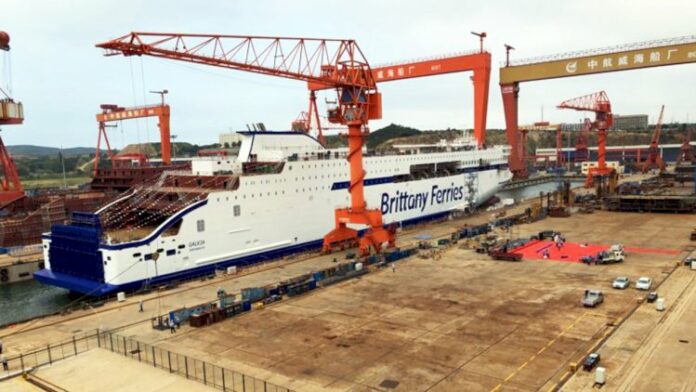
Ferry company Brittany Ferries has marked two key milestones in its €550 million fleet renewal programme. At the AVIC Weihai shipyard in Shandong, eastern China, shipyard workers and Brittany Ferries teams gathered to celebrate the launch of cruise-ferry Galicia, and the start of building work for sister ship Salamanca.

The 215-metre long hull of Galicia was majestically floated out at a traditional Chinese ship-launching ceremony. Then, alongside in the building dock the very first steel was cut for fleet mate Salamanca marking the beginning of the ship’s construction.

When complete, the two ships will serve Brittany Ferries’ long-haul routes connecting Portsmouth to Santander and Bilbao in northern Spain, with Galicia due to enter service in late 2020 followed by Salamanca in spring 2022. They will be joined a year later by a third sister ship to be named Santoña.

Brittany Ferries CEO Christophe Mathieu said:

“It gives me great pleasure to be here in China today to celebrate the launch of Galicia and the start of work on Salamanca. Our customers rightly expect our fleet to be modern, comfortable and efficient, with the promise of minimal environmental impact from operations and we can only achieve this aim with the very best, innovative new ships. Galicia and Salamanca are perfectly suited to our long-haul Spanish operations, and will allow us to further enhance our service to holidaymakers and hauliers taking advantage of these routes.”

The three 42,200-tonne ‘E-Flexer’ class ships will be amongst the biggest in Brittany Ferries’ fleet, measuring 215 metres long, with around three kilometres of space for cars and lorries.

Not only will they be capacious, comfortable and efficient – they’ll also be better for the environment. Whilst Galicia will be fitted with funnel exhaust gas cleaning systems, Salamanca and Santoña will be amongst the first ferries of their type to be powered by Liquefied Natural Gas (LNG) offering significant environmental advantages over traditional marine fuels, burning more efficiently and producing no sulphur, virtually no particulates and 95 per cent less nitrogen dioxide. The company’s very first LNG-powered ship Honfleur is currently under construction in Flensberg, Germany and will enter service on the busy Portsmouth to Caen route in 2020.
 

Port of Hueneme has purchased a zero-emission mobile harbor crane

0

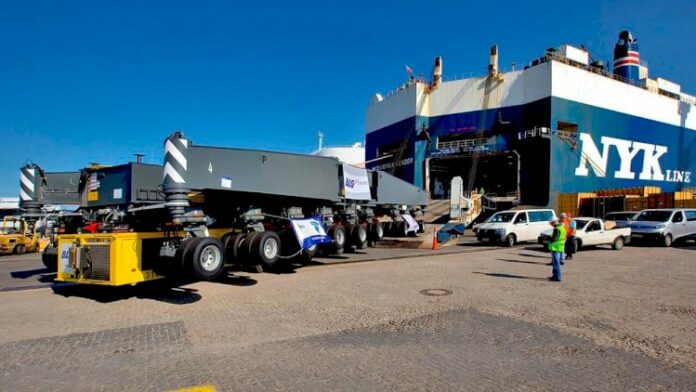
Mammoet has assisted with the transport of a zero-emission mobile harbor crane from the Port of Bremerhaven, Germany, to the Port of Hueneme in California, USA. The hybrid crane, which can be powered by electricity, was purchased by the Port of Hueneme as part of their long term vision to move to zero emission cargo handling. One of the steps towards this vision is to use this crane to deliver the world’s first “zero-emission ship-to-store avocado”.

The Port of Hueneme is part of an initiative to reduce the carbon impact of transporting avocados to California, which currently results in a surprisingly large carbon footprint. Grown in South America they are shipped under temperature controlled conditions, resulting in high carbon emissions. The Port has a vision to achieve zero emission cargo handling, thus eliminating the emissions from one part of the avocado-shipping process. The Port’s new hybrid crane, a Liebherr LHM420 harbor mobile crane, can run on electricity and will make a vital contribution to this goal.

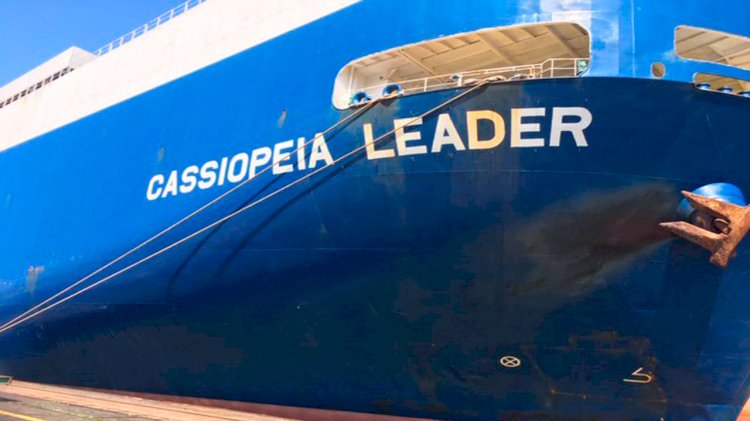
Mammoet was contracted to assist the customer, NYK Line, to load and unload the German-manufactured crane body onto the vessel Cassiopeia Leader. Mammoet moved the under carriage of the dismantled harbor crane from the quay side at the Port of Bremerhaven onto the “Roll-on/Roll-off” vessel. Once it had arrived in the USA a Mammoet team transported the 107-ton under carriage onto the quay side at the port in California. For both locations Mammoet sourced locally-available equipment, from a nearby terminal operator at Bremerhaven and from a nearby project in Los Angeles. This minimized the carbon impact of the transport and enabled a swift mobilization.

Teams from across Mammoet worked in cooperation to execute the two operations, firstly in Bremerhaven, where the under carriage was loaded onto the vessel using SPMTs and then in California, for the unloading operation. The maneuverability and load spreading ability of the SPMTs enable the team to execute the move within the limited 150-tonne capacity of the vessel’s ramp.

Mammoet’s Hamburg office provided a permanent point of contact for NYK Line. With this one-stop-shop approach, Mammoet delivered transport solutions for both ports with different local conditions. This saved the client further coordination efforts and guaranteed a safe and reliable execution, delivering the same high standards at both project locations on two different continents.

Jan De Nul enters French renewables market

0

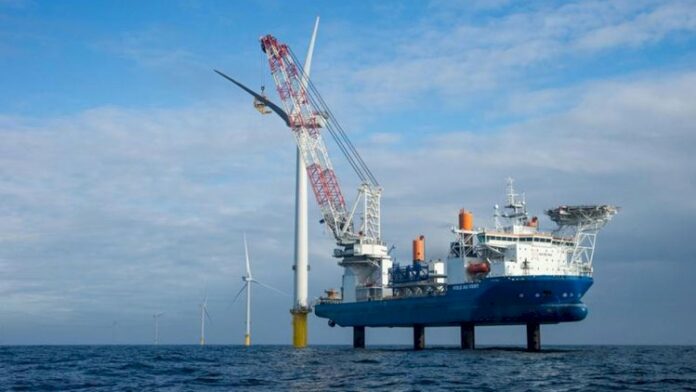
Jan De Nul Group has signed its very first offshore wind contract in France! Its French subsidiary Sodraco International SAS will be responsible for the transportation and installation of 80 Offshore Wind Turbines on the 480MW Saint-Nazaire Offshore Wind Farm (OWF).

The contract was awarded by Parc du Banc de Guérande, a joint venture between the French renewable energy company EDF Renewables and the Canadian energy infrastructure company Enbridge.

Philippe Hutse, Offshore Director at Jan De Nul Group, says:

“We are excited to contribute to the further development of renewable energy, and offshore wind in particular, in France. Next to that we are looking forward to working again with EDF Renewables and to confirm our skills and competencies by making the installation of the Offshore Wind Turbines in collaboration with GE a great success.” 

The Saint-Nazaire OWF is located in the northern part of the Bay of Biscay at nearly 12km from the coast and lies on top of the Banc de Guérande seabed formation. The wind farm will consist of 80 Offshore Wind Turbines supplied by General Electric (GE), which will be installed on top of monopile foundations. The OWF will have a total capacity of 480 MW, which equals 20% of the Loire-Atlantique’s electricity consumption needs.

The turbine installation works are planned to kick off in spring 2022 and will be finalized by the end of 2022.

BAE Systems demonstrates first integration of USV with Royal Navy warship

0

At a time of increased threat to international shipping, BAE Systems will this week demonstrate for the first time how Unmanned Surface Vessels (USVs) can be fully integrated with operational Royal Navy warships to extend their reach beyond the horizon and reduce sailors’ exposure to danger.

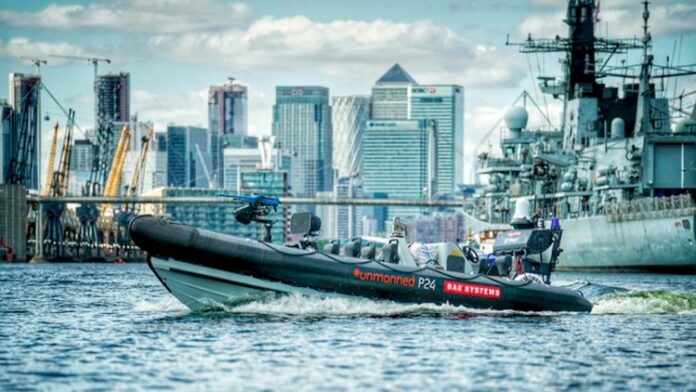
An unmanned Pacific 24 Rigid Inflatable Boat (P24 RIB) will be integrated with the combat system of HMS Argyll, a Type 23 frigate, in a series of waterborne demonstrations in London’s Docklands at DSEI 2019, the international defence and security event.

At 7.8 metres long, the P24 RIB has a speed of 38 knots and can operate for up to 45 hours at patrol speed or 100 nautical miles in pursuit mode, while being controlled remotely or operating autonomously. Its integration with an active warship has potential applications across a range of missions, including anti-piracy operations, border control, intelligence gathering, maritime security and force protection.

At the show, technologists from BAE Systems, in collaboration with the Royal Navy, Dstl and autonomous systems supplier L3Harris, will demonstrate the potential to make naval missions faster, easier and safer by carrying out high-speed exercises that mimic real world scenarios that include force protection, threat intercept and chase missions.

The P24 RIB, designed and built by BAE Systems, is the standard sea boat for the Royal Navy and is used widely across its surface fleet. It is also used extensively by the Royal Marines, Royal Fleet Auxiliary, Ministry of Defence Police and by allied navies and by overseas security forces. The new autonomous capability has the potential to be retrofitted to existing P24 RIBs.

A key part of proving the technology for future operational use has been to ensure a secure connection between the combat management and sensor system on board the warship and the off-board systems on the RIB.

Early trials of the technology have been conducted in collaboration with the Royal Navy’s new autonomy and lethality accelerator programme, Navy X.

Cdr Sean Trevethan, Royal Navy Fleet Robotics Officer, said:

“This is much more than an Unmanned Surface Vessel demonstration for the Royal Navy. What we are doing is the first step in exploiting system architecture in a complex warship to integrate an unmanned system into the ship. This ensures the system and its payload fully contribute to the warfighting capability of the ship. Ultimately this will change the way we fight – through integrated command and control – and lead to development of new tactics, techniques and procedures. The P24 RIB is well known to the Royal Navy and has a lot of potential in terms of its payload and deployment as an unmanned system. The Royal Navy is excited at the prospect of developing this capability.”

The version of the autonomous P24 RIB on show at DSEI has been modified for optional unmanned operation and fitted with additional sensors and effectors including a high-resolution optical and thermal camera and Long Range Acoustic Device (LRAD) system, capable of emitting warning messages at distance. It is also equipped with automated navigational decision-making technologies, freeing up operators to focus on mission critical information from afar.

The P24 has pre-programmed intelligent behaviours to position itself appropriately in relation to a potential threat. However, its planned weapons system, developed by MSI Systems with BAE Systems, remains firmly under a human operator’s control, ensuring that while the vessel can operate and navigate autonomously, there will always be a highly-trained operator, making the final decision on engagement and targeting.
 
The demonstrations highlight the collaborative effort of industry working alongside Dstl partners in supporting the future of the Royal Navy, and the advancement of technology in providing non-lethal and lethal advantage to our military forces.

First introduced on an experimental basis in 2015 and trialled as part of the Royal Navy’s Unmanned Warrior exercise in 2016, BAE Systems is working with the Ministry of Defence to continue a series of capability demonstrations, including NATO trials, designed to further test the integration of the technology with existing warship combat management systems trials and its planned weapons systems.

Study: Startups’ key role in digitalisation of shipping and offshore sectors

0

New and original research into maritime startups conducted for Inmarsat by UK GovTech venture firm and research house, PUBLIC, concludes that more bandwidth connecting ships to shore at lower cost than ever before is empowering a new breed of single-minded innovators to bring the true benefits of digitalisation to the shipping and offshore sectors.

The report, ‘Trade 2.0: How Startups are driving the next generation of maritime trade’, and co-authored by Nick Chubb and Leonardo Zangrando, locates the maritime sector at an inflection point; open to big data, blockchain, artificial intelligence (AI) and cloud computing, at a time when emissions regulations are pushing it away from the fossil fuels that have framed its business model.

Estimating that this market is worth US$106bn as a whole today, the report predicts the value of Ship Technology (ShipTech) rising to US$278bn by 2030. Significantly, in what represents the first ever market value estimate, they go on to predict exponential growth for maritime startups. The projection is based on direct input from 100 startups and two years of tracking 240 active startups by the authors’ database of maritime innovation.

The report says that, in 2018, just US$4.2bn (£3.4bn) of digital spending went to startups and small innovators, with the rest going to corporations that also sell operational technology and hardware. However, as barriers to consume digital services at sea come down, the total spending on digital services from startups and small to medium sized enterprises (SME) will rise to over $111bn by 2030, representing a compound annual growth rate of 120%.

Welcoming the research, Ronald Spithout, President Inmarsat Maritime says:

“These are exciting results for our industry, showing that startups and investors should see maritime as offering significant market opportunities for the next ten years.”

The findings also align closely with group investments and Inmarsat’s role as an enabler of maritime digitalisation with close to 7,500 VSAT installations completed, says Spithout. In 2019 alone, Inmarsat has launched the shipping industry’s first Internet of Things (IoT) platform (Inmarsat Fleet Data), added partners to its Certified Application Provider programme, worked with startups through the Inmarsat Digital Incubation scheme and backed two high profile maritime accelerator programmes.

Inmarsat has joined forces with startup programmes Rainmaking Trade and Transport Impact (T&TI) and Bluetech Accelerator, which support the potential of the IoT in maritime, ports and the supply chain. Inmarsat seeks to help innovators find a route to market via the high-speed Inmarsat communications infrastructure that connects over 160,000 vessels, ports, road and rail networks worldwide.

The new report indicates that maritime startups raised nearly $200m in venture capital investment in 2018, just four years after the creation of the world’s first accelerator dedicated to the sector. Last year, 25 programmes existed, with 226 startups collectively ‘graduated’ to date.

Also featured are case studies of startup solutions to enhance ship and port operations, and ship management. These include drone-based remote inspection from RIMS BV, approved by nine class societies, and the automated crew travel system from C Teleport.

Inmarsat also highlights the fact that several of the standout innovators are UK-based. These include: Workrest, a smart crew logger of rest hours for any device, to ensure compliance; Green Sea Guard, a sensor-in-funnel plus reporting solution to verify emissions compliance; the HiLo solution to reduce risks by recording, analysing and feeding back data on ‘high frequency, low impact’ incidents to ships; and the constantly updated and voyage-specific BunkerEx pricing portal.

Spithout says:

“As this important report shows, it is more important than ever for startups, corporate suppliers and ship operators to collaborate. We’re championing open innovation, collaboration and partnership, and reaching out to identify opportunities to co-research and co-create new digital products with external innovators to serve our existing customers and open up new markets. Exciting new collaborations with some of the start-ups covered in this report are bringing game-changing digital products to the maritime industry.”

AIDAperla to receive the largest battery storage system in passenger shipping

0

AIDA Cruises and Corvus Energy sign agreement for further cooperation at the opening of the first production plant of the battery manufacturer in Norway.

On the occasion of the opening of Corvus Energy's first production plant in Bergen, Norway, AIDA President Felix Eichhorn and the world's most renowned provider of maritime battery systems signed the agreement on September 5, 2019 to electrify the first cruise ship of AIDA Cruises.

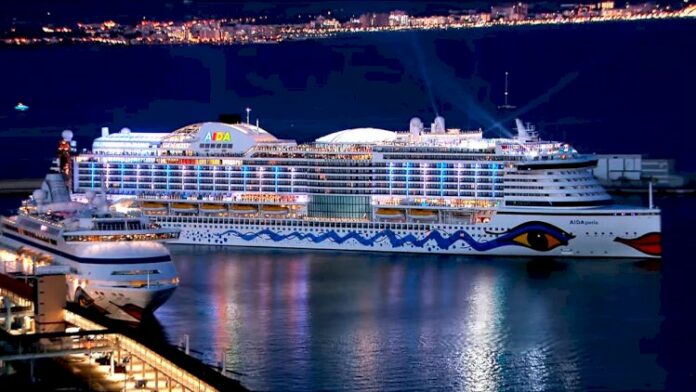
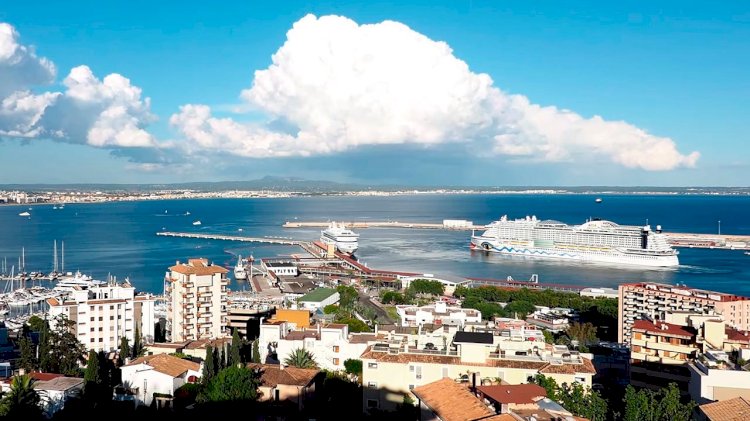
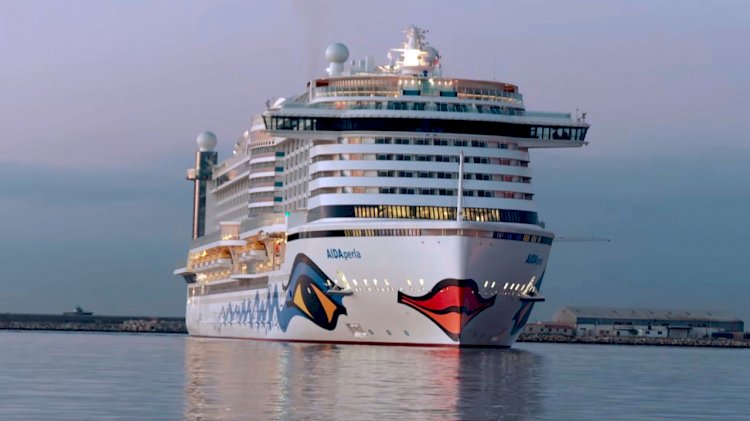
AIDAperla will be the first ship to be fitted with lithium-ion batteries from Corvus, produced in Norway, in 2020. The 300-meter-long cruise ship receives a battery pack capable of generating a total output of 10 MWh. As of today this will be the largest battery storage system worldwide to be ever installed on a passenger ship.

AIDA President Felix Eichhorn said:

“The integration of innovative battery technology into our “Green Cruising Strategy” is another important practical step we are taking on our path towards emission neutral ship operation. Corvus Energy is an important partner for us in the electrification of our ships.”

The battery systems can be charged with shore power and during sea operation (peak load shaving). In addition to pure battery operation, the systems may also contribute for an extended period of time, e.g. during port mooring or during ship maneuvers. Thanks to the use of this technology, the consumption of fossil fuel will reduced further and the efficiency of ship operations will be increased significantly.

It is planned to incorporate the experiences from this pilot operation of battery systems on board other AIDA and Costa cruise ships as well.

The use of a battery system on an AIDA ship is another important milestone on the way to an emissions-neutral ship operation. Previously, by the end of 2018, AIDA Cruises had pioneered a technology leap forward with the launch of AIDAnova, the world's first cruise ship operating entirely on low-emission LNG (LNG). Just a few days ago, AIDA Cruises was awarded the Blue Angel, the German Federal Government’s ecolabel for AIDAnova’s environmentally friendly ship design. By 2023, two more AIDA LNG vessels will be put into service.

AIDA Cruises is also a trailblazer in many other areas. As early as the end of 2020, 12 of 14 AIDA cruise ships will be able to receive shore power where available. Since 2017, AIDAsol has been using the shore power plant in Hamburg-Altona in regular operation. As part of its "Green Cruising Strategy", AIDA is also exploring the possibilities of CO2-free production of liquefied gas from renewable sources ("Power to Gas" project) or the use of fuel cells in cruise shipping.

Floating PV is flooding South East Asia’s power mix

0

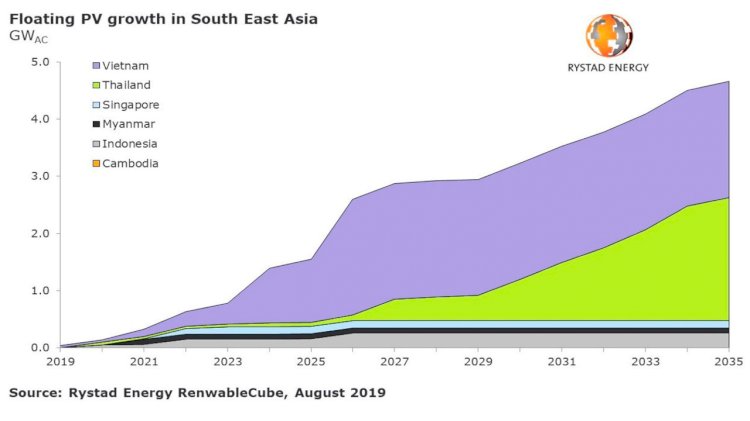
Floating photovoltaic (PV) panels are making a splash in South East Asia, where gigawatts (GWac) worth of utility-scale solar power are planned in the coming years. Development plans are in the works in Thailand and Vietnam as large-scale floating PV installations, with smaller utility-scale floating PV developments being proposed in Indonesia, Singapore and Myanmar.

Rystad Energy expects large-scale floating PV developments, typically installed on dams and reservoirs, to increase one hundred-fold in South East Asia over the next five to 15 years as countries in the region look to substantially increase their share of renewable energy in the power mix. This will open new market opportunities to both new and existing players in the industry.

Minh Khoi Le, an analyst on Rystad Energy’s renewables team, says:

“Floating PV offers an attractive alternative for large and mega-scale ground-mounted utility solar development, allowing beneficiaries to take advantage of under-utilized dams and reservoirs. We expect floating PV capacity to grow from current levels of 0.04 GWac to 3 GWac in the next 10 years. After a ground-mounted solar boom, Thailand is now turning its sights to floating PV."

The country is taking the lead in Southeast Asia and currently has several developments in the pipeline, with the floating PV setups to be installed at nine different hydroelectric dams. The Electric Generating Authority of Thailand (EGAT) plans to conduct tenders for each phase, the first of which closed on 20 August 2019. Currently the country has no operational large-scale floating PV capacity, making this an ambitious plan.

Although the country’s pipeline for floating PVs is smaller than Thailand, Vietnam currently has the largest operational floating PV plant in the region with 39 MWac of capacity, commissioned in May 2019. More projects are in the works across the region, with proposals being tendered in Indonesia and Singapore.

Floating PV plants are an advantageous option for land-scarce South East Asian countries to continue developing utility-scale solar power. Mostly proposed on hydroelectric dams and reservoirs, these PV plants will be able to connect to the grid using the connection points already available at hydroelectric facilities. This somewhat mitigates grid overload issues that often plague PV development and creates possibilities for the hybridization of power plants, promoting greater grid stability and flexibility.

Minh adds:

“Currently-operating installations in the region are small, producing under 50 MW, making these planned floating PV setups even more impressive.”

About Rystad Energy

Rystad Energy is an independent energy research and business intelligence company providing data, tools, analytics and consultancy services to the global energy industry.

BlueCORE’s cyber security solution was tested by IOActive

0

Building secure, sustainable and stable IT solutions has long been a priority issue for Sea IT, long before Cyber ​​Security became a popular concept. 

Mattias Patriksson, COO Sea IT, says:

"Allowing IOActive, one of the largest players in this area, to quality assure and review our systems, is another step-in building an even more secure solution for our customers."

Sea IT built the first version of BlueCORE's Cyber ​​Security solution in conjunction with an installation of a large VSAT project for its customers as early as 2006. The solution already then contained online virus protection and content filters as well as segmented networks for crew and business. At that time there were many protests from both shipowners and crew, but these safety measures are today, 13 years later, requirements for all vessels.

Today, Sea IT installs the 5th generation of BlueCORE Cyber ​​Security, a system that has been constantly improved and developed based on the experience the company has accumulated throughout the years in the maritime industry together with its long-term customers and partners.

In order to ensure the best and safest solution for its customers, Sea IT engaged the reputed and worldwide company IOActive for a safety analysis test of BlueCORE. IOActive conducted extensive tests of the IT infrastructure of the vessels, the network structure and the support system by simulating real cyberattacks, so-called penetration tests. IOActive looked not only at the infrastructure and the various parts of the solution but also at the resistance to attacks, the ability to detect them and to act to eliminate and harm the threats and attacks.

Mattias Patriksson adds:

"The review that IOActive did of both internal and external risks in our solution was our way to get a solid cyber security picture to assuring that we take the right steps in order to continue our ongoing work to meet todays and tomorrows cyber security risks." 

Sea IT realized early on that there are many parts that must interact to create secure, sustainable and stable IT environments and solutions for customers. Working with segmented networks, backups and redundancy is self-evident. Likewise, to work with the permissions of the various parts of the solution so that users can only see and can reach what concerns them. But it's not enough.

Kristian Ryberg, CEO Sea IT, says:

"It is not possible to focus only on hardware and software – it is also important to focus on education and information for those who will use our products. Many people believe that Cyber ​​Security is only about what comes from outside the company and how the company must protect itself against it and they sometimes forget that many of the big threats are on the inside in the form of, for example. users who connect their own devices to the networks, download files and click on links that can pose major security risks."
 
Sea IT has also worked on visually enhancing security by, for example, locking the computers on board, limiting the possibilities of connecting external devices, plugging out sockets and putting up stickers and signs.

Since BlueCORE is based on standardized solutions that are installed on many vessels, Sea IT often finds risks that the suppliers are not themselves able to detect. This means that risks and problems in most cases can be handled and taken care of before the vessels even notice them or can be removed before they even occur. The only thing the shipowners and crew see is a safe, stable and enduring function that operates 24/7.

Wave energy technology trialled off Tasmanian coast

0

On behalf of the Australian Government, the Australian Renewable Energy Agency (ARENA) has today announced $4 million in funding to Wave Swell Energy Limited to install a pilot-scale wave energy converter off the coast of King Island, Tasmania.

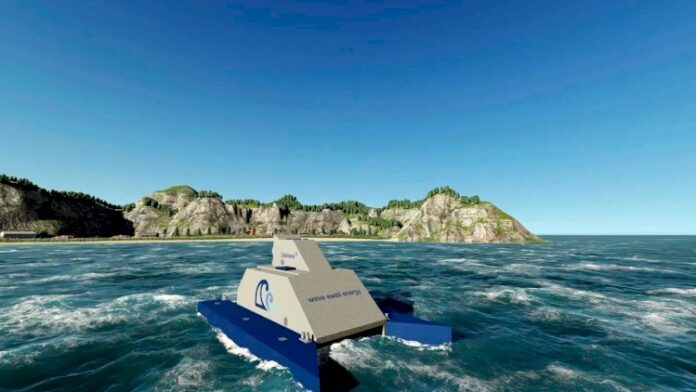
The $12.3 million project will involve the design, construction, installation and operation of the UniWave 200, a 200 kW wave energy device off the coast of King Island.

The project will also be integrated with the King Island microgrid operated by Hydro Tasmania, which received $6 million in ARENA funding in 2011 to demonstrate the integration of several renewable resources and energy management technologies.

The device will be partially submerged as it sits on the seabed and has an opening on one side to allow the movement of the waves in and out of the chamber.

Water rises and falls inside the chamber, causing the pressure of the air trapped above to change between negative and positive pressure. The pressure fluctuations force the air to pass through the turbine at the top of the chamber, generating electricity.

ARENA CEO Darren Miller said the project will offer additional insights into combining wind, solar and wave energy:

“Wave energy has the potential to be integrated into microgrids, particularly on island locations with limited space, to reduce the need for significant battery storage due to the relative predictability and consistency of wave energy.

The tidal and wave sector in Australia is still in the early demonstration phase. Wave Swell’s unique approach to wave energy will gain valuable knowledge and help to see whether this is a viable option for generating renewable energy.”

Wave Swell Energy CEO, Dr Tom Denniss said:

“We are extremely pleased to have such a substantial component of the UniWave 200 King Island Project funded by ARENA.

The project, aimed at demonstrating the commercial viability of the technology, is expected to be the first of many wave energy projects utilising this unique world leading intellectual property. ARENA’s role in the King Island project represents a vital component of the ultimate commercialisation of the technology."

Kraken launches OceanVision project

0

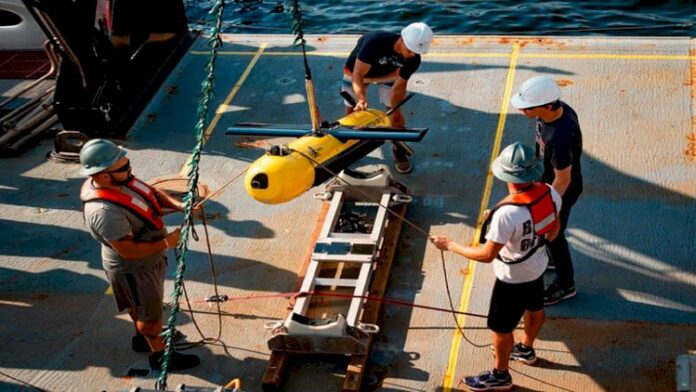
Kraken Robotics Inc. has announced that its wholly owned subsidiary, Kraken Robotic Systems Inc., has launched the initial phase of its OceanVision™ project. Commencing in late September, Kraken will deploy its sensors and unmanned underwater platforms to conduct ultra-high definition seabed imaging and mapping on the Grand Banks of Newfoundland and other areas of Atlantic Canada.

OceanVision™ is a three-year, $20 million project focused on the development of new marine technologies and products to enable an underwater data acquisition and analytics as a service business. OceanVision™ enables the acceleration of Kraken’s strategy from sensors and system sales to becoming an integrated provider of Robotics as a Service (RaaS) and Data as a Service (DaaS).

Karl Kenny, Kraken’s President and CEO said:

“We are pleased to reach this major milestone and officially launch our OceanVision™ project. OceanVision™ will result in an end-to-end digitalization solution offering advanced sensors, robots and data analytics as a turnkey service for imaging and mapping of the seafloor as well as seabed assets and infrastructure. Today, high fidelity data is an absolute requirement for coherent input to machine learning algorithms – otherwise it’s garbage in, garbage out. We are uniquely positioned in the underwater industry as Kraken will build, own and operate the sensor-laden drones; Kraken (and partners) will run the missions; and Kraken (and partners) will analyze the data for our customers.

We expect recurring revenues from RaaS/DaaS to become a significant part of our future revenue mix and strategic growth. Rapid subsea data acquisition and analytics will make it possible to significantly reduce the cost of obtaining high quality data allowing end-users to make more informed operational decisions in near real-time. The new technologies and services that Kraken will develop within the scope of the OceanVision™ project are currently not available in a tightly integrated offering in the marine industry.”

OceanVision™ will enable Kraken to further new technology and product development and fine-tune recurring revenue business models. While near-term focus of the project will be the Inspection, Repair, and Maintenance (IRM) segments for offshore energy (oil & gas and wind), OceanVision™ will also address the requirements of other stakeholders in the fisheries, aquaculture, ocean science and underwater defense industries.