-1.5 C
New York
Home Blog Page 1002

Rolls-Royce launches innovative technology to support Naval autonomy

0

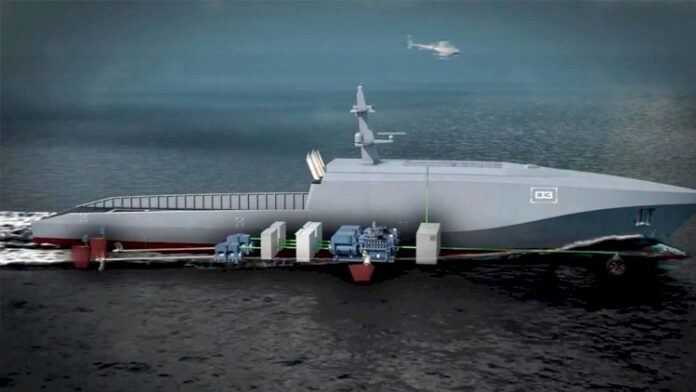
Rolls-Royce is developing an autonomous machinery control system which allows Naval vessels to undertake long endurance missions with less human interaction.

Developed by Rolls-Royce, Artificial Chief Engineer® is a critical enabler for autonomous missions by acting as the equivalent of the engineering department responsible for the health and the operation of an unmanned vessel’s machinery. Navies intend to increase their use of optionally-manned and unmanned vessels to project power further for less cost by reducing reliance on manpower, by allowing higher-risk or longer-endurance missions and by lowering the procurement and operating costs of future platforms. 

Artificial Chief Engineer is an on-board, secure, decision-making control system designed to intelligently operate the machinery of lean-manned and unmanned naval vessels. The technology makes condition-based decisions about how best to operate the machinery – including the engines, propulsion system, electrical network and fuel system – using algorithms to optimise the ship for maximum efficiency, lowest noise, top speed or to preserve damaged equipment as required by the ship’s mission. This reduces the workload of remote operators and allows increased mission and system complexity in future unmanned ship designs.

Colin Field, Naval Autonomous Systems Engineer at Rolls-Royce, said:

“This project combines our experience with naval ship automation, Rolls-Royce’s knowledge of designing and operating warship power and propulsion systems and our complementary work developing similar autonomous power systems for aircraft.

Now that we have a live Artificial Chief Engineer demonstrator, we want to share and refine our vision of how we believe unmanned vessels should be designed and operated – we want to connect with potential collaborators and help our naval customers realise the benefits of autonomy.”

Officially launched at DSEI 2019, Artificial Chief Engineer is currently in the demonstration phase allowing Rolls-Royce engineers to showcase its capabilities using a sample mission that includes fleet escort, open water transit, conducting anti-submarine warfare, managing a complex set of power and propulsion and auxiliary systems and reacting to machinery system degradation.
Kongsberg awarded contract from ExxonMobil to supply its system for Liza Phase 1 development

0

The contract award includes the full SURF System including Production wells, Gas and Water Injection wells, umbilicals, flowlines and risers.

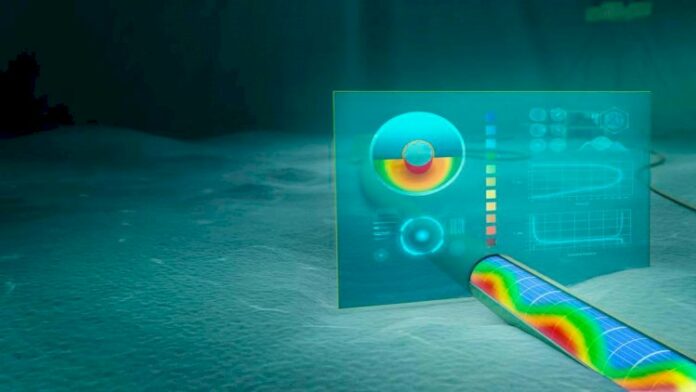
The Subsea Production System Simulator is an online digital representation of the production system and comprises a real-time and an offline planning mode. KONGSBERG has provided an Operator Training Simulator to ExxonMobil for this field which will be cloned for this system to be used in real-time and planning mode. The real-time provides a “window” into the wells and flow lines providing information on the hydrocarbons, water and chemicals not available from instrumentation. The offline mode is used for planning purposes. The Subsea Production System Simulator will be built using Kongsberg Digital’s K-Spice Dynamic Process Simulation Platform and the LedaFlow Advanced Transient Multiphase Flow Simulator.

Rajesh Baskaran, Vice President – Production Assurance, Kongsberg Digital adds:

“Kongsberg Digital supplied Operator Training Simulators for Liza Phase 1 Subsea and Topsides facilities and is delighted to have been awarded this important contract to support the development and operation of this development in Guyana.”

Port of Long Beach cuts diesel pollution 87%

0

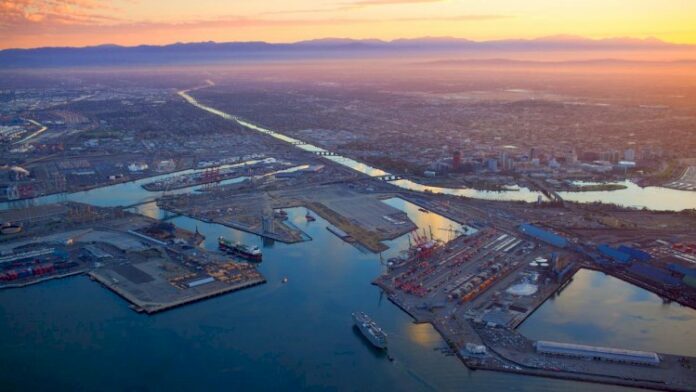
The Port of Long Beach’s clean-air efforts have continued dramatic reductions in air pollution, including an 87% cut in diesel emissions, according to the latest comprehensive study.

The annual emissions inventory conducted by an independent consultant is available here. In addition to diesel particulates, the study found the Port’s aggressive actions to curtail pollution have decreased smog-forming nitrogen oxides by 56% since 2005. Sulfur oxides were down 97% and greenhouse gases are 16% lower.

Long Beach Harbor Commission President Bonnie Lowenthal, said:

“We’re seeing the results of the hard work by the Port and the goods movement industry, and we’re showing the world that sustainable cargo movement is possible. There’s work to be done to get to our ultimate goal of zero-emissions operations, but I’m confident we will get there together.”

While emissions remain dramatically lower than they were in 2005, the Port-funded study for 2018 found a small increase in diesel particulates and greenhouse gas emissions from the previous year’s inventory. The 2017 inventory measured an 88% decrease in diesel particulates and an 18% reduction in greenhouse gases compared to the 2005 baseline year. Port officials attributed the change to record throughput of 8.1 million twenty-foot equivalent units in 2018.

Port of Long Beach Executive Director Mario Cordero, said:

“We’ve accomplished these reductions even while container traffic has risen 21% since 2005. We are proud of what we’ve done in cooperation with our many partners, but we’re not finished. The Port is managing $150 million in projects all across our port, all in the name of cleaner air. This includes $80 million in grant funding to demonstrate zero emissions equipment and advanced energy systems in Port operations.”

The purpose of the emissions inventory is to measure and track the overall cumulative progress of Clean Air Action Plan measures and ensure the Port is on track to meet emission reduction goals. The study calculates the amount of pollution coming from all the ships, trucks, locomotives, harbor craft and yard equipment working at the Port, with the help of terminal operators and other businesses.

The results are reviewed by the U.S. Environmental Protection Agency, the California Air Resources Board and the South Coast Air Quality Management District.

Port of Rotterdam launches the mobile shore-based power pilot project

0

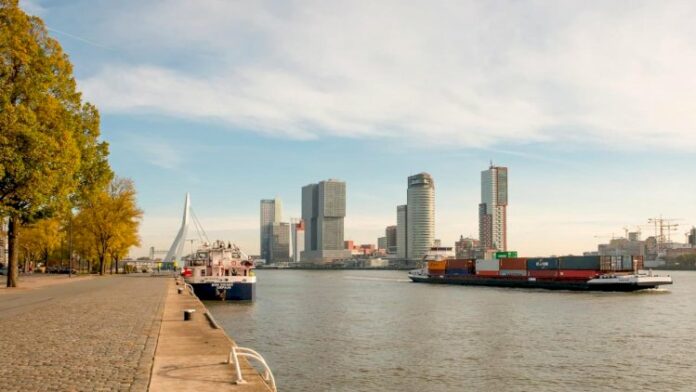
Five commercial parties will be taking part in a pilot project set up by the municipality of Rotterdam and the Port of Rotterdam Authority at Parkkade in central Rotterdam: ENGIE Ventures & Integrated Solutions BV; PON Power & its subsidiaries; Aggreko Benelux; Mobiele Stroom BV and JP Energy Systems. The project will focus on various mobile shore-based power solutions for sea-going vessels.

Shore-based power has been compulsory for ships docking at Rotterdam’s more than 500 inland berths for years. However, this will be the first pilot project involving mobile shore-based power for sea-going vessels.

Sea-going vessels need electric power during a port call. Usually, this is generated by their auxiliary engines – resulting in emissions and in some cases noise nuisance for the surrounding area. This nuisance can be reduced by powering down the vessels’ auxiliary engines and providing them with external power: shore-based power, also known as ‘power to ship’ or P2S. Shore-based power is relatively expensive, and it’s difficult to operate fixed connections to the power grid on a profitable basis.

Arno Bonte, Alderman of Sustainability, Air Quality and Energy Transition, says:

“This is the first time a European port will be organising a pilot project with mobile shore-based power on this scale. This project is in line with the ambition to ultimately supply all sea-going vessels in the port with mobile shore-based power, in addition to the facilities for inland vessels.”

Port Authority COO Ronald Paul says:

“This pilot project with shore-based power for sea-going vessels aligns with the Port Authority’s ambition to be a frontrunner in the energy transition. It is one of the many projects that we are working on to improve local air quality and mitigate global climate change.”

The five project participants will be testing a variety of concepts. The focus will mainly be on their technical and commercial viability, user-friendliness and positive environmental impact:

  • ENGIE Ventures & Integrated Solutions B.V.: Hybrid system with a Big Battery Box, integrated with a biofuel-powered generator (HVO).
  • PON Power & subsidiaries: Hybrid container with a battery, combined with a generator powered by blue diesel (HVO) in a 10-ft container.
  • Aggreko Benelux: LNG-powered gas engine in a 20-ft container.
  • Mobiele Stroom BV: Bio LNG-powered turbine in a 20-ft container.
  • JP Energy Systems: Hydrogen-based fuel cell unit combined with a small battery.

The pilot project will start in the autumn and will run until spring. Each system will be installed for 2 to 4 weeks at a location halfway along Parkkade, where it will supply shore-based power to sea-going vessels mooring at a specific berth. During the tests, researchers will perform measurements to determine the reduction of noise and emissions achieved by the different systems, compared to the vessel’s on-board generator.

The pilot project will be set up at the public berths for sea-going vessels on Parkkade, close to Rotterdam’s city centre. This port basin is frequented by numerous coasters operated by shipping companies like Wilson, Vertom and Wijnne Barends. In principle, any sea-going vessel that moors at this location can make use of the mobile shore-based power – although quite a few sea-going vessels lack the plug connector required for this.

The mobile shore-based power pilot project comprises a number of phases. After successfully completing Phase A, the researchers intend to immediately move on to its follow-up, Phase B. This phase will mainly focus on arranging shore-based power for larger sea-going vessels.

Underwater cameras tackle tough questions for fishery

0

Ocean scientists and fishermen team up to document seal-fishing net interactions.

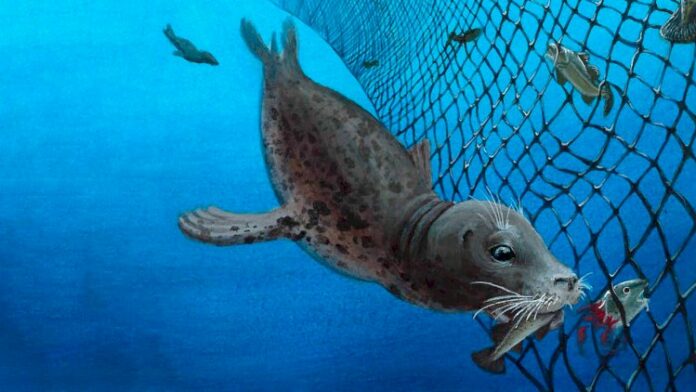
One of the tough realities of commercial fishing is that fishermen and seals sometimes compete for the same fish. And when they do, interactions between the animals and fishing nets can occur, leaving fishermen with ruined catches and damaged fishing gear, and seals with the possibility of lethal entanglements.

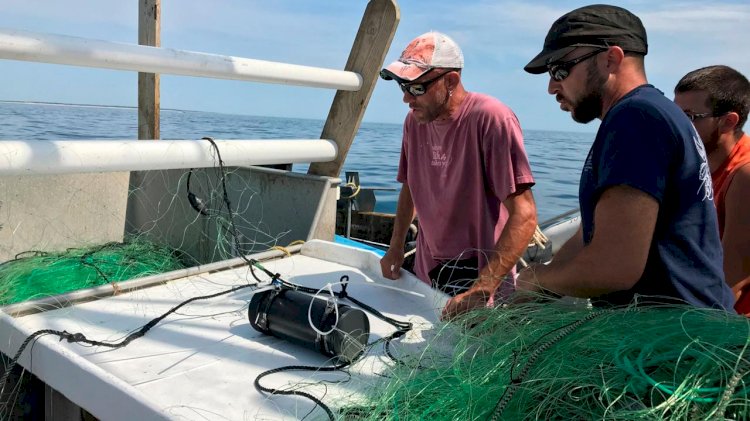
To come up with new ways to prevent such interactions between marine animals and fisheries, ocean scientists at the Woods Hole Oceanographic Institution (WHOI) and the Center for Coastal Studies (CCS) are working with local fishermen on Cape Cod to understand exactly what happens when seals and other marine mammals invade a fishing net to forage.

Alex Bocconcelli, a research specialist at WHOI, said:

“Fishermen are a great source of knowledge and a big part of the conservation equation here in New England, where the commercial fishery is so important. But they are also facing hard issues related to both lost catch and lost fishing opportunities from depredation. So, we’re leveraging the strong relationships we have with the local commercial fishing industry to figure out what’s going on, and more importantly, what can be done to help reduce the economic and ecological impacts.”

The costs of depredation—when marine animals prey on fish caught in nets—can be high on both fronts. On the economic side, it can reduce the amount of sell-able fish and lead to torn fishing nets. 

Doug Feeney, a commercial fisherman based in Chatham, Massachusetts, said:

“A five-inch opening in the net can quickly become a 15-inch hole when a seal gets caught and tries to free itself.”

When fishermen spend time mending nets and sorting through their catch for fish they can sell, they often lose valuable fishing time, which compounds the financial hit.

From an ecological standpoint, the incidental by-catch of gray seals—which occurs even when they’re not preying on fish caught in the net—is a leading cause of mortality among these and other protected marine mammals.

Scientists documented the behavior of seals and other animals in and around fishing nets just east of Cape Cod—an area that has seen steady growth in gray seal populations over the past few years.  The team has mounted an array of five underwater cameras across the top or “headrope” of a gillnet—a ten-foot tall wall of mesh netting that extends as wide as the wingspan of a 747 jumbo jet—to get an unprecedented view of the encounters. They are also relying on the use of a remotely operated vehicle (ROV) to periodically survey the nets. The ROV takes real-time video snapshots of activity below the surface to supplement the top-mounted cameras.

Owen Nichols, director of Marine Fisheries Research for CCS, said:

“This is the first time anyone has captured video of active sink-gillnet fishing in the northeast U.S. that we know of. In general, we don’t know much about what goes on around the fishing gear until we see what comes over the rail. That’s when we can see the bite marks and other catch damage in the net, as well as occasional damage to the fishing gear itself.”

The underwater imagery has the potential to facilitate a shared learning experience between the scientists and fishermen, but capturing clear footage isn’t without its challenges. The gillnet site is so rich with marine life, the cameras are often filming through a thick fog of fish biomass. Turbulence from surrounding ocean currents can distort the view even more by pushing suspended sediment and organic material around like confetti. Fortunately, the cameras are mounted on tightly-anchored nets, which helps to minimize the amount of camera movement and resulting visual noise.

The study, which is funded through grants from the National Marine Sanctuary Foundation and the Marine Mammal Commission, was launched last summer and is expected to run through the end of 2019. 

The cameras have collected close to 100 hours of video footage, which is still being analyzed. The researchers feel that the camera array will be invaluable for documenting the behavior of seals engaged in depredation, and thus helping to inform commercial fishermen on measures they can take to prevent these costly interactions.
 

SIMEC Atlantis Energy to build the world’s largest ocean powered data centre

0

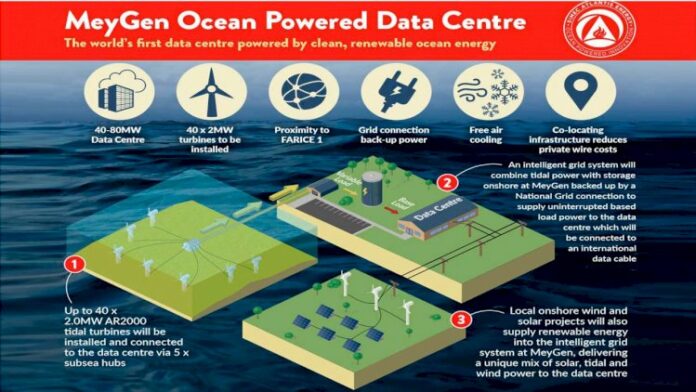
SIMEC Atlantis Energy Limited (“Atlantis”), the global developer, owner and operator of sustainable energy projects, has announced ambitions for a tidal-powered data centre in the Caithness region of Scotland. The power supply for such a data centre would include electricity supplied via a private wire network from tidal turbines at the existing MeyGen project site.

This would be the first ocean powered data centre in the world, with the potential to attract a hyperscale data centre occupier to Scotland. It is expected that the data centre would be connected to multiple international subsea fibre optic cables, offering a fast and reliable connection to London, Europe and the USA. Further connectivity to the central belt using domestic terrestrial networks could significantly improve Scottish data and connectivity resilience.

The MeyGen project has a seabed lease and consents secured for a further 80MW of tidal capacity, in addition to the 6MW operational array which has now generated more than 20,000MWh of electricity for export to the grid. The target operations date for the data centre is expected to be 2024, in line with the expansion plans for the tidal array, however a smaller initial data centre module could be deployed sooner to draw on the output from the existing tidal array.

Atlantis has been working with AECOM, the multinational engineering firm, to assess the feasibility of connecting to high speed international fibre optic connections and undertake the systems design for a data centre with access to predictable renewable generation with grid back-up, at a location which benefits from low temperatures to assist cooling of the data centre.

The data centre could also alleviate constraints on other local renewable energy development, which is restricted by the current grid capacity and the closure of renewable energy subsidy mechanisms.  Projects including MeyGen would be able to sell power directly to the data centre via a new private wire network and thus are expected to benefit from a premium to the wholesale power prices which are achieved when dispatching output via the National Grid.

The private wire connection is intended to provide an alternative pathway to construction of the next large phase of the MeyGen project without reliance on the UK government’s current limited support schemes for renewable energy.  Atlantis is in discussions with world leading data centre operators to progress plans for the data centre and facilitate the expansion of MeyGen using the Scottish supply chain.

It is expected that the turbines to power this giant data centre will be manufactured in Scotland.

Misuga Ship Management migrates dutch fleet to Sealink VSAT

0

Future proof connectivity solution for Japanese ship owner to ensure IT compliance on dry bulk and container fleet.

Rotterdam based ship management company Misuga Kaiun Holland B.V. has chosen Marlink to provision cost-effective, unlimited global Sealink VSAT connectivity for its dry bulk, multipurpose and wood chip carrier vessel fleet. Marlink will install one metre Ku-band antennas and integrate an extensive package of solutions and applications designed to provide secure connectivity for business and operations as well as crew welfare.

Misuga Kaiun Holland B.V. is the European subsidiary of Japan headquartered Misuga Kaiun Co., Ltd. (Misuga Ship Management), which ranks among the top 10 ship management companies worldwide, with a managed fleet of more than 150 vessels. The specific Sealink VSAT solution for vessels managed from the Rotterdam office has been developed in collaboration between Misuga Kaiun Holland B.V., Misuga Kaiun Co., Ltd, Marlink and Marlink Japan.

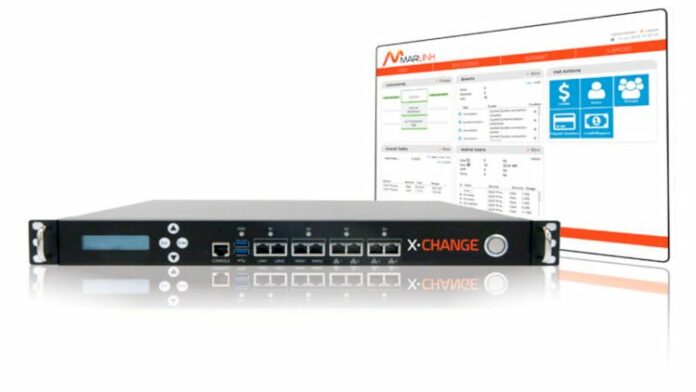
In addition, Marlink’s XChange integrated communications management platform will be deployed on all vessels to run business operations efficiently as well as enabling crew internet access. XChange Universal Remote Access is also an integral part of the service, helping Misuga Kaiun Holland B.V. to improve its IT resilience and compliance by providing secure, network-independent access to all devices connected to XChange, allowing technicians or administrators to manage IT equipment on board from any location worldwide. SkyFile Mail and Anti-Virus as well as IP phones, complete this economic and powerful connectivity package that will improve crew and operational data use.

Misuga Kaiun Holland B.V. is a member of Dutch consortium BroadBand@Sea, where ship managers, owners and suppliers share their experiences on maritime satcom. The organisation provided a platform for Marlink to demonstrate how XChange can significantly streamline service management and administration, ensuring that Misuga Kaiun Holland B.V. can leverage its new global VSAT service for smart effective fleet operations.

Tore Morten Olsen, President Maritime, Marlink, said:

"Together with an unlimited Sealink VSAT data plan, high availability and quality of service across the fleet, and our inherently secure network, XChange unlocks significant extra value for Misuga Kaiun Holland B.V as it upgrades its satellite connectivity to improve operational capabilities and crew communications facilities." 

Taiwanese offshore wind farm Formosa 1 generates first power

0

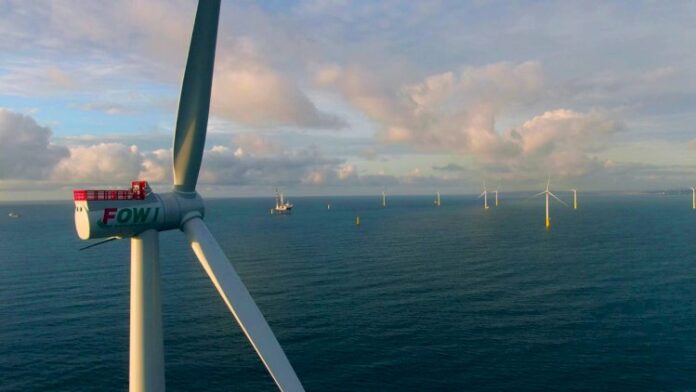
On Thursday, 5 September, the second phase of Formosa 1, Taiwan’s soon-to-be first commercial-scale offshore wind farm, produced first power.

The second phase of Formosa 1 will comprise 20 Siemens Gamesa 6MW offshore wind turbines. 10 of these have now been installed, and six of them have started gradually generating power. 

When the first of the new wind turbines started generating clean renewable energy, it set a new milestone for Taiwan's offshore wind industry and marked the first step towards achieving the Taiwanese government’s ambitions of installing 5.7GW offshore wind by 2025.

Wind turbine commissioning is the last stage before the completion of an offshore wind farm. Before commercial operation, each wind turbine needs to go through a power generation test lasting between 10 to 14 days to complete the commissioning stage. The 20 wind turbines for the second phase of Formosa 1 are expected to be fully operational within the next two months.

Matthias Bausenwein, Formosa 1 Chairman and President of Ørsted Asia-Pacific, says:

“First power from the second phase of Formosa 1 is a major milestone for the project before completion. An achievement by the Formosa 1 team and all our supply chain partners. Together with our joint venture partners, JERA, Macquarie Capital and Swancor, we’ll keep devoting our efforts to building Taiwan’s first offshore wind farm on time and within budget. Formosa 1 is committed to producing significant amounts of clean energy and contribute to Taiwan’s energy transition.”

The Formosa 1 offshore wind farm includes two phases: two 4MW wind turbines were installed in October 2016 for the first phase and officially entered commercial operation in April 2017. The second phase involves the installation of 20 6MW wind turbines. Formosa 1 is located approximately 2-6km off the coast of Miaoli County. The total power generation capacity for Formosa 1 is 128MW, enabling it to supply 128,000 Taiwanese households with clean renewable energy.

The Formosa 1 offshore wind farm is owned by Ørsted (35%), JERA (32.5%), Macquarie Capital (25%), and Swancor Renewable Energy (7.5%).

VIDEO: The vehicle carrier ‘Golden Ray’ capsized in St. Simons Sound, Brunswick, Georgia

0

The Coast Guard and port partners are searching for the remaining four crew members aboard the 656-foot vehicle carrier Golden Ray, in St. Simons Sound, near Brunswick, Georgia, Sept. 8, 2019. A Coast Guard MH-65 Dolphin helicopter aircrews and other port partners rescued 20 people after it was reported the vessel was disabled, listing, and had a fire on board. 
 

DNV GL: Sesam Insight application removes costly barriers in offshore engineering

0

Scattered data and analysis models lead to inefficiency in data exchanges between asset owners, operators and contractors. With the release of DNV GL’s Sesam Insight application, which provides shared 3D models among all stakeholders, costly barriers in offshore engineering are removed.

When analysis models and data are stored in several places, there is a risk of costly and time-consuming information exchange between the involved players, such as owners, operators, contractors and regulatory bodies. This lack of transparency can lead to issues during the verification process, and uncertainty about the status and quality of project work. In some cases, knowledge and data remain with contractors instead of asset owners, and data recovery costs can be high.

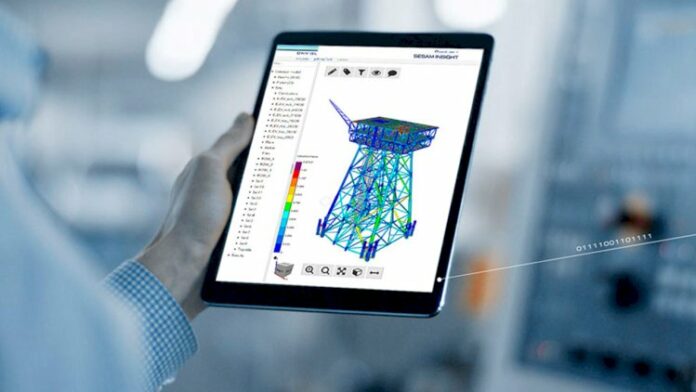
With the release of the Sesam Insight solution from DNV GL, a new level of collaboration in offshore engineering is possible through common insight into shared 3D analysis models, securely accessible online by all stakeholders with access rights. Sesam Insight provides access to the data and models for subscribers on any device, regardless of screen size and operating system. If you have a tablet, laptop, workstation or smartphone, you can visualize your organization’s assets with Sesam Insight.

Elling Rishoff, Head of Software Ecosystems at DNV GL – Digital Solutions, says:

“Better collaboration and communication between asset owners, operators and contractors has immense potential for cost savings. Sesam Insight is a game-changer when it comes to improving decision-making at all levels of the organization, and reducing errors."

It’s not only structural engineers who can get key information from Sesam models with the application. Sesam Insight is also easy to use for non-technical staff, including inspectors, operations teams or managers that have domain knowledge but may have previously worked with other tools. There is easy access throughout the involved organizations, with no installation, no nodelocked licenses and no device restrictions.

Sesam Insight establishes a single source of truth. The analysis model and its results, stored in Sesam Insight, are the baseline for all further work. This means that conflicting versions and revisions can be avoided. Stakeholders can comment directly on the model and see all relevant information on the asset itself. In addition to annotations, it is possible to attach relevant files such as images, explanatory reports, drawings or hand calculations.