1.1 C
New York
Home Blog Page 987

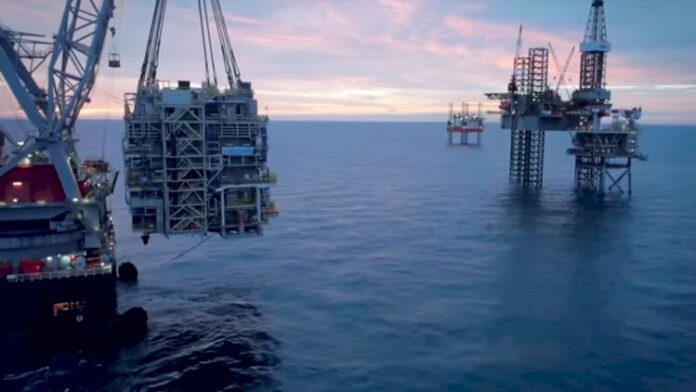
Haliade-X turbines to be used by Dogger Bank wind farms

0

World’s largest offshore wind farm to use world’s most powerful turbine.

Dogger Bank Wind Farms, which is developing what will become the world’s largest offshore wind farm when built, has unveiled GE Renewable Energy as its preferred turbine supplier.

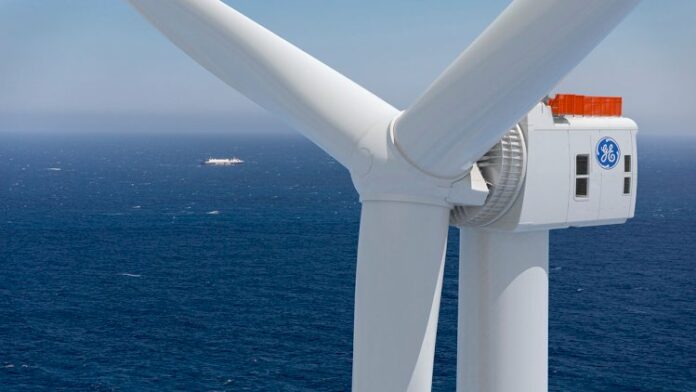
Under the new deal, GE Renewable Energy will supply Dogger Bank with its next generation of offshore technology, the ground-breaking Haliade-X turbine, bringing the world’s most powerful wind turbine to the world’s largest wind farm. The final number of turbines to be installed at Dogger Bank will be confirmed in due course.

Dogger Bank Wind Farms is a 50:50 joint venture (JV) between Equinor and SSE Renewables. The overall wind farm comprises three 1.2 GW projects located in the North Sea, approximately 130km from the UK’s Yorkshire Coast. The projects were recently successful in the latest Contracts for Difference (CfDs) Allocation Round, the UK Government’s auction for renewable power.

SSE Renewables will lead the development and construction phases of Dogger Bank and Equinor will lead on operations once completed.

Paul Cooley, Director of Capital Projects at SSE Renewables, said:

“The joint Equinor and SSE Renewables project team on Dogger Bank is excited to work with GE Renewable Energy to introduce the next generation of offshore wind turbine to the UK, and to be the first European wind farm to install and operate these innovative turbines. Dogger Bank will now be home to the largest offshore wind turbines in the world and to this pioneering low carbon technology, which will play a central role in helping the UK become carbon neutral by 2050.”

Dogger Bank Wind Farms Project Director, Bjørn Ivar Bergemo, said:

“Our success in the CfD auction was due in large part to the relationships we have built with our supply chain, which enabled the lowest ever strike prices. The Haliade-X represents a step change in turbine technology, and we look forward to working with GE Renewable Energy to maximise innovation and supply chain benefits for the UK.”

The Dogger Bank projects will have a combined capacity of up to 3.6 GW, making it the largest wind farm in the world. It will be able to provide enough clean, low-carbon energy to power over 4.5 million homes annually, equivalent to around 5% of the UK’s estimated electricity generation.
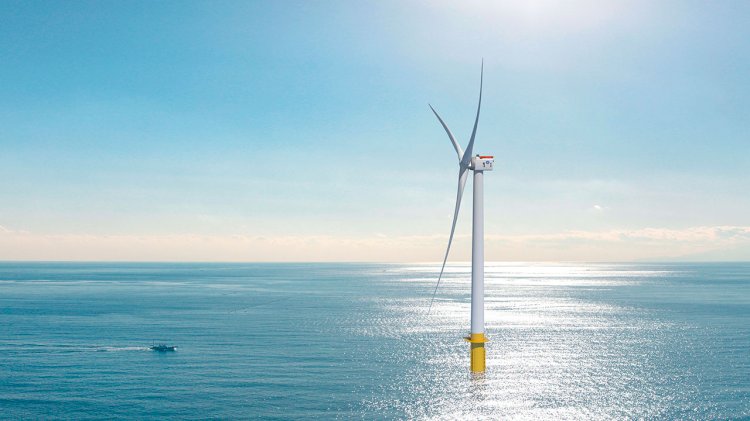
The projects are expected to trigger approximately £9bn of capital investment between 2020 and 2026 into much needed low carbon infrastructure and delivering substantial economic benefits to the UK.

John Lavelle, President and CEO, Offshore Wind, GE Renewable Energy, said:

“We are very excited to announce this agreement as it gives us the opportunity to bring the world’s most powerful offshore wind turbine to the world’s largest offshore wind market. We have an important role to play in the UK’s offshore wind ambitions and in delivering further carbon emission reductions. Our Haliade-X technology is helping our customers to make offshore wind a more competitive source of clean and renewable energy by reducing the levelized cost of energy (LCOE).”

The Dogger Bank projects will now progress towards a financial investment decision by the end of 2020, after which there will be confirmation of GE Renewable Energy as turbine supplier.

Onshore construction is expected to commence in early 2020, and first energy generation is expected in 2023. Dogger Bank Wind Farms is currently preparing for the commencement of onshore works, alongside plans to hold events for local residents and the potential supply chain.
Maritime IoT platform Fleet Data secures approval from Bureau Veritas

0

Fleet Data from Inmarsat, the world leader in global, mobile satellite communications has received Approval in Principle (AiP) from leading classification society Bureau Veritas. This is a major milestone for the maritime industry’s leading secure sensor data and Internet of Things (IoT) platform. Conditions of approval by Bureau Veritas verify that Fleet Data can be installed safely on board, without its operation affecting existing navigation, safety and radio communication systems.

The bandwidth-inclusive platform allows ship owners and managers to take control of sensor data collected on board, pre-process, extract and aggregate it in cloud-based storage to be exploited by the operator’s own decision-making software or third party applications. Fleet Data is available via Fleet Xpress and soon to be rolled out to Inmarsat FleetBroadband users.

Jean-François Segretain, Technical Director, Bureau Veritas Marine & Offshore, said:

“Bureau Veritas is an innovator in maritime digitalisation. Granting this AiP to Fleet Data offers powerful evidence of our strategy to lead the way when it comes to supporting the technologies that will truly transform our industry and to provide the required confidence in users and stakeholders.”

The Fleet Data IoT platform draws on different sources for data, including onboard sensors, the ship’s voyage data recorder (VDR) or the Integrated Automation System. Data is pre-processed and transferred ashore by satellite connection. Users access a secure online dashboard that is virtually connected via Application Program Interfaces (APIs) to the analytic, monitoring and management tools available through the IoT.

Stefano Poli, Vice President Business Development, Inmarsat Maritime, says:

“Securing approval demonstrates that the maritime industry’s impartial standard bearers on safety, security and the environment identify Fleet Data as supportive of their objectives. The launch of Fleet Data indicated that the world’s leading maritime satcoms supplier had also developed the industry’s first sensor agnostic platform to unleash IoT-based vessel performance gains. This approval verifies that Fleet Data can be installed onboard any ship without the need for further approval, certification or testing of any existing system and means it is safe to install.”

Poli emphasised that the power of Fleet Data can be enabled via any suitably-equipped data-logging device that benefits from continuous connectivity:

“As a bandwidth-inclusive service, Fleet Data is also available to subscribers without additional airtime cost, whether they use the solution to enhance operational ship efficiency or to benchmark data across an entire fleet.”

NileDutch goes live globally with a new container carrier operations solution

0

Single centralized platform increases visibility, enhances yield and improve standardization.

CyberLogitec, the leading provider of maritime, port/terminal and logistics operations technologies, announced the successful launch of ALLEGRO, its integrated container carrier operations solution, at one of the world’s largest shipping companies Nile Dutch Africa Line BV (NileDutch).

Headquartered in Rotterdam, NileDutch has been serving the links between West Africa and the rest of the world for over 30 years, during which it evolved to be one of the world’s largest shipping companies. It boasts of 85 offices and agencies around the world, providing excellent service and expertise to customers uncovering opportunities offered by the African continent.

With plans for further global expansion, NileDutch wanted to ensure that operations would stay at the forefront of the industry, be it in terms of accelerating operational efficiency, harnessing real-time data for critical decisions or effective resource deployment. CyberLogitec’s groundbreaking solution ALLEGRO was identified as the technology that could empower NileDutch to enhance its operations and service excellence. In summer 2018, NileDutch procured ALLEGRO for: its intelligent algorithms for automated data capture, resilient service network and other advanced capabilities.

Mark Kraaijenbrink, ICT Director of NileDutch, said:

“NileDutch has a massive, intricate network of global offices working 24/7 on complex services. So it is imperative for us to have maximum system uptime to continue providing service quality to our customers. The new ALLEGRO solution was launched seamlessly and implemented within a very brief period of just nine months between project launch and go-live. The smooth collaboration between CyberLogitec and NileDutch is a testament to the hard work and solid dedication both teams exhibited throughout the process. We are impressed by CyberLogitec’s ability to create strategic and innovative responses quickly.”

CyberLogitec delivered 24/7 support during the post-live stabilization phase for all NileDutch offices and agencies across the globe, ensuring a smooth operation, and that users’ feedback and issues were promptly attended to. Aside from minor teething issues, there were no major showstoppers that impeded on NileDutch’s operations and services delivery to their customers.

W.J. van Aalst, Chief Executive Officer of NileDutch, said:

“As a leader of the global shipping sector, NileDutch is committed to embracing new technologies in order to better serve our customers. The ALLEGRO solution is groundbreaking in many ways, including its capability to convert real-time data into instant, actionable insights, and we see it as the cornerstone of NileDutch’s strategy for a future-forward operating model. We have already begun using the system to unlock potential, including exploring cutting-edge services.”

Jason Hyeon, Managing Director of CyberLogitec Global, said:

“CyberLogitec believes in creating solutions and services that matter and we found an amazing partner in NileDutch whose team readily embraced all that ALLEGRO could offer. At CyberLogitec, we are proud to have supported NileDutch in their digital transformation by delivering the global-scale project within nine months. NileDutch’s vision for their expanding business and ALLEGRO’s capabilities found a match in each other and we are very excited about what may come next for NileDutch.”

ALLEGRO is an end-to-end, integrated solution tailored for the operations of containerized shipping lines that not only accommodate containerized cargo but also breakbulk and project cargo. Through intelligent advanced algorithms, ALLEGRO digitalizes, integrates and automates all business processes essential for maximizing the operations efficiency on a global scale. Container activity planning, booking auto-rating, special cargo validation, profitability simulation and provisioning are seamlessly and consistently executed, reducing human error and boosting productivity. It also has simulation and exception management capabilities that enable users to optimally control costs, manage yields and effectively deploy resources and assets, giving them a competitive edge and improved business insights. The solution is fully web-based and is accessible via all major web browsers and mobile devices anywhere, anytime.
 

MOL develops car carrier loading plan with technologies of AI

0

Significantly Improving Efficiency in Planning and Validation with 'Mathematical Optimization'.

Mitsui O.S.K. Lines, Ltd. and its group company MOL Information Systems, Ltd. has announced that, along with Associate Professor Shunji Umetani (Note 1) of Graduate School of Information Science and Technology, Osaka University, they have successfully developed a vessel allocation plan and cargo loading plan (Note 2) for car carriers based on "mathematical optimization," (Note 3) one of the fundamental technologies of artificial intelligence (AI). This technological advance could allow MOL personnel to complete vessel allocation and loading plans more quickly than ever before.

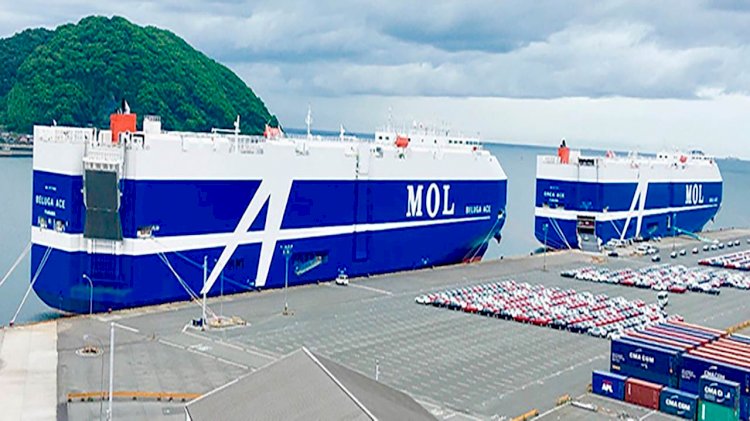
MOL operates about 100 car carriers, and in general, cargo capacity per ship is around 5,000 standard passenger cars. In recent years, transport and logistics patterns of automakers and other shippers have been diversifying, and efficient vessel allocation and cargo loading are absolutely essential to ensure the fleet to operate at peak effectiveness to meet customer needs. For example, when the vessel is calling several loading and unloading ports, the deck and hold in which cargo is loaded can significantly affect safety of cargo operation and its efficiency. In addition, since the order of cargo loading/unloading and hull balance during the voyage must be taken into consideration, it can take longer to develop a loading plan, depending on the plan’s level of difficulty and the skills of the planner.

In this study, in cooperation with Associate Professor Umetani, two teams developed an algorithm that efficiently generates a proposed plan from an enormous number of combinations by using mathematical optimization. Both teams will assess the potential for practical use of the technology, aimed at improving services through digitalization, and significantly shortening the required time to respond to customers when transport volume or the order of port calls changes suddenly.

The MOL Group continually takes a proactive stance in promoting the practical use and application of ICT and draws upon each division's specialized knowledge, with the goal of creating a shipping group that is always the customers' first choice when it comes to transport and logistics.

(Note 1) Associate Professor Shunji Umetani

Associate Professor Umetani earned his Ph.D in Informatics at Kyoto University, and currently works at Graduate School of Information Science and Technology, Osaka University. He is major in mathematical optimization, especially in combinatorial optimization. His work aims to develop powerful tools for solving a wide variety of real applications with "Big data". He is also actively working on solving real applications using mathematical optimization through collaboration with companies.

(Note 2) Cargo loading plan

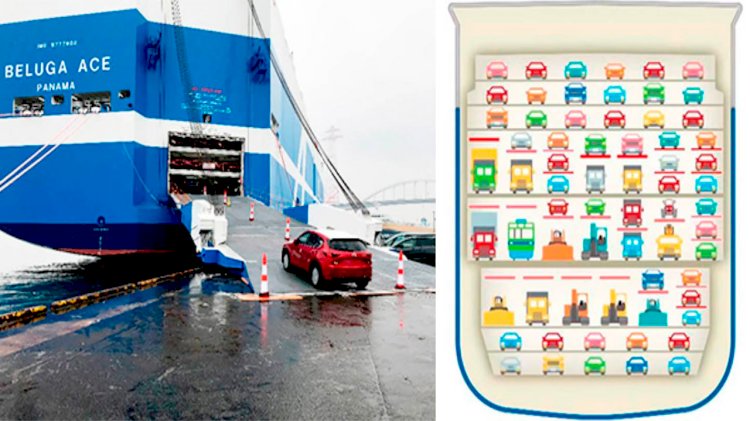
Allocation plans for car carriers-which could be thought of as huge, ocean-going multilevel parking garages-requires careful consideration of cargo height, weight, and dimensions, as well as the number of units and loading/unloading ports. Since the vehicles must be driven to and from their loading position, passageways must be clear at the appropriate time. In addition, cargo loading positions (deck and hold) must be adjusted in consideration of hull stability during the voyage and loading/unloading safety. So in many cases, plans must be redrawn in response to sudden changes in the number of units or changes in the order of calling ports.

(Note 3) Mathematical Optimization

Mathematical optimization is one of the representative mathematical methods for decision-making and problem-solving that selects an optimal solution from some set of available alternatives. It is used in a broad range of areas such as investment management, logistics and supply chain, energy management, and scheduling.

Drilling rig contract awarded for Seagull project

0

Neptune Energy and its joint venture partners BP and JAPEX have announced Valaris plc has been awarded a contract to provide a heavy-duty jack-up drilling rig for the Seagull development oil project in the UK North Sea.

Valaris will provide the Rowan Gorilla VI (VALARIS JU-248) to drill four firm wells for the development, which is located in the Central North Sea. The approximately 18-month drilling campaign is scheduled to start Q3 2020.

Neptune Energy’s UK Managing Director, Pete Jones, said:

“This is an important milestone for the Seagull project and a further demonstration of how the development is progressing at pace, following the award of the SPS and SURF contract to TechnipFMC in July. We are pleased to be working again with Valaris which continues to demonstrate strong safety and operational performance.

Seagull is a very positive example of what our industry is working hard to achieve in terms of MER UK; the project partners have embraced a collaborative, commercially-innovative approach and extended the life of operating assets through the use of existing infrastructure in order to maximise recovery of North Sea hydrocarbons.”

Seagull is a high pressure, high temperature development located on UK licence P1622 Block 22/29C, 17km south of the BP Operated ETAP Central Processing Facility (CPF). Seagull will be tied back to the ETAP CPF partially utilising existing subsea infrastructure which would otherwise have been decommissioned. Gas from the development will come onshore at the CATS processing terminal at Teesside, while oil will come onshore through the Forties Pipeline System to the Kinneil Terminal, Grangemouth.

The development is expected to initially produce around 50,000 barrels of oil equivalent (boe) per day1 (80 per cent oil) across its 10-year design life. Proved plus probable gross reserves are estimated at 50 million boe.

Work on the Seagull project has continued at pace since the Field Development Plan (FDP) was submitted to and approved by the Oil and Gas Authority (OGA) in March this year.

Neptune is the operator of Seagull and has a 35 per cent equity interest. Its joint venture partners are BP with 50 per cent and JAPEX with 15 per cent. Neptune acquired its 35 per cent interest in Seagull from Apache North Sea Limited in 2018.
 

Two companies launch a new tidal energy project in Canada

0

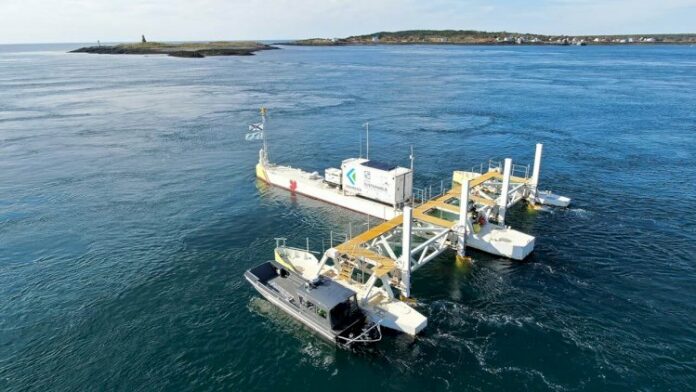
Sustainable Marine Energy (SME) and Minas Tidal LP (MTLP) have agreed to co-develop their adjacent berths at the Fundy Ocean Research Center for Energy (FORCE) and will utilise SME’s PLAT-I floating in-stream tidal energy technology to deliver up to 9MW of tidal energy to the Nova Scotia grid.

The combined project is to be called the Pempa’q In-stream Tidal Energy Project and will be delivered in phases starting next year. For Phase 1 SME will deliver three next generation PLAT-I platforms, each producing up to 420kW, providing a combined capacity of 1.26MW.

Sustainable Marine Energy (Canada) was recently awarded a license by the Nova Scotia Department of Energy and Mines (NSDEM) which allows energy generated by the three tidal energy systems to be sold via a power purchase agreement (PPA) to Nova Scotia Power.

Project financing for the first phase through equity and debt is being provided by Hamburg-based reconcept Group. The asset manager specialising in renewable energy investments has been advising on the project and is establishing a capital fund specifically for this purpose. reconcept will also be supporting the financing of further phases of the project, to enable the delivery of the full 9MW of capacity provided by the two berths.

Karsten Reetz, Managing Partner of reconcept Group stated:

“Tidal power has great potential, especially in the Bay of Fundy, and can help answer the challenges of the climate crisis. The major advantage of tidal power plants is their predictable and reliable output – this is very compelling from the investor's point of view. We expect attractive returns for our German co-investors.”

Jason Hayman, the Managing Director of SME commented:

"Reaching this point has been a team effort and made possible by the strong support provided by key stakeholders in both Europe and Canada. Over the past three years we have focused on developing and proving up our technical solution which has been strongly supported by our major shareholders; SCHOTTEL and Scottish Enterprise. This enabled SME to build and test the first PLAT-I demonstrator in Scotland, and since this time last year we have continued the testing in Nova Scotia, at Grand Passage, in preparation for our entry into FORCE.

The FORCE site is renowned for its incredible tidal resource, but this also makes it a very challenging environment in which to deploy equipment. The lessons learned from our deployments in Scotland and Nova Scotia have helped us to prepare for this project.

A supportive and stable market environment is required to enable the transition from R&D into an industry that can deliver commercially viable, abundant and predictable clean energy. We would like to thank the Government of Nova Scotia for remaining steadfast in their support of tidal energy. This enables us to continue our staged approach to delivering our objective; reducing the cost of tidal energy.“

The President of MTLP, Mark Savory, who has been appointed as President of the Spicer Marine Energy joint venture stated:

“In conjunction with our partner Minas Energy, a founding berth holder at FORCE, we have evaluated a number of potential technologies for developing our project over the years.SME have demonstrated an innovative and robust solution which offers unrivalled access to key components for maintenance which will help reduce lifecycle costs and is essential for de-risking early-stage projects.

Combined with the demonstrated ease of installation when compared to other technologies, this provides us with a high degree of confidence. We have scrutinised SME’s next generation design; they have adapted their system to deal with the conditions present at FORCE and have increased the rated output by 50% with only a small increase in the size of the platform. This makes us very optimistic about the commercial potential of their approach.”

When questioned about the significance of the project’s name, Savory responded:

“Here, in Nova Scotia, we are conducting our activities in an area that is home to the Mi’kmaq First Nation. In the Mi’kmaq language, pempa’q (pronounced bembaahk) is the name for the rise of the tide, which we feel is especially representative of the environment we are working in. The Bay of Fundy is famous for its large tidal range, which creates the strong tidal streams through the Minas Passage that we are using to generate renewable energy.

FORCE is located on the Parrsboro Shore, which in the 1800’s had very prosperous shipbuilding industry, that used the rise of the tide to launch their vessels. Now we are using the rise of the tide in the Bay of Fundy to launch a new, sustainable industry which will bring economic prosperity to the area in an environmentally responsible manner, that respects the values of Indigenous communities, many of whom are becoming more and more involved in the development of the renewable energy projects in Canada.”


The Ocean as a solution for climate change: 5 opportunities for action

0

Ocean-based climate action can play a much bigger role in shrinking the world’s carbon footprint than was previously thought.

It could deliver up to a fifth (21%, or 11 GtCO2e) of the annual greenhouse gas (GHG) emissions cuts needed in 2050 to limit global temperature rise to 1.5°C. Reductions of this magnitude are larger than annual emissions from all current coal fired power plants world-wide.

This is a key finding of a new scientific report, The Ocean as a Solution for Climate Change: 5 Opportunities for Action, published at the U.N. Secretary-General’s Climate Action Summit in New York. 

The report proposes five opportunities for ocean-based action which, together, could deliver up to a fifth (21%, or 11 GtCO2e) of the annual GHG emissions cuts required by 2050 to keep global temperature rise to 1.5°C. Reductions of this magnitude are larger than the emissions from all current coal-fired power plants world-wide.

Five Opportunities for Action:

1. Harness Ocean-Based Renewable Energy

Installing offshore and ocean-based renewable energy production – including wind, wave, tidal, current and solar – offers very promising climate mitigation potential (up to 5.40 GtCO2e a year by 2050 – equivalent to taking 1 billion cars off the road annually). This can be scaled up to meet future energy demand and become cost-competitive.

2. Decarbonize Ocean-Based Transport

Decarbonizing the shipping industry – through energy efficiency measures, improved hull design, and low-carbon fuels – would also significantly reduce greenhouse gas emissions (up to 1.8 GtCO2e a year by 2050).

3. Invest in Nature-Based Climate Solutions

Ensuring the protection and restoration of coastal ‘blue carbon’ ecosystems – mangroves, seagrasses and salt marshes – would secure considerable CO2 sequestration and storage benefits (up to 1 GtCO2e a year by 2050), while delivering coastal protection, key habitats, food security and jobs. Adding seaweed farming to the nature-based solution set would remove an additional .29 GtCO2e a year by 2050.

4. Secure Sustainable Food for the Future

Shifting diets to sustainable marine sources (such as seafood, seaweed and kelp) is a brand new area of potential explored by this report. Increasing the consumption of low-carbon sources of marine protein could provide an alternative to high emitting land-based sources (red meat). Coupled with reducing emissions from the fisheries and aquaculture industries, food from the ocean could support a reduction of up to 1.24 GtCO2e each year by 2050.

5. Advance the Deployment of Carbon Capture and Storage

Technological approaches, such as carbon sequestration in the seabed, offer great potential to store carbon (up to 2 GtCO2e each year by 2050). However, significant investment in additional research and development would be required to ensure associated risks to the marine environment are minimized.

To set the proposed solutions in motion, the High Level Panel for a Sustainable Ocean Economy issued an urgent and practical ‘Call to Ocean-Based Climate Action’ today. The Panel is calling for political commitments, business partnerships and investments to capitalize on the ocean’s untapped potential to fight climate change, while providing a viable and sustainable future for economies, food sources, coastal communities and sea life.

In tandem with efforts to decarbonize land-based industries, including phasing out fossil fuels and restoring and protecting forests, these ocean-based actions can set the world on a new pathway to a low-carbon, climate-resilient future that would help us meet the targets of the Paris. What is more, they will help protect coastal communities from increasingly severe storms, boost food security, safeguard and create jobs, avoid air pollution, restore habitats for wildlife and help maintain economic growth, thereby contributing to many of the U.N. Sustainable Development Goals (SDGs).

VIDEO: Five reasons why RoRo is great for transporting breakbulk cargo

0

RoRo vessels don’t just carry cars – they’re also great for transporting breakbulk products to destinations around the world. Ben Hargreaves explores why customers are turning to RoRo for their breakbulk shipments.

1. RoRo vessels can handle almost any type of breakbulk.

RoRo vessels might have started out shipping cars, sure, but today they’re designed to handle all types of breakbulk, from heavy mining and construction machinery to rail cars, power transformers, aero engines and installations for the oil and gas industry.

2. RoRo is an exceptionally safe and secure means of shipping breakbulk.

Some shipping solutions involve multiple lifting operations and cargo is exposed to the elements on open deck. RoRo transport involves minimal lifting of your product as well as dry and safe storage inside the vessel, protected from the environment.

The inside of a RoRo vessel is a flexible space that can accommodate many different types of cargo, with ramps linking decks. Once the right deck has been selected for the breakbulk in question, it’s safely secured and then not lifted again during ocean transit. That helps to prevent damage.

3. RoRo is an economical option for shippers.

The savings promised by load-on, load-off (LoLo) and container vessels are often cancelled out by additional costs like labour, container and equipment rental. RoRo pricing is more transparent – and may actually mean a lower overall total transport cost.

With a regular RoRo liner service, there’s no need to hire warehousing at port, which also helps save time and money. Guaranteed RoRo departure times mean you can arrange your own port operations and breakbulk can be moved onto vessels when required – with no need for costly storage at port while waiting for the right vessel.

4. Whatever the type of breakbulk, specialised equipment is available to handle it.

Wallenius Wilhelmsen Ocean has developed an array of handling equipment to service the needs of its breakbulk customers, including roll trailers, multi-purpose bogies, Samson heavy lift trailers, blocks and beams, and bolsters. Many items of equipment are specially designed in-house for specific customers.

Equipment may be used on its own or in combination with other types. Roll trailers are used to handle any type of breakbulk cargo up to 140 tonnes in weight, while multi-purpose bogies are typically used for rail cars, beams, and compact generators and transformers. Samson trailers can handle breakbulk up to 220 tonnes in weight; with blocks and beams and jack-up trailers, that figure rises to 400 tonnes.

5. RoRo vessels operate globally, with frequent and fast services to many destinations.

WW Ocean’s RoRo network operates globally to a frequent scheduled timetable. Unlike LoLo routes, a RoRo liner service is reliable and frequent, and transshipment hubs provide a safe and secure means of negotiating complex routes for your products. Cargo awaiting transfer is always lashed to secure wheeled handling equipment – which means peace of mind for customers.

Subsea 7 awarded contracts offshore Azerbaijan

0

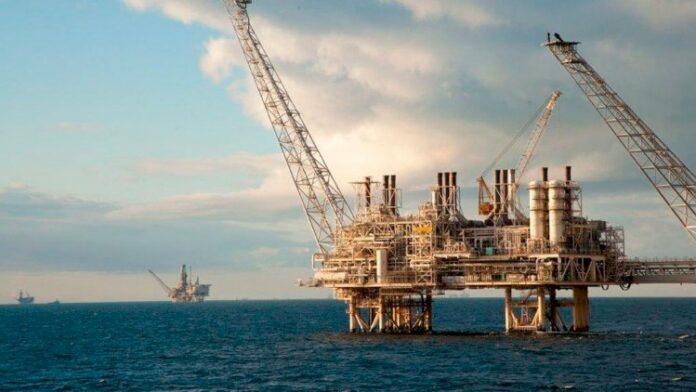
Subsea 7 announced today the award of two contracts, together representing a sizeable (1) contract award, by BP Exploration for the Azeri Central East (ACE) project in the Azeri-Chirag-Deepwater Gunashli (ACG) field in the Caspian Sea in a water depth of approximately 140 metres.

The work scopes comprise engineering and fabrication of subsea structures, engineering, transport and installation of spools, the launching of a 16,200 tonne jacket and the float-over of an 18,500 tonne topside.

The contracts will be executed in consortium with BOS Shelf, which will be responsible for the fabrication, logistics and facilities support. Engineering work shall commence immediately from Subsea 7’s office in France and offshore execution is expected to take place in 2021 and 2022.

Gilles Lafaye, Subsea 7’s Vice President Africa Region, said: 

“This project reflects our long-term relationship and early engagement with BP Exploration and builds on our Life of Field activities in Azerbaijan. We look forward to increasing our presence in the Azerbaijani market with safe and reliable solutions for its offshore energy developments.”

(1)  Subsea 7 defines a sizeable contract as being between USD 50 million and USD 150 million. This value range refers to Subsea 7’s share of the consortium contract.
 

NYK conducts world’s first autonomous surface ships trial

0

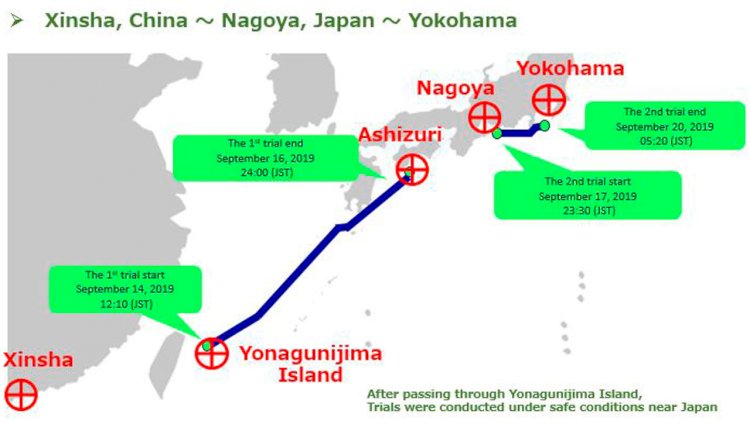
NYK has conducted the world’s first Maritime Autonomous Surface Ships (MASS) trial performed in accordance with the IMO’s Interim Guidelines for MASS trials* as the company begins tests to realize its target of manned autonomous ships** for safer operations and a reduction in crew workload.

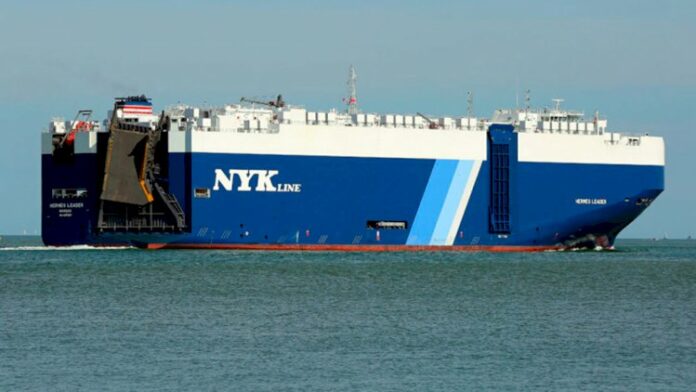
Iris Leader, a large NYK-operated PCTC having a gross tonnage of 70,826 tons, was navigated day and night using the Sherpa System for Real ship (SSR) navigation system*** during the period from 14 to 17 September from Xinsha, China, to the port of Nagoya, Japan, and then from the port of Nagoya to the port of Yokohama, Japan, from 19 to 20 September. Crew performed typical duties during the navigations, which included Japan’s coastal area but excluded bays.

During the trial, the SSR’s performance in actual sea conditions was monitored as it collected information on environmental conditions around the ship from existing navigational devices, calculated collision risk, automatically determined optimal routes and speeds that were safe and economical, and then automatically navigated the ship. Using data and experience gained through this trial but not obtainable through onshore simulators, NYK was able to ensure the feasibility of the SSR and its benefit for safe and optimal operations. This trial was a big step toward realizing NYK’s goal of manned autonomous ships.

NYK will analyze the data and continue to develop the SSR into a more advanced navigation-support system by making adjustments to the difference between the optimal course derived by the program and that determined by professional human judgment.

The SSR verified by this trial will also be applied to future coastal ships, which currently face serious crew shortages. The SSR can become a basic technology for remote and unmanned navigation, contributing to social issues through business that embodies NYK’s “Bringing value to life” mission.

The NYK Group will accelerate its digitalization efforts based on the company’s medium-term management plan “Staying Ahead 2022 with Digitalization and Green,” and will conduct development and demonstration tests of advanced operational support technologies to realize manned autonomous ships.

* IMO’s Interim Guidelines for MASS trials

IMO outlines autonomous ship trial guidelines in June, 2019. This trial follows the guidelines and is conducted with approval from Panama, flag State, and notified the ministry of Land, Infrastructure, Transport and Tourism and Japan Coast Guard related to coastal State.

** Manned autonomous ships
NYK’s aim of manned autonomous ships that will make use of advanced technologies and remote support from office to support ship operation and enhance safety.

*** Sherpa System for Real ship (SSR) navigation system
This system navigates a vessel by calculating optimal routes based on environmental conditions. This aims to meliorate JMS’s traffic simulation program and support actual vessel operation. By incorporating knowledge and perceptions by experienced captains, a program will be established as one of MASS technologies.