2.5 C
New York
Home Blog Page 986

Port of Rotterdam Authority introduces track & trace containers

0

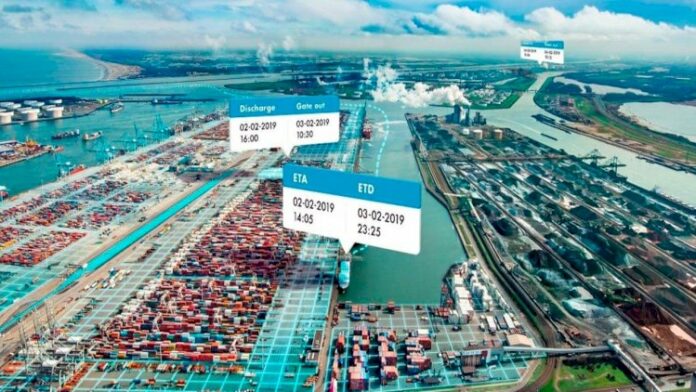
The Port of Rotterdam Authority launched 'Boxinsider' today. The application allows shippers and freight forwarders to see where their containers are located at any given moment. Not only is this much more reliable than the approach used until now, it is also much more user-friendly and efficient than collecting information yourself from all kinds of sources.

CEO Allard Castelein explains:

'When I order a book online, I can almost follow the package live. With Boxinsider, we are now presenting a similar solution for containers. By developing digital applications, we are making our port even more efficient, safer and more reliable. Solutions like Boxinsider are good examples of this transition and so they are a perfect match with our ambition to be the world's Smartest Port.'

Most shippers, freight forwarders and other users still collect information manually from a range of websites about where their containers are located. That is time-consuming and error-prone. It can also cause planning errors and have costly consequences. Boxinsider puts an end to all that. Drawing on status information from container vessels and inland and deep-sea terminals, it can track containers, and determine expected and actual arrival and departure times for vessels, as well as container unloading and departures at container terminals. Users are warned about any delays or disruptions.

ABC Logistics from Poeldijk is one of the 'launching customers' and it has seen the benefits of the system. 'Boxinsider gives us – quickly and with minimal effort – a clear picture of the containers that we can expect at the various Rotterdam terminals,' says account manager Remco Verwaal. 'It really is a very user-friendly application.'

Boxinsider works as a stand-alone application but it can also be integrated with existing systems using a link.
GNS enhances Voyager PLANNING STATION with new tools

0

New version features pre-ECDIS route validation to make the route planning process simpler plus enhanced voyage plan and Navarea Warning features.

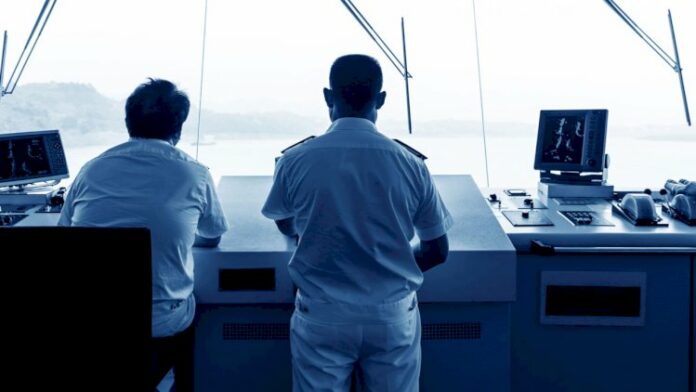
GNS has announced the release of a new version of Voyager PLANNING STATION, delivering new tools that make its market-leading planning software even more useful and improving features bridge officers use every day.

The new Voyager PLANNING STATION version 7.4 introduces a route validation tool to provide a more streamlined route planning process as well as highlights Alert and Warning Hazards along a route to enhance vessel safety and extends the passage plan to include squat and under keel clearance calculations, ENC navigation hazards, Marpol areas and Navarea Warnings.

Officers using ENCs for navigation must validate each route in ECDIS and then transfer the route back to a PC in order to get any missing permits and check for ENC updates. Importantly, with the new version of Voyager PLANNING STATION the entire route planning process can be done in one place. Using Voyager PLANNING STATION, officers can plot waypoints, optimise routes, validate those routes and purchase and download the exact permits and updates required before transferring to ECDIS using GNS’s V-DRIVE data transfer tool to make end-to-end route planning simpler, more cost-effective and significantly more efficient.

Hayley van Leeuwen, GNS’s Director Product and Marketing, said:

“With this new release of Voyager PLANNING STATION we are removing one of the major inefficiencies associated with digital navigation and bringing greater simplicity and efficiency to the bridge at a very affordable price. This new version also provides significant enhancements to Voyager’s PASSAGE PLAN tool to make it easier for officers to produce a compliant passage plan.”

Voyager PLANNING STATION is powered by the SEALL ECDIS kernel which has been type approved by DNV, to enable officers to perform their everyday navigation planning and compliance tasks via one intuitive software application.
 

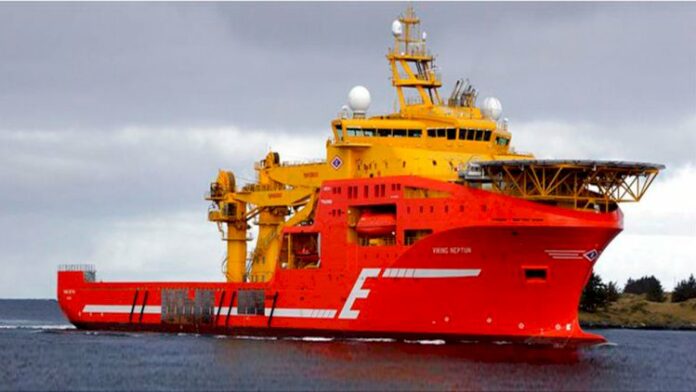
Wärtsilä to supply a hybrid propulsion system for ‘Viking Neptun’

0

The technology group Wärtsilä has been selected to engineer, supply, and commission a hybrid propulsion system for an offshore sector vessel. Norway-based Eidesvik AS has contracted Wärtsilä to carry out the upgrade project on its ‘Viking Neptun’ construction vessel. The order was placed in August 2019. This latest order follows two similar hybrid upgrade contracts awarded to Wärtsilä in recent months.

The 15,900 DWT ‘Viking Neptun’ was built in 2015. It is fitted with Wärtsilä engines and Wärtsila’s Low Loss Concept (LLC) electrical systems. By choosing Wärtsilä’s battery hybrid solution, the ship will be able to operate on a single generator set together with batteries during dynamic positioning (DP) operations. Integration of the new system with the existing Wärtsilä control systems will be seamless.

The Wärtsilä hybrid solution will deliver customer benefits in the form of fuel cost savings and better environmental performance. Furthermore, maintenance costs will also be reduced since the load on the engines will be more efficient and the running hours will be less.

Cato Esperø, Head of Sales, Service Unit Nordics and Baltics, Wärtsilä Marine, says:

“Wärtsilä continues to lead the industry’s technological transformation into a new era of greater efficiency and more sustainable operations. Our hybrid solutions are well established and proven, and this latest project order is a further endorsement of our competences in this field.”

Vice President, Technology & Development, Vermund Hjelland, Eidesvik AS, says:

“It is very important to our company that we play our part in reducing greenhouse gas emissions from shipping, which is why we give a high level of priority to sustainable operations for our fleet. We have worked closely with Wärtsilä for many years and we were comfortable with again selecting them for this hybrid upgrade project.”

The Wärtsilä scope includes two 870 kWh battery packs and two 2.7 MW drives for the hybrid system pre-installed in containers. Wärtsilä will also upgrade the existing switchboard, as well as the integrated automation and power management systems. The project is expected to be completed within a six months period.

Westridge Marine Terminal in the Port of Vancouver to be upgrade and expansion

0

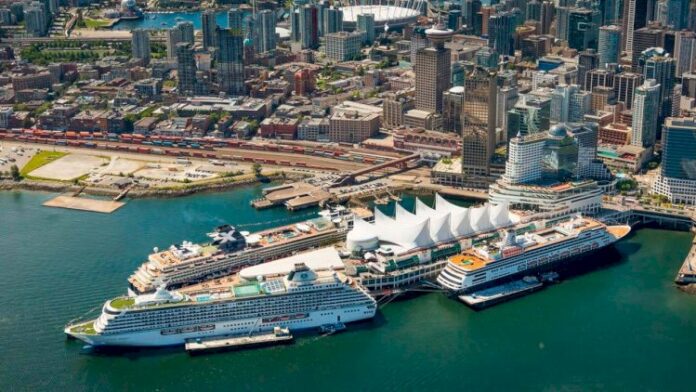
The Vancouver Fraser Port Authority has approved a permit application from Trans Mountain Pipeline ULC for the portion of the Trans Mountain Expansion Project within its jurisdiction involving the upgrade and expansion of the existing Westridge Marine Terminal in the Port of Vancouver.

The port authority had previously issued a permit for these works in 2017 following a thorough and robust project and environmental review, including consultation with Indigenous groups and local communities on the impacts of construction activities at the Westridge Marine Terminal. However, as a result of the Federal Court of Appeal decision on August 30, 2018, that previously approved permit is no longer valid.

On August 9, 2019, Trans Mountain Pipeline ULC submitted a new project permit application to the port authority for the proposed Westridge Marine Terminal Upgrade and Expansion Project.  Given the works and activities proposed as part of this project permit application had not materially changed from those previously reviewed and approved, the scope of the port authority’s review focused on the following minor changes:

  • Updated construction hours to undertake work outside of the port authority’s standard construction hours, comprising nighttime welding activities for the duration of the construction period to minimize the impact of high tide cycles on welding efficiency.
  • Updated noise baseline limits for construction noise monitoring to reflect the current ambient noise baseline conditions at Westridge Marine Terminal, based on new baseline noise monitoring undertaken by the Trans Mountain Pipeline ULC in September 2018.
  • The temporary re-location of an existing utility dock from Pier 59 to Pier 61 during construction.
  • Updated construction schedule with an anticipated completion date of the fourth quarter of 2022.

The Westridge Marine Terminal Upgrade and Expansion Project is part of the Trans Mountain Expansion Project, which is a designated project under the Canadian Environmental Assessment Act, 2012.

Report: Slow car carrier recovery to trigger more distressed asset sales

0

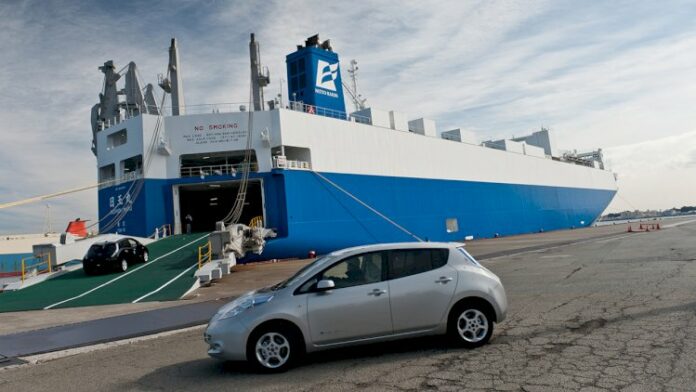
Car carrier shipping is expected to continue its slow recovery, supported by improving utilisation and minimal vessel ordering.

However, costs are rising while the trade outlook is vulnerable to rising geopolitical risk, which is expected to lead to more distressed vessel sales as shipping lines focus on landside investments in search of profitability, according to the Finished Vehicle Shipping Annual Review and Forecast 2019/20 report published by global shipping consultancy Drewry.

Seaborne trade in finished vehicles, including high & heavy and used autos, continued to grow from 2016’s low, recording growth of 1% in 2018 to 22.8 million units, and this trend has continued into 2019. This is despite the first decline in global vehicle sales in a decade as US and Europe transactions peaked and a decline in China, now the world’s largest vehicle market, accelerated after years of double-digit growth.

Tom Ossieur, Head of Car Carriers at Drewry, said:

“North-south and intra-regional trades continue to gain market share compared to hitherto dominant East-West routes, offering opportunities for triangulation. However, matching supply and demand is becoming increasingly challenging for car carriers in the current climate of rising trade tensions and low forward traffic visibility.”

Continuing last year’s trend, owners and operators are holding off acquiring vessel capacity, as trade uncertainty and downward risks weigh on the market. Just four car carriers were ordered during the first half of 2019, mostly small ships for regional trades.

As fleet utilisation improves time charter rates are forecast to rise over the next five years. But profitability will lag on rising operating costs and higher bunker prices with the introduction of IMO mandated low sulphur fuel regulations in 2020.

Meanwhile, despite the slowdown in trade growth ports across North America and Europe reached peak utilisation in 2018 leading many terminal operators to invest in capacity expansion, rewarded by strong financial returns. Similarly, ports in developing regions remain in need of new investment and finished vehicle handling expertise to accommodate rising auto traffic, particularly as carrier deployment of larger vessels is compromising operational efficiency at these ports.

Nearly two-thirds of the 550 terminals handling vehicles around the world move less than 50,000 units a year. Most of these are small multi-purpose terminals that struggle to handle sizeable parcel sizes carried by large Post-Panamax vessels and are in need of expertise to leverage capacity and service offer expansion opportunities.

Ossieur added:

“Unlike car carrier shipping, the global vehicle port terminal sector is highly fragmented, with the need for investment likely to trigger more consolidation. Poor financial returns from carrier liner operations and an uncertain trade outlook will force a rise in distressed vessel sales and a diversion of investment to more profitable port assets.”

Hapag-Lloyd launches a new MIAX service

0

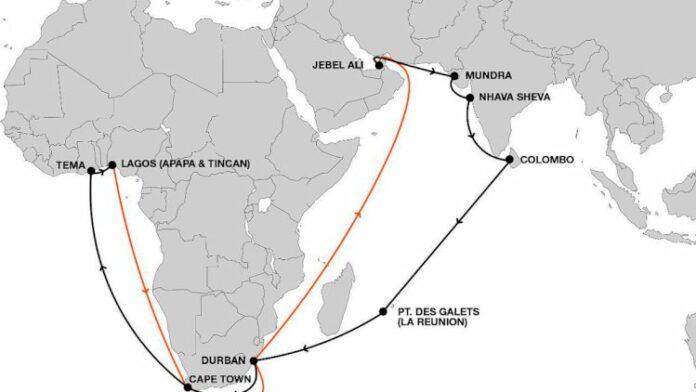
Hapag-Lloyd continues to develop its position in Africa and launches the new MIAX (Middle East-India-Africa Express) service – which will offer direct connections and fast transit times between South and West Africa, the Persian Gulf, India, Colombo (Sri Lanka) and La Réunion.

Hapag-Lloyd has entered the African market about twelve years ago and has since then seen steady and significant growth in transported volumes to and from Africa.

Dheeraj Bhatia, Senior Managing Director of Hapag-Lloyd’s Region Middle East, says:

“With the new MIAX service our customers will now benefit from an even wider range of fast and flexible direct connections.” 

The MIAX service will be connected to the Global Mainline Network via the key ports of Jebel Ali (Dubai) and Colombo. Hapag-Lloyd will jointly operate the MIAX service with it’s THE Alliance partner Ocean Network Express. A total of nine ships with a capacity of 2,800 TEU each, including five provided by Hapag-Lloyd, will be deployed for the new service.

Samad Osman, Managing Director of Hapag-Lloyd’s Area Africa, says:

“The new MIAX service enables us to offer our customers very attractive transit times between South and West Africa, Middle East and India, at the same time, we are integrating Africa even more tightly into our global network.”

The first departures are scheduled for early October with the following port rotation: Jebel Ali ▪ Mundra ▪ Nhava Sheva ▪ Colombo ▪ La Réunion ▪ Durban ▪ Cape Town ▪ Tema ▪ Lagos (Tincan and Apapa) ▪ Cape Town ▪ Durban ▪ Jebel Ali.
 

Kalmar and PSA sign Software Maintenance and Support Agreement

0

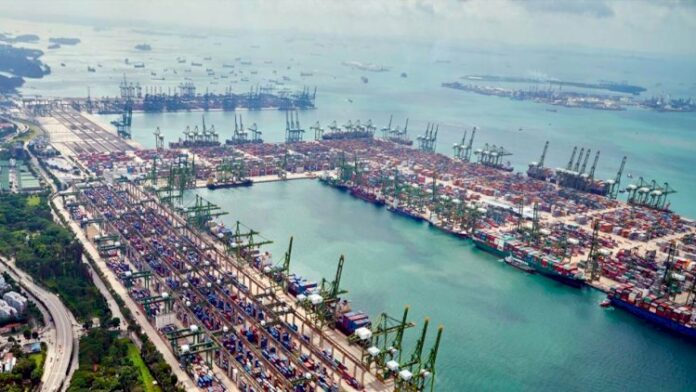
Kalmar, part of Cargotec, has signed a Software Maintenance and Support Agreement with PSA Singapore covering the entire automated guided vehicle (AGV) fleet at PSA Singapore.

The contract is for five years. The AGV fleet is expected to grow to over 400 units by the completion of first phase of PSA Tuas Port expansion in a few years’ time. The order was booked in Cargotec's Q3 2019 order intake and the contract will come into effect from Q4/2019 onwards. 

PSA operates in Singapore with a total of 67 berths with an annual handling capacity of 45 million TEUs at the container terminals in Tanjong Pagar, Keppel, Brani and Pasir Panjang. PSA Singapore’s container terminals will eventually be consolidated to a single location in Tuas. The new Tuas Port will be able to handle the world’s biggest container ships and will be the largest automated container terminal in the world, with an annual handling capacity of 65 million TEUs.

The Software Maintenance and Support Agreement with PSA Singapore covers the Navigation and Fleet Maintenance Systems for the AGVs. The services include software development work, remote and frontline maintenance support as well as professional services that aim to sustain and improve the fleet’s performance with the help of Kalmar Fleet Management System. The original Kalmar system for the AGV Program at PSA was delivered in 2014, and it has proven to be dependable and robust.

Ismo Matinlauri, Vice President, Automation Solution Sales APAC, Kalmar:

"We are delighted to have the opportunity to further strengthen our long-term relationship with PSA through this comprehensive maintenance and support agreement. This is a significant milestone for both parties and lays the groundwork for Kalmar to further support PSA in optimising and expanding their AGV operations." 

VIDEO: The new cruise ship Norwegian Encore leaves Papenburg

0

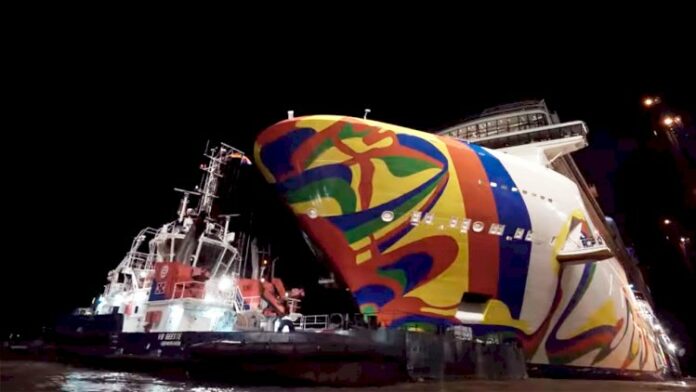
The new cruise ship for Norwegian Cruise Line (USA), Norwegian Encore, left Papenburg on Monday, September 30, 2019, to be conveyed on the river Ems to Eemshaven (Netherlands). The ship is planned to arrive in Eemshaven on Wednesday morning. Later on the ship will go through several days of technical and nautical sea trials on the North Sea before delivery to the cruise line end of October in Bremerhaven.

£40m Investement to upgrade container terminal in Belfast Harbour

0

Belfast Harbour hasrevealed details of a £40m investment programme to upgrade its container terminal at Victoria Terminal 3 (VT3) which connects Northern Ireland’s businesses to global markets through the European hub ports of Rotterdam and Antwerp.

Belfast Harbour recently launched its 2035 Strategic Outlook with plans to be the ‘Best Regional Port in the World’ and a ‘Smart Port’ by investing in new technology and enhancing capacity. The first investment announcement on the back of this for VT3 will improve productivity and help customers grow and target new trade opportunities.

The three-year investment programme will see Belfast Harbour invest £28m in ten new cranes and undertake major civil works delivered by local contractor F.P. McCann to reconfigure the 27-acre terminal to increase terminal capacity by around 30% and improve terminal efficiency.

The terminal is operated by Belfast Harbour’s partners, Irish Continental Group (ICG), and currently handles more than 250 sailings annually between Belfast and key Northern European container ports such as Rotterdam, Antwerp and Le Havre, providing local importers and exporters with access to overseas markets.

Michael Robinson, Belfast Harbour’s Port Director, said:

“This investment programme will future-proof the terminal for a generation as well as utilise the most modern technology making Belfast Harbour one of the world leaders through the implementation of Rubber Tyre Gantry remote control and stack automation technology. Long-term, we anticipate that the container market will continue to grow and surpass pre-recession levels and as a port we need to be ready to handle these volumes.”

The investment in new larger state-of-the-art cranes and a new terminal layout, futureproofs the terminal capacity and provides the ability to handle larger ships.  Two Ship to Shore (STS) cranes have been purchased from Liebherr Cranes, the first of which will be delivered in Q1 2020.

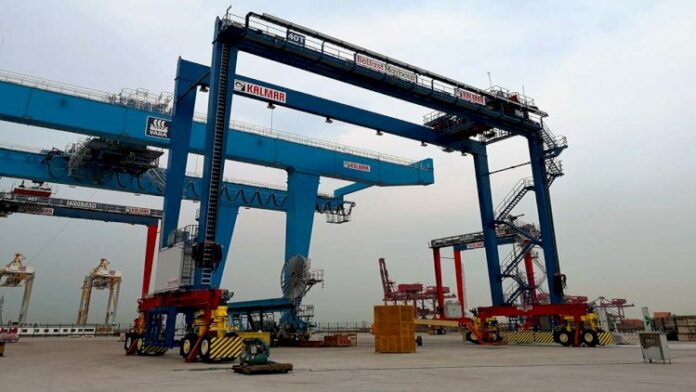
The investment will also provide eight new Kalmar Rubber Tyre Gantry (RTG) cranes, which are faster and more versatile than the current yard cranes and can be operated remotely, further increasing productivity. The first five RTGs will be delivered in November 2019 with the first two RTGs commissioned and ready for use in early Q1 2020.

Mr. Robinson added:

“This is amongst the largest investment projects that Belfast Harbour has ever undertaken and will help create one of the most modern container handling terminals of its size in Europe.
There is widespread recognition in industry and government that Northern Ireland’s future economic growth will rely on increasing exports and this investment puts us in a strong position to accommodate export growth by local companies over the long term.”

Declan Freeman, Managing Director, ICG Container and Terminal Division, said:

“We wholeheartedly welcome Belfast Harbour’s commitment to make a long-term investment in both infrastructure and equipment to modernise and improve efficiency at the container terminal. This announcement is good for all local exporters who want to access international markets and we are very much looking forward to the arrival of the first new RTGs in November.”

VT3 links Northern Ireland with the international hubs of Rotterdam and Antwerp, bringing products such as food and drink and household goods to Northern Ireland, and providing a route to global markets for local exporters. Last year VT3 handled almost 128,000 containers, a 1.5% increase on the previous year and the highest volume since 2010.

VT3 was opened in 1993 and was pivotal in repositioning Belfast as one of the island’s gateways to international markets.

Saipem presents a new technology for application to the LNG market

0

Saipem’s latest technological solution for application to the LNG market, known as LiqueflexTM, was presented the at the latest GASTECH, the most important international conference dedicated to the natural gas and LNG industry recently held in Houston, Texas. With patent pending, LiqueflexTM is targeted at the small and medium scale natural gas liquefaction market, such as the local distribution of LNG.

LiqueflexTM technology consists of a process of liquefaction of natural gas applied to LNG plants conceived according to a standardised design which can be installed on a modular basis with a productive capacity ranging from 200,000 to 1,200,000 tonnes per year. These features facilitate the curtailing of costs and assembly times. Since it does not require the use of hydrocarbon liquid refrigerants, the new liquefaction technology reduces the risks associated with safety problems. This compact plant engineering solution is adaptable to variations in the composition of natural gas and is particularly suitable for installation in congested industrial areas and on floating and offshore facilities.

For onshore applications, LiqueflexTM has been designed for application in ports which have a nearby natural gas pipeline from which the pre-treated gas can be drawn. The system can also be used as a small hub that both produces and distributes LNG through filling stations for vessels and truck loading facilities for land transport. Diffusion of such an integrated system would also allow for significant reductions in investments in maritime infrastructures for the docking of large-size LNG transport vessels and associated permit costs.

Eric Zielinski, Saipem’s Upstream&LNG Product Manager, explains:

“The design of LiqueflexTM emerged from the need to adopt strategies that reduce the environmental impact associated with sea and road transport and to enable the development of alternatives to traditional liquid fuels. Indeed, the replacement of petrol and diesel with LNG is a strategy promoted by the authorities and by energy companies the world over, particularly in those areas where infrastructures have not been developed, or have been developed only partially, and where the lack of LNG supply is keenly felt”.