0.3 C
New York
Home Blog Page 988

Report: Oil & Gas sector needs more sophisticated IT solutions for offshore operations

0

Marlink has reported a significant boost in demand for more bandwidth and new installations from new energy sector customers and increased activity from its existing customer base at sea and on land.

Strategically important markets such as the Middle East, America, Africa, Northern Europe and Gulf of Mexico are regions in which Marlink is expanding both in terms of number of activated terminals, satellite connectivity and managed network and IT solutions as well as onsite resources such as sales or in country field service teams.

Within these regions, Marlink has recorded significant year-on-year growth for H1 2019 at 11%, and is projected to be as high as almost 20% by end of year. The increased demand and activity is coming from diverse customers including National Oil Companies and oil majors as well as rig operators and companies providing Exploration & Production (E&P) services.

The growth reflects a healthy recovery in a number of cost-sensitive Oil & Gas markets. Key customers have been looking for increasingly sophisticated hybrid connectivity and IT solutions for onshore and offshore operations to drive the digital transformation of oil rigs, drilling and offshore supply vessels, production platforms and FPSO vessels.

Marlink’s portfolio of flexible and scalable satellite connectivity as well as IT solutions are providing a cost-efficient means to i.e., enable the monitoring of complex operations as well as improving welfare for remote workers. Achieving gains in operational performance through Marlink’s connected services is a key support for a return to operation for previously shelved assets.

Additionally, with more processes being performed digitally and remotely than ever before, interest in high-throughput and low-latency hybrid connectivity solutions is growing. These include the projected use of future LEO satellite constellations to further enable cloud-based applications and integrated SD-WAN networks for remote operation.

Erik Ceuppens, CEO, Marlink Group, said:

"Marlink’s energy customers require solutions that support them to optimise efficiency and reduce operational costs. More operators are seeing cloud-based and digital operations as a way to maximise performance when fewer assets and experts available due to challenging market conditions, which is reflected in the growing demand for our future-proof, managed network infrastructure, the technology we use and services we provide."

 

Maersk Supply Service to use a new digital system for vessels and shore-bases

0

Maersk Supply Service, the Copenhagen based shipping company, has announced that it has implemented the ship management system Cloud Fleet Manager from German software provider Hanseaticsoft. Maersk Supply Service will be using the Cloud Crewing module of the web-based system for vessels and shore-bases to manage their crews and handle all crew-related tasks.

One highlight is the variety of interfaces (APIs) that can be used to import and export data from and to Cloud Fleet Manager. Another benefit is the ability to share data from Cloud Crewing with external providers, especially as the extensive APIs of the payroll module are primarily used to further utilise information for additional calculations and analytics using data warehouse (DWH) and Power BI.

Kevin Bro Beier, Head of Crewing, Maersk Supply Service said:

“We selected Cloud Fleet Manager from Hanseaticsoft as our new Crew Management system. It combines a standard platform with comprehensive functionality with a high degree of usability, enabling us to deploy new features at a faster pace. Working closely with Hanseaticsoft’s dedicated team of professionals has contributed to a fast and straightforward implementation, and we have gained an increase in user satisfaction and efficiency.”

While implementing the system, data from four different solutions that were used to handle all the crew related tasks previously, was imported into Cloud Crewing, now replacing the legacy systems. As a result, Maersk Supply Service can now perform its crew and vessel management related tasks using one central system rather than multiple different solutions, saving time, cost and resources.

Cloud Crewing will be used to manage general tasks such as the handling of crew’s activity-based payroll, the management of crew particulars, dynamic crew change management and to check compliance of documents. In addition to this, Maersk Supply Service is using Cloud Crewing’s Cashbox module to handle all cash on board, the Bonded Store to register and administrate all transactions from the on-board shop as well as the Crew Portal – enabling the crew to autonomously access and manage their personal data or documents and to access company news and shared data such as presentations or training schedules. Currently, a total of 1.100+ seafarers are managed using the new system.

Alexander Buchmann, CEO of Hanseaticsoft said:

“Maersk Supply Service is one of the leading maritime service providers and we are very happy they have chosen our product to manage their crews.”
 

Damen to build Utility Vessel 3911 for PAJAM

0

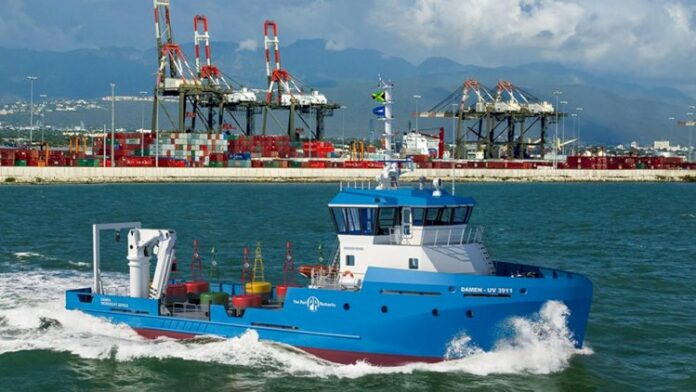
On 21st August, Damen Shipyards Group signed a contract with the Port Authority of Jamaica (PAJAM) for the delivery of a Utility Vessel 3911. The vessel will be used by Damen’s client for buoy-laying and maintenance support operations in the ports of the island nation.

Damen has a long relationship with PAJAM, stretching back to the 1990s, when the port authority placed orders with Damen for two Stan Tugs 2909. This was followed, more recently, by orders for two Pilot Vessels 1605.

Captain Hopeton Delisser says:

“Our past experiences with them have proven to be very positive. They have always demonstrated an ability to translate our requirements into reliable vessels and this has given us the confidence in their capability to deliver, once again, a vessel that meets our needs.”

Damen sales manager Alan Borde says:

“We were very pleased to receive this order from PAJAM as it confirms their satisfaction with the previous deliveries. We enjoy a good and long-standing relationship that contributes significantly to ensuring the success of the vessels. I am looking forward to working again with PAJAM on the construction of this new vessel.”

The UV 3911 is a 39.4 x 10.8 metre vessel built to facilitate a crew of twelve. It will feature an A-frame with a 50 tonne capability and a towing winch, remotely operable from the wheelhouse. It will be outfitted at Damen Maaskant Shipyard Stellendam in the Netherlands. Its delivery is scheduled for Q1-Q2 2021.

BHGE and Ocean Installer awarded Balder X subsea contract by Vår Energi

0

The integrated EPCI contract includes subsea production systems and subsea umbilicals, risers and flowline systems.

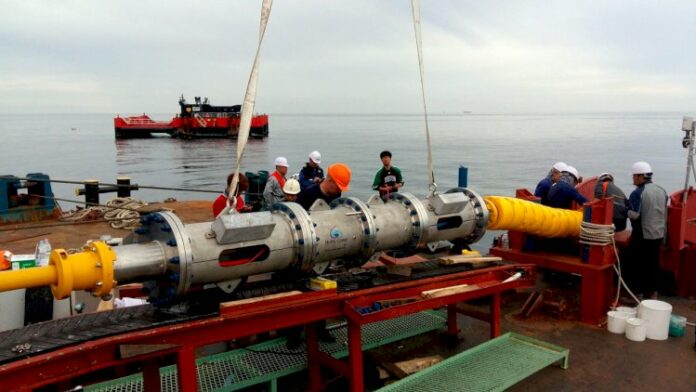
Vår Energi AS has awarded BHGE and Norwegian subsea contractor Ocean Installer a subsea contract for the engineering, procurement, construction and installation (EPCI) of subsea systems and associated services for the Balder X project on the Norwegian Continental Shelf (NCS). 

Under the contract, BHGE and Ocean Installer will engineer, procure, construct and install 16 new subsea production systems (SPS), umbilicals, risers and flowlines to the Jotun A floating production storage and offloading (FPSO) unit. BHGE and Ocean Installer will also carry out decommissioning work in the field. 

Neil Saunders, President and CEO, Oilfield Equipment, BHGE, said:

“Our Subsea Connect approach is transforming the way we do business and bringing new efficiencies to subsea projects. Working closely with Vår Energi and Ocean Installer, we will deploy the key components of Subsea Connect, including early engagement, advanced field-proven technology, flexible partnerships and digital solutions to improve project economics. Our experience in the Balder field, local capabilities and leading technology solutions will support on-time delivery and strong project execution.” 

Kevin Murphy, CEO, Ocean Installer, said:

“The Balder X project is the largest award in Ocean Installer’s history, it doubles our order backlog and allows us to be part of Vår Energi’s first major development. We are proud to have been chosen for such a prestigious award and look forward to delivering Vår Energi a successful project in the North Sea. Furthermore, this project cements our close relationship with BHGE and provides a fantastic opportunity to showcase the strength and unique qualities of both companies in an integrated delivery.” 

Kristin Kragseth, CEO, Vår Energi, said:

“We are pleased to award this important contract to BHGE and Ocean Installer. It will provide new activity to the world-class oil service industry we have in the Stavanger region. Both companies have a strong local presence and large portions of the construction and engineering work will come from local suppliers, supporting employment in the region.” 

The ongoing Balder X Project is focused on re-developing the Balder and Ringhorne fields in the North Sea. Redevelopment activities include refurbishing and relocating the Jotun A FPSO to extend the production life to 2045 and extending the life of the Balder FPSO to 2030. It also includes drilling 15 new production wells in the Balder field area and 11 new production wells in the Ringhorne field area. 

Opinion: subsea industry still has a “long, hard slog” ahead

0

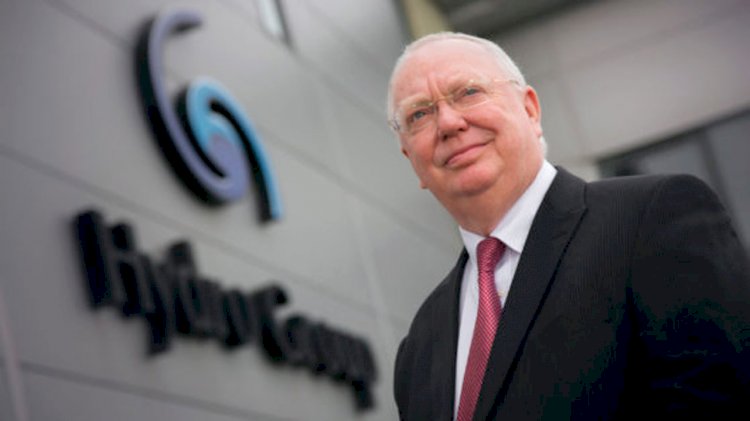
Hydro Group has hailed growth thanks to work in the defence sector but said the subsea industry it operates in still has a “long, hard slog” ahead.

The Aberdeen engineering firm saw 19% growth in sales turnover last year, primarily from work in military markets such as the Dreadnought submarine programme.

Defence contracts represent around 60% of the firm’s business, but managing director Douglas Whyte said the subsea industry – which it designs and manufactures cables and connectors for – is still plagued by volatility and a lack of new projects.

The company, which employs 125 people between bases in the north-east, US and Singapore, started 2019 with a £12.5 million backlog, which Mr Whyte said positions them well. The firm is working on Dreadnought-class submarines which will carry the UK’s Trident nuclear weapons after they replace the four-strong Vanguard fleet from the 2030s onwards.

Mr Whyte said he expects growth to continue as the benefits of that contract starts to come through, while the firm has sight on another potential four orders, worth around £45m to Hydro Group over the next 10 -12 years.

The company posted pre-tax profits of £118,363, up from a £50,000 loss the year before, on turnover of £11m, up from £9.1 million in 2017.

While the defence sector has positioned them for growth, Mr Whyte said the subsea industry still faces a series of challenges. He added: 

“I personally think it is still a long hard slog to get back to a reasonable return in the industry because there’s so much volatility going on. I don’t think you can find anyone who would say the industry is on the up and up. Or it might be going up, but an inch compared to three or four metres higher. What’s still lacking out there is new projects and it is new projects that fuels the expansion of the subsea industry.”


Climate change: A triple threat for the ocean

0

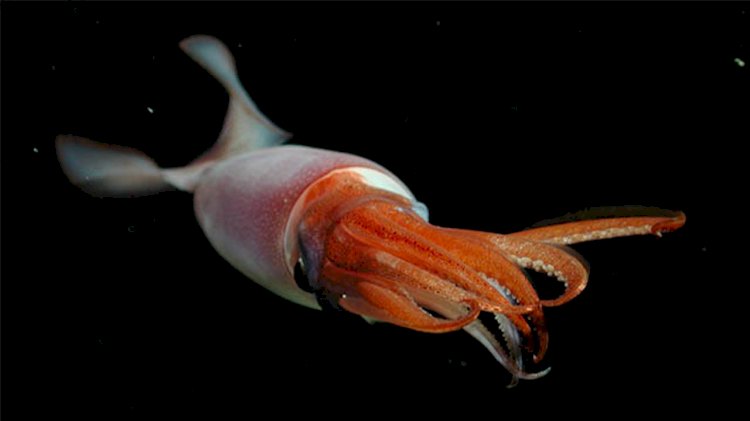
MBARI scientists have seen changes in deep-sea communities over the last three decades. For example, Humboldt squid (Dosidicus gigas) and sergestid shrimp populations appear to be shifting with climate change.

A new scientific report connects many ocean changes with human activities that take place largely on land. The Intergovernmental Panel on Climate Change (IPCC) Special Report on the Ocean and Cryosphere in a Changing Climate marks the first time that the IPCC has written a stand-alone report on the marine realm. It presents a detailed account of the increasingly severe consequences of climate change for the ocean, its trillions of creatures, and, ultimately, ourselves.

The report makes clear that to protect the ocean, we must first reduce our dependence on fossil fuels. But we must also reduce ocean stresses caused by overfishing and pollution, so the ocean is healthy enough to weather the changes already underway.

The emerging footprint of human influence is increasingly clear—fossil fuel emissions are harming the ocean.

Our emissions have raised the global average surface temperature by about 1°C (1.8°F) since the late 1800s. But it could be much worse. The ocean, so far, has absorbed more than 90 percent of the excess heat in the climate system since 1970 and about 25 percent of the carbon dioxide we’ve pumped into the atmosphere since 1870. Without the ocean to put the brakes on climate change, our planet would be roughly 11°C (20°F) warmer today, on average, than it’s been over the past century—in other words, largely uninhabitable by people.

The IPCC report details the triple threat of climate change to ocean ecosystems: warming, acidification, and deoxygenation.

The top 200 meters (656 feet) of the ocean have warmed roughly 0.6°C (1°F) since 1870. In 2018, the ocean had its warmest year on record—a trend that increases the likelihood of marine heat waves, harmful algal blooms, wildlife loss, more intense tropical storms, and coral bleaching.

Ocean acidification causes a depletion of carbonate ions, which are critical for shell-forming animals including corals, crabs, clams, oysters, and tiny free-swimming snails called pteropods.

At the same time, the open ocean is losing oxygen. The IPCC report estimates a loss of between 0.5 to 3.3 percent between 1970 and 2010 from the surface to 1,000 meters (0.6 miles). In addition, oxygen minimum zones are expanding, especially in tropical areas.

The picture this new report paints is grim, but the good news is that the solutions are clear. We must take courageous action to slow the pace of climate change and protect our global ocean—starting now. In order to avoid the worst impacts, the IPCC advises, humanity should keep the planet’s average warming below 2°C relative to pre-industrial levels.

This requires getting net carbon dioxide emissions down to zero by mid-century. This may be the biggest, most ambitious and most important challenge modern society has ever faced.

KVH receives orders for TACNAV tactical navigation systems

0

KVH to supply fiber optic gyro (FOG)-based systems for military customers.

KVH Industries has announced that it has received two orders totaling $6.7 million for its fiber optic gyro (FOG)-based TACNAV® tactical navigation systems for use by military customers. Revenue from one of these orders will be completed in 2019; revenue from the other order is expected to begin in the fourth quarter of 2019 and continue through 2021.

Dan Conway, executive vice president of KVH’s inertial navigation group, says:

“KVH’s TACNAV tactical navigation solution provides precision navigation as well as coordination of military vehicles in critical situations. The system serves as a crucial resource for navigation and battle management, and as an alternative source of heading, position, and navigation in GPS-denied environments, helping keep soldiers safe and out of harm’s way wherever they travel. These new orders reaffirm the value of KVH’s TACNAV products and add to our backlog.”

KVH’s FOG-based TACNAV military vehicle navigation systems provide unjammable precision navigation, heading, and pointing data for vehicle drivers, crews, and commanders. TACNAV also serves as a heading and position source for situational awareness.

KVH’s widely-fielded TACNAV systems are currently in use by the U.S. Army and Marine Corps, as well as many allied customers including Canada, Sweden, Great Britain, France, Germany, Spain, Egypt, Botswana, Australia, New Zealand, Saudi Arabia, Taiwan, Romania, Poland, Turkey, Malaysia, Switzerland, South Korea, Singapore, Brazil, UAE, and Italy.
 

AIDAnova receives the “Blue Angel” for its environmentally friendly ship design

0

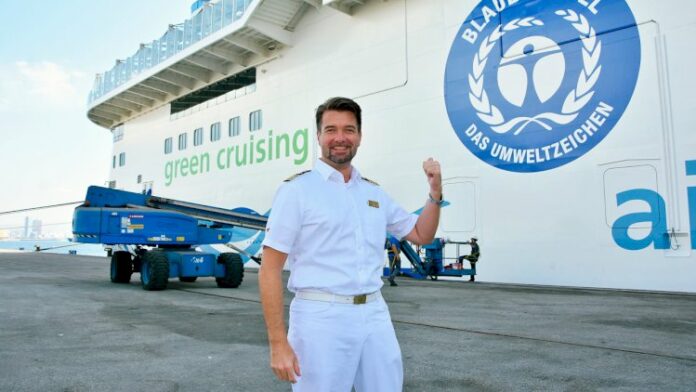
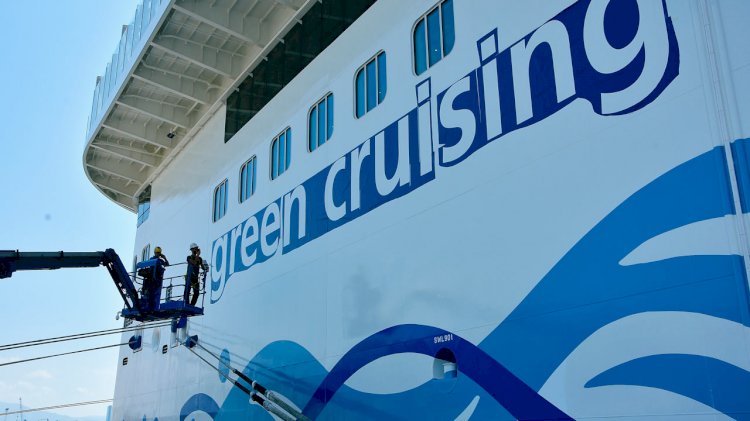
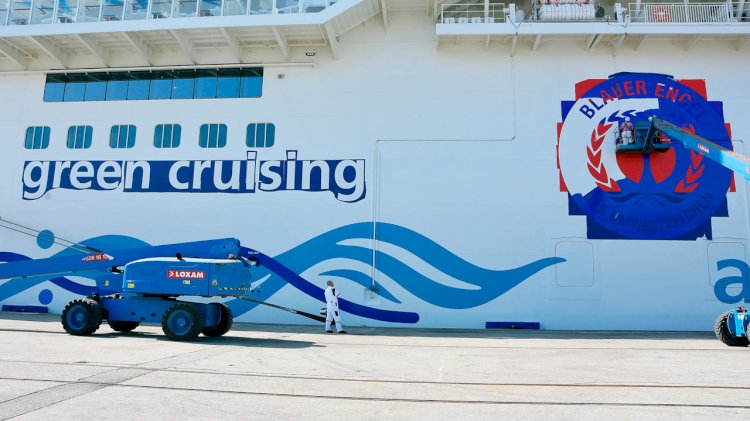
AIDA Cruises has been awarded the “Blue Angel”, the Federal Government’s ecolabel, for AIDAnova’s environmentally friendly ship design. On September 19 and 26, 2019, the “Blue Angel” logo was painted onto AIDAnova’s side at the Port of Marseille. 

Through the use of liquefied natural gas (LNG), as on board AIDAnova, emissions of particulate matter and sulfur oxides are almost completely eliminated; nitrogen oxide and CO2 emissions are sustainably reduced. AIDA Cruises is a trailblazer in many other areas as well with innovations that actively contribute to the energy transition.

As early as 2023, ninety-four percent of all AIDA guests will be traveling on ships that can be fully operated with low-emission liquefied natural gas or, where possible, with green shoreside power at port.

Since 2017, AIDAsol has been supplied with green shore power at Hamburg-Altona. By the end of 2020, twelve of fourteen AIDA ships will be equipped for shore power from renewable energy sources. The company is ready to start test operations for the shoreside power units planned for 2020 in Kiel and Rostock.

AIDAperla will be the first ship fitted with a battery storage system produced by marine battery supplier Corvus in Norway in 2020. The 300-meter-long cruise ship is receiving a battery pack with a capacity of 10 megawatt hours.

Innovations in design of marine craft racing seats

0

A Cornish company is planning to revolutionise the way in which marine craft racing seats are designed and manufactured, thanks to support from Marine-i.

Based in St Austell, Cornwall, Toniq Composites designs and manufactures a range of bespoke and standard products using advanced composite materials. When they hit upon a breakthrough idea for the marine sector, they applied for support from the Marine-i project.

Part funded by the European Regional Development Fund, Marine-i is designed to help the marine tech sector in Cornwall & Isles of Scilly grow through harnessing the full potential of research and innovation.

Colin Williams, CEO of Toniq Composites, explains their new concept:

“Many marine craft racing seats are prone to breaking in extreme conditions, when they have been made using conventional methods. Our advanced design and construction techniques can produce a seat that will overcome these problems. Also, unlike sectors such as automotive, there is currently no set of compliance criteria for racing seats in the marine industry. We want to help define new standards in this sector.”

The approach used by Toniq Composites also has important environmental benefits. Colin Williams says:

“There are two points. First, our advanced vacuum infusion process is less hazardous to health for those working on these products and generates less waste material. Secondly, we want to assess the possibility of introducing sustainable, organic materials into our composites, which could be used in place of glass fibre or carbon fibre.”

Matt Hodson, Marine Hub Operations Director for Cornwall Development Company and a partner in the Marine-i project says:

“This innovation ticks a lot of boxes for our team. It would have immediate potential in the domestic market for marine craft but, longer term, could reach a massive worldwide market. This would create important new opportunities for Cornwall’s marine supply chain. As well as being a brilliant application of composite manufacturing techniques, it would also have a significant environmental impact for the industry – something we are very keen to support.”

Colin Williams adds:

“We are delighted to receive this grant from Marine-i. It will enable us to purchase the advanced CAD and IT hardware that we need to carry out rendering of the designs and to complete our critical Finite Element Analysis. In addition, Marine-i partners such as University of Plymouth will be helping us with the research expertise that we need to successfully develop this exciting new process.”
 

Britain’s Royal Navy detonates huge historic bomb

0

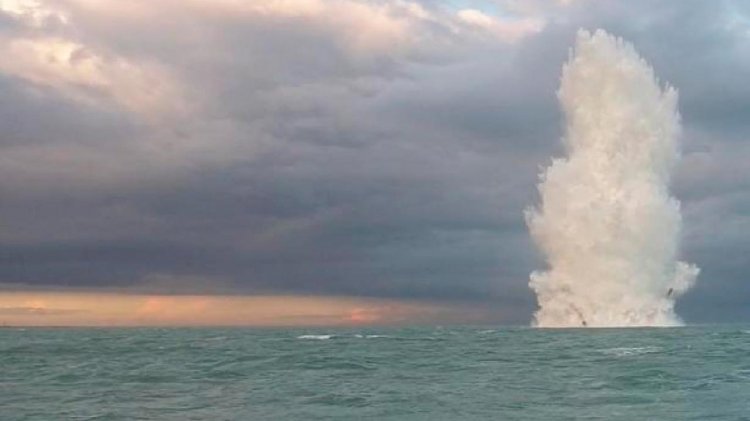
Royal Navy bomb disposal experts have destroyed a 987kg German World War Two bomb found in the wreck of a 17th century warship near Southend Pier in Essex.

Civilian divers with Historic England discovered the historic device during an archeological dive on the 350-year-old protected shipwreck of 'London' which lies in two parts near the pier.

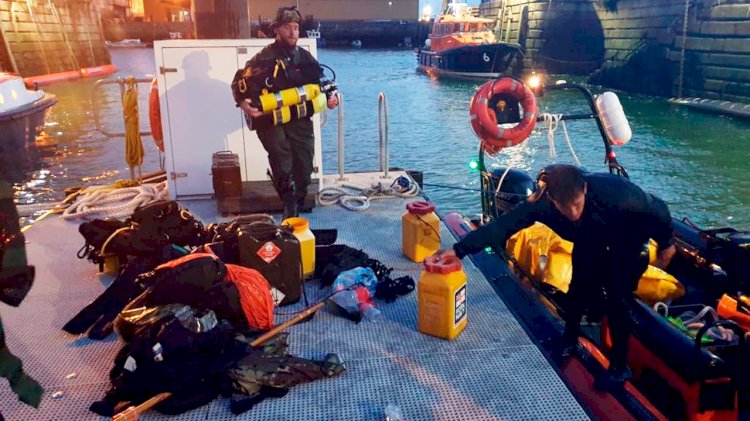
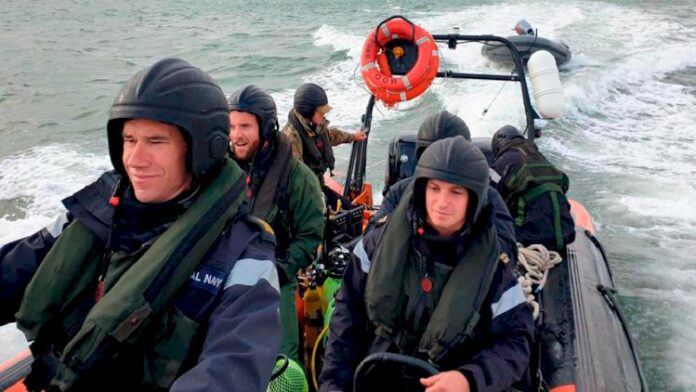
A bespoke eight-man team of Royal Navy divers from Portsmouth were dispatched to the area where they towed the device out of the estuary to safely destroy it at sea in a complex six-day operation.

Lieutenant Ben Brown, Officer in Charge of Southern Diving Unit Two based in Portsmouth, said:

"The complexity of this task should not be underestimated. Dealing with one of the largest pieces of German Second World War ordnance in the Thames Estuary presents some of the most challenging diving conditions there are to work in. With nil visibility underwater and significant tidal flow, the diving windows are extremely limited and all work on the ordnance must be done by touch.

The deteriorating weather conditions of this week also added another layer of complexity, and all whilst working next to one of the busiest shipping channels in the UK. However, these conditions are exactly what Royal Navy Clearance Divers are trained to work under and my team did an excellent job of keeping the public – and other mariners – safe."

The WW2 German parachute ground mine contained a main charge of 697kg of Hexamite, equivalent to 767kg of TNT, and weighed 987kg in total. Known as a GC, it was one of the largest pieces of ordnance used by the Luftwaffe during the Second World War.

Due to the complexity of the task and the difficult weather conditions it took the team six days, 216 man hours, and around 20 dives, to carefully lift the mine from the wreck and slowly tow it for five miles to the disposal site at Shoeburyness, blowing it up with a 2kg charge.

Lt Brown added:

"The mine, most likely dropped to target one of the numerous docks in the Thames Estuary, was in extremely good condition given its age. This task was completed by SDU2 but it would not have been possible were it not for the cooperation and assistance from numerous other agencies. These included HM Coastguard, RNLI, Essex Police Marine Unit, Essex County Fire and Rescue Service, Peel Port Sheerness Docks, Shoeburyness Ranges, London Port Authorities and Historic England."