-2.5 C
New York
Home Blog Page 957

City airport in Toronto to convert its ferry to electric-power

0

PortsToronto, owner and operator of Billy Bishop Toronto City Airport, has announced that the airport’s Marilyn Bell I passenger/vehicle ferry will be converted to electric-power.

This innovative retrofit represents a unique technological advancement in the airport’s fleet as the vessel will be the first 100 per cent electric lithium-ion powered ferry in service in Canada. PortsToronto anticipates that the ferry’s retrofit will be complete by the end of 2020.

The vessel’s propulsion system will be entirely powered by battery and fueled by 100 per cent Bullfrog Power® renewable electricity, enabling the electric-ferry to eliminate greenhouse gas emissions from the airport’s ferry operation. In addition to operating more efficiently and eliminating related air emissions, the retrofitted vessel will build on the airport’s award-winning Noise Management Program, as it will operate far more quietly, dramatically reducing related noise in the surrounding community.

As part of PortsToronto’s sustainability program, a phased approach to greening the airport’s ferry operations began in 2018 when the Marilyn Bell I was converted from diesel to bio-fuel, which resulted in the reduction of approximately 20 tonnes of greenhouse gas emissions last year. The electric-powered ferry is expected to reduce greenhouse gas emissions associated with ferry operations by 530 tonnes, dramatically reducing the airport’s carbon footprint and setting the organization on a clear path toward achieving PortsToronto’s overall emissions target.
 
Minister of Transport Marc Garneau said:

“The retrofitting of the Marilyn Bell I to electric power clearly demonstrates how we can build a clean and efficient transportation system, create good jobs and protect the environment. The Government of Canada commends PortsToronto for this initiative that will benefit Toronto communities and reduce our carbon footprint.”

Geoffrey Wilson, Chief Executive Officer, PortsToronto, said:

“Converting the Billy Bishop Airport ferry to electric power is a clear indication of how serious we are in our commitment to the environment and maintaining balanced operations with the waterfront community in which we operate. We are proud to invest in leading-edge, sustainable transportation infrastructure that will reduce PortsToronto’s overall emissions, which is a significant step toward our organization’s environmental objectives and in support of the Canadian Government’s 2030 emission reduction target.”

In compliance with PortsToronto’s Sustainable Procurement Policy, three Canadian companies that share PortsToronto’s vision for sustainable operations have been selected to collaborate on completing the ferry retrofit. As developers of the winning concept and proposal, St. Catharines-based leaders in marine electrical engineering Canal Marine & Industrial Inc. (CANAL) are the prime designers for this project. On board as the project naval architect is Concept Naval, Quebec-based naval architects and marine engineers, recognized for their innovative and customized solutions in Canada's shipbuilding industry. PortsToronto has also engaged Nova Scotia-based E.Y.E marine consultants to assist with the implementation of the project.

Shawn Balding, CANAL Commercial Director, said:

“CANAL is proud to be delivering the first completely zero-emission Ro-Pax ferry in Canada. This is an important step in the evolution of the marine industry made possible by maturing advancements in energy storage and power and propulsion system design.”

The airport’s ferry operation not only transports passengers, airport staff and essential supplies to and from Billy Bishop Airport, but serves as a vital link for City of Toronto service vehicles to gain access to the Toronto Islands. The conversion of the airport ferry to electric-power is one of Billy Bishop Airport’s key capital projects and will cost approximately $2.9 million. This cost will be paid in full by PortsToronto through the Airport Improvement Fee. PortsToronto is a federal business enterprise that is financially self-sufficient and does not receive funding from any level of government.

VIDEO: Fall pipe vessel simulator in Jan De Nul Group

0

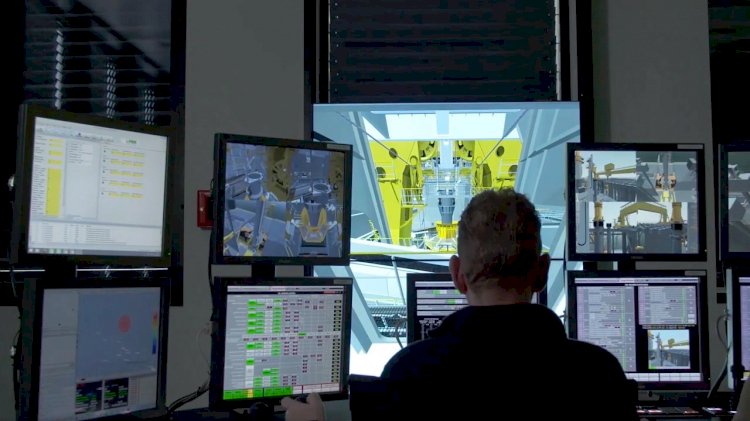
In 2014, Jan De Nul Group ordered a new simulator. The Cutter, Hopper and Backhoe Dredger simulators are already being used for personnel trainings of company's crew members, but in the meantime Jan De Nul  also dispose of a Fall Pipe Vessel Simulator for training crew member of the sister Fall Pipe Vessels 'Joseph Plateau' and 'Simon Stevin', both able of installing rocks in water depths of up to 2,000 metres.

New subsea cable between Guam and Australia lands in Sydney

0

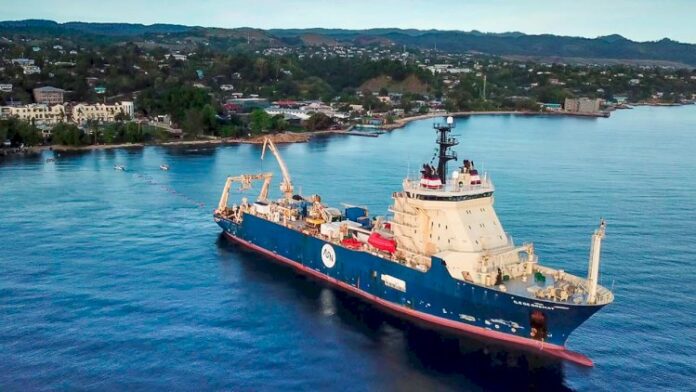
AARNet, Google and RTI have announced a significant milestone in the Japan-Guam-Australia South subsea cable system (JGA-South) with the landing of the cable into Narrabeen Beach in Sydney.

This marks the completion by AARNet of the Sydney shore end work. Alcatel Submarine Cable Networks (ASN)’s cable ship, the Ile de Brehat, will now continue laying the cable north towards Guam, with the completion of JGA South on-track to be completed and ready for service by March 2020.

This new eastern seaboard telecommunications cable will complement the recently completed INDIGO cable system forming an all-important ring between Australia and the fast-growing North and South East Asian markets.  Using today’s coherent optical technology, JGA South’s two-fibre pairs will support up to 36 terabits per second, the equivalent of simultaneously streaming millions of movies a second with lower latency and enhanced reliability.

JGA South will utilise ASN’s spectrum sharing technology where each consortium member can independently take advantage of technology advancements for future upgrades and capacity increases on demand.  This is especially relevant to the high bandwidth demands of research in Australia.

AARNet’s CEO Chris Hancock said:

“This is an exciting time for AARNet.  INDIGO was the first in a number of significant investments for research and education in Australia. JGA South is our second, and equally important, investment to meet the future growth in collaborative research and transnational education between Australia and our important partners in Asia.  As the Sydney landing party, AARNet sincerely thanks its build partners and especially Northern Beaches Council for its far-sighted and active support in the on-time delivery of this new and critical infrastructure for Australia.”

RTI’s CEO Russ Matulich said:

“Cloud companies, service providers, and telecom operators are looking for more control of their network. They want rapid provisioning, capacity portability, and network scalability. RTI’s 100Tbps international network and superior service offerings deliver all that and more.”

VIDEO: Tilbury2 approach bridge installation for Forth Ports

0

The steel bridge was towed 135 nautical miles from Rotterdam to the Tilbury2 site – a process which took 24 hours – before it was lifted into place.

The approach bridge is the first of three components to be installed over the next few months to create a Roll On – Roll Off facility into the new terminal currently under construction by GRAHAM.

Peter Ward, Commercial Director at The Port of Tilbury, said:

“This is another important milestone in the creation of our new port Tilbury2. GRAHAM’s team successfully completed the link span fixed bridge installation and we look forward to seeing the bridge opened early next year.”

The steel bridge, measuring 54m x 15m x 5m was chosen for its strength and durability in the marine environment.  It was transported by the HAPO pontoon H-332 and supporting tug. The Port of London (PLA) pilots were on board when entering the Thames Estuary and remained with GRAHAM throughout the lifting operations. Following closely behind in convoy was the MATADOR 3 seagoing floating sheerleg crane with a lifting capacity of 1,800 tonnes, again with a supporting tug.

Paul Scott, Contracts Director for GRAHAM, said:

“We have hit another milestone on this major project with the arrival and installation of the approach bridge. It was a real team effort from the loading out at Ravestein’s BV yard through to the installation. The approach bridge is positioned from abutments on both the landside of the flood defence and on the foreshore.”

The Tilbury2 project consists of the construction of a new port terminal and associated facilities on land at the former Tilbury Power Station on the north bank of the River Thames at Tilbury.

When operational in Spring 2020, Tilbury2 will be the UK’s largest unaccompanied freight ferry port, the country’s biggest construction processing hub and will see the creation of a new significantly larger rail head which can accommodate the longest freight trains of 775m.

The project is central to the Port of Tilbury’s £1 billion investment programme during 2012-20, which has seen it double the size of its business in the past 10 years and is projected to double the volume of cargo across the quay (from 16 million to 32 million tonnes) and increase direct employment (from 3,500 to 12,000 jobs) over the next 10-15 years.

Speedcast wins multi-year communications contract by Aurora

0

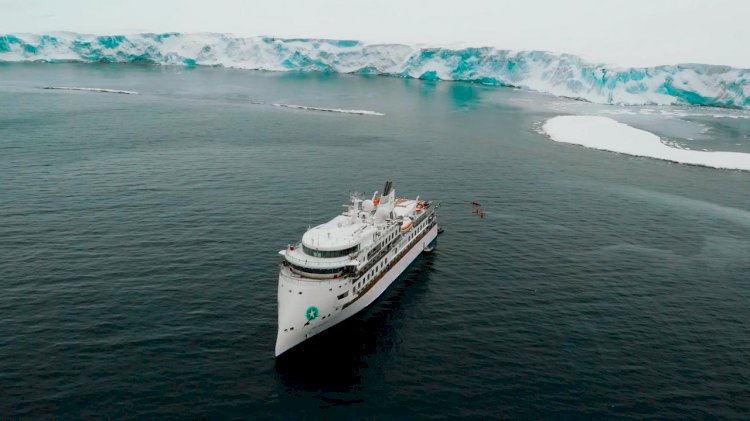
Speedcast International Limited, the world’s most trusted provider of remote communication and IT solutions, announced the company has been awarded a new multi-year communications and value-added services contract with Aurora Expeditions for the Greg Mortimer expedition ship, including live TV, Speedcast TV on Demand with custom radio streaming and PressReader digital newspapers and magazines.

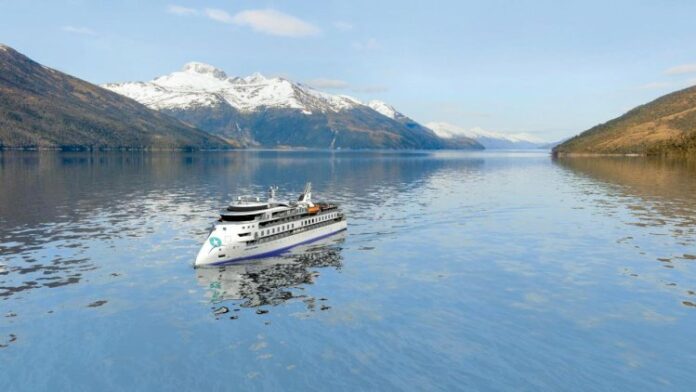
The Greg Mortimer is Aurora Expedition’s newest state-of-the-art vessel and is one of the most advanced expedition ships in the world. Speedcast will provide VSAT connectivity with L-band backup for seamless and truly global mobile satellite service. Beyond connectivity, Speedcast has tailored a suite of value-added services for guests and crew, including live television, movies and thousands of newspaper and magazine selections to support the growing demand for home-like entertainment while onboard. Speedcast continues to grow its content offerings in response to increasing demand for premium content services for staff and crew across cruise, ferry, commercial maritime, energy, and enterprise verticals.

Brent Horwitz, Speedcast’s SVP of Cruise and Ferry, says:

“Aurora Expeditions is redefining expedition cruising. Their vessel not only required robust communications capable of performing in extremely adverse weather conditions, but also services that satisfy the guests’ demand for luxury and comfort. Speedcast provides services to over 50% of ocean-going cruise ships globally and we are honored that Aurora Expedition’s team has trusted us with such unique and exciting challenges to expand our strategic communications partnership with innovative content services and deliver unforgettable guest experiences.”

Aurora Expeditions CIO, Marcel De Graaf, says:

“With over 27 years of experience in expedition cruises, we recognize the importance of a fully-managed communications solution for our guests and crew. Good connectivity is now an expectation, and especially when our guests are discovering new and exotic places with the Greg Mortimer, they want to instantly share their discoveries on social media and feel as connected on the ship as they do at home”.

GoodShipping biofuel trial a success

0

IKEA Transport & Logistics Services, the CMA CGM Group, and the GoodShipping Program have announced the successful completion of their 2019 biofuel test programme on CMA CGM vessels, following the positive trials of Heavy Fuel Oil-equivalent (HFO) Bio-Fuel Oil (GoodFuels BFO) during CMA CGM ALEXANDER VON HUMBOLDT’s North Europe-Asia trip, which occurred in September and October 2019.

This latest development follows the world premiererefuelling of a container ship with sustainable biofuel, when the CMA CGM WHITE SHARKtook on the bunker during a call at the Port of Rotterdam in March 2019.

Under the unprecedented trial, sustainable Bio-Fuel Oil was used in a blend with conventional fossil-based marine fuels to power a vessel on a major oceangoing route. Both applications of the Bio-Fuel Oil showed a positive result, thus provingthe technical compatibility of sustainable marine biofuels. These developments demonstrate the viability of advanced biofuels to meet current and future environmental regulations and emissions reductions targets, delivering a more sustainable shipping industry.

The Bio-Fuel Oil trialled by CMA CGM across both vessels was supplied by leading biofuels company GoodFuels, and is the first ever HFO-equivalent biofuel. All GoodFuels sustainable marine fuels are virtually Sox free and deliver 80-90% well-to-propeller CO2 reduction versus fossil equivalents. 

The announcement comes at a time when the industry is under increasing scrutiny to improve its sustainability and move towards decarbonisation. With scalability, bio-fuel oil effectively future-proofs requirements for shipowners and operators to comply with future regulations on carbon reduction by 2030 and 2050.

The trials were achieved through IKEA Transport & Logistics Services’ participation in the GoodShipping Program, the world’s first decarbonisation initiative for cargo owners.  

The GoodShipping Program works on the premise that, as all CO2 from shipping is emitted into the same atmosphere, the means of mitigating these emissions is equally impactful, regardless of which vessels adopt biofuels over traditional bunker fuels – or the amount of ‘drop in’ biofuel that is added to the fuel tank, as long as it offsets the CO2 costs of transporting participating shippers’ cargo. 

This flexible approach provides far greater scope for immediate impact, while having the same net effect in averting the effects of climate change. 

Elisabeth Munck af Rosenschöld, Head of Sustainability, IKEA Global Transport & Logistics Services, said:

“We are pleased to conclude that this pilot has been successful and that it has been proven possible to use advanced Bio-Fuel Oil on oceangoing vessels. It is only through collaboration and partnerships between major players – including cargo owners, ship operators and solution providers – that we can achieve real change at fast pace. We need a diversified portfolio of solutions to achieve our ambitious emissions reduction targets – and marine biofuels are an important part of the puzzle going forward for our sector.”

Xavier Leclercq, Vice President – CMA Ships, CMA CGM Group, said:

"As a world leader in shipping and logistics, we are resolutely committed to environmental protection and the energy transition. This world premiere partnership with the GoodShipping Program and IKEA is further proof of the CMA CGM Group’s commitment to improving the sustainability of the shipping industry, and of its pioneering role in the development of innovative and environmentally-friendly solutions. These landmark trials give the maritime sector a vital demonstration into the scalability, sustainability and technical compliance of marine bio-fuel oil, confirming CMA CGM’s leading role in the energy transition of the industry.”

Dirk Kronemeijer, CEO, The GoodShipping Program said:

“The success of this test programme with IKEA and CMA CGM builds further evidence of the important role that Bio-Fuel Oil will play in the marine fuel mix, and proves that initiatives already exist on the market for cargo owners to realise their decarbonisation goals. The GoodShipping Program is committed to helping more cargo owners unlock the potential of this direct decarbonisation option in the near future, as our sector continues to establish and embrace its wider carbon reduction efforts.”

This project was supported by the Incentive Scheme for Climate-Friendly Shipping, The Port of Rotterdam Authority’s program established to support innovative projects involving alternative fuels in sea-going shipping.

Orbital awards blades contract for O2 tidal turbine

0

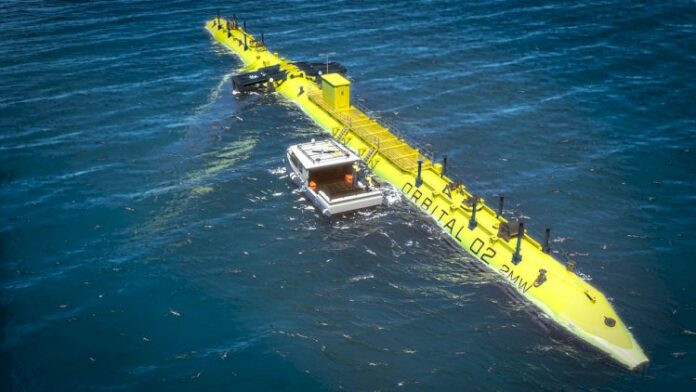
Orbital Marine Power Ltd (Orbital), the world’s leading developer of floating tidal stream turbines, has awarded the composite blades contract for the company’s first commercial O2 tidal turbine to A C Marine & Composites (ACMC) who will carry out the manufacturing at their facilities in Gosport, Hampshire, England. 

The contract will see ACMC build 10m composite blades for both of the O2’s twin rotors (four blades in total) giving the machine a swept area of over 600 square meters, the largest ever on a tidal turbine.

The O2, capable of generating over 2MW from tidal stream resources, will become the world’s most powerful tidal turbine when it enters operation later next year (2020) as part of a long term project at the European Marine Energy Centre, Orkney. Improvements in Orbital’s platform design have allowed for a rotor diameter increase of 4m on the company’s previous, record breaking, 2MW SR2000 turbine, with the O2 capable of producing electricity for over 1,700 UK homes.

Andrew Scott, Orbital’s Chief Executive Officer, said: 

“A C Marine & Composites have an impressive track record in delivering high quality composites solutions to a range of sectors including marine energy. We are delighted that they are supporting the commercialisation of our technology through the O2 project. We believe this contract demonstrates the strong potential for the UK’s advanced materials sector to supply high value components to the emerging, global tidal stream market.”

Alex Newton, Director, A C Marine & Composites said:

“We are extremely proud to have been awarded this contract by Orbital Marine; becoming part of the wider UK supply chain for the O2 project. Our structured production philosophy and in-house resin infusion technology will no doubt add value to this commercial tidal stream project. This is also a great opportunity for A C Marine & Composites to work on a project that will have a positive impact on the environment, whilst reaffirming the UK’s commitment to renewables.”

Orbital’s contract with ACMC follows recent contract awards as part of the overall build programme for the O2; these include the O2 platform manufacturing contract to TEXO Group in Dundee and an anchors contract to FAUN Trackway in Anglesey.

GAC onboard with Moscord digital maritime marketplace

0

GAC Marine Logistics (GML) has formed a partnership with maritime e-commerce developer Moscord to provide global last mile delivery services for its digital marketplace, which brings the world’s maritime buyers and sellers together.

Moscord.com gathers the world’s products and suppliers in one convenient online location with a single, simple interface. It enables any supplier or manufacturer to sell to the global market and any ship or company to purchase supplies and spares directly from manufacturers, guaranteeing the shortest possible delivery times, the most accurate ordering process, and the lowest possible prices. Hailed as “the amazon.com of shipping”, moscord.com currently offers 200,000 products to the shipping industry.

Under the agreement, GML draws on its expertise and the GAC Group’s global network to ensure safe and efficient delivery of ship spares worldwide. Orders placed via the Moscord platform are received by GAC Singapore – the designated control and coordination hub – who then arrange for the spare parts or supplies to be cleared at the destination port before delivery to their final destination.

Freddy Ingemann, the founder and CEO of Moscord, comments:

“Moscord is committed to building the leanest, most efficient and reliable purchase and fulfilment cycle, from initial customer engagement through to final delivery at any port location worldwide. We have created a platform that we believe can revolutionise the ship supply segment, delivering huge benefits to both buyers and sellers, and it’s important we engage with the right partners to realise its full potential. I can’t think of a better name than GML to help us achieve our ambitious goals.”

GAC Asia Pacific & Indian Subcontinent region’s Group Vice President, Lars Bergström, says:

"As a global specialist in door-to-deck delivery of ship spares, GML is happy to be a part of the Moscord supply chain ensuring that orders are delivered safely to the vessels wherever and whenever they are needed." 

Saipem’s first turn-key project in the offshore wind farm sector

0

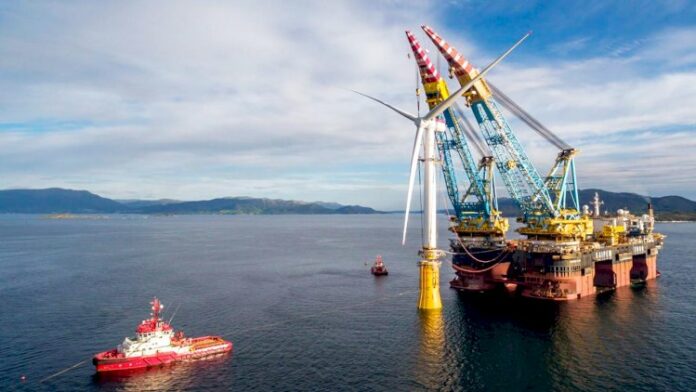
Saipem has been awarded a contract by the French company EDF Renewables for the construction of the Neart na Gaoithe (NnG) wind farm offshore Scotland.

This is the first turn-key project awarded to Saipem in the offshore wind farm sector. The scope of work consists of the engineering, procurement, construction and installation of 54 steel foundation jackets for an equivalent number of wind turbines with a capacity of around 8MW each, 2 steel foundation jackets for the offshore electrical substations and the transportation and installation of the relevant topsides. These jackets will be manufactured partly at a Saipem owned yard and partly in fabrication facilities located in Scotland. The jackets will be placed on piles at depths ranging from 40 to 60 meters.

Offshore installation activities will be carried out by the crane vessel Saipem 7000, which has a consolidated track record of operations in the North Sea.

The NnG offshore wind farm, 15km off the east coast of Scotland, will be deployed over an area of 105 km2 and will be capable of generating around 450 megawatts of electricity.

Francesco Racheli, Chief Operating Officer of the Saipem E&C Offshore Division, affirmed:

“This EPCI contract awarded by EDF Renewables marks a key milestone in the pursuit of our strategy to become a reference player for large offshore windfarm developments and, more extensively, in the sphere of energy transition. This important achievement has been made possible thanks to our capabilities and expertise in engineering, fabrication and installation as well as to our assets, particularly suited to projects of this kind. Our collaboration with EDF Renewables and with the entire supply chain will allow us to contribute to the generation of 450 megawatts of green energy, fostering the utilisation of local supply chain and expertise to provide the most competitive solution to our stakeholders and clients and execute a successful project”.

Furthermore, Saipem has been awarded a new contract for the Formosa 2 offshore wind farm project. The scope of work entails the supply of material and fabrication of 32 foundation jackets for an equivalent number of wind turbine generators. The wind farm is being developed by a partnership between Macquarie’s Green Investment Group and Swancor Renewable Energy, offshore Miaoli County on the West coast of Taiwan. Construction works for the project are scheduled to commence early 2020.

The overall amount of these two new contracts corresponds to approximately 750 million euro, representing more than 15% of the E&C Offshore Division order intake year-to-date, thus consolidating Saipem position as a global solution provider to the extended energy sector.

Subsea 7 awarded contract offshore Australia

0

Subsea 7 today confirmed a substantial contract award by Woodside for the execution of phase 2 of the Julimar-Brunello Project. This contract was awarded to Subsea 7 earlier this year, subject to the final investment decision of the Julimar-Brunello joint venture participants (Woodside and KUFPEC), which has now occurred.

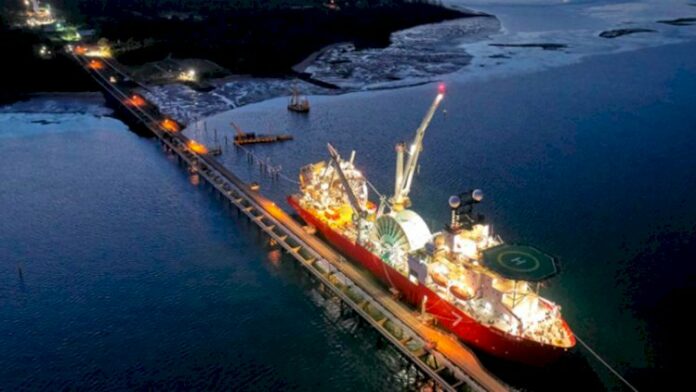
The Julimar field is located approximately 200 km offshore North Western Australia. The full scope of work will be to design, procure, install and commission a 22 km 18” Corrosion Resistant Alloy (CRA) gas transmission flowline and an umbilical system.

The offshore activities will be performed in 2021 using Subsea 7’s reel-lay and heavy construction vessels.

Andy Woolgar, Subsea 7 Vice President Australia and New Zealand, said:

“This contract with Woodside reflects what can be achieved with strong collaboration and early engagement. Our solution demonstrates the advantages of having a full range of installation and pipelay capabilities in Australia and illustrates how Subsea 7’s global technology portfolio allows us to deliver cost-effective solutions to our clients around the world.”