-2.5 C
New York
Home Blog Page 956

Damen and VSTEP Simulation have joined forces to develop new software

0

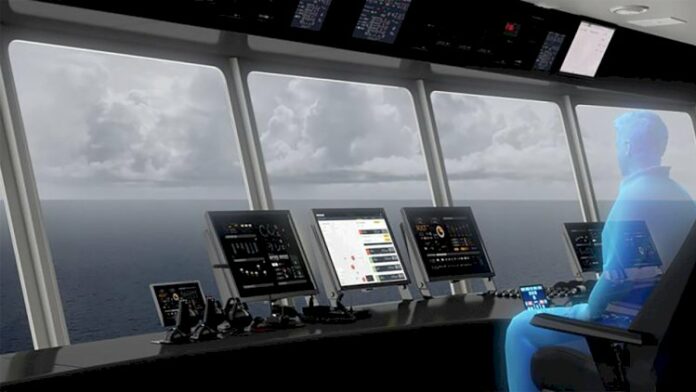
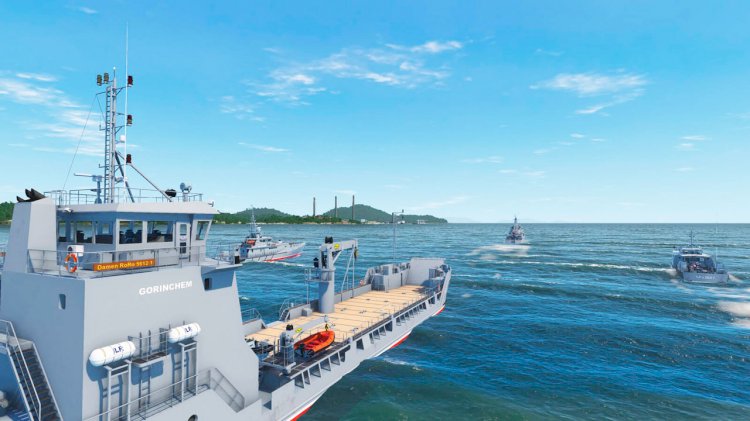
Damen Shipyards Group and VSTEP Simulation, a leading provider of training simulation technology, have joined forces to establish a laboratory to explore innovative new simulation solutions. The aim of the partnership is to develop software that will extend the capabilities of VSTEP’s existing NAUTIS Maritime Simulation platform into engineering applications and so open up new research and development possibilities for Damen’s numerous R&D programmes.

The initial focus will be on ship design and engineering, where software will be developed that will allow naval architects and engineers to first model potential changes in a design and then view in virtual reality the impacts that these would have on other aspects of the vessel’s performance.

Marcel Cleijsen, team leader at Damen R&D, says:

“Business units across the group require ever more simulations to mitigate the risks inherent in designing and commissioning. Costs per simulated vessel are currently high due to dependency on suppliers, high tariffs and limited re-usability as ownership remains with suppliers. This project is an investment that will drastically lower the cost per simulation by standardising the interface between components and making the completed simulations re-usable for future purposes.”

Damen is well-known for its commitment to continually improving its designs based on industry feedback and the application of new technology, and this capability will be a valuable tool in supporting that process.

Steve Claes, technical director at VSTEP Simulation, added:

“With our focus on driving innovation within the industry, we can ensure that our combined solutions will complement each other. The industry demands better quality each year, which is something our maritime simulators can help accommodate. I believe this new project marks the beginning of a closer cooperation that will lead to a wealth of new data findings. These findings will contribute to the digitisation of the industry and pave the road to a new norm, with our simulator solutions in the lead.”

Damen and VSTEP Simulation already work together via Damen’s associate company 360-Control. There, NAUTIS Maritime Simulators are used to train crew in manoeuvring tugs and OSVs in a range of scenarios in a highly lifelike but zero risk environment.

The new laboratory will also explore the potential to create ‘Digital Twins’. That is, virtual representations of existing vessel types that can then be manipulated to establish how they might perform in roles or conditions that they have yet to experience. That information will then be applied to optimising the designs to allow them to operate effectively in new markets.

Marcel adds:

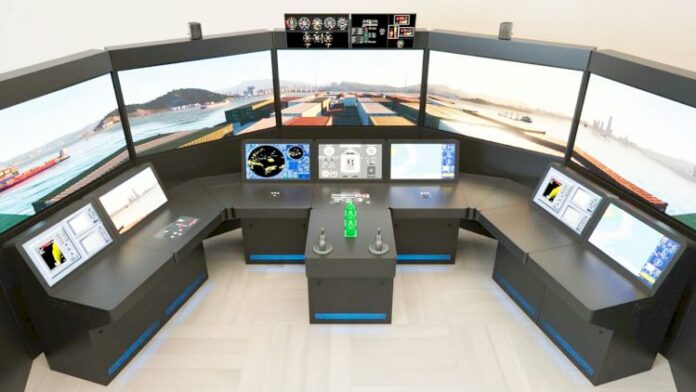
“Investing in a full bridge simulator is a step towards the Digital Twin goal, and not only enhances Damen’s capability as a digital system integrator, but also enables us to present our findings to our internal and external clients and suppliers in an intuitive 3D graphical format.”

The laboratory will be based at Damen’s headquarters in Gorinchem and operational from February 2020.
Navozyme announces the formation of the Blockchain Registry Alliance for Vessels

0

Singapore headquartered maritime blockchain technology company Navozyme, supported by Maersk Drilling and the American Bureau of Shipping (ABS) announced the formation of the Blockchain Registry Alliance for Vessels (BRAV).  The BRAV is supported by the Maritime & Port Authority (MPA) of Singapore.

The BRAV aims to consolidate Singapore’s reputation as an innovator in the global maritime industry and to lead the worldwide adoption of blockchain enabled ship registrations.

The blockchain enabled solution specially designed for the ship registry processes allows for real time exchange of critical data across authorized maritime stakeholders like shipowners, classification societies, flag authorities, shipyards and other related organisations. The solution can enable faster completion of the ship registry process and can aid to improve safety, compliance and productivity for the stakeholders.

Ms. Quah Ley Hoon, Chief Executive of the Maritime and Port Authority of Singapore said:

“MPA is heartened by the Navozyme – Maersk – ABS consortium’s efforts to streamline the preparation of the ship registration process using blockchain technology to create a more efficient data workflow.”

Jan Holm, Managing Director of Maersk Drilling Singapore, comments:

“This is an exciting opportunity for the industry to collaborate with Singaporean maritime authorities and start-ups to drive digitization and improve the efficiency of the ship registry process to further strengthen Singapore’s position as a maritime hub. In Maersk Drilling, we are happy to contribute our ideas and learnings to this innovative project and expect the blockchain approach to provide significant efficiency gains.”

Christopher J. Wiernicki, ABS Chairman and CEO said:

"Distributed ledger technology such as Blockchain has significant potential for shipping in terms of transparency, security, speed and efficiency of operations. ABS is committed to harnessing the full capability of these and other digital technologies for the benefit of the industry, while maintaining a laser focus on safety. As a pioneer in the utilization of maritime data, ABS is proud  to lend our support to this innovative project."

“Navozyme was founded to serve as an ‘enzyme’, a catalyst to address digitization and eventual transformation of the maritime industry. We are very proud of our stakeholders and industry participants who have supported us in the architecture of radically enhancing the processes of global ship registry.”, commented Captain Jitesh Jaipuriyar, Chief Executive of Navozyme.

MacGregor to test data infrastructure integration with Kongsberg

0

MacGregor, part of Cargotec, and Kongsberg Digital, part of KONGSBERG, have entered into a collaboration agreement to test the interface of MacGregor’s OnWatch Scout condition monitoring and predictive maintenance service within Kongsberg Digital’s Vessel Insight data infrastructure solution.

The Vessel Insight solution enables high quality data from interfaced systems to be captured and transmitted in a cost effective and secure manner to the Kongsberg Digital Kognifai platform.

The initial in-service testing and data analysis will be conducted with application to MacGregor cargo handling cranes installed on pilot merchant customer vessels.    

Dennis Mol, Vice President, Digital and Business Transformation, MacGregor, says:

“We are pleased to be extending our relationship with KONGSBERG and working closely with Kongsberg Digital to accelerate the testing of digital solutions, focused on further enhancing critical system safety, availability, efficiency and sustainability.”

Vigleik Takle, Senior Vice President, Maritime Digital Solutions, Kongsberg Digital, says:

"It is essential for KONGSBERG to work with world-class partners, and we are therefore very pleased to be collaborating with MacGregor as we progress our common interest in accelerating the adoption of digital technology-enabled capabilities in support of the maritime industry becoming safer, more efficient and environmentally sustainable.”
 

HHLA aims to become a climate neutral company by 2040

0

Hamburger Hafen und Logistik AG (HHLA) is increasing its efforts to protect the climate and conserve resources. The aim is to make the entire Group climate neutral by 2040. The already successfully implemented sustainability strategy will now be realised under the “Balanced Logistics” brand. HHLA thereby underscores its commitment to be both economically successful as well as socially and ecologically responsible.

Angela Titzrath, Chairwoman of HHLA’s Executive Board:

“The people of Hamburg can rely on HHLA. We are well aware of our responsibility to protect the climate and that is why we are implementing specific measures for efficient and more sustainable container handling and environmentally friendly transport chains. Regardless of the dynamic that the climate protection debate has taken on recently, HHLA has been making a significant effort to increase the energy efficiency of its processes, conserve resources and consistently reduce emissions for many years now. The self-imposed target to reduce CO2 emissions per handled container by at least 30 percent by 2020 was thus achieved ahead of time last year. We are now setting new targets. We’re working on halving our absolute CO2 emissions by 2030 compared to the figures from 2018. The aim is to make the entire HHLA Group climate neutral by 2040.”

In order to further clarify HHLA’s stance on this important social topic, the sustainability strategy will in future be implemented under the guiding principle of “Balanced Logistics” and the profile raised with a corresponding logo. 

Titzrath explained:

“We understand ‘Balanced Logistics’ as finding a balance between economic success, good working conditions, social responsibility and environmental and climate protection. Only as a successful and competitive company do we have the means and opportunities to sustainably invest in our employees and fulfil our social and environmental responsibilities.”

HHLA believes that intelligent, sustainable solutions are an opportunity for new business models and raising added value.

Chairwoman of HHLA’s Executive Board said:

“Those who invest in innovative, climate-friendly technologies at an early stage achieve sustainable results faster, which is to the benefit of shareholders, customers, staff members and society.”

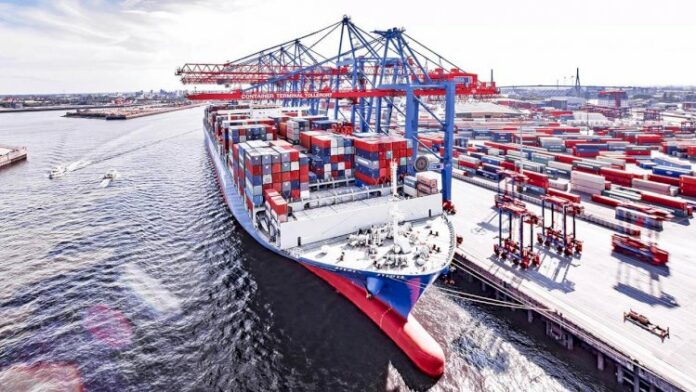
This means looking into new technologies without prejudice in order to tackle head-on the challenges that we will face in the future. One area of action is the Container Terminal Altenwerder (CTA), which became the first handling facility for containers in the world to be certified climate neutral by TÜV Nord in 2019. The quayside facility located in Hamburg is one of the most technologically modern and efficient container terminals in the world and has been in continual advancement since it commenced operations in 2002. Operations at CTA are now primarily powered by green electricity. Terminal processes that still produce CO2 emissions today will be gradually electrified, or their transition to electrical power will be field-tested.

HHLA compensates for CO2 emissions that are still being generated through emissions reduction certificates, thereby supporting environmentally friendly projects that are certified according to the highest gold standard of Voluntary Emission Reduction (VER) including wind farms in India, low-friction anti-fouling paint for ship hulls and reforestation of rainforests in Panama. CTA’s CO2 footprint will be reviewed again by TÜV Nord next year. It can be assumed that the need to compensate will decrease as the electrification of the terminal continues to progress.

The measures HHLA is implementing do not stop at the quayside; in addition to further optimising its own facilities, networking with other logistics players also offers much potential. The company has developed HHLA Pure, a product that can ensure climate neutral transport chains from the port into the European hinterland, making an important contribution to lowering transport-related CO2 emissions. This product allows HHLA to combine the strength of Hamburg as the largest European rail port with the environmentally friendly rail transport offered by the intermodal company Metrans. The HHLA subsidiary uses energy efficient electric trains and lightweight flat wagons, which can transport more containers with the same train length.

The forwarding company Jakob Weets and transport logistics company cargo-partner are both pilot customers for whom Metrans transports containers from the Port of Hamburg to Central and Eastern Europe. If, for instance, the handling and rail transport of a 20-foot container from CTA to Prague, roughly 700 km away, generates a CO2 footprint of approximately 80 kg per standard container (TEU) this certified value can be compensated for with HHLA Pure. This offer enables customers to make their container transport climate friendly and increases competitiveness at the same time. Following a successful pilot phase HHLA Pure will be brought onto the market in 2020.

Titzrath commented:

“We review not only the economic value and benefit for our customers of every process optimisation and every new technical development, but also the sustainability aspect. As the ‘gateway to the future’, HHLA considers innovation and technical excellence to be key to fulfilling our responsibilities and developing sustainable solutions.”

Animals carrying sensors could help humans monitor oceans

0

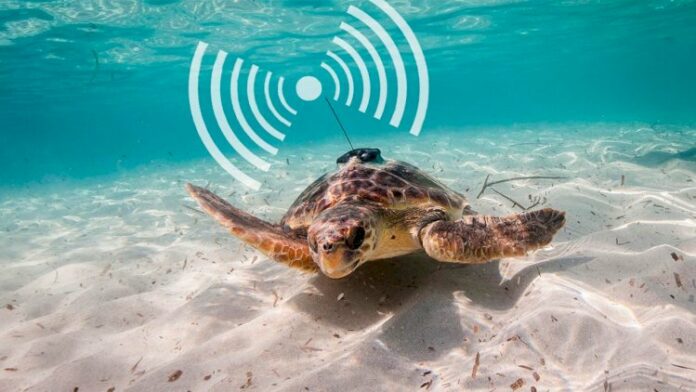
Sharks, penguins, turtles and other seagoing species could help humans monitor the oceans by transmitting oceanographic information from electronic tags.

Thousands of marine animals are tagged for a variety of research and conservation purposes, but at present the information gathered isn’t widely used to track climate change and other shifts in the oceans. Instead, monitoring is mostly done by research vessels, underwater drones and thousands of floating sensors that drift with the currents. However, large areas of the ocean still remain under-sampled – leaving gaps in our knowledge.

A team led by the University of Exeter says animals carrying sensors can fill many of these gaps through natural behaviour such as diving under ice, swimming in shallow water or moving against currents. Lead author Dr David March, of Centre for Ecology and Conservation on Exeter’s Penryn Campus in Cornwall, said:

“We want to highlight the massive potential of animal-borne sensors to teach us about the oceans. This is already happening on a limited scale, but there’s scope for much more. We looked at 183 species – including tuna, sharks, rays, whales and flying seabirds – and the areas they are known to inhabit. We have processed more than 1.5 million measurements from floating sensors to identify poorly sampled areas (18.6% of the global ocean surface).”

Professor Brendan Godley, who leads Exeter Marine, said:

“By comparing this with gaps in current observations by drifting profiling sensors (known as Argo floats) we identified poorly sampled areas where data from animal sensors would help fill gaps,”  These include seas near the poles (above 60º latitude) and shallow and coastal areas where Argo profilers are at risk of hitting the land. The Caribbean and seas around Indonesia, as well as other semi-enclosed seas, are good examples of places where Argo profilers struggle because of these problems.”

Tagged seals in the poles have already complemented ocean observing systems because they can reach areas under ice that are inaccessible to other instruments.

The study suggests data collected by turtles or sharks could also enhance ocean monitoring in other remote and critical areas such as tropical regions, with large influence on global climate variability and weather. The researchers say their work is a call for further collaboration between ecologists and oceanographers. Professor Godley added:

“It is important to note that animal welfare is paramount and we are only suggesting that animals that are already being tracked for ethically defensible and conservation-relevant ecological research be recruited as oceanographers. We do not advocate for animals being tracked solely for oceanography.”

The research team included the Balearic Islands Coastal Observing and Forecasting System (SOCIB), the University of St Andrews, the Mediterranean Institute of Advanced Studies and the Spanish Institute of Oceanography. The paper, published in the journal Global Change Biology, is entitled:

“Towards the integration of animal-borne instruments into global ocean observing systems.”

Seafloor cable used to detect earthquakes, faults, and storm waves

0

In a paper appearing this week in the journal Science, researchers describe an experiment that turned the seafloor cable on MBARI’s MARS ocean observatory into the equivalent of 10,000 seismic stations on the ocean floor. During a four-day experiment in Monterey Bay, the researchers recorded a 3.5 magnitude quake, detected storm waves and internal waves, and discovered a new fault zone.

The technique, which was initially tested using fiber-optic cables on land, could provide much-needed data on quakes that occur under the sea, where few seismic stations exist. Eventually the technique could be applied to seafloor telecommunications cables around the world, helping scientists learn about offshore earthquakes and geologic structures hidden deep beneath the ocean surface.

The study was a joint effort by researchers from MBARI, the University of California, Berkeley, Lawrence Berkeley National Laboratory (Berkeley Lab), and Rice University.

Nate Lindsey, a UC Berkeley graduate student and lead author of the paper, said:

“There is a huge need for seafloor seismology. Any instrumentation you get out into the ocean, even if it is only for the first 50 kilometers from shore, will be very useful.”

Lindsey and Jonathan Ajo-Franklin, a geophysics professor at Rice University in Houston and a faculty scientist at Berkeley Lab, led the experiment with the assistance of Craig Dawe, the manager of MBARI’s MARS observatory in Monterey Bay.

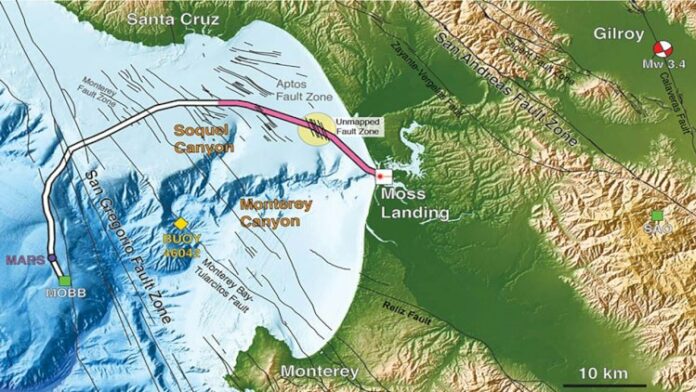
The MARS (Monterey Accelerated Research System) observatory is like a giant underwater USB port, supplying electricity and a high-speed data connection to instruments on the deep seafloor just outside Monterey Bay. The observatory is connected to shore by a 52-kilometer-long (32-mile-long) seafloor cable.

The experiment described in the recent Science paper was conducted over four days in March 2018, when the observatory was off-line for maintenance. The researchers used just the first 20 kilometers (12.4 miles) of the cable for their test.

The researchers used a new technology called Distributed Acoustic Sensing, sending ultrashort pulses of laser light down the cable and timing millions of tiny reflections (backscatter) from different parts of the cable. This allowed them to measure infinitesimal changes in the length of each two-meter (six-foot) section of cable. In effect, they turned the 20-kilometer length of cable into 10,000 individual motion sensors.

Ajo-Franklin said:

“These systems are sensitive to changes of nanometers to hundreds of picometers for every meter of cable. That is a one-part-in-a-billion change.”

Changes in the length of the cable can be caused by many different things, including ocean waves, seafloor currents, and earthquakes.

Lindsey said:

“The beauty of fiber-optic seismology is that you can use existing telecommunications cables without having to put out 10,000 seismometers. You just walk out to the site and connect the instrument to the end of the fiber.”

During the underwater test, they were able to measure seismic waves from a magnitude 3.4 earthquake that occurred 45 kilometers (28 miles) inland near Gilroy, California. They also mapped several submarine fault zones in Monterey Bay, including one that was previously unknown. They were also able to detect ocean waves both at and beneath the sea surface.

According to Lindsey, there is rising interest among seismologists to record Earth’s ambient noise field, which is caused in part by interactions between the ocean and the land—waves sloshing around near coastlines.

Ajo-Franklin said:

“This is really a study on the frontier of seismology, the first time anyone has used offshore fiber-optic cables for looking at these types of oceanographic signals or for imaging fault structures.” 

The tests so far have all used cables that are “dark,” meaning they are not actively carrying data. To make use of the world’s active fiber-optic cables, Lindsey and Ajo-Franklin need to show that they can ping laser pulses through one channel in a fiber without interfering with other channels that carry independent data packets. The researchers are currently conducting experiments with such “lit” fibers, while also planning fiber-optic monitoring of seismic events in a geothermal area south of Southern California’s Salton Sea.

Wight Shipyard Co awarded the largest export order of four vessels

0

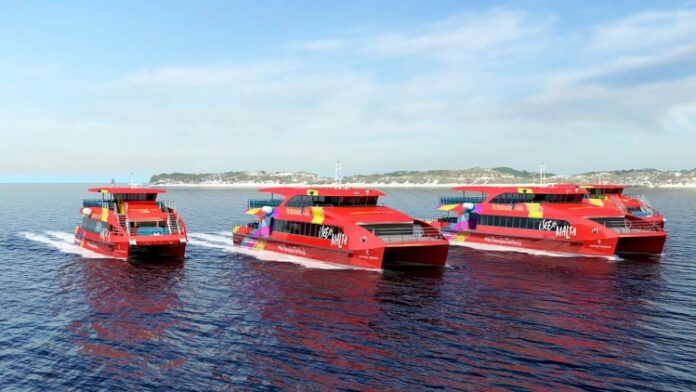
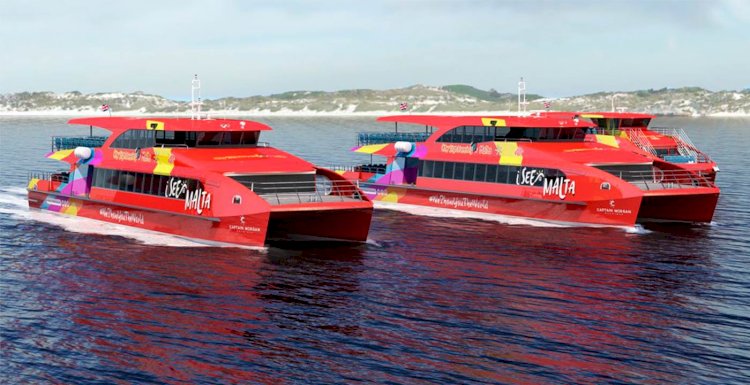
UK shipbuilder Wight Shipyard Co. is continuing its success in the fast ferry sector securing an order for four vessels from Malta’s tourism Leaders, Captain Morgan.

The order, from Captain Morgan Holdings Ltd, a subsidiary of Fortina Investments Ltd, consists of four new build vessels, two 20m and two 33m catamarans, all to be designed by One2Three Naval Architects.

Peter Morton, CEO, Wight Shipyard, said:

"We have been working with One2Three to develop lighter, more fuel-efficient ferries with the subsequent reduction of fuel costs.  The operators see the long-term benefits in using less fuel and thereby reducing carbon emissions. We are also working to integrate the boarding design for the ancient wharves and docks of the towns of Malta.”

The two new build 20m harbour waterbus vessels will replace a number of older vessels, which already service the harbour routes. They will be designed to service the low wharves at each harbour providing easy embarkation and debarkation for passengers while cruising around the harbour.

These vessels will be of a similar design to Wight Shipyard’s Loch Ness Jacobite Maverick 20m day cruise passenger catamaran, also designed by One2Three Naval Architects. The new 20m design is a slower harbour waterbus designed for going point to point around the main ports of the capital. 

Fortina Investments CEO Edward Zammit Tabona said:

“We are very excited about this venture and collaboration with Wight Shipyard, which is renowned for its high standards and attention to detail. We are looking forward to launching these vessels in Malta’s seas in May 2020, which will see Captain Morgan Group take its sea and land transport services to another level.”

These vessels form an integral part of Fortina Investments’ innovative iSeeMalta concept, which provides visitors with access through a single pass to the ferry service, City Sightseeing buses, public transport as well as museums, Heritage Malta sites, entertainment spots and other attractions.

The two 33m medium speed vessels are a new design for Wight Shipyard, based on a commuter boat currently used on Sydney harbour. 

Wight Shipyard Co. has recorded exceptional success in the fast ferry sector since its inception, and this latest order will take the yard to 13 new builds in just over four years.

Previous notable builds include the renovation of the historic motor yacht MY Shemara, Red Funnel’s Red Jet 6 and 7, three MBNA Thames Clippers, the Jacobite Maverick in Scotland, the Twin City Liner commuter and sightseeing vessel on the River Danube, and most recently two fast ferries delivered this summer for Mexico’s largest ferry operator Ultramar.

Next generation monitoring system for high-voltage power cable installation

0

NKT introduces next generation monitoring system for high-voltage power cable installation with NKT Victoria.

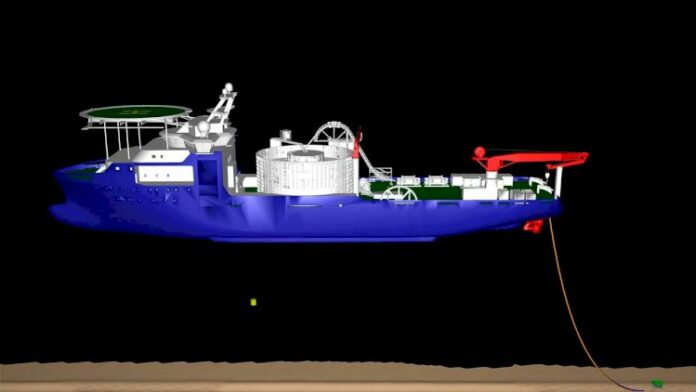
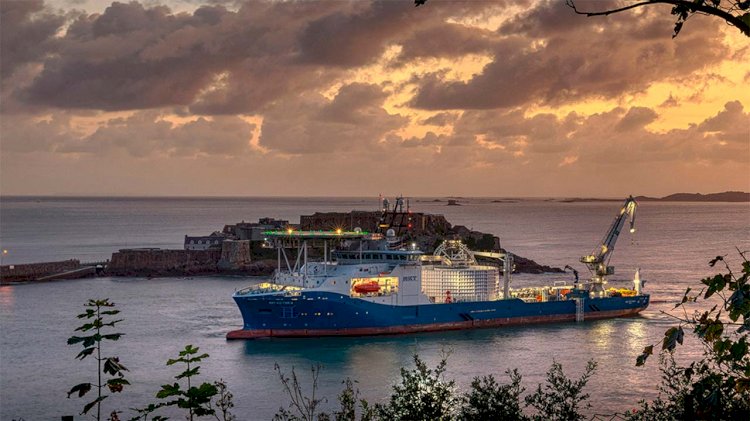
With the new custom-made Cable Laying Monitoring System, NKT has further enhance NKT Victoria’s capabilities to safely install power cables with minimal risk of compromising the cable integrity during laying operation in even the most challenging site conditions such as high seas, strong current and low visibility. The new system provides real-time monitoring and data collection during cable lay ensuring optimal layback tension, departure angle and touchdown position without any physical contact with the cable.

Claes Westerlind, Executive Vice President and Head of HV Solutions Karlskrona, says:

"We are always aiming to offer the most reliable and efficient power cable installation to our customers. With the new system we are setting new industry standards in terms of minimizing the risk of over bending or stretching of the cable during installation. The system increases the level of digitalisation and integration of the survey system improving the cable laying performance and reliability."

The Cable Laying Monitoring System has been specially designed by NKT in close collaboration with the software company 4D Nav and is integrated into the hull of the NKT Victoria. With the hardware hull integration and software integration into the vessels standard survey system the cable touch down monitoring is not sensitive to high currents like traditional monitoring based on Remote Operated Vehicle (ROV) positioning.

The accuracy and reliability of the Cable Laying Monitoring System has already been proven during operations in challenging site conditions in the UK.

Claes Westerlind says:

"We have put the new system to the test during the cable laying between the Channel Islands Jersey and Guernsey in October. These waters are known to pose a rather challenging environment with strong currents, bad visibility and large tidal differences. The monitoring system proved an excellent performance supporting NKT Victoria and the team to install the cable successfully within the planned schedule and with no unforeseen events."

NKT Victoria is ranked as one of the world’s most advanced cable-laying vessel and its design is based on extensive experience with offshore installations. She installs high-voltage offshore cable systems with exceptionally high precision based on DP3 (Dynamic Positioning) capability and sophisticated monitoring features. These, and many more cuttingedge features, contribute to higher efficiency and precision of the installation and service execution, while offering maximum safety for the crew. NKT Victoria was commissioned in 2017 and has completed operations across Europe.

Wärtsilä and Silverstream to deploy of air lubrication technology

0

The technology group Wärtsilä, and Silverstream Technologies, the leading air lubrication solution provider, today announced the signing of a Licence and Co-operation Agreement for future sales and servicing of the Silverstream System. As an authorised sales and service partner, Wärtsilä intends to fully integrate Silverstream’s air lubrication system within its propulsion solutions.

By offering the Silverstream System as an integral part of Wärtsilä’s propulsion solution for newbuild vessels, compliance with the Energy Efficiency Design Index (EEDI) will be further improved. Under the agreement, the Silverstream System will also be available through Wärtsilä’s sales channels for retrofit installations on existing vessels where Wärtsilä is a primary solution provider. The integrated Silverstream System is expected to realise synergies in capital and operational savings across the propulsion chain by increasing fuel efficiency, and optimising engine loading.

This new collaborative partnership will accelerate the deployment of air lubrication systems across all vessel classes, from small bulk vessels to the largest container ships. By combining Wärtsilä’s propulsion expertise and Silverstream’s innovative engineering knowledge, access to this clean technology will be facilitated across the market.

Going forward, the collaboration agreement will enable current and future Silverstream customers to access Wärtsilä’s global service network for the maintenance of their Silverstream System installations. Wärtsilä’s network of service centres, workshops, and service professionals is the most extensive in the maritime industry, with 4500 field service professionals located in 70 countries around the world.

The agreement means that more ship owners will have easy access to Silverstream’s proven air lubrication technology. The system has been proven to reduce fuel burn and associated emissions by 5 to 10%, depending on vessel type.

Speaking on the agreement, Lars Anderson, Director, Propulsion, Wärtsilä Marine, said:

“At Wärtsilä we are committed to fully supporting our customers as they strive to reduce operating costs and improve the environmental sustainability impact of their operations. Today’s agreement enables us to facilitate the building of better vessels that meet tomorrow’s challenges today, and Silverstream are the ideal partners to help us realise this goal.”

Noah Silberschmidt, CEO, Silverstream Technologies, added:

“Today’s agreement with Wärtsilä reinforces our position as the shipping industry’s leading clean technology manufacturer. In Wärtsilä we find a partner as committed as we are to achieving a cleaner, more efficient and sustainable maritime industry.

With the global sulphur cap almost upon us and decarbonisation targets on the horizon, the commercial case for proven clean technology has never been stronger. Now is the time for ship owners to take action to reduce their operational costs and their impact on the environment, and today’s agreement will help unlock the power of air lubrication technology for more vessels across our sector.”

The Silverstream System creates a carpet of microbubbles that coat the entire flat bottom of the vessel. This carpet reduces frictional resistance between the hull and the water, dramatically reducing fuel consumption and related emissions. The technology works in all maritime conditions, is not weather dependent, and does not constrain or negatively impact the normal operational profile of the vessel.
 

India acceded to the IMO ship recycling convention

0

India, one of the world's five major ship recycling countries, has acceded to the IMO Hong Kong Convention, the treaty that will set global standards for safe and environmentally-sound ship recycling. 

India's accession brings this important convention a significant step closer to entering into force, with the required 15 States now party to it and with India's ship recycling volume considerably contributing to the required recycling capacity.

The Hong Kong Convention1 covers the design, construction, operation and maintenance of ships to ensure they can be recycled safely and in an environment-friendly way at the end of their lives. It also deals with how ships should be prepared for their final voyage to a recycling facility, without compromising their safety or operational efficiency.

Under the Hong Kong Convention, ships sent for recycling are required to carry an inventory of all hazardous materials on board. Ship recycling facilities are required to provide a "Ship Recycling Plan", specifying how each ship will be recycled, based on its particular characteristics and its inventory of hazardous materials.

Mr. Gopal Krishna, Secretary to the Government of India, Ministry of Shipping and Mr. Amitabh Kumar, India's Director General of Shipping, deposited the instrument of accession to the treaty with IMO Secretary-General Kitack Lim today (28 November) during the thirty-first session of the IMO Assembly.

Welcoming India's accession, IMO Secretary-General Lim urged other States, in particular those with a considerable ship recycling volume, to become Party to the treaty as soon as possible.

Mr. Lim said:

"What happens to ships at the end of their lifetime is an important global issue with major consequences for safety and the environment. I urge all countries yet to do so to ratify this important convention so it can enter into force and provide a consistent, global regulatory regime for this vital industry."

The treaty will enter into force 24 months after three separate criteria have been met. It must be ratified by 15 States – but these States must represent 40% of world merchant shipping by gross tonnage, and a combined maximum annual ship recycling volume (during the preceding 10 years) of not less than 3% of their combined gross tonnage.

With India's accession, the number of States2 required has now been reached, but further tonnage and recycling volumes are needed before the convention can enter into force.

The top five ship recycling countries in the world, between them accounting for more than 98% of all ship recycling by gross tonnage3, are Bangladesh, China, India, Pakistan and Turkey (of these, two are now Parties to the Hong Kong Convention  – India and Turkey).