-3.7 C
New York
Home Blog Page 941

Oil discovery offshore Guyana for Tullow Oil

0

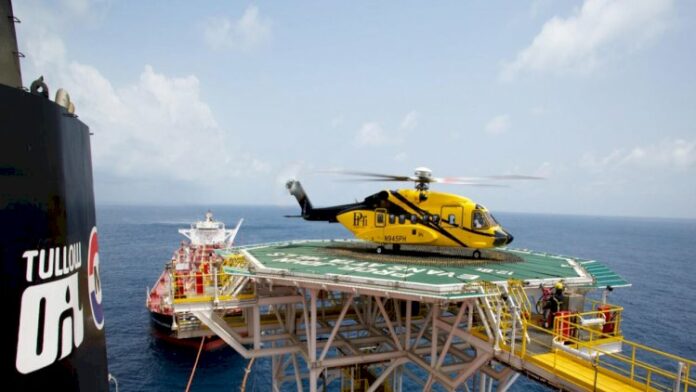
Tullow Oil plc (Tullow) announces that the Carapa-1 exploration well, drilled on the Kanuku licence offshore Guyana, has encountered approximately four metres of net oil pay based on preliminary interpretation, and has extended the prolific Cretaceous oil play into the Group’s Guyana acreage.     

Preliminary results of drilling, wireline logging, pressure testing and sampling of reservoir fluid indicate the discovery of oil in Upper Cretaceous age sandstone reservoirs. Rig site testing has indicated that the oil is 27 degrees API with a sulphur content of less than 1%. A detailed laboratory analysis of the oil quality will follow in due course.

The Carapa oil discovery suggests the extension of the Cretaceous oil play from the Stabroek licence southwards into the Kanuku licence. While net pay is lower than pre-drill forecasts, the 27 degree API oil supports the significant potential of the Cretaceous play on both the Kanuku and adjacent Orinduik licences.

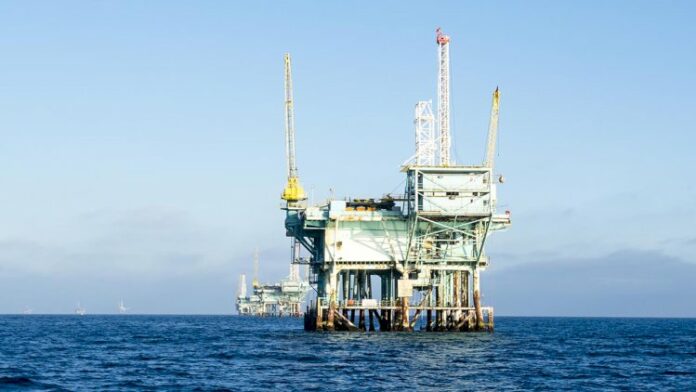
The Valaris EXL II jack-up rig drilled the Carapa-1 well to a Total Depth of 3,290 metres in 68 metres of water and the well will now be plugged and abandoned. Repsol Exploración Guyana, S.A. is the operator of the Kanuku block with a 37.5% stake. Tullow Guyana B.V. also holds a 37.5% stake with Total E&P Guyana B.V. holding the remaining 25%. 

Mark MacFarlane, Chief Operating Officer, commented:

“The Carapa-1 result is an important exploration outcome with positive implications for both the Kanuku and Orinduik blocks. While net pay and reservoir development at this location are below our pre-drill estimates, we are encouraged to find good quality oil which proves the extension of the prolific Cretaceous play into our acreage. We will now integrate the results of the three exploration wells drilled in these adjacent licences into our Guyana and Suriname geological and geophysical models before deciding the future work programme.” 

Underwater pile driving noise causes alarm responses in squid

0

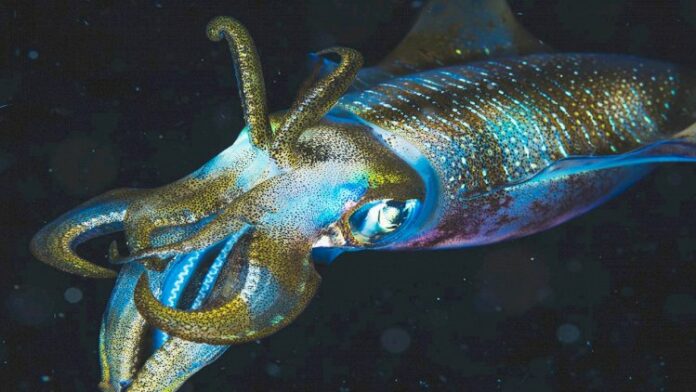
Longfin squid (Doryteuthis pealeii) are an important species in the east coast squid fishery, which is valued at about $40 million per year.

Exposure to underwater pile driving noise, which can be associated with the construction of docks, piers, and offshore wind farms, causes squid to exhibit strong alarm behaviors, according to a study by Woods Hole Oceanographic Institution (WHOI) researchers published in the journal Marine Pollution Bulletin.

Lead author Ian Jones, a student in the Massachusetts Institute of Technology-Woods Hole Oceanographic Institution Joint Program in Oceanography, said:

“This study is the first to report behavioral effects of pile driving noise on any cephalopod, a group including squid, cuttlefish, and octopuses.”

Squid use natural alarm and defense behaviors like inking, jetting, and changing color and patterns on their skin for communication and also for survival when they’re trying to avoid capture. Squids’ changeable skin gives them the ability to create extraordinary camouflage, enabling them to blend into the background and avoid becoming a meal.

Jones and his colleagues in the Sensory Ecology and Bioacoustics Lab at WHOI exposed longfin squid (Doryteuthis pealeii) to pile driving sounds originally recorded near the construction site of the Block Island Wind Farm in Rhode Island. The squid exhibited the same types of natural alarm and defense behaviors when they were exposed to the noises, but it’s what they did next that surprised the researcher team.

Jones said:

“The alarm behaviors occurred within the first several noise impulses, but they diminished quickly within the first minute of playback. That suggests a learned lack of response to the noise, as the squid perceive the noise stimulus may not pose an immediate threat, unlike the imminent threat of a nearby predator. This phenomenon is called habituation.”

Following a 24-hour rest period, the research team exposed the squid again. The squid exhibited similar responses and habituation rates, indicating that they had once again become sensitized to the noise.

WHOI biologist Aran Mooney, a coauthor and Jones’ advisor, said:

“It was surprising that they basically showed the same responses on day two. It was like the squid forgot the noise treatment from one day to the next, despite their super strong initial reactions. That kind of diminishing physiological or behavioral response to a noise may increase squids’ susceptibility to predators.”

In the next decade, the offshore wind industry is expected to expand rapidly in the Northeast U.S., causing concern among federal entities and commercial fishermen over how the behavior of commercially important fish and other species will be impacted.

Squid play a key role in the marine food web. Many marine mammals, seabirds, and fish feed off squid, as well as humans, who eat about three million metric tons of squid annually.

The results of the study could help management agencies and those in the offshore wind industry minimize disruptions to important fishery species like squid. The squid fishery on the east coast is valued at about 40 million dollars per year.

Jones said:

“Our results suggest that using longer periods between pile driving activity may discourage this type of long-term habituation, meaning squid will be more likely to respond to the noise with these alarm responses, and possibly more likely to successfully avoid predators with these responses as well. This study has given us a first look at how human-made noise can influence natural, ecologically important behaviors of these squid, and we still have much to learn about how these behavioral changes might influence squids’ interactions with predators and with other squid”.
 

Crew of dismasted sailing vessel was rescued southwest of Hawaii

0

The Coast Guard and good Samaritans aboard two commercial vessels located and rescued the crew of the 42-foot white dismasted sailing vessel Coco Haz III 656 miles west southwest of the Hawaiian Islands, Sunday.

Lt. Diane French, command duty officer, Coast Guard Joint Rescue Coordination Center Honolulu, said:

"We appreciate the support of the good Samaritans aboard the commercial vessels Nobility and Kalamazoo who made this rescue possible. This was a difficult case given the remote area of the search and a lack of communications with the crew. This case is a big win for the Automated Mutual-Assistance Vessel Rescue System, which the Kalamazoo subscribes to, the Safety NET message system, and the mariners out there willing to help each other."

The three crew are reportedly in good condition, with one possible concussion after further assessment by a flight surgeon, and en route to Honolulu aboard the motor vessel Kalamazoo.

Crews aboard a Coast Guard HC-130 Hercules and a U.S. Navy P-8 Poseidon airplanes conducted searches over several days. The Coast Guard Cutter Joseph Gerczak (WPC 1126) also responded from Honolulu, but shortly after reaching the search area, they turned back due to a low fuel state.

French said:

"We appreciate the support of the Navy Poseidon aircrews who were more than willing to fly and assist us during the holiday season. While the sailing vessel crew had supplies for the voyage they did not have and electronic position indicating radio beacon. Such a device would have provided their location rapidly and accurately, significantly shortening the search. We recommend anyone undertaking voyages offshore take an EPIRB."

Weather in the area was forecast from the National Weather Service as winds 17 to 28 mph and seas 6 to 10 feet.


VIDEO: Floating wind turbine installation by Maersk

0

Maersk Supply Service’s vision is to actively take part in solving the energy challenges of tomorrow.

Company supports customers in the offshore wind industry with integrated solutions and marine services for offshore installation of floating wind projects. 

Solent University game developers collaborate on vessel docking project

0

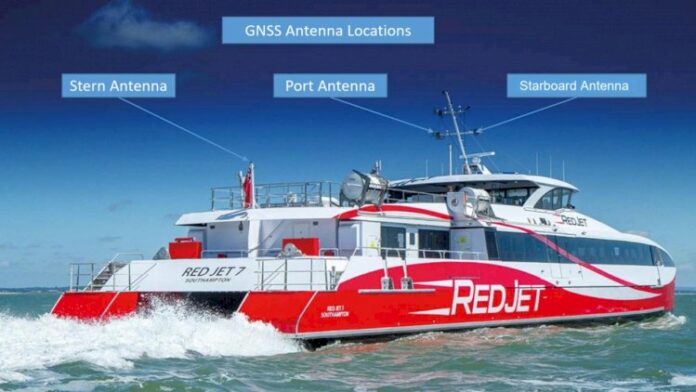
The Azurtane vessel docking user interface will be trialled on Red Funnel’s high-speed ferry, Red Jet 7, in March 2020. 

Solent University’s School of Media Arts and Technology has joined forces with maritime energy efficiency firm, Azurtane, to leverage the skills of student game developers in a high precision kinematics (HPK) marine vessel docking project.

The aim is to convert high precision positioning data into a user interface that will improve the vessel commander’s ability to visualise docking movements – reducing docking time and fuel consumption, as well as increasing safety.

Dave Cobb, Course Leader for Computer Games (Software Development) at Solent says:

“It’s great for our students, who are learning the techniques, languages and mathematics of game software, to be made aware how transferrable their skills can be. Gamers must be captured by and drawn into a game. That is also true in navigation. The closer an interface is to the user’s mind’s eye, the more likely it will be embraced.”

Two third year students have undertaken the initial visual design, and are now moving on to coding the input of millisecond data streams that will position the trial vessel with pinpoint accuracy. The user interface is due to be delivered for user trials on Red Funnel’s high-speed ferry, Redjet 7, in March 2020.

Explaining the reason for the collaboration with Solent University, Don Gregory, Azurtane’s Managing Director, says:

“Any industry needs fresh ideas and up to date communication methodology. And without specialist in-house digital design expertise, where better to get the very best than from students on computer game development courses? We have been in contact with several universities in the gaming field including the highly rated Leuven University in Belgium. But Solent University proved ideal due to its close proximity to our business and a very ‘can do’ attitude by both teaching staff and students.”

Azurtane is not only funding this industrial placement opportunity for students but is looking to continue and build on its partnership with Solent University with the aim of collaborating on future projects that will advance the safety and efficiency of deep-sea vessels.

Remind you that Royal Navy uses board games in anti submarine warfare training

VIDEO: Sangomar field development in Senegal

0

The Sangomar field, (formerly the SNE field), containing both oil and gas, is located 100 kilometres south of Dakar and will be Senegal’s first offshore oil development. First oil production is targeted in early 2023.

The Sangomar Field Development Phase 1 concept is a stand-alone floating production storage and offloading (FPSO) facility with 23 subsea wells and supporting subsea infrastructure. The FPSO is expected to have a capacity of around 100,000 bbl/day, with first oil targeted in early 2023.

The FPSO will be designed to allow for the integration of subsequent Sangomar development phases, including gas export to shore and future subsea tie-backs from other reservoirs and fields. Phase 1 of the development will target an estimated 230 MMbbl of oil. 

Scientists recorded the extraordinary sounds of fish communicating

0

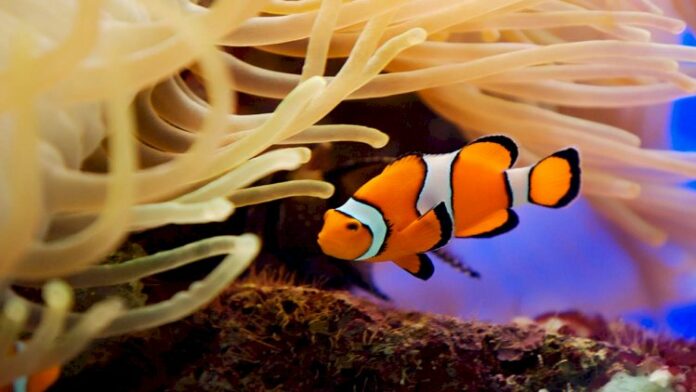
The extraordinary sounds of fish communicating to one another has been captured for the first time in the UK at SEA LIFE London Aquarium.

From a chorus of chattering clownfish to growling triggerfish, the amazing vocalisations recorded by Blue Planet II scientist and world leading expert in bioaucoustics, Professor Steve Simpson from the University of Exeter, reveal a hidden underwater soundscape.

The strange and surprising noises which include clicks, croaks, growls and trumpet-like hooting noises from a wide variety of fish species were recorded using specialist underwater recording equipment at the aquarium on London’s South Bank.

While latest scientific discoveries highlight the importance of sound for fish to interact with each other, choose habitats and explore their environment, the diverse sound recordings of fish singing to one another in the London Aquarium are the first ever to be recorded in this country.

James Wright, Displays Curator at SEA LIFE London Aquarium, said:

“Sound plays an important role in the health of our oceans and we were curious to find out how the diverse fish species at London Aquarium use language to communicate with one another or at the very least find a fish that had a vocal range like Mariah Carey in time for Christmas.

The fish sounds captured are incredible! No-one expected to hear a school of clownfish croak or a crayfish hoot like a trumpet – it’s truly amazing. Thanks to Professor Simpson and Abbey Road Studios we can now listen to our fish for the very first time and teach our guests just how important sound is to the ocean.”

Having spent his career travelling the world researching the importance of underwater soundscapes and the impact of humans on the marine environment, Professor Simpson and Kieran McCloskey from the University of Exeter collaborated with the London Aquarium’s, James Wright, to see what surprising noises they could discover.

  • Amongst 300 clownfish, croaking, popping and purring noises could be heard as a way of asserting their individual dominance in the group
  • Two native crayfish were recorded squabbling over food before one of the invertebrates surrendered, making a loud trumpet-like hooting noise
  • A triggerfish was recorded making a constant growling noise like a car engine
  • A group of seahorses were captured making clicking sounds as they threw opening their mouths to capture their food

Professor Simpson said:

“It was really exciting to step behind the scenes of the famous London Aquarium to capture the hidden soundscape of life within its exhibits. What we discovered is truly fascinating and highlights how fish are using sound to communicate to one another in an aquarium environment just like in more natural habitats."

Andrew Walker, sound engineer at Abbey Road Studios, said:

“I’m passionate about understanding how fish communicate and interact with their environment. There are many reasons fish make noise, including defending territories, warning against predators and during courtship. The more we listen the more we discover and I’m really happy to be working with SEA LIFE London Aquarium and Abbey Road Studios to educate more people about these amazing underwater soundscapes.

I never imagined having spent 30 years mastering music at the world-famous Abbey Road Studios that I would be remastering the hidden orchestra of fish sounds into a festive Jingle Bells track.”

SEA LIFE London Aquarium houses more than 7,000 creatures in the attraction across 15 themed zones including Coral Kingdom, Polar Adventure, Ocean Invaders: Enter the world of jellyfish and Rainforest Adventure.

Shelf Drilling awarded 35 years of contract extesions in Arabian Gulf

0

Shelf Drilling, Ltd. has announced that it has secured long-term extensions on four jack-up rigs in direct continuation of their respective current contracts in the Arabian Gulf. 

The High Island II, High Island IV and Main Pass I rigs have each been awarded a 10-year extension, while the Main Pass IV rig has been awarded a 5-year extension. All four extensions are at dayrates generally consistent with current rates for these rigs and allow for annual rate adjustments based on the
previous 12-month average Brent crude oil price. The extensions are expected to commence in Q1 2020.

David Mullen, Chief Executive Officer said:

“We are very pleased to continue our long-standing business in the Arabian Gulf and see these long-term extensions as a recognition of our leading performance and a further strengthening of our position in a strategically important market. All four of these rigs have been delivering exceptional safety and uptime performance in the region since 2005, and these awards are a testament to the quality of our rigs and, most importantly, our people. This renewed commitment is also an excellent opportunity for us to build on our proven track record of delivering wells safely and efficiently in the region.

These extensions will add significantly to our contract backlog and are yet another indication of the improving jack-up market. We remain focused on building this momentum throughout our business as the broader jack-up market recovery cycle unfolds.”
 

ExxonMobil secures exploration acreage offshore Egypt

0

ExxonMobil has secured more than 1.7 million acres for exploration offshore Egypt.

Mike Cousins, senior vice president of exploration and new ventures at ExxonMobil, said:

“These awards strengthen our exploration portfolio in the Eastern Mediterranean. We look forward to working with the government and deploying our proven expertise and advanced technology.”

The acquisition includes acreage in the 1.2 million North Marakia Offshore block, which is located approximately five miles offshore Egypt’s northern coast in the Herodotus basin. The remaining 543,000 acres is in the North East El Amriya Offshore block in the Nile Delta. 

ExxonMobil will operate both blocks and hold 100 percent interest. Operations, including acquisition of seismic data, are scheduled to begin in 2020.

Hesham Elamroussy, chairman and managing director of ExxonMobil Egypt, said:

“ExxonMobil has been a partner in Egypt’s growth for more than 115 years, and these awards reaffirm our commitment to pursuing high-quality opportunities in the country.”

The awards add upstream interests to ExxonMobil’s long-standing downstream presence in Egypt, where it has been a leading fuels, lubricants and specialties marketer since 1902.

Opinion: The digital transition is well underway, but there is still untapped potential

0

The digital transition of the maritime sector is well underway, according to Lotte G. Lundberg, Executive Secretary of the Danish Maritime Fund. However, she believes there is still untapped potential and would like to help the maritime sector in Esbjerg more.

The maritime sector has been accused of not keeping up with the digital transformation; indeed, it has had a reputation of hanging on a little too tightly to the analogue world. However, the reality is very different, promises Lotte G. Lundberg, who is the Executive Secretary of the Danish Maritime Fund, in an interview for the port of Esbjerg.

The fact is that the Fund has supported a wide range of initiatives and measures within digitalisation. Lundberg highlights particularly the development within the use of drones which have also been introduced at the port of Esbjerg. 

What is currently happening with digitalisation in the maritime sector and at the ports? And what does the near future hold? Lundberg provides a progress report and a glimpse into the crystal ball which hides huge potential for, for example, the ports and the companies located there.

– What is the general situation regarding digitalisation in the maritime sector?

At the Danish Maritime Fund, we stay well abreast of trends within both maritime research and business development, because many project managers come to us for funding. I can therefore confidently say that the digital transition of the maritime sector is well underway. Over the last few years, we have supported many projects addressing digitalisation in its broadest sense. In relation to port activities, we have particularly seen projects on automation using robotic and drone technology.

– What sort of development have you witnessed in recent years?

Obviously, not everything in the industry passes by our desk but we have provided early stage loans for many start-ups. Some started with a fledgling idea and got to proof of concept – others even as far as the market maturation process and subsequently to receiving funds from both public and private investors. The projects represent a broad spectrum of technical, operational and commercial activities that may be solved digitally.

For example, DanaDynamics developed a maritime drone for hydrographic surveying with funds from, initially, the Danish Maritime Fund and subsequently also from Innovation Fund Denmark and Syddansk Innovation, among others. In June, the drone was launched in Svendborg, and the innovative project became a highly visible product which has already been hailed as a very useful concept by many ports within the country. Another project which we have supported financially on more than one occasion is the research undertaken by the drone company Upteko which is developing autonomous drones that can provide support in many different contexts, such as dockings, man-overboard situations and inspections. A third project which I would like to mention is the brainchild of SubSea Robotics which has developed an underwater robot to clean ship propellers. This is also a project where we supported both the prototype and the further development.

– What role do the ports play in this development?

In many ways, the ports play an important role in the technological development. The ports know their customer portfolios on the harbour and can encourage collaborations within innovation. Based on my own experience as a board member of a couple of Danish ports, I know that ports have a unique opportunity to clarify the need for infrastructure through knowledge sharing and building networks and to generate business opportunities for all stakeholders in and around the ports.

– Do you see any specific potential within digitalisation at Port Esbjerg?

For many years, Port Esbjerg has been running a profitable business, providing services for the companies at the port whose core competencies are within the energy sector, both fossil and renewable. However, all things maritime are also wound up with the DNA of this place. Perhaps one might be able to foster even more entrepreneurial spirit by offering a setting around a maritime start-up hub with a view to supporting maritime growth? At the Danish Maritime Fund, we would certainly welcome many more applications from Esbjerg.

– 2020 is just around the corner and if you consult the crystal ball, what do you see happening in the future? Do you see any prominent trends within digitalisation in the maritime sector and at the ports?

When you operate in a mature sector, it is crucial that the players continue being competitive and attractive to their customers. This means that we must constantly increase our focus on streamlining, optimising, automating and digitising processes that are currently analogue. With regard to activities at ports, there are probably still endless opportunities for digitising and automating physical activities relating to port operations. However, just like we as private individuals expect to be able to bank, purchase goods and access citizens’ services online, customers in the maritime sector also expect digital customer service. Therefore, the players need to prioritise even more the transition to commercial digital platforms in order to improve the customer experience and to meet customers’ expectations and reward their loyalty. I know it can be difficult for ports to achieve that. After all, ports are – and will always be – providers of physical infrastructure and in itself, that would be rather hard to digitise. However, ports are also archives of inconceivable amounts of data which may be used to support customers and suppliers. No matter what, there are definite prospects in securing a good digital interface with customers, network-oriented digital communication with players at the port and digital marketing on all platforms to reach beyond national borders.

– Does digitalisation also have a role to play in relation to the climate issue?

It is quite clear that we cannot get away from addressing the problems of climate change when discussing the major issues of the maritime world. The ambition to become CO2-neutral is a huge challenge facing the maritime sector. The Danish maritime industry has set very ambitious targets on this. Therefore, all efforts are directed at research into and development of the fuel of the future.

For ports, it is a question of positioning themselves to provide CO2 targets of their own, supporting customer demands for a reduced climate footprint. Port Esbjerg is already well positioned with regard to a future with green shore-side electricity. However, the green transition will require knowledge. And knowledge is also about data. So once again, it will depend on digitalisation.

– As a fund, what will be your areas of focus in relation to digitalisation in the coming years?

The objective of the Danish Maritime Fund is to strengthen and contribute to shaping the future Blue Denmark. We focus particularly on initiatives within future ways of automating and digitising processes. This applies particularly to activities of a physical nature. However, there may also be a special need for creating platform solutions to support future ways of running a digital shipping business.

As a new departure this year, we have introduced yet another qualification requirement for applications. The reason is that we believe that we are well placed to support one or more of the UN’s 17 Sustainable Development Goals.

Our fund was established to bring growth to Danish shipping, the Danish shipbuilding industry and associated equipment production. And we would like to distribute the funds to all corners of the country. Therefore, we would certainly welcome many more applications from Esbjerg. We would strongly welcome and support brilliant ideas that would help the Danish maritime industry retain its position as market leader. Thus, we are very happy to support entrepreneurs, but mid-sized/large companies are also very welcome, if for example, their innovation departments are struggling with maturing an idea and advancing it to a stage where it can be approved by the management and board who may primarily be focused on day-to-day operations, return on investment, cash flow and  balance sheet items.