-3.7 C
New York
Home Blog Page 942

Royal Navy uses board games in anti submarine warfare training

0

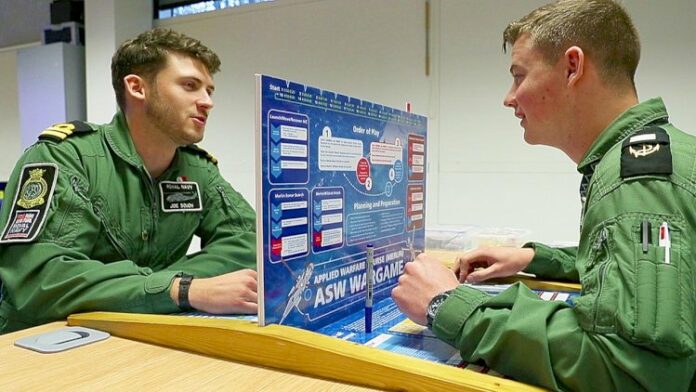
Instructors at British Royal Naval Air Station Culdrose have designed a set of bespoke board games based around hunting submarines.

They are now being used to train the next batch of observers and aircrewman who will have to use those skills for real.

Ed Oates, one of the brains behind the project, said:

“This is not about playing games. This is about learning by doing. The idea is that you take a game that people already know about and enjoy, and use that to teach the basics of anti-submarine warfare.”

The key thing about the games is that you have to get the science right, because that is the reality.

Mr Oates, is a former lieutenant commander and served as an observer in both Sea King and Merlin helicopters. Working with him is Gavin ‘Mini’ Cooper, who is a retired petty officer having served as a helicopter aircrewman. 

Both men now work for the company Babcock, using their expert knowledge to teach new aircrews at Culdrose’s Merlin Training Facility.

Their Anti-Submarine Warfare game is loosely based on the children’s classic Battleships, while a second helicopter search game, called Pingers, is more similar to the Asian strategy game Go. A third card game teaches Nato codewords in an elaborate version of Snap.

The pair are also developing another card game based on the mechanics of poker – although without any gambling – where the cards list tactical manoeuvres and the chips represent ships and helicopters.

Mr Oates added:

“We already do work with the trainees in the classroom and in our simulators. This is something extra where we can pull out the key points we want to teach and do that using a game. This is all about a long tradition of wargaming in the military.

Take our Anti-Submarine Warfare game for example.  Yes, it’s based on the game Battleships, but this uses the relevant up-to-date anti-submarine tactics. It follows the same 7-step NATO and Royal Navy planning process, analysis and search grids. The players take it in turns, then they debrief and switch over. Whether you playing as the aircrew or playing as the submariner, it allows you to understand the whole picture from both sides. The key thing about the games is that you have to get the science right, because that is the reality. You’ve got to do your maths and you’ve got to make sure your timeframe and the game mechanics are in sync with the maths.

The artistic part of designing the game is about making it fun, because it has to be enjoyable too as that is how the human brain works and that is an effective way to learn. These games could even be expanded to bring in multiple players or whole teams of players in different rooms representing the various ranks on the ships.”

The pair have now had ten sets of the Anti-Submarine Warfare and Pingers games made by design staff at Culdrose and will use them as an additional teaching tool on the Applied Warfare Course (Merlin).

The trainee aircrew are all part of 824 Naval Air Squadron, whose commanding officer, Commander Martin Russell, said:

"These new war games are a fantastic addition to the Merlin training course and introduce the basics of anti-submarine warfare to the aircrew in a really innovative format. I am sure the trainees will enjoy getting to grips with these games as part of all of their training here at Culdrose in the classrooms, simulators and in real aircraft. I can’t praise highly enough the work of Ed Oates and Gavin Cooper, who I know have put so much effort into producing these games. Their enthusiasm and commitment is a credit to Babcock and the Royal Navy.”
 

MEYER WERFT to launch three cruise ships in 2020

0

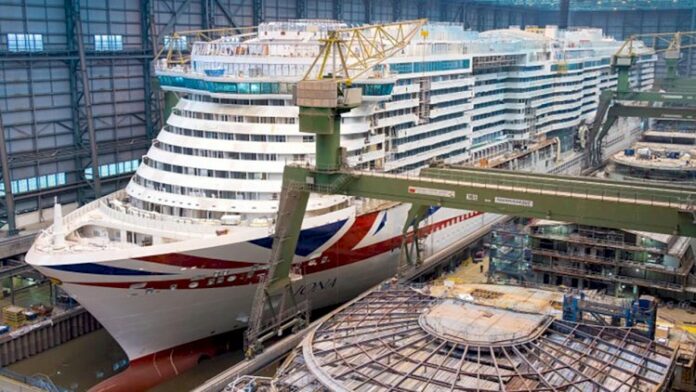
MEYER WERFT has had a strenuous and success-ful 2019. This year the shipyard has handed over three modern cruise ships to interna-tional cruise lines. In the years ahead, many demanding and innovative large projects will also be implemented.

Tim Meyer, Managing Director of MEYER WERFT, says:

"In the last twelve months alone, we have taken on 395 new employees in Papenburg, thus enlarging our team to more than 3625 people. We continue to recruit new col-leagues in all parts of the shipyard."

The shipyard has taken on all the 45 trainees who passed their final examina-tions. Moreover, a further 16 trainee positions have been instigated to ensure that that the future workforce receives the necessary qualifications directly on the shipyard.

At the same time, MEYER WERFT continues to invest in its state-of-the-art shipyard facilities. A modern logistics centre is currently under construction and should be com-pleted early 2021, to the tune of around 40 million Euro. Optimised stock-keeping in the new logistics centre will facilitate better coordination of material transportation and let us reduce the use of external storage facilities.

Tim Meyer continues:

"Our order book allows us to put us on a good footing for the future. We have to take this chance. Together with partners and suppliers, this year our again whole team has revealed the passion and motivation that we dedicate to our ship projects, despite all the challenges."

MEYER WERFT is working on new solutions to further expand its technology leader-ship in the construction of cruise ships. Intensive research is being pursued into fuel cell technology and other technical innovations on passenger ships on the path towards car-bon-neutral cruise ships.

Three cruise ships will once again be leaving the shipyard in 2020. These include Iona as the second cruise ship for the British P&O Cruises to be fitted with a low-emission LNG propulsion system. Furthermore, the Spirit of Adventure will be handed over to Saga Cruises and the Odyssey of the Seas to Royal Caribbean International. The order books are filled to the end of 2023 with nine cruise ships, including seven with an LNG propulsion system.

On 28 January 2020, MEYER WERFT will have a quite exceptional cause for celebra-tion with the 225th anniversary of the founding of the shipyard in Papenburg.

First port company in the world to receive the award from GIMI

0

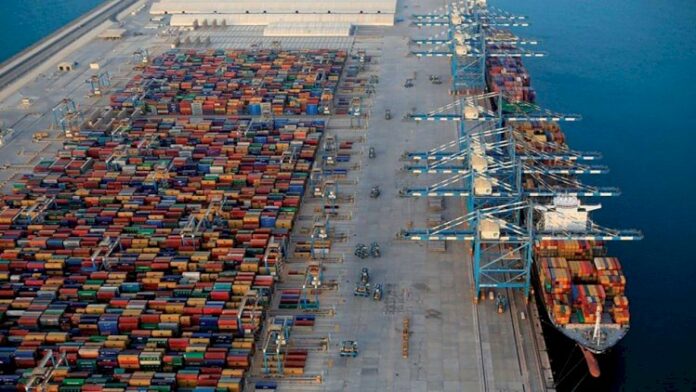
Abu Dhabi Ports has recently been awarded with the prestigious Innovative Organisation Level 3 Certification by Global Innovation Management Institute (GIMI).

The Certification was conferred by the Boston-based think tank during its annual conference, which took place in Colombia in November 2019.

The recognition demonstrates the value of initiatives such as Abu Dhabi Ports’ highly successful collaborative ideas platform, ‘IBTIKAR’ – Arabic for ‘innovation’. IBTIKAR uses a systematic approach to gathering and processing ideas from employees, customers and other stakeholders. It ensures that ideas can be successfully implemented and encourages teamwork and participation in order to improve the success of the business.

Abu Dhabi Ports is the first port and the first maritime and transportation organisation in the world to receive the award from GIMI.

GIMI is recognised as the international gold standard for Innovation Management, having certified over 10,000 individuals and over 800 organisations worldwide.

Supporting the UAE’s National Innovation Strategy, platforms such as IBTIKAR are not only cultivating novel ideas that are helping businesses improve their operations but are also enabling these organizations to contribute more towards growth of the local and national economy.

Group Chief Executive Officer of Abu Dhabi Ports, Captain Mohamed Juma Al Shamisi, said:

“Innovation is of paramount importance here at Abu Dhabi Ports. We are committed to delivering on the goals set out in the Abu Dhabi Economic Vision 2030, and we are proud that this award recognises our efforts to find transformational ways to develop sustainable infrastructure capable of supporting our country’s economic growth. We are inspired to continue innovating thanks to the continued support of the Abu Dhabi leadership.”

Dr. Hitendra Patel, Executive Director of GIMI, presented the award with the Board of Directors of GIMI in attendance. Speaking on behalf of GIMI, he said:

“We developed a four-level organisational certification programme which also serves as a pathway towards leadership in innovation. We offer our congratulations to Abu Dhabi Ports for becoming the first maritime company in the world to achieve Innovation Level 3 Certification by GIMI. The recognition highlights their position at the vanguard of corporate innovation in the region, sets the example for others, and leads the Middle East in step with the ongoing economic change.”

Eiman Al Khalaqi, Vice-President of Innovation, Abu Dhabi Ports, said:

“Innovation has always been an integral part of our everyday business here at Abu Dhabi Ports, and this certification is a recognition of this attribute. We are privileged to showcase to the world the enormous talent and capabilities of our people, and this is only the beginning.”

Sia Partners – the official representative of GIMI in the GCC – also expressed its support of Abu Dhabi Ports. Rafael Lemaitre, Partner of the international management consulting firm, said:

“We are proud to have worked with Abu Dhabi Ports, which excels in its progressive ambition to become a global leader in innovation. The company embodies the omnipresent desire for improvement, leading to radical development and significant business impact. In light of its current pace of change, we are certain that Abu Dhabi Ports has a promising future ahead, and we are honoured to support the organisation in its vision.”

Brittany Ferries pets and their owners can travel in confidence in 2020

0

Pets and their owners can travel with confidence in 2020, with no additional checks or administration. That’s because the prime minister’s deal has been passed by parliament and should become law in January. A transition period will follow until the end of next year, during which borders can be crossed as normal and pet passports will continue to apply.

This year Brittany Ferries has seen a significant drop in the number of pets carried. That follows six consecutive years of growth and the addition of more pet-friendly cabins to its 13-ship fleet.

More than 100,000 pets were expected to travel with the company in 2019.  However, only 88,100 dogs and cats have made the voyage across the English Channel or Bay of Biscay this year. That’s a drop of around eight percent on 2018 figures.

Brittany Ferries says thousands of owners held back due to worries about taking Fido or Felix abroad. Pet vaccinations, additional checks upon arrival abroad and the validity of the pet passport scheme were concerns raised throughout the year. Thanks to the Brexit deal, these concerns will not apply during the Brexit transition year ahead.

Christophe Mathieu Brittany Ferries CEO said:

“Passengers with pets rely on Brittany Ferries to carry them seamlessly across the channel, sometimes many times a year. Throughout 2019 we did our best to offer reassurance, but many people were confused and concerned, so chose to stay at home rather than take to the seas. Today however, turbulent waters have calmed for the next twelve months at least. Nothing should change during the Brexit transition year. And that means you can book a 2020 trip with confidence, whether you own a pet or not.”

This year Brittany Ferries’ summer period (July to September) was hit by an overall 6.6% downturn in passenger numbers. Routes linking Portsmouth, Poole and Plymouth with destinations in France suffered the most.  However, the company believes passengers will return in 2020 and wishes all those operating in the travel sector a brighter year ahead.
 

VIDEO: Plastic catcher was launched in the Port of Antwerp

0

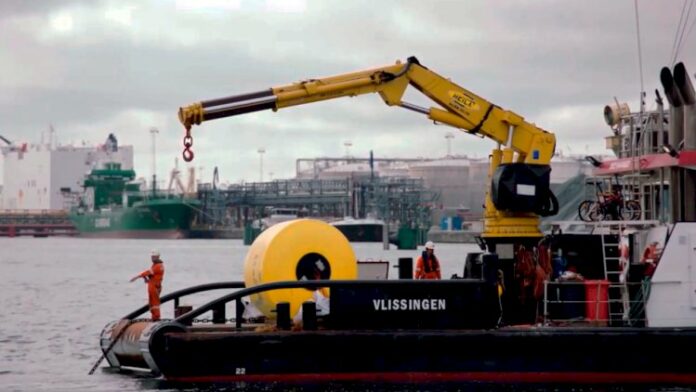
Plastic catcher "Patje Plastic" will prevent plastics and other unwanted floating waste from further spreading via the waterways.

"Patje" has not only been given a name, but also a pair of eyes, because he is an important employee for a series of sustainable projects that Port of Antwerp actively endorses.

This innovative system consists of 75% recycled material, and works on a wind, wave and gravity basis. A floating arm 100 metres long and 1,5 metres deep leads the plastics to the mouth of the plastic trap.

Study: Ocean ‘dead zones’ could be expanding far quicker than currently thought

0

A study led by Dr Sabine Lengger measured the stable isotopes of organic carbon in sediment cores taken from the ocean floor

‘Dead zones’ within the world’s oceans – where there is almost no oxygen to sustain life – could be expanding far quicker than currently thought, a new study suggests. The regions are created when large amounts of organic material produced by algae sinks towards the seafloor, using up the oxygen present in the deep water. Computer models can predict the spread of these zones, with the aim being to provide an insight into the impact they might have on the wider marine environment.

However, a study published in Global Biogeochemical Cycles suggests that dark carbon fixation – caused by the presence of anaerobic bacteria in the deeper water column – needs to be incorporated into these models. The research was led by Dr Sabine Lengger, a scientist at the University of Plymouth, and involved researchers from universities in the UK and the Netherlands.

They measured the stable isotopes of organic carbon in sediment cores taken from the floor of the Arabian Sea, one of the world’s large natural dead zones, in order to get a clear understanding about what is contributing to the organic matter contained within them.

This value is a mixture of all the distinct signatures from all the organisms that produced this carbon – thought to be mostly algae and bacteria living in the oxygen-rich, light, surface ocean where it sinks from. However, using a distinct biomarker produced by anaerobic bacteria, they suggest that around one fifth of the organic matter on the seafloor could in fact stem from bacteria living in or around these dead zones.

In the paper, the scientists say this casts doubt on current predictions around the impact of increasing atmospheric carbon dioxide concentrations, and consequent rising temperatures.

They in fact believe the dead zones could be expanding much faster than previously thought, and that future calculations must take the bacteria into account in order to accurately predict the full impacts of climate change and human activity on the marine environment.

The new study adds to warnings issued at COP25 by the International Union for the Conservation of Nature (IUCN), where it was reported that the number of known hypoxic dead zones has skyrocketed from 45 to 700 sites.

Canaveral Lock at Port Canaveral to close for four months

0

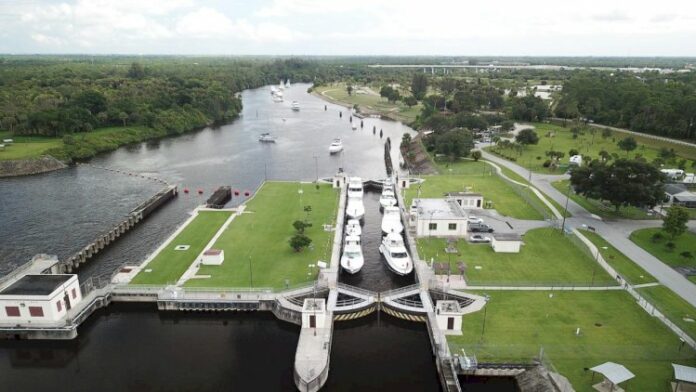
Canaveral Lock will be closed from Jan. 1, 2019, to March 31, 2020, so crews can complete necessary repairs. It’s the first time in a decade that the Lock will be closed for maintenance.

The U.S. Army Corps of Engineers Canaveral Lock lockmaster Daniel Hazebrook announced plans to conduct needed repairs and maintenance on the Canaveral Lock. According to the Corps, the work is necessary to repair aging and damaged infrastructure in addition to improving public and vessel safety. The Lock will be closed and dewatered from Jan. 1, 2020, through March 31, 2020

The Port recognizes the importance of Canaveral Lock and the maintenance required for the dependability and future operation of the Lock.

During the maintenance closure – the first in 10 years – the Lock chamber will be dewatered allowing crews to perform inspections, replace corroded steel structure, paint, install new gate seals and repair manatee protection system components. During the closure, barges, floating cranes and divers will be working in the Lock entrance, requiring vessel operators in the area to use minimal speed and caution for safety.

Located between the Port’s West Turning Basin and the Banana River, Canaveral Lock was built in 1965 by the Army Corps of Engineers to provide vessels with a safe passage from the river to Port Canaveral and the Atlantic Ocean. Operated by the Army Corps of Engineers, the Lock reduces tidal current velocities in Canaveral Harbor, prevents entry of hurricane tides into the river and prevents saltwater intrusion. The largest navigation lock in Florida, Canaveral Lock was built bigger than planned to allow passage of huge Saturn boosters that lofted Apollo rockets into space for NASA.

Canaveral Lock has a 47-ton sector gate that’s 23 feet high, 54 feet wide and 54 feet across the end. The gate is similar to gates on the Okeechobee Waterway gate. The Lock chamber is made of earth walls with a stone bottom and stone riprap on its walls.

The Lock changes water levels by an average of 3 to 4 feet by releasing water from the ocean side to the river side or vice versa. Five Army Corps of Engineers personnel work at the Lock. Petroleum, spacecraft components and commercial fishing vessels are major commodities that pass through the Lock.

Sea trials of Damen Mexican Navy frigate complete

0

ARM Reformador project shows economic impact of local shipbuilding.

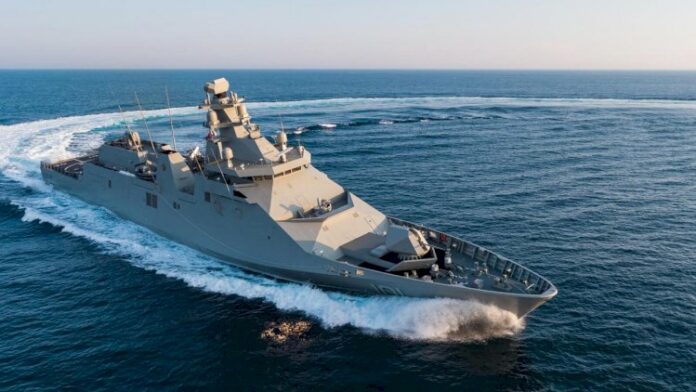
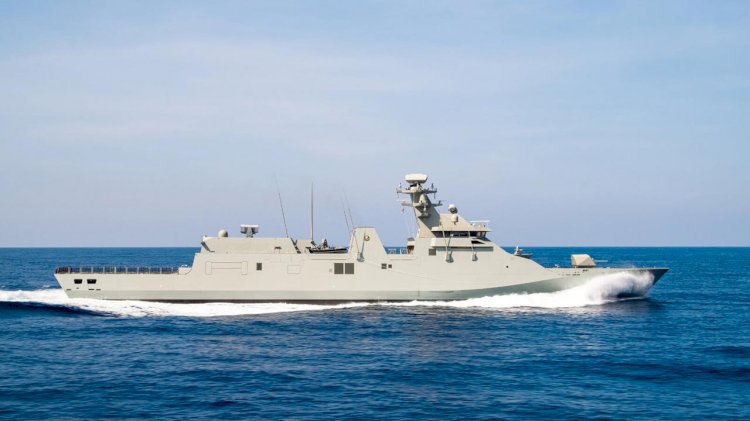
Working in close cooperation, Damen Shipyards Group, the Mexican Navy, subcontractors and suppliers have completed successful sea trials of the Mexican Navy’s POLA-class ARM Reformador. The programme of sea trials was comprehensive, including testing of platform and combat systems in addition to training of Mexican Navy crews. The completion of these sea trials indicate how the project as a whole is progressing: on budget and actually a few weeks ahead of the contracted schedule.

The ARM Reformador is the latest example of how Damen forms partnerships with navies around the world to build naval vessels in local yards. In this way, the Dutch shipbuilding company is using its considerable amount of experience and expertise to build technologically sophisticated naval vessels in Damen customers yards or in third party yards.

Damen has built up a strong relationship with the Mexican Navy over the last decade. This has resulted in the construction and delivery of more than ten naval vessels of various designs. Damen has also worked closely with yards like the ASTIMAR 20 naval shipyard in Salina Cruz, Mexico, where the ARM Reformador has been built.

These collaborative efforts are ensuring a significant transfer of technology and knowledge into the Mexican shipbuilding industry. For example, in order to maximise the local impact of this current project, Damen has placed contracts at local companies for supplies and assistance during the construction of the ARM Reformador.

Horacio Delgado, Damen’s commercial manager for Mexico, notes:

“This project is having a very positive impact on the local economy. More than 70% of the labour is being realised in Mexico – creating jobs and enabling local companies to develop their skills. Thanks to our excellent cooperation with the Mexican Navy, we are ensuring that this vessel is being built in Mexico, by Mexicans, and for Mexicans.”

The 107-metre long POLA-class ARM Reformador is the Mexican equivalent of Damen’s SIGMA Frigate 10514. A key point here is that the ARM Reformador represents Damen’s tenth time building a SIGMA Frigate. The implications of this are clear: the vessel that has been built for the Mexican Navy is a proven design that benefits from the wealth of knowledge possessed by the Dutch naval shipbuilding industry. This comprises world-renowned research institutes and a dedicated naval cluster of international specialist suppliers such as Thales.

Frank Verhelst, POLA project director at Damen, adds:

“This shows the real value of the project. Combining the many benefits of local construction with the high quality of Dutch naval shipbuilding – from Damen and our network of trusted suppliers and partners.”

The ARM Reformador project is also a reflection of Damen’s CSR policies. The company has contributed to various local social activities and projects while working in Mexico. Damen’s support of the Mundo de Talentos in the State of Chiapas is an example of this. Mundo de Talentos (World of Talents) is the first sister school of IMC Weekendschool in Latin America and introduces students of limited resources from 10-13 years old to the world of interesting professions and study choices.

VIDEO: Cargo ship runs aground on Istanbul coast

0

VIDEO: Balık Adam

The Liberia-flagged container ship Songa Iridium runs aground near the Rumelian Fortress on the Bosphorus, Istanbul. 

A cargo ship collided with the shore in Istanbul's Bosphorus strait on Friday, according to the governor's office and a witness, prompting authorities to close the waterway.

There were no injuries or casualties, the governor's office said, adding that the ship reported engine failure shortly before the collision.

The Bosphorus was temporarily closed to traffic, and the ship was being towed, it added.

The Liberian-flagged Songa Iridum had come from Odessa, Ukraine and was headed for Istanbul's port of Ambarli. 

A month ago the small bunker tanker Delfi under the flag of Moldova suffered a disaster on the roads of the Port of Odessa.

SAAM Towage will provide services for EDP project at the Port of Acajutla

0

SAAM Towage to enter El Salvador with Energía del Pacífico and reinforce its presence in Central America.

The Managing Director of SAAM Towage, Felipe Rioja, celebrated the company’s upcoming launch in the new market: El Salvador:

“We will provide services for the Energía del Pacífico (EDP) project at the Port of Acajutla, which reinforces our presence in Central America and our commitment to the region.”

The long-term agreement with EDP calls for allocating three tugs, two of which are new, to power plant operations. The 378 MW plant will be powered by liquefied natural gas and includes a floating storage and regasification platform.

The initiative will supply 30% of El Salvador’s energy demand, helping to diversify the country’s energy matrix and reduce environmental impact.

The project will begin to inject energy into the grid by the end of 2021, but our tugs will begin to operate in May 2021. The vessels are azimuth tugs, 32 meters in length, specially designed to meet the requirements of offshore operations and escort vessels.

SAAM Towage – with operations in Brazil, Canada, Chile, Costa Rica, Ecuador, Guatemala, Mexico, Panama and Uruguay – operates at more than 60 ports in the Americas, servicing over 25,000 ships a year.

It provides berthing and de-berthing services for ships; assistance, salvage and towage for barges and civil construction projects; specialized services for ships at off-shore terminals and anchoring oil and gas platforms.