2.4 C
New York
Home Blog Page 1053

New marine simulator centre considered key to UK Maritime 2050

0

A £7m new marine simulator centre has been officially opened at Solent University in Southampton. Presenting the new simulator, UK Chamber of Shipping president Sir Michael Bibby said it should play a vital role in delivering UK's Maritime 2050 policy objectives.

Facilities at the site include eight full-mission bridge simulators, a full-mission engine room simulator, over 50 part-task simulators, high voltage, dynamic positioning and liquid cargo simulators, on- and off-shore crane simulators, ECDIS, GMDSS and VTS suites, and four multipurpose desktop simulation and debriefing classrooms.

The centre is able to simulate more than 400 different ships and currently features about 140 ports worldwide. Every simulator and classroom is interconnected, with 35km of cabling allowing joint exercises to be conducted by students.

The new equipment enables the School to provide several new specialist training courses, like dynamic positioning, vessel traffic management and ice navigation. The simulators will also be used to support the university’s research work, in areas like sea traffic management, the machine execution of Colregs, and more studies analyzing navigational safety and the human-machine interface and operations.

What is more, the facilities include a 'Virtual Shipyard', to test ship designs or create digital twins of existing vessels. The simulators can also be used to test new port developments and berths, as well as being used for marine pilot training.

Professor Syamantak Bhattacharya, dean of the school, highlighted that the centre will be meeting the high demand for digital skills across the maritime workforce. He added that as training periods onboard get reduced, training providers must ensure that through simulation they are able to fill the gap.

In addition, Mr. Bibby stated that:.."This is a really important time for investment in such fantastic facilities. We must remain a world-leading cluster of expertise in the new areas of shipping that will develop over the next 30 to 40 years. The seafarers that will train here are the future of our maritime nation, and this centre should make it better and safer for all"

Source:safety4sea

Shetland project cuts tidal energy costs by 15%

0

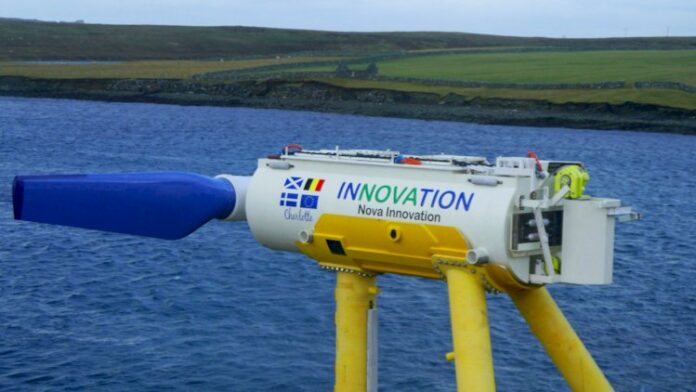
The European marine energy project, Enabling Future Arrays in Tidal (EnFAIT), has reduced the cost of tidal power by 15% and grown its supply chain from four to 14 EU countries.

By 2022, when the project closes, the project consortium forecasts a cost reduction exceeding 40%, potentially attracting interest in tidal power from global investors.

The €20m EnFAIT, which began 18 months ago, uses Nova Innovations’ tidal array technology installed off the coast of Scotland’s Shetland Isles.

The project is an academic-industry collaboration between nine European partners, demonstrating the economic viability of tidal power and paving the way for a new industrial marine manufacturing sector.

Nova is leading the consortium. Chief executive Simon Forrest said: “Even at this early stage of the project, we have achieved significant cost reduction successes, and EnFAIT is already helping to map out the world’s most extensive tidal power supply chain across Europe."

"The cost reduction pathway is becoming “increasingly clear,” he added.

Nova says further cost reductions will be driven by improvements in the design of its underwater turbines, learnings from the optimal arrangement of the turbines, and improved measurement and forecasting of tidal flows at prospective sites.

Advances in forecasting, led by engineers from the Offshore Renewable Energy (ORE) Catapult, have contributed to the faster than expected cost reductions so far.

The array itself is now supplied with 100% EU-manufactured content, bringing the number of EU supplier countries, throughout the continent, up to 14.

The array is already powering homes and businesses across Shetland.

There are more than 60 Scottish companies in the project supply chain.

Forrest said: “As the project progresses, we are discovering new insights into the way tidal turbines interact with each other, and we are also gaining knowledge of the elegant interplay between the turbines and the tidal flows around them."

This new knowledge is allowing us to maximise yield and creates the foundation for ‘eureka’ design moments that will facilitate further falling costs.

Other consortium members include Belgian renewables developer ELSA, Mojo Maritime in the UK, RSK Environnement in France and the University of Edinburgh.

Source:renews

Marine insurance blockchain tech sees another participant

0

Insurwave Limited, a marine insurance blockchain joint venture company from EY and Guardtime, announced a new agreement with Zhuhai Port Holdings Group to collaborate on the development of frictionless trade processes across China’s Greater Bay Area, and onward into international supply chains.

Specifically, the new signed Memorandum of Understanding (MoU) aims to connect the blockchain technology with port logistics systems, to enhance the efficiency of trade conditions.

Shaun Crawford, EY Global Vice Chair for Industry commented…"Combining the knowledge from Insurwave with Zhuhai Port Holdings’ experience in port logistics, we’re pleased to establish a joint initiative for identifying blockchain’s applications in cross-border financial services, logistics and trade."

He continued that the timing of this agreement is ideal, as the company was looking for additional ways to support the Greater Bay Area plan and the Belt and Road initiative.

Concluding, Insurwave consists of EY, Guardtime, Zhuhai Port Holdings, A.P. Møller-Maersk, Microsoft and insurance industry leaders Willis Towers Watson, XL Catlin, MS Amlin and ACORD.

NAPA joins Internet of Ships Open Platform

0

NAPA, provider of maritime software, services and data analysis, announced that it has become the first service provider for ClassNK-owned Ship Data Centre’s Internet of Ships Open Platform (ShipDC IoS-OP).

NAPA will provide ship performance analytics and voyage optimization capabilities for this universal platform developed to share vessel operational data between stakeholders.The goal of IoS-OP is to create a digital maritime cluster, by decreasing the costs of data ownership and portability of owners and operators, and in the meantime enable yards and manufacturers to have access to a data pool, that will act as the base of additional innovation and research.

NAPA aims to present to shipping stakeholders with vessel performance analysis, according to the information supplied, which will be even possible from simple noon reports through to data drawn from a vessel’s Automatic Identification System (AIS).

In addition, Naoki Mizutani, Managing Director, NAPA Japan, commented that collecting data on its own doesn’t add value unless you can turn it into insight.

How are we going to dramatically reduce emissions and stay profitable? How can we keep making ships that perform better, and safer? To answer these questions collaboration is key. Being able to draw on data from the whole IoS-OP consortium means we can get better results, and maximise the benefit we provide to the whole community.

Concluding,the IoS-OP consortium was launched in June 2018 by ShipDC, a ship data centre that aims to establish a platform to use data collected from vessel operation.

How to establish a system operation security

0

The lack or even absence of a system operation security policies can result to cyber crimes. When an unnecessary or vulnerable service is activated there is a possibility that it could be detected through network scanning and an unauthorized access or malicious code distribution will be exploited to hack the service.

For instance, KR refers to a Server Message Block (SMB) protocol used to exploit a vulnerability that could bypass the network traffic to an SMB server. This allows hackers to steal the corresponding login information of Windows PC users.

In light of the cyber threats, KR provides guidance for maritime cyber security system requirement:

  1. Operating system interface restriction (231.1): It should be ensured whether unauthorized interfaces, ports or services exist in the operating system;
  2. Change security setting (213.3): When introducing information assets, the default value should be newly set or changed according to the security policy or change management standard of the company;
  3. Change management (213.4): Prior to changing the system, the relevant data should be backed up and saved in the possibility of a system failure;
  4. Prevent auto-execution (213.6): All software accessing information assets should be configured to nor run automatically;
  5. Performing change management (213.7): When performing change management, pre-test should be conducted and change management records should be kept and managed.

Source:safety4sea

2020 sulphur cap guidelines now available

0

The 74th session of the IMO’s Marine Environment Protection Committee (MEPC 74) concluded on Friday with a comprehensive set of guidelines for the consistent implementation of the 2020 sulphur cap.

Taking into account the 1 January 2020 global implementation of 0.50% sulphur limit for the fuel oil used on board and the 1 March 2020 carriage ban of non-compliant fuel, the Committee adopted the subject Guidelines.

In addition, the FONAR is to include a description of the voyage plan, evidence of past attempts, and future plans, to obtain compliant fuel, operational constraints that prevented the use of compliant fuel and records of previously filed FONARs.

Distillate fuels

A key challenge with distillate fuels is low viscosity. Low viscosity may lead to internal leakages in diesel engines, boilers and pumps. Equipment makers recommendations should be taken into account, and adequate testing, maintenance and possible installation of coolers, etc., may be performed.

As the residual fuels are usually heated and distillate fuels are not heated, attention needs to be given to the cold flow properties of distillates. Cold flow property challenges can be managed by heating the fuel.

Fuel temperature should also be kept about 10°C above the PP in order to avoid any risk of solidification, however this may not reduce the risk of filter blocking in case of high CFPP and CP.

It is good practice to review the possibilities of heating arrangements for distillate fuels on board. This is usually very limited, as it is not standard practice to have heating arrangements in distillate storage, settling or service tanks. Transfer arrangements may be adapted to pass through a residual fuel oil heat exchanger should the need arise.

Residual fuels

It is essential to distinguish between "Fuel stability" within a single batch of fuel and "Fuel compatibility" between different fuel batches.

Regarding stability, the fuel must be stable and homogeneous at delivery and it is the responsibility of the fuel oil blenders and suppliers to ensure this.

It is recommended that ships have a commingling procedure. The procedure should mainly aim to ensure new bunkers are loaded into empty tanks to the extent possible. In the event that a ship finds itself possibly having to commingle a new bunker with bunkers already on board, then it is important that the ship determines the compatibility between the two said bunkers before comingling.

The reference test method shall be the total potential sediment test in accordance with ISO 10307-2:2009.

Key technical considerations

Tank cleaning is recommended when using a residual fuel tank for storing these new fuels. This is to avoid sludge that has gathered in these tanks from entering the fuel system.

Heating requirements, because of the cold flow properties of most of these new fuels, permanent heating of the fuel may be necessary to limit the risk of wax formation, also in storage. This is especially important in colder regions.

As for fuel treatment system, some of these new fuels may include cat fines and/or sediments and as a result need on board cleaning. Separator temperature and settings should be adjusted to the fuels' viscosity and density.

ISO Standard for residual fuels

The current ISO 8217:20176 specification for marine fuels considers the diverse nature of marine fuels and incorporates several categories of distillate or residual fuels, even though not all categories may be available in every supply location it covers all marine petroleum fuel oils used today as well as the 0.50% Sulphur fuels of 2020.

The General requirements, in the ISO 8217:20176 specification for marine fuels and characteristics, included in table 1 and 2 of ISO 8217:20176 identified safety, performance and environmental concerns and further considers the on board handling requirements, including storage, cleaning and combustion aspects of all fuel oils used today and the anticipated fuel blends of 2020, irrespective of the sulphur content of the fuel oils.

It is important that any new standards address and do not preclude the use of renewable and alternative non-fossil crude derived products, so long as they comply with the chemical properties specified for these fuel oils.

Survey and certification by Administrations

When conducting a survey according to regulation 5 of MARPOL Annex VI, the Administration should perform a survey of a ship to ensure that the ship complies with the provisions to implement the 0.50% sulphur limit. Especially, the Administration must check if the ship carries compliant fuel oils for use, based on the Bunker Delivery Note (BDN) onboard, any other document or fuel oil samples as appropriate consistent with the provisions of regulation 18 of MARPOL Annex VI.

If carriage of HSHFO for use is identified, the Administration should check whether regulation 3.2, regulation 4 of MARPOL Annex VI are applied to the ship, or if the ship faced a fuel availability problem and is operating pursuant to regulation 18.2 of MARPOL Annex VI.

Control measures by port States

Specifically, the port State should carry out initial inspections based on documents and other possible materials, including remote sensing and portable devices. Given "clear grounds" to perform a more detailed inspection, the port State may conduct sample analysis and other detailed inspections to verify compliance to the regulation.

Control on fuel oil suppliers

Designated authorities should, if necessary, take a sample and test fuel oils from bunker barges or shore bunker terminals. Sampling of fuel oils in bunker barges or shore bunker terminals can be taken and tested in the same manner that the MARPOL delivered fuel oils are tested by the PSC.

All possible efforts should be made to prevent a ship being unduly detained or delayed. If a sample is analysed, sample analysis of fuel oils should not unduly delay the operation, movement or departure of the ship.

Information sharing related to non-compliances under MARPOL Annex VI

When a Party finds a non-compliance of a ship or a fuel oil supplier, the information of the non-compliance should be reported to the MARPOL Annex VI GISIS module (regulation 11.4).

Publication of information on non-compliant ships/fuel oil suppliers or a reporting scheme to IMO to be registered on centralized information platforms are proposed as elements of an effective enforcement strategy.

Several PSC regimes have managed to use the publishing of information regarding substandard ships/fuel suppliers as a deterrent to non-compliance. Port States also must report detentions of ships to IMO which may impact the future PSC targeting of the ship. The IMO GISIS database already makes available certain information related to non-compliances with the MARPOL Annex VI regulations.

Fuel oil non-availability

Regulation 18.2.1 of MARPOL Annex VI mandated that in case compliant fuel oil cannot be obtained, a Party to MARPOL Annex VI can request evidence describing the attempts made to obtain the compliant fuel oil, including attempts made to local alternative sources.

Regulations 18.2.4 and 18.2.5 then require that the ship informs its Administration and the competent authority of the port of destination on the inability to obtain compliant fuel oil, with the Party to notify IMO of the non-availability. This notification is commonly referred to as a Fuel Oil Non-Availability Report (FONAR).

If a ship, in spite of its best effort to obtain compliant fuel oil, be unable to do so, the master/company must:

  • Present a record of actions taken to attempt to bunker correct fuel oil and provide evidence of an attempt to purchase compliant fuel oil in accordance with its voyage plan and, if it was not made available where planned, that attempts were made to locate alternative sources for such fuel oil and that despite best efforts to obtain compliant fuel oil, no such fuel oil was made available for purchase;
  • Best efforts to procure compliant fuel oil include, but are not limited to, investigating alternate sources of fuel oil prior to commencing the voyage. If, despite best efforts, it was not possible to procure compliant fuel oil, the master/Company must immediately notify the port State Administration in the port of arrival and the flag Administration (regulation 18.2.4 of MARPOL Annex VI).

Possible safety implications relating to fuel oils meeting the 0.50% m/m sulphur limit

Identified potential safety implications include, but are not limited to, the following:

  1. Stability of blended fuel oil;
  2. Compatibility, including new tests and metrics appropriate for future fuels;
  3. Cold flow properties;
  4. Acid number;
  5. Flash point;
  6. Ignition and combustion quality;
  7. Cat fines;
  8. Low viscosity;
  9. Unusual components.

Source:safety4sea

DNV GL passes ‘icy’ Nissum Bredning

0

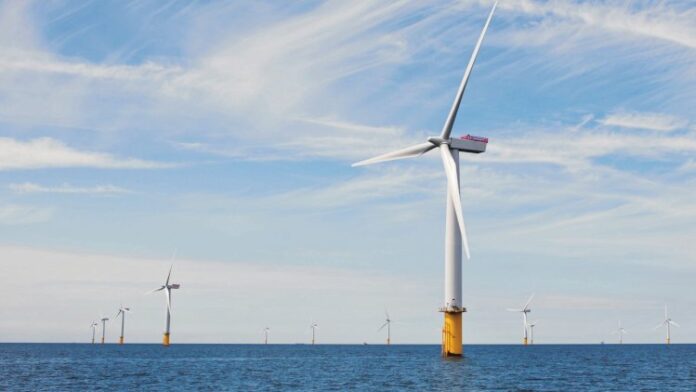
DNV GL has awarded Siemens Gamesa the project certificate for its four turbine 28MW Nissum Bredning offshore wind power park in waters of north-west Denmark.

The offshore wind farm, being built in Thyboron Kanal, can be affected by sea ice during the winter months, which made the certification process particularly challenging.

The project certificate demonstrates that sea ice will have no significant impact on the lifetime of the turbines of the wind power park, despite the unique maritime conditions.

The “extraordinary location” of the Nissum Bredning offshore wind power park provided a unique challenge to DNV GL’s team of certification experts, both from a technical and a logistical perspective, according to Kim Mork, DNV GL renewables certification executive vice president.

“Having worked in close co-operation with Siemens Gamesa’s team in the past enabled us to jointly realize this project certification,” added Mork.

The certification was carried out according to the Danish Executive Order Number 73 and covers all stages of the project development, from site conditions assessment over design evaluation to commissioning.

Despite its small size the park has a specific focus on the integrating of new technological innovations, including a 66kV transmission system to jacket foundations with concrete transition pieces to a cable-in-pipe installation to reduce the project’s levelised cost of energy.

Siemens Gamesa Nissum Bredning project certification manager Karsten Albers said: “The use of new technologies and the environmental conditions of the project required an experienced certification approach."

Having worked with DNV GL on several type and project certifications in the past, we were confident that we had a qualified partner on our side with the necessary technical expertise to verify that our project operates to the highest safety and quality standards.

TenneT Issues EUR1.25bln Green Bond

0

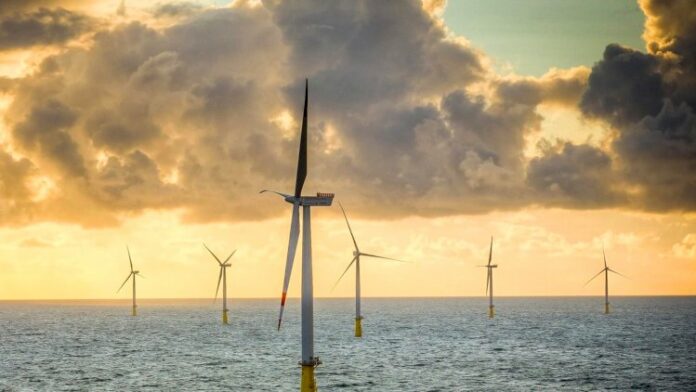
Netherlands-based transmission system operator TenneT Holding B.V. has launched and priced another Green Bond issue of EUR 1.25 billion, with proceeds set to be used for investing in offshore wind.

The Green Bond issue is split in two tranches of EUR 500 million and EUR 750 million with the support of five banks: ABN AMRO, Barclays, HSBC, NatWest Markets and SMBC Nikko.

"Proceeds will be used to invest in green projects in the Netherlands and Germany to connect large scale of offshore wind to the onshore electricity grid," said a press release.

Over the next ten years TenneT expects to invest EUR 35 billion in offshore and onshore grid connections across the Netherlands and Germany, driving the energy transition.

Approx. 80 percent of TenneT's investments are related to renewables, such as wind and solar energy.

In the period up to 2030, TenneT expects to have realized approximately 25 gigawatts (GW) of connection capacity for offshore wind farms in the Dutch and German parts of the North Sea, transmitting electricity sufficient to (every year) power 31 million households for a full year.

Source:marinelink

PSA, PFR and IFM Global completion acquisition of DCT Gdansk container terminal

0

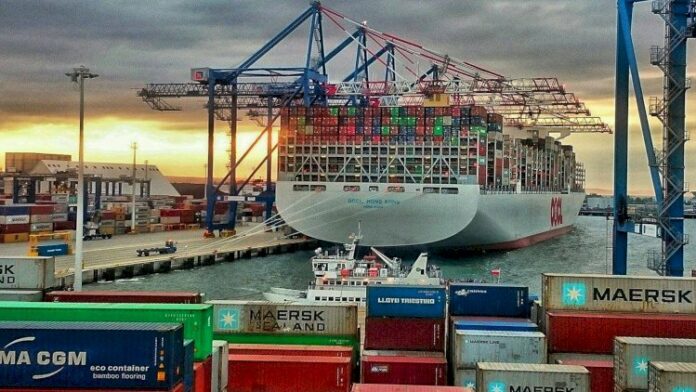
PSA International Ptd Ltd (PSA), the Polish Development Fund (PFR) and the IFM Global Infrastructure Fund (GIF), advised by IFM Investors, have completed the transaction to jointly acquire DCT Gdańsk, the largest container terminal in Poland.

The completion of the transaction follows formal approval on 21 May by the relevant competition authorities and it will mark PSA's first foray into Eastern Europe.

PSA, the Polish Development Fund and the IFM Global Infrastructure Fund had announced mid- March that they had signed an agreement to purchase the terminal from Macquarie Infrastructure and Real Assets (MIRA) managed fund Global Infrastructure Fund II, MTAA Super, Australian Super and Statewide Super.

DCT Gdańsk is one of the fastest growing container ports in Europe and the only terminal in the Baltic that can serve ultra large container vessels with a capacity of up to 23,000 teu  

Container volumes handled by the terminal have grown steadily over the years to reach 1.9m teu in 2018.

The terminal has a quay length of 1,306 metres and a maximum depth of 17 metres. 

DCT Gdańsk is already undergoing expansion, which will be completed in the course of 2019 and 2020. The consortium partners have the intention to further strengthen the terminal’s position and to look into additional expansion needs as and when relevant.

Source:seatrade-maritime

Iran walks towards smart ports

0

Iran announced its goal on achieving digitalization growth at its ports, following other countries that make steps towards more intelligent ports. The Deputy Minister of PMO commented that 'Iran would also like to be on the same path'.

Specifically, Hadi Haghshenas highlighted that"Internet of things is an important issue that can revolutionize the country's maritime industry."

He continued that the ports around the world have taken steps to maximize the use of the Internet in order to make ports intelligent, and the Ports and Maritime Organization is also prepared to use such capacity and move on the same path.

He continued that technology can be used in the provision of services, preventing smugglers, and also monitoring of the cargoes that are being departed from or arrive to the port.

Finally, the IoT will provide reassurance of save navigation of floats and vessels along the coast and ports; The vessels' safe navigation is a priority for PMO.

Source:safety4sea