2.4 C
New York
Home Blog Page 1052

Maersk joins CMA CGM and MSC with Traxens investment

0

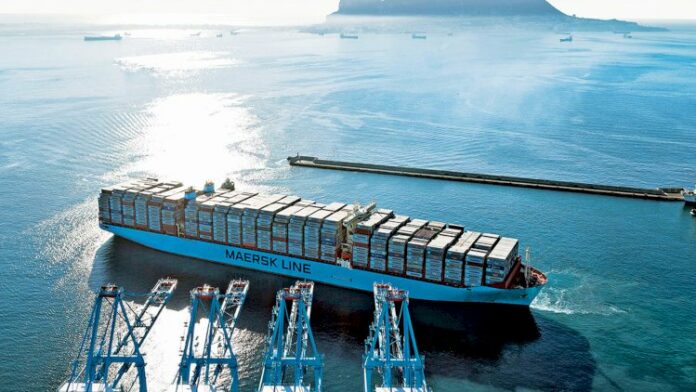
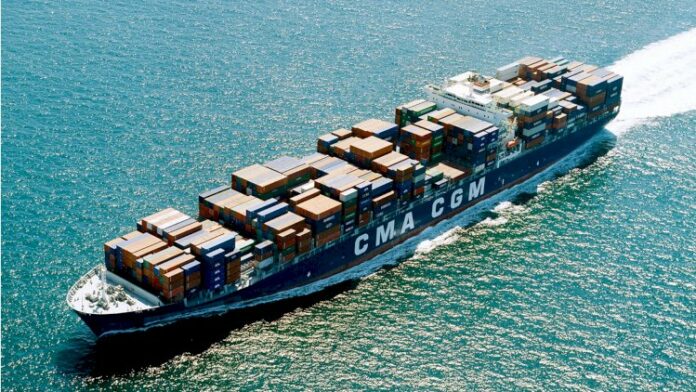
Maersk has decided to invest in Marseille-based smart container creator Traxens meaning the world’s three largest containerlines are now onboard as shareholders in the French company.

Maersk’s decision follows in the wake of CMA CGM and MSC with all three set to have an equal shareholding in Traxens. As part of the Maersk agreement, the Danish carrier has agreed to to order up to 50,000 Traxens devices, a similar order to those placed earlier by CMA CGM and MSC.

Ingrid Uppelschoten Snelderwaard, head of equipment at A.P. Moller – Maersk, said: “Creating visibility into the condition and location of containerised cargo is bringing Maersk’s strategy to offer digital end-to-end solutions to life. Having pioneered IoT-technology in our reefer fleet, we are excited to join Traxens and collaborate on the huge potential within connected containers. With this investment we look forward to working with key industry players to advance a leading solution within connected products and technologies for high value cargo, while ensuring customer choice through interoperability and open standards.”

Jacques Delort, general manager of Traxens, commented: “Having three of the world’s largest shipping companies now supporting us, this will help accelerate our international development and contribute to our solution becoming a global market standard for the entire supply chain.”

Source:splash247

Digitalization on the way for shipping: Are we ready?

0

Do you think the entire shipping industry will be completely digitalized by 2025? 

Big Data and ECDIS were the technologies that began the digitalization transformation and now autonomous shipping will define industry’s future. In this article, we take a look at where we stand with respect to autonomous operations and digitalization of shipping while we address key challenges that the industry needs to tackle accordingly.

Regulation lags behind?

Current international shipping law requires ocean-going vessels to be properly crewed, so fully autonomous, unmanned ships aren't allowed in international waters. However, since 2017, the international shipping regulator has been considering changing the International Convention for the Safety of Life at Sea (SOLAS) to allow ships with no captain or crew to operate.

Besides, the recent IMO MSC 100 approved the framework and methodology for the regulatory scoping exercise on Maritime Autonomous Surface Ships (MASS). Provisional principles for the development of guidelines on MASS trials, are being discussed such as:

– ensuring that such guidelines should be generic and goal-based

– taking a precautionary approach to ensuring the safe, secure and environmentally sound operation of MASS.

Interested parties will submit proposals to the next session of the Committee, taking into account the above mentioned principles.

Where we stand

We read recently that the 12-meter-long autonomous ship 'Maxlimer' is set to set sail from Canada in an attempt of the world’s first transatlantic voyage without a crew.

Unmanned ships are presently used predominantly by the marine scientific research communities and/or the defence field with today’s unmanned ships being comparatively modest in size, rarely extending beyond 15-20m in length.

Of course containers carriers and passenger liners continue innovating in order to keep up with the increasing expectations from end users, charterers, regulators and society at large by making the best use of:

  • sensors
  • data analysis
  • advances in satellite communications
  • advances in antenna technology
  • digitalization of information flows
  • automation of existing processes and functions

The fltet of the future will continually communicate with its managers and perhaps even with a “traffic control” system that is monitoring vessel positions, manoeuvres and speeds, according to Remi Eriksen, Group President and CEO DNV GL

Indeed, data sharing is happening, however the emerging challenges are not providing the right contexts for entire shipping to be digitalized.

Digitalization of shipping: 4 Key Challenges

  1. Fear of the unknown

Adapting innovative and disruptive technology brings the so-called fear of the unknown with respect to the risks ahead. Besides, a lot of people argue that risk in shipping will remain the same with the only difference being that the risk of human error is transferred onshore to a remote control centre.

  1. Trust

Trust, here, takes two different forms: Seafarers trust to autonomy and; trust to information sharing on platforms as it affects the transactions’ transparency. Of course trust is not gained overnight and in this regard, crew training is necessary. As far as it concerns transparency, smart technologies are already facilitating industry’s operations. The opportunities to harness digital technologies to enable more sustainable shipping are everywhere only if stakeholders encourage and support innovations that allow transparency. For example, blockchain has become the new mainstream in all businesses and maritime sector as well, brining much visibility and efficiency into shipping and logistics.

  1. Crew training

Combining maritime and digital skills is the way to go. Automation doesn’t mean unmanned; on-hand skills are still necessary. However, only with a combination of new skills, seafarers will continuously build their competence on technical and commercial capabilities within the digital sphere. The whole industry is now called to ensure the appropriate level of training. Therefore, competent and highly skilled seafarers are needed to monitor and guide vessels using AI or the machine learning. Although ship operators are aiming to remove crew completely from the ships and save operational expenses, they will still be in need of remote crew.

  1. Cyber Threat

A completely digitalized shipping means great reliance on IT, software and communications systems which, of course, elevate cyber risk; from modernized hulls to electrical systems onboard, including sensors and networks to monitor performance and enable proactive maintenance. The same sensors however could let cyber attacker to disable or gain control of steerage or propulsion.

“We should not become completely reliable on technology, since the threat of cyber incidents and attacks is real,” Ralf Nagel, Chief Executive Officer, German Shipowners' Association has stated in our SeaSense Column.

Above all, the major challenge for the shipping industry towards digitalization would be the right mindset. Since, several stakeholders are still stuck in their traditional way of doing things, changing perspective is vital for adopting to new reality and accelerating in the digital sphere.

BMP 5 guidance necessary in every HRA transit, white paper says

0

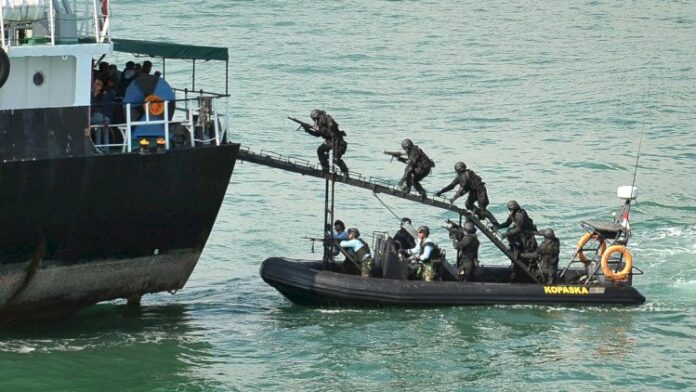
Diaplous Maritime Services has produced a White Paper on the issue of the HRA border reduction in the Indian Ocean, which includes a detailed threat analysis on Somali Based Piracy after taking into consideration a number of variables. The official position of Diaplous is that shipping companies should not become complacent in matters of maritime security, in order to prevent a resurgence of piracy and that BMP 5 standards should be followed at all times for Somali Basin & GoA transits.

As Dimitris Maniatis, Chief Commercial Officer at Diaplous Maritime Services, explained:"In the past days and following the attacks off Fujairah on the 12th of May, we are seeing continuous changes in the application of additional premiums by the leading War Clubs"

In light of the new developments, the white paper, which was issued prior to these changes, provides very useful insights.

Specifically, as of May 1st, 2019, the Indian Ocean Region High Risk Area has been revised following an earlier announcement issued by the below organizations:

  • BIMCO
  • OCIMF
  • Intertanko
  • Intercargo
  • ICC

The new HRA is within the following coordinates:

In the Southern Red Sea: Northern Limit: Latitude 15° 00’N

In the Indian Ocean a line linking: From the territorial waters off coast of east Africa at Latitude 05° 00’S to 050° 00’E. Then to positions:

  • Lat: 00° 00’ N
  • Long: 055° 00’ E
  • Lat: 10° 00’ N
  • Long: 060° 00’ E
  • Lat: 14° 00’ N
  • Long: 060° 00’ E

Then a bearing 310° to the territorial waters off the Arabian Peninsula.

Please see below Admiralty Chart Q6099, showing the revised HRA region and the UKMTO Voluntary Reporting Area:

According to open source information the following Navy Assets are in the wider region, available to provide assistance to vessels in distress or facing a security incident:

EUNAVFOR

4 Warships

2 Maritime Patrol Aircraft

Additional assets provided within The Combined Maritime Forces (CTF 150 & CTF 151)

It is worth noting that various National Navies (India, China, S. Korea, Japan etc.) operate in the GoA performing convoy escorts within the IRTC.

Cooperation between the above-mentioned forces is good but coordination is still to be maximized.

The time required for any of these assets to be in the immediate vicinity of a merchant vessel under attack rages from 2 to 20 hours.

Somali Based Piracy – Threat Analysis

Somali Basin & Gulf of Aden

Somali Pirate Action Groups (PAG’s) have recently been active off the South – Eastern and Central coastlines having recently performed attacks and hijackings.

On the 19th of April 2019 a Yemeni Dhow was hijacked and used as a mother ship to carry out attacks on merchant and commercial vessels.

On the 21st of April 2019, the F/V Adria was attacked 280 NM off the Somali coast.

GET THE SAFETY4SEA IN YOUR INBOX!

The F/V Adria, which is of S. Korean registry of ownership, did not have an Armed Security Team (AST) onboard but managed to evade the attack long enough to receive assistance from the Spanish F/V Txori Argi 

that arrived on scene to assist.

The F/V Txori Argi had an AST onboard who engaged with the attacking skiffs that were launched from the pirate’s mother vessel leading to the withdrawal of the later.

Later on the same day, the Chinese Fishing Vessel Shin Shuen Far 889 was also engaged by 2 skiffs with armed persons on board. This attack was also unsuccessful as the Chinese F/V also had an AST on board.

The Spanish Frigate ESPS Navara, operating under EUNAVFOR mission Atalanta departed from Mombasa port and arrived on scene to provide further assistance. On the 23rd of April, the ESPS Navara, intercepted and boarded the PAG’s mother vessel and arrested 5 pirates.

The hijacked Dhow, the F/V Al Azham and her 23-man crew were released unharmed.

This incident clearly demonstrates that Somali Based Piracy has NOT been eradicated and still poses a significant threat to shipping and the safety of human life at sea in the Indian Ocean.

Intelligence and information gathered from open and closed sources, clearly indicates that coastal communities in Somalia’s Central and South-Central regions, are still keen to support PAG operations in the Indian Ocean.

The reduced HRA will by all means and purposes send out the wrong message to the international maritime community that the threat has also been reduced while this couldn’t be further from the actual truth.

This news has also reached the PAG leaders who will patiently wait for complacency to set in with mariners and companies, eventually making them soft targets again.

Somali based piracy has been dormant for a significant time, however the same armed groups that performed successful hijackings from 2009 and on, are still operating in the region in a different mode.

Smuggling of narcotics, weapons and people from Somalia to Yemen and beyond, has been the business of choice for the past years.

Through these operations, subject groups have upkept their sea going equipment, weapons and a healthy cash flow to sustain them until the next big opportunity presents itself.

Military sources in the region are expressing their serious concern on the wisdom behind the decision to reduce the HRA at this time, clearly stating that the conditions in country (Somalia) have not changed in order for piracy to be affected in a negative way.

“Piracy is fought on land; it is only intercepted on the water”

Additionally, we see the difference on opinion between the leading War underwriters, with one major club adopting the revised HRA and the other not.

The London market has not seen positively this revision and the JWC has not made an announcement endorsing it.

The position taken by all the major key players of the maritime security industry, is that of caution, in principle all security experts disagree with the time and manor this reduction has come in to force.

Attacks at Fujairah Anchorage:

The attacks of May 12th 2019 at Fujairah Anchorage although not related with any piracy activity, indicate a new substantial risk in the wider region.

In past years the waters around Fujairah were within the HRA area and the security level was higher than that prior to May 12th.

Analysis and reports from leading global organizations mention that these attacks were done by the use of remotely controlled mini submersibles, each delivering a payload of approximately 30-50 Kg of high-grade explosives.

These underwater drones struck their targets and detonated at a depth of approximately 2.5 meters and in all cases the target area of the vessel was around the engine compartment at the stern of the vessels.

Most hypothesis on the identity of the aggressors are pointing towards regional actors, mainly Iran, rationalizing this as an expression of the rising tensions between the US and Iran.

Although it is regarded as highly unlikely for the industry to see a repetition of these attacks, the alarm has been raised in an area deemed secure in the past.

Diaplous Opinion:

The revision of the IOR HRA as of May 1st 2019 has indeed sent the wrong message to the maritime community.

Somali based piracy is lurking, watching and preparing for a new life cycle that will catch a large portion of the industry by surprise and the first to be affected, will be those that fall back on their preparedness, those that will dismiss the lessons learnt from the not so distant past.

Armed Security Teams on board merchant vessels have proven to be 100% reliable in protecting sea farers and vessels from acts of piracy in the high seas.

This is commonly agreed upon by the entire world.

Military assets are an essential element in the battle against piracy and assist in maintaining the international shipping routes open for free navigation, however they are not on board or alongside every vessel sailing the Indian Ocean.

When a merchant ship is attacked, she is usually alone and vulnerable, help may be hundreds of miles away and no response is guaranteed.

Armed Security Teams through Private Maritime Security Companies not only physically protect the lives of the mariners and the ships they sail, but also protect the reputation and profits of the companies behind them.

It is therefore essential that the industry does not become complacent and that all protective measures remain in force for all Somali Basin and Gulf of Aden transits.

Conclusion:

CSO’s, HSQE professionals and others within the customer base of the maritime security industry, are advised to take all available information under consideration when reviewing their security procedures and deployment of protective measures for the vessels and mariners under their care.

The use of Armed Security Teams is considered to be a must for all Somali Basin and Gulf of Aden transits.

BMP 5 guidance should be used in every HRA transit and the deployment of a professional and compliant Armed Security Team, provided by a reputable Private Maritime Security Company should be considered for all GoA and Somali Basin voyages.

The shipping industry has welcomed the announcement of the BMP 5, which is available for use to all those intend to transit from Horn of Africa (HOA) and adjacent sea areas. Somali piracy has not been eradicated and remains a threat, however.

BMP 4 was a publication titled “Protection against Somalia Based Piracy”. Now, BMP 5 is focusing to “Deter Piracy and Enhance Maritime Security in the Red Sea, Gulf of Aden, Indian Ocean and Arabian Sea”. The area specific (Somalia based) threat, has been replaced by a generic area term in order to include all additional piracy threats generated by other players in this area (Yemen, Aden straights, open ocean threat to Indian ocean and Arabic sea).

The new version of BMP has a different approach to antipiracy measures implementation. The Risk/threat identification and understanding plays a key role to this edition. Additionally the implementation of antipiracy measures follows the conducted risk assessment necessary for all vessels planning to transit through identified areas of risk.

It important to focus on the fact that as in BMP 4 the HRA was clearly established (latitude – longitude), in BMP 5 reference is made to Security chart Q6099. This means that any area change will be introduced through the chart change and not by a BMP amendment.

Source:safety4sea

Massachusetts opens next offshore sale

0

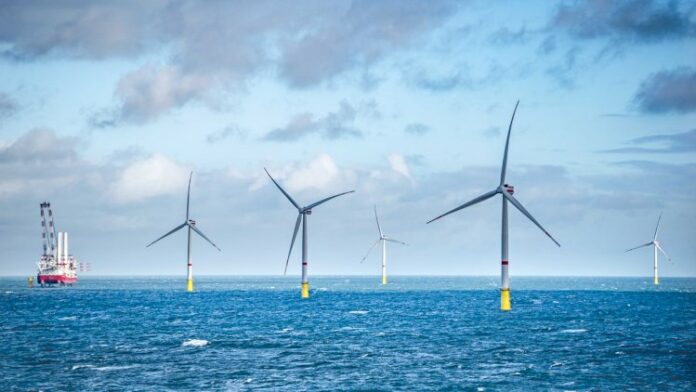
Massachusetts electricity distribution companies and the Massachusetts Department of Energy Resources have issued a request for proposal for up to 800MW of new offshore wind capacity off the US state.

The RFP, which is seeking projects of 200MW to 800MW in size, is the second solicitation issued for Massachusetts.

It is part of a staggered procurement schedule to bring about 1.6GW of offshore capacity online by 30 June 2027.

Interested parties have until midday local time on 9 August to submit confidential proposals or the same time on 16 August to submit public proposals.

Successful projects will be revealed on 8 November, with 13 December the date for the execution and negotiation of long-term contracts.

In the US state's first offshore wind RFP in May 2018, the 800MW Vineyard Wind project was successful.

Source:renews

Smart Container 42 begins journey from Port of Rotterdam

0

Port of Rotterdam announced that its smart Container 42 will depart from the port today, May 24, for the first leg of a two-year data-collecting mission around the world.

The container is equipped with an array of sensors and communications equipment; Also, it has been fitted with solar panels, which will be used to understand how much power a container can generate during a given journey by ship, train or truck.

Specifically, the goal of the container is to measure changes in parameters like vibration, slope, position, sound, local air pollution, humidity and temperature.

The first stop will be in Munich, Germany in early June.

Container 42 will provide an insight into the challenges a container faces during its transport and logistics, and will play a role into the development of the 'digital twin' for the port; A digital representation of the physical port area.

The project is based on the port's Internet of Things platform, which is used to collect and process data provided from sensors installed through the port area. By the IoT platform users have the chance to be informed on water and air quality.

Moreover, prior to beginning its journey, Container 42 will be presented during Transport Logistic 2019 in Munich.

Container 42 is a collaboration amongst Port of Rotterdam Authority, IBM, Cisco, Esri, Axians, Intel, HyET Solar, Van Donge & de Roo, Awake.ai, Betta Batteries, Simwave, Advanced Mobility Services, Kalmar and Shipping Technology.

Concluding, the smart container is a step closer to the port's aspiration on accommodating shipping in its port area.

Source:safety4sea

World’s first digital shipping company in 2019 to be revealed soon

0

As Loginno informed, only two weeks remain to unveil the world’s first digital shipping company. Namely, under its initiative 'Contopia Factor', the startup will select one organization to have its entire container fleet digitalized in 2019.

Earlier this week, Loginno announced that the final scoring of the competition's contestants had taken place, and a notice to the winning shipping company has been sent. The first digital shipping company, chosen out of 17 global applicants, will be revealed on June 6th in Oslo, Norway, during Nor-Shipping.

According to Nir Gartzman, co-founder of the DOCK, the creation of Contopia will provide the shipping company with advantages, by lowering operational costs and gaining competitive benefits. He continued claiming that via Contopia the customers will have upgraded services.

Loginno also revealed the 5th generation of it AGAM device, an installation method as a standard container vent enables every container service depot to install it with no training.

Founder Amit Aflalo, the man behind Loginno's technology, described the technical specifics of what he considers "both the smartest and the most affordable shipping container brain in existence today."

It is the only wide-area communications device with battery life of 10+ years without recharge, effectively making it a permanent solution for every shipping container, never to be taken off during its entire lifetime of usage

The long battery life is partly because of work done with Israeli startup 3GSolar. Other features contain measurement of the container's SOLAS VGM weight, piloted with the Israeli port of Ashdod; a CyberSeal to replace physical seals; the smart shipping container port integration with Navis, and other technologies which are tested together with one or more companies working side by side with Loginno.

CMA CGM buys trackers for 50,000 of its containers

0

French liner CMA CGM has ordered 50,000 Traxens trackers to monitor a portion of its containers.

CMA CGM was the first investor in Traxens seven years ago, helping bring the technology to the market.

The Traxens solution includes a connected tracker that is attached to the container, making it possible to monitor the container’s position, both at sea and on land, the intensity of any shocks that may occur, the opening and closing of the doors and external temperature variations.

CMA CGM said clients could pay for this extra service to help them monitor their goods more closely while in transit.

Source:splash247

Deepest Submarine Dive in History, Five Deeps Expedition Conquers Challenger Deep

0

Victor Vescovo and team complete the fourth mission of the expedition in  world’s deepest diving operational submersible, the Limiting Factor 

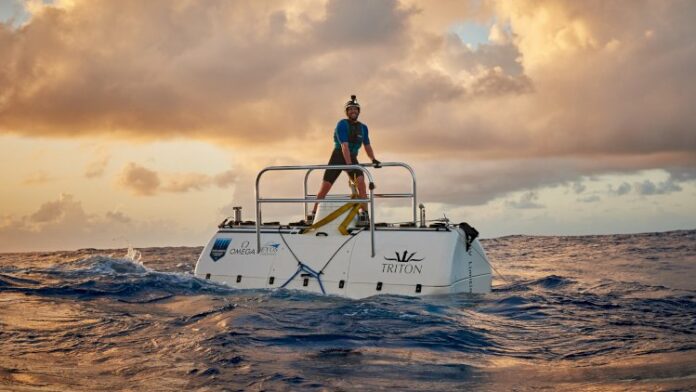
 For the fourth time, the Five Deeps Expedition has successfully dived to the bottom of one of the world’s five oceans. The team completed a mission to reach what is commonly known as the deepest point on planet Earth: Challenger Deep within the Mariana Trench. Victor Vescovo set a new deep-diving record and is the first human to make multiple dives, solo, to its hadal depths in the DSV Limiting Factor (Triton 36000/2 model submersible) the world’s deepest diving, currently operational submarine. The expedition reached a maximum depth of 10,928 meters1 / 35,853 feet deep, 16 meters/52 feet deeper than any previous manned dive. 
 
The last visit to the bottom of Challenger Deep was made in 2012 by filmmaker and explorer James Cameron, who reached a depth of 10,908 meters on a dive in his submersible, the Deepsea Challenger.2 Prior to Cameron’s dive, the first ever dive at Challenger Deep was made by the Trieste, a US Navy deep submergence bathyscape, in 1960 to 10,912 meters by Lieutenant Don Walsh and Swiss scientist Jacques Piccard.3 Both the Trieste and Deepsea Challenger only descended to the bottom of Challenger Deep once.  
 
Between April 28 and May 5, 2019, the Limiting Factor completed four dives to the bottom of Challenger Deep and one final dive on May 7, 2019 to the Sirena Deep which is also in the Mariana Trench, approximately 128 miles to the northeast. Two of the dives, including the deepest one made on April 28, were solo dives piloted by Vescovo.  

The full diving program during this phase of the overall expedition consisted of: 
 1. Dive #1 (April 28, 2019): Solo dive to bottom of the ‘Eastern Pool’ of the Challenger Deep to 10,928 meters (Victor Vescovo, Pilot). The expedition has calculated that this was the deepest dive by any human in history (see the footnote, page 1, for the methodology and rationale used in making this assessment). Four hours (248 minutes) were spent on the bottom exploring the basin, which is now the longest period of time ever spent on the bottom of the ocean by an individual.  
 
2. Dive #2 (May 1, 2019): A second, solo dive to the bottom of the ‘Eastern Pool’ of the Challenger Deep to 10,927 meters (Victor Vescovo, Pilot). Three hours (217 minutes) were spent on the bottom including extensive exploration of the southern, rocky slope of the Deep. 
 
3. Dive #3 (May 3, 2019): DNV GL Commercial Certification Dive and Lander Salvage in the ‘Eastern Pool’ of the Challenger Deep (Patrick Lahey, Pilot; Jonathan Struwe, Specialist). This was the deepest marine salvage operation ever attempted and was successful. A Five Deeps Expedition scientific lander was stuck on bottom during the previous dive (#2) and was freed and recovered from 10,927 meters by direct action of the manned submersible. The submarine also passed all of its qualification tests and commercial certification by DNV GL was granted. This makes the Limiting Factor the first full ocean depth-capable submersible to meet commercial safety standards and be granted commercial operating certification. Approximately 2.5 hours (163 minutes) were spent on the bottom by the sub and 2.5 days by the lander. 
 
4. Dive #4 (May 5, 2019): Scientific Dive in the ‘Central Pool’ of the Challenger Deep (Patrick Lahey, Pilot; John Ramsay, Sub Designer). Video surveying and biological samples were collected by the submersible and its landers for scientific analysis. The major focus was to investigate the north and southern edges of the subduction zones in the Challenger Deep. Time on bottom was approximately three hours (184 minutes). 
 
5. Dive #5 (May 7, 2019): Scientific Dive in the Sirena Deep which is part of the Mariana Trench (Victor Vescovo, Pilot; Dr. Alan Jamieson, Chief Scientist). First manned descent to the bottom of the Sirena Deep, which focused on geological, biological, and video survey and collection in the trench basin. Time on bottom was three hours (176 minutes) and the deepest piece of mantle rock ever recovered from the surface of the western slope of the Mariana Trench was collected. 

The Five Deeps Expedition is being filmed by Atlantic Productions for a five-part Discovery Channel documentary series due to air in late 2019. 
 
“It is almost indescribable how excited all of us are about achieving what we just did,” said Vescovo after arriving in Guam after the completion of the dives. “This submarine and its mother ship, along with its extraordinarily talented expedition team, took marine technology to an unprecedented new level by diving – rapidly and repeatedly – into the deepest, harshest area of the ocean. We feel like we have just created, validated, and opened a powerful door to discover and visit any place, any time, in the ocean – which is 90% unexplored.” 
 
On board the DSSV Pressure Drop for this historic accomplishment was legendary American oceanographer, explorer and marine policy specialist, Dr. Don Walsh (Captain, USN Ret.), who made the first successful decent into the Mariana Trench in 1960. The maximum depth achieved was measured and later corrected to be approximately 10,916 meters.  
 
Walsh continued, “This time it was an impressive tour de force as the team repeated the Challenger Deep dive four times in just eight days. This was a demonstration of system reliability and operational efficiency never seen before in exploration of the oceans’ deepest places. I was proud and honored to have been invited to be part of Victor’s team when it made world history at Challenger Deep.” 
 
With his dives, Vescovo also became the first person to have summitted Mount Everest and been to the bottom of the ocean, as well as having skied to both the North and South poles. Thus, he is the first to have completed visiting one version of the “Four Corners of the Earth”: Mt. Everest, Challenger Deep, and both geographic poles. In 2011, he completed the Seven Summits – climbing the highest peak on every continent – and has now been to the bottom of four of the world’s oceans. 

Other firsts or notable features of this recent phase (April 26 – May 7, 2019) of the Five Deeps Expedition: 
 • Deepest dive in history, to 10,928 meters, surpassing the Trieste’s maximum depth of 10,912 meters reached in 1960. (Vescovo)
• The deepest solo dives (two) in a submersible (Vescovo), to 10,928 and 10,927 meters.
• The greatest number of solo dives by an individual below 7,000 meters, now at six times (Vescovo).
• The first individual (Vescovo) to dive the Challenger Deep twice, and both were solo dives. Patrick Lahey of Triton Submarines become the second person to dive the Challenger Deep twice, on two-person missions that followed Vescovo’s solo dives with a maximum depth reached of 10,927 meters. This also made Lahey the second Canadian to reach the bottom, after James Cameron.
• The first time any submersible has been to the bottom of the Challenger Deep more than once. In this case, four times in eight days by the DSV Limiting Factor.
• The Limiting Factor executed the deepest marine salvage operation in history by searching for, and locating, one of the expedition’s scientific landers on the bottom of the 
Challenger Deep and freeing it from deep silt that had trapped it on the bottom. The recovery was made using the submersible’s manipulator arm at 10,927 meters. The lander was stranded on the bottom for 2.5 days.
• John Ramsay, an Englishman by birth and the submersible’s principal structural designer, became the first British citizen to descend to the bottom of the Challenger Deep. Coincidentally, the Challenger Deep was named after a British ship the HMS Challenger.
• Jonathan Struwe, a marine engineer and inspector with DNV GL, became the first German citizen to descend to the bottom of the Challenger Deep.
• The first manned dive into to the Sirena Deep, 128 miles to the northeast of the Challenger Deep, but also in the Mariana Trench, to a maximum depth of 10,714 meters. Vescovo piloted, with Dr. Alan Jamieson, the expedition’s Chief Scientist, acting as scientific mission specialist. Three hours on bottom and the first-ever rocks collected from that deep.
• Four ocean bottoms, of five, how now been visited by one person (Vescovo) with one more to dive – the Molloy Deep in the Arctic Ocean – which is the shallowest of the five at an estimated 5,669 meters.
• The scientific team identified at least three new species of marine animal during this dive series, including a type of long-appendaged Amphipod, discovered at the bottom of the Challenger Deep.
• The first US State flag – of Texas – to be taken to the summit of Mt. Everest and down to the bottom of the ocean. Vescovo’s personal mountaineering ice axe has also made the journey to the highest and lowest points on earth. 
 
“Our goal was to build a submersible capable of repeated dives to any depth with its pedigree and security assured by third party accreditation,” said Patrick Lahey, President of Triton Submarines. “Our dives in the Mariana Trench demonstrate we achieved our objective. The Triton 36,000/2 (“LF”) represents a quantum leap in the capabilities of a manned submersible and everyone at Triton is immensely proud to have had the privilege and opportunity to create such a remarkable craft, which was only possible by the unwavering support and vision of Victor Vescovo.” 
 
“This vehicle is effectively a reliable elevator that can transport us to any depth, in any ocean. During this expedition we have traversed over 110 vertical kilometers (68 miles) and proved the capabilities of a vehicle that will be a platform for science, film making and exploration of Earths hidden recesses,” McCallum added. 
 
The next stop on the Five Deeps Expedition is the Horizon Deep within the Tonga Trench in the South Pacific Ocean. Previously measured at 10,882 meters deep, the Tonga Trench is widely known as the second-deepest ocean trench in the world. Due to the small difference in measured depths between the Challenger and Horizon Deeps, Vescovo and team plan to find out, once and for all, if the Tonga Trench is actually only second-deepest in the Pacific or if it actually deeper than the Mariana Trench.  


Appomattox starts up ahead of schedule, under budget

0

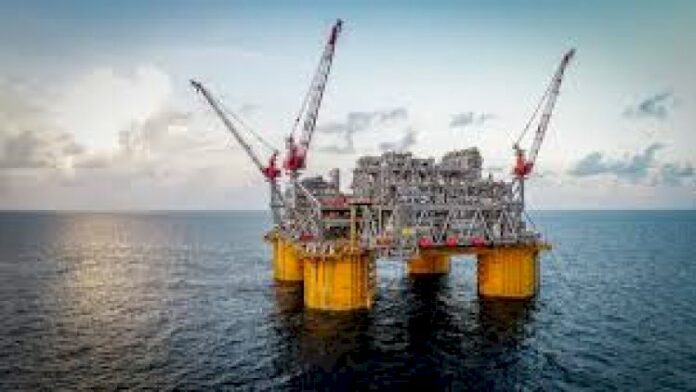
Shell Offshore Inc. has started production at the Appomattox field in the deepwater Gulf of Mexico.

Discovered in 2010, Appomattox is about 80 mi (129 km) southeast of Louisiana in about 7,400 ft (2,255 m). It is the first commercial discovery now brought into production in the Norphlet formation in the deepwater Gulf of Mexico.

The development initially will produce from the Appomattox and Vicksburg fields and will consist of a semisubmersible production platform, a subsea system featuring six drill centers, 15 producing wells, and five water injection wells. Expected peak production is estimated at 175,000 boe/d.

Since taking the final investment decision in July 2015, Appomattox has realized cost reductions of more than 40% through optimized development planning, better designs and fabrication, and expert drilling execution, according to Shell.

“That Appomattox was safely brought online ahead of schedule and far under budget is a testament to our ongoing commitment to drive down costs through efficiency improvements during execution,” said Andy Brown, Upstream Director, Royal Dutch Shell. “Appomattox creates a core long-term hub for Shell in the Norphlet through which we can tieback several already discovered fields as well as future discoveries.”

Appomattox is a joint venture between Shell (79%, operator) and CNOOC Petroleum Offshore U.S.A. Inc., a subsidiary of CNOOC Ltd. (21%).

Yuan Guangyu, CEO of CNOOC Ltd., said: “… Appomattox will become a new growth driver to our overseas production.”

The Mattox pipeline, a 90-mi (145-km), 24-in. system with a 300,000-b/d capacity, will move the produced crude oil from Appomattox westward to the Proteus pipeline system and then onshore. The pipeline was completed ahead of schedule and under budget, Shell said.

Mattox is jointly owned by Shell GOM Pipeline Co. LLC and CNOOC Petroleum Sales U.S.A. Inc., an indirectly wholly-owned subsidiary of CNOOC Ltd.

Source:offshore-mag

First unmanned vessel set to cross Atlantic without crew

0

After successfully conducting a cargo run trial in the North Sea, the 12-meter-long autonomous ship 'Maxlimer' is set to set sail from Canada in an attempt of the world’s first transatlantic voyage without a crew.

The unmanned surface vessel Maxlimer, built by SEA-KIT International, is bound for the south coast of England and will conduct deep sea surveys on the way, guided by a skipper in a control station in Britain.

The voyage is expected to last about 35 days, Reuters reported.

Earlier in may, the ship successfully carried a box of oysters from the UK to Belgium, in a 22-hour trip.

The vessel is operated by a hand-held remote control when in harbor and when at sea it can stream live data to the controller via multiple satellite links.

"What is now available through technology is very, very similar to what you have on the bridge of a ship and in many ways, I would argue, even more comprehensive. The controller here in this station can actually see all the way round on the horizon near real-time and in many ships it’s quite difficult to actually even see what’s behind you from the bridge of that ship,"...said James Fanshawe, a director of SEA-KIT.

The combination of size and hybrid diesel-electric propulsion cuts fuel use by around 95%, the company explained.

Sea-Kit International develops vessels for the maritime and research industries, for the Shell Ocean Discovery XPRIZE, a competition to autonomously survey the sea bed.