3.2 C
New York
Home Blog Page 1054

Asia/Pacific to invest heavily in AI Systems, report says

0

According to the latest Worldwide Semiannual Artificial Intelligence Systems Spending Guide, Asia/Pacific spending on artificial intelligence (AI) systems is expected to reach almost USD 5.5 billion in 2019. This is an increase of almost 80% in spent compared to 2018.

As industries invest more and more in projects that use AI software capabilities, IDC expects spending on AI systems to increase to USD 15.06 billion in 2022 with a compound annual growth rate (CAGR) of 50% during the 2018-2022 forecast period.

Swati Chaturvedi, Senior Market Analyst at IDC Asia/Pacific, stated:"Artificial Intelligence is changing the world as we speak. In fact, Asia/Pacific is quickly driving the growth in adoption of artificial intelligence because of its fertile & nascent digital ecosystem. Countries are developing economically with the help of technological advancements, increasing talent pool of millennials and growing number of tech-savvy businesses, to stay in this competitive market"

In addition, regional spending on AI systems will be driven by the retail industry where retailers will invest over 70% of this industry spend on solutions such as merchandising, expert shopping advisory & recommendations, automated customer service agents and supply & logistics.

The AI use cases that will face the most investment this year are automated customer service agents (almost $700 million), sales process recommendation and automation (more than $450 million), and intelligent process automation (more than $350 million). Moreover, the fastest growth will be seen in digital twin/advanced digital simulation.

What is more, hardware will be the largest area of AI systems spending in 2019 with about USD 7 billion going towards server and storage. Software will also be the fastest growing category for regional AI spending with a five-year CAGR of 80%.

Companies will also invest in IT services to develop their AI systems. By the end of the forecast, AI-related services spending will be slightly less than software spending.

China will be responsible for about two thirds of the Asia/Pacific – excluding Japan – (APEJ) regional spending on AI systems in all forecast years, driven by the retail, professional services and government industries. Nevertheless, Asia Pacific (excluding Japan & China) will indicate quick growth in adopting AI-enables solutions and deployment.

On the other hand, AI still faces many challenges from an application development and deployment perspective. The technology is dependent on multi-tiered technology stacks and many different skill sets. This makes its successful implementation to require organizations to enhance their capabilities in different dimensions including data, people, process, and infrastructure.

These organization are suggested to consider cloud-native infrastructure, review data readiness and practice data-driven decision making, according to Jessie Cai, Senior Research Manager at Cognitive Computing/Artificial Intelligence.
 

TGS and Schlumberger team up for Gulf of Mexico project

0

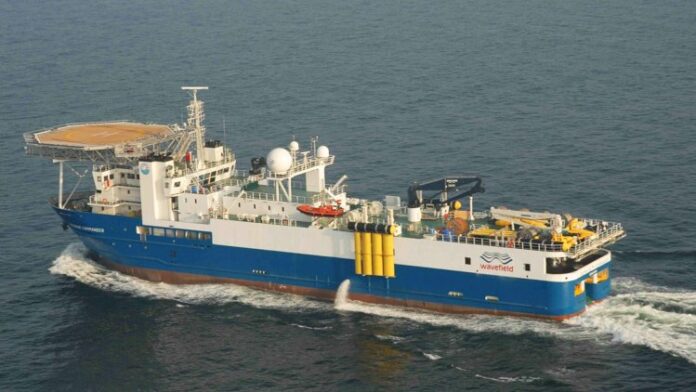
Offshore seismic services provider TGS and Schlumberger have formed a strategic collaboration for multiclient ocean-bottom node projects in the deepwater US Gulf of Mexico.

Under the agreement, TGS and Schlumberger will work together to develop opportunities to co-invest in additional multiclient ocean-bottom node projects in the region.

According to TGS, E&P companies are increasingly looking to ocean-bottom nodes, combined with advanced processing, as the next-generation technology to support both exploration and development activities in the Gulf of Mexico.

“TGS and WesternGeco have a strong track record of investing together, using the latest technology so that our clients can benefit from large-scale, high-quality data in the U.S. Gulf of Mexico. Both companies are at the forefront of ocean- bottom node technology with Amendment Phase 1 being the world’s first large- scale, multiclient sparse node program. We are working closely with our clients to plan future phases and are excited by the potential growth in exploration and production activity that this could drive in the U.S Gulf of Mexico and beyond,” said Kristian Johansen, CEO, TGS.

IAATO votes new measures to protect whales

0

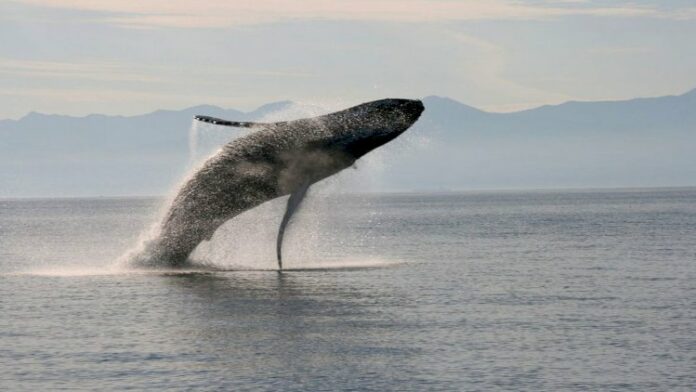
On May 3 the International Association of Antarctica Tour Operators (IAATO) voted measures into effect in order to reduce the incidence of tourist ships striking whales around the Antarctic Peninsula.

The vote offers Antarctic tour operators two possible options:

  • They must either commit to a 10-knot speed restriction within a specific time zone and area; or
  • They must recruit an extra crewmate to monitor and record whale sightings within the said area and time zone.

These measures will apply from July 1, before the start of the 2019-20 Antarctic travel season, which starts in October.

Almost all humpback whale populations in the Southern Hemisphere are increasing since 1982, when commercial fishing for the species was banned, with some of these populations having approached their biological maximum.

However, these populations have the disadvantage of making whale strike more common, especially in areas where whales breed, socialize, migrate, and feed. IAATO’s new measures aim to mitigate this vulnerability, supporting the continued increase in whale populations.

Commenting on the new measures, Mark van der Hulst, Oceanwide Expeditions chief operating officer and IAATO executive committee chair, said that:"IAATO shows its commitment to safe and environmentally responsible travel through decisions like this. These measures were initially proposed as a smaller request, but IAATO members felt so strongly about them that we decided to make them mandatory"

Van der Hulst added that both the Antarctic Treaty System and IAATO require tourism to affect Antarctica as little as possible.

USCG gives LNG training to Panama Canal Authority

0

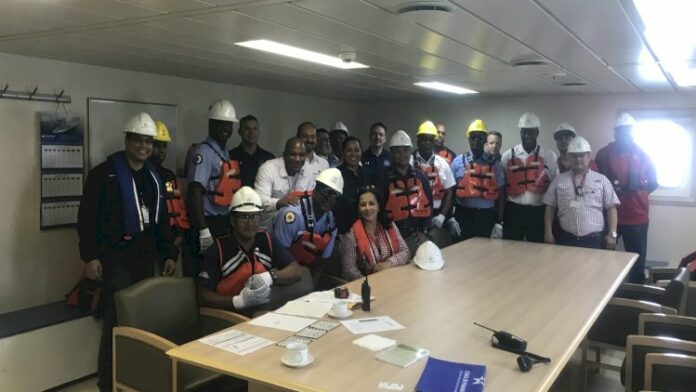
On 7-10 May, staff with the US Coast Guard's Liquefied Gas Carrier National Center of Expertise (LGC NCOE) delivered training on all aspects of LNG to representatives from the Panama Canal Authority and Panama Maritime Authority, and first responders.

The training covered a wide array of topics pertinent to the transportation of LNG to include the chemical and physical properties of LNG, LNG gas carriers, LNG terminals, and the use of LNG as a marine fuel.

The LGC NCOE instructors walked the 50 attendees through a typical USCG examination of a liquefied gas carrier, key safety elements, and followed by a discussion of historically significant case studies as they relate to LNG.

This year, the Coast Guard’s LGC NCOE had the opportunity to conduct training onboard the Q-Flex vessel 'Al Safliya'.

At 315 meters in length and with a breadth of 50 meters and a 210K cubic meter cargo capacity, the Al Safliya was the first Q-Flex type carrier and the largest LNG vessel to transit the Panama Canal.

"This professional interaction is a vital component in the US and Panama’s strategic relationship and is instrumental in furthering the Panama Canal Authority and the Panama Government’s understanding of LNG. Additionally, it strengthens the United States’s strategic understanding of the Panama Canal and its role in supporting the transportation route to accommodate the growth of the international shipments of natural gas,"…said Lt. Cmdr. Dallas Smith, supervisor of the LGC NCOE.

The LGC NCOE is one of six US national centers of expertise focusing on providing industry specific consultation and services to the USCG and maritime industry.

The LGC NCOE provides technical advice on matters related to liquefied gas in the maritime community; liquefied gas training and outreach opportunities; liquefied gas workforce forecasting and performance development; and technical expertise for the establishment of local and national liquefied gas guidance, policy and regulations.

Petronas produces first LNG after relocation

0

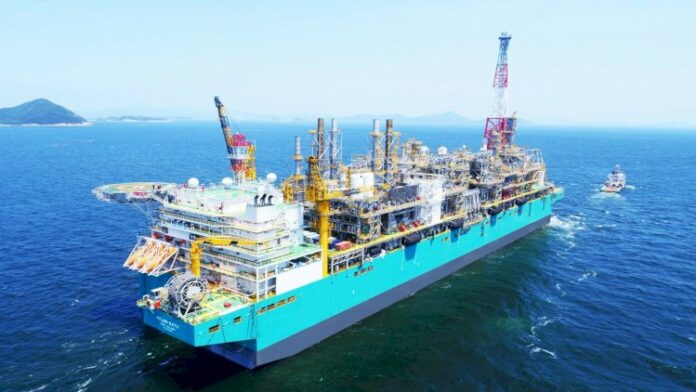
PETRONAS announced that PETRONAS Floating LNG Satu (PFLNG Satu) at the Kebabangan cluster field, conducted its first LNG drop by its floating LNG facility. The facility is located 910 kilometres offshore Sabah.

Operated by Kebabangan Petroleum Operating Company (KPOC), Kebabangan field is the second location for PFLNG Satu after its operation in Kanowit field, Sarawak.

The introduction of the PFLNG Satu was achieved on May 4, 2019, through a 5-km flexible pipeline.

The commencement of a series of start-up activities included the cooling down of natural gas until the production of the first LNG drop on May 7, 2019, just 3 days after.

In light of the LNG drop, PETRONAS Vice President of LNG Asset Zakaria Kasah noted..."This achievement showcases our focused execution and close collaboration efforts, within PETRONAS as well as externally with the State government and regulatory bodies. We not only prove our concept of relocatable floating LNG facility, but we have also seamlessly achieved the first LNG drop in just 3 days after first gas in."

Concluding, PETRONAS reported that the first LNG delivery is scheduled for June, 2019.

Source:safety4sea

US Wind to deploy Maryland met mast

0

US Wind has signed an agreement with EPIC Applied Technologies for the installation of a meteorological mast to collect data at the site of a planned 268MW offshore wind farm off the coast of Maryland.

Installation is scheduled to start on 14 July and be completed by 8 August 2019.

The mast will be used to collect raw wind data at a height comparable to the eventual turbines, US Wind said.

Data collected will be used primarily to validate virtual analysis collected through what have primarily been mathematical models to date.

It will also be used to monitor the performance of the installed turbines during the lifetime of the eventual wind farm.

US Wind president Riccardo Toto said: “This important milestone represents US Wind's ongoing commitment to realising this first-of-its-kind large-scale renewable energy project in the state of Maryland."

We look forward to delivering the significant economic and job-creation benefits that our project represents and to advancing our leadership position in this fast-developing new American industry.

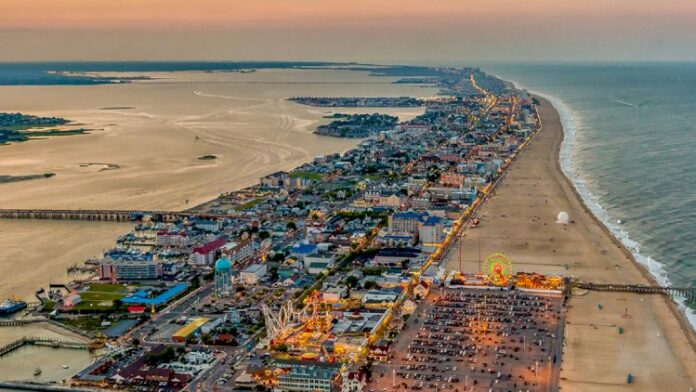
The US Wind project is expected to comprise up to 32 turbines and be located 27km off the coast of Ocean City.

Hamburg Süd Christens Polar Ecuador

0

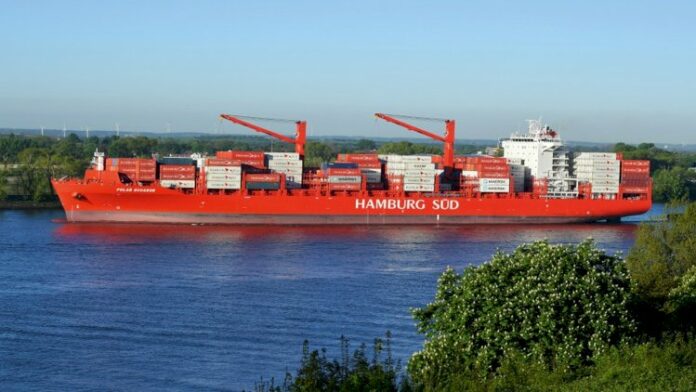
Hamburg Süd christened the Polar Ecuador containership in Antwerp.

The new vessel belongs to a group of four structurally identical vessels in the Polar class that have been built for Hamburg Süd by the Chinese shipyard Jiangsu New Yangzi Shipbuilding. With a total length of 230 meters and a width of 37.30 meters, the ship offers a container storage capacity of 3,800 TEU and is equipped with 1,000 reefer plugs.

The Polar Ecuador is deployed in Hamburg Süd’s North Europe – Mexico/Caribbean service (EMCS), which connects Antwerp and other European ports in Ireland, Great Britain and Germany with important Mexican and Caribbean ports.

Antwerp, where Hamburg Süd has had its own office in Antwerp since 1996, and where some 50 employees now work, is one of the most important destinations in this region for onward distribution to other European markets, especially for bananas, the company said.

“Antwerp is a highly important port for Hamburg Süd, and the Belgian New Fruit Wharf is a very suitable place for the christening of a Polar-class vessel,” said Frank Smet, Chief Commercial Officer (CCO) of Hamburg Süd. “After all, with more than 1,000 reefer plugs, the ‘Polar Ecuador’ transports a disproportionately large volume of refrigerated cargo for a container vessel of this size from Mexico and the Caribbean to Antwerp. This includes, for example, bananas, pineapples and melons, which are handled particularly efficiently and professionally by the fruit and reefer specialists here."

The Polar Ecuador's sponsor is Sonia Van de Vyvere, wife of Philippe Van de Vyvere, owner and CEO of SEA-invest, one of the world’s largest terminal operators for dry bulk, liquid bulk and reefer cargo, including Belgian New Fruit Wharf.

AMSA warns about phone scams

0

AMSA warned that it has received reports that its phone number has been used to make scam phone calls. When the call is answered, a computer-generated voice can be heard. The voice claims to be from the Australian Tax Office.

The Authority explained that if anyone receives an automated call pretending to be from AMSA, it is a scam, as AMSA does not use automated calling.

"We do not use automated or computer-generated calling in any circumstances"…AMSA stated.

For this reason, it encouraged to report scams to Scamwatch at the Australian Competition and Consumer Commission (ACCC).

This helps ACCC warn people about current scams, monitor trends, and disrupt scams where possible. If someone reports, they will need to include details of the scam contact they received, for example, an email or screenshot.

In addition, there several ways that scammers may try to contact anyone, including emails, telephone calls and text messages, or through websites and social media.

Email scams

Sending copycat emails with attachments or links that:

  • Go to fake login screens or web pages to trick you into downloading malicious software or giving them your personal information;
  • Contain programs that record your computer key strokes to get your personal information or login credentials.

Phone scams

  • Using false phone numbers that appear to come from inside Australia to make and receive phone calls and text messages;
  • Sending pre-recorded voice messages to people asking for an immediate call back.

Websites and social media scams

  • Sending ransomware (malicious software) that stops your computer working until you pay a fee;
  • Spoofing websites or login pages to get your personal information;
  • Accessing your public profile on social media to learn about you so they can meet proof of record ownership or break your passwords;
  • Posting or sending job advertisements which ask you to provide personal or financial details up-front. They could be in the form of emails, on noticeboards, and on social media and job recruitment websites.

Source:safety4sea

Arctic LNG 2 and TechnipFMC sign EPC Contract for LNG plant

0

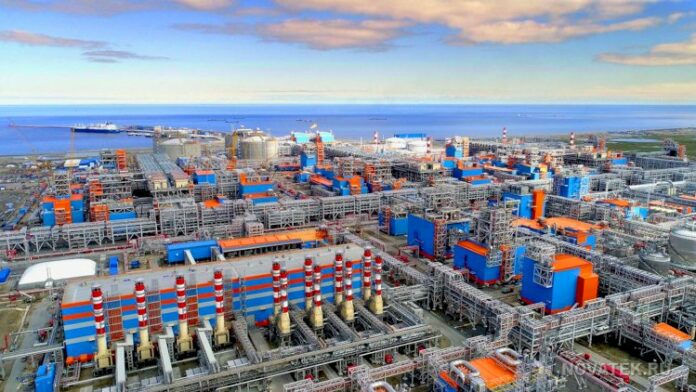
PAO NOVATEK announced that its joint venture Arctic LNG 2 and TechnipFMC signed a contract on engineering, procurement, supply, construction and commissioning of an integrated liquefied natural gas facility with annual liquefaction capacity of 19.8 million tons under the Arctic LNG 2 project. The contract terms provide for the launch of the first train of the project in 2023.

“The team, which implemented the unique Yamal LNG project in record time and on budget, has now joined an even larger and more innovative project,” noted NOVATEK’s Chairman of Management Board Leonid Mikhelson. “We are confident that the accumulated experience of mutual cooperation on the construction of LNG plants in the Arctic zone will also ensure the successful and timely implementation of our new project Arctic LNG 2”.

The Arctic LNG 2 project envisages constructing three LNG trains at 6.6 million tons per annum each, using gravity-based structure (GBS) platforms. The Project is based on the hydrocarbon resources of the Utrenneye field. As of 31 December 2018, the Utrenneye field’s 2P reserves under PRMS totaled 1,138 billion cubic meters of natural gas and 57 million tons of liquids. Under the Russian classification reserves totaled 1,978 billion cubic meters of natural gas and 105 million tons of liquids. OOO Arctic LNG 2 owns an LNG export license. The project’s participants include PAO NOVATEK (90%) and Total (10%).

PAO NOVATEK is one of the largest independent natural gas producers in Russia, and in 2017, entered the global gas market by successfully launching the Yamal LNG project. Founded in 1994, the Company is engaged in the exploration, production, processing and marketing of natural gas and liquid hydrocarbons. The Company’s upstream activities are concentrated mainly in the prolific Yamal-Nenets Autonomous Region, which is the world’s largest natural gas producing area and accounts for approximately 80% of Russia’s natural gas production and approximately 15% of the world’s gas production. NOVATEK is a public joint stock company established under the laws of the Russian Federation. The Company’s shares are listed in Russia on Moscow Exchange (MOEX) and the London Stock Exchange (LSE) under the ticker symbol “NVTK”.

Statfjord A Platform Resumes Loading After Leak

0

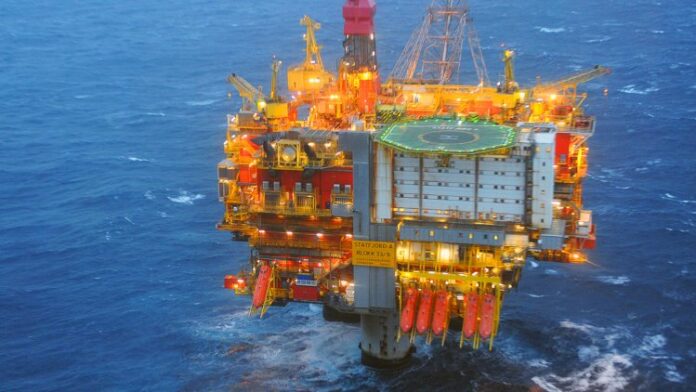
Equinor has resumed loadings at its aging Statfjord A platform as an investigation continues into a spill that occurred during oil transfer operations last week. 

On May 15, oil was spotted on the surface of the sea as crude was being loaded onto a shuttle tanker at one of Statfjord A's loading buoys. The exact source of the leak and the volume of the spill have not been determined, according to Norway's Petroleum Safety Authority (PSA). The PSA has begun an investigation into the circumstances of the spill, and it says that police authorities have been informed of the incident.

Production at the platform was not interrupted, and Statfjord A has since resumed loading using a different buoy.

The leak occurred less than two weeks after Equinor announced detailed plans to decommission Statfjord A, which has been in operation since 1979. In 2022, the platform will shut down. After preparatory work, the Allseas heavy lift ship Pioneering Spirit will remove the platform topsides in a single lift, then bring the module to the Kvaerner yard at Stord for dismantlement and recycling. Excalibur Marine Contractors will handle the engineering and preparatory work.