
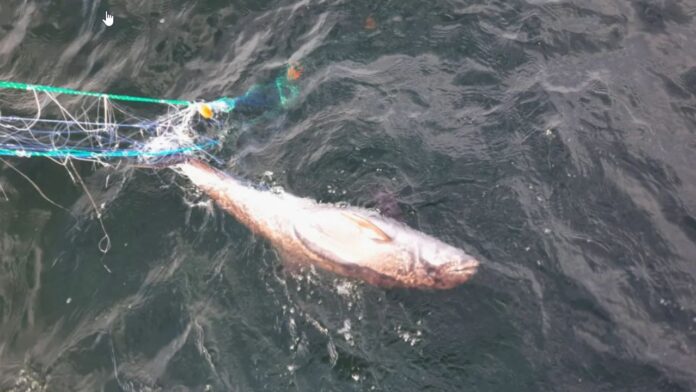
A new study published in Nature Conservation shows that not all acoustic deterrent devices may be effective in protecting the Black Sea porpoise, Europe’s smallest marine mammal.
The endangered Black Sea harbour porpoise (Phocoena phocoena relicta) is facing a critical fight for survival. As Europe’s smallest marine mammal, this isolated population is being pushed toward extinction by bycatch – the unintentional entanglement in fishing gear. The crisis is most acute in the Black Sea turbot fishery, where recent estimates reveal that more than 10,000 porpoises die annually.
Led by a strong motivation to address threats to this iconic species, a team of Bulgarian researchers has carried out a four-year trial study of 57 hauls seeking effective solutions to reduce porpoise mortality. The study, now published in Nature Conservation, found bycatch in 61% of all hauls, accounting for 189 cetaceans: 182 harbour porpoises, five bottlenose dolphins, and two common dolphins.
The trials did not begin promisingly, as the first two models of acoustic deterrent devices (pingers) tested, proved ineffective at reducing bycatch.
This initial setback prompted the team to search for an alternative solution, eventually leading to a breakthrough with the PAL Wideband pinger, an acoustic deterrent device developed in Germany.
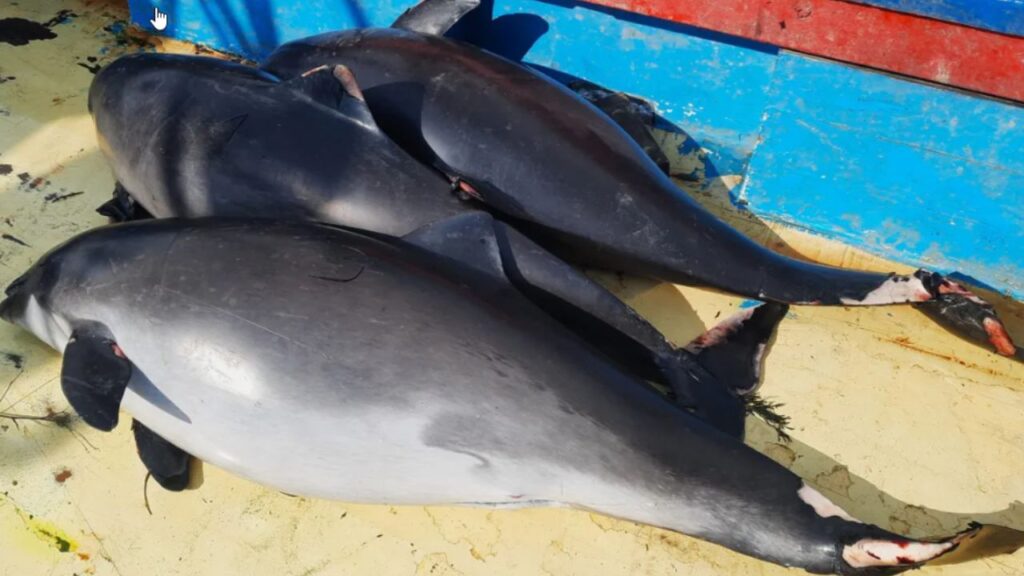
Field trials demonstrated that this device can reduce harbour porpoise bycatch in the Black Sea by approximately 74%. Researchers believe the specific acoustic signals, namely the wider frequency band (between 10 and 150 kHz) emitted by the PAL Wideband model, contributed to its effectiveness, as it was the only one of the three pingers tested, that successfully deterred porpoises from approaching fishing nets.
“Other recent studies have highlighted significant shortcomings in the conservation of harbour porpoise populations in European waters,” the researchers stated. This underscores the urgent need for effective strategies to reduce bycatch, the leading human-induced cause of mortality for the species.
“Mitigation measures could include spatio-temporal closures of high-risk fisheries in areas where harbour porpoises are most abundant, as well as the adoption of alternative or modified fishing gear, including the use of acoustic deterrent devices,” – the experts noted.
Among the available options, the use of effective pingers, supported by appropriate financing mechanisms, is increasingly seen as one of the most practical and widely accepted approaches to reducing bycatch while maintaining profitable fishing operations.
“Not all acoustic deterrent devices are equally effective in reducing the bycatch of the harbour porpoise in the Black Sea,” – the researchers concluded.
Their findings demonstrate that certain pinger models fail to mitigate porpoise bycatch in the bottom-set gillnets specifically used to target turbot.
The study underscores the importance of careful selection and testing of deterrent devices and emphasizes that this distinction must be explicitly taken into account in the development of targeted and effective strategies to reduce bycatch in Black Sea fisheries.
Source: blog.pensoft.net


