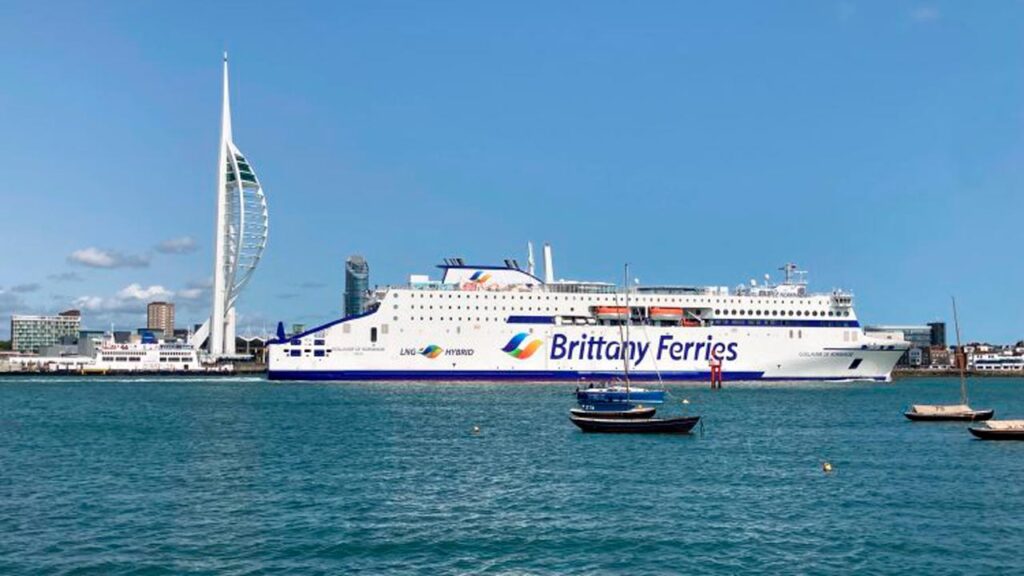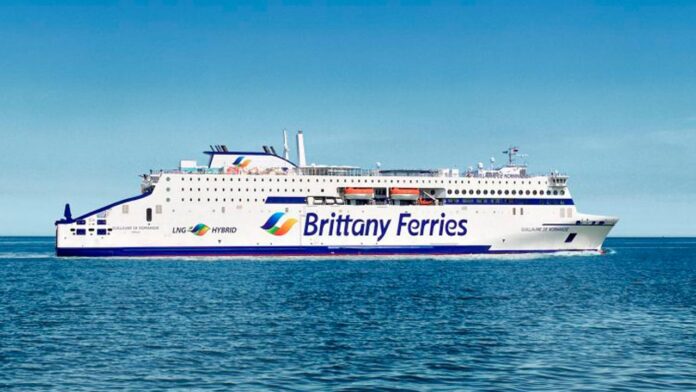
Brittany Ferries’ Guillaume de Normandie has become the first cross-Channel ferry to depart the UK using electricity supplied directly from the quayside, following the launch of Portsmouth International Port’s new shore power system.
The LNG-electric hybrid ferry connected to the system while alongside in Portsmouth, allowing it to recharge its onboard batteries before switching to electric power for its manoeuvre out of the harbour. More than 1,100 passengers were on board for the sailing to Caen.
The operation marked a milestone in the decarbonisation efforts of both Brittany Ferries and Portsmouth International Port, and took place on the company’s busiest route during the start of the summer holiday period.
Guillaume de Normandie, one of two new LNG-electric hybrid vessels operated by Brittany Ferries, arrived in Portsmouth from France and connected to the shore power system immediately. After recharging its batteries, the vessel used electric power while manoeuvring through Portsmouth Harbour and switched to hybrid LNG-electric operation after clearing the harbour entrance.
Portsmouth International Port had been testing the shore power system for two months before bringing it into full operation. The infrastructure is now available for both Guillaume de Normandie and its sister ship Saint-Malo, which operates on the Portsmouth–Saint-Malo route.
When connected to shore power, the ferries can switch off their onboard engines while alongside, eliminating local air emissions and noise from the vessels. The system also allows them to enter and leave Portsmouth Harbour using electric power, reducing emissions in the port and surrounding area.
Brittany Ferries CEO Christophe Mathieu described the first electric-powered departure as a major milestone for the company and credited the project to cooperation between the ferry operator, the port and other partners.
He said the shore connection allowed the company to make full use of its newer hybrid vessels while reducing their impact on Portsmouth.
However, the operator also highlighted the higher cost of shore power compared with running a vessel’s engines while alongside. Electricity prices and connection charges continue to make the system more expensive for shipping companies.
Brittany Ferries has called for government support, including possible tax incentives, to help offset the additional costs and encourage wider adoption of shore power across the maritime sector.
The company also thanked Portsmouth International Port for negotiations that resulted in an agreement covering the cost of shore power for the following 12 months, helping to reduce some of the additional financial burden.