-5.5 C
New York
Home Blog Page 996

Port of Incheon to slash passenger vessel emissions with ABB shore power

0

ABB will install Port of Incheon’s first shore-to-ship power solution, enabling passenger vessels to cut emissions, noise and vibrations at berth.

ABB has secured the contract covering South Korea’s commitment to sustainable shore-to-ship power, after a pilot scheme for passenger ships to plug into the local grid received the go ahead from Incheon Port Authority (IPA).

Juha Koskela, Managing Director, ABB Marine & Ports, said:

“As the first agreement covering shore-to-ship power in South Korea, this is a truly significant breakthrough for ABB. We are honored to be selected by IPA to support their efforts in reducing greenhouse gas emissions from ships, as well as moving towards increasingly sustainable port operations.”

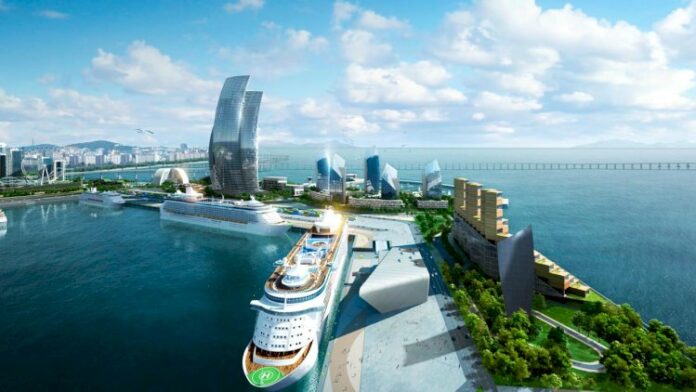
In addition to a new USD160 million ferry terminal opened in April 2019, Port of Incheon inaugurated South Korea’s largest cruise terminal in June this year. Given its metropolitan location and IPA’s ambitions to develop its ‘Golden Harbor’ vision for Incheon as a new tourism hub for the Northeast Asia, environmental credentials rank highly in port priorities.

ABB’s full scope of delivery includes the installation of an onshore power connection at the Incheon passenger terminal consisting of an enclosure featuring a 2000 kVA capacity Static Frequency Convertor with 50/60HZ output, a transformer, a Neutral Grounding Registor Unit and an outdoor enclosure.

ABB’s shore-to-ship power technology is proven from the performance and reliability point of view, but also in terms of optimizing the cost of electricity. It has already been integrated by over 50 ports around the world into strategies that reduce emissions overall and incentivize clean shipping.

An increasing number of ports around the world offer shore power for ferries, as well as other passenger vessel types. There is a clear interest to lower pollution in ports, and one way of doing that is to install shore power and have a clean grid feeding to it.
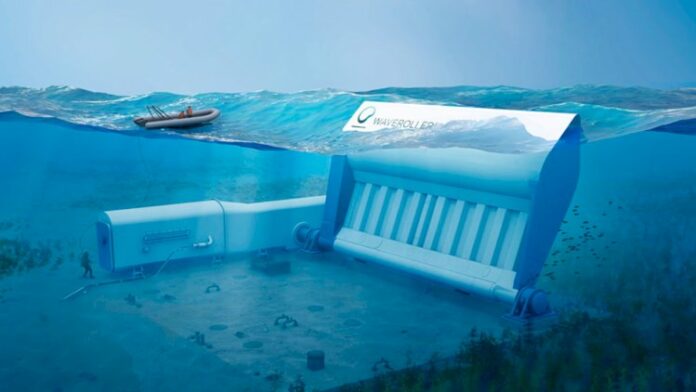
Tidal energy: The first commercial-scale WaveRoller unit is completed

0

The Final Assembly of the First commercial-scale 350 kW WaveRoller unit has been completed in Peniche, Portugal.

Upon deployment the unit is submerged to the sea bed and connected to the National Electricity Grid for production of electricity from the ocean waves.

The WaveRoller is a device that converts ocean wave energy to electricity. The machine operates in near-shore areas (approximately 0.3-2 km from the shore) at depths of between 8 and 20 meters. Depending on tidal conditions it is mostly or fully submerged and anchored to the seabed. A single WaveRoller unit (one panel and PTO combination) is rated at between 350kW and 1000kW, with a capacity factor of 25-50% depending on wave conditions at the project site. The technology can be deployed as single units or in farms.

IMCA promotes hybrid battery power systems on DP ships

0

The International Marine Contractors Association (IMCA) is promoting ways of reducing carbon emissions in the marine environment as part of its strategic theme of environmental sustainability.

The contribution of battery technologies in reducing carbon emissions is now having a positive effect in the offshore marine construction market. A number of IMCA’s member companies have taken the lead by incorporating hybrid power technologies on DP ships; and the initial feedback is very positive in terms of both carbon reduction and economic benefit.

For the last 30 years IMCA has been at the forefront of developing and publishing practical guidance and operating standards for the offshore marine construction industry. Currently IMCA’s DP Committee is addressing best practice for incorporating battery technologies into the existing power plants of DP ships. These are highly engineered systems where safety is paramount, however IMCA sees the very real potential of advanced battery systems playing an increasingly beneficial role in the offshore oil and gas and renewable energy industries.

Captain Andy Goldsmith, IMCA’s Technical Adviser – Marine, explains:

“The goal of this programme is to establish best operating practice to enable new hybrid power technologies to be interfaced with existing ship technologies in a safe and efficient manner, thereby allowing industry to transition to battery systems as smoothly as possible. The need for decarbonisation and lower cost strategies are well understood, and as these technologies become more mainstream, they will make a strong contribution to our industry”.

Viking Line awards AecorLink AB to deliver high-speed broadband

0

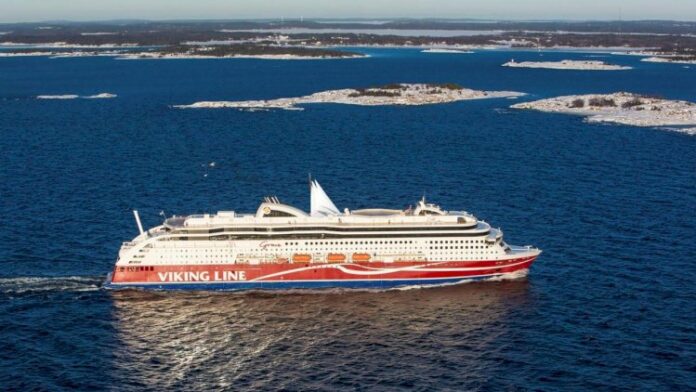
AecorLink AB, a company in the forefront in providing vessels with high capacity internet, has announced that the company has been awarded a communication contract with Viking Line. The ferry operator will with this agreement significantly improve the internet connectivity onboard its ferries.

The demand for fast broadband is constantly increasing and with this new project it will satisfy the present and the future demand for the ferry operator itself, its guests and the crew. Reliable internet connection is vital not least in order to attract the onboard conference guests, a segment which Viking Line particularly is targeting. AecorLink together with its partner, Specto Remote who does the service and installations, manage to deliver high-speed broadband thanks to a number of base stations along the routes, and a new proprietary configuration which effectively is tracking the base stations also over large distances.

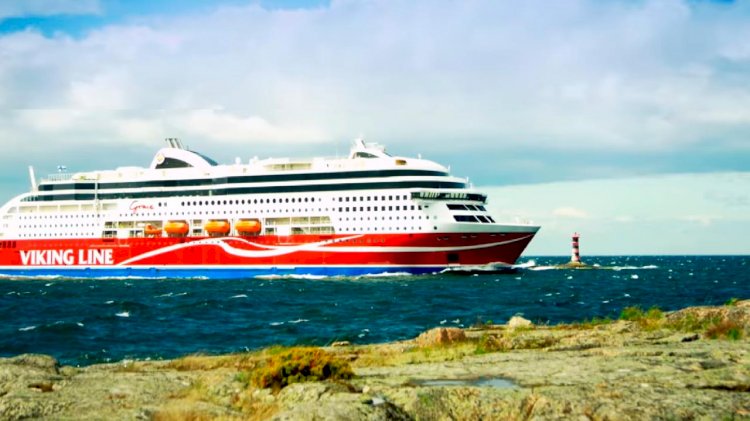
Viking Line has already implemented the new technology on the cruise ferry Viking Grace which successfully has provided high-speed internet connectivity since May this year, on the route from Stockholm to Turku over the high season. Viking Line now will integrate the rest of the fleet with the network and expand the infrastructure to include the full coverage between Sweden, Finland and Estonia.

Ulf Harderup with AecorLink says:

“Viking Line is for us a high-profile client, with a renowned name in the maritime ferry industry, so it is of course a fantastic opportunity helping Viking Line becoming even more competitive. To participate and to deliver this network where we and everyone can see this vast demand, is extremely motivating. We know the invaluable difference it makes offering passengers access to high speed broadband with low latency. AecorLink has for many years refined its innovative, ship to shore, seamless microwave technology. We have today the most stable solution with unbeaten capacity over the longest distances in the business. The new coverage between Sweden, Finland and Estonia is now in place, designed for many more clients to easily access it at very reasonable terms.”

Kaj Sundström, Network and Communications Manager for Viking Line, says:

“We see this project as part of our continuing commitment to improve our customer’s experience onboard Viking Line’s vessels. AecorLink’s established and proven network gave us the confidence to select them as our business partner in this area.”

AecorLink AB is a Swedish communication internet service provider targeting the maritime industry. Beside microwave shore to ship connectivity, the company is operating different techniques stretching from WiFi, LTE4G, Tactical UHF to different satellite solutions. Aecorlink also commission the onboard Wi-Fi connectivity and Captive Portals with Data analytics.

Parkwind designs turbines for the Arcadis Ost 1 Offshore windfarm

0

Parkwind has awarded the contract for the detailed design of the turbines and OSS foundations for the Arcadis Ost 1 Offshore windfarm to the Hamburg branch office of the consulting group COWI.

This includes the geotechnical design, loads calculations, primary and secondary steel design, limit state verification, and all activities pertaining to the approval of the design.

Michael Sienko, COWI’s Business Development Director for Offshore Wind, says:

“Wind energy is a strategically important growth area for COWI and we work with large-scale wind projects across the globe. The Arcadis Ost 1 project is without doubt amongst the most interesting offshore wind projects in the Baltic region for the time being, and we are very pleased to be onboard Parkwind’s team. With a growing office in Hamburg, I am confident that we can provide smooth and effective foundation designs in close cooperation with Parkwind.”

Arcadis Ost I Project Manager, Clément Helbig de Balzac added:

“We are glad to have selected COWI as foundation designer for the Arcadis Ost I project, we are convinced they have the relevant experience and skills to deliver an efficient design within the agreed timeframe. This milestone is one of the several coming this fall and we are pleased in moving our project forward in line with our planning”.

About COWI

COWI A/S is an international consulting group, with headquarters in Lyngby, Denmark. Based on their world-class competencies within engineering, economics and environmental science, they tackle challenges from many vantage points to create coherent solutions for their customers – and thereby sustainable and coherent societies in the world. www.cowi.com

About Arcadis Ost 1

The Arcadis Ost 1 wind farm has a capacity of about 247 MW and is located in the Baltic Sea, northeast of the island of Rügen, within the 12-nautical mile zone of the Federal State Mecklenburg-Western Pomerania, Germany. In April 2018, Parkwind was successful in the offshore wind auction in Germany, launched by the Federal Grid Agency.

ABS and Samsung Heavy Industries sign digital technology

0

ABS and Samsung Heavy Industries (SHI) are to collaborate on the use of digital technologies to streamline designing, building, and classing assets in a joint development project (JDP) signed today at Gastech 2019.

The JDP encompasses 3D digital disclosure, data exchange, and the use of analytics to support the new construction process and pilot the survey of the future.

Patrick Ryan, ABS Senior Vice President, Engineering and Technology, said:

“Data and digitalization are revolutionizing the marine and offshore industries. This JDP is further evidence of how ABS is leading the way and working with innovative partners such as SHI to shape the future of our industry. ABS is committed to realizing the potential benefits of these technologies for members and clients while advancing safety at sea."

Jong H Youn, Vice President of SHI, said:

"We have been leading digital innovation from design to production in order to adapt to the fourth industrial revolution and to ensure continued competitiveness. We expect this JDP with ABS will be a great opportunity to advance innovative certification and inspection."

The JDP is focused on three areas:

  • Piloting 3D Model Based Plan review
  • Developing a utility to import data from the SHI CAD system into ABS Engineering Software
  • Piloting the use of artificial intelligence to supplement traditional non destructive testing in the shipbuilding process. 

It’s the second JDP with SHI that ABS has announced during Gastech. The first being a project to develop a next generation LNG carrier design with advanced air lubrication and smart capabilities.

Ørsted contracts Van Oord for cable installation at Greater Changhua offshore wind farms

0

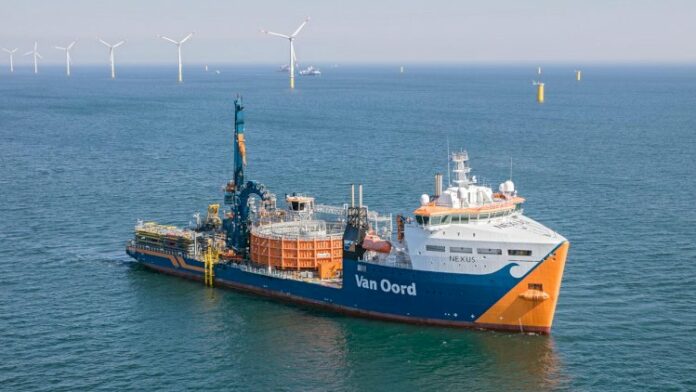
Van Oord has been awarded the contract by Ørsted for the cable installation works at the Greater Changhua 1 & 2a offshore wind farms.

The wind farms are located between 35 and 60 kilometres off the west coast of Changhua County, Taiwan. Greater Changhua 1 & 2a offshore wind farms will supply sustainable energy to approximately 1 million households per year. 

Van Oord is responsible for the transportation, installation and burial of the 111 inter array cables, with a total length of approximately 135 kilometres, and the 3 export cables, with a total of approximately 145 kilometres. To carry out the work, Van Oord will deploy its dedicated cable-laying vessel Nexus, equipped with a cable carousel with a capacity of 5,000 tonnes. Van Oord’s own trencher Dig-It will bury the cables to the required depth. The installation work starts in 2021.

The 900 MW Greater Changhua 1 & 2a offshore wind farms will be the first cable project in Taiwan for Van Oord. Once operational in 2022, the windfarms will contribute significantly to the Taiwanese government’s target of 5.7 GW offshore wind by 2025.

As the Taiwanese offshore wind market begins to expand, Van Oord is committed to support the further development of the Taiwanese supply chain and marine workforce by sharing our experience and knowledge in these fields. Van Oord will work closely together with Taiwanese engineering service providers and support vessel owners to complete this cable installation project successfully.

Kongsberg to supply its maritime solution for SeaDream

0

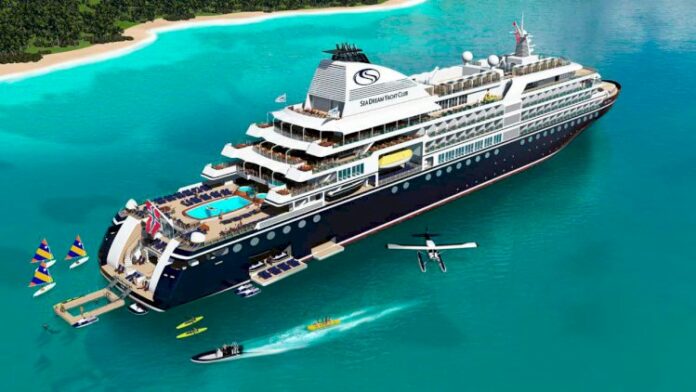
KONGSBERG has just signed a contract with Damen Shipyards in the Netherlands for the delivery of a fully integrated Kongsberg Maritime solution to the SeaDream Yacht Club cruise line.

Valued at more than NOK 190 million, KONGSBERG’s most extensive ‘Full Picture’ delivery for an expedition cruise ship, Innovation, also encompasses the supply and integration of propulsion equipment including the new ELegance azimuth pod system, Bergen engines, stabilizers, bridge and automation systems, accompanied by a comprehensive electrical, navigation and hybrid technology package. Delivery is expected to be accomplished in the second quarter of 2020, with the engineering and construction phases taking an estimated two years to complete. 

The ship will be fully compliant with the IMO’s forthcoming 2020 emission rules and regulations. An energy consumption and analysis system based on KONGSBERG’s digital platform will provide tools for detailed monitoring and energy optimisation.

Egil Haugsdal, President, Kongsberg Maritime, says:

“Both Damen and SeaDream are synonymous with peerless quality, attention to detail and environmentally-conscious principles. The Full Picture portfolio offers the most diverse mix of technology, engineering and digital solutions. When applied to an integrated delivery for the Innovation, it will enable highly efficient operations regardless of location and conditions.
With Kongsberg Maritime’s expertise in energy management systems and fuel-saving technology, this delivery not only raises the bar for sustainability in the cruise sector, but also represents a positive strategic step as our first expedition cruise contract with full scope for Kongsberg Maritime.”

SAAM Towage contracts Damen for delivery of tug vessel

0

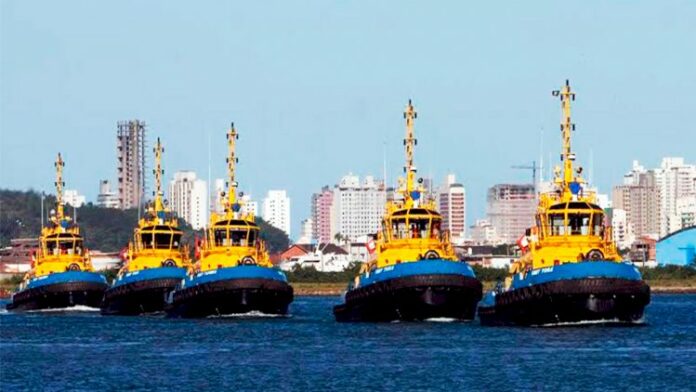
In August 2019 Damen Shipyards Group signed a contract with SAAM Towage for the delivery of an ASD Tug 2813 to SAAM Mexico for operations in the port of Veracruz. This order is the latest milestone in a business relationship spanning several decades and involving numerous vessels.

Due to an existing relationship built on previous shared success, SAAM Towage approached Damen sales manager Ezequiel Najmias with a possible order. Ezequiel used the opportunity to invite SAAM Towage representatives to visit the Damen Song Cam Shipyard in Vietnam. This allowed the client to view the shipyard’s production line, where they were able to see the entire shipbuilding process, from steel cutting right through to completion, looking at different tug vessels at different stages of construction.

Pablo E. Caceres, SAAM Towage technical director, said:

“Seeing the entire process first-hand was an insightful experience for all of us. We were able to get a close-up view of Damen’s operational standards, which we find very impressive. Together with Damen’s excellent track record of previous deliveries, confirming their high standards in action is the reason we decided to order the vessel from Damen.”

Damen has a long and busy history of supplying vessels to the Latin American market. Its relationship with SAAM dates back to 1995, and has seen considerable evolution since then. As part of its growth management in the region, Damen partnered with Wilson Sons through the Damen Technical Cooperation (DTC) in the 1990s, enabling Damen to support clients with vessel construction at a location of their choice.

The major port operator in the Americas, SAAM is a leading company providing towage services in South America and operates in thirteen countries over two continents.

Ezequiel Najmias said:

“We’re very happy to supply SAAM Towage again, as a continuation of our productive relationship. The ASD Tug 2813 is highly manoeuvrable, while also being powerful and offering a high level of crew comfort, so it will certainly be an asset to the fleet. SAAM Towage requested a vessel with over 80 tonnes bollard pull, and the ASD Tug 2813 is an ideal fit, with a maximum bollard pull of 85 tonnes and a top speed of 13 knots.”

The ASD Tug 2813 is a standard Damen product, allowing Damen to guarantee the fast delivery of a proven product. The ASD 2813 Tug’s systems are modular, allowing the possibility for customisation to the client’s requirements without incurring massive additional costs. On this occasion, SAAM Towage’s only additional option was the inclusion of a FiFi1 unit, providing firefighting capability to the vessel.

The ASD Tug 2813 will be delivered from Damen’s Song Cam shipyard to SAAM Mexico in January 2020.

HHLA’s floating cranes works on the river Elbe

0

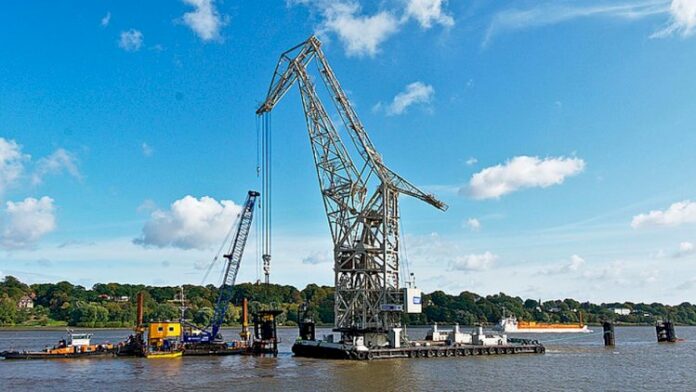
HHLA’s floating cranes transport 42-metre-long pipes which will be embedded into the bottom of the river Elbe to create additional waiting points for ships.

The waiting point for large ships by Finkenwerder is currently being expanded. Beginning in 2020, two ships that are 400 and 450 metres long will be able to moor there simultaneously – for example, while they wait to enter the passing place that is currently being built near Wedel. For this purpose, thirteen additional metal poles used to moor ships, known as pilings, will be driven into the riverbed of the Elbe close to the Airbus plant. The floating cranes “HHLA III” and “HHLA IV” tranship and transport the required pipes and heads for the pilings. Measured in working days and revenue, this is one of the largest projects of the past few years for the two floating heavyweights. 

Dr. Thomas Koch, head of the floating cranes department, explains:

“We are delighted that we can make a contribution to the dredging of the Elbe with our floating cranes, thereby helping Hamburg get in shape for the ultra large ships.”

He notes that the contract demonstrates the floating cranes’ performance once again, underscoring their importance for Hamburg’s all-purpose port.

The HHLA equipment has a heavy programme, probably until the end of September: The piles have a length of up to 42 metres and weigh a maximum of 108 tonnes. They were brought to Hamburg by ship from Swinemünde. With the help of the floating cranes, they were unloaded horizontally at the Rosshafen terminal, erected, and finally transported individually to the construction site approximately nine kilometres away. Since the heads of a few old piles will be replaced as part of the operation, the floating cranes also removed 25 piling heads, each weighing up to 55 tonnes. Some of them were temporarily stored at Rosshafen and transported from there to the construction site for assembly.