-5.2 C
New York
Home Blog Page 995

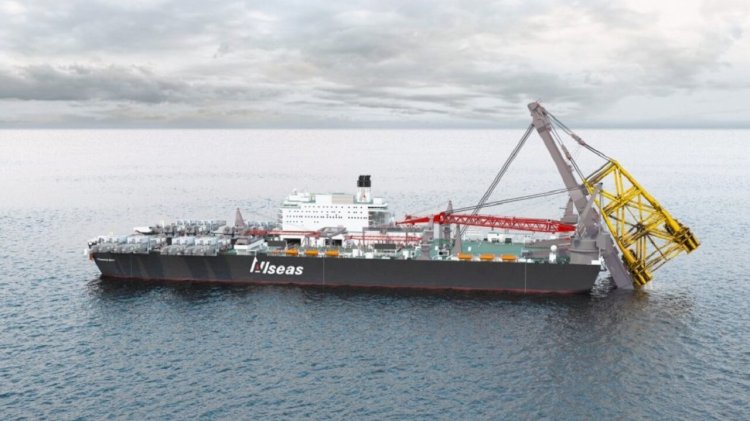
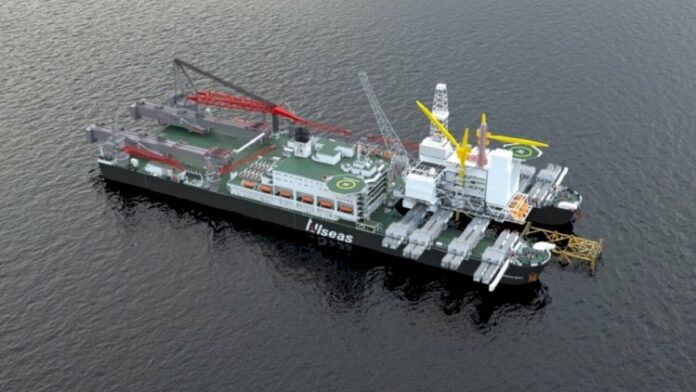
Allseas selected to remove the Repsol Gyda platform

0

Single-lift technology unlocked the possibility for Repsol to award the full scope to Allseas.

Repsol Norge AS has awarded Allseas an EPRD contract for the removal, transfer, load-in to shore and disposal of its Gyda platform in the Norwegian North Sea. The contract covers both the 18,000 t topsides and 11,200 t jacket, and includes an option for reinstallation on another field, which would be an unprecedented step for a fixed installation off Norway. Also included is an option for the removal, transfer, load-in and disposal of the jacket’s 32 conductors, weighing a total 3,100 t.

Gyda is a field in the southern part of the Norwegian sector in the North Sea, between the Ula and Ekofisk fields. The field has been developed with a combined drilling, accommodation and processing facility with a steel jacket standing in 66 m water depth. The platform started producing in 1990, a decommissioning plan was submitted in 2016 and Gyda is now producing in parallel with plugging of the Gyda wells. The platform is in very good technical condition, prompting operator Repsol to consider re-use.

As the jacket was vertically fabricated and installed back in the nineties, the structure cannot sustain loading in the horizontal position during transport. Allseas and Repsol spent more than a year studying ways to move the platform from its current location and bring it to shore for disposal. The solution of transporting the jacket in a near-vertical positon (60 degrees) with Pioneering Spirit’s unique jacket lift system unlocked the possibility for Repsol to award the full scope, both the topsides and jacket, to Allseas.

Removal is planned for between late 2020 and 2023. Allseas has selected Kvaerner AS to dismantle and recycle the platform at its Stord disposal facility on the west coast of Norway.

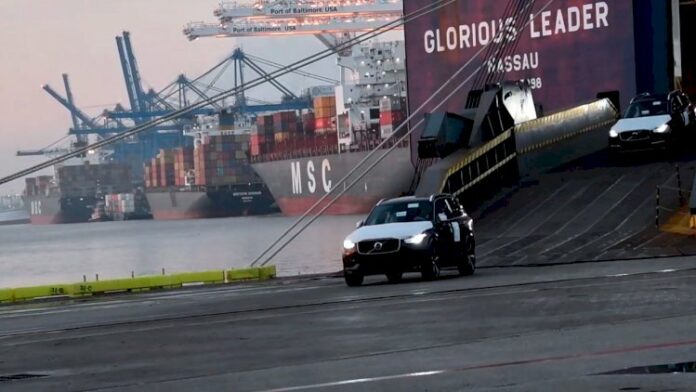
VIDEO: Berth reconstruction continues at Port of Baltimore

0

The Port of Baltimore's main automotive and Ro/Ro terminal, Dundalk Marine Terminal, continues with berth reconstruction to help maintain Baltimore as the nation's No. 1 port for autos and Ro/Ro. 

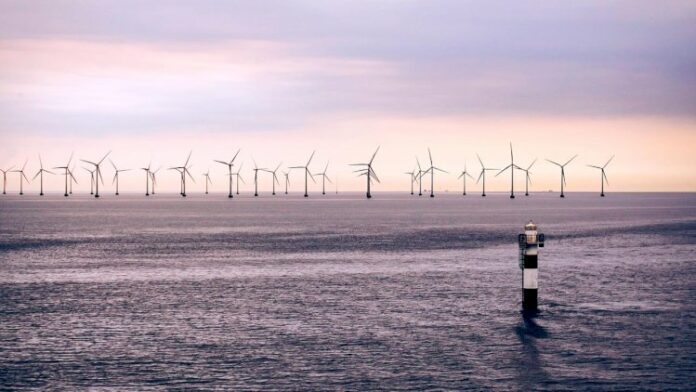
Equinor to develop the world’s largest offshore wind farm

0

UK authorities announced today, 20 September, that Equinor and its partner SSE were awarded contracts to develop three large scale offshore wind projects in the Dogger Bank region of the North Sea.  This will be the world’s biggest offshore wind farm development with a total installed capacity of 3.6 GW. The projects are expected to produce enough energy to power the equivalent of 4.5 million UK homes.

The Dogger Bank wind farm will consist of three projects, Creyke Beck A, Creyke Beck B and Teesside A.

The clearing prices for the projects are GBP 39.650 per MWh for Creyke Beck A and GBP 41.611 per MWh for the Creyke Beck B and the Teesside A projects (all in 2012 real prices). 

The auction results reflect the continued cost reductions and technological developments and the increasing competitiveness of bottom-fixed offshore wind. The contracts offer a fixed price for the first 15 years of operation, providing the projects with a long-term predictable revenue stream.

Eldar Sætre, CEO of Equinor, says:

“The successful bids for the world’s largest offshore wind development represent a game-changer for our offshore wind business and support the development of Equinor as a broad energy company. A full-scale development of Dogger Bank will constitute an industrial wind hub in the heart of the North Sea, playing a major role in the UK’s ambitions for offshore wind and supporting the net zero ambition. Excellent wind speeds, shallow waters and scale make Dogger Bank well positioned to deliver low cost renewable electricity to UK homes and businesses.”

Pål Eitrheim (left), executive vice president for New Energy Solutions in Equinor, and chief executive Eldar Sætre:

“Dogger Bank, together with the recent award for Empire Wind in the US, positions Equinor as an offshore wind major. These projects provide economies of scale and synergies, making us an even stronger competitive force in offshore wind globally. We expect the cost reductions obtained by the industry through continuous project execution and technological innovation will contribute to continued value enhancement.”

Jim Smith, Managing Director of SSE Renewables, says:

“We are thrilled at the success of our offshore wind projects at Dogger Bank which combined will be the largest wind farm in the world. Reaching this point has been a culmination of over 10 years of development and it is very exciting to work with Equinor on taking the project forward. We’re confident our wealth of offshore wind experience will enable us to deliver these unique projects. This success demonstrates that offshore wind is the key technology to enable the UK to become carbon neutral by 2050 in the most cost-effective way, whilst also delivering significant economic benefits across the country.”

The Dogger Bank projects are estimated to trigger a total capital investment of approximately GBP 9 billion between 2020 and 2026.

The joint venture will be seeking non-recourse project financing to fund the Dogger Bank development. A preliminary market sounding of potential lenders has demonstrated very strong interest for UK offshore wind assets.

The partners are planning for final investment decision for the first project during 2020 and first power generation is planned for 2023. Further phases of the Dogger Bank project will be developed thereafter.

The joint venture has selected SSE as the lead operator during the project construction phase and Equinor the lead operator for operations. Both companies will second personnel into the execution and operations teams.

The awards were given under the Contracts for Difference (CfD) competitive auction held by National Grid on behalf of the UK’s Department for Business, Energy and Industrial Strategy (BEIS) which has successfully commissioned 6 GW of offshore wind to reach a target of 30 GW of offshore wind by 2030.

Alcatel Submarine Networks rejuvenates its fleet

0

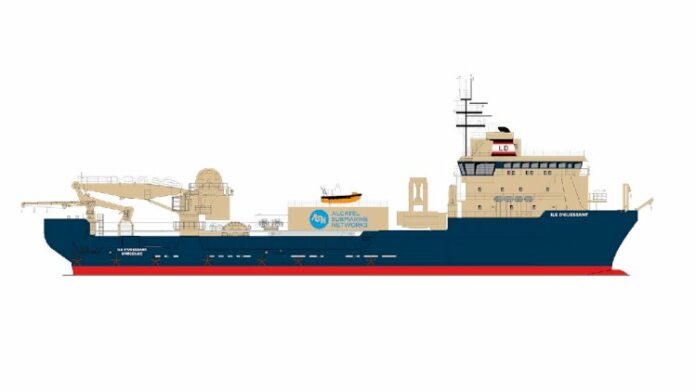
Alcatel Submarine Networks (ASN) announced today the acquisition of the Toisa Warrior, a 87 meters DP2 ship built in 2011 (and operated until 2016) from Sealion Shipping Ltd.

Thanks to this acquisition, ASN is rejuvenating its fleet and reinforcing its presence in the Atlantic area. The Toisa Warrior, renamed Ile d’Ouessant and registered under French flag, will serve primarily as a maintenance vessel for cables in the Atlantic (APMA) and will replace the Peter Faber.

The conversion of the ship will start shortly and will be run in Europe under Louis Dreyfus Armateurs’ (LDA) responsibility, with the aim of having the new ship operational in the Atlantic area by Q1 2020 the latest. As for the whole ASN fleet, LDA will be the ship manager for the Ile d’Ouessant.

This acquisition provides ASN with a modern, powerful, agile and fast vessel (2 propellers and 4 thrusters for a speed of 15 knots, compared to the 11 knots of the Peter Faber) combine with a longer endurance. ASN and LDA, thanks to their decades of experience in cable operations around the world, designed and engineered a solution to transform this Light Construction Vessel in a state-of-the-art repair cable ship. This vessel is meant to be more versatile with the ability to support new ASN Oil & Gas activities, such as DC/FO and PRM (Permanent Reservoir Monitoring) projects and provide extra capabilities to ASN as light subsea construction.

UK’s first eco hopper arrived at the Port of Rosyth

0

The Port of Rosyth welcomed their new SAMSON ecological hopper into the port for commissioning. The hopper is the first of its kind in the UK and will be a key component of the port’s new agri-bulk hub facility for Cefetra.

Forth Ports owns and manages eight commercial ports across the UK including the Port of Rosyth which is strategically located for road and rail and provides an important connection with mainland Europe and the UK. The Port of Rosyth is currently in an exciting phase of development with a multimillion pound investment to provide a dedicated  agri-bulk facility for Cefetra. The new terminal and improved storage facilities will deliver increased annual throughput and storage capacity positioning Rosyth as the main agri-hub for Scotland.

In developing this new agri-hub the safety of staff and protection of the environment is paramount.  Forth Ports chose a SAMSON Eco Hopper to receive dry bulk materials as it offers a high and reliable import capacity whilst minimising the escape of dust and it is equipped with a host of safety measures to ensure effective and safe performance.

The new SAMSON Eco Hopper arrived at the Port of Rosyth earlier this month and it will now be installed and commissioned to receive dry bulk materials such as grain and aggregates.

Dale Lockley, Managing Director of SAMSON Materials Handling, said:

“We are very pleased and excited to be working with such an important and respected Port Operator as Forth Ports and to provide one of our ecological hoppers for their new  agri-bulk terminal project at Rosyth. The Forth Ports Group has considerable experience with the SAMSON range of equipment as there is already SAMSON ship loading and stockpiling equipment operating at their other ports, but this is the first Eco Hopper at Forth Ports, indeed the first SAMSON Eco Hopper in the UK.”

Commenting on the hopper in Rosyth, Derek Knox, Senior Port Manager said:

“It’s great to welcome the new SAMSON eco hopper into Rosyth. We are investing in our port to ensure the most efficient, dust free agri-hub for Cefetra as well as other bulk customers. We look forward to using the hopper on the next grain shipment due into the port in September. We have a strong relationship with SAMSON and have had a great experience with their market leading equipment.”

Operation of the SAMSON Eco Hopper is straightforward.  As dry bulk materials such as grain arrive by sea they are offloaded into the hoppers using mobile harbour cranes.  At a little over 18m in height and made of reinforced steel the Eco Hopper provides a sturdy and solid reception unit.  The Eco Hopper is topped by a tapered inlet shroud which minimises any dust generation caused by cross winds.  As the crane grab discharges the load, dust filter units situated on three sides of the hopper will keep any fugitive dust from spreading.  The grain then falls through the “Flex-Flap” dust seal system which contains any further dust.  Material is discharged from the hopper via a dual outlet fitted with two telescopic cascade discharge chutes. This allows a single truck to be loaded by two chutes simultaneously thus increasing the average loading speed.  Material passes through the SAMSON Eco Hopper at a peak rate of 1200 tph.  The unit is wheel mounted which allows it to be positioned across the port in different locations as required and to be moved clear to allow other port operations to continue when not in use.

The SAMSON Eco Hopper benefits from a variety of safety measures: a storm anchor system (comprising of chains, shackles and attachments to secure the equipment during high winds), ready-to-load traffic lights and sounders, working lighting and safety overload protection.  The operators’ cabin is climate controlled and provides a 360 degree view of the operation while accessing all controls.  There is also a hand-held pendant operator remote control unit.

Forth Ports Rosyth is the first UK port to install a SAMSON Eco Hopper to provide dust controlled import facilities for its new agri-hub.

Schlumberger’s Ora platform completed more than 30 field trials worldwide

0

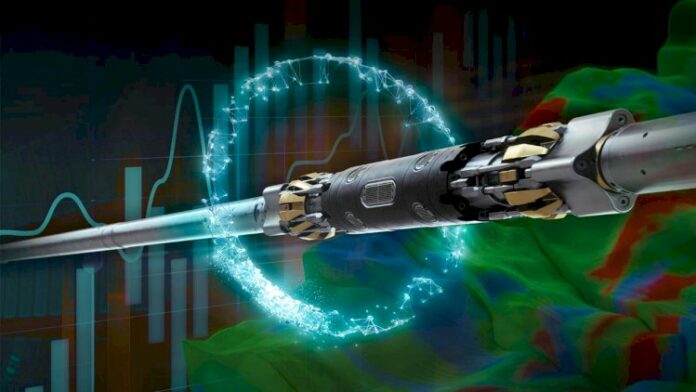
Schlumberger has introduced the Ora intelligent wireline formation testing platform at the SIS Global Forum 2019 in Monaco. The platform leverages a new architecture and metrology for enhanced performance, enabling dynamic reservoir characterization in all conditions, including where previously impossible.

The Ora platform is rated to 200 degC (392 degF) and 35,000 psi and includes a new focused radial probe, a dual-inlet dual packer, laboratory-grade metrology, new measurements, and the highest flow rate pump in the industry. The digitally enabled hardware can automate complex workflows, reduce operating time by more than 50% and deliver the highest precision fluid analysis and zero contamination samples. Furthermore, deep transient testing is now possible on wireline.

The platform is built on a digital infrastructure, providing a new customer experience, enabling real-time decisions in a cloud-native environment.

Djamel Idri, president, Wireline, Schlumberger, said:

“Characterizing dynamic reservoir properties is becoming more critical and difficult than ever as drilling for hydrocarbons is moving towards complex geologies and challenging environments. Moreover, analyzing this data to make business decisions can take weeks if not months. The Ora platform was built to address these challenges, with new wireline formation testing hardware and digital edge solutions enabling our customers to make faster and better decisions.”

The Ora platform has successfully completed more than 30 field trials worldwide in a variety of operating environments in the North Sea, US Gulf of Mexico, West Africa, Middle East, North Africa, and Central America. In Mexico for Pemex, the Ora platform was the first ever wireline formation tester to collect high-quality gas condensate samples in a challenging carbonate formation with permeability below 0.03 mD and 182 degC (360 degF) at 20,000-psi pressure. This helped Pemex announce the tripling of estimated reserves for Mexico’s most important land discovery in the last 25 years.

In deepwater Gulf of Mexico for Talos Energy, the Ora platform obtained high-quality downhole fluid analysis data in a challenging well geometry, which was immediately integrated and visualized in the reservoir context. The reservoir model was then updated using a bespoke Schlumberger reservoir fluid geodynamics workflow, enabling real-time assessment of lateral and vertical connectivity for early completions decisions.

New smart software system for oily water discharge data collation

0

Market leading developers of smart water quality monitoring technology Rivertrace Limited, have created a new, web-based software system for the automatic collation of MARPOL oily water discharge data.

RIVERTRACE CONNECTED has been developed by Rivertrace in partnership with UK software developers ISB, who have more than 25 years’ experience in tailored software solutions. The  intuitive, subscription-based service has been created in response to industry need and demand for the continuous monitoring of oily water discharge and simple, efficient operations.

The smart software system interprets, and records oily water discharge data received from Rivertrace’s SMARTSAFE ORB (Oil Record Book) Bilge Overboard Security System monitoring equipment. Data received from the SMARTSAFE ORB monitor is displayed on the user-friendly dashboard interface of RIVERTRACE CONNECTED which facilitates both ship and fleet-level critical information to be displayed for the user.

Aggregated data from the fleet can be displayed on the intuitive dashboard, allowing the user to rank ships in a league table from best to worst performance. The system’s vessel dashboard displays all data received for a particular ship within a specified period including amounts discharged and speed of discharge, alongside equipment details such as serial numbers, calibration, maintenance requirements, idle time, active time and prevented discharges. The system also offers a mapping function to show where discharges took place.

All of these features enable, RIVERTRACE CONNECTED to provide a fully auditable discharge data trail with timestamped entries for provision to port state control or and other Marine Enforcing Agencies, if required.  Additionally, the discharge data can be used as an automated entry into an electronic ORB.

In developing this advanced digital technology, Rivertrace have responded to industry requirement for simpler recording and reporting of discharge data for compliance, by removing the challenges associated with hard-to-use discharge data as commonly presented in unreadable CSV files and offering a system that displays the data in an easy to read and interpret format. Furthermore, the software enhances the credibility of discharge data collected by minimising the risk of human error.

Martin Saunders, Director at Rivertrace Limited says:

“Digital technology is changing the landscape of our industry and in launching RIVERTRACE CONNECTED, we are supporting our customers in their quest for simplified, continuous monitoring and efficient operations. As specialists in water quality monitoring we use our expertise and consistently push the boundaries of water analysis, the resulting offering to our customers being the new smart software system RIVERTRACE CONNECTED.”

Van Oord and Shell test the use of biofuel on vessels

0

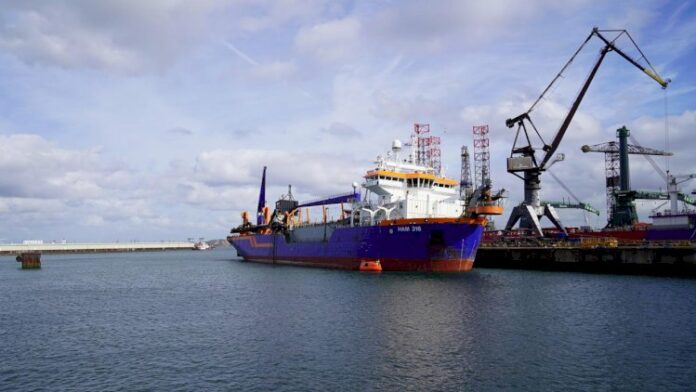
Together with Shell, Van Oord is testing the use of biofuel on its fleet. The biofuel reduces CO2 emissions by more than 40% compared with conventional marine fuel.

This test fits in with the ambitions of both parties to reduce the CO2 emissions in the maritime industry. The first pilot will take place during a dredging project in Germany on Van Oord's trailing suction hopper dredger HAM 316.

Pepijn van den Heuvel, project leader at Shell, said:

"We are very proud of this collaboration with Van Oord. Biofuels are one of the solutions for shipping that can be implemented in the short and medium term. Biofuels can be blended with conventional fuels without the need for major technical modifications to the engines. Partners such as Van Oord have the technical expertise to monitor and supervise such pilots effectively."

The shipping industry is being faced by major sustainability challenges. By 2050, global shipping will have to emit an average of 50% less CO2 than in 2008. In addition, Van Oord has signed the Green Deal with the aim of achieving a 70% reduction by 2050 compared with 2008. That's why Van Oord and Shell are working together to reduce emissions from vessels. Both parties have signed an agreement to carry out a large-scale biofuel pilot. Following the pilot, the possibility of using biofuels on other vessels will also be examined.

Ronald Schinagl, Director Business Unit Netherlands at Van Oord, said:

"We invest in initiatives and partnerships that contribute to the sustainable implementation of our projects. Our aim is to achieve a significant reduction in emissions. This partnership with Shell is an important step in this process."

Trailing suction hopper dredger HAM 316 will sail from Rotterdam to Cuxhaven and will be employed on the German project during the biofuel pilot. The ultra low-sulphur fuel easily complies with current ECA regulations. We're testing a “second-generation” biofuel made from waste products such as cooking oil. Moreover, it is ISCC certified, which means that the entire chain is certified by a third party. Current calculations show that the biofuel is an effective and affordable method of reducing CO2 emissions. The test will indicate whether the fuel can be used in practice in existing vessels. The local emissions of the vessel will be measured during the work and after completion the engine will be inspected.

Speedcast and Nelco awarded remote communications contract for leading Indian Cruise line

0

Providing Seamless VSAT Services for Cruise Line In and Out of Indian Waters.

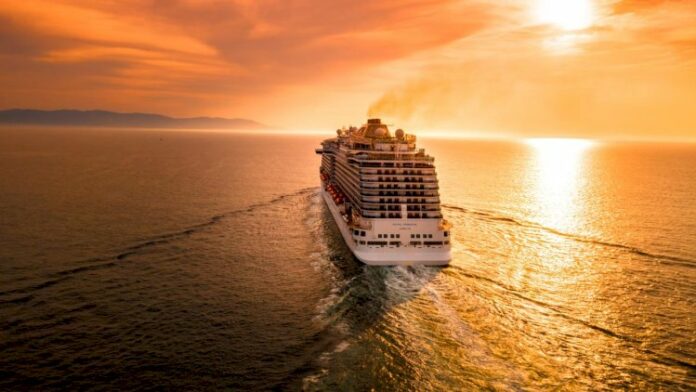
Speedcast International Limited, the world’s most trusted provider of remote communication and IT solutions, and India’s fastest growing VSAT service provider Nelco Limited, a Tata Enterprise, have been awarded a new contract to deliver satellite communications onboard a leading Indian Cruise line catering to the Indian domestic and international cruise markets.

The leading Indian Cruise line offers a rich experience of Indian culture, hospitality and cuisine to domestic and international travelers. The cruise ship will sail initially in India before proceeding to the Middle East. Throughout its journey, it will be able to enjoy seamless Ku-band connectivity in and out of Indian waters as a result of the recent partnership agreement between Speedcast and Nelco.

Brent Horwitz, Speedcast’s SVP of Cruise and Ferry, said:

“The Indian Cruise market is growing at a rapid rate and we are proud to have the global reach and strategic partnership with Nelco, to be the first provider of seamless connectivity for ships entering and exiting Indian waters. The challenge of maintaining uninterrupted communications in that region has always been one of our customers’ key pain points. Our unique proposition to supply reliable communication solutions to ships sailing in and out of Indian waters fits Indian Cruise operators’ connectivity needs very well. We expect more ships will sign up for our services, as there is a high demand for truly global and reliable broadband service onboard.”

Nelco MD & CEO P J Nath said:

“We are excited that this leading Indian Cruise line has awarded Speedcast and Nelco the contract to deliver seamless global communications service. We see the partnership with Speedcast as a big growth opportunity for Nelco and look forward to working with them to grow this business for both companies in the region.”

AARNet goes live with Cisco subsea data center interconnect solution

0

A global-first in connecting terrestrial networks via a subsea link over 9000km.

Cisco and Australia’s Academic and Research Network (AARNet) announced live production traffic on the AARNet portion of the INDIGO subsea cable, connecting data centers in two countries, over 9000km apart, to support research and education.  The project represents a global first in interconnecting a national terrestrial network with an international subsea link over a vast distance.

A combination of Cisco NCS 1004 Transponders, the NCS 2000 FlexSpectrum Single Module ROADM with noise loading is used to extend the spectrum from submarine cable landing stations across the AARNet national Dense Wavelength Division Multiplexing (DWDM) network directly to end-user data centre locations across Australia. The innovative approach of extending the submarine network into the data center locations allows AARNet to maintain diversity onshore and reduce the cost and complexity of connecting to research networks in Asia and Europe.

Chris Hancock, AARNet CEO, said:

“We’re extremely proud of the outcome for this phase for AARNet’s first submarine project.  We are the first  operator globally to interconnect their national terrestrial network with an international subsea link over these enormous distances in this way. What we liked the most about the Cisco solution was the ability to adjust the baud rates and thus tailor the wavelengths for the best performance for such a long distance, without wasting any spectrum.”

The Cisco NCS 1004 and the NCS 2000 FlexSpectrum Single Module ROADM platforms provide AARNet with the flexibility to not only send a wavelength over shorter segments of the system, from Sydney to Perth (INDIGO Central) and Perth to Singapore (INDIGO West) but also to concurrently send a wavelength over the entire INDIGO subsea cable system from Sydney to Singapore. In addition, the flexibility of the NCS 1004 to adjust modulation format and baud rate allows AARNet to achieve the maximum data throughput using minimum spectrum over different distances.

Bill Gartner, SVP/GM of Optical Systems and Optics at Cisco, said:

“Cisco is thrilled AARNet has achieved this major milestone of moving the INDIGO cable project to production.  With the NCS 1004, over 24Tbps of capacity can be turned up on the INDIGO network. By enabling AARNet to move from field trial to full deployment in under 3 months, Cisco has demonstrated its capability as a leading vendor for optical transport in both subsea and terrestrial applications.”

The Cisco NCS 1004 is optimized to maximize capacity with a minimum space and power footprint. At 2RU, the system supports up to 4.8Tbps of client and 4.8Tbps of trunk traffic. In addition to subsea applications, the Cisco NCS 2000 working with the NCS 1004 is also well suited for terrestrial ultra-long haul, subsea, metro, and enterprise optical networks.