-4.8 C
New York
Home Blog Page 997

VIDEO: Northrop Grumman’s Integrated Power & Energy Systems (IPES)

0

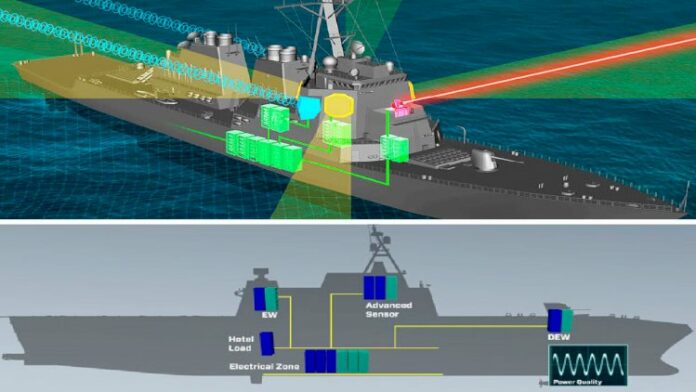
The Integrated Power & Energy Systems (IPES) is a highly dynamic and integrated system which encompasses power generation, distribution, conversion, energy storage and controls. This flexible and scalable system allows modules to be combined for effective power conversion solutions for a variety of shipboard applications, thereby reducing the hardware needed below decks.  

Utilizing the next generation of digital controls to enrich the power conversion and energy management capabilities, Northrop Grumman has developed a suite of power solutions using a modular, scalable, and flexible architecture. Northrop Grumman’s solutions can be configured to support a system, a collection of systems, or a complete platform.

For large dynamic shipboard loads, Northrop Grumman has used building blocks to create a modular and flexible Prime Power Equipment (PPE) architecture. The power system is designed to support the wide range of electrical input power that can be present with shipboard systems and to operate within the harsh maritime environment. Additional modules or cabinets can be added as the application dictates. While Northrop Grumman has developed power quality control techniques that have been shown to save 80% or more in required energy storage, systems can be expanded to include additional storage as the mission CONOPS requires.

The embedded machinery control systems take advantage of the lower power, modular electronics building blocks and real-time digital control products. These software-enabled control systems provide a tremendous level of flexibility and control over the machines, incorporating advanced control concepts in coordination with the overall electrical system and network controls. The result is a highly integrated system that is better suited to address transient and dynamic conditions as well as optimize component performance. The resulting reduction in size and weight are highly desirable in an environment where space is at a premium.

 

CargoX and RoadLaunch merge the worlds of public and private blockchains

0

CargoX, the public blockchain logistics document transaction platform which was built on a public blockchain, has been integrated into RoadLaunch, the private blockchain-based digital freight management platform.

This is the first publicly available integrated product in logistics of this kind, which merges the strengths of public and private blockchains in one solution to provide business users with the best of both worlds. 

The RoadLaunch platform streamlines freight quoting, dispatch, capacity management, load matching, asset tracking and instant settlement of freight payments into an intuitive, fully integrated and easy-to-use system. CargoX has added a great new feature, with a secure and trustworthy way to digitally transfer ownership of global trade documents.

The joint solution keeps records of the user’s data and documentation on multiple blockchains simultaneously. Users access the services in one single-window application, and they need no knowledge of the underlying blockchain technologies to use them successfully. 

"The partnership with CargoX is a big step forward in the supply chain industry and further sets the stage for next-generation logistics. Global organizations will be able to see an enhanced, trusted and simple interface for their shipment tracking and document transactions using multiple blockchain technologies," says Cory Skinner, founder, and CEO of RoadLaunch and FactR.

Eni starts production of Baltim South West field offshore Egypt

0

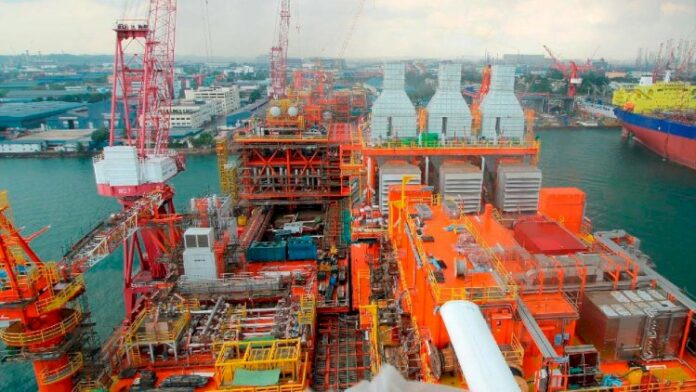
Eni successfully started-up production from the offshore Baltim South West gas field in Egypt.

Discovered by Eni in June 2016, the field goes on-stream in a record time. It lies within the Great Nooros area in which Eni first recognised great gas production potential and where it is conducting other new exploration projects.

San Donato Milanese (Milan), 17 September 2019 – Eni announces the successful commissioning and start-up of production of the offshore Baltim South West gas field in Egypt.

Discovered by Eni in June 2016, the field goes on-stream in a record time, just 19 months after the final investment decision (FID) was approved in January 2018. This result further confirms the success of the strategy adopted by Eni and the company capability in pursuing a fast track approach to development projects.

The field is located in shallow waters 12 kilometres off the Mediterranean coast of Egypt in the Baltim South development lease. It lies 10km from the Nooros field, but still within the Great Nooros area. This is an area in which Eni first recognised great gas production potential and where it is conducting other new exploration projects.

With the start-up of the first well, BSW1, the field is now producing with an initial rate of 100 million standard cubic feet per day (scf/d) from a new offshore platform connected to the existing onshore Abu Madi Gas Plant through a new 44 km long, 26 inch diameter pipeline.

The development program foresees the drilling of further five wells with the objective of achieving a production target of 500 million scf/d by the second quarter of 2020. Volumes produced by Baltim South West will further contribute to Egypt's natural gas export capacity. The overall gas potential from the Great Nooros Area is approximately 3 trillion cubic feet (tcf) of gas in place, of which about 2 tcf are in the Nooros field and the remainder in Baltim South West.

Eni, through its subsidiary Ieoc, has a 50% interest while BP holds the remaining 50% interest of the contractor’s  stake in the development lease of Baltim South. The project is executed by Petrobel, the Operating Company jointly held by Eni and the state corporation Egyptian General Petroleum Corporation (EGPC) on behalf of Medgas, jointly held by contractor (Eni and BP) and EGPC.

Eni has been present in Egypt since 1954, where it is the main producer with approximately 380,000 barrels of oil equivalent per day in equity. Such production is expected to further grow within the year, thanks to the ramp-up of Zohr gas field and progressive ramp-up of Baltim SW field.

Schlumberger, Chevron and Microsoft announce collaboration to accelerate digital transformation

0

Global organizations will work together to accelerate development of cloud-native solutions and deliver actionable data insights for the industry.

Tuesday at the SIS Global Forum 2019, Schlumberger, Chevron and Microsoft announced the industry’s first three-party collaboration to accelerate creation of innovative petrotechnical and digital technologies.

Data is quickly emerging as one of the most valuable assets to any company, yet extracting insights from it is often difficult as information gets trapped in internal silos. As part of the collaboration, the three companies will work together to build Azure-native applications in the DELFI* cognitive E&P environment initially for Chevron, which will enable companies to process, visualize, interpret and ultimately obtain meaningful insights from multiple data sources.

DELFI is a secure, scalable and open cloud-based environment providing seamless E&P software technology across exploration, development, production and midstream. Chevron and Schlumberger will combine their expertise and resources to accelerate the deployment of DELFI solutions in Azure, with support and guidance from Microsoft. The parties will ensure the software developments meet the latest standards in terms of security, performance, release management, and are compatible with the Open Subsurface Data Universe (OSDU) Data Platform. Building on this open foundation will amplify the capabilities of Chevron’s petrotechnical experts.

The collaboration will be completed in three phases starting with the deployment of the Petrotechnical Suite in the DELFI environment, followed by the development of cloud-native applications on Azure, and the co-innovation of a suite of cognitive computing native capabilities across the E&P value chain tailored to Chevron’s objectives.

Olivier Le Peuch, chief executive officer, Schlumberger, said:

“Combining the expertise of these three global enterprises creates vastly improved and digitally enabled petrotechnical workflows. Never before has our industry seen a collaboration of this kind, and of this scale. Working together will accelerate faster innovation with better results, marking the beginning of a new era in our industry that will enable us to elevate performance across our industry’s value chain.”

Satya Nadella, CEO of Microsoft, said:

“There is an enormous opportunity to bring the latest cloud and AI technology to the energy sector and accelerate the industry’s digital transformation. Our partnership with Schlumberger and Chevron delivers on this promise, applying the power of Azure to unlock new AI-driven insights that will help address some of the industry’s—the world’s—most important energy challenges, including sustainability.”

Joseph C. Geagea, executive vice president, technology, projects and services, Chevron, said:

“We believe this industry-first advancement will dramatically accelerate the speed with which we can analyze data to generate new exploration opportunities and bring prospects to development more quickly and with more certainty. It will pull vast quantities of information into a single source amplifying our use of artificial intelligence and high-performance computing built on an open data ecosystem.”

Nuclear-powered ballistic missile submarines set to be fastest growing segment in global market

0

Navies across the globe are enhancing their undersea warfare capabilities by commissioning advanced submarines, primarily to gain asymmetric advantage over their opponents and to protect their national interests.

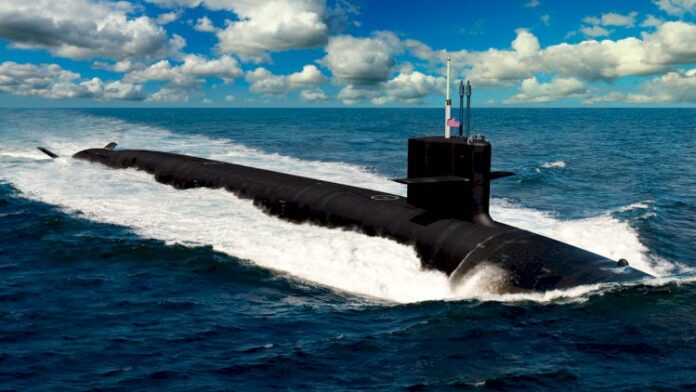
Therefore, nuclear-powered ballistic missile submarines (SSBN) are expected to account for 40% revenue share of the total global submarine market by 2029, which is up from 29% in 2019, according to GlobalData, a leading data and analytics company.

GlobalData’s latest report, ‘The Global Submarine Market 2019–2029’, states that the global submarine market is valued at US$22.4bn in 2019, and will grow at a compound annual growth rate (CAGR) of 3.4%, to reach US$31.3bn by 2029. The cumulative global market for submarines is anticipated to value US$280.5bn over the forecast period.

Numerous countries are undertaking multiple high-value programs for procuring new-generation strategic deterrence submarines. As a result, the SSBN market will be driven by the US Navy’s Columbia-class, People Liberation Army Navy (PLAN)’s Jin-class (Type 094/094A) and Tang-class (Type 096), and Russian Navy’s Borei-class (Project 955) SSBNs.

Furthermore, countries such as the UK and France plan to replace their existing submarines. For example, the UK’s Dreadnought class, built by BAE Systems, is expected to replace the existing Vanguard class, while France’s SNLE 3G (for 3rd generation SSBN) is set to replace the current fleet of SSBN (Triomphant-class).

Captain Nurettin Sevi (Rtd.), Turkish Navy, Defense Analyst at GlobalData, comments:

“Compared to land, air and above water based platforms, SSBNs with advanced stealth features are harder to detect and ideal for performing nuclear deterrence roles.”

Contrastingly, India is aiming to establish a credible nuclear triad, directing significant funds towards the procurement of SSBNs. The country has already deployed one Arihant-class SSBN and is presently building three additional units.

Sevi concludes:

“Major nuclear powers across the globe have been looking to not only replace their aging undersea fleet, but to also equip the incoming new submarines with state-of-the-art undersea systems, including advanced armaments, sensors, electro-optical systems, electronic and acoustic countermeasure systems.”

Equinor started production from the Utgard gas field

0

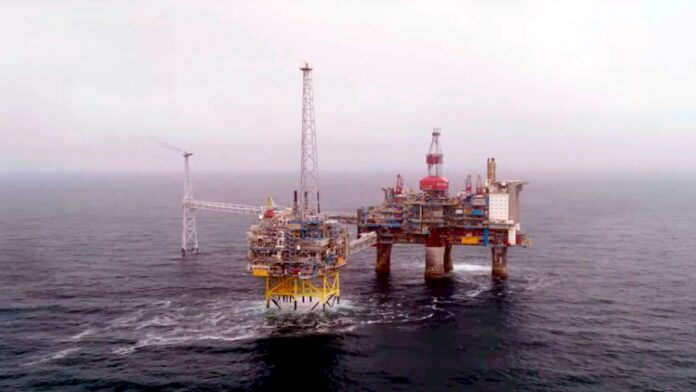
On 16 September, Equinor and its partners started production from the Utgard gas and condensate field, spanning the Norwegian-UK border in the North Sea. The project is delivered without any personal injuries, ahead of schedule and 25% below the cost estimate.

Recoverable Utgard resources are estimated at around 40 million barrels of oil equivalent (boe) and daily production on plateau will be around 43 000 boe.

The field development consists of two wells from a subsea template tied back to the Sleipner field by a pipeline and an umbilical. The template is installed on the Norwegian side of the border, with one well on each side.

The field was discovered in 1982 and a development has been considered several times. In 2016, Equinor acquired the UK share of the discovery to realize the development, which has become a profitable project even with substantially lower oil prices than we see today.

The plan for development and operation and the field development plan were submitted to Norwegian and UK authorities in 2016. At that time the cost estimate was NOK 3.5 billion (fixed NOK), and start-up was scheduled for the end of 2019.

Anders Opedal, executive vice president for Technology, Projects and Drilling in Equinor, says:

“I am proud of the Utgard project being delivered at NOK 900 million below the cost estimate and ahead of schedule, but first and foremost of the project being delivered without personal injuries.”

It is the first time Equinor leads a field development for recovering resources across the border between the Norwegian and UK continental shelves. Opedal says:

“Good and efficient cross-border cooperation with both licence partners and authorities has made the Utgard development possible, and I am pleased that we found solutions ensuring proper resource management on both sides.”

Arne Gürtner, senior vice president for UK and Ireland Offshore in Equinor, says:

“Through Utgard, we are maximizing economic recovery from the North Sea, and unlocking high value, low carbon intensity barrels in line with our strategy. We will continue to seek cross-border opportunities to add value on both sides of the border.”

Utgard will be remote-operated from the Norwegian Sleipner field, where the well stream will be processed before dry gas is transported to the market through the Gassled pipeline system, and liquids are sent through the existing pipeline to Kårstø for further export to Europe. Utgard will also utilize Sleipner’s facility for CO2 purification and storage.

Arne Sigve Nylund, executive vice president for Development and Production Norway in Equinor, says:

“By reusing the existing infrastructure, we can, with relatively low investments, realize smaller discoveries that would not otherwise have been profitable enough to develop. At the same time, we are adding valuable volumes to Sleipner.”

Seaspan Ferries selects Corvus to supply energy storage

0

Two newbuild LNG-battery hybrid ferries will use 2 MWh energy storage system to reduce fuel consumption and further reduce emissions.

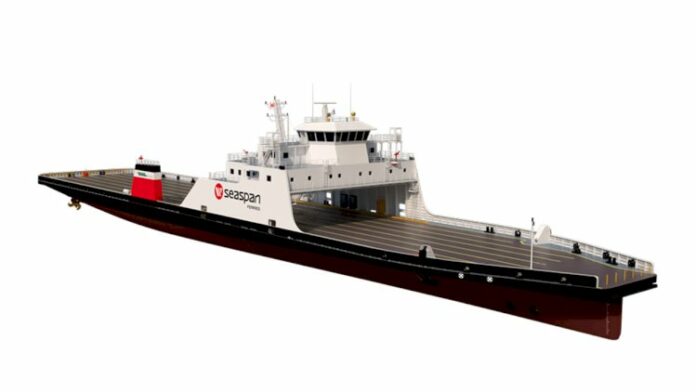
Corvus Energy is pleased to announce that Seaspan Ferries has selected Corvus Energy to supply a 2034 kWh Orca Energy system for each of its newbuild LNG-battery hybrid ferries currently under construction.

Seaspan will also operate the new roll-on/roll-off (Ro-Ro) ferries on its coastal routes in British Columbia. The Corvus batteries will contribute to significant reduction in emissions, fewer running hours on the engines, and faster response to load variations.

Harly Penner, Director of Fleet Engineering & Vessel Development at Seaspan Ferries, says:

“Seaspan Ferries is striving to gain maximum efficiencies with our new fleet which are larger than our existing vessels. The additional cargo takes more time to load. The only chance to make up time the increased time from loading is with vessel speed. Instead of putting in larger engines to allow for greater speed and faster acceleration and deceleration, we’re going to use batteries to share the higher load and assist during manoeuvring.”

The batteries will be delivered through Aspin Kemp and Associates (AKA), a Canadian company that designs, manufactures, installs and supports innovative power generation and energy management solutions for marine and land-based industries in strategic partnership with MAN Energy Solutions.

The Corvus Orca Energy system is Type Approved by Bureau Veritas and holds the highest standard of safety within the industry. DNV GL, ABS and RINA have also acknowledged the technology by issuing Type or Class Approval certificates for the Corvus Orca Energy system.

This is the second pair of ferries that Seaspan has equipped with Corvus batteries. Seaspan Reliant and Seaspan Swift went into operation in 2017. The 546 kWh Corvus batteries saved Seaspan the cost of an additional engine for spinning reserve, as well as improved fuel efficiency by 9%-10%. 

Sveinung Odegard, VP Sales, North American for Corvus, says:

“We are very pleased that Seaspan has again selected a Corvus energy storage system. Corvus may be a global leader in marine energy storage solutions, but we are very committed to the local marine industry as well. We firmly believe the North American market will grow in the coming years. For that reason, we are proud to deliver Canadian batteries on board Canadian vessels alongside a Canadian integrator.”

As the leading manufacturer of energy storage systems for maritime applications, Corvus Energy provides battery power to more hybrid or all-electric ferries than all other providers of energy storage systems combined. Corvus offers the innovative Orca ESS solutions portfolio and has unsurpassed experience from 250+ projects, totaling over 230 MWh and more than 2 million operating hours.

Greenland research vessel picks MAN hybrid propulsion package

0

Minimisation of noise central to composition of propulsion system; vessel has DNV GL’s SILENT F designation.

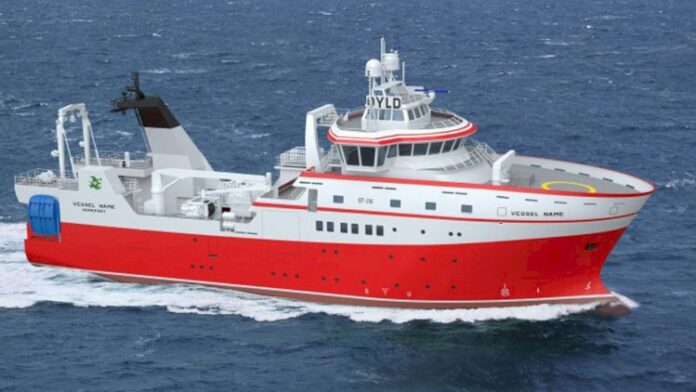
The Astilleros Balenciaga S.A. shipyard in Spain has ordered a complete MAN propulsion package – including MAN 27/38 and 175D engines, a 5-bladed MAN Alpha propeller and both remote-control and MAN HyProp systems – in connection with the construction of a research vessel for the Greenland Institute of Natural Resources.

The 61-metre, ice-class trawler is designed by Norwegian company, Skipsteknisk, responsible for the design of many other, Arctic trawlers. It will come equipped with modern research and laboratory facilities, as well as accommodation for 32 people. Delivery of the propulsion package is scheduled for Q1, 2020 with the vessel expected to enter service from spring 2021.

MAN Energy Solutions further reports that a large number of fishing vessels featuring a Skipsteknisk design are currently under construction, of which 18 feature MAN propulsion packages.

Lex Nijsen, Head of Four-Stroke Marine Sales – MAN Energy Solutions, said:

“This marks the first time that we have sold an MAN 175D unit to a research vessel, yet another market niche that it capably fills and testament to how versatile a performer this engine is. That it forms part of a complete propulsion package with our 27/38 engine and other MAN equipment is most welcome, and sits well with our intention to increasingly become a supplier of complete propulsion solutions.”

MAN Energy Solutions reports that the vessel’s propulsion package has been assembled with a special focus on minimising noise. As such, the research vessel will be driven by a diesel-mechanical set-up with the 27/38 acting as main propulsion and the MAN 175D and D2862 engines as auxilliary gensets. The 175D and D2862 will receive double-resilient mounting to comply with the vessel’s SILENT F notation. Similarly, the fully-integated MAN HyProp ECO frequency drive for DE operation system will control the rotation of the five-bladed Alpha propeller. Notably, both auxiliary engines are double-resilient seated.

The DNV-GL’s SILENT class is the first set of rules for underwater noise emission from vessels ever published. It provides owners of acoustically-sensitive vessels with concise, realistic criteria regarding underwater noise-emissions. It also gives environmentally-conscious owners an opportunity to demonstrate a low eco-footprint. Compliant ships are given the SILENT notation with an additional letter denoting a particular segment. In the case of the new research vessel, ‘F’ is reserved for vessels engaged in fishing.

The newbuilding will replace the Institute’s former research vessel, ‘Paamiut’, that also featured a complete MAN propulsion package but the new vessel will be equipped to carry out many more types of surveillance and research. It will be capable of fishing by bottom-trawling (shrimps, halibut, cod) and pelagic trawling (mackerel, etc.). A drop keel and acoustic equipment will enable the Institute to carry out acoustic examinations of depth soundings and other, pelagic resources.

The vessel’s main purpose is to ensure the scientific basis for the sustainable exploitation of the living resources in offshore West and East Greenland. With the ship’s size and expanded capabilities, the Institute will also be able to search new, more-northerly, fishing grounds and alternative fish stocks.

Danfoss involved in the InDEx program in Finland

0

The Intelligent Industry Ecosystem of top Finnish companies pursues growth through better utilization of data and AI, leading to tens of thousands of new jobs, saving energy and combatting climate change.

Danfoss is among the top companies driving the InDEx Programme (Industrial Data Excellence) which has started its pragmatic work towards global leadership. Radically more efficient utilization of data with AI is the key.

In order to create an intelligent industry, people and machines and appliances must communicate seamlessly with each other. Ambitious results can only be achieved with broad cooperation, and that’s exactly what the InDEx Programme aims at. 

Digitalization is transforming the manufacturing industry. Danfoss is actively developing data-driven digital services for drives using information collected from the drives. This improves energy efficiency of the applications, decreases emissions and reduces maintenance needs. It also provides new possibilities to monitor the process and application at the level of each actuator. This monitor data can be used to support predictive maintenance and condition-based maintenance.

However, the benefits to be gained on machine and factory level are much larger and they can only be achieved if data is shared and utilized across organizations. Danfoss expects to benefit greatly from this co-operation project where different corporations work together in creating new value networks.

The more effective use of data in the industry is expected to result in 25,000-65,000 new jobs in five years, amounting to 2-3 percent increase in turnover. As much as 99 percent of the value of data is left unused globally in the manufacturing industry, so the potential is immense.

The Intelligent Industry Ecosystem and the InDEx Programme create versatile growth and combats climate change at the same time. In fact, dozens of percent of energy can be saved with more intelligent use of data, significantly contributing to the prevention of climate change. This goes hand in hand with Danfoss’ promise to care for its people and its aim to leave the world to the next generation in a better state than we found it, while delivering growth and strong financial results.

InDEx is financed by Business Finland and the participating companies taking together: Konecranes, Cargotec, Danfoss, Elekmerk, Fastems, HT Laser, Nokia, PrimaPower, Raute, SSAB and Tieto. The academic partners of the DIMECC InDEx Programme are Aalto University, University of Tampere, University of Turku, University of Helsinki, University of Jyväskylä, University of Vaasa and VTT Technical Research Centre of Finland.

VIDEO: Safety traning steps into Virtual Reality

0

Preparing for a new job or task used to mean poring over a handbook. Those books still play a role at ExxonMobil, but with the help of cutting-edge virtual reality (VR) training simulations and the team at our ‘Digital Garage’ tech hub, new and more engaging ways are now available to help people learn.

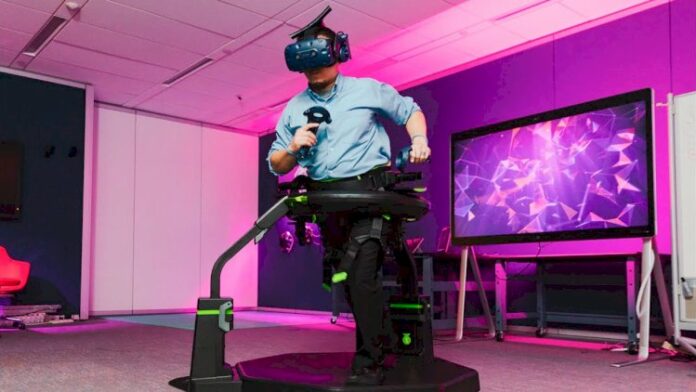
Thanks to technologists at the Digital Garage, people training for new tasks can now put on a VR headset and headphones, grab a controller and plug into the virtual world, engaging multiple senses. They can turn their heads, walk around and watch the VR world react – and long after the virtual training session is over, the skills learned remain relevant and real. For oil & gas operators and chemicals manufacturers, practice in a virtual simulation is more than a game, it’s a vital lesson.

Each scene is designed and brought to life by the Digital Garage’s Immersive Technology Studio. The studio’s design lead, Kyle Daughtry, and architect, Athicha “M” Dhanormchitphong, blend insights from experts and textbook lessons to create a 3D world.

Immersive simulations can transport VR users onto the loading dock of a liquefied natural gas (LNG) tanker, where they spend a day on the job assessing and reacting to different scenarios, from the mundane to the complex. The experiences allow employees to hone their instincts, catch their mistakes and make instant decisions, so that they’re better equipped to work smarter and safer.