-0.5 C
New York
Home Blog Page 991

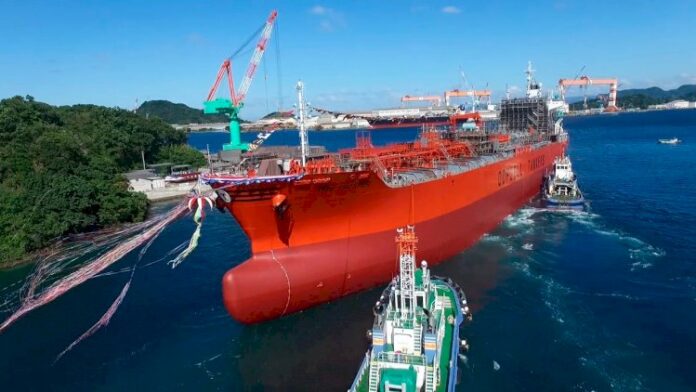
Odfjell successful launched its newbuilt chemical tanker

0

Odfjell's extensive fleet renewal continues. The newbuilt chemical tanker Bow Prosper was launched and officially named in Japan.

The 36,000 dwt, 28 tanks stainless steel vessel adds efficient, advanced and eco-friendly tonnage to Odfjell's commercially managed fleet.

Bow Prosper is part of one of the most comprehensive fleet renewals in Odfjell’s 105-year history. The 49,000 dwt Bow Orion has already entered into trade. Her three sister vessels are currently under construction and will enter the fleet in 2020.

The official launch ceremony at Fukuoka Shipyard in Nagasaki was witnessed by guests from Odfjell, the yard and ship owner Taihei, among others. 

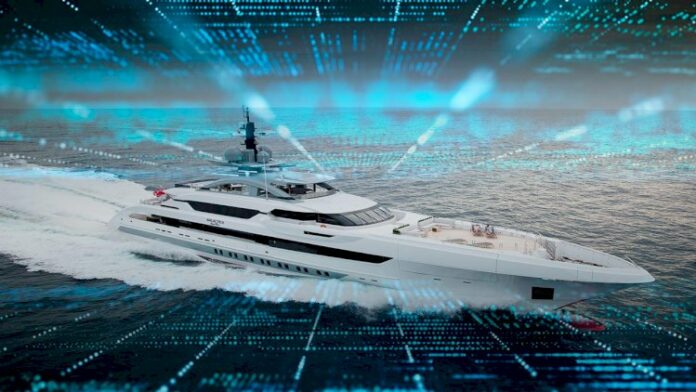
GNS launches a new kind of navigation service for superyachts

0

GNS, the maritime technology company, has announced the launch of Voyager SUPERYACHT, a new kind of navigation service for superyacht customers that has been designed to make managing navigation requirements easier and more cost-effective.

Early users of the service are reporting savings of up to 50% on navigation spend as well as better compliance management through a combination of more accurate purchasing, lower costs and better monitoring and management.

Built on simplicity, transparency and safety, Voyager SUPERYACHT is the first navigation service that actually encourages superyacht customers to spend less on charts and publications. GNS’s unique Voyager navigation management software helps crews purchase charts and publications more accurately and data analytics to show where there is over-spending and cost-savings can be made.

Hayley van Leeuwen, GNS Global Director of Product and Marketing, said:

“More than 1,500 commercial vessels have already switched to this new way of buying and we are delighted to be able to now offer the same benefits to Superyacht managers and owners.”

Voyager SUPERYACHT uses data analytics to provide a highly intuitive view of each yacht’s chart and publication holdings compared to the requirements of its Flag and other regulatory stakeholders. Using GNS’s online platform, managers and captains are able to immediately see any issues that may arise and resolve them quickly and efficiently – enhancing navigation safety and compliance.

Under Voyager SUPERYACHT’s compelling pricing structure, users pay an annual membership fee for navigation software, yacht tracking, web-based compliance and cost management tools. They get all their navigation charts and publications at ’cost price; GNS puts no handling fee or other mark-up to any of the navigational products customers buy. This innovative approach has created a true partnership where GNS and the customer have a shared incentive to drive down the overall cost of navigation.

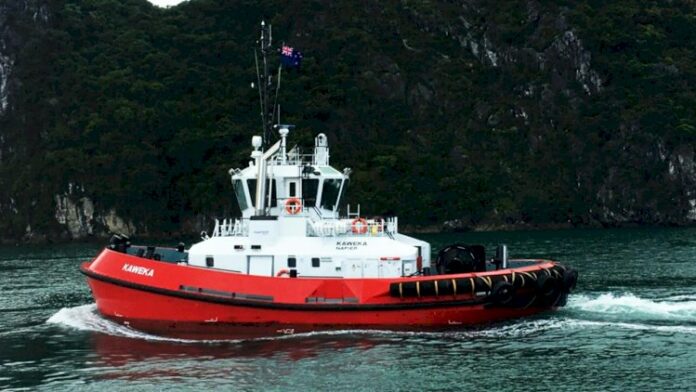
Napier Port boosts its fleet with third tug Kaweka

0

Napier Port’s new tug, Kaweka, is about to start its long journey to Hawke’s Bay.

Taking inspiration from the mountain range surrounding Hawke’s Bay, the Kaweka was named after a positive engagement process with local marae, hapū and iwi. The port’s third tug will soon set sail from Dutch company Damen Shipyards in Song Cam, Vietnam to arrive here in early to mid-November.

Following its successful listing on the New Zealand Stock Exchange last month, Napier Port is now getting ready to build its sixth wharf. At 350 metres long, the wharf will be capable of handling the larger vessels that are expected to call at the port in the future and will also allow more ships to call.

Napier Port CEO Todd Dawson says: 

“Having a fleet of three tugs will be a major boost to our customer service. This is an important step toward building the resilience and agility of our infrastructure. A strong port is important to our region’s economic prosperity as a gateway to and from global markets. Over the last two years cargo volumes have increased and we need to grow our capacity to support future growth.”

Napier Port Capability and Cruise Manager Bruce Lochhead and a team from Napier Port recently returned from Vietnam to carry out final checks, sea trials and commissioning of all equipment.

Mr Lochhead says:

“The Kaweka performed very well and she looks great. Our Marine team are excited to take delivery of the third tug in a couple of months. This boost to our fleet will improve our ability to service vessels, including larger vessels, reduce congestion and delays, improve berth availability and maintain full marine services if one of our other two tugs was out of service."

The new Azimuth Tractor Drive (ATD) Tug 2412 Twin Fin, will join the two existing Voith-type tugs at the Port – Te Mata and Ahuriri. Just 24 metres in length but with 72 tonnes of bollard pull, the Kaweka will deliver the right combination of power and compactness that the Napier Port Marine team is seeking.

Tractor tugs work well at Napier Port due to their ability to operate effectively in a swell, to tow indirectly, and their manoeuvrability, the last particularly important due to the tight berthing arrangements at the Port.


Report: Lack of awareness on maritime cybersecurity

0

World leader in satellite communications Inmarsat has launched its second annual report, in association with The Superyacht Group, to gain a unique understanding of the future requirements for global, mobile satellite communications on superyachts by analysing input from superyacht skippers, senior crew, chief engineers and technical professionals on vessels ranging from 24m to over 100m.

Key findings from the 2019 Inmarsat Superyacht Connectivity Report include:

  • Usage of large scale VSAT will increase – currently 46% of respondents, growing to 80% by 2024, are using VSAT more than 50% of the time on-board.
  • Spend on satellite communication will increase – currently 34% of respondents spend between €5,000 and €20,000 annually, growing to 57% by 2024.
  • Demand for IoT applications will increase – currently respondents predict IoT will account for 6.2% of operational connectivity demand, increasing to 24.7 per cent by 2024.
  • Demand for TV over IP streaming will increase – currently 24% of respondents are using 50% or more of their connectivity use on TV over IP streaming, growing to 58% by 2024.
  • Only 17% know the difference between Anti-Virus software and more secure endpoint protection.
  • 5% of respondents say that no-one oversees cyber security on-board.

More than 80% of respondents showed a lack of awareness about the most effective measures of cyber security.

Peter Broadhurst, Senior Vice President, Yachting and Passenger, Inmarsat said: 
“Once again, it has been hugely beneficial and informative for us to work with the superyacht community to produce the annual Inmarsat Superyacht Connectivity Report. Underlining their needs for the future, the report ensures that we can match our services with their requirements by providing the best, most reliable connectivity at sea globally. 

As expected, the results confirm the expansion of digitalisation in the sector is gathering pace – but the level of projected growth in large scale VSAT usage and spend in the next five years is even higher than anticipated. The feedback on cyber security, a key factor in the future safety of these vessels, is particularly valuable for us in our continued work with superyacht professionals to provide more robust and accessible options. With the research confirming that most respondents are still not aware that an in-depth, multi-layer cyber defence is much more effective that a standard antivirus program, it is essential that we help to raise awareness in this area by working with captains and engineers.”

To help superyacht captains and crew maintain a secure system core on-board, Inmarsat has developed its Fleet Secure Portfolio to provide a comprehensive solution, consisting of three services:

  • Fleet Secure UTM (Unified Threat Management), which is a comprehensive set of tools designed to continuously inspect, detect and protect the vessel’s network;
  • Fleet Secure Endpoint, a powerful multi-layered endpoint security solution to prevent attacks whilst removing infections and threats throughout the onboard endpoints; and
  • Fleet Secure Cyber Awareness, cyber security training specifically targeted for seafarers, raising awareness to assist in preventing threats before they get on board.

CMA CGM launches the world’s largest LNG-powered containership

0

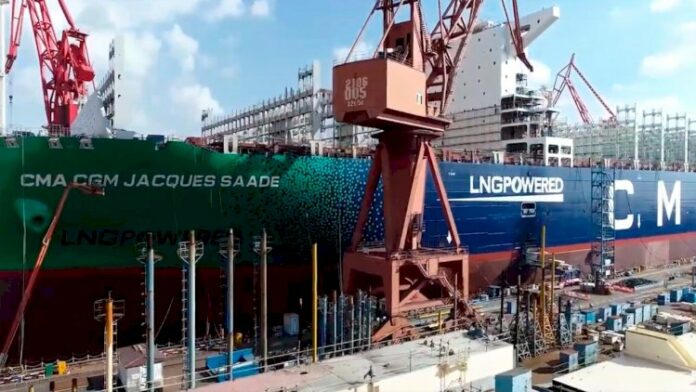
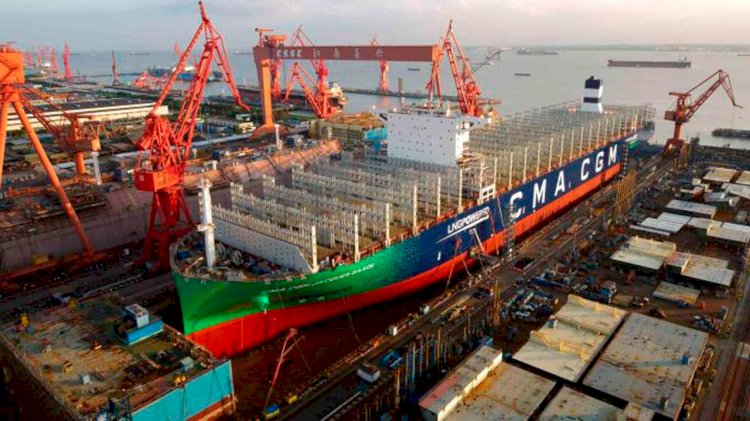
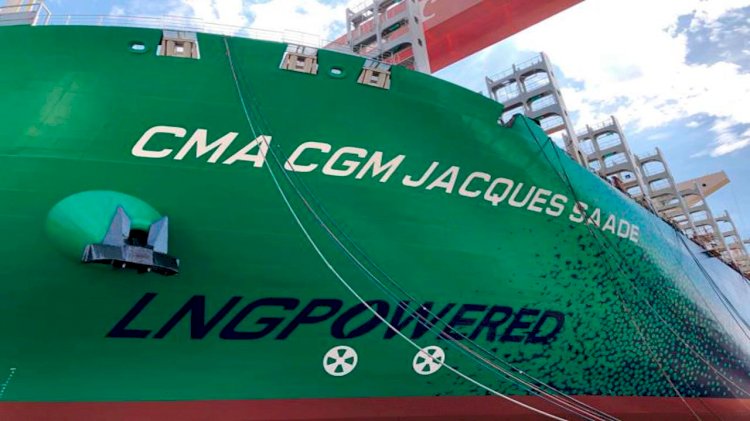
The CMA CGM Group, a leading worldwide shipping and logistics group, is pleased to announce the launching of the world's largest containership (23,000 TEU) powered by liquefied natural gas (LNG).

This major milestone in the construction of the world's first LNG-powered ultra large containership was reached today at the Shanghai Jiangnan-Changxing Shipyard, at an event attended by Rodolphe Saadé, Chairman and Chief Executive Officer of the CMA CGM Group, French and Chinese officials, business leaders and CMA CGM Group customers.

In 2017, Rodolphe Saadé announced his decision to order a series of nine 23,000-TEU containerships that would be the world’s first ever to be powered by liquefied natural gas. Through this strategic choice, the CMA CGM Group reaffirmed its assertive commitment to safeguarding the environment and leading the industry’s energy transition.

A clean energy, LNG helps to reduce:

  • emissions of sulphur oxides and fine particles by 99%;
  • nitrogen oxides emissions by up to 85%;
  • carbon dioxide emissions by around 20%.

These new vessels will join the Group's fleet in 2020 on the French Asia Line (Asia-Northern Europe) and will be registered in the French International Register (RIF), confirming the Group's commitment to operating under the French flag.

In addition, the nine newbuilds will feature a state-of-the-art bridge design, the world’s first to deliver four major innovations to assist the Captain and crew:

  • a tactical display offering enhanced map views for more dynamic navigation briefings;
  • a path prediction system optimised to display the ship’s predicted position in the next three minutes;
  • a smart eye system projecting a bird’s-eye view of the ship’s surrounding area augmented reality screens offering the crew precise information on the ship's rate of rotation, distance from the wharf and transverse speeds.
The first vessel in this new class of 23,000-TEU LNG-powered containerships, the CMA CGM JACQUES SAADE will also be equipped with a smart system to manage ventilation for the reefer containers carried in the hold.

To further improve the environmental performance of the CMA CGM JACQUES SAADE and her sisterships, their hull forms have been hydrodynamically optimised. The bulb has been seamlessly integrated into the hull profile and the bow is straight. The propeller and rudder blade have also been improved, along with the Becker Twisted Fin®.
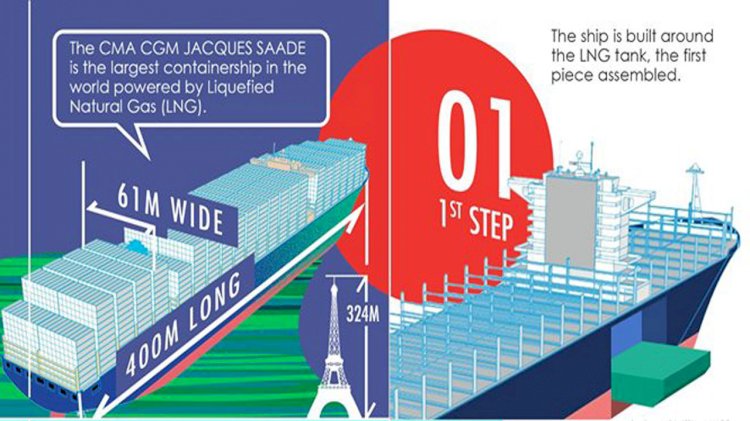
The exceptionally large vessels (400 metres long and 61 metres wide) will be distinguished from the rest of the fleet by a special livery proudly displaying an “LNG POWERED” logo, attesting to the major worldwide innovation that LNG propulsion represents on ships of this size.

By naming the world's first LNG-powered, 23,000-TEU container ship CMA CGM JACQUES SAADE, the Group has symbolically given the name of its Founder to its future flagship. A visionary entrepreneur, Jacques Saadé built CMA CGM into one of the world’s leading maritime shipping companies, while maintaining its family dimension and strong values. In this way, he left a lasting mark on the entire shipping industry.

During the launch event, Rodolphe Saadé, Chairman and Chief Executive Officer of the CMA CGM Group, said:

“With the launching of the first 23,000-TEU ship powered by Liquified Natural Gas, we demonstrate that energy transition can be effectively successful in our industry if all the players work together. It paves the way to a global shipping approach where economic growth and competitiveness can coexist with sustainability and the fight against climate change.”

GKinetic tests its submerged tidal device

0

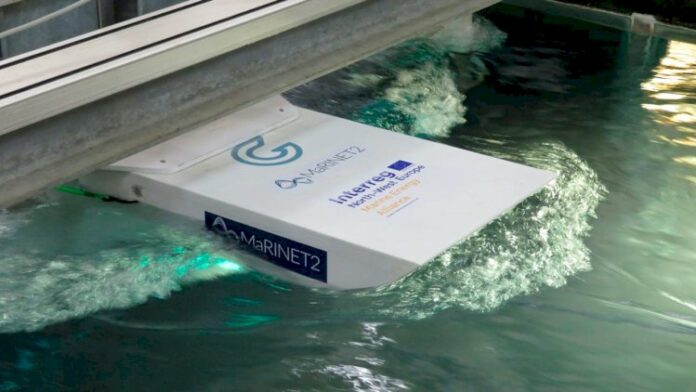
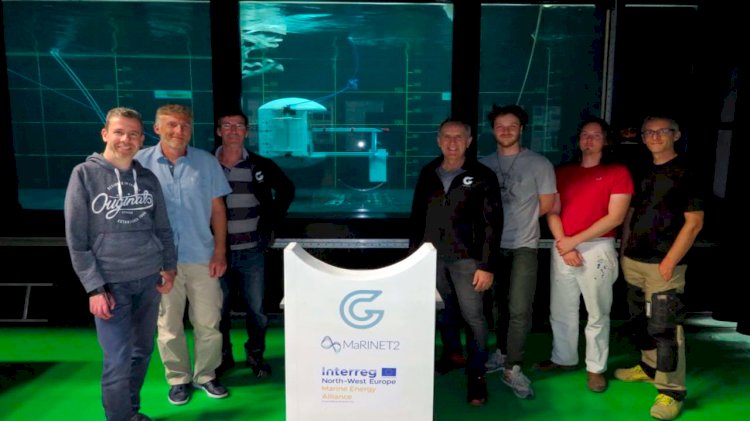
Irish hydrokinetic turbine developer, GKinetic Energy Ltd, returned to the IFREMER test facility in Boulogne-sur-Mer, France last week for a full 5 days of intensive testing on an optimised device that was both submerged and deployed at the surface for comparative analysis. The testing is part of a much larger, overall project that is assessing the technical and commercial feasibility of a 250kW, submerged, tidal device utilising GKinetic’s core technology concept.

The week was a huge success with the team getting through their full testing plan as scheduled and extremely positive, initial results from the submerged version. Costs for use of the IFREMER test facility were funded by the Marinet 2 programme and subsequent analysis of the test results for both technical and commercial feasibility are being carried out by GKinetic along with experts at the University of Edinburgh as well as assistance from Exceedence all thanks to consultancy funding covered by the Marine Energy Alliance funding programme.

Vincent Mc Cormack, Managing Director at GKinetic Energy Ltd, said:

“The testing series at the IFREMER flume was undertaken to understand the hydrodynamic behaviour of our turbines when combined with their deployment systems. Working in the controlled conditions of a flume tank allows us to study the flow around a scaled model of our turbines in detail. This will inform on the optimisation of both the turbine and the deployment systems. This test series at the IFREMER flume used an LDV instrument to collect data on the flow streams around the device. This data will be processed over the coming weeks to provide a full flow field map. Using CFD techniques, the flow field map can be used to model the performance and structural loads of larger scale machines thereby enabling the design of larger submersible hydrokinetic turbines and deployment systems. Overall we are extremely happy with what we managed to cover and achieve in the week and our thanks go out to all who made this possible.”

Assisting with the CFD modelling on the testing programme was Dr Stephen Nash from NUI Galway (National University of Ireland Galway) and MaREI, the SFI Research Centre for Energy, Climate and Marine, who was also onsite at IFREMER for the week. Stephen had the following to say from the experience:

“This kind of scale model testing is a critical component of TRL progression for hydrokinetic devices. The data collected during the tests can be used to validate a similar scale model of the turbine and the validated model can then be upscaled and used to conduct design optimisation studies of the device. Testing models at small scale in a controlled environment like IFREMER’s recirculating flume is much more cost–effective than testing scale models at sea. Although the latter is also important, controlled laboratory tests allow one to test devices under a large range of different conditions and collect high quality data in an efficient manner.”

For the team at IFREMER, this was their 2nd encounter working with GKinetic and they too felt the testing went very smoothly with positive results for the team. Speaking with Grégory Germain who runs the IFREMER centre, he had the following comments on the week:

“It is always a pleasure and a great satisfaction to be part of successful industrial developments. This type of testing is made possible thanks to the work done during the last few years to develop the experimental infrastructure under the CPER Marco (French regional project) and state of the art test protocols under Met-Certified (Interreg 2 Seas) and MaRINET2 (H2020) projects. We hope to welcome GKinetic’s team members soon for their future developments.”

GKinetic will now be analysing the results from the testing and assessing the feasibility of a larger tidal device utilising their core technology, now with patents granted in 4 regions and patents pending in 13 other territories.

Nauticor and Unifeeder conduct first SIMOPS LNG bunker operation

0

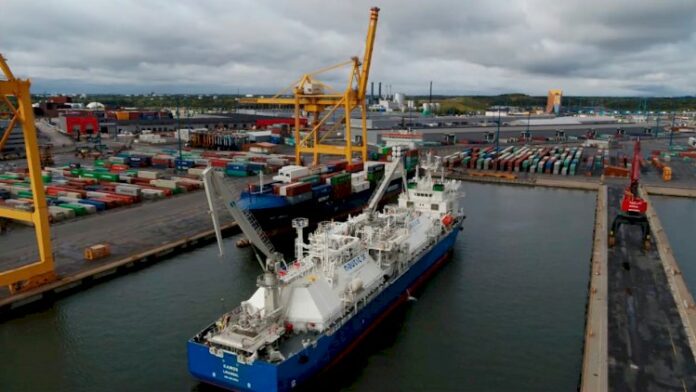
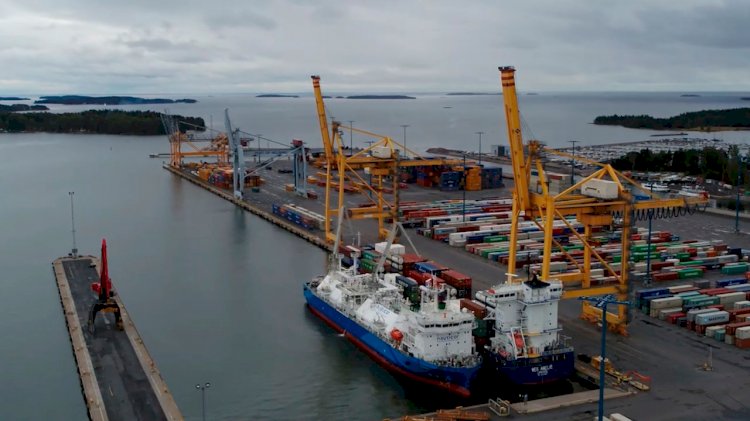
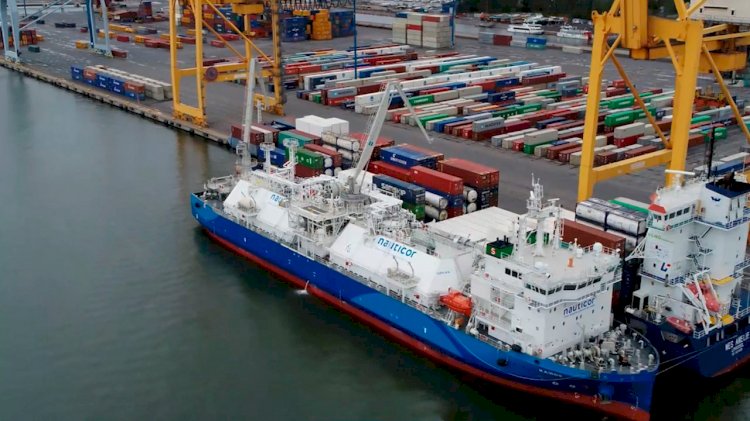
On September 21th, 2019, the world’s first container ship retrofitted with a Liquefied Natural Gas (LNG) engine, “Wes Amelie”, received LNG through a SIMOPS (simultaneous operations) ship-to-ship bunker operation from the world’s largest LNG bunker supply vessel “Kairos”. 

The operation took place at the Vuosaari Harbour container terminal in the Port of Helsinki, Finland. The transfer of LNG between the two vessels marks an important step in several aspects, with the operation being the first LNG ship-to-ship operation for the Port of Helsinki as well as the first SIMOPS LNG ship-to-ship operation for a container vessel in the Baltic Sea in general.

Hans Staal, Head of Bunker Procurement of Unifeeder, highlighted the importance of this event:

“The first SIMOPS LNG ship-to-ship transfer at a container terminal for the “Wes Amelie” was a great success, due to the smooth cooperation between the crews on board of the LNG bunker vessel and the receiving vessel, the terminal and port operators, the Nauticor experts and our bunker team here at Unifeeder. This marks another milestone in our quest to develop a comprehensive LNG supply chain, making the use of LNG as fuel for container vessels more efficient.”

The SIMOPS LNG ship-to-ship bunker operation was the first such operation conducted by “Wes Amelie” and “Kairos”. Nevertheless, both vessels already conducted their first LNG ship-to-ship operation at anchorage in front of Visby, Sweden, in April 2019.

Therefore, Lydia Glabisch, Operations Manager at Nauticor, confidently stated:

“We are proud that we have been able to achieve another important milestone together with Unifeeder and the Port of Helsinki. The successful operation proves again that bunkering LNG is already an established procedure in a variety of ports especially in Northwest Europe. Furthermore, bunkering LNG is as efficient and uncomplicated as bunkering conventional fuels, especially when it is performed ship-to-ship and in parallel to the cargo operations."

Andreas Slotte, Head of Sustainable Development at the Port of Helsinki, confirmed that view:

“With the first ship-to-ship LNG bunker operation in our port being conducted successfully, the Port of Helsinki proves again its ambition to facilitate the use of more environmentally friendly alternatives to oil-based fuels. Today’s event was a natural next step in the process of LNG becoming even more mainstream as a maritime fuel in Helsinki.”

By using LNG, a wide range of emissions, especially sulphur, nitrogen and particle matters, as well as carbon dioxide, can be significantly reduced.

EnBW Albatros offshore wind farm completely installed

0

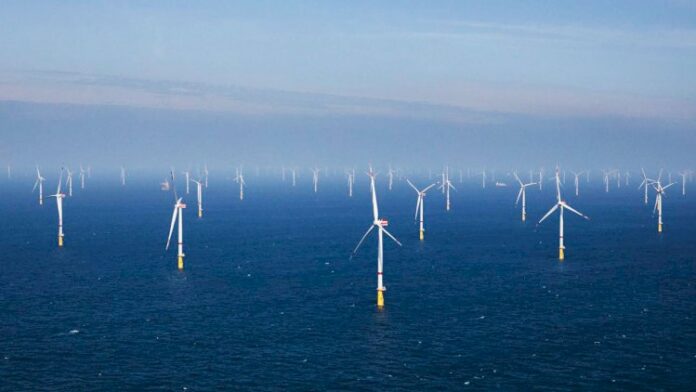
Final wind turbine installed in Germany's largest offshore wind power project.

EnBW is building two large wind farms in the North Sea with a total installed capacity of 609 megawatts: Hohe See with 71 wind turbines and the adjacent Albatros with 16 turbines. Together they are the largest offshore wind power project under construction in Germany as part of the Energiewende.

The wind turbines will be commissioned in the coming weeks. By the end of the year, both wind farms are to go into operation and then produce around 2.5 billion kilowatt hours of electricity annually – enough to supply all households in Munich.

At peak times, over 600 employees worked and lived on the large construction site in the middle of the sea. More than 80 ships were in action. This major project is a logistical challenge and is being coordinated by the EnBW offshore subsidiary in Hamburg.

Corvus Energy to develop a novel lithium-ion capacitor technology for KHI

0

Lithium-ion capacitor (LiC)-based energy storage systems (ESS) to be sold by Corvus to offshore vessels and oil rigs globally.

Subsequent to a product development agreement between Kawasaki Heavy Industries (KHI) and Corvus Energy that began in 2017, KHI and Corvus have reached a licensing agreement for a novel lithium-ion capacitor (LiC) technology developed by Corvus for KHI.

Takeshi Ohata, Managing Executive Officer of Kawasaki Heavy Industries at their headquarters in Tokyo, Japan, says:

“Corvus Energy has been an outstanding development partner for the LiC technology. Their battery engineering experience and marine market leadership gives Corvus Energy expertise unlike any other. Their knowhow around thermal management inside battery modules is critical to ensuring safe and reliable operation.”

Sean Puchalski, EVP of Strategy & Business Planning for Corvus Energy, says:

“It is truly a validation of our world-class R&D capabilities that KHI selected Corvus to develop this technology. The new cutting-edge LiC technology provides the best of both worlds — current-handling performance nearing a supercapacitor with improved energy density. It will enable our Offshore customers to cost-effectively improve efficiency through energy recapture from heave compensation, drilling draw works and payload lowering applications with a lightweight, space-saving footprint.”

The LiC incorporates lithium-ion capacitor cells into an energy storage system (ESS) with high-efficiency liquid cooling that maintains an optimal temperature range at very high RMS currents and charge/discharge rates. The LiC will safely sustain charge/discharge rates of 600 C peak and 300 C continuous, enabling both energy recapture/storage and fast discharge for high-power load handling.

Corvus Energy will introduce a new product based on the LiC ESS technology with Kawasaki Heavy Industries, trademarked Blue Marlin and targeting the Offshore segment it currently serves with its Orca and Dolphin ESSs and Moray subsea ESS. The new Blue Marlin product is expected to be available in 2020.

Geir Bjørkeli, CEO of Corvus Energy, says:

“Corvus offers a timely solution to an urgent problem. Offshore producers are increasingly committed to investing in solutions that reduce the carbon footprint of their operations. We are thrilled that the progressive leadership at Corvus shareholders Equinor and Shell—whose offshore operations are the largest in the world—will help speed adoption of Corvus’ energy efficiency solutions in the Offshore segment.”

Danfoss powers up the world’s strongest electric ferry

0

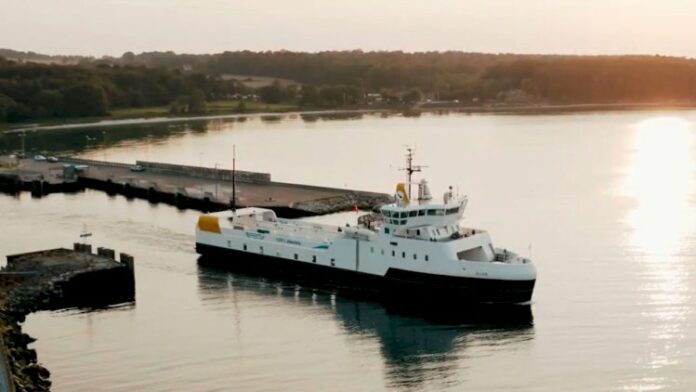
The groundbreaking E-Ferry has just been launched in Denmark with the help of Danfoss. The electrically powered ferry has the largest battery capacity at sea and navigates without CO2 emissions.

Ellen is the world's most powerful electric ferry. And it has just been deployed between Ærø and Als, the Danish home island of Danfoss.

On a round trip, Ellen travels 22 nautical miles, seven times further than any other electric ferry in the world today. She carries the largest battery capacity at sea.

Kimmo Rauma, Vice President of Danfoss Editron, says:

"Ellen is an excellent example of the future for electric transport: cleaner, greener and more efficient. It is a key project for the EU and demonstrates the potential for electric ferries to end users and the industry itself. We want to change the world by helping to alleviate pollution, and we believe that industry can lead the way. With a powerful Danfoss Editron system running it, Ellen will be positioning Danfoss as a world leader in the development and delivery of world class electric ferries.”

Danfoss Editron is already number one in electric solutions for off-highway and marine transport technology and Ellen is Danfoss’ electric flagship.

The skipper for the crossing, Søren Svendsen, is accustomed to sailing diesel vessels. He describes the change to electricity "like going from an old Volvo Amazon to a Tesla."

Eric Alström, President of Danfoss Power Solutions, says:

“Electrification know-how and products will be important ingredients for Danfoss’ success in the future. We will electrify complex machinery, achieving not only reductions in CO2 and other emissions, but also improve productivity and efficiency of such machines. Danfoss Editron is already recognized as a technology leader, and we are investing heavily in the business to ensure we stay in the forefront of electrification.”

For Vice President of Danfoss Editron, Kimmo Rauma, the overall mission of Ellen and her electric powers will be to convince the world that technologies that can change the world are within reach:

”There is a lot to be gained by electrifying heavy duty machines and the marine sector and ferries operate all the time, around the clock. Together we can bring electrification to even more transport sectors that have not yet heard the soft sounds of our drivetrains and propulsion motors. Everything can be electrified!"

The highly innovative electric ferry is funded by Horizon 2020, the EU’s largest ever Research and Innovation program.