-0.5 C
New York
Home Blog Page 990

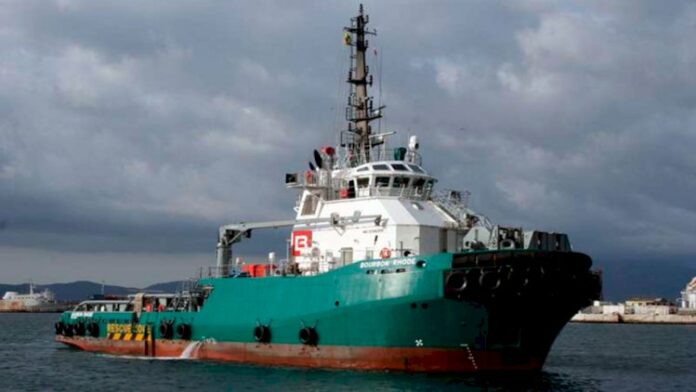
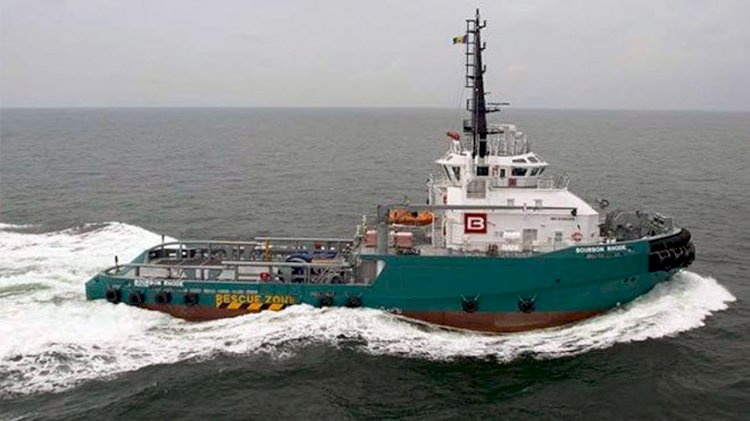
Rescue operation: Bourbon Rhode stricken in Hurricane Lorenzo

0

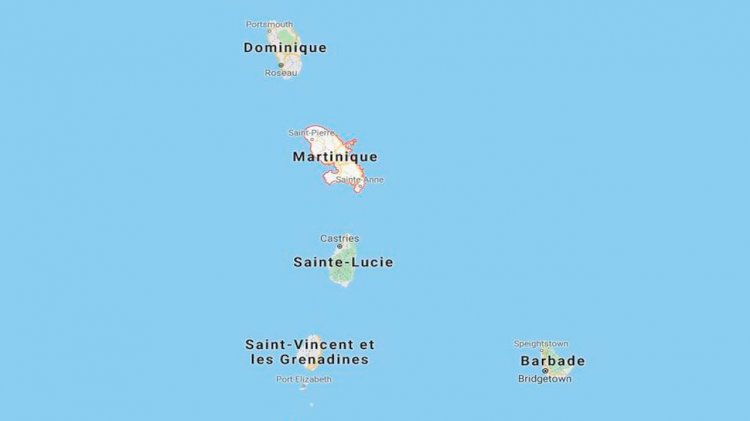
A rescue operation of a tug supply vessel Bourbon Rhode under Luxembourg flag is under way, as the vessel was in transit at 1 200 nautical miles off Martinique island and 60 nautical miles South-South East from the eye of category 4 hurricane “Lorenzo”. In particularly adverse weather conditions, the 14 crew members are facing a water ingress in the rear part of the vessel.

A crisis cell has immediately been activated and it ensures the coordination, out of Marseilles, of the rescue of the vessel and its crew, in close collaboration with authorities, including the Regional Operational Center of Surveillance and Rescue (CROSS) West Indies-Guyana. In order to bring the quickest support possible, the CROSS has asked that bulk carrier “SSI EXCELLENT” (229 m long) change its route and assist the Bourbon Rhode. Situated at 200 nautical miles South, the bulk carrier is expected to arrive on zone tomorrow morning (local time).


Golden Energy Offshore further strengthening green operations with Ulstein Blue Box

0

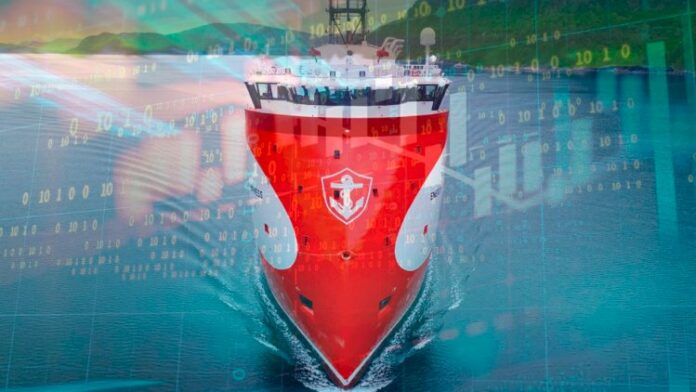
The Norway-based ship owner Golden Energy Offshore has decided to install Ulstein Blue Box on two of their vessels.

Ship owner Per Ivar Fagervoll says:

“With Blue Box we will manage to reduce our fuel consumption and environmental footprint further, which is very important to us.”

Golden Energy Offshore is actively pursuing environmental friendly solutions, and has a green profile. Together with Ulstein, they are now entering into a Blue Box pilot project on two of their vessels.

Blue Box is a system which is easy to set up. It connects the vessels’ data system to the cloud for direct access to important information such as engine configuration and speed. The ship’s crew and the ship owner’s land-based personnel will have easy and intuitive access to the data.

Golden Energy Offshore will install Blue Box on the two sister vessels Energy Duchess and Energy Empress. These are of the same ship design, have the same systems on board, and work in the same geographical area. Their data can easily be compared. Through analyses of data the ship owner will be able to assess the most effective types of operational modes.

Fagervoll adds:

“With this pilot project and the programs aligned with this agreement we will be enabled to consolidate, process and analyse data and target our focus on energy efficiency. This will have an impact on our environmental profile and sustainability adaptation, as it will identify optimized ‘green’ operations. Setting our high green standards have been an easy choice. Through several collaborative initiatives, other pilot projects and individual efforts we have achieved a considerable energy efficiency on our vessels.”

The results are lower fuel consumption and lower local emissions, and the end results are more sustainable, environmentally friendly and cost-effective operations.

Fagervoll states:

“Not only do we save costs through energy efficiency. We also note that our clients request modern vessels operated energy efficiently and with low emissions. Our vessels are all working with high utilisation in a demanding market, a situation we are very comfortable with.”

By analysing their data as a decision support, the ship owner stands a better chance of getting the best out of the ship’s (or fleet) capabilities. This will lead to a reduced eco-footprint.

By retrieving the data from the Blue Box cloud services, the ship owner can either access raw data for their own analyses or receive pre-analysed data via the report module. The intuitive user interface and alarm system give real-time advice to the ship operators on the most optimal way, economically and environmentally, to run the vessel. Thus, the system opens up to a big potential for fuel savings and reduced emissions.

The ship owner Golden Energy Offshore was established in 1929 and operates a fleet of eight vessels. The ship owner has high environmental standards and hold numerous ISO certifications. For five years, they have been certified in ISO 50001 – Energy Management. They are also certified in ISO 9001 – Quality Management, ISO 14001 – Environmental Management and OHSAS 18001 (ISO 45001) – Health and Safety Management and have defined Sustainability Development Goals for their company. The company is also governing their operations in accordance to SEEMP and CEEMP energy efficiency plans.

VIDEO: A global fleet of sailing drones is monitoring oceans

0

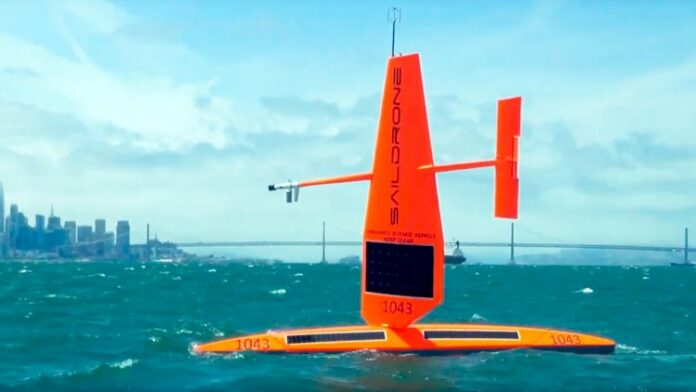
Our oceans are changing at an unprecedented rate. Saildrone is taking action by building a global fleet of 1,000 wind-powered, emission-free ocean drones to monitor our oceans in real time and working with the science community to improve collective understanding on how these changes impact people around the world. 
 

HMM cooperates with DSME for smart ship development

0

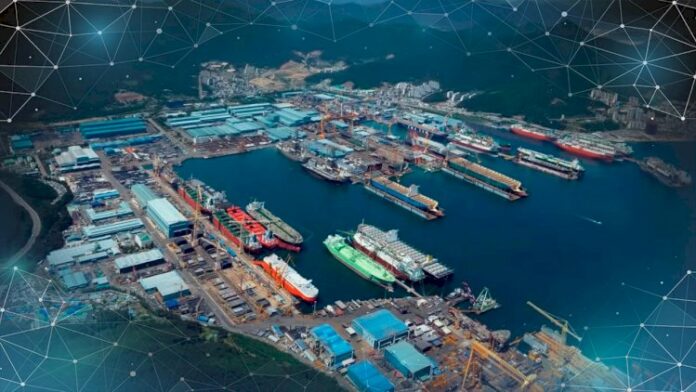
HMM is closely working together with DSME on the research, development and innovation in the field of smart ship technologies.

The MoU (Memorandum of Understanding) signed by two parties includes:

  • research on real-time service system based on IoT (Internet of Things);
  • design on-shore platform for optimsed fleet operation;
  • development of automated warehousing systems for ship materials;
  • development of economic navigation solutions.

HMM plans to promote the innovation of smart ship technologies underway of directly reflecting and testing operational data to its own container vessels.

In fact, certain part of smart ship solution related to optimised ship operation has already been completed and will be applied to seven out of twelve 23,000 TEU mega containerships ordered to DSME last year. The ships are scheduled to be sequentially delivered from April 2020.

HMM official said:

"Joining forces between HMM and DSME will create a huge synergy. HMM will preemptively respond to both environmental regulations and digitisation through operating 23,000 TEU ships outfitted with smart ship technologies."

DNV GL report: digitalization in wind energy

0

New DNV GL report reviews progress, potential and barriers for digitalization in the wind energy industry. Improving operational efficiency (identified by 52% of respondents), decision making (42%) and cost efficiency (40%) are top priorities for further digitalization. Balance between sharing data and protecting competitive advantage and Intellectual Property key to realizing full potential of digital technology in the industry.

Digitalization is already playing a major role in the growth of wind energy, but it can still drive further improvements in operational efficiency, decision making and cost efficiency – if it can overcome concerns around data sharing. This is the key finding of the report ‘Digitalization and the Future of the Wind Energy Industry’ published today by DNV GL. Based on a survey of almost 2000 engineers and senior executives from across the energy sector, the report assesses the current progress of digitalization and identifies the top priorities for and barriers to further growth.

The wind industry is widely expected to become an ever-greater contributor to the world’s future energy mix. DNV GL’s Energy Transition Outlook report forecasts a 15-fold escalation in wind-powered generation from 1.1 PWh in 2018 to 17 PWh in 2050. In terms of installed electricity generation capacity, the amount of wind energy will increase more than 8 times by 2050 to 5TW globally. 

Digital technologies have been one of the key reasons behind wind power’s growth to date. DNV GL’s report ‘Digitalization and the Future of the Wind Energy Industry’ reveals that digitalization will also be vital in achieving the wind energy industry’s ambitious future growth targets.

In particular, the industry considers improving operational efficiency (identified by 52% of respondents), decision making (42%) and cost efficiency (40%) as the top priorities for further digitalization.

However, the report also highlights that the benefits of digitalization could be threatened by issues over sharing data and limited willingness to provide more transparency. Such doubts are particularly felt in the offshore sector where concerns over data sharing (37% of respondents) and inability to access data (25%) were cited as the biggest barriers to further digitalization. Interestingly, barriers related to data were a greater concern in the wind industry than in other parts of the energy sector. Other potential barriers identified include digital skills gaps within the industry and organizations focusing on other priorities.

Lucy Craig, Vice President of Technology and Innovation at DNV GL – Energy, said:

“The wind industry already uses vast amounts of data to improve performance, for example exploiting wind farm SCADA data to enable a predictive approach by anticipating faults and planning maintenance in order to ensure greater up-time. However, this increased reliance on data brings new challenges and the wind industry faces conflicting priorities when it comes to data sharing. While the benefits to sharing are clear, there is also an essential requirement to protect competitive advantage and intellectual property. Finding the balance will allow the wind industry to unlock a bright digital future.”

The full ‘Digitalization and the Future of the Wind Energy Industry’ report is available to download here.

Kongsberg unveiled a new naval ship design called Vanguard

0

The concept combines long experience in both the maritime and naval sectors to design a platform that meets modern threats and demands for safety, security, economy and environment.

The Vanguard couples KONGSBERG’s knowledge, technology and systems together with the competence coming from the Norwegian Maritime and Offshore Industry. The Vanguard fulfils the needs of coastal nations for both military and civilian operations, such as Search & Rescue, Harbor and Assets Protection, Subsea Survey, Exercising Authority and Sovereignty, Anti-Access/Area-Denial, Anti-Submarine Warfare and Mine Clearance, and Detection and Disposal.

Vanguard, by design, is highly adaptable and capable of fulfilling a multitude of roles. It is designed with a multi-role hangar for air, surface and sub-surface assets. Easily interchangeable mission modules and extensive use of unmanned vehicles enables quick change of operational roles. The Vanguard is also based on an open architecture to integrate and take advantage of new technology as it becomes available.

To offer extremely capable yet affordable military vessels, Vanguard is based on civilian and commercial ship design, combined with flexible military mission packs. This approach represents significant cost savings as compared to traditional military bespoke solutions.

Eirik Lie, President Kongsberg Defence & Aerospace AS, says:

“The Vanguard by KONGSBERG represents a game changer in naval operations. Combining our experience from the maritime, offshore and naval sectors, this innovative concept provides an adaptable and affordable solution to meet the operational needs of coastal nations.”

CENIC network helps to efficiently share large volumes of ocean data

0

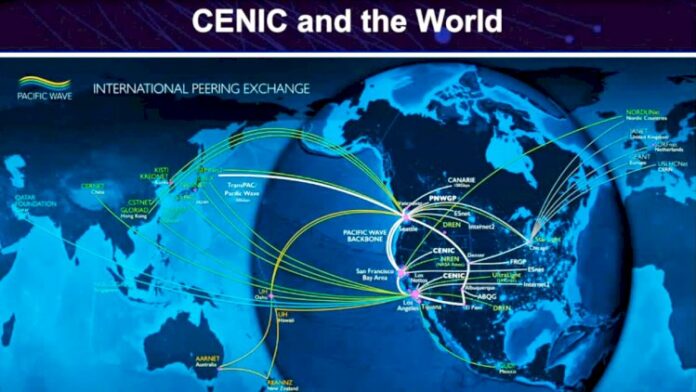
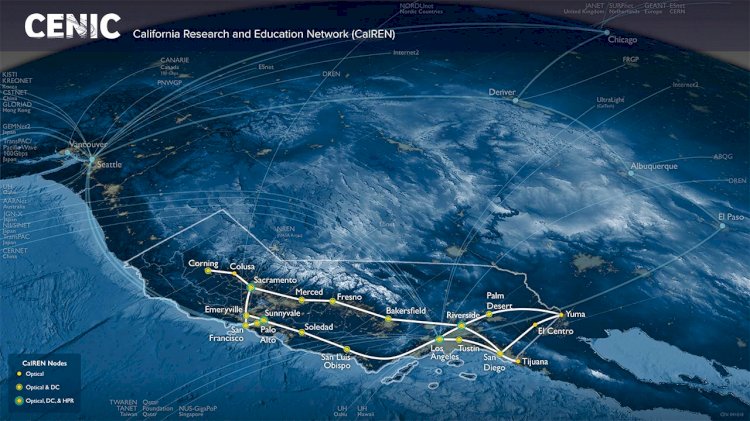
The nonprofit Corporation for Education Network Initiatives in California (CENIC) operates the California Research and Education Network (CalREN), an advanced broadband network with a 100Gbps capacity connecting more than 20 million users in California from research facilities to K-12 students, public libraries, and universities. 

To stimulate economic development, the City of Alameda, CA, has launched a two-year public-private partnership providing technology and research and development companies access to the CENIC network.

This is the first time that private sector companies like Saildrone will be allowed to access the CENIC network, enabling Saildrone to distribute its fast-growing ocean data to its science partners such as NOAA and NASA. Saildrone will also be able to access super-computing facilities from the nation’s network of labs, including the nearby Lawrence Berkeley National Laboratory, home of the Lawrencium, a 942-node (23,424 computational core) Linux cluster with a 1.8PB parallel file storage system.

Saildrone designs, manufactures, and operates a global fleet of wind and solar-powered unmanned surface vehicles (USVs). Each vehicle is equipped with a suite of science sensors to collect high-definition meteorological and oceanographic data above and below the sea surface. Data is distributed in NetCDF scientific format and available on Saildrone’s proprietary data portal data.saildrone.com, as well as public data portals including NASA PO.DACC, NOAA ERDDAP, EMODNET, and others. Targeting a global fleet of 1,000 vehicles at scale, Saildrone is quickly becoming a major platform augmenting the global ocean observing system (GOOS).

Saildrone COO Sebastien de Halleux said:

“With this ultra-fast connection, we will be able to efficiently share large volumes of ocean data with our science partners and access key government super-computers such as the  High-Performance Computing (HPC) Division at Lawrence Berkeley National Lab.”

The partnership is about more than network access, and opens the door to closer collaboration with the Department of Energy (DOE) national labs. Lawrence Berkley National Lab is, for example, involved in a number of ongoing climate research efforts that could potentially benefit from the types of data collected by the Saildrone platform. The Calibrated and Systematic Characterization, Attribution, and Detection of Extremes (CASCADE) project, for example, is designed to improve the country’s ability to identify and predict climate extremes such as hurricanes, floods, and heat waves and understand how they are affected by environmental factors.

The CENIC Network Partnership not only connects Saildrone and other companies to research and education institutions in California, but by extension, the world. The Energy Sciences Network (ESnet) is the US Department of Energy’s dedicated science network, which provides ultra-fast access to research facilities around the world such as the European Organization for Nuclear Research (CERN)’s Large Hadron Collider, (LHC) the world’s largest and most powerful particle accelerator, as well as other research resources across Europe and Asia.

Wärtsilä and Q Power to support development of renewable fuels

0

The technology group Wärtsilä and Q Power Oy, a Finnish pioneer in biomethanisation, have signed a cooperation agreement to accelerate the development and commercialisation of renewable fuels. 

The companies will work closely together to further develop the market and to find business opportunities for biomethanisation and synthetic fuels globally. The first target of the cooperation is to showcase a mobile demonstration plant at the Finnish pavilion at Expo 2020 Dubai between October 2020 and April 2021. The World Expo is expected to attract 25 million visits, bringing high visibility to the new concept and the possibilities of synthetic fuels.

Q Power’s patented biomethanisation concept helps in the transition towards renewable fuels, which are produced by taking CO2 from the atmosphere or industrial processes and combining it with hydrogen. Biomethanisation is a Power-to-X technology for producing synthetic methane. Synthetic methane and other synthetic fuels are essential steps on the path to decarbonising the energy, transportation and industrial sectors and helping humankind move towards a 100% renewable energy future.

Jaakko Eskola, President & CEO, Wärtsilä Corporation, says:

“This is a perfect example of Wärtsilä’s ambitious vision of a 100% renewable energy future and demonstrates the concrete actions we want to take to develop smart technologies for sustainable societies. We are extremely happy and eager to work with Q Power to develop technology and concepts that help the world take concrete steps on the path towards 100% renewables.”

The collaboration with Q Power is a continuation of Wärtsilä’s way of working with start-ups and collaborating with other energy players to develop and scale up technologies and business opportunities that support a 100% renewable energy future.

Ilkka Herlin, Chairman of the Board of Q Power Oy, says:

“We are thrilled to start working with a global energy leader like Wärtsilä to take forward our unique biomethanisation technology. We see that this partnership provides great value for both parties as well as for society as a whole. Contributing to decarbonisation is our goal, and our technologies are already available today. With this cooperation we’re able to ramp up the technology to a global scale.”

Smart navigation systems can reduce the climate impact in shipping

0

The research project Prepare Ships, led by RISE Research Institutes of Sweden, will develop a navigation system that foresees the positions of other vessels through machine learning.

This reduces the risk of collisions and enables more efficient navigation. The project has recently been granted funding through the “European GNSS Agency”, GSA.

A consortium of Swedish, Norwegian and German partners has now been given the go-ahead for their research and innovation project that will increase safety and efficiency in shipping. The goal of Prepare Ships is to create a positioning solution for smart and connected navigation applications.

John Rune Nielsen, Research and Business Development Director at RISE, says:

"We are very pleased to be able to bring together the shipping value chain in this project that uses advanced machine learning."

One of the main causes of ship collisions today is lack of awareness of the position and intention of other vessels. By being able to predict future positions for vessels in the vicinity with high position accuracy by EGNSS and machine learning and exchange these dynamic predictions with the vessels nearby with VDES, smarter decisions can be made. In addition to reducing the risk of collisions, this allows for more energy efficient maneuvering of the vessels, which contributes to reduced environmental impact of shipping.

In addition to RISE, the project also includes Telko (Norway), SAAB (Sweden), ANAVS (Germany), (Swedish mapping, cadastral and land registration authority) and supported by Stena Line (Sweden). The project runs over 26 months and starts in December 2019.

Comments from partners in Prepare Ships:

Pål Hansen, Vice President R&D, Telko:

"Prepare Ships will combine technologies supporting officers on manned ships as well as shore-based operators controlling unmanned ships and can compensate for the shortage of experienced marines. The developed product shall also be applicable to other applications requiring high accuracy, highly robust position, also enabling yet unidentified markets."

Anders Sandin, head of the Geodata division, Land Survey:

"By working closely with our partners in this project, we strive to lead the way in providing a reliable high accuracy positioning service based on GNSS (Global Navigation Satellite System). Our aim is not only to meet safety requirements for smart maritime applications, the goal is also to understand how to adapt our geodetic infrastructure to new GNSS mass market applications and how to use enhanced European GNSS services by testing real use cases and scenarios through this project.”

ISWAN arranges urgent medical support for seafarer held captive by pirates

0

An extremely ill seafarer received urgent medical support upon his release from captivity thanks to a relief fund administered by ISWAN.

FV Siraj, an Iranian fishing vessel with 19 crew, was hijacked by Somali pirates on 25 March 2015. The vessel was held in the Galmudug region of Somalia, near the notorious pirate port of Hobyo. There were four Iranian crew remaining in captivity whose proof of life was established by the Hostage Support Programme (HSP).

One of the four hostages, Mohamud Jaffery, was reported as extremely sick from the last few weeks due to malaria. He also had an extremely high temperature, was suffering from severe malnutrition and had no access to medical facilities. The pirates agreed to free Mr Jaffery without any ransom demands. However, there were costs involved in taking Mr Jaffery to hospital in Galkayo, which was 300km away from where the hostages were held, and providing security cover to the team who went in to collect him.

The HSP contacted ISWAN, which administers the Contact Group on Piracy off the Coast of Somalia (CGPCS) Piracy Survivor Family Fund (PSFF). The fund advisors unanimously agreed on the application to save a human life and approved a grant on a humanitarian basis, which covered the costs towards providing urgent medical support to the ailing crew member. Mr Jaffery was rescued by the HSP team and immediately taken to hospital to take care of his medical needs.

Roger Harris, Executive Director of ISWAN, said:

‘We are extremely happy that the support provided through this grant could be used to save the life of this seafarer. ISWAN will do its best to provide further humanitarian assistance to the seafarer and his family once he returns home so he can move forward after this horrific ordeal. We also appeal to the pirates, and to the senior Somali clan leaders to persuade the pirates, to immediately release the remaining three Iranian crew of FV Siraj on humanitarian grounds.’

ISWAN’s Maritime Piracy Humanitarian Response Programme (MPHRP) has provided humanitarian assistance to a large number of seafarers and their families affected by incidents of piracy, armed robbery and hostage taking. The programme would like to extend its gratitude to all those who had donated generously to the PSFF, along with the HSP and others who worked tirelessly towards the safe release of this crew member from the captivity of pirates.