-2.7 C
New York
Home Blog Page 992

The world’s first 3D printed rescue boat

0

Lloyd’s Register and Lloyd’s Register Foundation support the development of the world’s first 3D printed rescue boat.

Lloyd’s Register (LR) is partnering with Singapore’s National Additive Manufacturing Innovation Cluster (NAMIC), Autodesk, ST Engineering and AML3D to launch a global design competition offering a first prize of S$30,000 (c£17,500) to the winner of the best innovative design idea for a 3D printed rescue boat hull. This will be the first ever full-scale rescue boat which will be delivered by 3D printing.

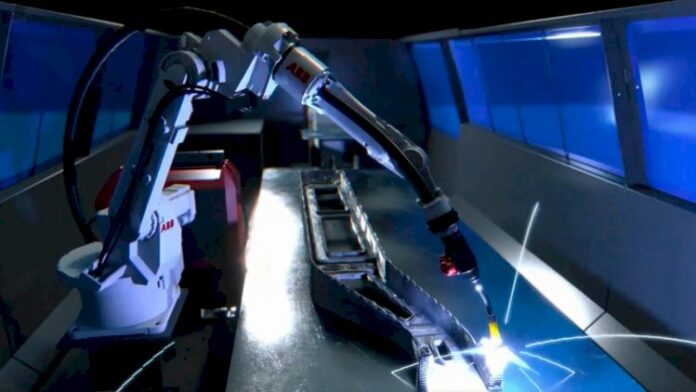
Large scale 3D printing allows for complete design freedom versus conventional manufacturing and enables development of better performing complex hull structures; and the ability to embed advanced control systems and sensors, pushing the boundary of what’s possible in traditional ship building.

This initiative follows a recent project funded by Lloyd’s Register Foundation (LRF), the charitable parent company of Lloyd’s Register Group, in which a digitally enabled steel pedestrian bridge was successfully 3D printed in Amsterdam, the Netherlands.

As the first organisation to publish Guidance Notes on how to certify laser printed metallic parts in partnership with The Welding Institute (TWI), LR’s reputation as the leader in 3D printing is growing globally. The company’s specialist additive manufacturing team works with customers all over the world and has recently qualified 3D printing facilities in Asia-Pacific with 3D Metalforge and AML3D as well as Shell’s Technology Centre in Amsterdam.

Launched by NAMIC the competition is the first part of a three-phase project to build and qualify a 3D printed rescue boat hull with autonomous sensors, in partnership with LR, the Lloyd’s Register Foundation, ST Electronics, Autodesk, and AML3D and supported by Singapore’s National Research Foundation (NRF) and the Maritime Port Authority of Singapore (MPA). Further details on the competition’s rules and guidelines can be found here.
Hussain Quraishi, Innovation Lead at LR’s Digital Innovation Hub in Singapore, said:

“This is a great competition for any shipbuilder, shipyard, manufacturing company or design business interested in submitting their designs with the possibility of winning a significant amount of money to develop their idea using additive manufacturing techniques. We’re particularly looking for entries which embrace the freedom that Additive Manufacturing allows to develop new novel hull designs.”

The winning design will be part of a research exercise with Nanyang Technological University (NTU) Singapore, embedding sensors and integrating autonomous navigation systems provided by ST Electronics. This incubation and design appraisal phase is expected to last around a year, after which it will be manufactured by AML3D and qualified by LR.

While the winner of the first prize will be awarded an impressive S$30,000, second and third prizes of S$20,000 and S$10,000 are also up for grabs. The prize money is part sponsored by the LRF.

LR’s additive manufacturing group was launched in 2014 and the company has been delivering world leading Additive Manufacturing services since the first Guidance Notes were published in 2016. This project will see LR leverage its expertise in additive manufacturing to develop methods to qualify large complex 3D printed structures. Be it part certification, facility qualification, assurance, training or consultancy, LR has the deep research and experience to help understand and manage risks associated with this new technology.
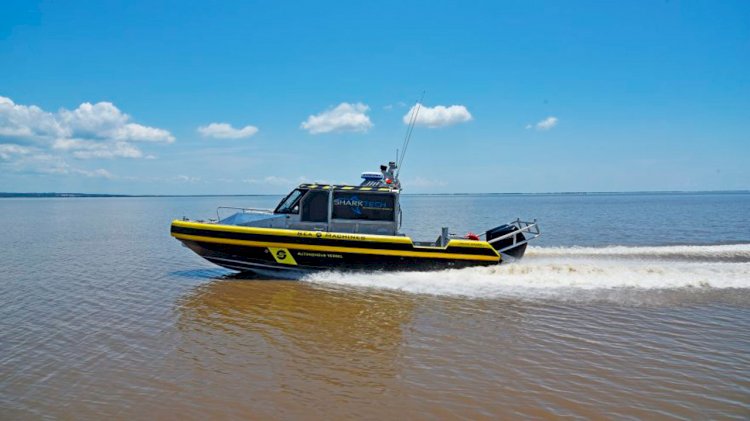
VIDEO: Sea Machines and Metal Shark launch new Sharktech autonomous vessel

0

Shipbuilder Metal Shark and Sea Machines, a Boston-based leading developer of autonomous marine technology, have partnered on the introduction of a new 29-foot autonomous vessel now being offered through Metal Shark’s “Sharktech” autonomous division.

The new Sharktech 29 Defiant welded-aluminum monohull pilothouse vessel features OEM-integrated, Sea Machines technology offering a full range of advanced capabilities, including active control and collision avoidance. The system allows for traditionally manned, reduced-crew or unmanned autonomous operations to deliver “human-in-the-loop” navigation during both line-of-sight and over-the-horizon operations.

Sea Machines and Metal Shark recently commenced demos using the new platform, and units are now available for acquisition by government and commercial operators under Metal Shark’s stock boat program. 

Metal Shark CEO Chris Allard, said:

“We founded Sharktech in 2018 to streamline the customer’s path to autonomy by bridging the gap between the industry’s autonomous software developers and the traditional shipbuilder. Now, in conjunction with Sea Machines we have developed a turn-key autonomous production model to be kept in our regular stock rotation and available for near-immediate delivery.”

Sea Machines’ founder and CEO Michael G. Johnson, said:

“The decision to partner with Metal Shark is yet another example of Sea Machines’ commitment to delivering advanced technology to the commercial marine market. With our systems installed on board, commercial operators and government users alike will benefit from increased operational productivity and safety, and will gain capabilities such as force multiplication, collaborative vessel operations and remote payload control – all of which allows operators to do more with less.”

Through Sea Machines’ SM300 autonomous control and monitoring system, the Sharktech 29 Defiant and all onboard systems are commanded via a direct wireless PC-based user interface. An industrialized remote control with joystick provides manual control for situations when autonomy mode is not required, and an available belt-pack remote allows for vessel, systems and payload control within a 1- to 2-kilometer range.

The system frees the operator from the helm to allow manned, technology-assisted control from anywhere onboard the vessel. Alternately, when unmanned operations are required, the vessel and its onboard systems may be monitored and controlled via network connections from a shoreside station or second vessel. Local situational awareness is provided to the remote operator via streaming video, ENC localization, radar, AIS and live environmental and deck machinery condition feeds. The vessel may also be operated autonomously in a traditional (manned) mode.

Advanced mission planning and situational awareness capabilities round out the autonomous package. Routine software updates allow for system enhancements as additional refinements are made. The advanced Sea Machines technology suite has been integrated into a highly versatile, military-proven hull form. Nearly 400 Metal Shark 29 Defiant vessels are in service worldwide. Powered by twin outboard engines, the vessel achieves top speeds in excess of 45 knots. Like all Metal Shark offerings, the Sharktech 29 Defiant may be customized to suit unique mission requirements. However, to reduce lead times, a standardized configuration has been developed for the stock boats program.

Allard said:

“While many people still think of autonomous technology in future terms, it has already arrived. Together with Sea Machines we’re bringing autonomy to market in a ready form that operators can buy today and run tomorrow.” 

Cisco demonstrates 26.4Tbps on MAREA Transatlantic subsea cable

0

Cisco has announced the successful testing of its NCS 1004 platform over MAREA, the 6,600 km subsea cable system connecting the United States to southern Europe (Virginia Beach, Virginia to Bilbao, Spain). The test was to demonstrate the ability to provide increased transatlantic bandwidth as well as simulate transpacific distances via loopback on one end of the cable.

Leveraging the flexibility of the NCS 1004, several channel capacity combinations were tested to maximize the performance and spectral efficiency on the cable. For the Virginia to Bilbao trial, 400G error-free performance was demonstrated; channels with record spectral efficiency of 6.445 b/s/Hz were achieved, while 4.52b/s/Hz spectral efficiency was tested on the looped back scenario of over 13,200km.

Network operators do not have unlimited bandwidth so spectral efficiency is the most important measurement in subsea deployments. Spectral efficiency refers to the rate that can be transmitted over a given bandwidth and is a measure of how efficiently a limited frequency spectrum is utilized by the physical layer. Spectral efficiency of a communication link can be enhanced by packing more information, bits, in a single transmission.

Thus, maximum capacity of 26.4Tbps can be achieved on MAREA cable deploying the NCS 1004 with margin. In the same way, the transatlantic loopback scenario reached up to 18.9Tbps.

Bill Gartner, Senior Vice President and General Manager, Optical Systems and Optics, Cisco, said:

“We demonstrated that 24.7Tbps could be used on MAREA with plenty of margin. We also tested in full loopback mode (Bilbao to Virginia and back to Bilbao) showing that 18.5Tbps could be deployed for double the distance, also with plenty of system margin.”

Cisco NCS 1004 has been designed to maximize wavelength and fiber capacity with a minimum space and power footprint. At 2RU, the system supports up to 4.8Tbps of client and 4.8Tbps of trunk traffic. Cisco NCS1004 delivers multi-haul coherent DWDM transport capabilities with agility, programmability, and simplicity of use. The Cisco NCS 2000 working with the NCS 1004 delivers agility, programmability, and massive scale for ultra-long-haul, subsea, metro, and enterprise optical networks.

ClassNK grants AIP on LPG Reformer for marine engines

0

Leading Classification Society ClassNK granted an Approval in Principle (AIP) to Osaka Gas for their joint project with Daihatsu Diesel on an LPG Reformer for marine engines. This was the first AIP granted in Japan for such equipment.

The LPG Reformer is designed to convert LPG into synthetic methane gas equivalent to the kind found in LNG. Due to being mainly composed of propane and butane, LPG is susceptible to knocking (abnormal combustion), making it difficult to use as a fuel for lean burn gas engines and dual fuel engines. In contrast, by converting LPG into synthetic methane gas with the LPG Reformer prior to fueling the engine, the risks of knocking can be restrained, resulting in equivalent operational performance observed when using LNG.

Additionally, by using LPG as fuel, the emission of environmentally harmful substances like SOx and NOx can be significantly reduced compared to when using conventional heavy oil fuels, allowing for compliance to the 2020 IMO SOx regulation and more by using marine engines themselves.

Further, when using LPG as fuel, the International Code of Safety for Ships using Gases or other Low-flashpoint Fuels (IGF code) applies. The current IGF code, however, does not address specific regulations for alternative fuels other than LNG. For this reason, ClassNK released Guidelines for Ships Using Low-Flashpoint Fuels (Methyl / Ethyl Alcohol / LPG) in June 2019 which outline safety requirements for other viable alternative fuels besides LNG. The recently issued AIP to Osaka Gas is also in line with these guidelines.

CADMATIC and PROSTEP agree on development cooperation

0

CADMATIC and vendor-independent PLM consulting and software company PROSTEP AG are intensifying their cooperation delivering end-to-end digital shipbuilding and shipping solutions.

Building on many years of successful and trustworthy cooperation in integration projects with renowned customers like MEYER Group, both companies have signed a Letter of Intent to enter into a closer development partnership. The intention of the partners is to further develop and maintain the existing CADMATIC connectivity in the context of PROSTEP’s integration platform OpenPDM SHIP.

Based on PROSTEP’s proven OpenPDM technology, which is used by many companies in the automotive and other sectors to support integration, migration and collaboration scenarios, OpenPDM SHIP is an integration platform specially designed for the marine industry. It connects shipbuilding specific development systems via standardized connectors with common PDM/PLM and ERP systems as well as with mechanical CAD applications and thus creates the prerequisite for integrated digital processes and information flows in shipbuilding and shipping.

PROSTEP is one of the leading experts for PLM integration, migration and supplier collaboration in the marine industry, as Jukka Rantala, CEO of CADMATIC, points out:

“Through this partnership, we can provide our customers with digital information management solutions for the entire shipbuilding life cycle. CADMATIC software itself provides PDM / PLM functionality for multiple customer needs, but now it can be flexibly integrated also with different PDM / PLM software applications. PROSTEP has already demonstrated its capability to integrate data from various sources in a consistent digital ship model."

Matthias Grau, Product Manager OpenPDM SHIP in Hamburg, says:

“Integration with CADMATIC is the key to enable end-to-end digital processes and information flows in shipbuilding. We are happy to enter a closer development partnership with CADMATIC to be able to offer CADMATIC customers enhanced connectivity with standard enterprise PDM / ERP environments as well as upstream and downstream in the ship development process. It is a win for customers, CADMATIC and for us.”

Trafigura sales a fleet of suezmax tankers to Frontline

0

Trafigura Marine Logistics (“TML”), a wholly-owned subsidiary of Trafigura Pte Ltd, has announced that it has entered into an agreement to sell ten Suezmax tankers built in 2019 to Frontline Ltd., through the sale of a TML special purpose vehicle which holds the vessels.

As part of the transaction, options have also been agreed for Frontline to acquire a further four Suezmax tankers built in 2019 through the sale of a second TML special purpose vehicle.

  • TML to sell to Frontline ten Korean 2019-built Suezmax tankers all fitted with exhaust gas cleaning systems.
  • Transaction consideration to consist of (i) 16,035,856 ordinary shares of Frontline at an agreed price of USD8.00 per share issuable upon signing and (ii) a cash amount ranging from USD538 to USD547 million, payable upon the closing of the Transaction.
  • Closing of the Transaction is targeted as soon as practically possible, with November 15, 2019 being the earliest and March 15, 2020 being the latest expected date.
  • To obtain earlier exposure to the vessels, Frontline has agreed to time charter all the ten vessels from Trafigura until closing of the Transaction at a daily rate of approximately USD23,000.
  • Frontline has also agreed to charter five of the vessels back to Trafigura on three year time charters at a daily base rate of USD28,400 with a 50 percent profit share above the base rate.
  • Following the closing of the Transaction, Trafigura will own approximately 8.48 percent of the ordinary shares of Frontline.
  • Frontline has two separate options to acquire two plus two additional Suezmax tankers that expire on September 12, 2019 and September 24, 2019. The second option will expire if the first option is not validly exercised. The transaction structure for the four optional vessels will be similar to that of the ten firm vessels. The number of ordinary shares to be issued if one or both of the options are exercised will be based on the volume weighted average trading price of Frontline’s ordinary shares on the NYSE over the 20 days prior to the option exercise date. All four option vessels are 2019 Chinese built and fitted with exhaust gas cleaning systems.

Rasmus Bach Nielsen, Global Head of Wet Freight at Trafigura, commented:

“This marks a continuation of an approach that has long been integral to Trafigura’s strategy, namely investing in infrastructure assets in support of commodity flows and then collaborating with a market leader like Frontline to maintain sufficient access to those assets for our trading business.  Trafigura trades around 5.5 million barrels per day of oil and petroleum products around the world and has a market-leading position in strategic commodity flows, notably as a leading exporter of crude oil from the U.S. The significant increase in U.S. export volumes, an aging global fleet particularly of crude vessels and a historically low order book all support our constructive outlook for the sector. We therefore see significant upside potential in our equity in Frontline, a company with vast commercial scale and capabilities with whom we already enjoy a close working relationship.”

Robert Hvide Macleod, Chief Executive Officer of Frontline Management AS commented:

“This transaction is backed by our strong belief in tanker market fundamentals and reflects our ability to act swiftly and decisively with the support of our largest shareholder. We welcome Trafigura as a strategic shareholder and believe the transaction reflects the value they ascribe to our equity. In addition to Trafigura being a longstanding customer of Frontline, we now have a unique partnership with Trafigura that we believe will lead to further synergies going forward. The structure of the transaction creates an immediate impact to our earnings at a time when we expect freight rates to increase significantly. Moreover, we expect the transaction to boost our dividend capacity going forward.”

DNB Markets has acted as mandated advisor between the parties in the transaction.

Ports test an underwater robot that can inspect quays

0

The Port of Rotterdam Authority and North Sea Port conducted tests this summer using an underwater robot that can inspect quays.

North Sea Port conducted the tests in partnership with Asset Insight – a VolkerWessels company. Indian company Planys Technologies carried out the inspections. This start-up participated in last season’s PortXL acceleration programme in Rotterdam, and these tests were covered in various media.

Quay inspections are currently still carried out by divers. Deepsea shipping in the area then needs to be stopped for safety reasons. This is no longer necessary with the Planys Technologies innovative high-tech underwater robot. The robot, equipped with laser and sonar equipment as well as a high-resolution camera can also collect information faster, whatever the weather conditions. Inspections with this robot are faster, cause less disruption and produce objective data.

For instance, one of tests showed that current and murky water can influence data. Planys Technology aims to use these insights to improve the product. They are also developing a system to enable measured data to be consulted in a clear way – a combination that is unique in the market. The next exploration is currently being investigated, together with the Port of Rotterdam.

Together with the Port of Rotterdam Authority, North Sea Port and the Municipality of Rotterdam, Planys Technologies completed 4 pilots during the 2019 PortXL start-ups and scale-ups programme. Participating in this programme opened doors for them, enabling them to make contacts with maritime corporates and resulting in plans for additional projects; opportunities that Planys Technologies aims to make the most of. The company is looking at the options of moving to Rotterdam.

About PortXL

PortXL is the world’s first Maritime Port Accelerator and is unique in its kind, with a global network of leading companies and experts. PortXL aims to accelerate innovative technologies for the maritime, logistics, energy and chemical sectors in port regions across the world. In doing so, PortXL is activating the largest possible ecosystem to stimulate entrepreneurship for all involved parties.

The PortXL ecosystem comprises start-ups and scale-ups, investors and partners, and market leading companies such as Van Oord, Port of Rotterdam Authority, EY, Royal IHC, Mammoet, Vopak, Boskalis, Shell, Rabobank, Municipality of Rotterdam, Rotterdam The Hague Airport, InnovationQuarter and ECE.

Reefer IoT technology innovations

0

Globe Tracker, a leader in IoT tracking and monitoring solutions for logistics assets and Olinsa, a Colombian company with more than 15 years of experience maritime reefer with a focus on supply chain management for perishables are partnering on reefer IoT technology.

The partnership leverages Olinsa’s deep experience as a service provider for all the major marine reefer brands as well as their market leading presence in cold chain management and technical prowess in controlled atmosphere technologies in order to provide innovative solutions for farm to market applications across the perishables supply chain.

Don Miller at Globe Tracker notes:

“We are very excited about our partnership with Olinsa. As Globe Tracker expands to key markets having their skill on the ground and relationships to the producers as skilled advisors is invaluable to us.”

Andrea Cuervo C.E.O of Olinsa says:

“We have looked at what Globe Tracker has been doing in the market and their level of innovation and we wanted to be involved. The perishables market has so many opportunities with the uses of IoT and helping bring those to market is very interesting to us and our customers.” 

Customer engagement has already begun and Olinsa will be present at the World Avocado Congress in Colombia.
 

JR Shipping adds two vessels to container feeder fleet operation

0

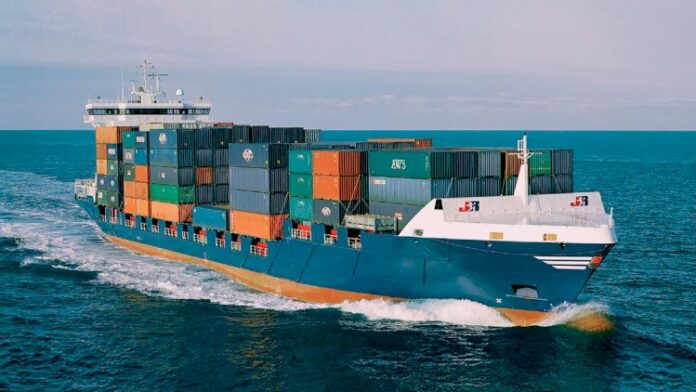
Harlingen-based JR Shipping Group has expanded its container feeder fleet by purchasing a vessel and entering into a new management contract. The two vessels were transferred to the shipping company. They will be registered under the flag of Madeira and sail under the names MV Expert and MV Energy.

Harlingen – Harlingen-based JR Shipping Group has expanded its container feeder fleet by purchasing a vessel and entering into a new management contract. The two vessels were transferred to the shipping company. They will be registered under the flag of Madeira and sail under the names MV Expert and MV Energy. Confeeder Shipping & Chartering is responsible for the commercial management.

The new management contract concerns MV Expert. She is an 800 TEU short-sea feeder and was built by Damen Shipyard Group in 2011. This vessel is specifically equipped for 45-feet containers and, with her ice class 1A, she can operate in Baltic waters in winter. The purchased vessel, MV Energy, is a 750-TEU feeder which is suitable for all container shapes and sizes, including 45-feet ones.

Because of her good manoeuvrability and limited draught, this vessel is particularly well-suited for deployment in relatively small ports. Including the 2 new vessels, JR Shipping currently operates 20 container feeders, varying in size from 750 up to approximately 1,500 TEU.

New milestone in Denmark: wind turbines produce more electricity than the country needs

0

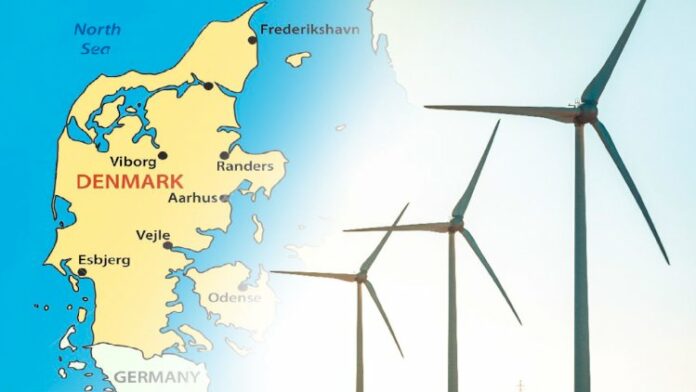
Sunday 15 September 2019 from midnight to midnight was the first day ever for wind turbine production to exceed the Danes’ demand for electricity. This is documented by preliminary figures from Energinet.

The year’s first strong autumnal winds swept across Denmark in the weekend from 13 – 15 September, sending storm-force winds towards the west coast and the wind turbines.

The strong winds resulted in several records.

For the first 24-hour period ever, wind turbines generated electricity from midnight to midnight in excess of total demand in Denmark. On Sunday, production from midnight to midnight supplied 130 per cent of demand in Denmark, which meant that lots of green electricity was supplied to the Danes, while excess electricity was sold to other countries.

Early on Sunday morning between 2.00 am and 3.00 am, the wind turbines generated an impressive 60 per cent more electricity than the Danish market demanded, thus beating the Whitsun record from 9 June 2019, where wind turbine production exceeded demand by 52 per cent. 

15 September 2019 is a milestone for the green transition in Denmark and the first 24-hour period ever of excess wind power production during all hours of the day and night:

Carsten Vittrup, Energy Strategy Adviser at Energinet, says:

"A mere ten years ago, wind accounted for only about one fifth of our supply. But things have developed extremely fast, meaning that we now see not just hours, but entire days of wind turbines generating more electricity than we need."