0.3 C
New York
Home Blog Page 989

Hurricane Nicole sheds light on how storms impact the deep ocean

0

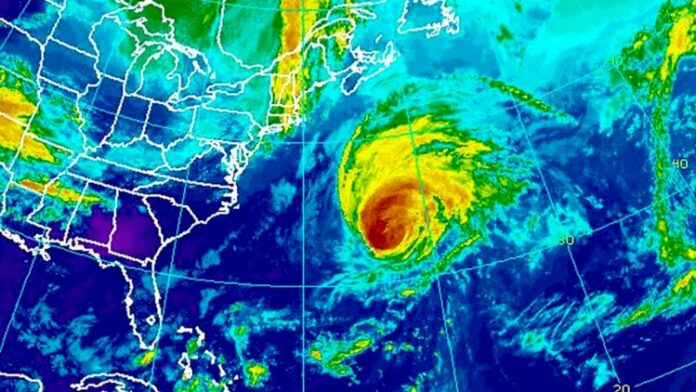
In early October 2016, tropical storm Nicole formed in the middle of the Atlantic Ocean. It roamed for six days, reaching Category 4 hurricane status with powerful 140 miles per hour winds, before hitting the tiny island of Bermuda as a Category 3.

Hurricanes like Nicole can cause significant damage to human structures on land and can often permanently alter landscapes. But these powerful storms also affect the ocean.

Scientists have a good understanding of how hurricanes impact the surface layer of the ocean — the sunlit zone where photosynthesis occurs. The strong winds of hurricanes churn colder water from lower depths, bringing nutrients such as nitrogen and phosphorus to the surface and stimulating short-lived algae blooms. However, until recently, geoscientists didn't know much about how hurricanes impact the deep ocean.

A new study of Hurricane Nicole by researchers at the Marine Biological Laboratory in Woods Hole, Massachusetts, and the Bermuda Institute of Ocean Sciences shows that Nicole had a significant effect on the ocean's carbon cycle and deep-sea ecosystems.

The results, published in Geophysical Research Letters, demonstrate the first direct evidence that hurricanes affect the ocean's biological pump, a process in which living organisms transfer carbon from the surface to deeper ocean layers and the seafloor.

Hedy Edmonds, a program director in NSF's Division of Ocean Sciences, which funded the research, said:

"The availability of long-term, nearly continuous observing programs like those near Bermuda gives us the ability to study sudden and extreme events against an understanding of 'normal' conditions."

Joint group launch technology centre for ocean and environment

0

The Aker Group and the World Economic Forum (WEF) have announced the establishment of the Centre for the Fourth Industrial Revolution Norway (C4IR Norway), dedicated to harnessing the advances of technology to preserve our ocean and improve the environmental footprint of ocean industries.

Through public-private partnerships, the Centre will develop governance frameworks and solutions for a sustainable and profitable ocean economy, using digital technology ranging from Artificial Intelligence (AI) to Blockchain.

The C4IR Norway will join the WEF’s global C4IR Network and collaborate with the Government of Norway and the High Level Panel for a Sustainable Ocean Economy. The Centre will provide a platform for partnerships on governance policies, research and business solutions that can accelerate the application of science, data and technology in the public interest. The Centre will be an independent non-profit foundation, financed initially by founding partner the Aker group. Aker has gained valuable experience through engaging in cross-sector partnering between its own commercial and non-profit entities, such as REV Ocean, Ocean Data Foundation and VI Foundation. Once operational, the Centre will be open to new partners and projects from both the public and the private sector.

Aker President and CEO Øyvind Eriksen said:

“The ambition with this Centre is to leverage our offshore expertise and the Nordic model of collaboration between the public and the private sector to accelerate the application of technology that can reduce the industry’s environmental footprint.  Only through collaboration between business, government and NGOs will we unlock the great potential that resides in digital technology to promote sustainable development – for our societies, for value-creation and for the environment.”

To reach the UN Sustainable Development Goals (SDGs), the ocean will need to provide the world with more food, jobs, energy and raw materials. According to OECD estimates, the value of the ocean economy could exceed USD 3 trillion by 2030, providing more than 40 million jobs. However, fulfilling this potential will require safeguarding and improving the health of the ocean.

Vidar Helgesen, Norway’s Special Envoy to the High Level Panel for a Sustainable Ocean Economy, underlined:

“Building a sustainable ocean economy is one of the most important tasks and greatest opportunities of our time. To mitigate the threats to a healthy and productive ocean, we need to move faster. The Norwegian government welcomes the new technology centre at Fornebu as an essential contribution to ocean health and wealth. It can bring together actors from business, academia and civil society in developing ground-breaking ocean solutions.”

Today, the ocean is under immense pressure notably due to climate change, pollution and overexploitation, with declining biodiversity as a result. Saving the marine ecosystems will require innovative policies, good governance, technology, research and new business solutions, based on sound scientific data.

Børge Brende, President of the World Economic Forum, said:

“The new Centre for the Fourth Industrial Revolution Norway will bring together some of the world’s top minds to co-design innovation policy solutions to achieve the SDGs and protect our ocean. Powered by the Forum’s international network of Centres, this Affiliate will be able to accelerate and scale quickly.”

As an affiliate of the C4IR in San Francisco, which opened in 2017, the technology centre in Norway will be the only centre among the seven in the network to focus on the environment. The Centre’s initial projects will fall into three categories: minimising the environmental footprint of ocean-related industrial activities; harnessing big data to optimise marine resource mapping, monitoring and management; and using digital technology tools to protect marine biodiversity.

The Aker group founding partner of the C4IR Norway is composed of Aker, Aker BP, Aker BioMarine, Aker Energy, Aker Solutions, Cognite and Kvaerner, as well as Ocean Data Foundation and REV Ocean. The Centre will at first be based at the Aker headquarters at Fornebu, Norway, before moving into the World Ocean Headquarters, an ocean cluster being developed by Aker and REV Ocean. The Centre will officially open on 1 January 2020. The recruitment of a director for the Centre is currently underway.

VARD Brattvaag equips a new REV Ocean research vessel

0

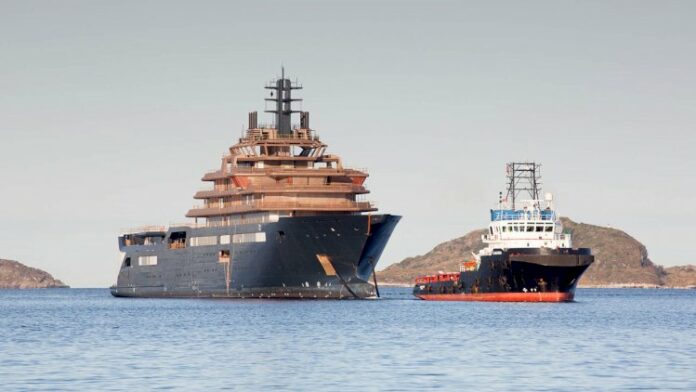
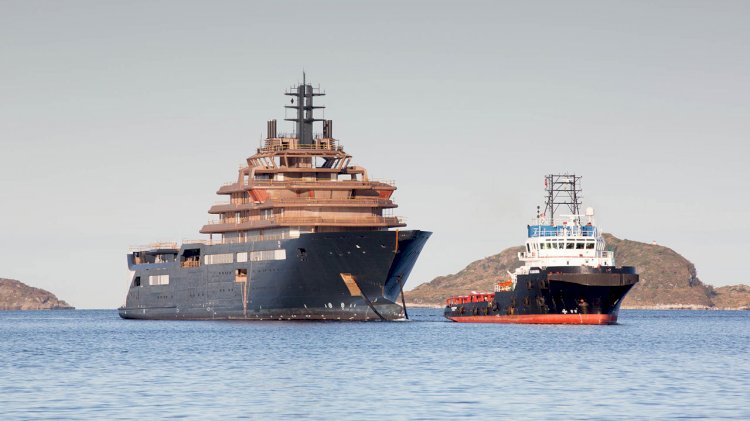
The REV Ocean vessel has arrived at the Vard Brattvaag shipyard to begin its next phase of evolution from a floating steel hull to a state of the art research vessel. REV Ocean departed the Vard Tulcea shipyard in Romania just under 30 days ago and arrived ahead of schedule in Norway, being pulled efficiently by the tugboat Kamarina.

Nina Jensen, CEO of REV Ocean, said:

“Today is one of the most exciting moments in the development of our research vessel. We now watch with great anticipation as she will develop into a full-fledged and operational vessel with state of the art scientific equipment to be installed by the talented team at Vard Brattvaag. This is a major milestone towards achieving our mission of achieving one healthy ocean.”

Erik Haakonsholm, the new General Manager of VARD offshore and specialized vessels and head of Vard Design says:

"At VARD we have long experience in building sophisticated and exciting vessels, but the size, complexity, and purpose of this vessel add extra enthusiasm for all parties involved. We expect high activity at our yard in Brattvåg as our employees eagerly take on the outfitting phase. This project also generates a positive spinoff effect in Norway outside VARD.“

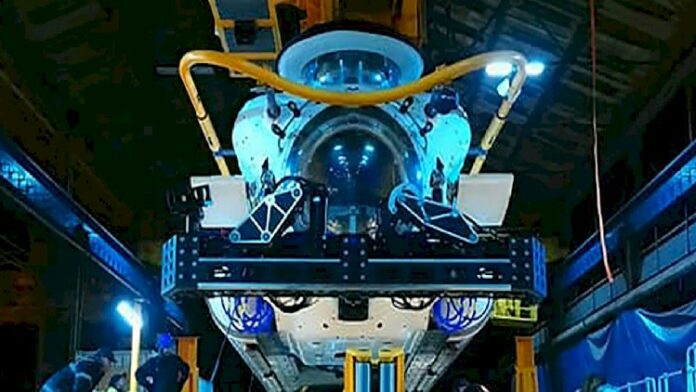
REV Ocean will be equipped for conducting missions that cover the entire global marine ecosystem and will be an inclusive global vessel for testing and proliferating ocean solutions. The vessel will be used by scientists and innovators for solutions-oriented research that explore issues such as the impact CO2 emissions have on the ocean, plastic pollution, and unsustainable fishing. The vessel is 182.9 meters long and will have the capacity of holding 55 scientists and 35 crew. Equipment on-board includes scientific trawls, sonar systems, laboratories, auditorium, moonpool, Triton submarine with 2300 meter depth capacity, an ROV with 6000 meter depth capacity and advanced communication equipment.

George Gill, Project Director and Owners Representative, said:

“REV’s arrival in Brattvåg is a crucial step in her development, she will lay here in Norway for the coming months, and this establishes the core groundwork for the research and operations of the vessel. Getting these important systems and her keystone machinery right is critical to her success and position within the Worlds research fleet. We have an excellent collaboration with VARD and the whole of the Owners Team look forward to these months ahead and REV’s delivery to us and the next phase of her gestation.”

Dag Vikestrand, Yard Director at Vard Brattvaag says:

“We would like to thank our colleagues at Vard Tulcea for their contributions so far in this exciting and innovative project, and we are looking forward to continuing the outfitting and completion of the vessel in close cooperation with the REV Ocean team and all other parties involved.”

REV Ocean will strive to fill critical knowledge gaps, develop innovative solutions, and bridge science, business and policy sectors to achieve positive change. Taking on the role of ocean REVolutionaries the goal is to create positive, measurable impact; provide a pathway for others to follow and motivate the next generation of ocean leaders.

Oystein Mikelborg, REV Ocean Operations Director, added:

“The arrival in Brattvåg is a major milestone and a new chapter for REV Ocean. In the next few months, VARD Brattvaag will turn this into one of the world’s most advanced research vessels. The complexity and sheer scale of the work ahead is challenging, and I know it will be very busy days ahead both for the yard and the Owner’s team. Modern multi-purpose research vessels are notoriously complex as there are so many sensitive systems that need to work seamlessly together. However, given VARD’s track record of building complex world-class vessels, we are confident in their ability to make REV Ocean the vessel we have envisioned.”

REV Ocean is a not-for-profit foundation established and funded by Norwegian businessman Kjell Inge Røkke together with marine biologist Nina Jensen, former CEO of WWF Norway (Verdens naturfond).

Global cruise company to eliminate single-use plastic bottles across fleet

0

Norwegian Cruise Line will be the first major global cruise company to become plastic bottle free. Over six million plastic bottles to be eliminated each year.

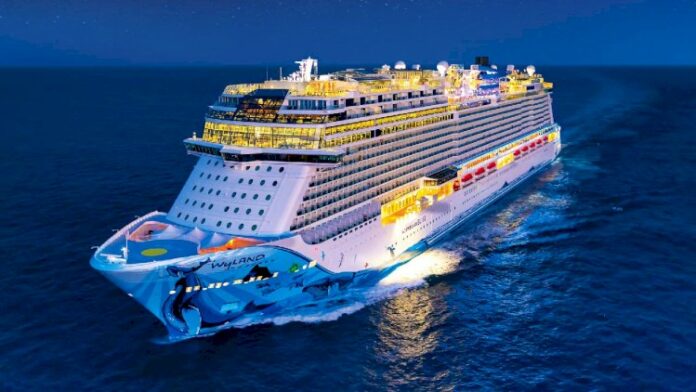
Norwegian Cruise Line, the innovator in global cruise travel with a 52-year history of breaking boundaries, has announced another first as a result of its partnership with JUST® Goods, Inc., which will enable the Cruise Line to replace all single-use plastic bottles across its fleet by January 1, 2020, beginning with its newest innovative ship, Norwegian Encore. 

The decision is the latest sustainable step forward for Norwegian Cruise Line. In 2018, the Company eliminated single-use plastic straws across its 16-ship fleet and private destinations, and as a result of this most recent initiative, it will replace over six million single-use plastic bottles every year. These efforts are driven by the Company's Sail & Sustain Environmental Program which is its commitment to minimize waste to landfills, reduce its CO2 emissions rate, increase sustainable sourcing and invest in emerging technologies.

Andy Stuart, president and chief executive officer of Norwegian Cruise Line, said:

"We are a leading Company – one that is in the business of creating memorable experiences for our guests. It is imperative that we take meaningful steps to preserve our oceans and the destinations we visit. Partnering with JUST is one of my proudest moments as the head of our pioneering brand. This latest effort – the elimination of single-use plastic bottles across our fleet – is just the latest environmentally responsible action we are taking to reduce our footprint and encourage others to protect our natural resources. While we are aware that this is just the beginning of what we and others need to do to be good stewards of our environment, we are committed to our Sail & Sustain initiatives and will continue to innovate for the overall benefit of the planet and its future."

Envisioned and founded by American rapper, songwriter, actor and activist Jaden Smith and family, JUST takes an innovative approach to sourcing and packaging the world's most valued resource – water.  The revolutionary company focuses on an impact model, taking into consideration both how the water is sourced and packaged. JUST is 100% spring water in a plant-based carton.

The carton is made of 82% renewable materials – the paper carton is made from trees grown in responsibly-managed forests and the cap and shoulder are made from a sugarcane-based plastic. It is refillable and recyclable. JUST has a global presence with bottling facilities in Glenn Falls, NY; Ballymena, Northern Ireland; and Ballarat, Australia, thus allowing the company to meet demand around the world without shipping water from a single production source. JUST takes care to use the most efficient shipping options available.

JUST Goods, Inc. CEO Ira Laufer, said:

"It's critical that businesses take a leading role in efforts to lighten the impact we have on our planet. We created JUST to do just that – to be a better option in a category that has created a lot of the damage and continues to do so.  The JUST team couldn't be happier to now share this goal with our partner, Norwegian Cruise Line. We're deeply appreciative of Norwegian's commitment that's so similar to ours – the Company is pushing the boundaries of what's always been done because it knows we all need to do better.  We're thrilled to be taking steps in the right direction alongside NCL."

VIDEO: Wärtsilä future ferry solutions

0

Working with ferry owners world wide, Wärtsilä has delivered environmentally sustainable solutions that make business sense. 

Nearly 40 percent of the world’s population – 2.4 billion people – now live within 100 km of the coast – combine this with the focus from ports, cities, society, governments and regulatory bodies on emissions and environmentally sustainable transport options and it’s clear to see the need to invest in ferries to meet future demand and requirements.  This is creating exciting new opportunities in the ferry industry and is increasing the speed of innovation with a focus on new technologies that can deliver efficient business solutions, while lowering emissions across all ferry types.

Wärtsilä is a global leader in smart technologies and complete lifecycle solutions for the marine and energy markets. By emphasising sustainable innovation, total efficiency and data analytics, Wärtsilä maximises the environmental and economic performance of the vessels and power plants of its customers.

Wartsila is committed to collaborating with ferry operators and owners to deliver the solutions needed to meet this growing demand as efficiently as possible.
 

Innovative cyber risk method wins Lloyd’s List Americas Award

0

Third cyber award in 2019 confirms industry leading position in maritime cyber security.

The industry leading ABS FCI Cyber Risk™ Methodology has won the Excellence in Data and Technology Innovation Award at the Lloyd's List Americas Awards held September 25 in Houston.

Working closely with leading government agencies, ABS and ABS Group Cyber Risk experts pioneered the innovative method, which simplifies cyber risk in marine and offshore environments. The Lloyd's List Americas award for the ABS proprietary FCI Cyber Risk Methodology follows two top industry awards from Seatrade Maritime Review and Smart4Sea magazines earlier this year, confirming ABS Group as the global leader in cyber security for the maritime and offshore industries.

Russ Medeiros, ABS Group Vice President of Global Marine and Offshore, says:

"Cyber security is a business imperative and ABS Group leads the way in helping the marine and offshore industries reduce the risk of cyber threats in operational technology. No other solution makes it so straightforward for operators and owners to gain such a deep understanding of their cyber risk and the steps they can take to manage it."

ABS and ABS Group developed the groundbreaking FCI Cyber Risk Methodology to measure cyber security risk associated with operational technology, providing clients a calculated risk index for vessels, fleets and facilities. The approach quantifies cyber security risk and gives owners and operators an actionable strategy to reduce cyber risk onboard a vessel. Effectively, it places the controls for responding to cyber risks back into the hands of the asset owner.

The FCI Cyber Risk Methodology was developed following a two-year research contract with the Maritime Security Center—a U.S. Department of Homeland Security Center of Excellence—led by Stevens Institute of Technology and including the U.S. Department of Defense.
 

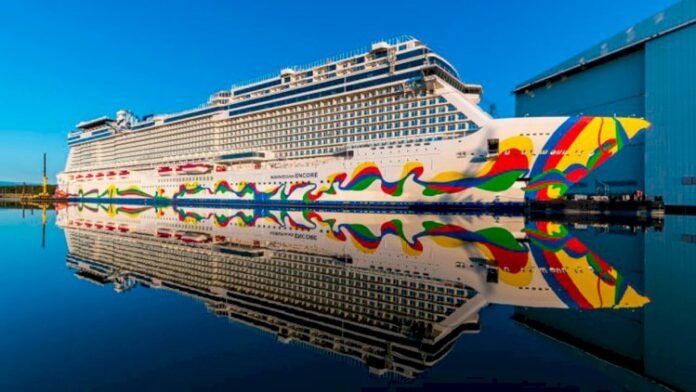
One of the largest cruise ships in Germany was built for NCL

0

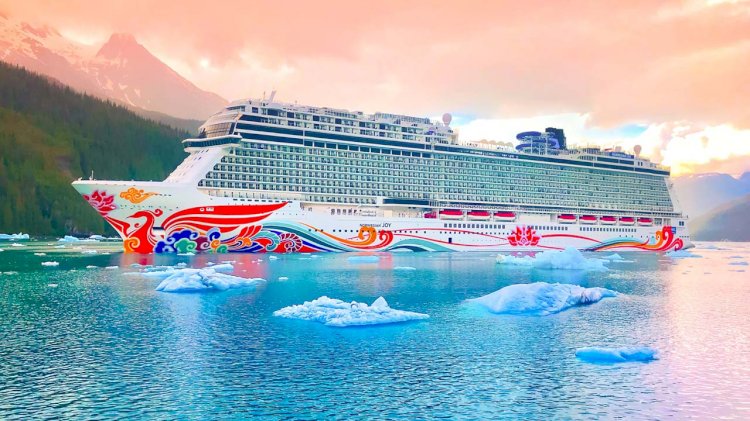
The new cruise ship for Norwegian Cruise Line (USA), Norwegian Encore, will probably leave Papenburg on Monday, September 30 2019 to be conveyed on the river Ems to Eemshaven (Netherlands).

The ship is planned to arrive in Eemshaven on Wednesday morning. Later on the ship will go through several days of technical and nautical sea trials on the North Sea before delivery to the cruise line end of October in Bremerhaven.

The Ems barrier will be helping Norwegian Encore to pass through the river Ems, a procedure which will be kept as short as possible. The following schedule has been drawn up for the conveyance of the new cruise ship, with changes possible at short notice due to the weather and tidal conditions:

A team of river pilots from Emden will be responsible for manoeuvring the ship to Eemshaven. The yard captain of MEYER WERFT also comes from the team of pilots on the river. The whole team trained the conveyance at the computerised simulator in Wageningen (Netherlands) to be better prepared for the task.

Norwegian Encore will proceed in reverse up the river Ems to the North Sea. This ap-proach has proven successful in the past as it makes it easier to manoeuvre the ship. Two tugs will be providing assistance in the process.

The cruise ship with 169,300 GRT is one of the largest cruise ships to be built in Germany with capacity for about 4,004 passengers. After completing the technical and nautical sea trials on the North Sea, the ship will be handed over to the owners end of October 2019.

Meanwhile, MEYER WERFT continues to work flat out on other ships: building dock II currently houses the Iona which is scheduled to be completed in spring 2020 for the British P&O Cruises and Odyssey of the Seas for Royal Caribbean International with delivery in autumn 2020, while Spirit of Adventure gets completed in building dock I. The ship for Saga Cruises (UK) is scheduled to be delivered in summer 2019.

ONE works with the digital Port Call Optimisation platform Pronto

0

Container shipping company Ocean Network Express (ONE) was established in 2018 from the merger between the former Japanese shipping companies K-Line, NYK Line and MOL.

The bright pink ONE vessels are now also a familiar feature in the Port of Rotterdam. To improve the efficiency of port calls in Rotterdam, ONE has been working with the digital Port Call Optimisation platform Pronto for several weeks.

ONE is currently one of the six largest carriers in the world. Vessel Planning for Europe is carried out in London. In Rotterdam, the team of Robin de Puij, Head of Operations, takes care of local monitoring of ONE vessels in the Port of Rotterdam and the contact with the terminals. The shipping company has some 350 calls per year in Rotterdam, which means that around ONE vessel per day arrives in the Port of Rotterdam.

De Puij stated as reason for ONE’s choice for Pronto:

‘We were searching for a platform that would enable us to better monitor, analyse and optimise the approach to and handling of our vessels in the Port of Rotterdam. Multiple parties offer solutions for this, but Pronto is currently the best and most well-developed option. It contains good dashboards and warning and analysis tools. The whole port benefits from this platform if all parties involved in a port call enter the information into the platform. This offers fantastic opportunities to reduce costs and achieve environmental advantages.’

Vessels that need to wait and are moored cost a lot of money. That’s why it is important for ONE that vessels arrive in the Port of Rotterdam just-in-time. De Puij:

‘Sometimes you sail too quickly, so you reach the next port too early and need to anchor. This results in waiting times as well as in unnecessarily high fuel consumption. That’s why we want to know in advance how much time we have until the next port. Via Pronto, we receive the information we need to reach the Port of Rotterdam just-in-time.’

ONE can also use Pronto to monitor, measure and analyse operations in the port. De Puij said:

‘We want to be able to stick to our sailing schedules. All activities related to a port call need to be implemented in time in the ports and according to planning. As well as the anchor time, we also aim to reduce the time between the end of operations at the terminal and the departure of the vessel. To achieve this, we’d like to have earlier insight into the arrival and departure times of bunker vessels, waste collectors and nautical service providers.

Of course, the loading and unloading of containers also needs to run smoothly. It is also good to see that more and more Rotterdam terminals supply information via Pronto regarding their operation times. This is essential for us to be able to leave the port quickly and report to the next port in time that we are on our way. The terminals also benefit from this. The faster and more accurately vessels can be handled and exchanged, the higher their productivity.’

Not only the Rotterdam ONE team but also the London team’s initial experiences with Pronto are positive. ‘Rotterdam’ and ‘London’ are still fine-tuning how they work with Pronto via a weekly call. The first improvements regarding waiting time reduction are already visible, according to De Puij:

‘We’ve all worked really hard on this. And we receive a lot of support from Pronto’s developers. The platform offers excellent opportunities to analyse port calls afterwards. What was the objective and how did the port call actually proceed? We can use this information to make improvements, in which we not only look at other parties, but also take a good look at ourselves. As we are sailing in alliance, it would also be great to use Pronto to provide insight into our partners’ vessels. We need to give each other permission for this.’

De Puij stated:

‘A platform such as Pronto is really conducive to how the Port of Rotterdam functions. Improved forecasting and higher speeds make a huge contribution to the Rotterdam port community. An important condition is that all involved players share information. It would be even better if the surrounding ports also participated.’ The head office of ONE in Singapore is also following the work with Pronto with interest. ‘Our head office has a strong focus on innovation and Pronto fits well with this. Of course the platform developers will need to continue to consider the platform’s ongoing development.’

JFD to design and build new submarine rescue equipment

0

JFD awarded multi-million pound contract for the design and build of submarine rescue equipment to China Shipbuilding & Offshore International Co, Ltd.

JFD, the world leading underwater capability provider serving the commercial and defence diving markets and part of James Fisher and Sons plc, has announced it has been awarded a multi-million pound contract for the design and build of submarine rescue equipment, including advanced Deep Search and Rescue Vehicles (DSAR), as part of a comprehensive submarine rescue capability being provided to China Shipbuilding & Offshore International Co., Ltd.

JFD provides fast, safe and reliable subsea rescue services, solutions products, engineering services and training to 80 countries and 33 of the world’s navies including the Royal Navy, Australian, Indian, Singapore, and South Korean Navies, as well as providing the NATO Submarine Rescue System.

Giovanni Corbetta, Managing Director, JFD, said:

“This contract award underlines JFD’s position as market leader in the submarine rescue market, safeguarding the lives of submariners and providing a comprehensive submarine rescue capability to organisations around the World.”

Indian container market: Hapag-Lloyd launches two new services

0

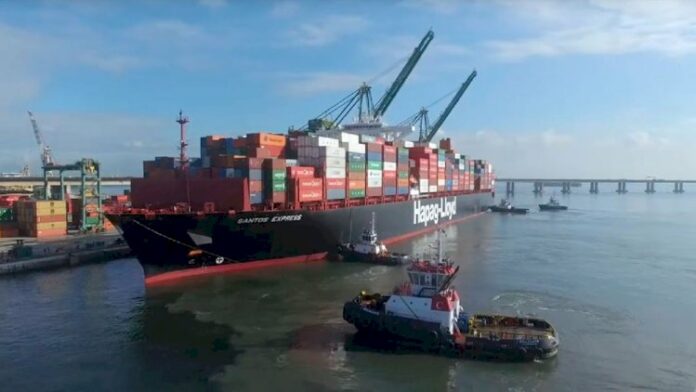
In response to growing demand, Hapag-Lloyd will offer more services from and to India. Two new services, the South East India – Europe Express (IEX) and the Middle East-India-Africa Express (MIAX), will enter into operation in October.

Both the IEX and the MIAX will further strengthen and optimize Hapag-Lloyd’s market-leading position in India and connect the country even more closely to North Europe and Africa.

Dheeraj Bhatia, Senior Managing Director of Hapag-Lloyd’s Region Middle East, says:

“We believe in serving the needs of all Indian customers. To do that, a comprehensive service coverage is essential and the IEX and MIAX will be an optimal addition to our existing service portfolio.”

Rizwan Soomar, CEO and Managing Director, DP-World Indian sub-continent, one of the leading terminal providers in the country, adds:

“Hapag-Lloyd has a strong network of services connecting key markets through Indian ports. The launch of two new services – IEX and MIAX – will create stronger opportunities for EXIM cargo and for Indian manufacturers to cater to global markets.

At DP World, it is our constant endeavour to deliver the best services to our partners in the supply chain with highest levels of efficiency. We are extremely pleased to be chosen by Hapag-Lloyd yet again as it reinforces their confidence in our capabilities to add value to trade. We will work closely with Hapag-Lloyd to ensure that customers benefit from our multi modal logistics capabilities in the country to effectively manage their supply chains.”

The IEX will provide the only direct connection between South and East India and Europe in the market. The weekly service, jointly operated with ONE, YML and COSCO, will be made up of nine 6,500 TEU vessels, with Hapag-Lloyd contributing four ships. The first departures are scheduled for 26 October.

The MIAX, launching on 12 October, will on the other hand support the growing demand of transport capacity between India and Africa. Hapag-Lloyd will operate MIAX jointly with ONE. A total of nine vessels with a capacity of 2,800 TEU each, will serve on this new route, five of which will be provided by Hapag-Lloyd.

Hapag-Lloyd entered the Indian market 12 years ago and has established a strong presense in the country with 12 services and 14 offices. The company has experienced significant growth in transported volumes every year since then. 

Dheeraj Bhatia confirms:

“In recent years we have seen strong growth in our transport volumes and market share, and today have roughly a market share of around 9%. There is great potential for further growth in India and the new IEX and MIAX services are a step into that direction.”

Today, Hapag-Lloyd employs over 2,000 experts in India and Indians are the largest group of nationalities in the global Hapag-Lloyd organization.