3.4 C
New York
Home Blog Page 984

Finnpilot launches a new traffic info service

0

The new Finnpilot Traffic Info service was launched on 3 October 2019.

Finnpilot Traffic Info displays timetable information for both piloted and non-piloted vessels for the first time in a single view with an easy-to-read format. The timetables for piloted vessels are retrieved from Finnpilot’s own Pilotweb system and the timetables for non-piloted vessels from the Portnet system maintained by the Finnish Transport and Communications Agency Traficom.

Finnpilot Traffic Info is a public website designed to function on devices of different sizes. The aim of the service is to provide a clearer situational picture of maritime traffic for all actors within the field.
 

VSimulator: people’s wellbeing research

0

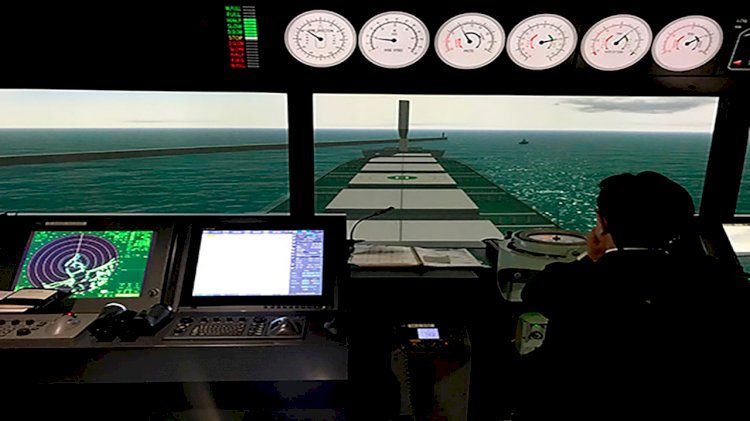
The VSimulator facilities are new test platforms that are being built at the universities of Bath and Exeter, consisting of hydraulically-powered moving chambers that allow researchers to study the impacts of vibration and movement on people’s wellbeing in a range of environments, from working and living in skyscrapers and on vessels to operating equipment in industrial environments.

The £4.8 million VSimulator project aims to discover more about how to design environments to make their occupants and operators as safe and as comfortable as possible. The facilities are being developed with funding from the Engineering and Physical Sciences Research Council (EPSRC).

At the University of Bath’s Faculty of Engineering & Design, the box-shaped chamber can sway up to 40cm horizontally which, when combined with climate, sound, air quality and visual controls and highly-detailed 3D virtual reality cityscapes projected onto the internal walls, will allow researchers to accurately measure human responses. This facility will accommodate two occupants for research purposes and will open for commercial and academic use in October 2019.

Meanwhile the University of Exeter are constructing a three-storey building at Exeter Science Park in which to house their VSimulator’s multi-disciplinary platform. This will offer a state-of-the-art, world-class facility that will provide virtual reality (VR) technology capable of immersing up to nine occupants simultaneously in headset-projected VR scenarios. The custom-designed, 4m x 4m motion platform will be able to move in six degrees of freedom and will be linked to the VR scenarios to help users perceive realistic motion as they move around in a virtual world, whilst optical and inertial motion-capture systems and an array of force plates will record their experiences. This facility will be open for commercial and academic use from January 2020 onwards, with applications within and beyond architectural design.

James Brownjohn, Professor of Structural Dynamics and Principal Investigator for VSimulators at University of Exeter, said:

“VSimulators offers opportunities for collaborative international and multi-disciplinary research and innovation, linking academic and commercial communities. Our initial focus will be on factors including vibrations that compromise user experience in the built environment such as wobbly footbridges and bouncy office floors, but we will also study user-centred design of building environments, biomechanics of human balance on moving surfaces and rehabilitation physiotherapy.”

These facilities will not only help design new physical environments, but can also help mitigate the impact of existing environments through better training and enhanced immersion in synthetic environments.

Mike Cottrell, Visualisation Capability Manager from BMT said:

“I’m personally excited by the technical integration the VSimulator motion platform will bring to our immersive solutions at BMT. Integrated immersion will bring a whole new dimension to what we can offer customers to simulate scenarios in a much more realistic way. Being able to move the environment independent of the individuals, whilst keeping immersion synchronised, will be a powerful combination that we are looking forward to exploiting."

Phaedra Gibson, Head of Training at BMT, adds:

“The simulator further enables us to understand human response and measure psychological, physical and physiological responses to the environment. This enables us to design and deliver authentic, meaningful and reliable training solutions to meet the complex operational demands of our customers."

 

Deepening of the busiest waterways in the Netherlands complete

0

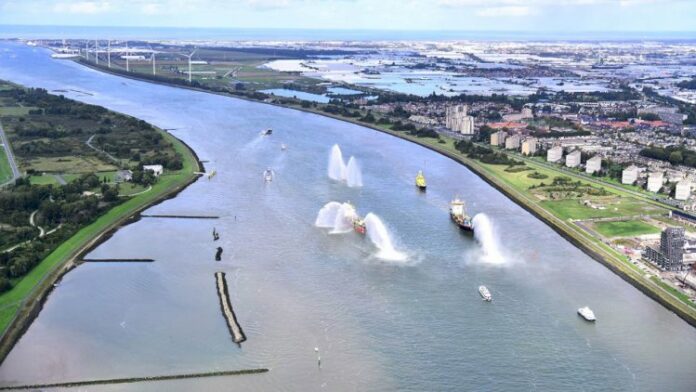
The Directorate-General for Public Works and Water Management (Rijkswaterstaat) and the Port of Rotterdam Authority celebrated the completion of the deepening of the Nieuwe Waterweg and Botlek yesterday. One of the busiest waterways in the Netherlands has been deepened by a metre and a half across a distance of 25 kilometres. 

The ceremonial opening of the deepened Nieuwe Waterweg and Botlek was performed by Minister Cora van Nieuwenhuizen (Infrastructure & Water Management) and Ronald Paul, the Port of Rotterdam Authority’s Chief Operating Officer. The opening included a spectacular nautical salute together with vessels from contractors Van der Kamp and Boskalis, a Port of Rotterdam Authority patrol vessel and a Rijkswaterstaat vessel.

The Minister and Ronald Paul are proud of the excellent partnership and the speed with which this challenging contract was completed. The largest sea-going vessels with a depth of 15 metres can now also easily access Rotterdam port’s Botlek area. Minister Van Nieuwenhuizen said:

‘Big, bigger, biggest. We’re talking here about the Aframax, Suezmax and Panamax, mammoth vessels that sail cheaper, more sustainably and safer. In the port sector, big is not only a matter of honour, but it’s also a condition for survival in today’s cut-throat competitive world. That is certainly true for the port of Rotterdam.’

Ronald Paul said:

‘That the biggest sea-going vessels can now access the Port of Rotterdam easily is vital to the competitive position of businesses in this area. Port Authority investments are eliciting a wide range of port business sector investments. This confirms our aim to continue to strengthen existing port industry, while also working hard to develop entirely new activities, for instance by investing in the energy transition and digitisation.’

The total joint investment amounted to around €70 million. The dredging activities were carried out while Europe’s busiest port remained open for business. Over 15,000 sea-going vessels navigate the Nieuwe Waterweg every year.


Traxens develops first standards for smart container data exchange

0

Traxens, a company providing high-value data and services for the supply chain industry, has led the development of the first standards for smart container data exchange published by the United Nations Centre for Trade Facilitation and Electronic Business (UN/CEFACT). Business Requirements Specifications (BRS) delivers internationally standardized messaging to facilitate the use of smart container data.  

Although many smart containers are already in use, there are no global standards in place to capture and communicate consistently and multimodally the array of data they generate. Initiated in October 2017 under the leadership of Hanane Becha, innovation & standards senior manager at Traxens, the ‘Smart Containers BRS’ project aims to provide clear global standards for the exchange of data to ensure interoperability and easy integration within different systems. Data will be generated once and shared between multiple stakeholders, platforms and systems; improving data exchange, automated workflow and alert generation.

These new standards will be the basis for API development, bringing technology into every aspect of the supply chain and providing powerful and innovative tools.

Jacques Delort, managing director of Traxens, said:

“This technology can be combined with other innovations such as blockchain, big data or data pipelines to provide even more uses in the trading community. In all of these cases, though, we see that creating clear, unambiguous message exchange standards will unlock the further potential of enhanced data.”

Hanane Becha, innovation & standards senior manager at Traxens, said:

“Thanks to smart containers standardized messages, the computer representation of the supply chain will become synchronized with the physical world, increasing the speed and accuracy of decision-making, the automation as part of transport and logistics execution and the seamless collaboration between stakeholders. Enhanced data will improve visibility and predictability for stakeholders as well as for regulatory agencies that need detailed information on consignments before they arrive at the border.” 

Mathieu Friedberg, senior vice president – Commercial & Agencies Network, CMA CGM Group, said:

“We are proud to pave the way to better data integration and advanced smart container services by bringing the shipping industry together around a common standard. Such standardized solutions are key to advance digitalization and to seize all the opportunities offered by smart containers.”

Subsea 7 awarded Shell’s contract offshore UK

0

Subsea 7 has announced the award of a sizeable contract by Shell for the Pierce depressurisation project, located approximately 160 miles offshore, east of Aberdeen.

The contract scope involves the engineering, procurement, construction, transportation and installation (EPCI and T&I) of a 30km gas export pipeline, a gas export riser and associated subsea infrastructure, for tie-ins at the Haewene Brim FPSO.

Project management and detailed engineering has commenced at Subsea 7’s office in Aberdeen, with offshore activities scheduled for 2020 and 2021.

Jonathan Tame, Vice President UK & Canada, said:

“This award recognises our extensive knowledge of Shell’s North Sea developments, gained over almost 30 years of working closely together to deliver safe and cost-effective construction, inspection, repair and maintenance operations across Shell’s European offshore fields and facilities.”

New eco-friendly initiatives in the Port of Marseille Fos

0

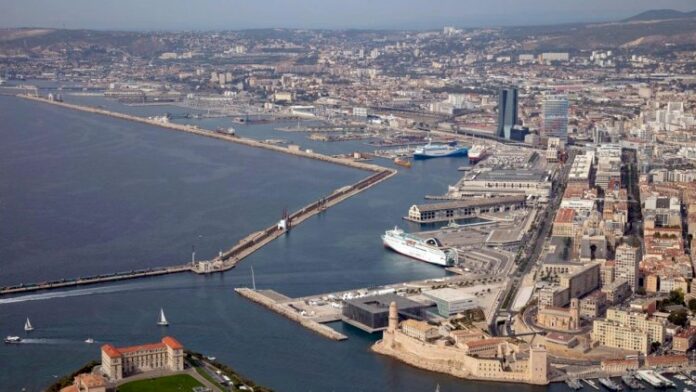
Among a string of new eco-friendly initiatives, the Marseille Fos port authority is to spend €20 million over the next six years to extend shoreside electrical connections for berthed vessels to every ferry, cruiseship and repair quay within the Marseille eastern harbour.
 
Already available on the Corsica ferry quays, the network will be expanded in two phases to cover North Africa ferry quays and the shiprepair hub by 2022 and the cruise terminal between 2022 and 2025.

The zero-emissions investment – backed by national and regional government – recognises the need to maintain the port’s value to the economy while improving the city’s waterside air quality.  Marseille Fos CEO Hervé Martel commented:

“We are convinced that ecological transition is the springboard to economic growth. That’s why we are investing heavily to become the Mediterranean’s first 100% electric port by 2025."

Transocean announces world’s first hybrid floating drilling unit

0

Transocean Ltd. has successfully deployed the world’s first hybrid energy storage system aboard a floating drilling unit. The system is now operational on the Transocean Spitsbergen, engaged in drilling operations at the Snorre field in Norway.

Transocean’s patented hybrid power technology, developed in partnership with Aspin Kemp and Associates, reduces fuel consumption and increases a dynamically positioned rig’s station-keeping reliability by capturing energy generated during normal rig operations that would otherwise be wasted, and storing it in batteries.  This energy is then used to power the rig’s thrusters.  This important operational and safety enhancement targets a 14% reduction in fuel use during normal operations, leading to a significant reduction in NOx and CO2 emissions.

Transocean’s investment is funded in part through fuel saving incentives in its contract with Equinor and by the Norwegian NOx Fund.

Jeremy Thigpen, President and CEO, said:

“This first of its kind hybrid power upgrade will further enhance the reliability of our operations, while simultaneously reducing fuel consumption, operating costs and our environmental footprint. We are pleased and proud to work alongside Equinor to jointly identify and implement more efficient and sustainable technology to deliver high-value wells to the industry.”

Transocean is a leading international provider of offshore contract drilling services for oil and gas wells. The company specializes in technically demanding sectors of the global offshore drilling business with a particular focus on deepwater and harsh environment drilling services, and believes that it operates the highest specification floating offshore drilling fleet in the world.
 

Multiple Baltic ports’ projects selected for EU funding

0

Over EUR 117 million has recently been allocated to 39 key transport projects by the EU, aimed at filling the gaps in missing connections across the continent while at the same time keeping a strong focus on sustainable transport modes. A number of projects submitted by the Members of the Baltic Ports Organization (BPO) were among the selected proposals.

The projects, supported through the Connecting Europe Facility (CEF), among other things, are dedicated to upgrading infrastructure within EU ports in order to foster multimodality and lower emissions of pollutants and greenhouse gases. BPO Member projects include initiatives by the Ports of Kiel, Tallinn, Rauma, Oulu, Ystad and Karlshamn. The BPO welcomes the fact, that a number of the selected ports are part of the comprehensive ports network. BPO’s Comprehensive Ports Working Group keeps a careful eye on the allocation of funds to smaller ports, which is key for their continuous development and competitiveness.

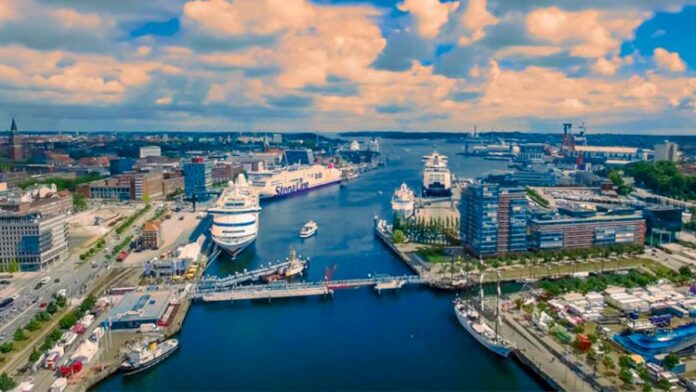
  • Port of Kiel is upgrading to improve efficiency and move road freight to rail instead. The project will provide an environment-friendly power supply for ships, improve access to combined transport, and install a third rail track (recommended CEF funding: ca. EUR 1.6 million).
  • Port of Tallinn plans to deepen Paldiski South Harbour to allow larger ships to enter the port. The project includes studies regarding the geology, environmental effects and the dredging. This will allow the harbour to be more efficient and better respond to transport demands (recommended CEF funding: ca. EUR 1.3 million).
  • Port of Rauma’s MultiPort project will increase capacity and reduce congestion through a new cargo handling area. Along with a wider plan to expand and modernize the port, it will bring environmental benefits alongside regional development (recommended CEF funding: ca. EUR 2.4 million).
  • Northern Gateway, a project by the Port of Oulu, aims to improve the multimodal infrastructure, building new railway facilities to accommodate and handle longer trains. This is expected to move a significant amount of freight from road to rail (recommended CEF funding: ca. EUR 2 million).
  • This “YES” project (Ystad upgrading Efficiency and Safety) submitted by the ferry Port of Ystad will improve connections to Swinoujscie in Poland and the island of Bornholm. By doing so the port will be able to improve its efficiency and sustainability, while handling more traffic at the same time (recommended CEF funding: ca. EUR 1.2 million).
  • A project by the Port of Karlshamn will allow it to prepare for the next generation of large Ro-Pax vessels, almost doubling its capacity and resulting in faster cargo flows. The initiative includes installation of onshore power supply facilities (recommended CEF funding: ca. EUR 3 million).

Violeta Bulc, EU Commissioner for Transport, offered the following comment:

"We are delivering on our commitments to make transport more sustainable, safer and smarter. Today's decision gives a further push to the transition to low-emission mobility across Europe – starting with our railways and our ports."

The projects were selected for funding via a call for proposals launched on 8 January in all EU Member States. The EU's financial contribution comes in the form of grants, with different co-financing rates depending on the project type. Under the CEF programme, €23.2 billion is available for grants from the EU's 2014-2020 budget to co-fund TEN-T projects in the EU Member States. Since 2014, the first CEF programming year, six waves of calls for project proposals have been launched (every year since 2014).

Japanese companies design a large cargo ship with ‘hard sail’

0

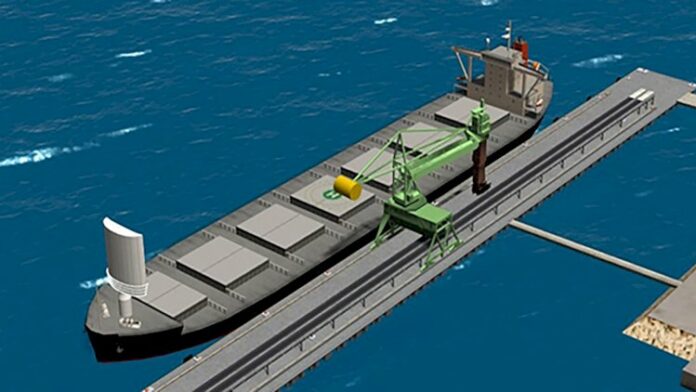
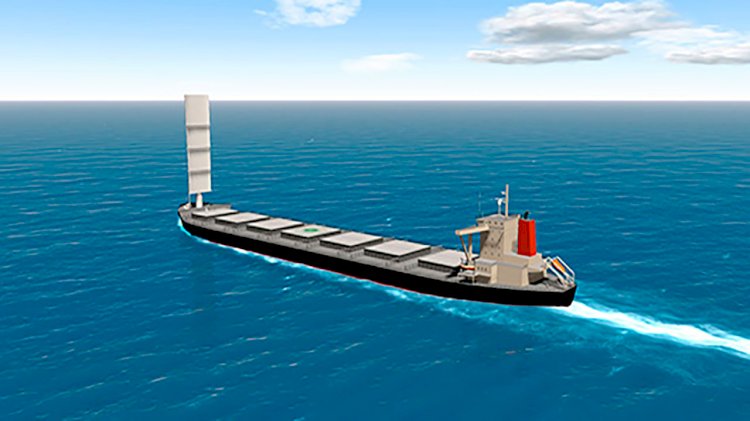
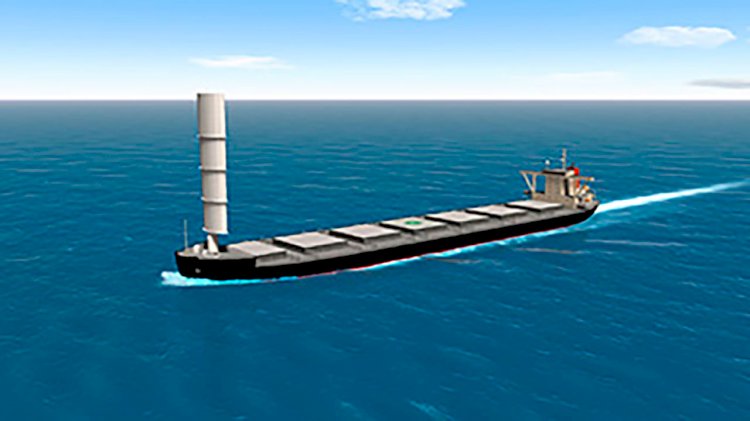
Mitsui O.S.K. Lines and Oshima Shipbuilding Co have jointly obtained "Approval In Principle (AIP)" from Nippon Kaiji Kyokai for the design of a hard sail system. The system converts wind energy to propulsive force with telescopic hard sail, and is a fundamental technology of the "Wind Challenger Project" that MOL and Oshima Shipbuilding are spearheading.

Along with other participating organizations, MOL and Oshima Shipbuilding have played a central role in research and development on the Wind Challenger Project, which aims to reduce greenhouse gas (GHG) emissions by using wind energy. Obtaining the AIP marks the completion of the initial design related to the sail structure and controls.

MOL and Oshima Shipbuilding will continue to move toward a detailed design and implementation for the Wind Challenger Project, with the aim to launch of a newbuilding vessel equipped with a hard sail. That would reduce the vessel’s GHG emissions by about 5% on a Japan-Australia voyage, and about 8% on Japan-North America West Coast voyage. The long-term goal is to develop a widely accepted solution to achieve the IMO target (Note 3) in combination with other measures to reduce GHGs by equipping vessels with multiple sails.

Through this project, MOL and Oshima Shipbuilding will establish one of the technological choices for GHG reduction, with the objective of contributing to environmental conservation.

The Wind Challenger Project started in 2009 with the "Wind Challenger Plan," an industry-academia joint research project led by The University of Tokyo, and from 2013, the team has been chosen to receive "Subsidy for Next-generation marine environment-related technology research" by Ministry of Land, Infrastructure, Transport and Tourism. In January 2018, MOL and Oshima Shipbuilding took charge of the plan and now play a central role in this project.

NC Ports partners with Versiant to enhance IT infrastructure

0

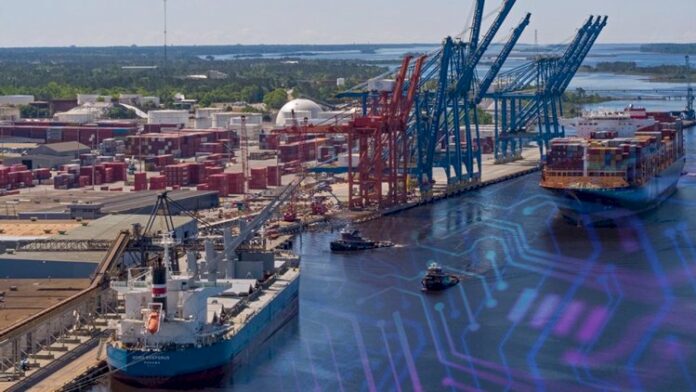
Versiant, a leading international provider of managed, professional, software and support services for enterprise IT infrastructure, announces North Carolina Ports as a new client.

As an IT services provider, Versiant maintains a unique position among many given its history in the maritime space since the early days of the company’s inception. Versiant provides the expertise and insight for maximizing operational efficiency and security for ports and terminals around the world. Now this knowledge and maritime systems capability is being brought home to Versiant’s home state of North Carolina through their newly announced relationship with the leading force of the southeast’s Maritime Industry, North Carolina Ports.

Bill Cocoran, CIO with North Carolina Ports said:

“The State of North Carolina has allocated over $200M in enhancing the supply chain and the Port of Wilmington is a critical component in that supply chain. It is imperative we partner with a company that has industry domain expertise and that can help us execute our long-term goals. Versiant has the experience in both our industry and in the technical world. They bring proven IT and Maritime delivery capabilities and will help us drive success.”

Edward Reade, Chief Operating Officer at Versiant, said:

“We are pleased to have successfully completed the first phase of an infrastructure refresh that will enhance the overall connectivity and operations at North Carolina Ports. We look forward to continuing our partnership with NC Ports and supporting the technology planning and implementation as they continue to expand and modernize their terminal operations”

Versiant delivers business value to Maritime Industry clients globally.  Our reputation has been earned over many years of delivering business outcomes that enable Ports and terminal operators to run more efficiently and productively.