3.4 C
New York
Home Blog Page 983

One of the worlds largest sailing catamarans hauls out at Oceania Marine

0

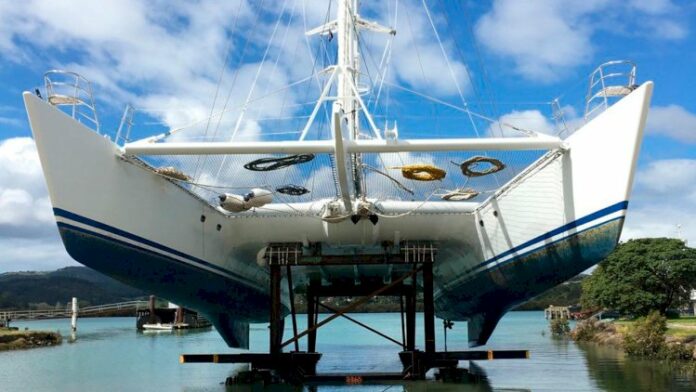
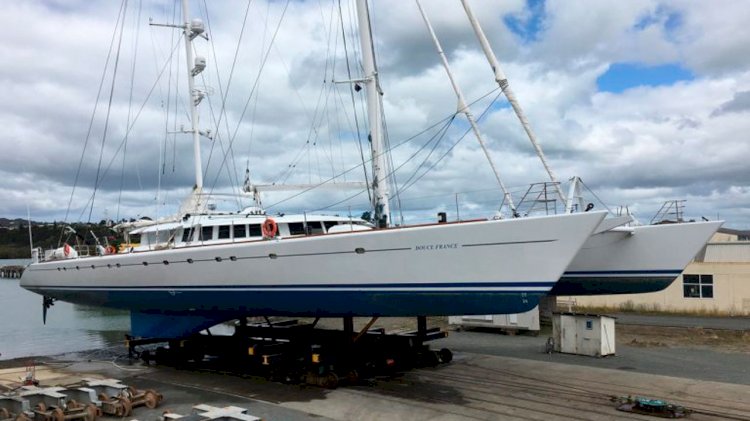
The 42M ‘Douce France’ is one of the worlds largest sailing catamarans and she has just hauled out for the first of two refit periods at Oceania Marine’s North Shipyard, Port Whangarei, New Zealand. It is not her first visit to the shipyard having been here on a number of occasions previously.

Accommodating a vessel of this specialist nature is challenging and Oceania Marine is one of the few shipyards in the Pacific region that can do so. The yachts has a massive 15.4M beam and in order to haul this vessel.

Oceania Marine utilised its specialist multihull knowledge to construct a custom cradle that supported her under the bridge-deck. She is now on the hardstand to complete her worklist.

‘Douce France’ had been successfully chartering in the Pacific for a number of years and offers high end luxury charter in such exotic locations as Palau and Tahiti. A guest’s experience is fully supported by an amazing array of activities amongst the worlds finest reefs and atolls.

Tropical St. Thomas Terminal implements Octopi to improve its productivity

0

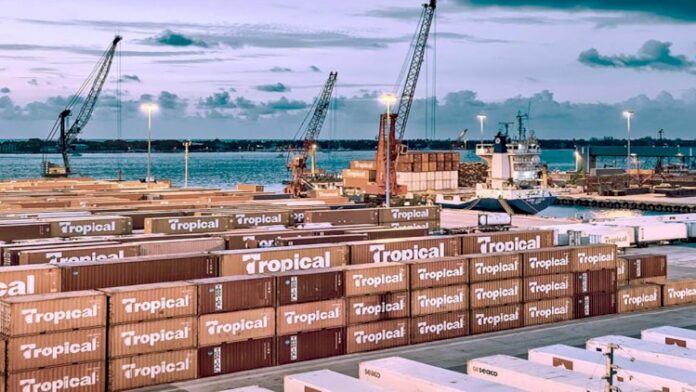
Octopi, part of Navis, and Cargotec Corporation, a provider of operational technologies and services that unlock greater performance and efficiency for the world’s leading organizations across the shipping supply chain, has announced a new subscription agreement for Octopi with Tropical St. Thomas Terminal operated by Tropical Shipping.

The terminal will implement Octopi to address a multitude of business needs that will improve productivity, accuracy, and efficiency at the terminal. Octopi will be the first TOS system implemented in St. Thomas.

Located in the Virgin Islands, Tropical St. Thomas operates at 95,000 TEU annual throughput and handles 1,500 short tons of general cargo per year. Due to its geographical location, Tropical St. Thomas enables direct access to ports in the US, Canada and the Virgin Islands. Currently, container movement and tracking within the terminal operations must be done manually. Tropical selected Octopi’s modern, cloud-based TOS to improve inventory accuracy and operational efficiency as well as to provide better visibility to stakeholders both inside and outside of the organization.

Mark Chapman, Vice President of Business Operations at Tropical Shipping, said:

“We are very excited to work with Octopi to improve efficiencies at the terminal. Octopi’s cloud-based offering allows us to focus on the business instead of IT.  We are very impressed with the full range of operating functionality and the overall ease of use.”

Martin Bardi, VP of Global Sales, Octopi by Navis, said:

“Octopi by Navis’ powerful, agile and affordable TOS allows us to provide real value to these historically underserved businesses while also expanding our customer reach to smaller terminals, whose size belies their importance to the conduct of global trade. We look forward to implementing Octopi in St. Thomas for Tropical Shipping to help them better serve their customers internationally and streamline operations for their employees.”
 

New maritime platforms for supply chain optimisation

0

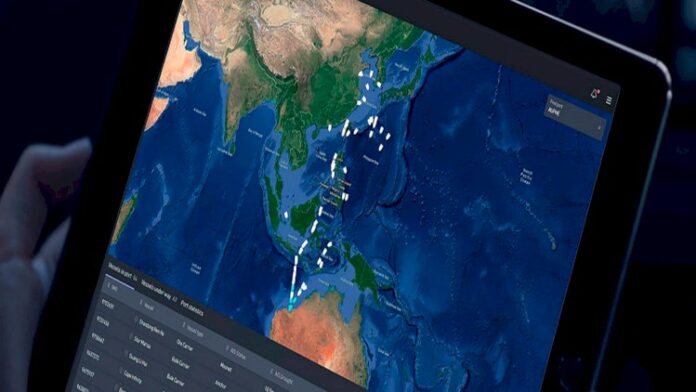
BHP’s Maritime and Supply Chain Excellence team and Klaveness Digital are working together to drive the development of new shipping and logistics platforms to improve the way the industry collaborates and shares scheduling and vessel information.

The concept will enable BHP and its partners to access the same shipping information in real-time, customers on the platform can also see the shipping schedule and calculate impact on their inventory and production. 

As a first proof of concept, BHP invited a global steel producer to trial the CargoValue solution developed by Klaveness Digital as a new way of working together. The proof of concept has provided the steel producer with actionable insight into their raw material flow, with real-time updates on unexpected deviations to the schedule, allowing them to better forecast inventory, manage safety buffers and plan production.

Rashpal Bhatti Vice President, Maritime and Supply Chain Excellence at BHP, said:

“By partnering with Klaveness Digital, we get to explore new ways of delivering value to our customers. The CargoValue solution developed by Klaveness Digital provides a new way to securely share cargo and vessel information with our customers around the globe, changing the way we interact with our clients.”

Aleksander Stensby, Managing Director at Klaveness Digital, said:

“We truly believe our partnership with BHP will improve the way industry stakeholders collaborate and share shipping information. Solutions such as CargoValue will enable real-time and contextual collaboration across stakeholders such as suppliers, agents, brokers and other modes of transportation.” 

NOAA awards big grants to advance new ecology projects

0

Projects will help improve efforts to protect marine resources, public health and coastal economies.

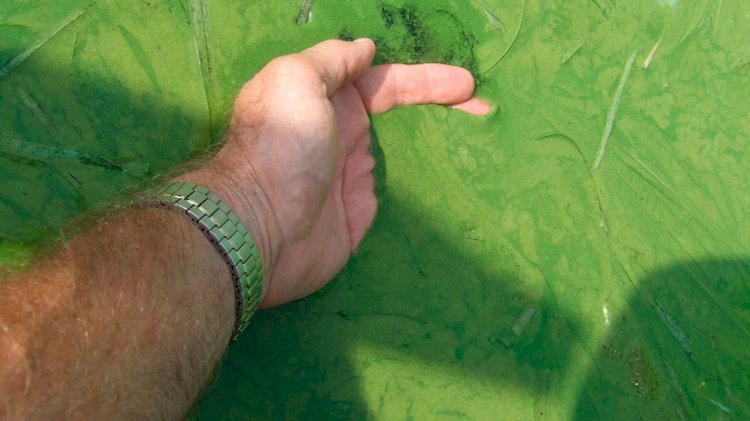
NOAA’s National Centers for Coastal Ocean Science (NCCOS) is allocating $10.2 million in FY 2019 to fund HAB research across the USA. Approximately $8.4 million of that will cover the first year of new 3- to 5-year projects, and $1.78 million will go to 3-year projects already in process. Funded under NOAA’s ECOHAB and MERHAB programs, new projects will begin in Alaska, California, Chesapeake Bay, Florida, the Great Lakes, New England and the Pacific Northwest.

Award recipients will conduct research to identify conditions that increase bloom toxicity; model toxin movement from the water into shellfish, fish and marine mammals; and improve toxin monitoring and forecasts. NCCOS research programs help states and regions around the nation mitigate the effects of HABs, which can include contaminated drinking water, fisheries closures and disruption to recreation and tourism. 

NCCOS director Steven Thur, PhD, said:

“Through NCCOS, NOAA is funding the latest scientific research to support environmental managers trying to cope with increasing and recurring toxic algae that continue to affect environmental and human health and coastal economies. Improved understanding of these coastal HAB threats will lead to better bloom observation and prediction, and help to mitigate effects along the U.S. coast.”

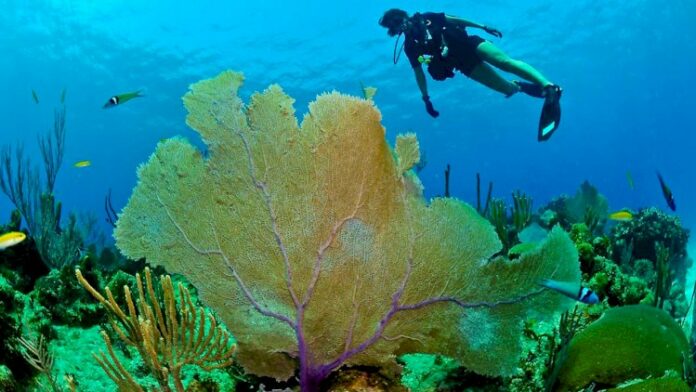
Also NOAA’s Coral Reef Conservation Program has awarded more than $9.3 million in grants to support coral conservation projects and scientific studies in seven U.S. states and territories, as well as international projects in the Caribbean, Mesoamerica, Micronesia and the South Pacific.

Grant and cooperative agreement recipients are also providing more than $5.4 million in matching support — a total of $14.7 million for these critical projects.

These projects and studies will help address the three primary threats to coral reefs: a changing global climate, land-based sources of pollution, and unsustainable fishing practices. The awards also fund activities to heal and restore damaged coral reefs.

Jennifer Koss, director of the NOAA Coral Reef Conservation Program, said:

“Healthy and diverse coral reefs support the nation’s blue economy through tourism and recreation, coastal flood and storm protection, and seafood production. We are delighted to continue funding research and activities that reduce local threats and advance conservation strategies so that we can sustain coral reef ecosystems for generations to come.”

Nearly half of the funds will support projects led by state and territorial resource management agencies, while other projects will be run by non-governmental organizations, community groups and academic partners. A limited number of international projects will also support work in Micronesia, southern Mexico and northern Central America, and the wider Caribbean region. The awards will build on long-term project partnerships with the National Fish and Wildlife Foundationoffsite link and The Nature Conservancyoffsite link. 

Among other projects, the studies focus on the loss of coral reef from disease, and how water quality and environmental change can affect reefs.

The NOAA RESTORE Science Program has awarded approximately $15.6 million in grants to four teams of researchers and resource managers from across 20 institutions including universities, federal and state agencies and non-governmental organizations to support work on living coastal and marine resources and their habitats in the Gulf of Mexico.

Steven Thur, director of NOAA’s National Centers for Coastal Ocean Science, said:

“These awards continue NOAA’s commitment to producing timely and high-quality science to support the management and sustainability of the Gulf of Mexico. Improving our understanding of long-term trends in the Gulf will help us make the decisions now and in the future necessary to ensure the Gulf remains a vibrant resource for the nation.”

The grants are in response to the RESTORE Act, which in July 2012 authorized the use of administrative and civil penalties resulting from the Deepwater Horizon oil spill to restore and protect the natural resources, ecosystems, fisheries, marine and wildlife habitats, beaches, coastal wetlands and economy of the Gulf Coast region.

Production from the giant field in the North Sea is started

0

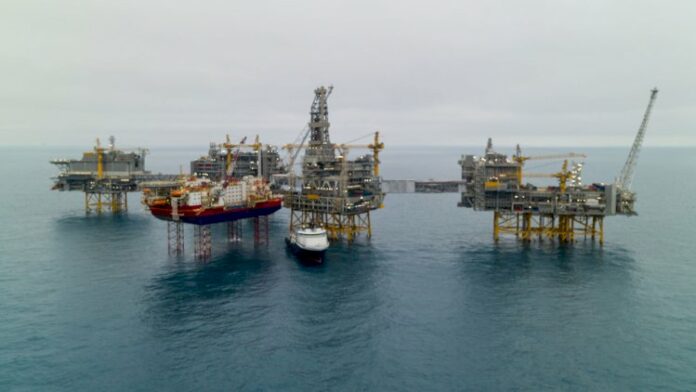
On 5 October Equinor and the Johan Sverdrup partnership consisting of Lundin Norway, Petoro, Aker BP and Total, started production from the giant field in the North Sea, more than two months ahead of and NOK 40 billion below the original estimates in the Plan for development and operation.

Eldar Sætre, president and CEO of Equinor, says 

“Johan Sverdrup coming on stream is a momentous occasion for Equinor, our partners and suppliers. At peak, this field will account for around one third of all oil production in Norway and deliver very valuable barrels with record low emissions. Johan Sverdrup is expected to generate income from production of more than NOK 1400 billion of which more than NOK 900 billion to the Norwegian state and society.”

Johan Sverdrup has expected recoverable reserves of 2.7 billion barrels of oil equivalent and the full field can produce up to 660,000 barrels of oil per day at peak. Powered with electricity from shore, the field has record-low CO2 emissions of well-below 1 kg per barrel. 

The break-even price for the full-field development is less than USD 20 per barrel. After reaching plateau for the first phase, anticipated during the summer of 2020, expected operating costs are below USD 2 per barrel. The operator also expects cash flow from operations of around USD 50 per barrel in 2020, based on a real oil price of USD 70 per barrel, partly as a result of the phasing of tax payments in the ramp-up phase. 

Anders Opedal, executive vice president for Technology, projects & drilling in Equinor, says:

“Starting production months ahead of schedule helps realize additional value from the field and is fitting for a project that over the development phase has redefined excellence in project execution.”

The Plan for development and operation (PDO) for Johan Sverdrup phase 1 set an ambition for production start-up in late December 2019. Since the PDO was approved in August 2015, investment costs for the first phase of the development have been reduced by NOK 40 billion to now NOK 83 billion (nominal NOK, fixed exchange rate). Opedal says:

“Close cooperation with our partners and suppliers has contributed to high quality in the execution phase, and has been a key part of the improvement story. And we’ve also made courageous decisions with new technology and digitalization that we’re benefiting from today. 

The qualification of new installations technology has reduced safety risk, saved more than two million offshore hours and shaved months of the development schedule. We have also invested in digital solutions and ways of working to boost oil recovery, optimize production and improve field operations, and these new ways of working have already saved at least one month in the execution stage.”

Sanctioning of Johan Sverdrup in 2015 led the way to the largest development on the NCS since the 1980s. The first phase of the development has taken above 70 million manhours, and more than 12.000 people worldwide worked every day during the main construction period 2016-2018.  Opedal says:

“Johan Sverdrup is a giant development, built across nearly 30 construction sites in Norway and globally, and the field centre assembled in the North Sea counts as one of the largest on the NCS. Sanctioned right at the beginning of the downturn in the oil and gas industry, it helped ensure activity for tens of thousands of people, especially in Norway, at a critical time for many.”

More than 70 percent of the contracts were awarded to suppliers in Norway, in strong international competition. The consultancy Agenda Kaupang has estimated that the Johan Sverdrup development can contribute more than 150,000 man-years in Norway during the construction phase between 2015-2025.

In the operations phase expected to last more than 50 years, Johan Sverdrup may also generate employment of more than 3,400 man-years on average every year.

Arne Sigve Nylund, executive vice president for Development & production Norway, says:

“The field will be operated from Equinor’s offices in Stavanger, whereas base and helicopter services will be delivered from Dusavika and Sola. The oil transported from the field will also sustain activity at the Mongstad terminal outside of Bergen, and the gas will be exported to Kårstø. The importance of this field for both the national and regional economies in Norway cannot be overstated.

In the same year that Norway celebrates 50 years since the Ekofisk discovery in 1969, which started the oil and gas adventure in Norway, the start-up of Johan Sverdrup lays the foundations for another 50 years of industrial activity and value-creation on the NCS.”

The Johan Sverdrup field is developed in two phases. Phase II of the development was approved by Norwegian authorities in May 2019 with production start-up expected in Q4 2022.

ShipServ to deliver full integration solution for AMOS Group

0

ShipServ has announced it is set to deliver a full supplier integration solution for AMOS Group Ltd, the SGX-listed global provider of diversified products services and solutions to the marine and offshore industries.

The new full integration solution will enable AMOS Group to increase efficiencies and the speed of processing multiple transactions, significantly reducing labour time as well as quickly responding to RFQs. This will help drive customer retention and the ability to win more business through faster turnaround times.

The development is an important part of AMOS Group’s digitalisation strategy, which includes investing in the implementation of a new ERP (Enterprise Resource Planning) system as it looks to strengthen its global customer network and deliver a campaign of facility modernisation and certification. This is designed to deliver efficiency improvements and enhance capabilities across its 11 international locations in Asia, the Middle East and Europe. The company also recently opened its newly upgraded Logistics and Fulfilment Centre in Gul Circle, Singapore.

Commenting on the agreement, Mr Dan Tan, Chief Executive Officer, AMOS Group said:

“The shipping and offshore markets are being transformed by the opportunities of digitalisation and using technology to drive efficiencies and improve the ability and performance in responding to customer demands and delivering more value. Our focus is on providing our customers with a modern, seamless and streamlined logistics and supply infrastructure; integrating the ShipServ trading platform into our ERP system is a critical component to achieving this and an important element within our digitalisation journey.”

Prior to the integration, AMOS Group was utilising ShipServ’s SmartSupplier solution, the advanced Outlook-style order management tool used to prioritise and manage transactions.  As AMOS Group has grown and expanded, the number of transactions that it processes daily has also risen exponentially.  By fully integrating with the ShipServ platform, AMOS Group can respond to RFQs and quote directly from its new ERP system, which enables it to better automate the fulfilment of orders with existing and prospective customers, as well as providing greater visibility and control over the entire process. As re-typing is eliminated with this solution, manual errors are also significantly reduced, and efficiencies gained through significant time savings. The increased speed in processing transactions and responding to customers and prospective buyers also increases competitive advantage, which enables AMOS Group to better connect with major clients, drive retention and win more business.

The integration will be phased, with the initial steps focusing on integrating its Shanghai and Hong Kong offices with the ShipServ platform, followed by the Korea office in phase two.

Sharon Gill, Senior VP Sales and General Manager Singapore, ShipServ said:

“When the number of transactions that a supplier processes reaches a critical mass, full integration with the ShipServ platform provides a significant return on investment.

They benefit from significant savings in labour time throughout the year driving operational, productivity and transactional efficiencies. It also provides them with total control and transparency over the entire RFQ and order transaction process with customers and prospects, automating outbound and inbound information, quotes and purchase orders. The development in AMOS Group adopting our most advanced supplier solution also demonstrates the strength of our relationship with the company, the value we provide and how e-procurement is seen as a fundamental element within the digitalisation of the maritime industry.”

Quinny Lei, VP, Group Information Technology, AMOS Group, commented:

“Integrating into the ShipServ platform creates economies of scale that makes sound commercial and operational sense for AMOS Group. We have experienced real growth over the past few years and have developed our IT infrastructure to support this, of which the implementation of our new ERP has been a critical step. As we continue to see a significant increase in the RFQs and transactions we need to handle, moving to a full integrated solution with ShipServ will deliver significant efficiencies in the transaction process and helps us to deliver quickly for our customers, and provide them with the high level of service they expect from AMOS Group.”

Orolia Maritime and SRH MARINE SAIT announce a new e-navigation security solution

0

Orolia Maritime announces it is working in close collaboration with SRH Marine to integrate Orolia Maritime’s M-SecureSync cyber security capabilities into its new automated digital services distribution platform.

“SecureNav+”, due to launch by end of 2019, is a new agnostic solution that links a vessel’s Very Small Aperture Terminal (VSAT) or Fleet Broadband (FBB), Electronic Chart Display and Information System (ECDIS) and Global Navigation Satellite System (GNSS) receiver, allowing ship owners and operators to use the device as a data bridge to review and update ECDIS data. With the inclusion of Orolia Maritime’s M-SecureSync capabilities, this combined solution will allow ships sailing paperless to analyse their GNSS source for jamming or spoofing interference, offering ship owners the combined e-navigational security of GNSS signal integrity and chart accuracy.

Chris Loizou, Vice President Maritime at Orolia, comments:

“We are thrilled to be working with SRH Marine. This innovative collaboration builds on Orolia Maritime’s strengths in resilient GNSS solutions, offering both vessel and shoreside management a unique e-navigational security solution during a period of increased concern over GNSS cyber safety.”

SRH Marine Group Chief Operations Officer, Panayiotis Giannoulis, echoes Mr. Loizou’s sentiments, saying:

“We’re pleased to be working with Orolia Maritime on this, building on our existing partnership. The SecureNav+ solution will bring more resilient navigation and ensure ship owners have access to the latest e-navigation information. The incorporation of M-SecureSync capabilities will give our customers the peace of mind that they are protected by a multi-layered suite of cyber security resilience for threats to critical GNSS signals.”
 

USA, Denmark, the Netherlands: Collaboration to strengthen cyber security

0

A high level of cyber security for ships and ports is necessary to sustain global trade.

On October 1-3, 2019, the United States, Denmark, and the Netherlands chaired a maritime cybersecurity event in the margins of the One Conference in The Hague, a three-day international conference focused on cybersecurity and the economic opportunities offered by cyberspace, aiming to facilitate the exchange of knowledge and ideas within the international cybersecurity community.

The United States, Denmark, and the Netherlands affirmed the vision they share of a global, open, interoperable, reliable, and secure Internet and stable cyberspace, and commitment to continued collaborative efforts in enhancing cybersecurity in the maritime sector.

Andreas Nordseth, Director of the Danish Maritime Authority, said:

“The increasing digitalisation poses significant new security challenges. Cyber threats know no bounds making it vital that we cooperate on maritime cyber security to ensure shipping both at sea and in port.”

The following statement was released by the Governments of the United States of America, Denmark, and the Netherlands:

"While digitization provides tremendous opportunities for economic and social growth, it also poses new security challenges. Maritime cybersecurity is a necessity to keep our people, ports, cargo, and ships safe and secure. Given the inherent connectivity of cyberspace and the interconnectivity of the international maritime transportation system, international cooperation is vital to keep our maritime sector digitally secure and promote economic opportunities.
The maritime cybersecurity event brought together like-minded nations to share knowledge and expertise to prevent and respond to threats from cyberspace that could bring societies to a standstill."

The maritime cybersecurity event follows the May 2019 U.S.-Dutch Cyber Collaboration initiative, launched in The Hague, as a platform to support closer cooperation on a range of transnational cyber issues including research partnerships, critical infrastructure protection, elections security, law enforcement investigations, responsible state behavior and other topics.

In 2020, the Danish Maritime Authority will host the second instalment of the maritime cybersecurity conference.

NYK delivered low emission methanol-fueled chemical tanker

0

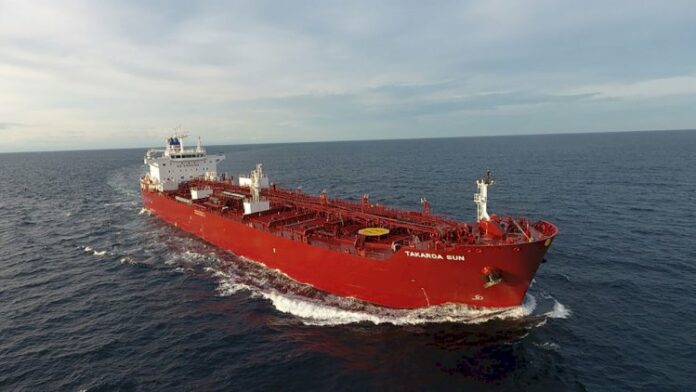
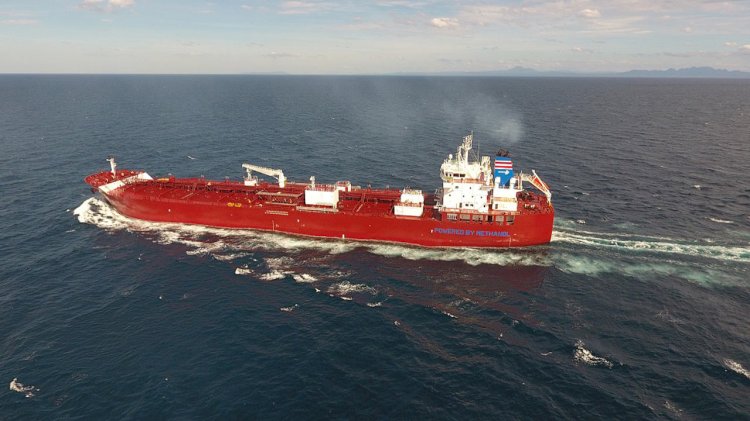
Nippon Yusen Kaisha (NYK Group) is proud to announce the delivery of Takaroa Sun, a methanol carrier equipped with two-stroke dual-fuel engine technology that enables the vessel to be powered by methanol. Built in South Korea at Hyundai MIPO Dockyard, the new ship was funded through NYK’s green financing initiative established to support environment-friendly projects.

Takaroa Sun was constructed with the MAN Energy Solutions second-generation B&W ME-LGIM two-stroke dual-fuel engine that runs on both methanol and conventional marine fuel. The vessel will be chartered to Waterfront Shipping Company Limited (WFS), a wholly-owned subsidiary of Methanex Corporation, the world’s largest producer and supplier of methanol, in a long-term time-charter agreement between WFS and NYK Bulkship (Asia) Pte. Ltd., an NYK Group company based in Singapore.

Takeshi Kishi, managing director of NYK Bulkship (Asia) Pte. Ltd., said:

“We are delighted to establish this relationship with WFS, which has expertise in methanol shipping, and we welcome our first methanol-fueled vessel into our fleet. Making use of the NYK Group’s attentive, safety-focused vessel management featuring advanced, new technology, we plan to fully meet the expectations of WFS. We will continue to transport cargo for customers around the world by corresponding to individual demands and strengthening our knowledge of new technologies.” 

As a marine fuel, methanol is safe, biodegradable, and clean-burning, offering compliance with the International Maritime Organization’s (IMO) 2020 regulations by reducing sulphur oxides (SOx) by approximately 99 percent. With the ability to be produced from renewable sources, methanol can also provide a pathway to meeting future carbon emission reduction targets. The vessel also has a processor that reduces nitrogen oxides (NOx) so that they meet the IMO’s stringent Tier III regulation.

Paul Hexter, President, Waterfront Shipping Ltd., says:

“We are very pleased with the performance of our existing methanol-fueled vessels that have proven the safety and reliability of the technology. With the delivery of Takaroa Sun, we are continuing to benefit from innovative technological advances that will optimize performance and efficiency. On an energy-equivalent basis, methanol is cost-competitive over the cycle and we see significant value creation opportunities from using a methanol flex-fuel engine.”

The NYK Group will continue to secure business with stable freight rates through long-term contracts. The company is committed to realizing a sustainable society that will make use of technology that reduces negative impacts on the environment.
 

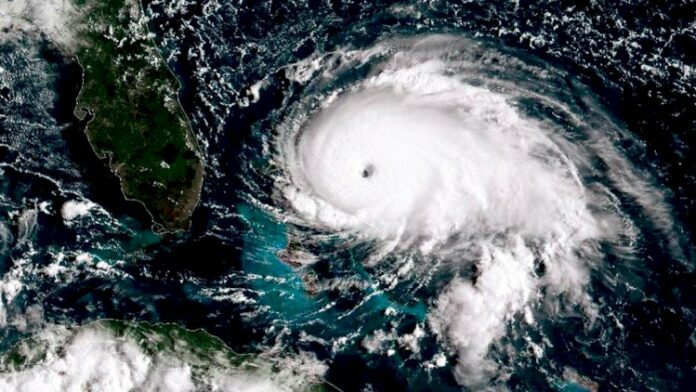
After Hurricane Dorian: JAXPORT and MSC support The Bahamas

0

Jacksonville Port Authority (JAXPORT) tenant SSA Atlantic recently shipped a container filled with relief aid to the victims of Hurricane Dorian in The Bahamas. The container was donated by Mediterranean Shipping Company (MSC) and shipped to Freeport from JAXPORT aboard an MSC vessel.

The donated items, which include first aid kits, emergency blankets, food, toiletries, clothes, diapers and more, were collected, packed and shipped during a donation drive organized by SSA Atlantic, with support from other Blount Island Marine Terminal tenants, Jacksonville labor unions and maritime service providers.

SSA Atlantic Vice President Florida Operations Frank McBride said:

“It’s going to be a marathon, not a sprint—and there’s much more work to be done. We are thankful to MSC and our maritime partners here in Jacksonville for taking action and helping us get these much-needed supplies to the island as quickly as possible.”

Other participants in the effort included TraPac Jacksonville, ILA Local 1408, ILA Local 1593, C&K Trucking, AMPORTS, Marine Repair Service, BJ’s Wholesale and the Jacksonville Maritime Association.

SSA and MSC will be shipping two more containers to the island over the next couple of weeks—one of those will include 10 pallets of rice donated by Mars Food US LLC and the second to include donations collected from Fernandina Beach High School and others in the community. 

The American Red Cross and JAXPORT have also established a website for cash donations to help victims of Hurricane Dorian.