-1.2 C
New York
Home Blog Page 953

Global project launched to tackle plastic litter from ships and fisheries

0

The GloLitter Partnerships Project agreement was signed by IMO Secretary-General Kitack Lim and His Excellency Wegger Chr. Strømmen, Norway's Ambassador to the United Kingdom of Great Britain and Northern Ireland, on Thursday 5 December, 2019. The project aims to prevent and reduce marine plastic litter from shipping and fisheries.

A new global project to prevent and reduce marine plastic litter from shipping and fisheries has been launched by the International Maritime Organization (IMO) and the Food and Agriculture Organization of the United Nations (FAO). Initial funding for the project is from the Government of Norway.

Plastic litter in the oceans is recognised as a major environmental problem. The GloLitter Partnerships Project aims to help shipping and fisheries move to a low-plastics future. GloLitter will assist developing countries identify opportunities to prevent and reduce marine litter, including plastic litter, from within the maritime transport and fisheries sectors, and to decrease the use of plastics in these industries, including identifying opportunities to re-use and recycle plastics.

The project will consider the availability and adequacy of port reception facilities; look at enhancing awareness of the marine plastics issue within the shipping and fisheries sectors, including seafarers and fishers; and encourage fishing gear to be marked so it can be traced back to its owner if discarded.

These and other actions to reduce plastic litter have already been identified in IMO's Action Plan to address marine plastic litter from ships, adopted in 2018.

The GloLitter project will develop guidance documents, training material and toolkits to help enforce existing regulations, including IMO's International Convention for the Prevention of Pollution from Ships (MARPOL) Annex V. Since 1988, this has prohibited the discharge of plastics, including discarded fishing gear, into the sea from ships.

The project will also promote compliance with relevant FAO instruments (including the Voluntary Guidelines on the Marking of Fishing Gear) and will target waste management in ports. It will, additionally, emphasise implementation and enforcement of IMO's London Convention/London Protocol regime on dumping of wastes at sea, which requires waste (such as from dredging) to be assessed before permits to dump are granted. 

The GloLitter project will include private sector participation through a global industry alliance and is seeking partners from major maritime and fisheries companies. 

Mr. Kitack Lim, Secretary-General, IMO, said:

"Plastic litter in the oceans is harming fish, marine mammals and seabirds and threatening the entire marine ecosystem. IMO has been at the forefront of addressing this issue from the perspective of shipping and dumping at sea and this global project will further strengthen efforts within the fishing and maritime transport sectors to pilot, demonstrate and test best practices to deal with marine plastic litter. Our ambition is to move the maritime transport and fisheries sectors towards a future with no plastic waste entering the sea, and to share our successes with other sectors that could be encouraged to strengthen their efforts too."

Norway's Minister of International Development Dag-Inge Ulstein said:

'In the fight against marine litter, it is vital to strengthen the capacity to prevent pollution from shipping and fisheries in developing countries. Norway is therefore allocating NOK 40 million to a new project under IMO, which has a great deal of expertise in the field."

Dr. Matthew Camilleri, Head of FAO's Fishing Operations and Technology Branch, said the partnership between FAO and IMO, further strengthened by the support of the Government of Norway, will enhance technical assistance to developing countries and increase their capacity to develop strategies for reducing marine litter from fishing operations, and to implement the Voluntary Guidelines on the Marking of Fishing Gear.

Dr. Camilleri said:

"The fisheries sector has an important role in reducing pollution of the marine environment by plastic litter, particularly from abandoned, lost or otherwise discarded fishing gear, and should seek to develop fishing port facilities and schemes for sustainable waste processing, recycling and re-use of materials which contribute to marine litter."

Ten countries, from five high priority regions (Asia, Africa, Caribbean, Latin America and Pacific) will be selected to spearhead the project. At country level, GloLitter will expand government and port management capacities and instigate legal, policy and institutional reforms. Regional cooperation will also be enhanced. 

The project is intended to be a multi-donor programme. The initial funding of NOK 40 million (approximately US$4.5 million) from the Government of Norway provides for a 3.5-year project, executed by IMO in partnership with FAO.

Norway's Minister of Climate and Environment Ola Elvestuen said:

"Shipping and fisheries are a major source of marine litter, and Norway has considerable knowledge in this area. Through the GloLitter project, we will contribute to strengthen international efforts to fight plastic litter from shipping and fisheries. The Government is also working to achieve a comprehensive global agreement to combat marine plastic litter from all sources." 

Collaboration with other international, regional and national partners through additional in-kind co-financing is envisaged, from the private sector as well as beneficiary countries. The planned Global Industry Alliance (GIA) will link with the UN Global Compact, which has adopted Sustainable Ocean Principles for responsible business practices. 

The GloLitter Partnerships Project follows the successful implementation of a similar model of cooperation and collaboration, in the GloBallast, GloMEEP and GloFouling projects. This has been referred to as the "Glo-X" model – which combines national, regional and global efforts, combined with public-private partnerships to push research and development and capacity building.

The GloLitter Partnerships project will directly help to achieve one of the of the specific targets in the global Sustainable Development Goal (SDG) 14 – to "prevent and significantly reduce marine pollution of all kinds, in particular from land-based activities, including marine debris and nutrient pollution, by 2025".
 

ABS, MAN and SDARI join forces to develop ammonia-fueled feeder vessel

0

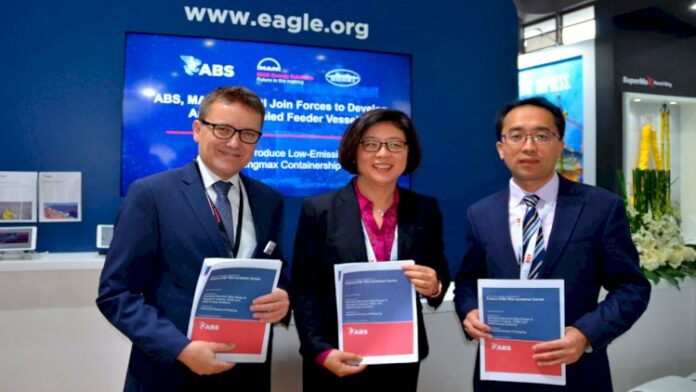
ABS will advise on compliance and safety considerations as MAN Energy Solutions (MAN) and the Shanghai Merchant Ship Design & Research Institute (SDARI) develop designs for a low-emission feeder container vessel.

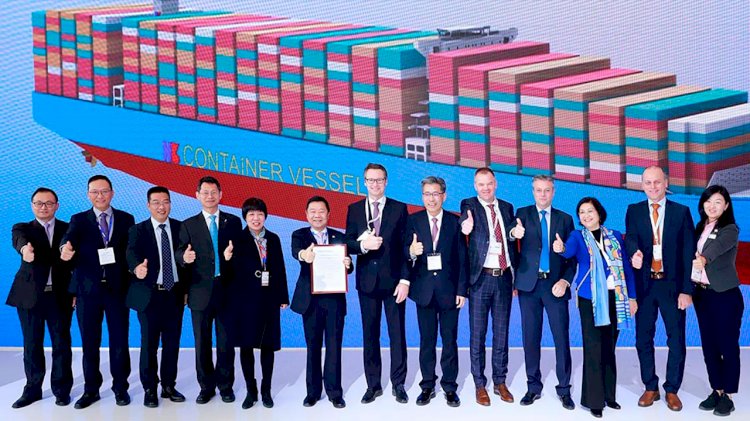
Signed in a ceremony held at MARINTEC China, the joint development project aims to produce designs for an ammonia-fueled Chittagongmax container carrier of 2700 TEU capacity. 

Dr. Xiaozhi (Christina) Wang, ABS Vice President, Global Marine, said:

“Ammonia is an energy source with significant potential to help the industry meet IMO 2030 and 2050 emission targets but will require stringent new safety standards to be developed in order to support its adoption. This innovative project is typical of how ABS is working with leading partners across the world to support the development of next generation fuel solutions for shipping.”

SDARI will develop the ship design and engineering, which will utilize MAN’s dual fuel technology and ABS will assess safety-related issues and contribute to the development of rules and standards in relation to ammonia as a fuel.

Conceptual design development is the initial phase of the JDP, with the second phase moving to engagement with owners to develop designs tailored to their specific operational requirements.

Mr. Zhiyong Zhou, SDARI Vice President, said:

“Building upon SDARI’s experience in feeder container vessels, we are actively seeking to develop next generation designs that incorporate strategies to meet IMO 2030 and 2050 targets.”

Bjarne Foldager, Senior Vice President, Head of Two-Stroke Business at MAN Energy Solutions, said:

“The development of ships with low greenhouse-gas emissions fits well with the strategy of MAN Energy Solutions’ two-stroke portfolio, which has offered engines that can burn low- or zero-carbon fuels for many years. As such, low-speed marine engines are already the most efficient propulsion system for trans-oceanic shipping, making them the de-facto, standard powertrain for commercial vessels. Ammonia can be seen as a potential future energy-carrier of renewable primary-energy sources such as wind, hydro or solar.”

Ammonia, when generated by renewable energy sources, has no carbon footprint and emits almost no CO2, SOx or particulate matter when burned in engines.

MSC becomes first major shipping line to use 30% biofuel blends

0

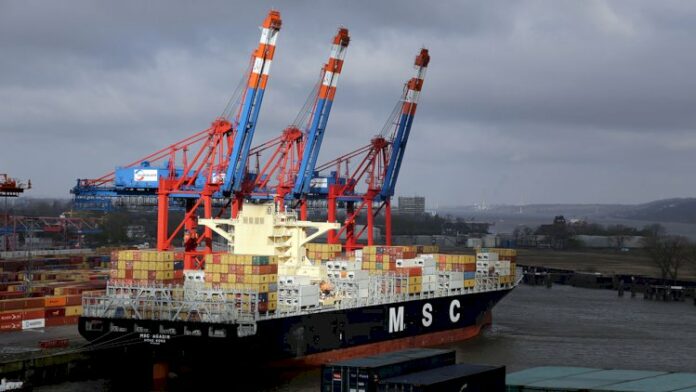
MSC Mediterranean Shipping Company (MSC) has announce that the company is now starting to use biofuel in its vessels calling in Rotterdam, the Netherlands.

Following successful trials with biofuel blends earlier this year, MSC has decided to continue bunkering responsibly sourced biofuel blends on a routine basis.

The trials were completed with a minimal 10% blend fuel and following further trials the company is now using much higher 30% blends.

Bud Darr, Executive Vice President, Maritime Policy & Government Affairs, MSC Group, said:

“We are pleased to see these trials completed successfully and look forward to now using biofuel on our vessels as a routine matter. When using such blended fuel, we can expect an estimated 15-20% reduction in absolute CO2 emissions. The potential CO2 reduction in the bio component of these fuels could reach 80-90%, which we will monitor and confirm over time.”

Responsibly sourced biofuels could provide an alternative solution for the shipping sector to meet the 2030 IMO level of ambition for CO2 emissions intensity reduction, as well as to make significant progress toward the 2050 levels of ambition. Using biofuel on container ships could significantly help reduce emissions and improve air quality.

MSC’s decision to use biofuel is complementary to the company’s broader strategic approach to sustainability.  The company remains committed to implementing concrete plans to modernise its green and efficient fleet via the largest container shipping investment program in the industry.

DFDS inaugurated its new and largest ro-ro ship

0

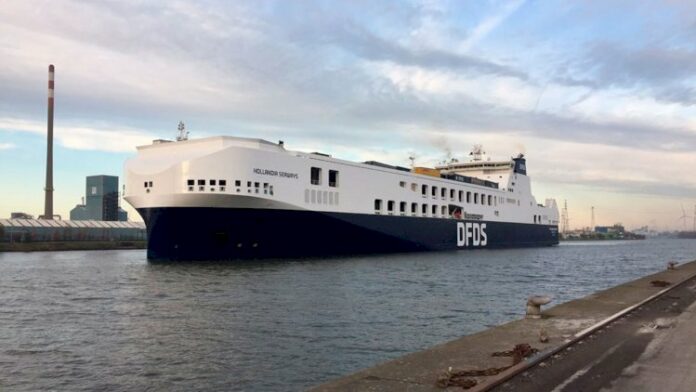
DFDS is now also using the new ro-ro ship 'Hollandia Seaways' on the line between Ghent and Gothenburg in Sweden. On Thursday 5 December, DFDS's largest ship was officially inaugurated at the Mercatordok Multimodal Terminal in Ghent, North Sea Port.

The naming ceremony for the Hollandia Seaways cargo ferry was held in Gothenburg on Friday. The ship can carry 450 trailers, representing a cargo capacity of 6,700 line metres. It has a length of 237.4 metres. With an 'extra floor' for trailers, this new ship will immediately catch the eye when in the lock in Terneuzen or on the Ghent-Terneuzen Canal. The ferry is not only larger than the three DFDS ships which currently sail between Ghent and Gothenburg six times a week, it will be by far the largest ship in the entire DFDS fleet. This larger vessel will take the place of one of the three existing ships on the route. As a result, capacity will increase by some 600 trailers per week.

The Hollandia Seaways features a unique stern ramp system: it has three independent stern ramps which allow trailers to be loaded and unloaded at the same time, significantly shortening the time in port. So even though this ship is much larger, the loading and unloading time remains eight hours but now for 450 trailers instead of 290. The mooring infrastructure and capacity of the gates at the terminal have been adapted for this purpose.

Due to the vessel's large cargo capacity, energy consumption per transported trailer will decrease significantly. The ferry is also equipped with a system that 'scrubs' the exhaust gases in order to reduce sulphur oxide emissions. In addition, the ship can be connected to shore power in the port.

Danish shipping company DFDS is preparing for future growth by having six mega freight ferries (roll-on-roll-off) built at the Jinling Shipyard in China. The first two ships were delivered during the course of 2019 and have been taken into service between Turkey and the EU to meet the growing demand for shipping capacity from logistics companies. The cargo ferry Hollandia Seaways is the third ship in this series and is being used on the North Sea.

RAL and Hidrovias do Brasil to develop pioneering technology in inland navigation

0

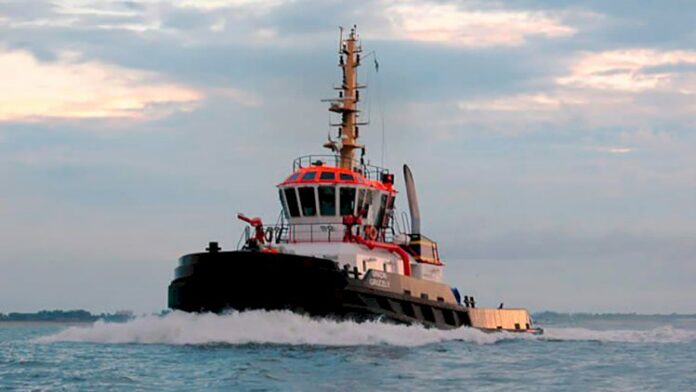
The project, focused on the Amazon Basin, forecasts the development of LNG river convoys and the intention on deployment of the first fully electric pushboat in the world.

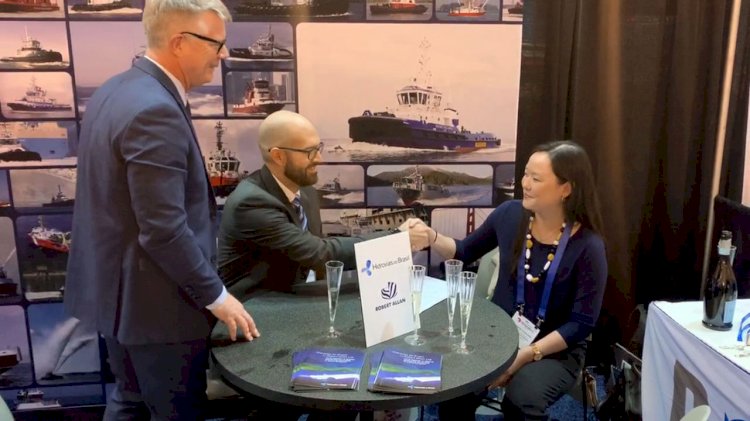
Hidrovias do Brasil and Robert Allan Ltd. announce an exclusive partnership for the development of a two-stage project, pioneer in South America’s inland navigation.

The first phase of the project involves the development of river convoys for the transportation of liquefied natural gas (LNG) in the Amazon Basin, consisting of natural gas powered pushboats and cryogenic barges, which maintain liquids at temperatures below minus 160 degrees Celsius. The goal is to meet regional demand, which encompasses the domestic market, local thermoelectric plants and industrial complexes with combined demand potential of over 5 million cubic meters of natural gas per day.

Currently, the most widely used fuels for waterway transportation are heavy fuel oil and marine diesel oil. The use of natural gas offers numerous benefits, such as cost savings (LNG price expected to be about 45% of Fuel Oil’s for the same power delivered) and also in the emission of polluting gases (25% less relative to Fuel Oil), so the Amazon region will benefit from LNG access through a massive transportation made with alternative energy, with lower environmental impact and cost reduction.

The second phase includes the development of electric pushboats capable of maneuvering barges with approximately 2000 tons of cargo. Innovation, in addition to preventing the spread of pollutants in more environmentally sensitive areas, should reduce fuel and maintenance operating costs by up to 20%. According to a study to analyze the viability of the Project, developed by the companies, the new pushboat can reach next to zero emission condition when powered only by batteries.

The use of LNG and batteries will contribute to the future of waterway logistics, as well as promoting a more sustainable, cost-effective and more productive solution for the operation. Both the electric pushboat and the LNG convoy are expected to be operational by 2021. The project also comprises an LNG Terminal owned by Hidrovias do Brasil in Barcarena, in advanced stage to receive Installation License from State Environmental Secretary (IL) – Preliminary License was issued in July 2019.  This terminal has construction time estimated in 18 months after IL issuance.

Robert Allan Ltd. is Hidrovias do Brasil’s primary naval architecture and technical consulting partner, since the latter’s founding for the development of pushboats and barges. Together these companies have been pioneers in the use of pushboats equipped with diesel electric technology and azimuth drives for inland navigation, which promote more safety, economy and agility to river navigation.

APM Terminals Gothenburg to offer fully climate-neutral cargo handling

0

A year ago, APM Terminals Gothenburg introduced the Gothenburg Gateway to accelerate the development of Sweden’s goods transports, having identified the need for Sweden to keep pace as global goods transports grow in scale and become more efficient.

APM Terminals Gothenburg is now taking the next steps towards becoming a more efficient gateway by introducing Green Gothenburg Gateway on December 6th at a launch event in front of key stakeholders. 

Henrik Kristensen, Managing Director of APM Terminals Gothenburg, says:

“With the Green Gothenburg Gateway concept, the terminal will continue to move Sweden closer to world markets by delivering fast, efficient, and reliable cargo handling.”

Work has already commenced to make the terminals’ container handling fossil free, and transport of all customer goods through the terminal will already be fossil free by next year. APM Terminals Gothenburg will also be able to offer their customers fully climate-neutral cargo handling through the terminal. 

Gothenburg’s container terminal is used by Sweden’s largest exporting and importing firms. A clear signal from the Swedish business sector to APM Terminals Gothenburg is that climate impact needs to be reduced, but an equally clear signal is that this mustn’t result in higher costs and decreased competitiveness. Therefore, the conversion will be done at no cost to customers and will not affect the speed or reliability of cargo handling.

APM Terminals Gothenburg is doing this not only to meet customer demand, but also as their major contribution to Sweden’s ambitious climate target for the transport sector. The Swedish Parliament has decided that by 2030, greenhouse gas emissions from the country’s domestic transports will be 70 per cent lower than 2010 levels.

Since taking over operation of the container terminal, APM Terminals has made investments and changes that have reduced the terminal’s climate footprint. Carbon dioxide emissions will be approximately 90 per cent lower than they were ten years ago, thanks to measures already implemented and the conversion to renewable fuels. Accordingly, by 2020 the Green Gothenburg Gateway will exceed, by good measure, the local Parliament’s 70 per cent reduction target.

Henrik Kristensen, Managing Director of APM Terminals Gothenburg, mentions:

“APM Terminals Gothenburg is proud to strengthen the terminals’ contribution to the Swedish business sector’s competitiveness and climate work. Together, we will achieve Sweden’s climate target.” 
 

Intellian world’s first 1.5-meter Global Xpress terminal

0

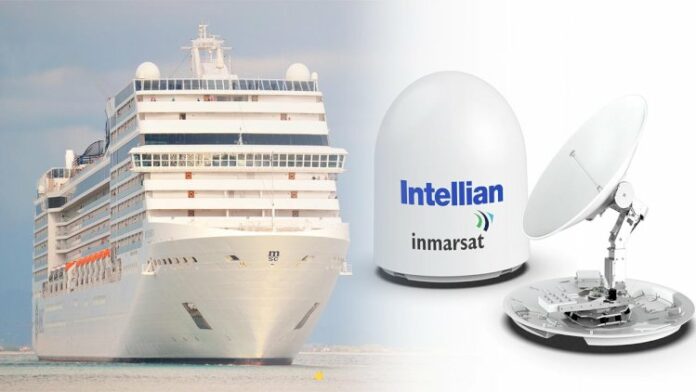
Intellian, the global leader of mobile satellite communication antenna systems, unveils the world’s first 1.5 m Global Xpress terminal, GX150NX.

As the largest terminal, which will be available for the Inmarsat Fleet Xpress service following type approval and successful sea trials in 2020, the GX150NX will unlock the full power of the Global Xpress network for users with high bandwidth demands seeking the most resilient platform for digital and cloud-based operations.

The Intellian GX150NX will offer high-speed data and leading performance throughout the Global Xpress Ka-band footprint, strengthened further with exceptionally efficient RF design that delivers unrivalled link performance on the Fleet Xpress service.

In line with the future-proof ethos of Intellian’s entire NX Series antennas, the GX150NX features an optimized reflector and radome and is ready for operation on forthcoming 2.5 GHz Wideband Ka networks as well as GX5 satellites. Cruise and passenger ships, research and larger offshore vessels and structures will also experience more performance with a 10 W BUC.

Based on Intellian’s new NX technology platform, the GX150NX uses a single coaxial cable, which combines Tx, Rx, and DC power, to simplify installation. It introduces a new “All-in-One” GX Below Deck Terminal (BDT) which integrates an antenna control unit (ACU), a modem, a power supply, a 4-port switch, and a mediator in a single unit to further reduce the time and cost of installation in Intellian’s Fleet Xpress Rack.

The integrated mediator is especially relevant for offshore support vessels, as it streamlines and reduces the cost of dual antenna installations often needed to avoid satellite blocking when working close to other vessels or infrastructure.  

The GX150NX also includes the new AptusNX antenna management and control platform. Common to all NX Series antennas, AptusNX includes an installation wizard with a step-by-step commissioning guide for easier setup and enhanced diagnostic capabilities, including alerts for operators when predictive maintenance is required.

Eric Sung, CEO of Intellian, added:

“The GX150NX will be our flagship antenna for the Global Xpress network, and will be the largest available in the world today. This makes it an ideal solution for users in the offshore energy sector or passenger market; where reliable, high quality connectivity is in demand as a way to achieve sustainability in business, as well as for the environment.”

The terminal will enter the Inmarsat Type approval process in the next few weeks with forthcoming sea trials in planning and with a commercial entry date scheduled for early 2020.

Hudong-Zhonghua developed gas-fueled 25000 TEU containership design

0

At the Marintec China trade fair in Shanghai, DNV GL has awarded an Approval in Principle (AiP) certificate to Hudong-Zhonghua for its new gas-fueled 25000TEU Ultra Large Container vessel (ULCS) design at the CSSC booth. The AiP is for a design that would be the largest containership in the world.

Knut Ørbeck-Nilssen, CEO DNV GL – Maritime, presented the certificate to Chen Jun, President of Hudong-Zhonghua, at the CSSC booth in Shanghai. The ceremony was witnessed by Chen Jianliang, Chairman of Hudong-Zhonghua, and Norbert Kray, Regional Manager of DNV GL – Maritime for Greater China.

Norbert Kray said:

“We are very proud to cooperate with Hudong-Zhonghua on this project. Hudong-Zhonghua has been a leading player in pushing the ship design envelop forward, especially for large vessels. In addition, the use of LNG is a sign of the continuing momentum for the fuel, as shipping transitions to a lower emission, lower carbon future. We look forward to supporting Hudong-Zhonghua on this project and its successful realization with ground breaking new vessels.”

DNV GL and Hudong-Zhonghua have cooperated on many innovative projects, including on the Hapag Lloyd vessel “Sajir”, the world’s first LNG conversion of a large container ship. A recent strategic cooperation focussed on driving new developments in shipbuilding in the gas carrier segment. In addition, in 2015, Hudong-Zhonghua developed a B type tank design and mock-up and obtained a GASA certification from DNV GL. DNV GL is also providing support on the application of the Type B tank in new containership designs.

ICTSI initiates the second phase expansion of its Matadi Gateway Terminal

0

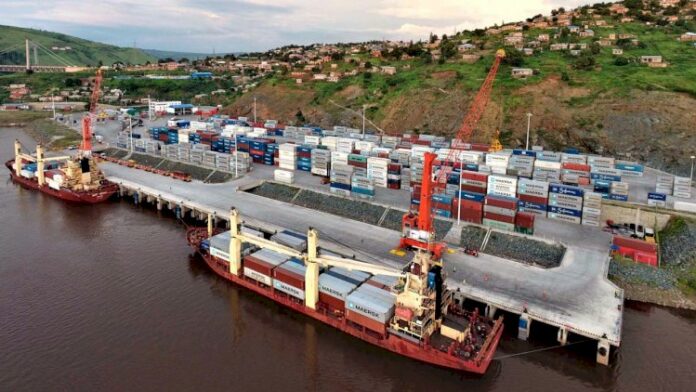
International Container Terminal Services, Inc. (ICTSI) has, together with its local partners, initiated the second phase expansion of its Matadi Gateway Terminal (MGT), located 92 miles upstream on the left bank of the Congo River, Democratic Republic of the Congo (DRC).

The Phase 2 expansion will more than double MGT’s existing annual throughput capacity to 400,000TEU/yr and represents an important component of comprehensive plans to consolidate and expand Matadi’s position as the most cost competitive and efficient port gateway, serving the fast-growing DRC capital city of Kinshasa and surrounding hinterland.

Matadi has the natural advantage of being the closest port to Kinshasa and as such offers the lowest inland transport cost that greatly benefits cargo owners. The introduction of new rolling equipment onto the rail system between Matadi and Kinshasa by Société Congolaise des Transports et des Ports (SCTP), an MGT shareholder and operator of the public port and rail system, will further strengthen this competitive position. So too will the realization of plans to implement a Public Private Partnership (PPP) scheme to achieve the dredging of the Congo River initially to a depth of 10 metres and subsequently to 12.5 metres. Implementation of this project will commence in 2020 and will promote lower marine freight rates further enhancing Matadi’s natural competitiveness.

Hans Ole Madsen, Senior Vice President, Europe, Middle East and Africa, ICTSI, says:

“The expansion of MGT is aligned with actual and projected container growth rates for the DRC. and corresponds with cargo owner and shipping line requirements for the medium term. The market is seeing positive growth albeit off a relatively low base in terms of total demand.  Studies suggest that Congo will achieve emerging market country status within the next 10-years and as such we are very confident that this nearly USD100 million expansion plan anticipates the DRC’s requirements over this period and will deliver unrivaled efficiencies.”
 

Fugro performs first deepwater AUV site survey for Brunei Shell Petroleum

0

Ceri Powell, BSP’s Managing Director, delivered a congratulatory note acknowledging the quality of Fugro’s work and HSSE leadership shown throughout the campaign.

BSP’s Project Lead Bilman Pardomuan Hutabarat commented:

“This campaign was the first deepwater survey project for Shell in Brunei and its success will lead to many more deepwater programmes.”

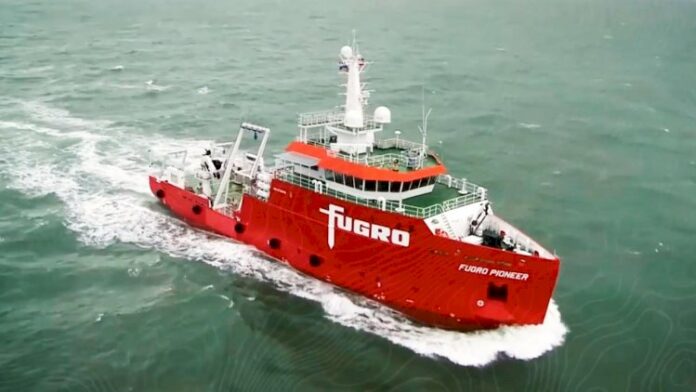
The survey was performed in August in water depths of 600 m using the Fugro Equator, a dedicated geophysical survey vessel, and the Fugro ES-V AUV, and completed with zero HSSE incidents. The survey results will be critical for planning a safe drilling programme, and will provide key inputs for engineering and design studies for pipeline routing and subsea structures in future deepwater field developments.

Following the successful site survey, BSP subsequently awarded Fugro the associated geotechnical site investigation and geoconsultancy contract. The project included a review of the geophysical data and desktop study to assist BSP in defining their geotechnical scope of work. Fugro Voyager, a dedicated deepwater geotechnical drilling vessel, completed the fieldwork in October 2019, also with zero HSSE incidents.

Jerry Paisley, Business Line Director, Asia Pacific Region, remarked:

“We are pleased to provide our deepwater site characterisation capability to another deepwater field development in the APAC region. BSP has been our client for more than 40 years and part of that success is owed to our unique ‘Triple A’ approach, where we acquire, analyse and advise on Geo-data across the full project life cycle.”