0.1 C
New York
Home Blog Page 952

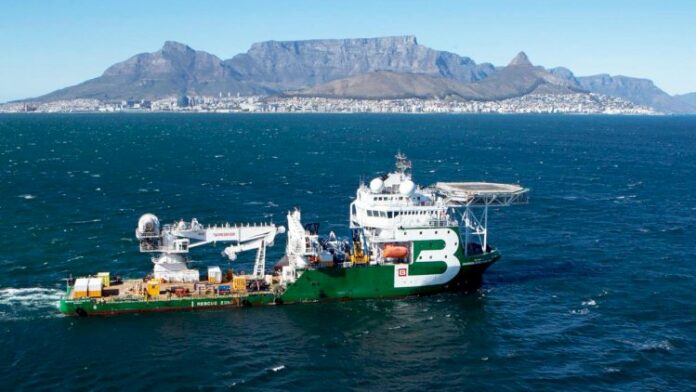
Marseilles Commercial Court reviews BOURBON Corporation takeover offers

0

The Marseilles Commercial Court examined today BOURBON Corporation takeover offers.

The offer of Société Phocéenne de Participation (SPP), a company owned by a group of French banks* representing 75% of the group's debt, concerns 100% of the assets and activities of BOURBON Corporation and would lead to the conversion into capital of approximately €1.4 billion of debt currently borne by the group and €300 million of debt in the form of repayable bonds. It also includes €150 million in bank financing, of which €30 million can be released as soon as the transfer of ownership is completed to meet immediate liquidity needs. The business plan is based on the implementation of the strategic action plan #BOURBONINMOTION.

If this offer were accepted, BOURBON Corporation would be liquidated, leading to a total loss notably for the shareholders and bondholders. Société Phocéenne de Participation informed the Court that if its plan were adopted and it then became the shareholder of 100% of BOURBON Maritime’s capital, a company in reorganization proceedings, holding of all BOURBON's activities, it would present a continuation plan for BOURBON Maritime for which 75% of the creditors have already given their consent.

In terms of governance, the SPP’s proposition would be to provide the company with a Supervisory Board composed of 8 to 10 members representing the shareholder and industry experts, as well as a Management Board composed of Gaël Bodénès, Chairman, and Thierry Hochoa.
 
The offer submitted on behalf of JS & Co by Jacques de Chateauvieux could not be examined. The Chinese company ICBC Financial Leasing, supporting the SPP, refused to discuss a possible agreement with JS & Co, an agreement that was a condition precedent to its offer.
 
The representatives of the other two offers, Peschaud and Tidewater, did not appear at the hearing. The Court is due to rule on December 23, 2019.

Jacques de Chateauvieux, Chairman and CEO, said:

“The court's decision, if it were to favor the SPP's offer, would lead to the liquidation of the listed company BOURBON Corporation and a total loss for shareholders and bondholders. It would make BOURBON Maritime's new shareholders responsible for the recovery of a French company, which is still the world leader in offshore oil and gas marine services, its future development and the preservation of its decision-making centers in France.”

* BNP Paribas, Caisse Régionale de Crédit Agricole Mutuel Alpes Provence, Caisse Régionale de Crédit Agricole Mutuel de Paris et d’Ile de France, Crédit Mutuel Equity SCR (anciennement dénommé CM-CIC Investissement SCR), Crédit Lyonnais, Natixis and Société Générale.

** Bonds redeemable in cash and shares issued by SPP
 

Kongsberg and NSSR join forces to develop new SAR solutions

0

Collaboration aims to improve access to sonar equipment for maritime emergencies faster and easier

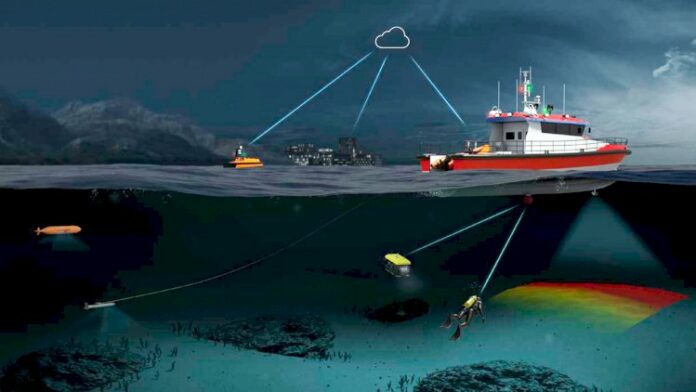
Kongsberg Maritime has signed an agreement with the Norwegian Society for Sea Rescue to develop new and innovative maritime Search and Rescue (SAR) technologies. The duo’s collaboration will cover five concept development areas for SAR: maritime operations, rescue operations, search on the surface of the sea, underwater search and digital solutions.

Through the agreement, Kongsberg Maritime will provide the Norwegian Society for Sea Rescue with access to its established hydroacoustic systems for in depth testing and development on new approaches to SAR. The systems include Kongsberg Maritime’s innovative PulSAR sonar, which can be towed behind a rescue boat to scan large areas of sea in a short time, transmitting images of the seabed and helping divers to navigate directly to targets of interest. The Society will also test the SAR application of Kongsberg Maritime solutions for monitoring diving operations.

Rikke Lind, Secretary General of the Norwegian Society for Sea Rescue, says:

“We want to ensure that people who are missing at sea and presumed lost are found more quickly. For the next of kin, it is important that presumed victims are found as quickly as possible. Living in uncertainty is an additional strain. Sonar search must be much more accessible; we want to have a specialised team who can travel out with the sonar when needed.”

Bjørn Jalving, Senior Vice President, Subsea at Kongsberg Maritime, explains:

“With this cooperation, Kongsberg Maritime and the Norwegian Society for Sea Rescue will test modern technologies to improve search and rescue and make it more effective. We are proud to be able to work together with the Society and contribute to its incredibly important work.”

ABS grants AIP to Deltamarin and GTT for dual-fuel bulk carrier design

0

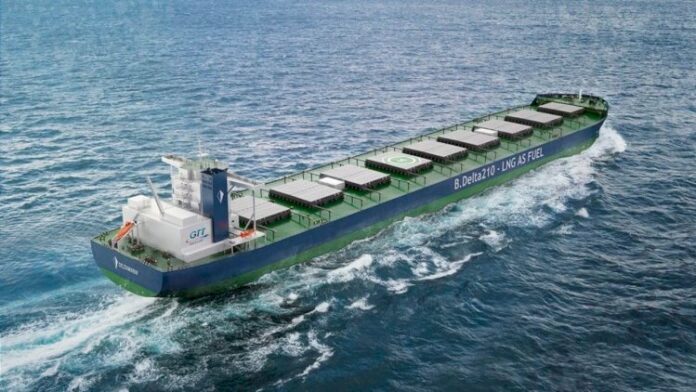
ABS has granted Approval in Principle (AIP) to Deltamarin and GTT for a dual-fuel Newcastlemax bulk carrier design.

Deltamarin, GTT and ABS have been cooperating on the development of this LNG-Fueled energy efficient Newcastlemax Bulk Carrier that is intended to meet current and future environmental targets, by introducing GTT Membrane type LNG Tanks with LNG fuel stored at atmospheric pressure and designed to ABS Class.

The AIP addresses the design’s introduction of a membrane fuel tank sited in the aft of the vessel. The tank design is intended to maximize cargo capacity, with the additional tank having zero impact on available cargo space or the vessel’s hull dimensions.

Patrick Janssens, ABS Vice President Global Gas Solutions, said:

“A design such as this would allow owners and operators to capitalize on the potential of LNG as marine fuel to help meet emissions reduction objectives without having to compromise on cargo load. ABS is committed to supporting innovation in LNG shipping that helps drive operational performance and flexibility while maintaining safety standards.”
 

World’s largest floating PV plant project is stepping forward in South Korea

0

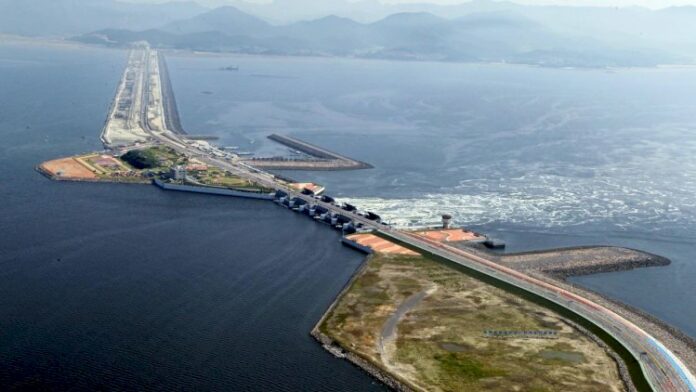
The project is to build the world’s largest solar power generation plant of 2.1GW on the area of 30km of Saemangeum Lake in South Korea.

The capacity of the plant is 14 times bigger than the existing world’s largest floating PV plant (Huai Nan, China, 150MW) and bigger than the whole world’s floating PV generation capacity in 2018 (1.3GW).

The project is expected to provide opportunities for renewable energy entrepreneurs which may produce more than 5 million PV modules. USD 2.05 billion market is expected to appear. 

Administrator Saemangeum Development and Investment Agency (SDIA) Kim Hyun-Suk said that the photovoltaic project would make a condition to attract investments and to promote internal development in Saemangeum. The administrator also said that the project would lead to minimize carbon emission in line with Carbon Certificate System(Carbon FootPrint) which the Ministry of Industry and Energy will adopt by 2020.

Jeollabuk-do has a plan to build up an Industry-University-Institute collaboration cluster in connection with the floating PV plant in Saemangeum according to the Governor.

Freeport LNG Train 1 begins commercial operation

0

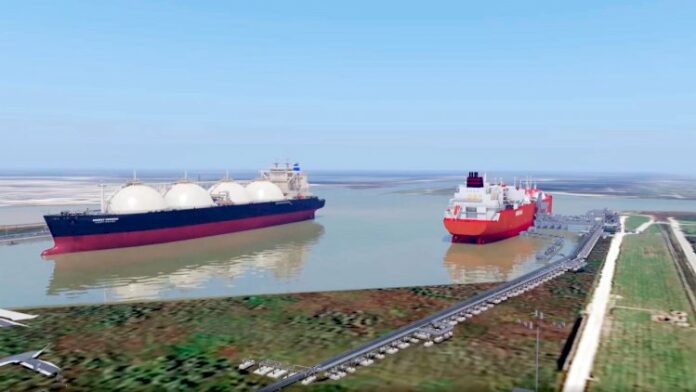
Freeport LNG has announced the start of commercial operations for its first liquefaction train on December 8, 2019. Freeport’s Train 1 is part of a multi-train liquefaction facility located on Quintana Island near Freeport, Texas.

Michael Smith, Founder, Chairman and CEO, Freeport LNG, said:

“This is a significant milestone for Freeport LNG and we now look forward to commencing commercial operations of Trains 2 and 3.” 

Mark Coscio, McDermott's Senior Vice President for North, Central and South America, added:

"The past few months have brought significant accomplishments for Train 1 of the Freeport LNG project—starting with introduction of feed gas in July, first liquid in August, shipment of first cargo in September and now commercial operation. Congratulations to the joint venture project team whose commitment to safety and quality has remained strong throughout the project."

Commissioning work for Freeport LNG’s Train 2 continues to progress with commercial operations expected to start in January. Construction on Freeport LNG’s Train 3 is nearly complete with commercial operations expected in May 2020.
Freeport LNG’s three trains are expected to produce in excess of 15 mtpa. A fourth train is in development. Freeport LNG recently announced that it has raised just over $1 billion for its Train 4 project which, combined with a contemplated bank facility, will provide the capital required for Train 4. Final Investment Decision for Freeport LNG’s Train 4 is targeted for the first quarter of 2020. When Train 4 comes on line, Freeport LNG will rank as the 8th largest LNG facility globally.
 

Archer awarded a contract extension from Equinor for the Peregrino Field

0

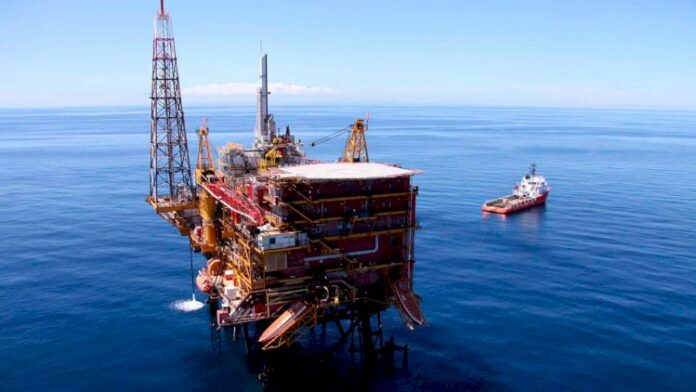
Archer Limited has announced that effective from the 1st December 2020, Equinor Brasil Oleo e Gas Ltd have confirmed a new 4 year contract for the provision of Platform Drilling Management Services on their Peregrino Field Development on the Peregrino A and B platforms respectively.

The new four year contract awarded will be in direct continuation of Archer’s current contract, and will further extend Archer’s continuous relationship with Equinor in Brazil to over 15 years since Peregrino A drilling start-up of operations in 2009. The contract award ensures Archer’s continued operations for Equinor in Brazil until November 30th, 2024.

Kenny Dey, VP Platform Drilling said:

“We are delighted to have been awarded this 4 year contract award. It is positive news for Archer and is recognition of the hard work and commitment from all our personnel who have consistently maintained a safe environment on the Equinor Peregrino operations, whilst ensuring a high level of operational and technical efficiency. We look forward to extending our working relationship with Equinor in the continued development of the Peregrino field through the duration of the current contract term and beyond”.

New low-sulphur bunker oil popular in Rotterdam

0

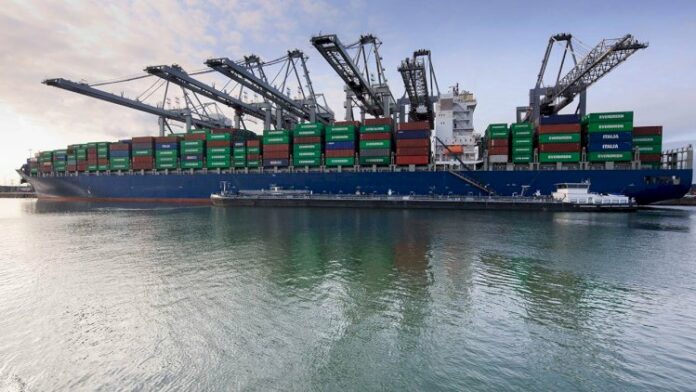
The new low-sulphur bunker oil VLSFO (Very Low Sulphur Fuel Oil with a maximum 0.5% sulphur) has become extremely popular in Rotterdam, Europe’s largest bunker port. Half of all November bunker sales were for VLSFO. This became apparent from the bunkering notifications via the Port of Rotterdam Authority’s TimeToBunker App.

As of 1 January 2020, sea-going vessels on the world’s oceans may only use fuel with a sulphur content of no more than 0.5%. The current maximum is 3.5%. High-sulphur fuel will only be permitted on vessels that have scrubbers – an installed filtration system – on board.

The TimeToBunker App shows that VLSFO sales have increased dramatically over the past two months: September 1,700 tonnes, October 32,000 tonnes and November 95,000 tonnes. This means that the VLSFO percentage within total fuel oil sales grew from 1.8% in September to 51.6% in November. This separation based on fuel oil sulphur levels can only be made in TimeToBunker.

The sulphur level of fuel oil is not stated in standard bunkering notifications. However, Ronald Backers, the Port Authority’s bunkering expert, suspects that this trend is representative for all bunker sales in Rotterdam:

‘The TimeToBunker App has been used since February and is a huge success. Over a third of all bunkering notifications run via the app. I see no reason to assume that companies that still make standard bunkering notifications have completely different clients with completely different fuel oil purchasing behaviour.’

Although even stricter sulphur regulations apply to shipping on the North Sea and bunker oil may only contain 0.1% sulphur, many shipping companies in Rotterdam are ordering VLSFO, because they also sail intercontinentally and not just across the North Sea.

Høglund and DNV GL improve data generation and sharing in the marine industry

0

Høglund and DNV GL have signed a Memorandum of Understanding to help generate and export Big Data from vessels. This is a step towards greater digitization of the marine industry and will provide DNV with better and more standardized real-time data on vessel operation, security and risk management.

Børge Nogva, CEO of Høglund Marine Solutions, says that a cooperation with DNV on digital technology and data sharing is useful due to many reasons. For instance it helps put the matter of Big Data on ships higher up on the agenda. DNV is a significant actor in the maritime markets and companies like Høglund can contribute in the data gathering, storage, transfer and analysis.

Høglund has for many years pointed to the lack of consistency in ship specifications when it comes to defining how important data shall be made available for all stakeholders. Owners, managers, charterers, insurance companies, classification companies, equipment suppliers and more, all have great potential to exploit by utilizing data, which in many cases already exist on board vessels, but are hard to access. In making data available we will see a great reduction in risk levels of ship operations. The digital transformation of shipping is finally happening and opens the door to many long sought after advantages and necessary progress.

Tramarsa purchases Damen’s dredger for 30-year strategy of expansion

0

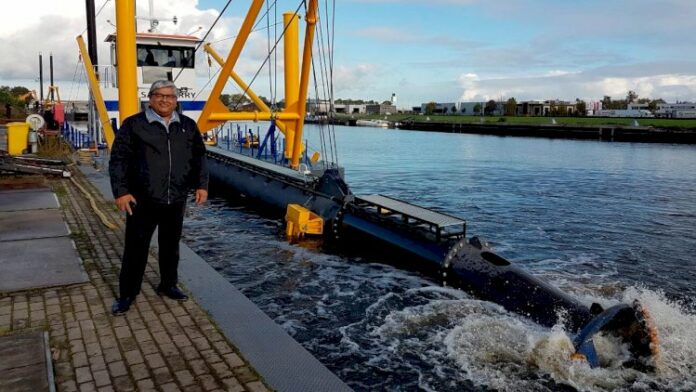
Peruvian maritime services provider Tramarsa has taken delivery of a Damen Cutter Suction Dredger (CSD) 450. Tramarsa will be providing the tools to its subsidiary company Salaverry Terminal Internacional (STI), which will be using the new vessel for maintenance dredging tasks in the Port of Salaverry, Peru, with an eye on goals for future expansion.

The purchase of the new Damen CSD450 relates to the 30-year contract that STI was awarded for delivering port services at the Port of Salaverry. This contract includes maintenance dredging to keep the harbour at a suitable depth; operations that are necessary on a regular basis due to the currents along this part of the Peruvian coast that bring a lot of sand into the harbour area.

Tramarsa technical manager William Revilla Valdivia explains:

“We had worked with an international dredging company to get the water depth down to -11.5 metres, and maintenance dredging has to be conducted throughout the entire year. Therefore, as Tramarsa, we decided to buy our own maintenance dredger and provide Salaverry International Terminal with the necessary tools to perform the job.”

Tramarsa selected Damen after an international tender, basing its decision on quality and production levels. For the past 35 years the Damen dredger Grumete Arciniega has been working in Salaverry port. The quality of this dredger and the service levels Damen has given the past decades to keep the dredger running has been a key factor. Moreover, because of the respected name of Damen in the dredging industry, the possibility of re-selling the vessel at some point in the future was an important factor.

STI’s work will also consist of modifying the port infrastructure to increase quay length for bulk cargo vessels for the mineral and agricultural sectors. Mr Revilla Valdivia says:

“Corn and fertilizers, as well as copper and anthracite, are all important exports, and Peru is starting to export a lot more fresh fruits and vegetables – so the container trade is going to grow in the future.”

Responding to these ambitions of future growth, the new CSD450 has been adjusted to be able to dredge down to -14 metres.

Mr Revilla Valdivia says:

“Dredging the port to a good operational depth for continuous accessibility is the main issue. Then we can concentrate on expansion towards a deeper facility. The new CSD is our tool to realise these jobs. We have good expectations for this stationary dredger – we trust that we will increase the services to our clients. Working together with Damen is going a long way to achieving this.”

Damen sales manager Latin America Marnix Brouwer comments:

“It has been a pleasure to work with Tramarsa. Mr Revilla Valdivia had a very good understanding of what he needed at the technical level – in terms of performance specifications and productivity, for instance. Now that the dredger has arrived in Peru, we are happy to continue this working relationship with a full crew training programme.”

Wärtsilä develops new hybrid power systems with a new partner

0

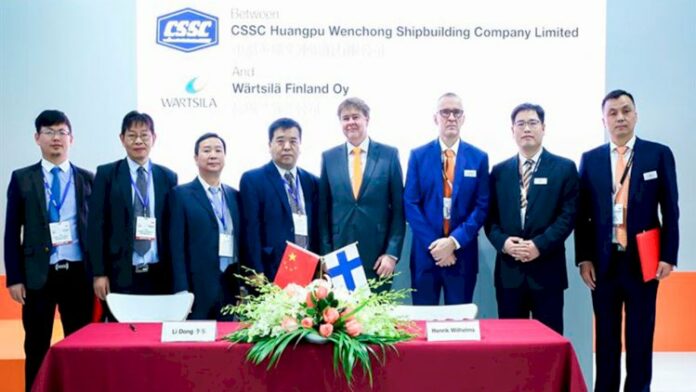
The technology group Wärtsilä has signed a strategic development agreement with Chinese state-owned shipbuilder CSSC Huangpu Wenchong Shipbuilding Company Limited Huangpu Wenchong. The five year agreement is aimed at the joint development of a hybrid powered dredger, but could possibly extend to other hybrid vessels as well. The agreement was signed on December 3 at the Marintec conference and exhibition in Shanghai.

The purpose of the agreement is to build a cooperation framework and working mechanism for the research and development of hybrid power systems. Wärtsilä will support Huangpu Wenchong during the design and construction phases with technology innovations, system selection, performance calculations, and long-term services.

Henrik Wilhelms, Director Offshore and Special Vessels at Wärtsilä, says:

“Collaboration with industry partners is at the very core of Wärtsilä’s Smart Marine approach to raising efficiencies, and eliminating waste throughout the shipping sector. This is one more example of this philosophy, and we look forward to cooperating with Huangpu Wenchong to create hybrid powered vessels that will benefit the industry by lowering costs, and benefit the planet by reducing greenhouse gas emissions.” 

Li Dong, Chief Engineer at CSSC Huangpu Wenchong Shipbuilding Company Limited, says:

“We are very happy to be cooperating in this project with Wärtsilä, a proven technology innovator and industry leader in hybrid solutions for the marine industry.”

The initial work will be based on a hopper dredger, a vessel that the shipyard already builds. Evaluations will be carried out to determine the most suitable hybrid solution for that class of dredgers.