0.1 C
New York
Home Blog Page 946

Ascenz signs up as new Inmarsat application provider

0

Ascenz, a trusted provider of end-to-end smart shipping solutions for the maritime industry, has signed an agreement with Inmarsat, the world leader in global, mobile satellite communications, to become one of its Certified Fleet Data Application Providers.

With this tie-up, ship owners and ship operators can look forward to greater value-added services of real-time fuel consumption monitoring and other performance analytics capabilities.

Inmarsat’s Fleet Data collects data from onboard sensors, preprocesses it, and via the Inmarsat Network, uploads it to a central cloud-based database equipped with a dashboard and an Application Process Interface (API). It now has a fast growing community of Application providers offering a wide range of applications for vessel monitoring, planned maintenance, navigation and healthcare.

Ascenz, using its Shipulse solution, will connect directly to the Fleet Data API and will be able to carry out further analysis to show key performance insights and develop customised reports, enabling better decision-making for optimised vessel performance.

Mr Tang Teck Hong, Director – Commercial, Ascenz Solutions, said:

“Shipulse transforms any vessel into a smart ship. It delivers comprehensive and insightful information from monitoring fuel consumption, engine performance, bunkering monitoring, and other vessel activities to help maritime industry players achieve greater operational efficiency and increase fuel savings.”

Mr Tang said:

“With Shipulse being an Inmarsat Certified application that is integrated with Inmarsat’s network capabilities, we are confident that we can reach more customers that have a need for marine data analytics and vessel performance solutions for their fleet. We would like to help customers achieve more using digital solutions and by becoming a Certified Application Provider enables us to work together on joint opportunities.”

Marco Cristoforo Camporeale, Head of Digital Solutions, Inmarsat Maritime, said:

“We are delighted to be working with an innovative company such as Ascenz. We have been enabling digitalisation of ship operations through our Fleet Xpress platform for the last three years and we are seeing dramatic growth in our Application Provider community and this is a fantastic example of collaboratively working together to improve vessel performance.

This will allow ship operators and managers to monitor and measure fuel consumption to allow better decision making, through the Shipulse application on Fleet Data and via a secure platform that is fully scalable, fleet-wide and now commercially available on both Fleet Xpress and FleetBroadband.”
DEME deploys autonomous plastic collector on the river Scheldt

0

DEME Environmental Contractors (DEC), the environmental specialists of DEME, is installing a plastic collector on the river Scheldt on behalf of the Vlaamse Waterweg (the Flemish authority responsible for waterways in Flanders). A combination of a fixed and mobile installation will be tested for a year to collect waste from the water.

To tackle the increasing problem of river pollution, the Vlaamse Waterweg is joining forces with the business world to test the concept of waste collectors on the river Scheldt. After a call from the Vlaamse Waterweg to companies to submit an innovative proposal, DEME proposed a project for collecting waste by the Temse-Bornem Scheldt bridges. The DEME test set-up consists of a fixed installation that passively collects floating and suspended waste from the water and a mobile system that actively collects bigger pieces of waste.

The test phase, that will start in February 2020, is being carried out in cooperation with the University of Antwerp and the Institute for Nature and Forestry Management (Instituut voor Natuur- en Bosbeheer).

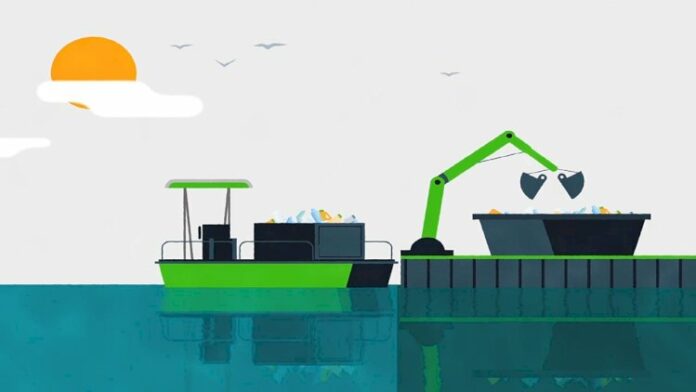
The mobile installation consists of a smart detection system, a work boat that can navigate autonomously and a charging point. Floating waste is detected using artificial intelligence by smart cameras that are installed on the old Temse bridge. An autonomously navigating work boat, the “Marine Litter Hunter” intercepts waste and pushes it to a collection pontoon. The waste is collected in the collection pontoon, where a crane equipped with a grab transfers the waste into a container.

The fixed crane is operated remotely by an operator using virtual reality and 3D vision technology. When the container is full, the work boat takes this autonomously to the docking station, where it is unloaded by a transfer crane on the quay. The “Marine Litter Hunter” is fully CO2-neutral and moors autonomously at the docking station to charge.

In addition to the mobile plastic collector, DEME will also test a fixed installation to collect floating and suspended waste. The installation will consist of a V-shaped fyke with a collection pontoon.

Dirk Poppe, Managing Director of DEC says:

“In the course of our global activities we are confronted daily with waste in rivers and oceans. During dredging works, for example, we come across large quantities of plastic. For DEME’s environmental subsidiary DEC, that specialises among other things in soil, sludge and water remediation, it is a logical step to use our expertise to cooperate actively on solutions for the global waste problem. By collecting plastic in rivers we can avoid it landing up in our seas and oceans, where it is more difficult to tackle the problem. As a pioneering company we continue to commit to technologies and innovations that offer solutions for global challenges. By cooperating with the Vlaamse Waterweg we can thoroughly test the operation of the plastic collector and see whether we can use the technology on a larger scale in rivers, river deltas and ports.”

MHI Vestas sets new standard in digital safety training

0

Industry-first Safety’N’Mind app developed to streamline safety refresher training courses for offshore wind turbine technicians.

With the launch of the global wind industry’s first digital training app, called Safety’N’Mind, MHI Vestas has made a noteworthy contribution to the digitalisation of the sector.

Basic Safety Training, as governed by the Global Wind Organisation (GWO), is required of all turbine technicians. And that training needs to be refreshed every other year, which traditionally takes three full days.

The Safety’N’Mind app from MHI Vestas is designed as a digital, gamified substitute for one theoretical training day – a development that promises to reap big gains for the industry.

MHI Vestas Head of Technical & Safety Training, Elisabeth Mygind, said:

“We developed the Safety’N’Mind app because we saw an opportunity to innovate within safety training. In the end, we wanted to create a fun, gaming environment in which our technicians could refresh their training at their own pace, and in a way that would be most memorable. We believe this innovation adds demonstrable value to our training efforts and, ultimately, to our customers.”

The Safety’N’Mind mobile app, having recently received GWO accreditation, is based on micro learning, meaning that participants can experience the course in whatever way works best for them – in small doses or all in one sitting.

Jakob Lau Holst, GWO CEO, said:

“The MHI Vestas digital solution to GWO refresher training is, forgive the pun, very refreshing. It incorporates new technologies towards learning and makes clever use of weather downtime in a way that seems to not only provide new efficiencies, but also increase learning. The value of good standardized safety training is that is helps create a common safety mindset across the supply chain, which in turn will drive higher efficiency in execution of complex projects.”

The first-mover mobile app, launched at a recent live event at WindEurope Offshore 2019 in Copenhagen, has been audited by DNV-GL, having met the stringent requirements of the sector’s safety training courses.

Soren Hald, DNV-GL Senior Lead Auditor, said:

“The GWO training is quite innovative as it combines e-learning with practical exercises. Each participant must pass a multiple-choice test prior to participating in the practical training which ensures that everyone learns the required GWO skills during the e-learning module.”

MHI Vestas’ Mygind concludes:

“The safety of our technicians is paramount. And this new solution, while flexible and engaging, is focused on the serious business of safety, innovation, and optimising the value MHI Vestas brings to every offshore wind project.”

Report: FPSO and SURF players will be in a fierce competition in 2020

0

A dark cloud of capacity constraints is casting a shadow over the oilfield service industry heading into 2020, mirroring the sharp growth in the number of new projects being brought forward by oil and gas operators.

About 250 new oil and gas projects are likely to be sanctioned for development in 2020, up from 160 in 2016, and bottlenecks among suppliers appear inevitable. According to Rystad Energy’s latest market report on the global service market, floating production contractors, subsea installation players and fabricators of liquefied natural gas facilities will all likely struggle to keep up with the surge in demand for their services, thus causing projects schedules to slip. Exploration and production companies will thus find themselves in a fierce competition to secure capacity.

Contractors, having secured 13 new orders for floating production, storage and offloading vessels (FPSOs) in 2019, have thus raised the total number of units currently under construction or on order to 28. This means FPSO players will not be able to handle all 12 of the additional units that operators aim to move forward with in 2020. Likewise in the installation market for subsea umbilicals, risers and flowlines (SURF), orderbooks are swelling and players are racing to keep pace given the vast number of Christmas trees – nearly 600 in all – that were ordered in 2018 and 2019. Furthermore, marine contractors are already scheduled to install about 4000 kilometers of subsea oil and gas flowlines and umbilicals in 2020.

Audun Martinsen, Head of Oilfield Services at Rystad Energy, says:

“Deepwater projects are now in a challenging situation as they are heavily dependent on SURF and FPSO contractors. Deepwater fields have been among the most sought after supply sources in recent years, next to the shale bonanza, and the increase in massive contract awards to players in the deepwater industry now could put constraints on further field sanctioning activity.”

Another complicating factor is the massive push by certain offshore energy companies to move ahead with offshore wind projects. Rystad Energy observes that 25 gigawatts (GW) of offshore wind capacity is now operational, and this is poised to double to more than 50 GW by 2022. This implies a massive increase in demand for installation of offshore wind power cables, climbing from 1800 km in 2019 to an unprecedented 4300 km in 2022 – thereby surpassing the amount of subsea cable installation work from the oil and gas industry.

Martinsen explains:

“Major SURF players like Subsea7 and Saipem are in a great position to capitalize on this trend, having managed already to diversify from being pure oil and gas players to become substantial drivers within the energy transition. This segment will increasingly occupy vessel capacity from the installation fleet, likely causing a significant jump in service prices and exacerbating the contractual challenges faced by operators. Offshore gas and LNG projects will also add to the rising demand for services, as we forecast that these projects will require the installation of about 1000 km per year of export pipelines linking offshore fields to onshore facilities over the next few years.”

Rystad Energy forecasts capacity constraints among key vendors in the LNG market, as well, implying new projects could risk significant delays. With 10 LNG projects sanctioned this year, and with seven more on the drawing board for 2020, the few established engineering, procurement and construction (EPC) contractors that are qualified to tackle the mega-projects planned in such a specialized sector are already close to being fully booked and short of manpower.

Martinsen predicts:

“We expect to see pricing power strengthen further among service providers in 2020, particularly within certain segments. This will drive up prices but also delay projects and production targets for E&P companies. We have seen that ambitious operators with a long-term focus have been able to secure vital capacity within the supply chain, but many other players will face difficult bottlenecks in 2020. If those companies want to deploy capital next year without any service capacity issues, they should consider drilling offshore infill wells or channeling investment into the shale sector in North America. Both of those markets still have substantial overcapacity within offshore rigs, pressure pumpers and sand providers.”

Intertek supports REN on WindFloat Atlantic project

0

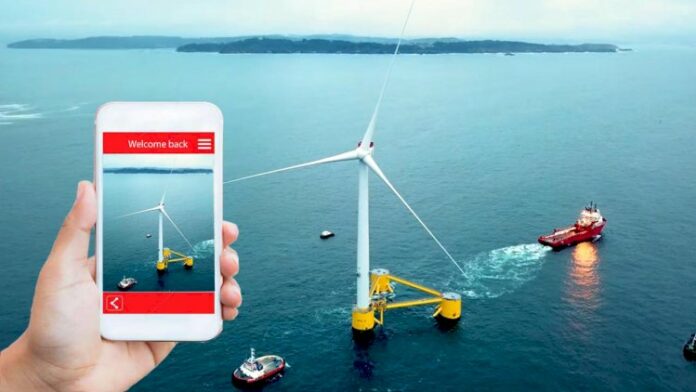
Intertek, a leading Total Quality Assurance provider to industries worldwide, has provided client representation for the oversight of the successful export cable installation and protection works for the 25MW Windfloat Atlantic, the first floating wind farm project in the Atlantic Ocean.

To be installed 20 kilometres off the coast of Viana de Castelo (Portugal), the WindFloat Atlantic comprises an 18-kilometre static and dynamic submarine cable linked to three MHI Vestas 8.4MW turbines mounted on WindFloat platforms anchored to the seabed in water depths of 85 – 100 metres. This cutting-edge project is managed by the Windplus consortium which is jointly owned by EDP Renováveis (54.4%), ENGIE (25%), Repsol (19.4%) and Principle Power Inc. (1.2%), with Portugal’s transmission system operator, Redes Energéticas Nacionais, S.A., responsible for transmission to shore.

Redes Energéticas Nacionais, S.A. contracted Intertek for specialist client representation to oversee installation of the WindFloat Atlantic export cable. This assurance role spanned cable load-out, cable lay, and burial and cable protection operations in challenging seabed conditions that required cable pre-lay rock bag installation, post-lay rock placement, and the application of Tekmar and First Subsea cable protection systems in rocky areas.

Andy Page, Intertek Energy & Water’s Site Characterisation and Engineering Lead, said:

“We are very pleased to utilise our extensive technical knowledge and experience regarding installation of subsea cable projects and to provide expert personnel to assure quality and safety of this critical aspect of such an exciting renewable energy project.’’

Intertek’s global offshore project experience encompasses numerous industries and includes the planning, permitting and construction oversight of offshore power transmission and telecommunication cable as well as offshore renewables projects. Our many services include site selection and characterization, feasibility studies, survey and installation oversight, Environmental Impact Assessments (EIAs) and scoping studies, metocean assessments, and risk management for a variety of offshore developments.

Wärtsilä awarded Lloyds Register cyber security approval

0

Wärtsilä awarded Lloyds Register cyber security certification for fully connected and integrated operational systems. The Lloyds Register certification is one of the first to be awarded globally.

The technology group Wärtsilä has been awarded Lloyd’s Register (LR) system-level cyber certification for its network architecture relating to Wärtsilä’s integrated main and auxiliary machinery. The LR’s ShipRight SAFE AL2 certification, which is with Wärtsilä’s Data Collection Unit (WDCU), gives Approval-in-Principle (AiP) for the entire Wärtsilä integrated system network, rather than for any individual component. The certification is one of the first of its kind to be awarded globally.

At a time when information and operational technologies onboard ships are being networked together, building resilience against unauthorised access, software failures or attacks on ships’ systems has become a top priority. The LR certification is, therefore, highly relevant for Wärtsilä’s Data Collection Unit, which as part of Wärtsilä’s Data Bridge solution, is used to gather and transfer operational data to the cloud for remote monitoring. Data Bridge is a data platform developed by Wärtsilä to enable advanced analytics that provide insight into a vessel’s performance. This in turn unlocks the potential for enhancing even further the vessel’s operational and technical efficiency.

The ShipRight procedure defines an Accessibility Level (AL) for autonomous or remote access to the system, in this case meaning cyber access for remote or autonomous monitoring. It particularly takes into account digitally-enabled systems having remote access to onboard data. Mandatory within the AiP is a cyber-security risk assessment of the complete onboard integrated operational system.

Jonas Blomqvist, General Manager, Cyber Security, Marine Business, says:

“This certification validates Wärtsilä’s work in mitigating cyber security risks with the appropriate controls in the integrated system, when collecting and sharing operational data. This takes Wärtsilä lifecycle offering to the next level and knowing that these systems are cyber secure provides customers with the assurance that they are safe to use.”

Lloyd’s Register defines ‘cyber-enabled’ systems as those systems installed onboard ships that have traditionally been controlled by the ship’s crew, but which nowadays include the capability to be monitored, or monitored and controlled, either remotely or autonomously with or without a crew onboard. The level of cyber risk varies from system to system, and mitigation actions need to be made appropriately.

The International Maritime Organization (IMO), in its Resolution MSC.428(98), has announced that by 1 January 2021 maritime administrators must have appropriately addressed cyber-security risks in their Safety Management Systems (SMS). Guidance and Standards on how these cyber-security risk controls shall be built is currently defined by classification societies. For Operational Technology (OT) systems that provide highly integrated solutions to most of the world’s marine industry today, Wärtsilä aligns in most cases with the security standard IEC 62443, as laid out by the International Electrotechnical Commission, for Industrial Automation and Control Systems, which has been developed by a global network of experts from all industry sectors

Wärtsilä’s Smart Marine Ecosystem approach utilises smart technologies within the areas of digitalisation, connectivity, and data exchange to create greater levels of efficiency, safety, and environmental performance. Understanding and effectively dealing with potential cyber security risks introduces a level of safety that adds value to the implementation of these new technologies and ways of working. The certification awarded to Wärtsilä by LR represents a clear message that Wärtsilä is already today integrating cyber secure capabilities within systems in the marine ecosystem.
 

PICT became the first container terminal with ISO certification in Pakistan

0

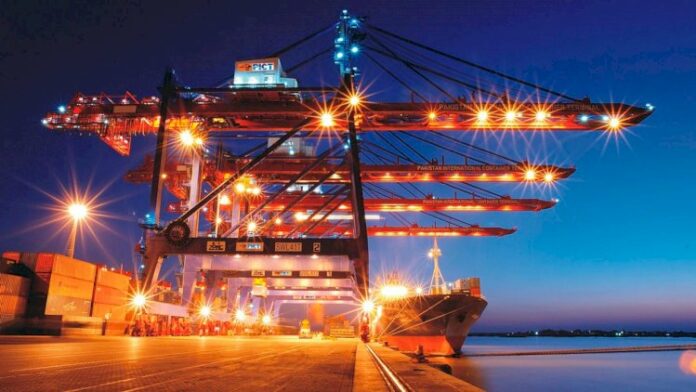
Pakistan International Container Terminal (PICT), International Container Terminal Services, Inc.’s (ICTSI) subsidiary at the Port of Karachi, recently became the first container terminal in the country to obtain the ISO 45001:2018 certification, the world’s first integrated international standard for occupational health and safety.

Demonstrating compliance with the new global standard to ensure a safe and healthy workplace, PICT successfully migrated from the old OHSAS 18001 standard to the new ISO 45001:2018, following a rigorous verification and audit process carried out by certification agency Bureau Veritas S.A.

The ISO 45001:2018 specifies requirements for an occupational health and safety management system, and recognizes organizational commitments to continual improvement of its systems to deliver an even safer and healthier workplace.

Khurram Aziz Khan, PICT Chief Executive Officer, said:

“This certification demonstrates our commitment to enhance employee well-being and achieve customer service excellence by implementing best practices in quality, health, and safety. By integrating the highest international standards in our systems and processes, we are continuously working to provide our valued clients with the highest quality of service.”

With occupational health and safety among its top priorities, ICTSI is committed towards providing a safe and healthy workplace for employees, contractors, and port stakeholders alike by implementing and maintaining Health, Safety & Environment (HSE) management systems across its global operations, and mitigate the risks related to its business activities.

Andrew Dawes, ICTSI Senior Vice President and Regional Head of Asia Pacific, affirms:

“These certifications, equally crucial in improving our safety culture, ensures the ICTSI Group’s collective efforts towards zero harm. ICTSI remains steadfast in its drive to prevent serious incidents and ensure that every employee, contractor or visitor coming in every ICTSI port goes back home safely.”

Jan De Nul wraps up Liepaja Port dredging ahead of schedule

0

Jan De Nul Group completes the capital dredging works for the improvement of Liepaja Port in Latvia ahead of schedule.

In order to allow larger vessels to enter and leave the port of Liepaja fully loaded, the access channel to the port needed to be adapted. As part of the Liepaja Port Water Infrastructure Works, Jan De Nul Group was awarded the dredging works.

The scope for Jan De Nul Group entailed the removal of 2.7 million m³ of sediments to deepen the port access channel from 12.5 m to 14.5 m, and to create a new navigation channel of -14 m towards one of the main bulk terminals within the port area.

Jan De Nul Group faced challenging weather and soil conditions during the execution of the project. Liepaja is one of the three major ports in Latvia, located along the west coast. It is known for the cold temperatures in winter and adverse weather conditions in general. A big challenge for the Jan De Nul vessels was the high waves that regularly can be observed in the Baltic Sea, especially during winter. As Liepaja’s nickname ‘The city where the wind is born’ suggests, strong winds also had an impact on the project planning.

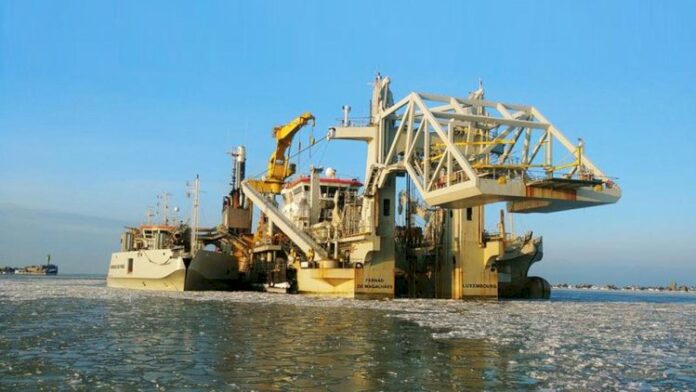
For the dredging works, the self-propelled Cutter Suction Dredger Fernão de Magalhães, assisted by three Split Hopper Barges, was specifically chosen because of the heterogenous material in the Baltic Sea. The Fernão de Magalhães had to remove very hard-to-dredge glacial sediments of sand, clay, stone and large boulders.

Despite these challenging weather and soil conditions Jan De Nul Group was able to deliver the project in less than 9 months, 1.5 months ahead of schedule.

Mieke de Mûelenaere, Jan De Nul Project Manager of the Liepaja project, said:

“We are proud to be able to finish the project 1.5 months ahead of schedule. Liepaja challenged us and we have succeeded. We are grateful to our colleagues of LSEZ for the constructive and positive cooperation which also led to this success.”

Helix Robotics Solutions awarded NnG offshore wind farm project work

0

Helix Robotics Solutions Limited has been awarded three scopes of work for the Neart na Gaoithe (NnG) offshore wind farm project by EDF Renewables.

Gary Aylmer, Helix Robotics Solutions Vice President – Europe and West Africa, stated:

“This is a significant award for Helix as it represents an expansion to our current renewable offering – to better support the development of the UK’s offshore renewable energy sector. As a company based in Scotland, we are immensely proud to have been selected by EDF Renewables to perform the work on a Scottish offshore windfarm and look forward to working with them and the local supply chain in delivering this significant project.”

Helix Robotics Solutions has been awarded the following scopes of work which are expected to proceed as follows and commence imminently. The project will be managed and overseen by the core team in Aberdeen, supported by specialist subcontractors from within Scotland and the wider UK:

  • Phase I: Potential UXO identification. Estimated duration of 3 months of offshore work to conduct the investigation of the potential unexploded ordnances (UXOs). To conduct the inspections, Helix will mobilize a XLS Work class ROV onboard a chartered vessel.
  • Phase II: UXO detonation. Helix will detonate identified UXOs utilizing the same vessel and XLS ROV, duration of work to be determined by number of UXOs that are found.
  • Phase III: Boulder relocation. Using a boulder grab tool onboard a chartered vessel of opportunity, Helix will relocate and clear the designated project path of boulders. Expected duration in excess of 6 months.

Helix shall utilize local ports for mobilization / demobilization and support services.

The NnG offshore wind farm will be located 15.5 km off the Fife coast and will cover an area of approximately 105 km2. The project has the potential to generate 450MW of renewable energy, which is enough power to supply around 375,000 Scottish homes – more than the whole of Edinburgh – and to offset over 400,000 tonnes of CO2 emissions each year. Offshore construction is scheduled to start in June 2020 and full commissioning is expected to complete in 2023.
 

COSCO SHIPPING Ports’ Lianyungang terminal goes live on Navis N4

0

N4 selected to help optimize terminal operations in a flourishing region.

Navis, a part of Cargotec Corporation, and the provider of operational technologies and services that unlock greater performance and efficiency for the world’s leading organizations across the shipping supply chain, has announced that Lianyungang New Oriental International Terminals Co., Ltd. (“LNOIT”), a subsidiary of COSCO SHIPPING Ports Limited (“COSCO SHIPPING Ports”), has gone live with N4. This implementation was completed by COSCO SHIPPING Ports as part of its larger globalization strategy with the terminals it operates.

Located on the southwestern coast of Haizhou Bay in China, Lianyungang New Oriental International Terminals Co., Ltd. is the first modern terminal company specializing in international container loading and discharging at Lianyungang Port. The terminal reached 2.88M TEU in 2018 and currently operates 22 international and domestic routes, including three from marine alliances on the Persian, Southwest American and South African lines.

As the Eastern Bridgehead of the New Asia-Europe Continental Bridge, LNOIT plays an important role in regional economic development and needed a system that would help boost efficiency and bring greater value to its customers. The terminal selected N4 to help meet its immediate business goals to optimize operations but also for longer term aspirations including cost savings, adaptability and scalability as it grows and its customer needs change.

Zhang Dayu, Managing Director of COSCO SHIPPING Ports, said:

“Our partnership with Navis is important to the overall strategy of our company. As we look to expand, we need an innovative system that is a global leader in the space to grow with our business. As the shipping industry is flourishing and the demand for mega-ships and more containers is on the rise, we look forward to the ways we can work with Navis to continue to remain a leader in the space.”

Mark Welles, Vice President and General Manager Asia Pacific, Navis, said:

“The Asia-Pacific market plays a critical role in the ocean shipping industry, so it is imperative that we work with our partners in those regions to help them perform at their peak. The relationship we have with COSCO SHIPPING Ports has allowed us to broaden our reach in the region and we look forward to continuing to be a key partner to the terminals it operates and helping LNOIT be successful.”