0.7 C
New York
Home Blog Page 945

NOAA entered contracts with Amazon, Google and Microsoft

0

NOAA’s vast collection of environmental data will be more accessible than ever before through new collaborations announced with Amazon Web Services (AWS), Google Cloud, and Microsoft.

Under these new agreements, commercial cloud platform providers will generate untold opportunities for scientific and economic advances by exponentially expanding, rapid and reliable, no-cost access to NOAA data for the public.

NOAA's vast collection of environmental data is heading to the cloud. NOAA has entered into separate multiyear contracts with AWS, Google Cloud, and Microsoft to provide the public with cloud-based access to the agency’s environmental data sets, in accordance with the agency’s full and open data policies. NOAA generates tens of terabytes of data every day from satellites, radars, ships, weather models, and other sources. 

Neil Jacobs, Ph.D., acting NOAA administrator, said:

“NOAA’s wealth of world-class environmental data will now be more accessible through partnerships with commercial cloud providers, which will allow the agency to better manage a rapidly increasing volume of data going forward. Cloud-based storage and processing is the future. Not only will this improved accessibility enhance NOAA’s core mission to protect life and property, but it will also open up new and exciting areas of research at universities and significant market opportunities for the private sector.”

This is the latest milestone of the ongoing NOAA Big Data Project, which seeks to remove obstacles to public use of the agency’s data by combining three powerful resources: NOAA's expansive collection of high-quality environmental data and expertise; the vast infrastructure and scalable computing capabilities of our industry collaborators; and the innovative energy of the American economy. 

Dave Levy, vice president, U.S. government at AWS, said:

"This builds on AWS's long standing support of NOAA and their mission, and we look forward to continuing our collaboration. As customers gather more data about Earth, cloud offers new opportunities to understand our world and contribute to sustainable future. With initiatives like the Big Data Project, researchers are leveraging AWS services to lower the barriers to affordable, on demand, and scalable data analysis. As a result, researchers are gaining greater access to NOAA data, and speeding up the time to discovery, at a fraction of the price and time previously required."

Kate Brandt, Google sustainability officer, said:

“Technology is transforming how we understand our ever changing world. Through the NOAA Big Data Project, Google Cloud can help researchers, innovators, and organizations analyze data to tackle a range of environmental challenges — regardless of their size or computing power.”

Dr. Lucas Joppa, chief environmental officer at Microsoft, said:

“Improving the world around us starts with a better understanding of it, and pairing NOAA’s world-class data sets with world-class cloud computing power offers a big step forward. Microsoft is proud to further its work with NOAA with this contract, building on existing work including hosting NOAA’s largest and most valuable weather data on Azure Open Datasets and specific projects on camera trapping and hydrophones to more accurately count animal populations. We’re thrilled to see our technology play a role in democratizing access to accelerate scientific discovery and prioritize the protection of natural resources.”

The NOAA Big Data Project leverages operational public-private partnerships with the cloud computing and information services industries to avoid the costs and risks associated with data access services. Under the contracts, the cloud platform providers can charge for compute or other services related to additional processing of NOAA data, but are required to provide free and open access to the data itself.

Jacobs added: 

“The NOAA Big Data Project, which is the first public-private partnership of its kind in the U.S. government, will help accelerate new areas of scientific and economic growth."

This announcement is the culmination of NOAA’s efforts to broaden access to its data resources and facilitate full and open data access to foster innovation. Rather than utilize a traditional, large-value contract award, these contracts represent a unique relationship with the Cloud Service Providers: NOAA contributes its high-quality environmental information and scientific expertise, and the CSPs provide their cloud storage and technical capabilities, improving the public's ability to use these data without being charged for cloud storage or data access.

Ed Kearns, Ph.D., acting chief data officer at the Department of Commerce, said:

“The Big Data Project’s Cloud Service Providers have shown incredible commitment to open data principles, and they clearly understand the value of NOAA's data to their customers and to the Nation's economy.”

Following an initial research phase that began in April 2015 and operated under Cooperative Research and Development Agreements, the contract awardees were selected through a Request for Proposal conducted in spring 2019. The NOAA Big Data Project is part of the Department of Commerce 2018-2022 Strategic Planoffsite link priority to reduce extreme weather impacts by improving access to NOAA’s data and strengthening partnerships with America’s weather industry and other members of the weather, water, and climate enterprise. The NOAA Big Data Project also supports the White House’s goal of Leveraging Data as a Strategic Asset, and incorporates many of the practices promoted by the new Federal Data Strategy. 

Last month, the NOAA Big Data Project received a Best in Class 2019 Government Innovation Award in the category of Public Sector Innovation, which recognizes innovative ways that government applies technology to better meet its mission and serve the public.
Vår Energi awards rig contract to Seadrill

0

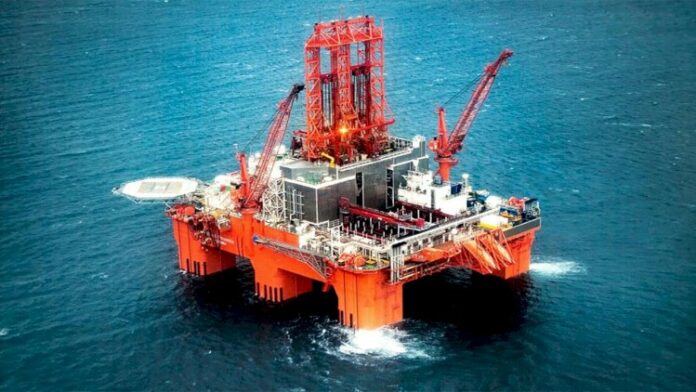
Vår Energi AS awards rig contract to Seadrill Norway Operations AS, a Seadrill Ltd subsidiary, and secures the West Phoenix drilling rig for work on the Balder Future re-development project in the North Sea. 

West Phoenix is selected to drill new production- and injection wells on the Balder field in the period Q2 2021 to Q3 2023. The drilling campaign is part of the Balder Future re-development project.

Vår Energi VP Operations, Rune Oldervoll, says:

"The Balder Future project is one of our key growth projects, and will be one of the largest development projects on the Norwegian Continental Shelf for the coming years. We are very pleased with the rig selection and are happy to have Seadrill on board the team.  We look forward to work together for a safe and efficient drilling campaign."

The contract is subject to authority approval of the revised plan for development and operations for Balder and Ringhorne. The Balder Future project is a part of the Balder X project with the target to recover around 200 million barrels of additional reserves from the Balder-Ringhorne area in the North Sea.

Vår Energi has reserves and resources of more than 1 900 million barrels of oil equivalent (Mboe), and is expected to reach a daily production of 350 000 barrels of oil equivalent by 2023.

This will require developing more than 500 million barrels of oil equivalent in over ten existing projects in Vår Energi’s development portfolio on the Norwegian continental shelf. The Balder X project is key in this growth plan.

Oil production starts from the Liza field offshore Guyana

0

ExxonMobil has announced that oil production has started from the Liza field offshore Guyana ahead of schedule and less than five years after the first discovery of hydrocarbons, which is well ahead of the industry average for deepwater developments.

Production from the first phase of the Liza field, located in the Stabroek Block, is expected to reach full capacity of 120,000 barrels of oil per day in coming months, and the first cargo is set to be sold within several weeks.

Darren Woods, chairman and chief executive officer of Exxon Mobil Corporation, said:

“This historic milestone to start oil production safely and on schedule demonstrates ExxonMobil’s commitment to quality and leadership in project execution. We are proud of our work with the Guyanese people and government to realize our shared long-term vision of responsible resource development that maximizes benefits for all.”

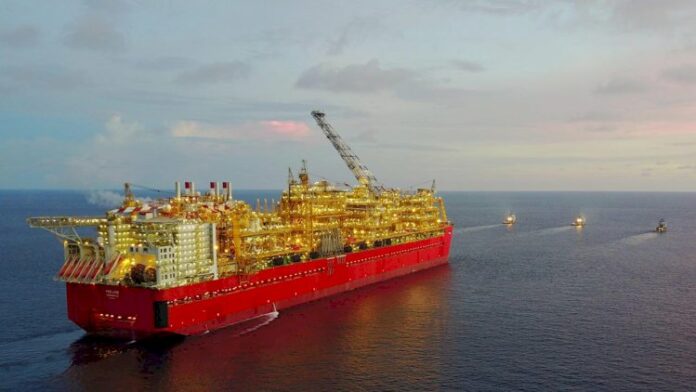
The concept design for the Liza Phase 1 development project features the Liza Destiny floating, production, storage and offloading (FPSO) vessel moored 190 kilometers offshore Guyana, and four subsea drill centers supporting 17 wells.

Approximately 1,700 of ExxonMobil’s employees and other workers supporting its activities in Guyana are Guyanese – more than 50 percent of the total workforce. This number will continue to grow as additional operations progress. ExxonMobil and its direct contractors have spent approximately $180 million with more than 630 local suppliers since the first discovery in 2015.

Rod Henson, president of ExxonMobil’s Guyana affiliate, said:

“Through our continued workforce development and community investments, we are making a positive impact in Guyana. We are committed to the use of technology and continued innovation to achieve the highest standards for safety and environmental performance.”

A second FPSO, Liza Unity, with a capacity to produce up to 220,000 barrels of oil per day is under construction to support the Liza Phase 2 development, and front-end engineering design is underway for a potential third FPSO, the Prosperity, to develop the Payara field upon government and regulatory approvals. ExxonMobil anticipates that by 2025 at least five FPSOs will be producing more than 750,000 barrels per day from the Stabroek Block. The timely development of these additional projects will ensure that the local workforce and the utilization of local suppliers will continue to grow.

ONE unveils new South Korea to North Vietnam service

0

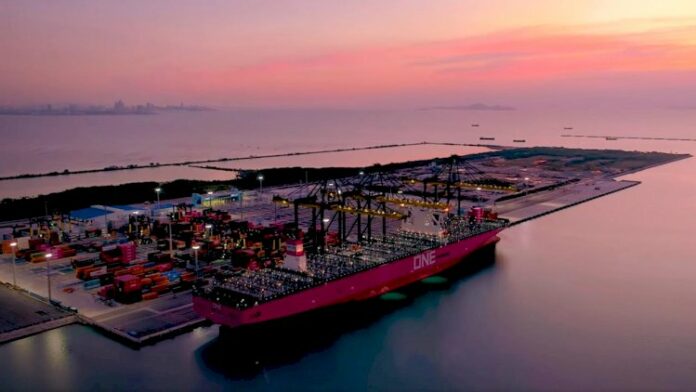
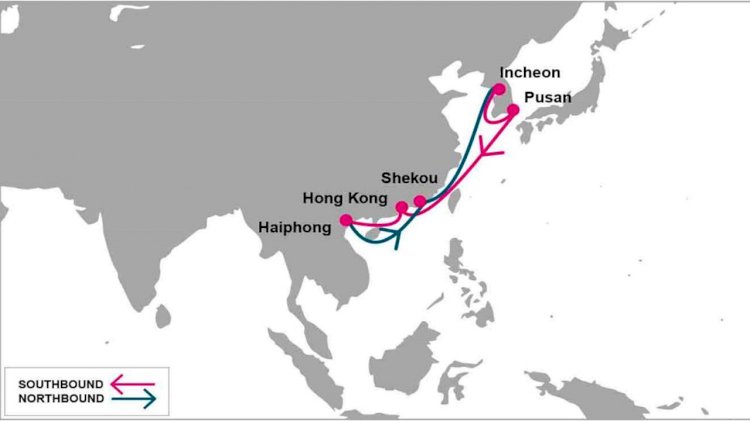
Ocean Network Express (ONE) is pleased to announce details of the new Korea Haiphong Express (KHX) service. Connecting North Vietnam, South Korea and South China, the new KHX service offers improved service coverage and comprehensive port connections for ONE’s customers.

The KHX service, which will be the first within ONE’s network to call Incheon, will provide shippers direct and fast coverage from North Vietnam to South Korea and South China to Incheon.
The KHX service coverage, an addition to ONE’s current Japan Vietnam Haiphong (JVH) service which connects Japan, South Korea and Taiwan to Haiphong, is an enhancement to ONE’s Intra-Asia Haiphong service network. 

KHX and JVH rotation as follows:

  • Korea Haiphong Express (KHX): Incheon – Pusan – Hong Kong – Haiphong – Shekou – Incheon.
  • Japan Vietnam Haiphong Service (JVH): Yokohama – Tokyo – Shimizu – Nagoya – Kobe – Moji – Hakata – Pusan – Keelung – Kaohsiung – Haiphong – Kaohsiung – Yokohama.

The new KHX service is scheduled to begin from January 2020.

Port of Helsinki to deepen the Vuosaari fairway

0

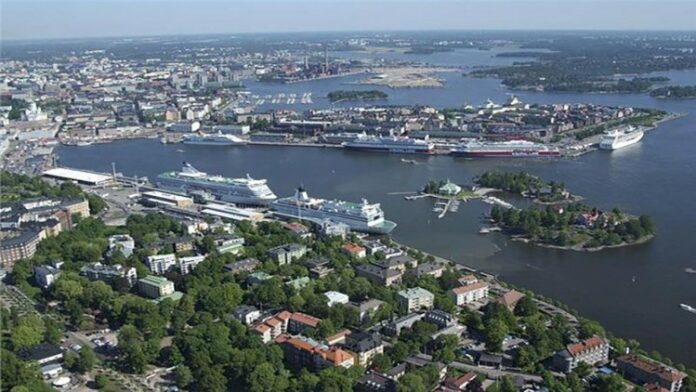
The Finnish Transport Infrastructure Agency and the Port of Helsinki will improve the competitiveness of Vuosaari Harbour by launching a project to deepen the fairway leading to the harbour and part of the harbour area. The project will be carried out during 2020 and 2021.

The Finnish Transport Infrastructure Agency and the Port of Helsinki Ltd have launched a project to deepen the Vuosaari fairway. The project will deepen the existing Vuosaari fairway and part of the harbour area from 11 metres to 13 metres. The project will include dredging about one million cubic metres of soil and excavating about 0.3 million cubic metres of underwater rock from the seabed. Non-usable dredging spoils will be transported to the Vuosaari offshore disposal site. The rock from the underwater excavation will be transported by barge to be used for rock filling in the City of Helsinki's regional construction in Hernesaari, West Harbour and the Vuosaari marine centre. 

The project will increase the depth of the fairway and harbour basin to meet the requirements of a 13-metre draught. The aim of the project is to improve the transport economics of container transport in particular and develop the competitiveness of the harbour. As the fairway becomes deeper, some cargo ships can almost double their cargo capacity, resulting in significant transport cost savings and reducing the adverse environmental impact of ship traffic. Transporting the excavated rock suitable for construction by sea instead of the street network will bring significant cost savings and reduce the environmental impact of transport.

The total cost of the project is estimated at 33.6 million euros, of which 25 million euros will go to deepening the fairway and 8.6 million to the harbour. The European Union’s Connecting Europe Facility (CEF) will cover 20% of the project’s costs. In addition to this, the City of Helsinki will contribute 4.2 million euros towards the transportation costs of the rock to be transported to the City's rock filling sites.

The permits required by the Water Act for the implementation of the project have been acquired. The project is planned to be implemented within two open water seasons. The contractors in charge of the implementation will be selected in early 2020, and construction will begin in May 2020. The new deeper fairway will be introduced by the end of 2021.

MOL to start joint study on collision avoidance algorithms

0

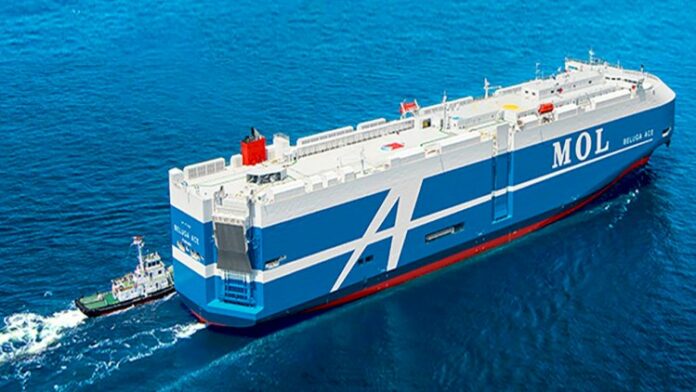
Mitsui O.S.K. Lines, Ltd. has announced that the company, along with MOL Marine Co., Ltd., National Maritime Research Institute of National Institute of Maritime, Port and Aviation Technology, and Tokyo University of Marine Science and Technology have signed a contract under which they will conduct a joint study on collision avoidance algorithms and autonomous collision avoidance.

The project members will study collision avoidance algorithms and autonomous navigation/remote ship operation system. The system will be assessed by active watch officers using a ship handling simulator and actual vessels, in preparation for installing on in-service vessels.

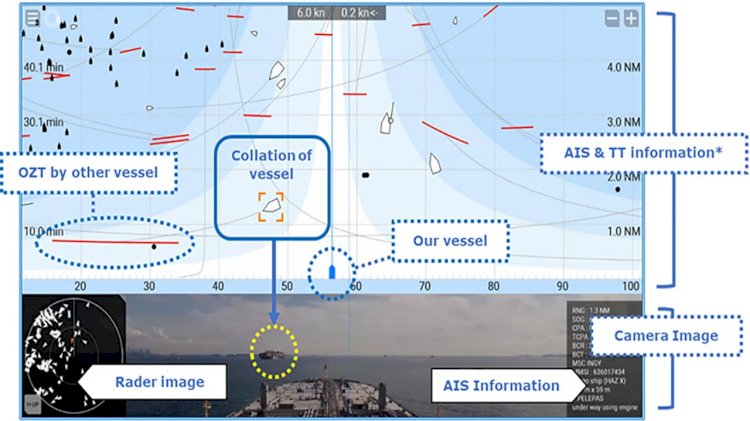
In the project, AI technology, such as rule-based AI and deep reinforcement learning technique, and Obstacle Zone by Target (OZT) algorithm are used to make a decision to avoid collision dangers and to take actions to avoid the target ships.

MOL has been already categorized its research on navigation support systems related to "recognition" such as "AR Navigation Information Display System" as its "FOCUS EYE" series. In order to accelerate its programs to advance safe operation and to realize autonomously navigated vessels, MOL has newly set up "FOCUS BRAIN" series to categorize navigation support systems related to "decision making," such as the collision avoidance.

MOL has moved ahead with advanced support of safe operation and reduction of its environmental impact, as set out in the MOL's Smart Ship Project "ISHIN NEXT", which began in November 2016, and aims to become customers' first choice as a logistics business partner by applying ICT technology to improve service quality and efficiency.

VIDEO: Two Carnival cruise ships collide at a dock in Cozumel

0

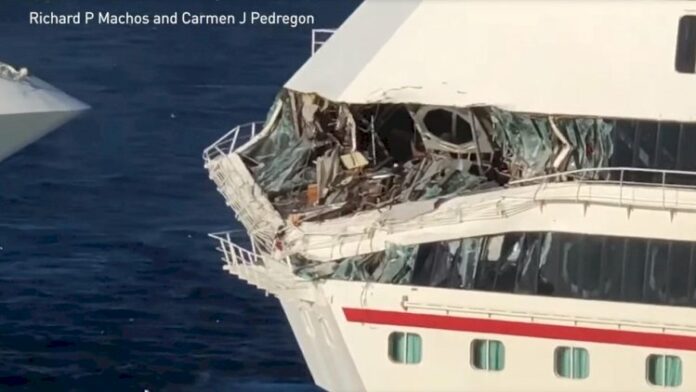
Two Carnival cruise ships crashed Friday morning in Cozumel, Mexico.

Hundreds of cruise ship passengers are sharing videos and stories of a collision on Friday, in which two Carnival ships in Mexico came into contact. 

Videos are showed the Carnival Glory collided with the Carnival Legend, which was already docked. A minor injury occurred on board the Glory when a group of guests where evacuated from a dining room, the cruise line said. The cruise line is assessing damage to both ships.

Video: Richard P Machos and Carmen J Pedregon

Shell and Silverstream to drive clean technology uptake in LNG segment

0

Silverstream Technologies has announced the signing of a landmark framework agreement for retrofit installation of the Silverstream® System on some of the vessels in the Shell International Trading and Shipping Company Ltd. (“Shell”) LNGC fleet.

The agreement will see Shell and Silverstream develop a close working relationship for the design, engineering, procurement, and execution of the Silverstream® System.  

The new framework will enable Shell to expedite the installation of the technology on Shell’s LNGC fleet. Initially covering the next three years, the framework will ultimately reduce contract lead times and the total cost of ownership for vessel operators. 

Today’s announcement marks the next step in the longstanding relationship between Silverstream and Shell. Tracing their relationship back to 2014, Silverstream and Shell have collaborated on a number of vessel performance studies and landmark sea trials to fully understand and verify the savings potential of the Silverstream® System. 

In-operation trials have proven that the Silverstream® System reduces fuel consumption and associated emissions by between 5-10%, depending on vessel profile.

Noah Silberschmidt, CEO, Silverstream Technologies, added:

“Today’s announcement marks a significant next step for Silverstream. Shell has been a longstanding and important partner for our organisation, and strengthening this relationship will help to drive clean technology uptake within a crucial market segment.

That is why signing this framework agreement today makes sense. Given the rate of change within our industry, we hope that this will prove to the sector that retrofitted clean technologies such as the Silverstream® System are easy to procure and execute, and should form an integral part of an overall GHG emissions reduction strategy for existing vessels and fleets.”

The Silverstream® System reduces fuel consumption and associated emissions by creating a carpet of microbubbles that coat the entire flat bottom of the vessel. This carpet reduces frictional resistance between the hull and the water. The technology works in all maritime conditions, is not weather dependent, and does not constrain or negatively impact the normal operational profile of the vessel.

Ørsted and partners secure funding for renewable hydrogen project

0

Seven industrial partners have been awarded funding for a demonstration project in Denmark using offshore wind power to produce renewable hydrogen for road transport.

Within energy, Avedøre is best known for housing Ørsted's large biomass-fuelled CHP plant, Avedøre Power Station, but in the future, the area might become home to more than heat and power production. This became clear when the Energy Technology Development and Demonstration Programme (EUDP) under the Danish Energy Agency decided to support the H2RES project where Ørsted is the principal partner.

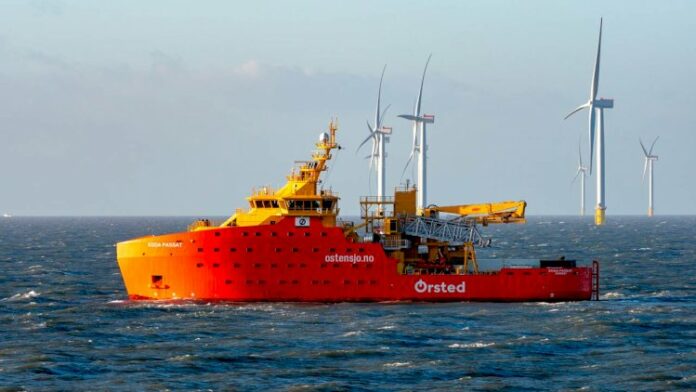
Together with partners Everfuel Europe A/S, NEL Hydrogen A/S, GreenHydrogen A/S, DSV Panalpina A/S, Hydrogen Denmark and Energinet Elsystemansvar A/S, Ørsted has received funding of DKK 34.6 million for the construction of a 2MW electrolysis plant with appurtenant hydrogen storage. The plant will use electricity from offshore wind turbines to produce renewable hydrogen for buses, lorries and potentially taxis.

The daily hydrogen production is expected to total around 600kg, enough to power 20-30 buses, while also making testing its use in lorries and taxis possible. The funding awarded to the H2RES project is the largest among the 53 projects which have received funding from the EUDP in this second 2019 call for applications.

Hydrogen is widely used in heavy industry in Europe, but it is mainly produced by converting fossil fuels in a process which emits large amounts of greenhouse gases. Hydrogen may also be produced by means of electrolysis, a process in which electricity is used to split water into hydrogen and oxygen. If the power used for electrolysis originates from renewable energy sources, the hydrogen produced will be renewable. Therefore, the H2RES project, for which Ørsted and partners have just now received funding, will be using power directly from Ørsted's two 3.6MW offshore wind turbines at the Avedøre Power Station. Moreover, electrolysis can be run flexibly, thereby helping to ensure flexible use of the fluctuating power production from the offshore wind turbines.

Anders Nordstrøm, Vice President and Head of Ørsted's hydrogen activities:

"Renewable hydrogen could potentially form a cornerstone of Denmark's ambition to reduce greenhouse gas emissions by 70% in 2030 and of the transition to a world that runs entirely on green energy. Heavy road transport is one of the sectors which can be made greener by indirect electrification with hydrogen produced from renewable sources. However, renewable hydrogen is currently more expensive than hydrogen produced from gas or coal. Therefore, it's important for us to be able to demonstrate the technology and gather experience, that will make it possible to scale up the technology and make it more efficient, so that we'll be able to produce renewable hydrogen at a price which can compete with the price of the fossil-based alternatives."

Jacob Krogsgaard, CEO, Everfuel:

"The interest in green zero-emission fuel is enormous, especially in the Greater Copenhagen area. Hydrogen produced on surplus renewable energy gives us the possibility to make 100% green, pollution-free fuel. The energy can be stored, distributed and used flexibly without the need for further substantial investments in new electricity infrastructure for heavy transport in, for example, the city environment. Everfuel is responsible for distributing the renewable hydrogen, including establishing hydrogen stations for owners and operators of zero-emission vehicles – without limitations to existing operational needs. The H2RES project at Avedøre is completely unique with strong partners and a close proximity to Copenhagen."

Jon André Løkke, CEO, Nel ASA:

"Denmark is a global front runner within renewable energy and has a pole position in leading the way for renewable hydrogen to be the energy source of choice for heavy-duty transportation. The realisation of the H2RES project will be an important step towards developing a nationwide infrastructure for renewable hydrogen, and we look forward to working with Ørsted and the H2RES partners on this and future projects."

Niels-Arne Baden, CEO of Green Hydrogen A/S:

"This is a very important project for us to be a part of, and we're looking forward to the cooperation. Ørsted is leading the way for the wind industry when it comes to the concrete use of hydrogen. The project will give GreenHydrogen valuable experience and a unique foundation to further develop our electrolysis facilities to meet the requirements of the wind industry, which will be among the very largest players within hydrogen for energy storage."

Tejs Laustsen Jensen, CEO of Hydrogen Denmark:

"The integration of energy from offshore wind into heavy transport is a main challenge in the green transformation. With H2RES, we'll have the possibility of testing how hydrogen and offshore wind can best complement each other. Both with each other, with the transport sector and the collective energy system. It's a very important step for hydrogen as a key technology in the green transformation."

K LINE will assist with liquefied hydrogen transportation for HySTRA

0

Towards the Realization of a Hydrogen Society, K LINE will be involved in the Demonstration of the World’s First Liquefied Hydrogen Carrier.

Kawasaki Kisen Kaisha, Ltd. has announced that K LINE is participating with “CO₂-free Hydrogen Energy Supply-Chain Technology Research Association” (“HySTRA”), an association working towards creating an international CO₂ free energy supply chain comprised of hydrogen production effectively utilizing brown coal in Australia, its liquefaction, transportation to Japan, storage and utilization. K LINE will provide assistance for the safe transportation of liquefied hydrogen.

HySTRA was founded in 2016 to develop and demonstrate technologies required to build a supply chain comprising of hydrogen production effectively utilizing brown coal, transportation and storage as well as utilization of hydrogen with its long-term goal to realize a stable supply of economical CO₂-free hydrogen. Currently, under the assistance of the New Energy and Industrial Technology Development Organization (NEDO), HySTRA is working on the pilot phase of the project, along with studies for these technologies to become widely used in society and commercially viable around 2030.

Principal Particulars:

  • Name: SUISO FRONTIER
  • Length over all: 116.0m
  • Breadth moulded: 19.0m
  • Depth moulded: 10.6m
  • Design Draft: 4.5m
  • Gross Tonnage: abt. 8,000T
  • Tank Capacity: abt. 1,250CBM
  • Speed on design draft: abt. 13 knot
  • Complement: 25 persons
  • Flag: Japan
  • Builder: Kawasaki Heavy Industries, Ltd.

K LINE has been developing professional expertise and know-how concerning safe operation of liquefied gas carriers and handling of liquefied gas cargoes such as LNG and LPG through its long history and diversified track-record of ownership and technical management of liquefied gas carriers. Based on such extensive experience, K LINE will contribute to HySTRA’s demonstration by providing assistance in the technical operation of “SUISO FRONTIER”, a liquefied hydrogen
carrier which was successfully launched in Kobe Works of Kawasaki Heavy Industries, Ltd. on December 11, 2019, that will be conducted in Japan.

The K LINE Group will promote its efforts to reduce greenhouse gas (GHG) emissions in accordance with its “K”LINE Environmental Vision 2050, providing logistics services that are more environmentally-low-loaded and highly efficient.