1.7 C
New York
Home Blog Page 944

Boskalis awarded sizable FSRU contract in El Salvador

0

Royal Boskalis Westminster N.V. (Boskalis) has been awarded a sizable contract to connect an offshore Floating Storage and Regasification Unit (FSRU) to an onshore power plant in El Salvador.

The contract was awarded by Energia del Pacifico (EDP), a 378-MW liquefied natural gas (LNG)-to-power infrastructure project at the Port of Acajutla, El Salvador. The project will commence early 2020 and is scheduled to be operational by the end of 2021.

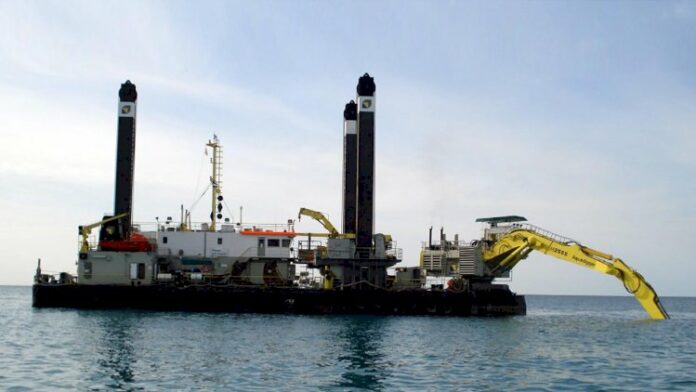
The project entails the construction of a two-kilometer-long gas pipeline connection from the onshore power plant to an offshore FSRU including the mooring and hook-up. This will include the construction of a micro tunnel from the power plant into the sea followed by the dredging of an offshore pipeline trench. With the aid of a construction support vessel (CSV) Boskalis will pull the 24 inch pipeline through the micro tunnel and trench. At the offshore location, a riser will be installed to connect the FSRU to the pipeline, in addition to an anchor spread with 11 anchors to permanently moor the FSRU in position. The final phase of the project involves the physical mooring of the FSRU and the FSRU hook-up. For these activities Boskalis will deploy a CSV, a medium-sized trailer suction hopper dredger and a backhoe dredger.

With the development of this thermal powerplant, EDP will contribute to the diversification of the energy mix of El Salvador with an improved performance and reduced environmental impact. The lead project partner is Invenergy, a US-based leading global developer and operator of sustainable energy solutions, as well as several local investors.

GAC to launch hull cleaning operations in Qatar

0

GAC Qatar is joining forces with HullWiper Ltd in preparation to launch its hull cleaning solution at the Qatari port of Ras Laffan in early 2020 to meet growing demand for safe, eco-friendly hull cleaning solutions. GAC Qatar is the only company to have been granted a license by the country’s Environment Ministry to operate hull cleaning equipment in its waters.

Daniel Nordberg, GAC Qatar Managing Director, says:

“GAC has always been a maritime services pioneer. We are always looking for ways to innovate, add value to our customers, and at the same time, operate in an environmentally-conscious and sustainable manner. Bringing HullWiper to Qatar is yet another initiative to tackle the global biofouling crisis.”

HullWiper’s Remotely Operated Vehicle (ROV) complies with Qatar’s strict regulations, which include collection of 100% of biofouling removed during cleaning for safe disposal at the Qatar Petroleum (QP) facility after a QP test, and the maintenance of proper cleaning records for monthly submissions to QP Environment office. All fouling removed is captured in its unique onboard filter unit, and a detailed report of the operation is produced.

Hullwiper offers ship owners and operators a cost-efficient, brush- and diver-free alternative to traditional hull cleaning methods that protects both the ocean and expensive anti-fouling vessel hull coatings. Owners and operators benefit from a clean hull without any extra downtime or harm to the marine ecosystem.

The system uses adjustable seawater jets as the cleaning medium, instead of brushes or abrasives, to minimise the risk of damage to coatings. Removing fouling from vessels’ hulls results in optimal performance, energy efficiency and reduced CO2 emissions, and avoids the expense of recoating in case of damage. No divers are used, so there is no risk to human life and cleaning can be conducted day or night, in most weather conditions, and whilst cargo operations are underway.

Simon Doran, HullWiper Managing Director, says:

“Qatar is the region’s biggest LNG exporter with more than 70 ships transporting cargo all over the world. With the increase of LNG production, and other ships operating in the country, the number of vessels calling at its ports is expected to grow significantly and HullWiper’s operational presence in partnership with GAC at Ras Laffan will support Qatar’s initiative for safer, cleaner and greener shipping with its hull cleaning solutions.”

BOURBON Corporation’s assets sold to SPP handed down today

0

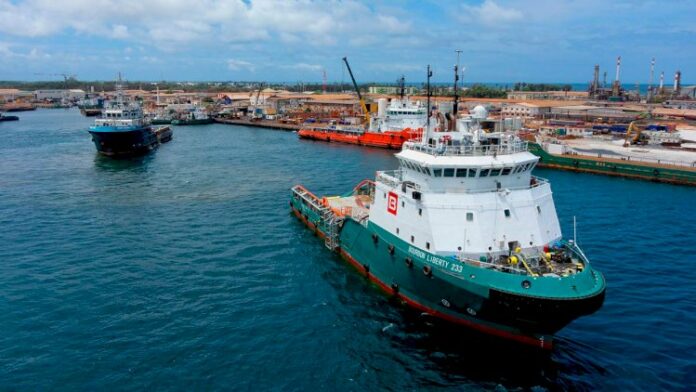
BOURBON Corporation's assets sold to Société Phocéenne de Participations by decision of the Marseille Commercial Court, handed down today.

By a judgment dated December 23, 2019, the Marseilles Commercial Court decided of the disposal of the assets of BOURBON Corporation to Société Phocéenne de Participations (SPP), a company owned by the following banking institutions : BNP Paribas, Caisse Régionale de Crédit Agricole Mutuel Alpes Provence, Caisse Régionale de Crédit Agricole Mutuel de Paris et d'Ile de France, CM-CIC Investissement SCR, Crédit Lyonnais, Natixis and Société Générale.

Transfer of ownership of the BOURBON Corporation assets will take place as of January 2, 2020.

Cameron LNG Train 2 begins producing first liquefied natural gas

0

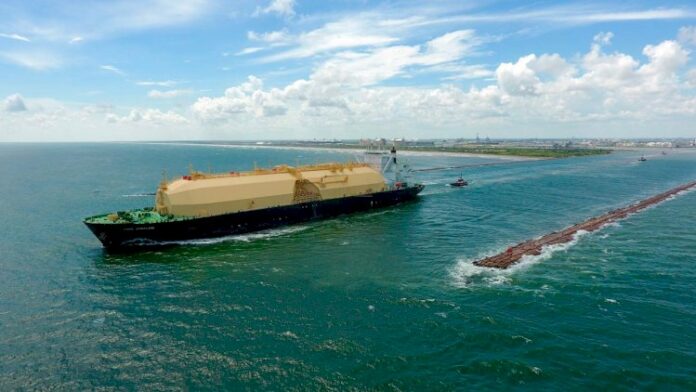
McDermott International, Inc. and its joint venture partner, Chiyoda International Corporation, a U.S.-based wholly-owned subsidiary of Chiyoda Corporation, Japan, today announced that Train 2 of the Cameron LNG project in Hackberry, La., has begun producing liquefied natural gas (LNG). While production is in the initial phases, this significant project accomplishment is a precursor to substantial completion of Train 2.

Mark Coscio, McDermott's Senior Vice President for North, Central and South America, said:
"This accomplishment is attributable to the entire team's unwavering commitment to project delivery and steadfast focus on safety and quality performance as we work toward completion of Train 2. We are confident their hard work and focus will continue through the remainder of the project."

McDermott and Chiyoda have provided the engineering, procurement and construction for the Cameron LNG project since the project's initial award in 2014. The project includes three liquefaction trains with a projected export of 12 million tonnes per annum of LNG, or approximately 1.7 billion cubic feet per day.

Cameron LNG is jointly owned by affiliates of Sempra LNG LLC, Total, Mitsui & Co., Ltd. and Japan LNG Investment, LLC, a company jointly owned by Mitsubishi Corporation and Nippon Yusen Kabushiki Kaisha (NYK).

Seafarer e-money platform MarCoPay accredited by Central Bank

0

On December 10, MarCoPay Inc. has obtained a certificate of registration from Bangko Sentral ng Pilipinas (BSP), the central bank of the Philippines, allowing the company to operate as an electronic money issuer.

In July 2019, NYK and Philippine-owned business group Transnational Diversified Group (TDG) announced the development of the new fintech platform MarCoPay. Now certified by BSP, it is well on its way to meet its target launch date for NYK operated vessels in early 2020. NYK plans to expand the service in which MarCoPay can be used by shipowners and ship-management companies outside of NYK next spring, form a world-class and highly secure platform which contributes to enhance the lives of seafarers and their families.

In accordance with the NYK Group’s medium-term management plan “Staying Ahead 2022 with Digitalization and Green,” NYK will continue its efforts in digitalization and supporting the lives of seafarers and their families around the world.

Transnational Diversified Group (TDG) is a globally competitive and highly progressive Philippine-owned business group that is comprised of over forty companies, primarily in logistics, ship management & manpower, travel & tourism, information and communications technology, and other investments in industries such as renewable energy, agriculture and real estate.
It has been actively working with NYK since its establishment in 1976 and has since become a respected strategic partner of large global corporations due to its world-class experience and win-win outlook.
 

Building an ecological baseline in the Central Pacific with USV

0

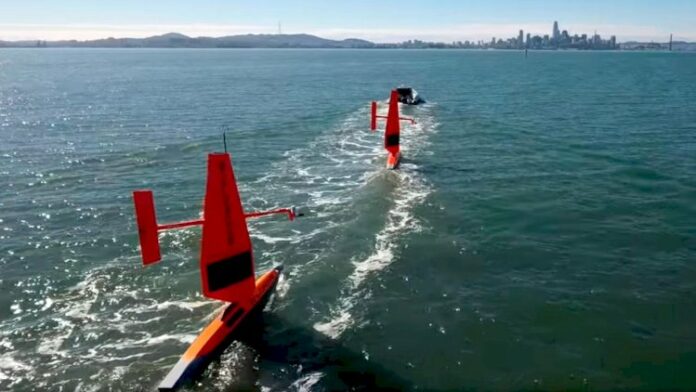
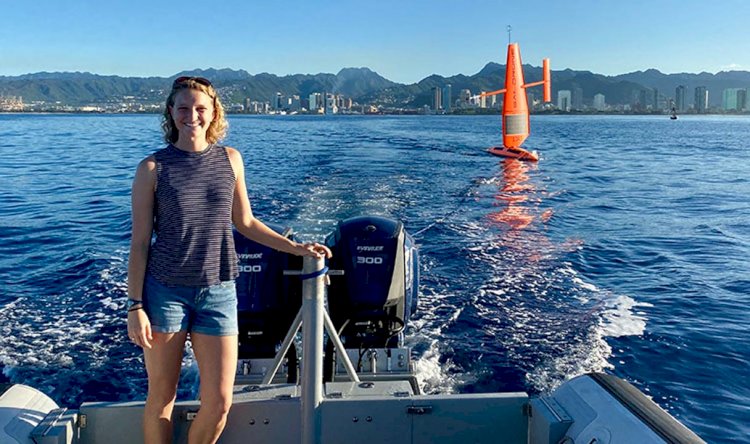
A Saildrone unmanned surface vehicle (USV) deployed from Honolulu, is studying the behavior of small midwater fishes, squids, and crustaceans, collectively called micronekton, in the Clarion-Clipperton Fracture Zone (CCZ) southeast of Hawai’i in order to establish an ecological baseline ahead of proposed deep seabed mining in the region. The 30-day mission is supported by a Saildrone Award.

The CCZ is a six million square kilometer area in the Central Pacific Ocean rich in polymetallic nodules—metal-rich deposits that have precipitated out of the water column over millions of years and settled on the seafloor. The metals of specific interest are cobalt, nickel, and copper, which are needed for electronics manufacturing and renewable energy (electric car batteries). Industrial-scale deep-sea mining in the CCZ, one of the largest reserves of polymetallic nodules on Earth, could begin as early as 2022.

Micronekton are often referred to as a prey community because these small animals provide food for top predators and commercially important species like tuna, billfishes, and marine mammals. They reside deep in the water column where light is limited, but every evening, billions of these tiny organisms migrate to the sea surface in search of food. This mass movement is called the diel (daily) vertical migration, and it’s the largest migration on the planet, in terms of biomass. The Hawai’i CCZ mission will address the question of variability in the vertical dynamic of midwater prey communities and how those dynamics are driven by the natural oceanography of the area.

Jessica Perelman, a Ph.D. candidate in the Department of Oceanography at the University of Hawai’i, said:

“Our goal is to characterize the ecosystems that might be influenced by the mining process, including these midwater species that migrate daily to the surface to feed, driving a lot of vertical connectivity and carbon transport in the water column.” 

Environmental drivers like light and oxygen are thought to cause micronekton and zooplankton to vertically migrate. These animals are trying to escape visual predation, but they also have certain physiological constraints; if there’s limited oxygen at a certain depth of the water column it could restrict their migration. Increased sediment in the water column from mining could affect the availability of light and oxygen.

Perelman explained:

“We want to be able to understand the correlation between those variables and the behaviors of these prey communities as they occur naturally so that we have a baseline to asses and monitor future changes in the CCZ prior to any environmental disturbances that might occur from impending human activities.”

Saildrone USVs are equipped with a suite of science-grade sensors to record meteorological and oceanographic data above and below the sea surface, including oxygen, salinity, and the conductivity, temperature, and pressure of seawater, as well as wind speed and direction, air temperature, relative humidity, and wave height and period. Hourly and minutely data is sent in real-time via satellite to Saildrone Mission Control; high-resolution (one second or better) data is available once the saildrone is retrieved.

For the Hawai’i CCZ mission, SD 1043 is also equipped with a Simrad WBT Mini (EK80) echo sounder. The echo sounder sends a pulse of sound through the water; the returning sound pulse echoing off the back of organisms in the water column called acoustic backscatter can be measured. Saildrones are wind and solar-powered vehicles, which makes them virtually silent. With no engine or moving mechanical parts, they are therefore capable of collecting echo sounder data much deeper in the water column than motor-powered vessels.

Perelman said:

“Deep-sea mining could have significant consequences on a massive ecosystem in the Central Pacific Ocean. It is critical to provide the groups that create regulations and monitor activities the best information possible from sound scientific research.”

Svitzer acquired Port Towage Amsterdam

0

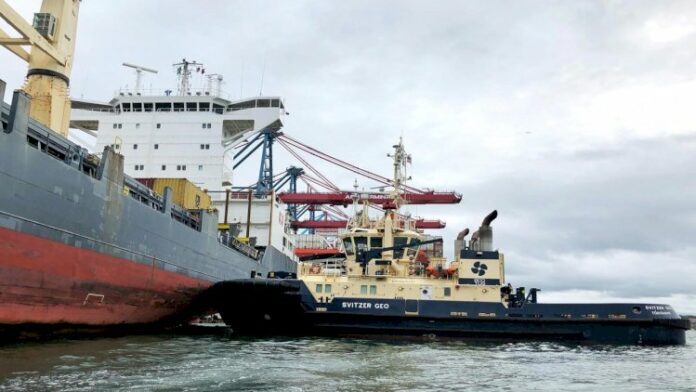
Svitzer, a leading provider of global marine services, has announced it has acquired Port Towage Amsterdam (PTA). PTA was formed in 2014 as a joint venture between Svitzer and Iskes Towage and Salvage, and following today’s announcement Svitzer expects to take complete ownership during January 2020.

As part of the agreement Svitzer acquires the shares from Iskes Towage and Salvage obtaining 100% ownership of PTA. The deal sees Svitzer taking over more than 30 employees, including crew from Iskes Towage and Salvage. Furthermore, nine shore based staff from PTA will be joining the Svitzer family. In addition, seven Iskes tugs will be taken over by Svitzer.

The acquisition marks the next step in Svitzer Europe’s 2025 strategy, which will see the organisation bolster its marine services offering and connect sea and shore through efficient and innovative towage operations.

Commenting on the acquisition, Kasper Nilaus, Managing Director, Svitzer Europe, said:

“At Svitzer we are committed to improving and strengthening our service offering, particularly for our customers in the busy ports of Amsterdam and Ijmuiden. That’s why this acquisition of PTA is a sensible move as we continue to serve this dynamic and important market.

With a total infrastructure solution spanning vessels, crew and shoreside staff already in place in Amsterdam, customers should anticipate no disruption to their service. We look forward to continuing the same flawless service delivered by PTA over the last six years. I would like to extend a warm welcome into the Svitzer family to both the skilled crews from Iskes and the highly qualified staff from PTA. Also, with this deal I am delighted to add another seven tugs to Svitzer’s fleet.”

The deal will see Svitzer take total control of PTA’s operations from January 2020. Fred Jeeninga, Cluster Managing Director of Svitzer Continental Europe, will head the new operation in Amsterdam.

This acquisition resolves concerns raised by the ACM (Authority Consumers & Markets) in the Netherlands regarding the full-functional nature of PTA. The ACM did not establish the existence of any infringement. As a values driven company with a strong culture and commitment towards competition compliance, Svitzer has worked closely and cooperatively with the ACM to address its concerns. Svitzer’s acquisition of PTA is consistent with the ACM’s guidance. 

SOLAS amendments entering into force 1 January 2020

0

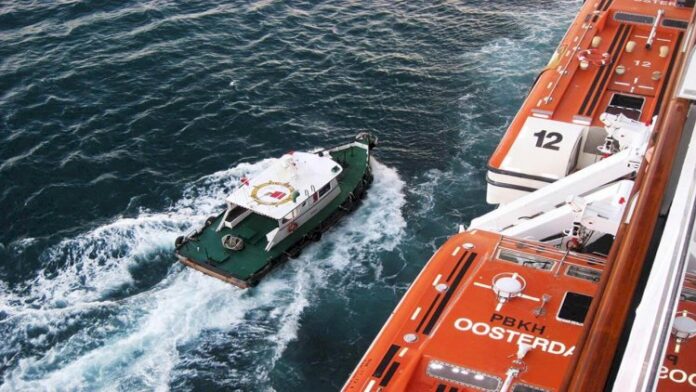
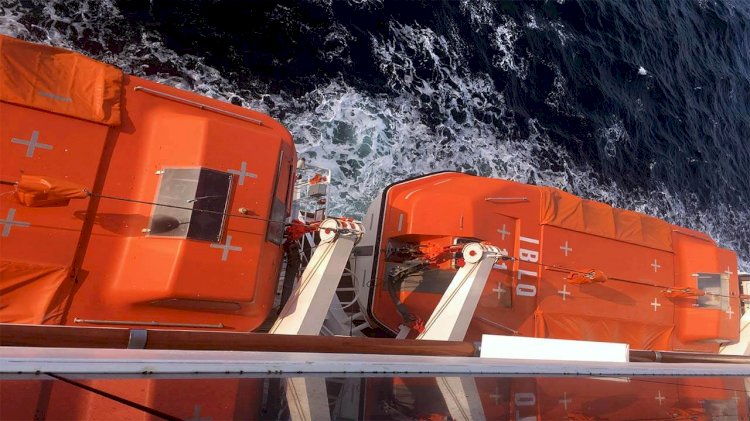
​Measures aimed at preventing accidents with lifeboats enter into force on 1 January 2020. The SOLAS amendments address maintenance, thorough examination, operational testing, overhaul and repair of lifeboats and rescue boats, launching appliances and release gear.

A set of important amendments to the International Convention for the Safety of Life at Sea (SOLAS) and various codes mandatory under the Convention enter into force on 1 January 2020.

They include:

Addressing lifeboat maintenance – preventing accidents with lifeboats

Amendments to SOLAS regulations III/3 and III/20 make mandatory the Requirements for maintenance, thorough examination, operational testing, overhaul and repair of lifeboats and rescue boats, launching appliances and release gear.  

This package of provisions aims to prevent accidents with survival craft and addresses longstanding issues such as the need for a uniform, safe and documented standard related to the servicing of these appliances, as well as the authorization, qualification and certification requirements to ensure that a reliable service is provided.

The intention is to ensure that seafarers are confident that they can fully rely on the survival craft at their disposal, which should comply with applicable SOLAS requirements.

Subdivision and damage stability

A set of amendments to SOLAS chapter II-1 relating to subdivision and  stability enter into force, amending, among other things, the regulations on the required subdivision of passenger ships to increase their safety, as well as regulations related to the stability information to be provided to a ship's master.

The amendments were developed following a substantive review of SOLAS chapter II-1, focusing in particular on new passenger ships. The review took into account recommendations arising from the investigation into the 2012 Costa Concordia casualty.

Planning for evacuation on cruise ships

Requirements for all new passenger ships carrying more than 36 passengers to be built with evacuation analysis early in the design process come into force.

The amendments to SOLAS regulation II-2/13 extend the requirements for evacuation analysis to all passenger ships, not just ro-ro passenger ships. The analysis should be used to identify and eliminate, as far as practicable, congestion which may develop during an abandonment due to normal movement of passengers and crew along escape routes, including the possibility that crew may need to move along these routes in a direction opposite to the movement of passengers. In addition, the analysis should be used to demonstrate that escape arrangements are sufficiently flexible to provide for the possibility that certain escape routes, assembly stations, embarkation stations or survival craft may not be available as a result of a casualty.

Expanding maritime satellite communications equipment providers 

Amendments to chapter IV of SOLAS and some codes provide for a "recognized mobile satellite service" to be installed for maritime distress and safety communications. Previously, the regulations specified an Inmarsat device.
Full list of SOLAS amendments entering into force on 1 January 2020: 

Amendments adopted by the 96th session of the Maritime Safety Committee (MSC 96):

  • Amendments to SOLAS regulations III/3 and III/20 to make mandatory the Requirements for maintenance, thorough examination, operational testing, overhaul and repair of lifeboats and rescue boats, launching appliances and release gear.
  • Amendments to SOLAS regulation II-2/13 to extend the requirements for evacuation analysis to all passenger ships, not just ro-ro passenger ships. (Associated revised guidelines on evacuation analysis for new and existing passenger ships were also approved). 
  • Amendments to chapter 8 of the International Code for Fire Safety Systems (FSS Code) regarding prevention of internal corrosion and clogging of sprinklers and the inclusion of a new chapter 17 in the FSS Code, mandating requirements for helicopter facility foam firefighting appliances. 

Amendments adopted by MSC 97:

  • Amendments to SOLAS regulation II-1/3-12 on protection against noise; and regulations II-2/1 and II-2/10 on firefighting and new regulation XI-1/2-1 on harmonization of survey periods of cargo ships not subject to the ESP Code.
  • Amendments to the 2008 International code on Intact Stability (IS Code), relating to ships engaged in anchor handling operations and to ships engaged in lifting and towing operations, including escort towing.
  • Amendments to the International Code for Fire Safety Systems (FSS Code), clarifying the distribution of crew in public spaces for calculating the width of stairways.
  •  Amendments to the International Code for the Construction and Equipment of Ships Carrying Liquefied Gases in Bulk (IGC Code), aligning the wheelhouse window fire-rating requirements in the IGC Code with those in SOLAS chapter II-2.

Amendments adopted by MSC 98:

  • A set of amendments to SOLAS chapter II-1 relating to subdivision and damage stability. The amendments were developed following a substantive review of chapter II-1, focusing in particular on new passenger ships. In conjunction, the MSC adopted revised explanatory notes to SOLAS chapter II-1 subdivision and damage stability regulations and revised guidance for watertight doors on passenger ships which may be opened during navigation.
  • Amendments to SOLAS regulation II-2/3.56, relating to the definition of "vehicle carrier" and adoption of new SOLAS regulation II-2/20.2 on fire safety requirements for cargo spaces containing vehicles with fuel in their tanks for their own propulsion, specifically vehicles which do not use their own propulsion within the cargo space.
  • Amendments to SOLAS regulation II-2/9.4.1.3 to clarify the requirements for fire integrity of windows on passenger ships carrying not more than 36 passengers and on special purpose ships with more than 60 (but no more than 240) persons on board.
  • Amendments to SOLAS regulations III/1.4, III/30 and III/37 on damage control drills for passenger ships, to require such drills to take place on all passenger ships from 2020.

Amendments adopted by MSC 99:

  • Amendments to SOLAS regulations II-1/1 and II-1/8-1, concerning computerized stability support for the ship's master in case of flooding, for existing passenger ships.
  • Amendments to chapter IV of SOLAS, and the appendix to the annex to the Convention, replacing all references to "Inmarsat" with references to a "recognized mobile satellite service" and consequential amendments to the International Code of Safety for High speed Craft, 1994 (1994 HSC Code), the International Code of Safety for High-speed Craft, 2000 (2000 HSC Code).
  • Amendments to update the IMDG Code (Amendment 39-18) in line with the latest recommendations of the United Nations Recommendations on the Transport of Dangerous Goods, including new provisions regarding IMO type 9 tanks, a set of new abbreviations for segregation groups and special provisions for the carriage of lithium batteries and vehicles powered by flammable liquid or gas.
  • Amendments to annex 3 to the International Code for the Application of Fire Test Procedures, 2010 (2010 FTP Code), concerning fire protection materials and required approval test methods for passenger ships and high-speed craft.
  •  Amendments to the model forms of the Certificates of Fitness, clarifying the requirement for an approved loading and stability manual/booklet to be supplied to the ship, under the International Code for the Construction and Equipment of Ships Carrying Dangerous Chemicals in Bulk (IBC Code), International Code for the Construction and Equipment of Ships Carrying Liquefied Gases in Bulk (IGC Code), Code for the Construction and Equipment of Ships Carrying Dangerous Chemicals in Bulk (BCH Code), Code for Existing Ships Carrying Liquefied Gases in Bulk (EGC Code), and the Code for the  Construction and Equipment of Ships Carrying Liquefied Gases in Bulk (GC Code).



New autonomous ferry company created by marine technologists

0

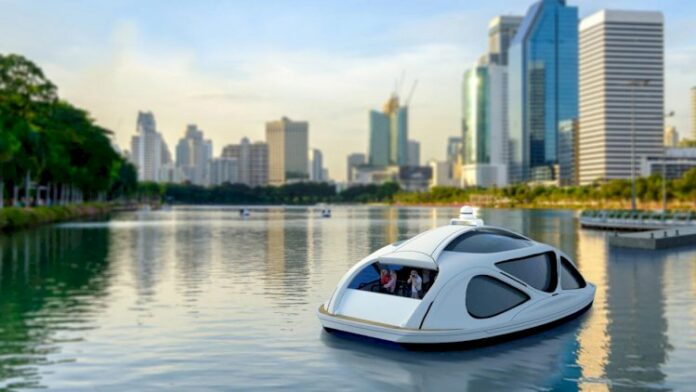
Leading marine technology entrepreneurs and the Norwegian University of Science and Technology (NTNU) have joined forces to set up a new company to build ‘emission-free marine mobility solutions’. 

Zeabuz intends to sell its ferries, infrastructure and services to coastal cities all around the world.

Former DNV GL top executive Bjørn K. Haugland and three NTNU professors with long industrial and entrepreneurial experience are part of the team.

Haugland, CEO of «Skift Business Climate Leaders» and chairman of the new company, says:

«Norway has a complete maritime cluster and together with NTNU's world-leading expertise in digitalisation, automation and autonomy, we can create a new industrial adventure».

The climate crisis means that there will be great demand for smart, climate-friendly mobility solutions worldwide. NTNU has been researching ship control and autonomy for many years, and the Norwegian industrial adventure concerning dynamic positioning of ships started at NTNU.

Today, this has given rise to a multimillion dollar industry centered in Norway. Zeabuz will sell autonomous mobility services to both cities and settlements along the coast, and will ally with strong Norwegian and international partners in designing and building the ferries themselves. The Zeabuz ferries will be small, electric and on-demand.

Asgeir J. Sørensen, director of NTNU's research center on autonomous maritime operations, NTNU AMOS, says:

"Autonomy fits like a glove with electric ferries. This enables better control, optimal operation, safety and maintenance.”

Susanne Jäschke, interim CEO of the company, says:

«Our autonomy solution is world-leading and can enable self-driving ferries that safely maneuver among other boats, dock to the quay by themselves and handle passengers safely. We work with DNV GL, the Norwegian Coastal Administration and the Norwegian Maritime Directorate to test two prototypes in Trondheim. The unique technology has been developed at NTNU and will be made available to the company».
 

Microplastics million times more abundant in the ocean than previously thought

0

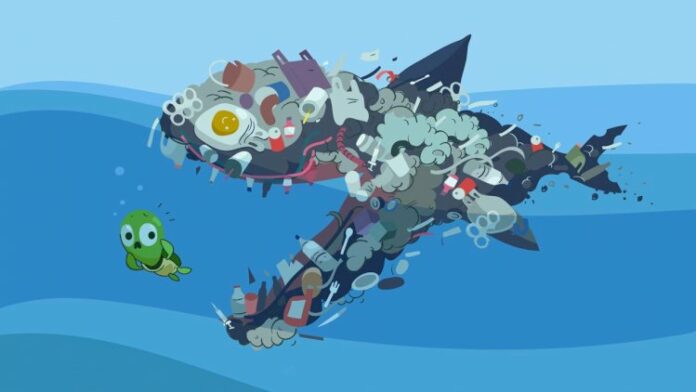
Nothing seems safe from plastic contamination. A new study by NSF-funded researchers at the Scripps Institution of Oceanography suggests there could be a million times more pieces of plastic in the ocean than previously estimated.

Biological oceanographer Jennifer Brandon found some of the tiniest microplastics in seawater at much higher concentrations than previously measured. Her method showed that the traditional way of counting marine microplastics is likely missing the smallest particles, suggesting that the number of microplastics in the ocean is off by five to seven orders of magnitude.

Brandon now estimates that the ocean is contaminated by 8.3 million pieces of mini-microplastics per cubic meter of water. Her discovery is published in Limnology and Oceanography Letters.

Brandon said:

"For years we've been doing microplastics studies the same way, by using a net to collect samples. But anything smaller than that net mesh has been escaping."

Most plastics are so chemically strong that neither microbes in soil nor water can break down the elemental bonds.

For answers, Brandon turned to salps, gelatinous filter-feeding invertebrates that suck in water to eat and to propel themselves around the upper 6,500 feet of the ocean. Their stomachs were a likely place to find mini-microplastics.

Of the 100 salps Brandon surveyed from water samples collected in 2009, 2013, 2014, 2015 and 2017, 100 percent had mini-microplastics in their guts.

The research was an outgrowth of basic research that took place at NSF's Central California Current Long-Term Ecological Research site.

Dan Thornhill, a program director in NSF's Division of Ocean Sciences, said:

"Despite tremendous interest in microplastics, we are just beginning to understand the scale and effects of these ocean contaminants. This study demonstrates that marine plastics are far more abundant than anyone realized and can be found potentially everywhere in the ocean. This is troubling, especially when the consequences for the environment and human health remain largely unknown."