-1.3 C
New York
Home Blog Page 923

Volkswagen Group with partners unveiled two new LNG powered car carriers

0

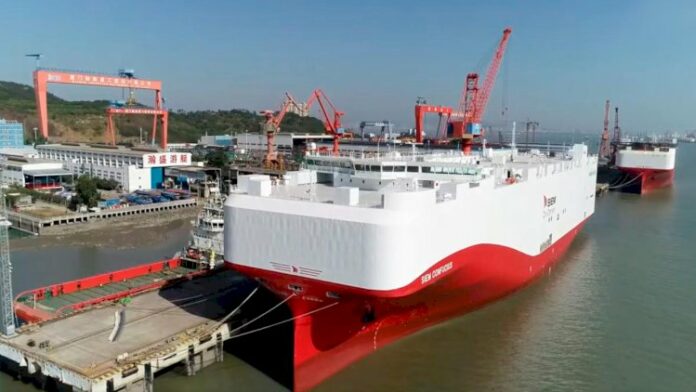
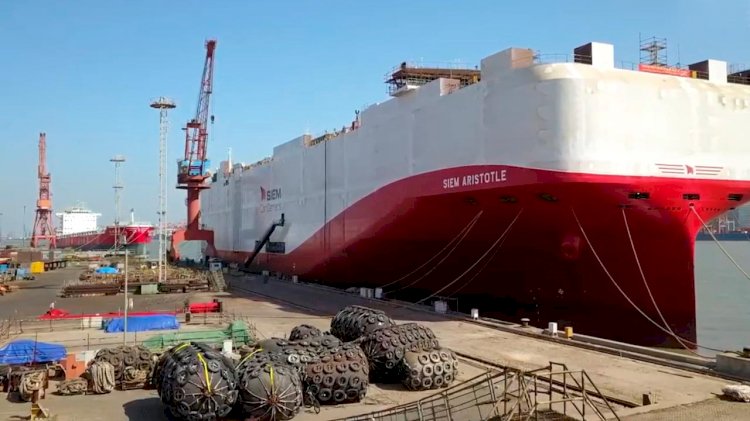
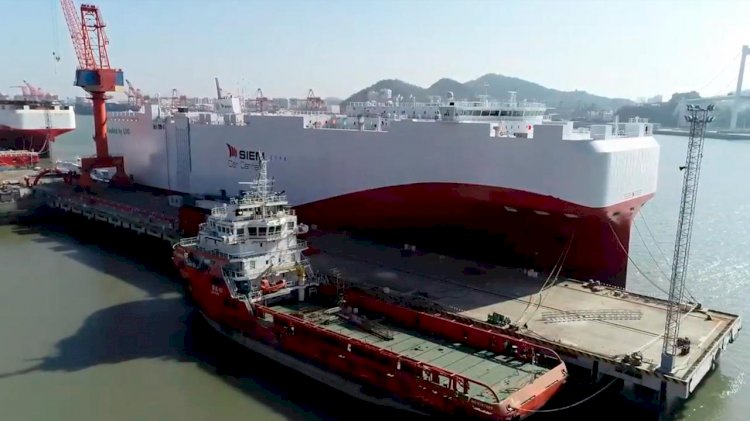
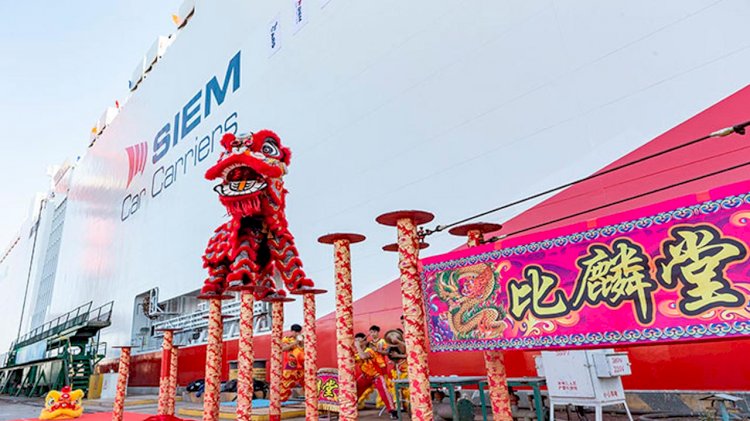
Commissioned exclusively for Volkswagen, the two ships – named Siem Confucius and Siem Aristotle – mark a critical turning point in how the industry’s biggest players are working together toward a future of sustainable marine transport.

Both ships are the first overseas car freighters in the world to be powered by clean burning liquefied natural gas (LNG), something that Volkswagen believes will contribute significantly towards it ‘goTOzero’ emissions strategy.

Christiane Eckert, Director of Group Strategy and Ecology at Volkswagen, says:

“It’s a very big milestone on our way to zero emissions shipping. For us at Volkswagen it’s important not only to talk about real investments in protecting the environment, but to actually act on it. It’s a really strong statement for us.”

The LNG-powered ships are set to replace two of the nine conventional oil-powered vessels currently used by Volkswagen on the Atlantic route between Europe and North America. Siem Confucius will begin shipping from beginning of 2020 after its transfer from Xiamen to Europe, while the second ship Siem Aristotle will start operations from spring 2020.

Thomas Zernechel, Head of Group Logistics at Volkswagen, comments on the ships’ strategic importance for Volkswagen Group's logistics:

"We are entering a new field here to reduce emissions. In addition to the increasing use of LNG trucks, conversion of our many rail transports to green electricity and the use of biofuel in the short sea segment, the two new LNG ships represent an important building block for our strategic goal of climate-neutral logistics.”

Both measure in at a hefty 200 meters by 38 meters and feature 13 car decks with a capacity of 7,500 CEU (car equivalent units), which will enable them to transport about 4,700 vehicles of the Volkswagen model mix in a single journey.

This makes them almost six meters wider than the car carriers currently in use, largely due to the additional space needed for two 1,800 cubic meter liquid gas tanks. To maintain the same freight capacity as conventional vessels, the ships were built significantly wider.

Once operational, both Siem Confucius and Siem Aristotle will have an average “eco-speed” of 16.5 knots and a full service speed of 19 knots, powered by a 12,600kW engine developed by MAN Energy Solutions. The real innovation, however, comes in the form of its reduced harmful emissions and particulate matter. The LNG engines can reduce carbon dioxide emissions by up to 25 percent and sulfur oxide emissions by up to 100 percent per ship. On its round trip voyages between Germany and the USA, the two car carriers will be fueled with LNG in Jacksonville, USA, and Emden, Germany, where two bunkering spots are available.

Put simply, these are among the most modern, efficient and eco-friendly ships in the world, according to Kenneth Ross, CEO of Siem Car Carriers:

“If you look at everything from their optimized design, speed reduction, the shape of the bow, even the quality of the paint – it’s a genuine breakthrough. It’s probably the most innovative project we’ve ever been involved with.”
Ross says shipping is traditionally a slow-moving and capital-intensive business that tends to focus on compliance over innovation. But this project forced the company to rethink this position and put innovation at the core. He says:

“When Volkswagen first came to us we fell back into a standard ship owner response and looked for technologies that would bring us to compliance, but compliance alone was not enough. Volkswagen were very clear that they wanted something much more than just compliance. It was something inspired by a vision of the future.”

That vision of the future was a compelling proposition for MAN Energy Solutions, which was tasked with powering this industry-first initiative. Mikael Adler, the Shanghai-based Vice President & Head of Asia Pacific and Engines & Marine Systems at MAN Energy Solutions, says the project highlighted a very important strategic objective of his company – decarbonization. Adler says:

“It’s a strong signal to send the market that technological change is here. Ship owners generally can be quite conservative, so I’m really happy that we have made this first major step. It’s very significant for us and we want to show the world that we have this clean technology. I think we will now see the LNG boom take hold.”
But LNG is just a first step on the road to decarbonizing the maritime economy. Adler says:

“On the long run we will need fully carbon-neutral synthetic fuels. We see tremendous potential in the Power-to-X technology which allows the generation of 100% climate-neutral natural gas from renewable energy. Any LNG-powered ship can also run on synthetic natural gas – so the Confucius and Aristotle are perfectly prepared for a climate-neutral future.”

During a meeting of the United Nations International Maritime Organization (IMO) in London last year, a global strategy to reduce greenhouse gas emissions by at least 40% by 2030 and 50% by 2050 was put into place. This included specific references to CO2 emissions reduction and a plan to phase them out entirely within this century. Targets like these are also a driving force for Volkswagen, which is now looking for significant change within its global workforce of some 660,000 people and right across its supply chain.

Eckert says:

“We are going to have a good look at the behavior of all our suppliers. It’s not just us acting on this initiative, we are trying to bring our partners on board who share the same vision. If you don’t have a strong vision you have nothing to accomplish.”

Eckert added that Volkswagen is aware of what this change means for suppliers and says there must be a win-win situation for everyone involved:

“If we can move forward in this direction then we hope others will follow us on this path. I think we can do quite a lot of things and investing in ships like these with low emissions is a good place to start.”
For Mikael Adler, the partnership represents something much deeper and more significant:

“To have partners like Siem and Volkswagen pushing for cleaner solutions, it makes me very happy. It’s been a huge global operation that has kept all our 130 offices around the globe engaged. There’s a lot of stakeholders all over the world and it’s been a great challenge.”

Ross says both Confucius and Aristotle are already 2050 compliant and the launch in Xiamen shows that the IMO target can be reached much faster than 2050:

“Any ship owners who are thinking about what they’re ordering today should be concerned about the life of the ship which they order if it’s running on oil. It may have a much shorter than they’ve come to expect in the past. But if a ship owner like us can work together in partnership with all the major players from equipment suppliers like MAN to Volkswagen, then we can achieve something truly great.”
Med Marine’s tugboat was delivered to Abu Dhabi Ports

0

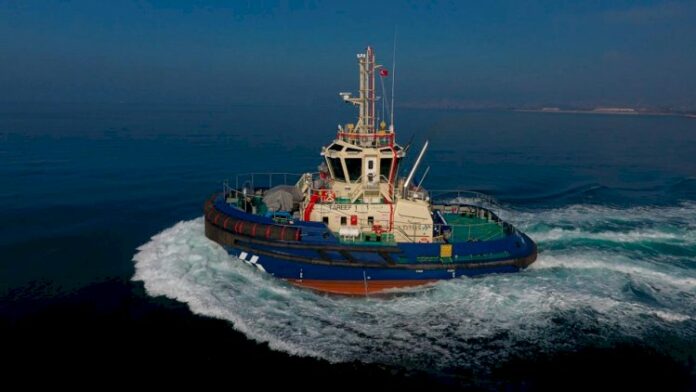
Med Marine, a global shipbuilder and tugboat operator, has completed the delivery of a MED-A2360 series tugboat to Abu Dhabi Ports’ flagship Khalifa Port.

Stemming from an agreement signed between the two parties back in August 2019, Med Marine’s MED-A2360 design is based upon Robert Allan’s RAmparts 2300-MM tugboat model.

Featuring a versatile, multi-purpose, and compact ASD design, the vessel, Tareef 1, boasts efficient ship-handling, coastal towing, escort, general-purpose duties, and fire-fighting capabilities.

R. Hakan Sen, CEO, Med Marine, said:

“We are proud to announce the successful delivery of Tareef 1 to Abu Dhabi Ports. Like our other MED-A2360s currently in service, Tareef 1 is a powerful and agile vessel that possesses the manoeuvrability to operate within challenging port environments.”

Compared to other 60 tonne BP designs, MED-A2360 series are shorter, more compact, but boast improved power and manoeuvrability, which allows them to counter challenges that may occur in narrow and shallow ports.

Med Marine’s extensive experience in building this exclusive design has played a key role in ensuring the smooth delivery of these vessels. With eight MED-A2360s built to date, the shipbuilder and tugboat operator is set to produce three more of this increasingly popular support ship.


Equinor launches a new climate roadmap

0

Eldar Sætre, president and CEO of Equinor, says:

“Today we are setting new short-, mid- and long-term ambitions to reduce our own greenhouse gas emissions and to shape our portfolio in line with the Paris Agreement. It is a good business strategy to ensure competitiveness and drive change towards a low carbon future, based on a strong commitment to value creation for our shareholders."

Sætre says:

"We are now looking 30 years into the future, and it is not possible to predict an exact shape and pace of the transition. Not for society and not for us. But we know there will have to be significant changes in the energy markets, and our portfolio will change accordingly to remain competitive. We will produce less oil in a low carbon future, but value creation from oil and gas will still be high, and renewables give significant new opportunities to create attractive returns and growth.

Equinor’s strategic direction is clear. We are developing as a broad energy company, leveraging the strong synergies between oil, gas, renewables, CCUS and hydrogen. We will continue addressing our own emissions in line with the emitter pays principle. But, we can and will do much more. As part of the energy industry, we must be part of the solution to combat climate change and address decarbonisation more broadly in line with changes in society.”

The ambition to reduce net carbon intensity by at least 50% by 2050 takes into account scope 1, 2 and 3 emissions, from initial production to final consumption. By 2050 each unit of energy produced will, on average, have less than half of the emissions compared to today. The ambition is expected to be met primarily through significant growth in renewables and changes in the scale and composition of the oil and gas portfolio. Operational efficiency, CCUS and hydrogen will also be important, and recognised offset mechanisms and natural sinks may be used as a supplement.
 
In 2026, Equinor expects a production capacity from renewable projects of 4 to 6 GW, Equinor share, mainly based on the current project portfolio. This is around 10 times higher than today’s capacity, implying an annual average growth rate of more than 30%. Towards 2035, Equinor expects to increase installed renewables capacity further to 12 to 16 GW, dependent on availability of attractive project opportunities.

Sætre adds:

“In order to combat climate change, governments, business and society must find new and sustainable solutions together. As a pioneer in CCUS, Equinor is engaged in building a European value chain, capturing and storing CO2 from third-party industrial sites. This, combined with a strong position within natural gas, makes Equinor prepared for future growth in hydrogen, which offers large scale opportunities for zero emission energy.”

The scale and composition of Equinor’s oil and gas portfolio, and the efficiency of its operations, will play a key role in achieving Equinor’s net carbon intensity ambition. Carbon efficient production of oil and gas will increasingly be a competitive advantage, and Equinor will seek to ensure a high value and robust oil and gas portfolio.

In January 2020, Equinor announced an unprecedented set of ambitions to reduce absolute greenhouse gas emissions from its operated offshore fields and onshore plants in Norway by 40% by 2030, 70% by 2040 and towards near zero by 2050. The ambition can be realised through electrification projects, energy efficiency measures and new value chains such as carbon capture and storage and hydrogen.

Equinor is aiming to reduce the CO2 intensity of its globally operated oil and gas production to below 8 kg per barrel of oil equivalent by 2025, five years earlier than the previous ambition. The current global industry average is 18 kg CO2 per barrel.

Equinor sets a new ambition to reach carbon neutral global operations by 2030. The main priority will be to reduce greenhouse gas emissions from own operations. Remaining emissions will be compensated either through quota trading systems, such as EU ETS, or high-quality offset mechanisms. By setting this ambition, Equinor demonstrates its long-standing support to carbon pricing and the establishment of global carbon market mechanisms as outlined in the Paris Agreement.

Equinor’s low methane emissions are industry leading at around 10% of the global industry average. The climate roadmap includes ambitions to keep methane emissions at near zero and to eliminate routine flaring before 2030.

Eldar Sætre concludes:

“The new climate roadmap illustrates our pathway to be a shaper in the energy transition and the future of energy. It is also an invitation to our partners, customers, suppliers and governments to work together on the necessary actions to combat climate change.”

Hapag-Lloyd launches remote reefer supply chain monitoring tool

0

Container shipping company Hapag-Lloyd is adding near real-time monitoring of its reefer containers to their product portfolio.

“Hapag-Lloyd LIVE” increases the transparency of the cold chain by offering customers a number of data sets about the condition and location of their reefer containers. The product will initially be launched to a selected group of customers and will gradually be made available as the reefer fleet of some 100,000 containers is being outfitted with the monitoring devices.

Juan Carlos Duk, Managing Director Global Commercial Development, says:

“At the core of our Strategy 2023 is an enhanced differentiation by offering unrivalled levels of reliability and service quality. To be number one for quality is the ultimate promise to our customers and a strong differentiator from our competitors. Hapag-Lloyd LIVE’ significantly increases the reliability of the global supply chain and the accountability of all parties involved. We are committed to the highest level of transparency by making data available unfiltered and untampered.”

The new solution is a step to further digitalize the supply chain of refrigerated cargo. Customers who use “Hapag-Lloyd LIVE” in the future will benefit from customizable graphic temperature limits, a convenient map mode, and easily downloadable data sets as part of the ‘basic product’.

The data will be conveniently accessible via the customer experience dashboard “Hapag-Lloyd Navigator” which was just launched in December 2019. With Hapag-Lloyd LIVE as a new feature, customers are now able to see all relevant shipment related information at one glance. At roll out, the following data will be made available:

  • Actual temperature set point
  • Supply & Return Air temperatures
  • GPS location information
  • Container Track & Trace Events

Hapag-Lloyd works closely with its customers to adapt the new solution based on their feedback. The available data and the features in the basic product line of “Hapag-Lloyd LIVE” will be gradually expanded according to the needs of the customers.

Benjamin Kaiser, Kuehne + Nagel, Vice President Global Reefer Trade, says:

“It is encouraging to see Hapag Lloyd LIVE being introduced to the reefer fleet. For Kuehne + Nagel as well as our customers, transparency of the supply chain is critical to deliver cargo in the best possible quality. The collaboration on the product at this early stage enables us to shape the product to our customer's needs.”

The remote container monitoring devices will be developed by leading supply chain visibility solutions provider Globe Tracker ApS. The transmitters send data whenever the vessel is within mobile network reach – up to every 15 minutes when connected to a power source, otherwise every four hours. The entire reefer fleet will gradually be equipped with the devices, starting with a focus on Europe and South America. 
 

VIDEO: Armada’s largest fleet of unmanned surface robots

0

Ocean Infinity has announced the launch of a new pioneering marine technology and data company, Armada.

Largest fleet of unmanned surface robots and most environmentally sustainable company in the industry.

Armada, with a focus on combining technology and sustainability, will initially add fifteen bespoke designed marine robots to Ocean Infinity’s current fleet of autonomous underwater vehicles.

The launch of Armada marks a major technological advance in the industry. Each unmanned surface robot will serve a wide range of industries by being fully equipped to perform a multiplicity of offshore data acquisition and intervention operations down to a depth of 6,000 meters. These robot ships will be capable of remotely deploying a wide range of the latest sensors as well as AUVs and ROVs for visual and acoustic data acquisition.

Armada’s fleet requires neither people on board nor a host vessel nearby.  Instead they will be controlled and operated by experienced mariners via satellite communications from state of the art onshore facilities in both Austin (Texas) and Southampton (England). With zero people required at sea Armada operations are set to be the safest the industry has seen. The fleet approach produces up to 90% less CO2 than other conventional survey vessels, also making it the most environmentally sustainable company in the industry.

Armada’s fleet is currently under construction and is expected to be deployable by the end of 2020.

Oliver Plunkett, CEO for Ocean Infinity, said:

“We’ve been driven to innovate by a desire to further reduce our impact on the environment and the time people spend at sea. We have built an outstanding team who boast world leading expertise to take this next stage of our business forward for the benefit of our clients and all those who work with us.

The launch of Armada re-confirms Ocean Infinity as the leading marine robotics and ocean data company in the world. ”

Dan Hook, Managing Director for Armada, said:

“We are very excited to be launching Armada, which perfectly complements the other service offerings in the Ocean Infinity Group. The pioneering technology makes our operations world leading in terms of environmental sustainability and safety, whilst still achieving the very highest levels of data quality and value for our clients.  With no requirement for a host vessel, we are breaking new ground in the area of sub-sea technology and data.  We look forward to providing our existing and new clients with a best in class solution that will be revolutionary for the industry.”

KONGSBERG launches new app for Vessel Insight users

0

Ship owners and operators using Vessel Insight can now improve performance, reporting and reduce fuel and energy consumption through the new KONGSBERG application Vessel Performance. Users will also achieve increased transparency and awareness about vessel emissions.  

The Vessel Performance application collects contextualized data from the ship using KONGSBERG’s data infrastructure solution Vessel Insight. The data is used to generate real-time value for users with tools for reducing fuel consumption and unnecessary running of equipment, optimizing equipment maintenance windows, and simplify reporting according to up to date regulatory requirements. 

Vigleik Takle, SVP Maritime Digital Solutions in Kongsberg Digital, says:

"Aside from getting access to contextualized data from your vessels, one of the main benefits of using Vessel Insight is the immediate access to value adding applications. Vessel Performance will increase the value for customers who are Vessel Insight users and help them reduce costs, utilize their assets better and stay compliant with new regulations." 

Vessel Performance reduces system and information complexity, improves ship and office communication and operational awareness. All information from the application will be available in the cloud, on the vessel and onshore. The application provides details on fuel consumption and overall energy efficiency levels benchmarked against historical performance, allowing the crew to exploit opportunities to minimize fuel usage and emissions. Vessel Performance is highly customizable and can be configured to meet specific customer needs across a wide range of vessels.  

Bård Bjørløw, EVP Global Sales and Marketing at Kongsberg Maritime, says:

"KONGSBERG’s vast experience in vessel and equipment design places us in a leading position in the development of unified applications, delivered seamlessly via Vessel Insight. By making efficiency data easily available, Vessel Performance will facilitate vessel and fleet operations, enabling decisions in real time."

Digital tools are being used for new shipping routes in Danish waters

0

On July 1, 2020, new shipping routes will be established in Kattegat and Skagerrak. The routes will increase the safety of navigation for the 70,000 ships that pass through the waters annually.

​Work is currently underway on the production of new charts and information for the ships so that the Danish and Swedish maritime authorities can be ready for the final establishment on July 1, 2020. The Danish Maritime Authority is preparing the new shipping routes in collaboration with the Swedish Transport Agency and the charting authorities in both countries. The new shipping routes were approved by the United Nations’ maritime organization, IMO, in 2018.

The current Kattegat shipping route, Route T, was established over 40 years ago. Today, ships are built much larger, and approximately 70,000 ships sail through Kattegat annually, including many deep-draught tankers sailing to and from the Baltic Sea.

The new shipping routes are established to create more predictable traffic patterns and to guide the ships on routes that separate oncoming ship traffic better, thus increasing the safety of navigation. On some sections, so-called traffic separation schemes are introduced, which will simplify sailing and help prevent ship collisions.

In addition to the traditional aids to navigation, the new shipping routes will in several places be marked with virtual AIS buoys. These type of buoys differs from traditional buoys as they are not physically found in the water, but only visible on the ship’s navigation system. Furthermore, the AIS system can be used to send fast information directly to the ships. In the period leading up to July 1, 2020, the AIS system will continuously release information about the impending route changes.
 

ABS and POML collaborate on condition-based class pilot project

0

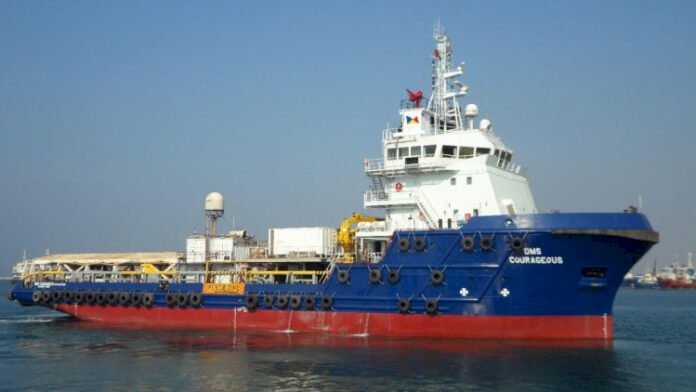
ABS and P&O Maritime Logistics (POML) have agreed to a pioneering condition-based class (CBC) pilot project for the platform supply vessel (PSV), DMS Courageous.

The historic agreement will see the vessel become the first to utilize ABS Nautical Systems® as the computerized maintenance management system to transmit planned maintenance data and condition-based maintenance activities to ABS, for the purpose of potentially crediting class survey requirements.

ABS CBC will enable less intrusive surveys of hull and machinery systems through alternative means of verification of compliance to specific survey requirements.

Delivered in three progressive phases, the project focuses initially on improving alternative means of compliance verification, then expanding and evolving to apply remote survey techniques, and ultimately leveraging predictive capabilities to transform the Class process and create efficiencies in onboard surveys.

Christopher J. Wiernicki, ABS Chairman, President and CEO, said:

“We are taking bold steps today that demonstrate the evolution of maritime safety in a digital world. Not only does this show how we are leading the industry in delivering next generation services, it underscores our commitment to harnessing the potential of digital technologies for the benefit of our clients and members.”

Martin Helweg, Chief Operating Officer of P&O Maritime Logistics, said:

“A cardinal element to our future is our continued disruption of the segments in which we operate – pushing ourselves to implement solutions which challenge conventional thinking methods. Our customer demands are increasingly shifting towards advanced services, and in response we began to digitize aspects of our service offering to optimize the supply chain. Through partnerships with companies like ABS, we continue to offer and deliver a difference which drives value for our customers.”

The technology will not only allow POML to further streamline its maintenance and management organization to reduce OPEX, but will also improve processes through leveraging new technologies.

The DMS Courageous project builds on the longstanding relationship between ABS and POML. The project utilizes ABS’ Remote Survey offerings and the ABS Guide on Smart Function for Marine Vessels and Offshore Units which introduced the industry’s first notations on Smart technology applications. This, in turn, supports the development of condition-based approaches to enhance safety and increase vessel operating time.  Recently, the Caspian Voyager, POML’s largest modern PSV in the Caspian Sea, entered into an ABS extended dry-docking scheme, intended to begin the CBC process, with the goal of enrolling the entire fleet into the ABS CBC program within the next five years.

DNV GL FuelBoss platform creates new online hub for LNG bunkering

0

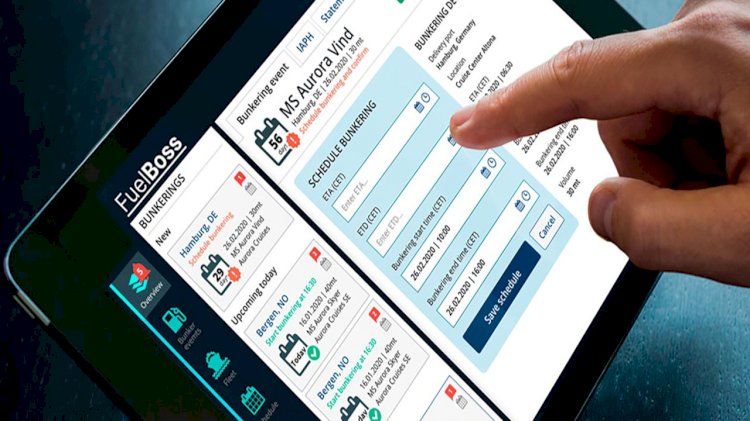
FuelBoss is a new online bunkering platform for LNG, to take operators seamlessly from order through to delivery.

As the adoption of LNG as a ship fuel continues to speed up, DNV GL has launched a new online bunkering platform to take operators seamlessly from order through to delivery. FuelBoss offers ship owners, operators and suppliers a single common platform for nomination, scheduling, spot inquiries and business intelligence. LNG suppliers Gasum, Cryo Shipping and Nauticor are amongst the confirmed pilot customers and have supported the development with their expertise and domain knowledge.

LNG has arrived in shipping. After a long wait, the number of vessels trading will more than double in the next two years. As the fleet grows from vessels that primarily work fixed routes to those in more general operation, the complexities of LNG bunkering and planning need to adapt to these changing patterns.

Trond Hodne, Senior Vice President at DNV GL – Maritime, says:

“The idea behind FuelBoss is to accelerate the uptake of LNG in the maritime industry by providing suppliers with a highly efficient tool for managing all their customers and day to day operations, while offering ship operators a common interface for interacting with LNG suppliers. FuelBoss will standardize and simplify daily work processes and enable the LNG fuel industry to reap the benefits of digitalization. 

At the moment, both the interest in and the number of vessels using LNG is growing rapidly, but the bunkering picture is still fragmented. Delivery costs can be a significant part of the delivered LNG price, so optimizing the supply chain is essential. FuelBoss will let LNG suppliers and shipowners reap the network benefits of having a single platform for this growing market.”

Photo: DNV GL

Online and open to anyone, FuelBoss is an integrated tool for LNG bunkering, allowing users to order bunker volumes within term contracts in a standardized format, keep track of changes and monitor involved assets, communicate through an integrated messaging service and digitally fill in, sign and archive forms and documentation from the bunkering process. The platform will facilitate spot inquiries outside term contracts and the users will also have access to a map-based overview of assets to keep track of LNG-fuelled ships and LNG bunker vessels through live and historic AIS feed. Signing up to the platform is free for ship owners and other buyers of LNG fuel.

The platform integrates software developed by port call optimization and maritime supply chain specialist Teqplay. This software has been validated and used by LNG supplier Shell and their customers for a year, to plan and execute LNG bunkering operations. Leon Gommans, CEO Teqplay, says:

“With the complexity of planning and coordinating operations for serving their growing customer base, Shell saw the need for a tailored digital tool that standardized the planning and work processes around the LNG bunker vessel operations. As LNG bunkering of Shell’s customers will be carried out by an increasingly global organisation to support the adoption of LNG fuel in new regions, the need for cost-competitive and standardized work processes became even more pressing.”

With FuelBoss, DNV GL and Teqplay have brought the market a flexible solution to fit the needs of both small and large LNG suppliers. LNG suppliers Gasum, Cryo Shipping and Nauticor have all signed up as pilot customers and have already supported the development with their user requirements, to ensure it becomes an efficient tool to manage their daily operations. DNV GL will continue to develop features for FuelBoss, including the integration of ship sensor data, data analytics for business intelligence, and support for other alternative fuels as demand grows.

The platform is due to launch commercially in April this year.

Finnlines ships to go green with Wärtsilä Hybrid Systems

0

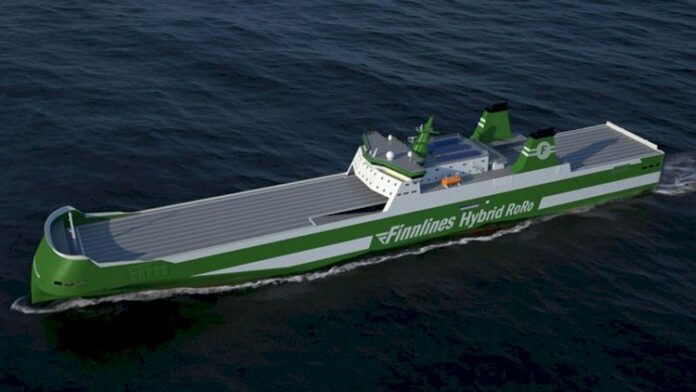
The technology group Wärtsilä will supply its Hybrid Power Conversion system for three new RoRo ferries being built at the Nanjing Jinling shipyard in China for Finnlines, a part of the Italian Grimaldi Group. The order with Wärtsilä was placed in Q4 2019.

The hybrid solution, which includes a 5000 kWh energy storage system, will enable these ships to operate with zero emissions while in port, and to meet the Registro Italiano Navale (RINA) Green Plus class notation. They will also have Ice Class classification 1A Super.

Mikael Lindholm, Head of Newbuilding Department, Finnlines, says:

“Wärtsilä’s Smart Marine approach to technology development aims at delivering highly efficient solutions with minimal impact on the environment. This order is one more example of how we turn this approach into practical and reliable reality.”

Emanuele Grimaldi, CEO of Finnlines, says:

“These new ferries will be among the most environmentally sustainable ships of their type. Finnlines is a frontrunner in the development of hybrid power ships, of marine battery packs and of energy management systems. By investing in research & development and by teaming with its suppliers, Finnlines aims at meeting well on time all the ambitious environmental targets set by the IMO and by the international community for shipping.”

Wärtsilä’s equipment, which also includes in-line shaft generators, power take-off/take in converters, and transformers, is scheduled for delivery to the yard in the second half of 2020. The 238 metres long vessels will serve Finnlines’ routes.