-1.3 C
New York
Home Blog Page 924

New digital tool helps shipowners to track the spread of the coronavirus outbreak

0

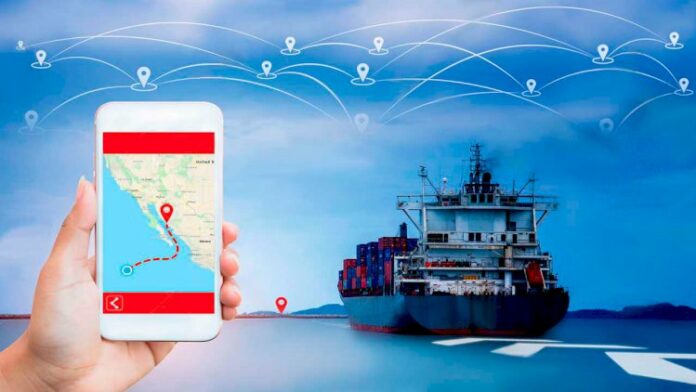
North P&I Club has launched a new digital tool that will help shipowners and operators track the spread of the coronavirus outbreak.

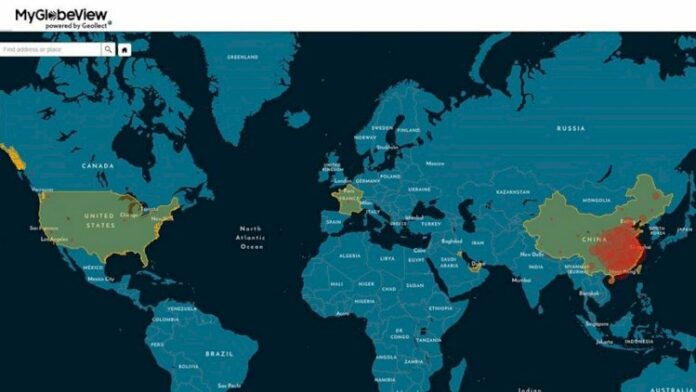
North P&I Club has developed its MyGlobeView platform – an interactive map which Members use to identify commercial risks and physical threats to shipping around the world – so that it now can provide live updates as to the number of confirmed cases of the virus, countries at risk and what to look out for.

The software, which sources its data from the World Health Organization (WHO) and other leading sources, can assist ships with chartering, operations and help prepare staff for what to expect when arriving in port.

Simon MacLeod, North deputy director – loss prevention, said:

“We are committed to ensuring that our ship owner Members have easy access to up-to-date advice and guidance to operate safely. So, we take outbreaks like the coronavirus very seriously and have acted quickly to release this latest update to our MyGlobeView platform. As well as receiving information from the WHO, John Hopkins University and other organisations tracking the virus, we also have a huge network of contacts in ports across the world, who are updating us with local information as the infection spreads. This means the software is as up to date and informative as possible.”

The coronavirus, which originated in Wuhan, China at the end of 2019, has so far seen more than 20,000 people infected across China, Europe, North America and the UK – including two confirmed cases in the North East. Over 400 people have died so far, all in China.

The WHO has declared the crisis a global health emergency.
 

AST launches its new Optima Package

0

Global innovator of intelligent remote satellite communication solutions, AST, announced today the official launch of its unique Iridium Certus “Optima Package”. The all-inclusive Iridium Certus package from AST offers unrivalled flexibility and capability for users who require dependable global connectivity without the barrier of upfront capital investment.

AST's exclusive Optima Package, will offer no upfront cost, flexible Iridium Certus airtime plans and inclusive hardware terminals. The unique package from AST, designed to deliver outstanding value, will enable a wide range of both Land and Maritime customers to adopt the Iridium Certus service, benefitting from brand new hardware, the fastest L-Band data speeds and truly global coverage – all for one single fixed monthly fee. 

AST’s market-leading “Optima Package” offers much more than the Iridium Certus service alone. It also includes INTEGRA Control, the only real-time data management solution on the market; IRIS, their award-winning remote monitoring solution, and access to their highly experienced 24/7 manned Global Customer Support Team. 

Gregory Darling, Group Managing Director, said:

“A little over a year ago, AST made the first commercial call over the Iridium Certus network and since then we have successfully activated hundreds of services for customers around the world. With the launch of our unique Optima Package and with Iridium Certus due to become the fastest L-Band service ever available, we believe that many more customers will be in a position to adopt Iridium Certus as their service of choice. AST is also proud to have been chosen by Iridium as one of a few GMDSS launch partners.”

The new GMDSS service planned to go live in the first half of 2020 will provide truly global satellite GMDSS service to mariners and offer a new choice in satellite network and equipment. The addition of Iridium as a GMDSS provider will extend the coverage of this service to 100 percent of the planet's waterways, including the dangerous A4 regions (Arctic and Antarctic) for the first time. In the future, Iridium Certus will be all that is required on-board to meet global maritime safety standards.

Ørsted launches programme for carbon neutral supply chain by 2040

0

Renewable energy company Ørsted sets out to work with its suppliers to decarbonise the supply chain by 2040.

Companies will have to cut emissions faster and further across their operations and supply chains if the world is to limit global warming to 1.5°C by reaching net-zero emissions in 2050. Ørsted, one of the world's largest renewable energy companies and recently named the most sustainable company in the world, has announced that it will be carbon neutral by 2025 and will reach net-zero emissions across the company's entire carbon footprint by 2040. 

Ørsted's carbon footprint is comprised of two parts: The company's own emissions from energy generation and operations; and the emissions from the energy traded by the company and the goods and services in its supply chain. On track to be carbon neutral in energy generation and operations by 2025, the company wants to cut energy trading and supply chain emissions in half by 2032 and then down to net-zero emissions by 2040.

Henrik Poulsen, CEO of Ørsted says:

"It'll be challenging to reach a carbon neutral footprint by 2040, and it'll require significant innovation in all parts of our supply chain. Many of the green technologies to be used to decarbonise our supply chain exist but they're not yet cost competitive. With the 2040 target, we want to help drive the necessary innovation forward to mature the green technologies in the industries that supply to us."

As Ørsted phases out trading of natural gas and accelerates the build-out of renewables, supply chain emissions will increasingly come into focus, the company outlines in its 2019 Sustainability Report.

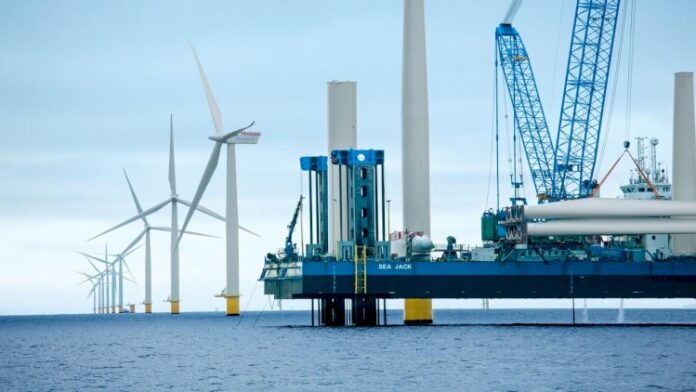
To decarbonise the supply chain, Ørsted is now launching a programme with the aim of engaging its strategic suppliers in the most carbon-intensive categories of the Ørsted supply chain: the manufacture of wind turbines, foundations, substations and cables. These are produced using steel, aluminium and copper, among other materials, which are energy intensive to extract and manufacture. The second largest source of supply chain emissions is the fossil fuels used by the maritime vessels that transport and install offshore wind components.

Henrik Poulsen says:

"Reducing emissions in the renewable energy supply chain is a significant task. Businesses will need to collaborate across supply chains to cut emissions at the pace and scale demanded by science. We now reach out to our industry-leading suppliers to join forces to accelerate the global green transformation."

In its supplier engagement programme, Ørsted will ask its strategic suppliers to:

  • disclose their own emissions and set science-based carbon reduction targets
  • use 100% renewable electricity in the manufacture of wind turbines, foundations, cables, substations and components
  • optimise their current vessel fleet and develop a roadmap to power vessels with renewable energy.

Ørsted has more than 22,000 suppliers, with strategic suppliers constituting 50% of the company's total procurement spend. Ørsted will also encourage its remaining suppliers to reduce the carbon impact of their goods and services and is strengthening the sustainability criteria in the company's procurement tenders.

Ørsted's carbon emission reduction targets are science-based targets approved by the non-profit Science-Based Targets initiative (SBTi). The SBTi has validated Ørsted's targets and classified them as more ambitious than a well below 2°C trajectory. Moreover, the initiative has preliminarily concluded that Ørsted's targets align with 1.5°C, with SBTi's methodology to assess this alignment to be launched later in 2020.

Targets in Ørsted's decarbonisation programme

By 2023

  • Phase out coal completely. Over the past decade, Ørsted has shut down three coal-fired power plants in Denmark. Power plants that play a key role in generating heat to Danish households and industry have been converted from coal to certified sustainable biomass. One remaining coal-fired power plant will be shut down by 2023.

By 2025

  • Carbon neutral operations and energy generation.
  • By phasing out fossil fuels and installing 20GW of renewable energy, carbon emissions will have been reduced by at least 98% by 2025, as compared with 2006.
  • Continue to reduce carbon emissions beyond 98% by switching to a fleet of electric vehicles in the company car fleet, in line with the EV100 requirements, and finding other reduction opportunities in the energy generation and operations.
  • Offset any residual emissions through verified, measurable and additional carbon removal projects.

By 2030

  • Build more than 30GW of green energy across technologies – enough to power more than 55 million people.

By 2032

  • Reduce emissions from energy trading and in the supply chain by 50%, as compared with 2018, to align carbon reductions across the entire carbon footprint with the 1.5°C pathway.

By 2040

  • Carbon neutral footprint a decade ahead of the 1.5°C pathway by driving out remaining emissions from energy trading and from the supply chain.

NYK to build second LNG-fueled PCTC

0

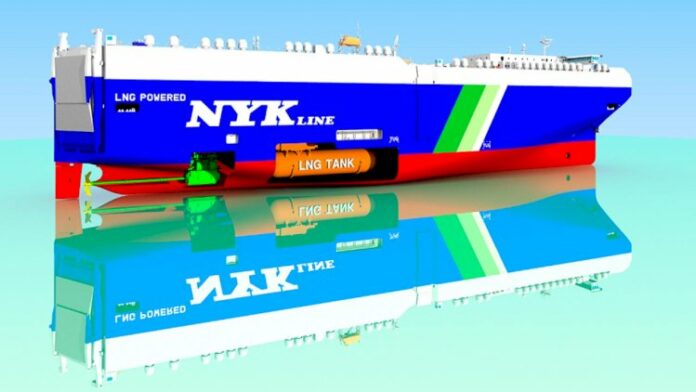
NYK has concluded a contract with Shin Kurushima Dockyard Co. Ltd. to build a second LNG-fueled pure car and truck carrier (PCTC).

With this new vessel, NYK will be able to provide more customers with a low-carbon transportation mode, and the company will continue its efforts to reduce its environmental load and contribute to the realization of a sustainable society.

NYK aims to integrate ESG principles into management strategies by making efforts to reduce CO2 emissions per voyage through full use of the company’s technological capabilities, such as the development of energy-saving technologies and the optimization of operations through the use of digitalization and big data (e.g., autonomous navigation technologies).

NYK has also positioned LNG fuel as one of the bridging technologies to realize future zero-emission ships. The company aims to have a clean transportation mode that will reduce the environmental burden of the entire PCTC fleet.

The shipbuilding contract was signed at NYK’s head office on January 31. The vessel is scheduled to be delivered in 2022 and will become NYK’s second LNG-fueled PCTC.

The first vessel NYK announced on September 24, 2019, was selected as a model project by Japan’s Ministry of Environment and Ministry of Land, Infrastructure, Transport and Tourism, and will receive support from the ministries for technical verification of CO2 emission reductions during actual voyages.

Vessel Particulars

  • Length overall: about 199.95 meters
  • Breadth: about 38.00 meters
  • Total car capacity: 7,000 units
  • Gross tonnage: 73,500 tons
  • Flag: Japan

The company is making a proactive effort to shift to LNG-fueled vessels as one solution to environmental concerns. In addition to these LNG-fueled PCTCs, an LNG-fueled coal carrier will be delivered in 2023.

Additionally, in 2015 Japan’s first LNG-fueled ship, the tugboat Sakigake, was delivered, and in 2017 the world's first purpose-built LNG bunkering vessel entered operation.

Further, NYK is making use of the expertise and know-how the company has obtained through LNG transportation over the years to expand its range of businesses to include LNG-fuel supply and sale.

Northrop Grumman to integrate sonar system onto L3Harris unmanned undersea vehicle

0

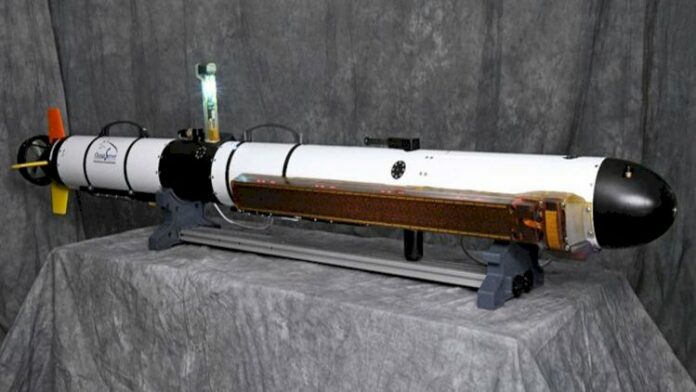
Northrop Grumman Corporation’s µSASTM (pronounced “micro-sas”) will be integrated onto L3Harris Technologies’ Iver4 Unmanned Undersea Vehicle (UUV) for a 12-month test period for the Defense Innovation Unit’s (DIU) Next Generation Small-Class UUV program.

The µSAS is a Low-SWaP (size, weight and power), high-performance interferometric synthetic aperture sonar that enables longer sorties and higher area coverage rates for UUV missions. Integrated onto a 9-inch diameter, 99-inch long, 200-pound UUV, the installation will occur at L3Harris’ Fall River, Massachusetts facility and the system will be tested in San Diego, California by the U.S. Navy. The integration of synthetic aperture sonar on a small diameter UUV is a significant step forward in small class vehicle capability.

Alan Lytle, vice president, undersea systems, Northrop Grumman, said:

“The Northrop Grumman µSAS advanced imaging sonar is a minehunting force multiplier designed specifically for UUVs. This integration will help to deliver a significant increase in the platform’s ability to detect objects on the seafloor and in the water column.”

Daryl Slocum, president and general manager, unmanned maritime systems, L3Harris, said:

“The Iver4, integrated with µSAS, is a major advancement in small-class UUV capability for the warfighter.”
 

Boskalis and Wetlands International to explore the potential of blue carbon

0

‎Royal Boskalis Westminster N.V. (Boskalis), a global dredging and marine contractor and Wetlands International, the global NGO dedicated to the safeguarding and restoring of wetlands, will intensify collaboration to enhance and restore coastal wetland habitats that not only support coastal protection and fisheries but store some of the world’s largest quantities of carbon.

The recently signed agreement will see the organizations first focus on developing the expertise and knowledge of ‘blue carbon’ ecosystems that can contribute to climate targets, adaptation and biodiversity conservation. ‘Blue carbon’ refers to the carbon stored by the world's coastal ecosystems, mostly mangroves, salt marshes and seagrasses.

With increasing risks of flooding and erosion, the impacts of climate change on coastal systems and communities are becoming ever more apparent. The dredging sector has a large role to play in safeguarding these areas, providing innovative ways to protect coastlines and introducing adaptive measures.

Jane Madgwick, Chief Executive Officer of Wetlands International said:

“As natural coastal protection, carbon and water stores, wetlands are vital in helping communities and nature deal with the effects of climate change. Together with Boskalis, we aim to further develop our blue carbon knowledge and expertise to help nature-based approaches become best practice across the maritime and dredging sector.”

Theo Baartmans, Board Member and Chief Operating Officer, Boskalis:

“As a leader in the industry, Boskalis is keen to further develop nature-based solutions to protect and enrich coastal ecosystems from the consequences of climate change. By collaborating with Wetlands International we can combine our respective areas of expertise to protect and further enhance coastal wetland habitats in terms of biodiversity whilst simultaneously utilizing their potential to store carbon.”

Boskalis and Wetlands International have worked together for several years as active members of Ecoshape, a pioneering consortium developing ‘building with nature’ principles to support nature-based flood defenses, coastal restoration, resilient deltas and sustainable ports. Such principles prioritize the use of natural processes and materials such as sediment flow and mangrove restoration to meet society's need for infrastructure. Noteworthy projects undertaken together include the ‘Building with Nature Indonesia’ program, where mangrove rehabilitation and nature-based coastal protection provide a foundation for local economy and community development.

Boskalis and Wetlands International are committed to strengthening the knowledge base and sharing the learnings from the collaboration with the sector as a whole.

Hapag-Lloyd to lower CO2 emissions using biofuel

0

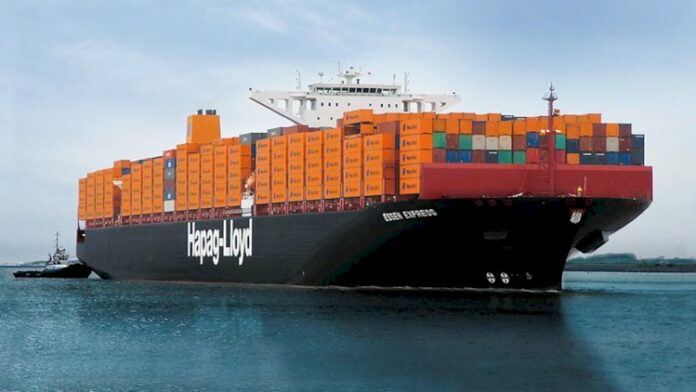
Hapag-Lloyd is bunkering “bio”: To reduce the CO2 emissions generated by operating ships, one of its ships recently refuelled in Rotterdam with a new, eco-friendly biofuel.

For the first time, the “Montreal Express” is being powered by so-called “B20” fuel, which consists of 80 percent low-sulphur fuel oil and 20 percent biodiesel based on cooking oils and fats that had previously been used in the food service/catering industry. The biodiesel generates up to 90 percent less CO2 emissions than conventional fuels.

With this test, Hapag-Lloyd is taking another step towards reaching its ambitious climate-protection goals. Jörg Erdmann, Senior Director Sustainability Management, explains:

“By the end of this year, we want to have reduced our specific CO2 emissions by 50 percent compared to the reference year 2008. Biofuels like ‘B20’ can help us reach this target. This is because, in addition to having a low sulphur content, the fuel also emits less climate-damaging CO2 during combustion.”

Hapag-Lloyd intends to use the test run with the “Montreal Express”, which operates in the St. Lawrence Coordinated Service 2 (AT 2) between Europe and Canada, to gain experience and information on the properties of the fuel in real-world use. Jan Christensen, Senior Director Purchasing & Supply at Hapag-Lloyd, adds:

“We are checking to see whether the share of biodiesel has any adverse effects on the equipment and the fuel processing on board the vessel. If the test is successful, more ships from Hapag-Lloyd’s fleet could operate using the ‘B20’ fuel in future.”
 

WinGD advances clean fuel research with flexible injector concept

0

WinGD (Winterthur Gas & Diesel) has bolstered its investment in fuel research with the development of a flexible injection system.

In a whitepaper released, ‘Flexible Injector to Advance Alternative Fuels Research’, the engine designers describe how the concept will play a crucial role in its investigations into low-carbon liquid fuels and engine injection concepts to harness them.

The system was developed as part of HERCULES 2, the collaborative European engine research project which concluded in 2018. It features an adjustable needle to allow for the injection of lower density liquid fuels, including promising alcohol fuels like methanol and ethanol, as well as conventional fuels including heavy fuel oil and marine diesel oil.

At present there is great uncertainty around the fuels that shipping will use to reduce its greenhouse gas emissions. Several of the candidates are unconventional liquid fuels including alcohols and synthetic diesel produced from biomass or renewable electricity. These will require different injection strategies to LNG, for example, which is already used in WinGD’s X-DF engines.

WinGD Future Technologies Team Leader, Andreas Schmid, said:

“The injection system is the most challenging element of designing an engine for low-carbon fuels, so this experimental design will give us an important head start. Once we know what fuels are likely to be used, we will be able to use this concept as a starting point to develop more tailored injection concepts.”

WinGD installed the fuel flexible injector on its RTX-6 engines in order to test ethanol combustion. Among other findings – detailed in the whitepaper – the company confirmed that ethanol fuel (with a small amount of diesel injected as a pilot fuel) reduces the formation of NOx and smoke emissions.

WinGD is currently involved in several projects investigating new liquid fuels, including the FALCON project to develop a carbon-neutral alternative to HFO from lignin, an organic polymer found in the cell walls of many plants. The fuel-flexible injection system will now become part of the company’s toolbox for validating low-carbon alternatives to help shipping meet its greenhouse gas reduction objectives.

These projects represent an ongoing valuable collaboration and exchange of ideas and equipment with Dr. Konstantinos Boulouchos, and the Aerothermochemistry and Combustion Systems Laboratory of ETH Zurich.

This project was made possible through funding from the Swiss Federal Office of Energy, bringing together academia and industry towards ensuring the transfer of knowledge and technology.

Dutch National Police continues fleet replasement

0

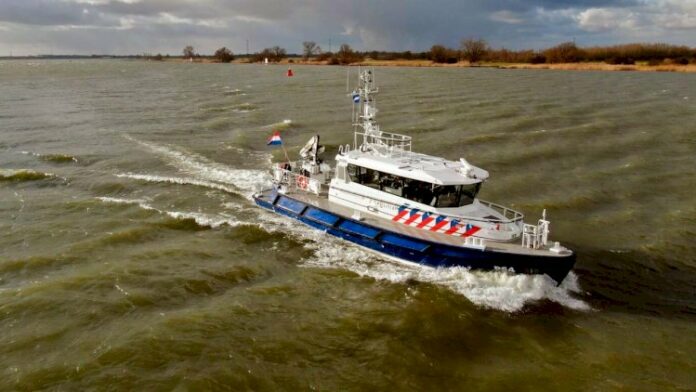
Damen Shipyards Gorinchem has hosted the official naming ceremony of a Damen Stan Patrol (SPa) 2005 for the Dutch National Police. The new vessel – named P64 – marks the second vessel in a six-ship contract between Damen and the Dutch Police.

The Dutch Police will use the new SPa 2005 for deployment on the Netherlands’ extensive inland waterways. The vessel’s aluminium hull and FRP (Fibre Reinforced Polymer) superstructure will provide the lightweight means required for fast and effective police patrol operations. Equipped with twin propellers, the SPa 2005 is capable of speeds up to 40 km per hour.

In addition to speed, the lightweight characteristics of the aluminium and composite construction materials will also markedly reduce fuel consumption and, therefore, exhaust emissions. Complying with the latest European Stage V emission regulations for inland vessels, the P64 is equipped with an exhaust gas after-treatment system.

Fuel efficiency will be further improved by the addition of a hull vane. This innovative naval architectural feature is an underwater foil located under the stern that improves fuel efficiency.

Talking at the P64’s christening ceremony, Damen sales manager Benelux Vincent de Maat stated:

“We are proud to be supporting the Dutch Police with their fleet replacement programme. The new Stan Patrol vessels that we are building are truly fit-for-purpose: fast and effective, but also highly advanced with regard to the latest environmental standards.”

Damen has a long working relationship with the Dutch Police, delivering 30 Stan Patrol ships over the years. The latest order was placed after a European tender process, the contract comprising three Stan Patrol 2005 and three Stan Patrol 2506 ships. Damen delivered the first vessel (a SPa 2506) in January 2020.

Sensors help costal monitoring network in New Caledonia

0

Access to coastal ocean observation systems in the Pacific Islands Countries and Territories (PICTs) has traditionally been difficult due to various factors.

The combination of a complex bathymetry, wave exposure and cost of deploying and maintaining large wave measuring devices in remote areas often meant that local meteorological services and research institutes had to rely solely on short term deployment of bottom-mounted sensors, offshore satellite altimetry or uncalibrated numerical models to assess the wave climates around their region.  

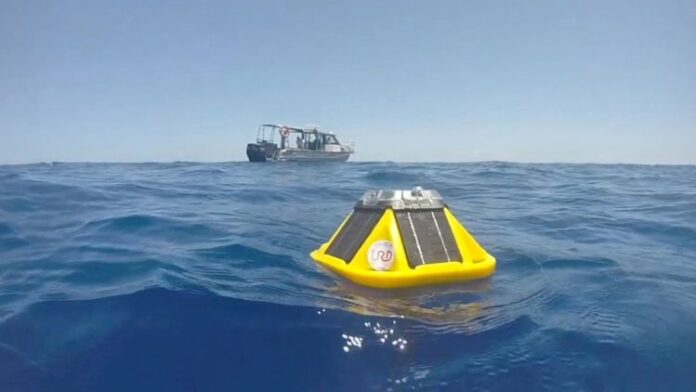
Spotter has allowed access to wave measurements in locations until now devoid of observations. With a lower cost, convenient data access and more accessible deployment requirements, it has enabled various research programs to obtain historical wave records and implement operational forecasting systems.

According to Dr. Jerome Aucan, a researcher at the Research Institute for Development, Center of Noumea Spotter was deployed off Nouméa's Southern coast, as part of the "Regional Coastal Warning Network. This was done in partnership between the IRD (French National Research Institute for Sustainable Development), the Pacific Community (SPC) and Météo-France New Caledonia.

The measured wave parameters are intended primarily for scientists for monitoring large wave events and for validating wave models, oceanic current and coastal flooding models, but also to improve local maritime safety, pilotage conditions and recreational uses (surfing).

Until now, New Caledonia has benefited from very occasional and isolated wave measurement campaigns. The installation of Spotter will make it possible to better observe and understand the phenomena related to the swell. This system is considered experimental, and the team will analyze the data carefully before deploying other similar systems in the Pacific region.

The deployment of this sensor is part of a region-wide program focused on warning systems for coastal communities in the Pacific Islands which relies in part on real-time data provided by multiple Spotter buoys and improved numerical modeling by local scientists.

Spotters have been or will be installed in Fiji, Tuvalu and Kiribati. 

This project is funded by the World Meteorological Organization (for Fiji, Tuvalu and Kiribati), and by the Ministry of Europe and Foreign Affairs via the Pacific Fund (for New Caledonia).