0.5 C
New York
Home Blog Page 57

NATO has unveiled surface drone capable of launching UAVs

0

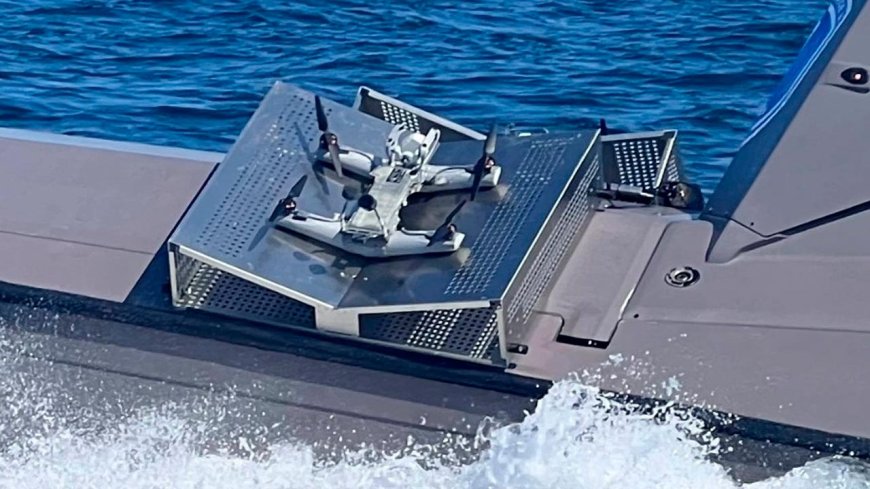
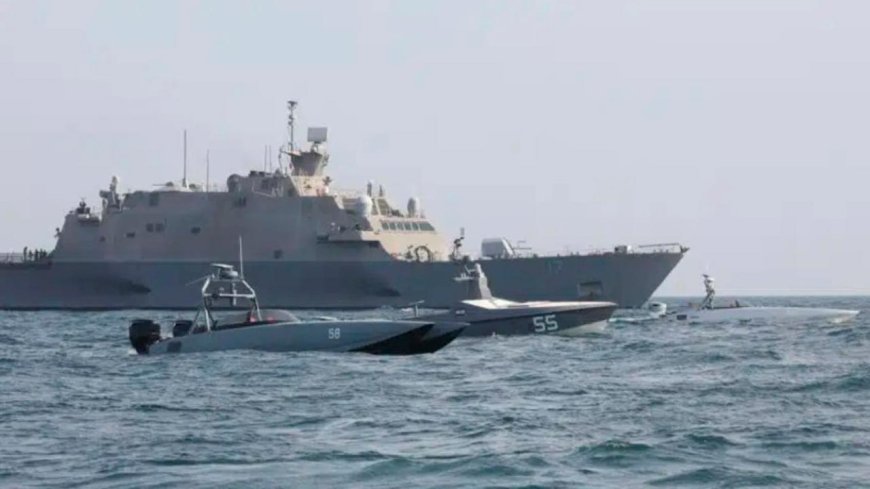
NATO has tested a new surface drone equipped with unmanned aerial vehicles.

Currently, surface drones are being tested primarily for reconnaissance missions to assess their effectiveness in the maritime environment.

The unmanned vehicles provide real-time surveillance.

The two unmanned aerial vehicles are not housed inside the sea drone’s hull, but on special external platforms.

Surveillance of the surrounding area is provided by a camera mounted on the drone’s superstructure.

The Alliance emphasizes that it is currently facing a changing maritime security environment.

To respond effectively to new threats, NATO has established Task Force X.

This initiative aims to implement innovative solutions, including maritime drones and artificial intelligence, to strengthen maritime security.

The main goal is to collect data on modern unmanned systems and breakthrough technologies, and to combine them into a single information network.

The Joint Transformation Command has already sent invitations to all NATO countries, particularly those with access to the Baltic Sea or developed infrastructure for maritime innovation.

Recently, at the Drone Summit 2025 exhibition, the Latvian company NEWT21 presented the Fog strike surface drone. Its lightweight modular hull is made of carbon fiber reinforced with aramid fiber.

Source: Militarnyi

EnBW and DHL Group sign agreement for green energy from He Dreiht offshore wind farm

0

EnBW Energie Baden-Württemberg AG (EnBW) and Bonn-based DHL Group have signed a power purchase agreement (PPA) to cover approximately 16 percent of DHL Group’s current annual electricity needs in Germany with climate-neutral, wind-generated power in a major step towards DHL Group’s decarbonization targets. 

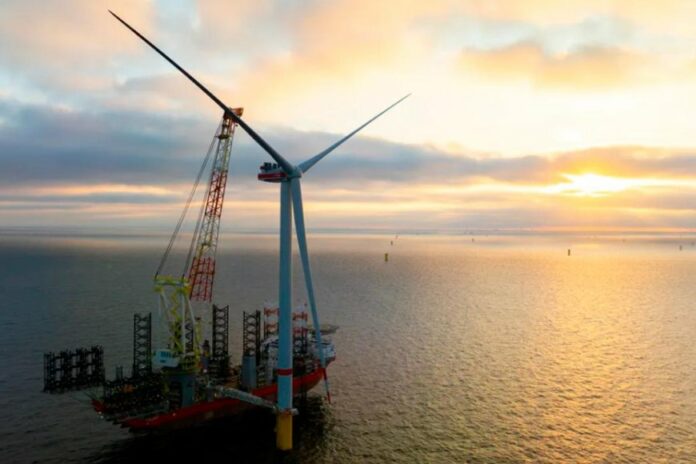
The agreement between the two companies will take effect in step with the phased commissioning of the wind farm through to spring 2026. It relates to approximately 80 gigawatt-hours (GWh) of green electricity per year and has a term of ten years. The electricity will come from the EnBW He Dreiht offshore wind farm currently under construction in the German Bight. He Dreiht will have an installed capacity of 960 megawatts (MW), 20 MW of which will go to supply DHL Group.

Anna Spinelli, Chief Procurement Officer at DHL Group: “Well thought-out energy management is crucial for us to achieve our goals. The agreement with EnBW for the He Dreiht wind farm is another important step on our path to net-zero emissions in logistics by 2050. The long-term agreement with our energy partner ensures a credible supply of electricity from renewable sources for our operations and contributes to supporting the energy transition. This is an example of how fostering proactive supplier relationships can contribute to a more sustainable and positive ecosystem.”

Matthias Obert, Executive Director Trading at EnBW, on the partnership: “We are delighted to support DHL Group on its journey towards zero-emission logistics. This partnership underscores our position as a major provider of sustainable energy across Europe. PPAs are a targeted and highly flexible instrument for advancing the decarbonization of industrials. They support the companies we partner with in meeting their sustainability goals while underpinning the financing of our projects: a win-win situation for industry and the climate.”

More than half of the electricity that will be available from He Dreiht is already under contract.

DMC to deliver custom rudders for 4 Dutch and Belgian Anti-Submarine Warfare Frigates

0

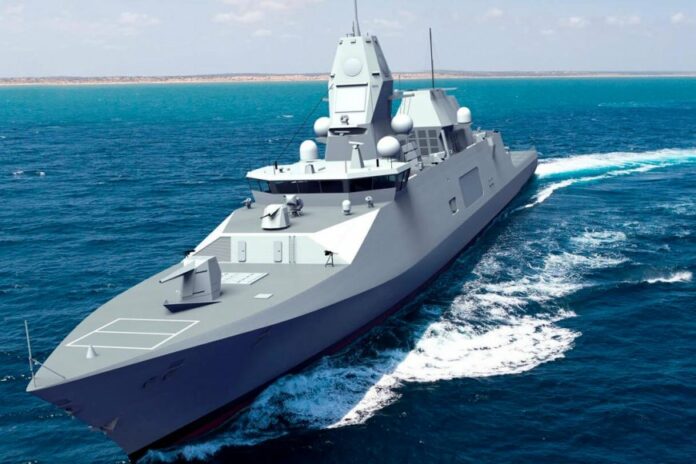
Damen Marine Components has received the order to design, engineer and produce eight rudders for the four Anti-Submarine Warfare Frigates that Damen Naval is building for the Belgian and Dutch Navies. Each vessel will be equipped with two rudders, developed to be resilient and to improve the hydrodynamic properties of the vessels that will be used for the defence and security of both countries. 

The ASWFs will replace the M-Frigate class vessels as of 2029. In addition to surface and sub-surface duties for monitoring or repelling submarines, these four ships will be deployed for several other (inter)national tasks. The vessels are built and outfitted on Damen Naval shipyards in Romania and the Netherlands in close collaboration with the Dutch and Belgian Ministries of Defence, navies and suppliers. 

As the focus is on anti-submarine duties, much attention goes into creating vessels that sail as silent as possible, for example as to propulsion, pumps and moving parts. This is where DMC’s range of naval products comes into play, especially the Atlantic type family of rudders, which have also been installed on earlier frigates and are adapted to their specific operational profile. 

A special requirement for naval operations is that the whole vessel, including the rudders, needs to be built to shock resistant specifications. The eight new rudders are designed to withstand shock loads. DMC has strengthened critical areas and has applied special welding details, based on both experience and extensive calculations. 

“All of us at DMC are proud to be able to contribute to these ultra-modern vessels,” says Ronald Beekhof, Sales Manager at DMC. “Being part of this high-profile Damen Naval project – together with many other Dutch suppliers – means that we can truly show our capacity to deliver equipment and systems fit for top-tier vessels. I want to thank Damen Naval and the Dutch and Belgian navies for their trust, and my colleagues for their professionalism in securing this deal. This is a real team effort – engineers, sales, QA-QC, and production in Gdansk. Both in a technical and commercial sense, this is a great package and we are looking forward to serve other navies as well.”

GeoServe launches the world’s first unified Voyage Operations Suite

0

GeoOne integrates all the key functions of a vessel operator’s workflow into a single solution, thereby boosting productivity, improving overall visibility, and reducing operational challenges. 

This platform represents a world-first for marine applications, providing the industry with a truly end-to-end solution for commercial vessel operations.

Operators typically need to rely on fragmented systems and data silos when managing voyage operations. Often the software serves only specific individual functions, while spreadsheets and disconnected platforms are required to manage key tasks, such as bunker procurement, vessel performance, laytime, and DA management. This is time-consuming, and can lead to inefficiencies, compliance risks, and high operating costs.

GeoOne addresses this challenge, not by replacing the existing systems, but by providing a unified, integrated ecosystem that streamlines all these actions, allowing them to work in effective harmony together.

“We aim to drive greater efficiency in managing commercial voyage operations. To achieve this, we seek to empower maritime operators with data-driven tools, seamless workflow integration, and scalable solutions for operational excellence. GeoOne is key to this development. It is a simple-to-use solution that integrates multiple functions into a single solution. If you look at what Office 365 did for business productivity, this VOS does the same for voyage operations. It connects the dots, removes duplication, and puts everything in one place,” says Sanjay Kapoor, CEO, GeoServe.

GeoServe is a provider of technology-enabled voyage management solutions, including voyage optimization, vessel performance, port disbursement accounting, laytime, and bunker procurement. 

GeoOne is the company’s flagship digital platform. It is designed to streamline and integrate the fragmented tools and disconnected workflows that hamper productivity, increase risk, and reduce profitability. The integrated solution represents a future-ready, next evolution system that significantly upgrades operational efficiency.

“GeoServe’s vision is to simplify voyage operations. GeoOne is the result of deep insights from a team that’s lived the operator’s challenges. In other words, the development has been a powerful amalgamation of experience and technology. This synergy between technology, process, standardization, and expert oversight is what makes our approach both practical and scalable,” adds Sanjay Kapoor.

The Ocean Cleanup launches 30 cities program to cut ocean plastic pollution from rivers

0

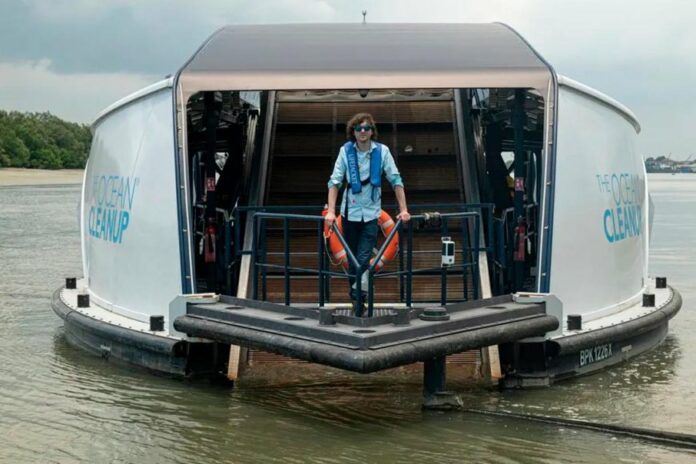
The Ocean Cleanup has announced, at the UN Ocean Conference (UNOC), its plan to rapidly expand its work to intercept and remove ocean-bound plastic pollution.

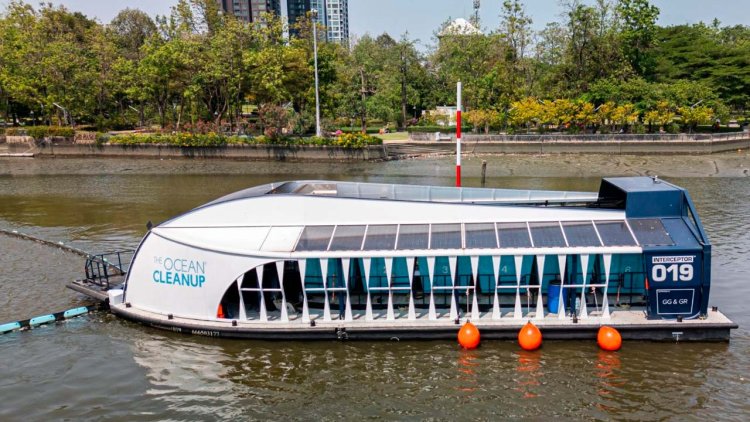
The 30 Cities Program will scale the organization’s proven Interceptor™ solutions across 30 key cities in Asia and the Americas, aiming to eliminate up to one third of all plastic flowing from the world’s rivers into the ocean before the end of the decade.

This evolution follows five years of learning through pioneering deployments across 20 of the world’s most polluting rivers and represents a key next step in the organization’s mission and the global fight against ocean plastic pollution.

With the 30 Cities Program, The Ocean Cleanup will transition from single river deployments to citywide solutions, tackling the main plastic emitting waterways within each selected city. This follows a key learning from deployments in Kingston, Jamaica, which showed it is possible to scale faster when projects encompass whole cities, as the same set of partners can be involved with all deployments.

To date, The Ocean Cleanup has already prevented over 29 million kilograms of trash from reaching the ocean. The organization currently intercepts an estimated 1–3 percent of global river-borne plastic emissions. With the first 20 river deployments close to being fully operational, it is now poised to reduce the plastic pollution flowing into the ocean from rivers by up to a third.

“When we take on an entire city, instead of individual rivers, we can scale faster, reduce costs, and maximize impact,” said Boyan Slat, Founder and CEO of The Ocean Cleanup.

“Our analysis shows that strategically deploying Interceptors across just 30 carefully chosen cities can stop up to a third of river plastic pollution worldwide. This is the next big leap toward our ultimate goal of a 90 per cent reduction in global ocean plastic pollution.”
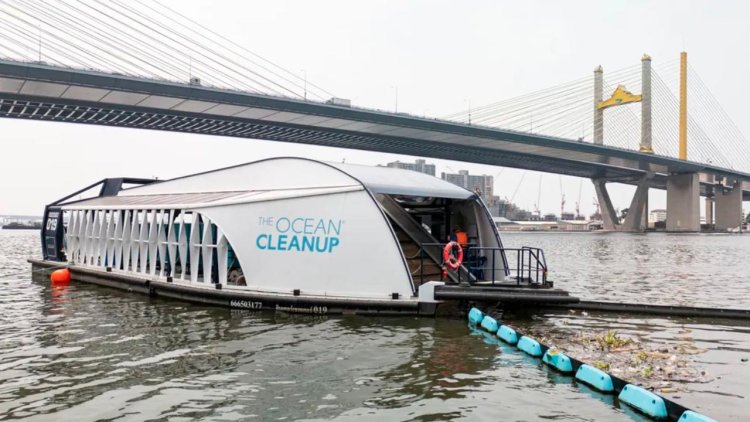
City-by-city: a faster path to scaling

Using the latest scientific modeling and on the ground experience, The Ocean Cleanup identified 30 major plastic polluting coastal cities which include:

  • Panama City, Panama – First deployment to go live in the coming months.
  • Mumbai, India – Mapping of all waterways completed; preparations for first deployments underway.

Furthermore, the organization is developing plans to expand on its existing work to all polluting rivers in:

  • Manila, Philippines; Montego Bay, Jamaica; Jakarta, Indonesia; Kuala Lumpur, Malaysia; Bangkok, Thailand and Los Angeles, U.S.A.

Other cities will be announced once the necessary partnerships and agreements are in place. Planning and fundraising activities are underway for all 30 cities. To realize these ambitious plans, the organization is currently also expanding its engineering and operational capacity.

Data Driven Restoration at Scale

Before Interceptors are deployed, each city project begins with an intensive analysis phase. Aerial drones, AI-powered image analysis, and GPS-tagged “dummy” plastics are used to chart every visible waterway and track how waste moves from streets to sea. These real-time insights guide optimal Interceptor placement and provide a public baseline against which progress can be measured.

Alongside intercepting new plastic, the 30 Cities Program will also remove debris from nearby coasts, mangroves, and coral reefs. This twin-track approach—shutting off the tap while clearing the legacy pollution—enables The Ocean Cleanup to achieve long-term impact, which includes the restoration of fish nursery habitats, boosting coastal tourism, and strengthening of natural storm surge defenses for local communities. Alongside local partners, the organization also advocates for improvements in waste management and awareness raising amongst communities.
Completing the first 20 Rivers

While laying the foundation for the 30 Cities Program, The Ocean Cleanup is also nearing completion of its first 20 river projects. The next landmark achievement—expected as soon as the second half of this year—is in the western Caribbean, where the team aims to resolve the plastic pollution problem in the Gulf of Honduras by intercepting the trash feeding into this body of water.

A Stepping Stone Toward a 90 Percent Reduction

The 30 Cities Program represents the first major scaling step in The Ocean Cleanup’s journey to eliminate 90 percent of floating ocean plastic pollution. In parallel, efforts are continuing to remove plastic from the Great Pacific Garbage Patch. Whilst extraction operations are currently on hiatus, work to deploy cutting edge technologies to map the “hotspots”, or areas of intense plastic accumulation, in order to make future extractions more efficient and economical, is ongoing.

By combining river interception and coastal cleanup with its offshore cleanup systems targeting legacy pollution that’s already in the ocean, the organization is charting a path to turn off the tap and mop up the mess.

Naval Group, Inria and Simula sign partnership cooperation agreement

0

Naval Group, Inria and Simula Research Laboratory have signed on June 5th a partnership cooperation agreement. The signature was hosted by Innovation Norway, Norway’s official Trade and Investment Promotion Organisation, at the Norwegian Club of Paris.

The agreement lay the foundation for cooperation on advanced research and innovation in key digital and maritime defense technologies. The cooperation will include areas like communication systems and digital transformation, all highly important for modern naval capabilities.

For Naval Group, the collaboration is part of a broader effort to deepen cooperation with trusted research institutions to support the technological needs of the Royal Norwegian Navy and allied forces.

“This agreement reflects a shared commitment to excel in digital innovation and national security,” said Sébastien Rousset, Director of Artificial Intelligence at Naval Group. “Inria and Simula bring unique strengths in scientific research, and we are proud to work with them on solutions that benefit not only Naval Group but also our partners in Norway and Europe.”

Inria, which is the French National Institute for Research in Digital Science and Technology, plays a pivotal national role in advancing digital science and supporting defense and security policy. Since January 2024, it has led the Program Agency for Digital Technologies, with a growing emphasis on contributing its scientific expertise and digital capabilities to national defense and security stakeholders. “This agreement is fully aligned with our strategic partnerships, respectively with Naval Group and Simula. Together with Naval Group and Simula, we aim to accelerate digital technologies that serve both our national interests and the European defense ecosystem” said, Bruno Sportisse, Chairman and CEO of Inria.

Simula, owned by the Norwegian government, is a renowned institution for digital research with a mandate to address societal and industrial challenges through science, innovation, and educating next generation experts. Its research in several technology areas is of high relevance to defense and security applications, making Simula a natural partner for Naval Group. “This collaboration gives us the opportunity to further our research contributions within the maritime and national defense sectors. We look forward to collaborating with Naval Group and our long-standing research partners at Inria to jointly pursue research and innovation that benefit society » said Lillian Røstad, CEO of Simula Research Laboratory.

Sigrun Daireaux, Director France of Innovation Norway, added: ” Innovation Norway and Team Norway support and promote French-Norwegian industrial and commercial cooperation. France and Norway have a long-standing history of joint industrial development, and a great potential for future cooperations. We are therefore proud to host this Cooperation Agreement’s signature between leading players in the field of digitalization and maritime research”.

Northland Power achieves first power on Hai Long Offshore Wind Project

0

Northland Power Inc. has announced first power from its Hai Long Offshore Wind Project in Taiwan, marking successful energization of the project and connection to Taipower’s grid. 

The milestone includes the commissioning of both onshore and offshore substations, further demonstrating the project’s progress toward full commercial operations, anticipated in 2027. 

“Achieving first power is a significant milestone for Northland and reflects the dedication of our team and partners,” said Christine Healy, President and CEO of Northland Power. “We extend our deepest appreciation to our joint teams, partners, and contractors for their extraordinary efforts.”

Since the commencement of construction, Hai Long has made substantial progress, including the production of jacket foundations and pin piles, installation of the Hai Long 2 and 3 offshore substations, installation of all 219 pin piles, assembly of Taiwan’s first locally manufactured 14 MW wind turbine nacelle and the installation of 14 out of 73 turbines.

With a planned capacity of 1 GW, Hai Long will play a vital role in supporting Taiwan’s renewable energy target of 15 GW of offshore wind between 2026 and 2035. Once operational, Hai Long will be among the largest offshore wind farms in the Asia-Pacific region, providing clean electricity to over one million Taiwanese homes.

“This milestone is a testament to the teamwork, technical excellence, and shared commitment from all involved,” said Toby Edmonds, Executive Vice President, Offshore Wind. “First power represents real progress, not just for Hai Long, but for Taiwan’s broader offshore wind ambitions. We’re excited to keep building on this momentum.”

UK tests underwater drone for communications protection

0

This was reported by the press service of the British government.

This project is being implemented by the Defense Science and Technology Laboratory (DSTL) of the British Ministry of Defense.

The laboratory’s specialists, together with industry partners, have added systems to a commercially available remote-controlled vehicle that allow it to detect ammunition and explosive devices and neutralize them by placing explosive charges and then detonating them.

According to the DSTL the drone should help in the fight against sabotage and the disposal of obsolete unexploded ordnance that pose a threat to underwater communications, divers and ships involved in their disposal.

The drone’s tools, sensors, and cameras provide operators with the ability to effectively deal with underwater hazards in real time.

The device can operate at depths greater than those reached by divers and stay there for much longer.

The newly developed technologies and systems will work in conjunction with other underwater vehicles to scan the seabed for hazards and will be able to deal with them once they are detected.

The remotely operated vehicle that will have passed the test can be launched from a ship or shore and its actions can be controlled by receiving video and data from its sonar. It can be used at least several times, which provides economic benefits.

In addition to several regions in the UK, this underwater drone has also been tested in Norwegian waters.

Protecting submarine communication and electricity cables, as well as underwater pipelines, has become a major challenge for many countries in recent years.

This is due to a series of sabotage attacks on undersea communications, particularly in the Baltic Sea, which are likely to have been carried out by Russian intelligence services.

Source: Militarnyi

BV launches AI-powered Augmented Surveyor 3D, for next-generation remote inspection

0

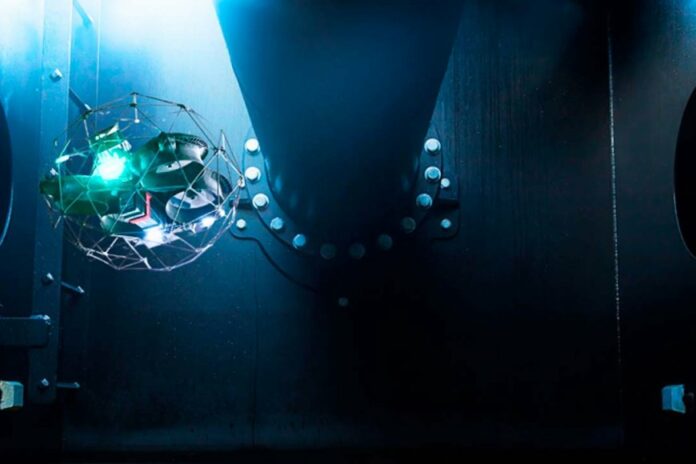
BV earlier completed a successful “proof-of-concept” pilot with TotalEnergies on a Floating Production Storage and offloading (FPSO) in West Africa. During the pilot, a drone-based inspection of two water ballast tanks was conducted. Using the AGS 3D to process all of the data, the survey generated a detailed 3D digital model with AI-enhanced corrosion analytics.

The AGS 3D solution promotes safety while improving efficiency by automating key tasks such as anomaly detection, corrosion mapping, and 3D modeling. Following the success of the pilot project, TotalEnergies will be looking to extend the solution to other assets.

Drone-based surveys generate vast amounts of data, including images, videos, and light detection and ranging (LiDAR) scans, the processing of which can be time-consuming and resource-intensive. By integrating AI technology, AGS 3D automatically detects anomalies in images and videos captured by drones, mapping them onto a 3D digital model created from point cloud data collected by a LiDAR sensor on the drone. This approach streamlines inspections, reduces human exposure to confined spaces, and provides precise defect localization, offering actionable insights for maintenance teams.

Suitable for use across various marine & offshore sectors, including FPSOs, FSOs, in-service ships, and floating offshore wind, the AGS 3D tool enables 360-degree visualization, optimized maintenance planning, data-driven decision-making, as well as providing a collaborative workspace for inspection teams, serving as a valuable complement to classification surveys. Final deliverables, such as LiDAR-based drone inspections, AI-driven corrosion detection, automatic defect localization, and a unified 3D dataset are reviewed by AGS experts to ensure quality.

Matthieu de Tugny, President of Bureau Veritas Marine & Offshore, said:

“Precise localization of defects is critical for effective investigation, maintenance planning, and ongoing monitoring. With AGS 3D, we are now able to automatically detect and localize defects, marking a significant step forward in remote inspection technologies and augmented survey. This innovation further supports stakeholders in optimizing asset integrity management and inspection workflows.”

Tatiana Akimova, Project Leader at the Innovation Accelerator, TotalEnergies, said:  

“Integrating new technology, such as the AI-powered Augmented Surveyor 3D (AGS 3D), supports our efficiency challenges. By taking advantage of drone technology and AI, we can improve critical tasks such as anomaly detection and corrosion mapping and significantly reduce human exposure to risks. As well as increasing the safety of our teams, this also optimizes our maintenance planning and decision-making processes. Thanks to the collaborative efforts and innovation spirit of TotalEnergies naval architecture team and Bureau Veritas, the successful test and future deployment of AGS 3D in our offshore fleet is a testament to our commitment to pioneering solutions that ensures asset integrity and guarantee a safer working environment for all.”

ABB wins electrical and automation contract for next generation of Petrobras FPSO vessels

0

ABB has been awarded a large order by Seatrium, a global provider of marine engineering solutions based in Singapore, for the supply of electrical equipment and automation solutions on a new generation of floating production storage and offloading (FPSO) vessels for operator Petrobras. The two vessels – P-84 and P-85 – will be deployed in the Atapu and Sépia fields, approximately 200 kilometers off the coast of Rio de Janeiro in Brazil.

ABB will design and construct the topside and hullside electrical equipment, electrical substation automation and eHouses for both FPSOs. Petrobras will utilize the ABB Ability™ System 800xA® and IEC 61850 technologies for substation automation, which allow for seamless interoperability between Intelligent Electrical Devices and enhances operational efficiency and system reliability. In a first for Petrobras, the P-84 and P-85 vessels will also feature an all-electric concept, which focuses on efficient power generation and increased energy efficiency, by u sing electrically driven compressors and motors to produce 165 MW power generation capacity.

The project also marks the first offshore application of ABB’s three Is-limiter configuration which, due to the FPSOs’ high-power capacity, is vital to ensuring short circuits are managed effectively. Is-limiters are fast-acting devices that prevent damage to electrical components and reduce mechanical and thermal stress by limiting the short-circuit current before it reaches its peak value.

Constructed by ABB Singapore, the FPSO topside systems will be installed in an ABB eHouse – a prefabricated transportable substation designed to house medium voltage and low voltage switchgear, critical power equipment and automation cabinets. ABB’s Sorocaba factory – located 85 kilometers west of São Paulo in Brazil – will manufacture the UniGear ZS1 switchboard, which is used to distribute electric power safely and reliably in demanding applications.

“The offshore energy industry requires innovative solutions and technologies, at scale and at pace, to support an effective and secure energy market,” said Per Erik Holsten, President of ABB’s Energy Industries division. “With our ability to meet advanced technical requirements and high safety standards, along with our deep commitment to energy efficiency, we look forward to working with Seatrium on this large scale and complex project.”

The Brazilian FPSO market continues to be a growth sector for offshore energy, with potential investment estimated at $21 billion in 2026-20271, set against a global FPSO market projected to reach a value of $46.2 billion by 20332.

Construction of the P-84 and P-85 FPSOs has been ongoing since 2024, with delivery of ABB’s eHouses expected by 2027. Each vessel will have a production capacity of 225,000 barrels of oil per day – at a time when total global supply capacity is forecast to rise to nearly 114 million barrels a day by 2030, according to the IEA3.