0.5 C
New York
Home Blog Page 56

Yinson, K Line partner on CO₂ transport and injection solutions

0

K Line, based in London, is a subsidiary of Japan’s Kawasaki Kisen Kaisha. Since 2024, K Line has managed two liquefied carbon dioxide carriers for the world’s first commercial carbon dioxide transport and storage service.

Meanwhile, Yinson Production operates a fleet of floating production, storage and offloading (FPSO) and floating storage and offloading (FSO) vessels and has extensive expertise in engineering, design, and operations in the offshore energy sector. 

The partnership between K Line and Yinson Production began in 2018 in the FPSO sector. Together, they co-own the FPSOs Anna Nery in Brazil and John Agyekum Kufuor in Ghana. 

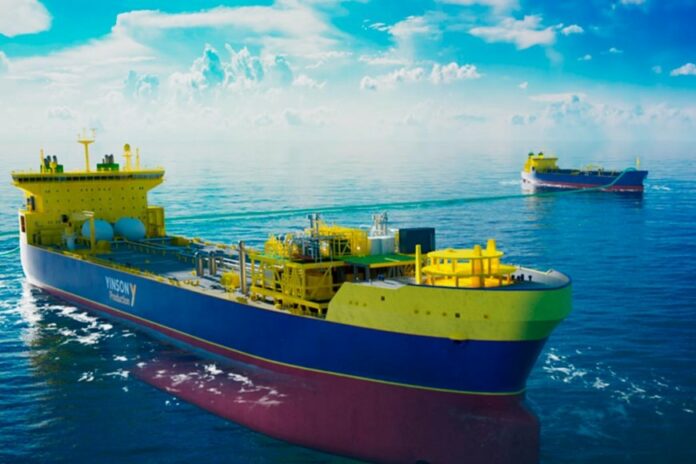
In a statement, both parties will jointly develop and market a floating storage and injection unit (FSIU) and a liquefied carbon dioxide carrier, targeting carbon capture and storage (CCS) projects being developed mainly in Europe.

The companies are expanding their collaboration to develop integrated solutions for transporting and injecting liquefied carbon dioxide as part of the CCS value chain, supporting global decarbonisation efforts.

Yinson Production chief technical officer Lars Gunnar Vogt said the collaboration with K Line builds on a longstanding relationship and complements their deep knowledge of offshore marine systems. 

He said that by leveraging each party’s respective core expertise, they are well positioned to develop innovative solutions that will support large-scale carbon transport and storage.

“This provides a one-stop solution to help industrial emitters achieve their decarbonisation targets,” he added.

K Line corporate officer Kei Onishi added that the collaboration builds on a strong foundation established through FPSO business and reflects a shared commitment to enabling scalable CCS solutions. 

“By combining their offshore engineering expertise with our experience in carbon dioxide shipping, we are developing an offshore unloading capability and bespoke transport solutions to serve a broader range of carbon dioxide storage sites. 

“This will complement traditional port-to-port transport models for the CCS Value Chain and offer emitters greater flexibility in meeting their decarbonisation goals,” he added.
Johan Castberg producing at full capacity

0

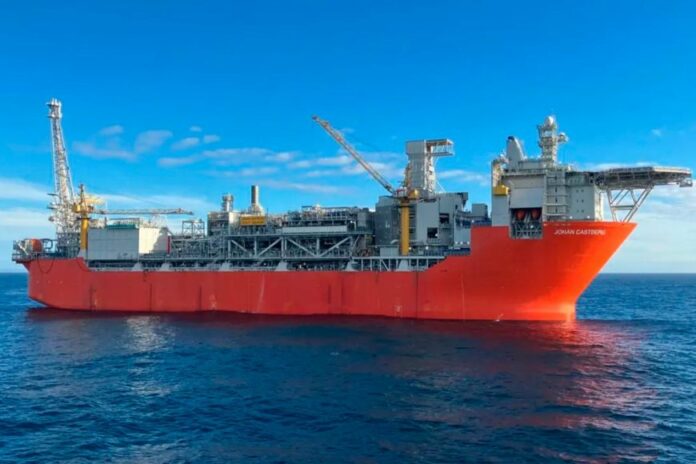
The early operation phase has gone according to plan, the field reaching plateau production on 17 June. Seventeen of a total of 30 wells have been completed. The wells that have come on stream are producing as expected.

“Johan Castberg represents a gamechanger for the importance of the Barents Sea for Norway’s future as an energy nation. Every three to four days, tank loads now depart from Johan Castberg, each of them worth around half a billion Norwegian kroner. The field will remain on stream for at least 30 years, delivering stable energy to Europe, generating high value for Norway, and ripple effects and jobs in Northern Norway,” says Kjetil Hove, Equinor’s executive vice president for Exploration & Production Norway.

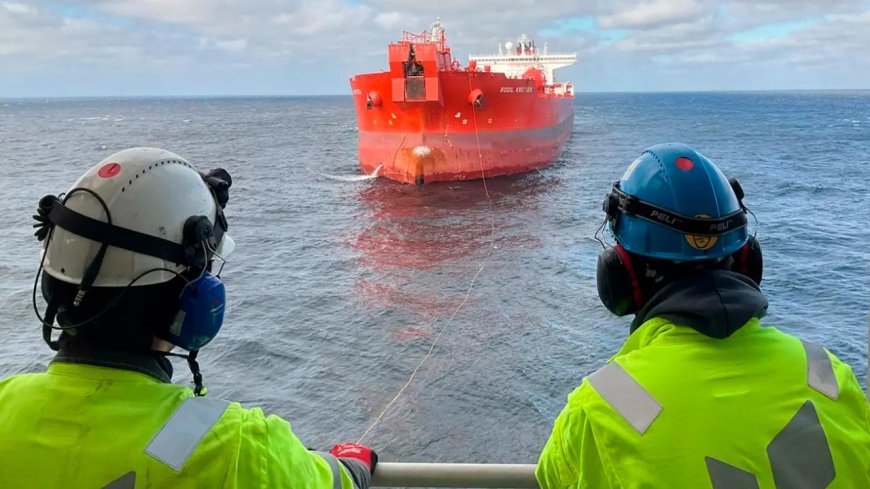
The new production vessel (FPSO) came on stream on 31 March, opening a new area for production in the Barents Sea. The first cargo was loaded by the tanker Bodil Knutsen on 25 May, shipping around 700,000 barrels to Spain. Almost all oil from the NCS is currently delivered to Europe.

“The Johan Castberg volume base initially estimated at 450-650 million barrels, our ambition is to increase the reserves by between 250-550 million barrels. We are already planning six new wells to extend plateau production. The Isflak project will be a rapid field development with an investment decision at the end of the year and start-up in 2028. In addition, we will drill one or two exploration wells annually near Johan Castberg,” Hove adds.

New exploration targets have been matured in the Johan Castberg area. Going forward, two rigs will be drilling new exploration wells in the areas around Johan Castberg and Goliat. They will also drill production wells for the fields.

ABB and StarDream Cruises strengthen collaboration with new service agreement

0

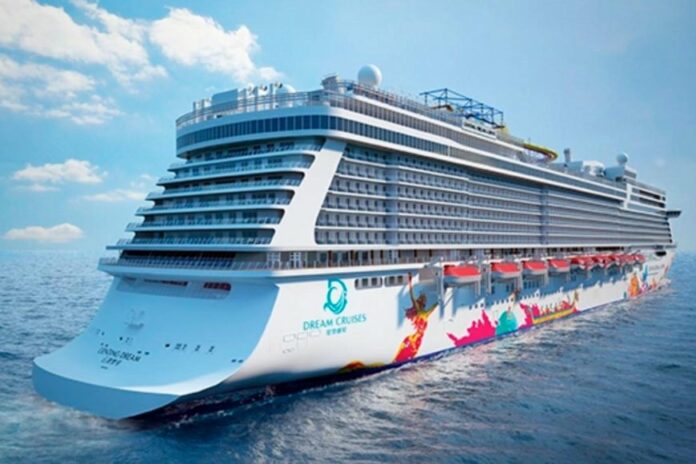
ABB and StarDream Cruises strengthen their longstanding collaboration  with a new service agreement covering two of the cruise line’s luxury ships – reinforcing a partnership that has helped the evolution of cruise travel in Asia.

The five-year agreement covers maintenance and lifecycle support for the cruise ships Star Navigator and Genting Dream, measuring 269 and 335 meters respectively. During this period, Star Navigator will undergo two, and Genting Dream one, drydocking projects, with both vessels receiving 24/7 technical support from ABB.

Known as Star Cruises at the time, the cruise line was ABB’s first marine customer in Singapore. To provide dedicated customer support and long-term value, ABB established its Marine & Ports local unit in Singapore in 2000. Now, coinciding with this latest contract, the division celebrates the 25th anniversary of its operations in the Lion City.

The new agreement comes at a time when Asia’s cruise market is returning to robust growth. In terms of guest numbers, the region contributed 16.7 percent to the global cruise market in 2024. Cruises in Asia generated revenues of USD 1.48 billion last year, and these are expected to reach USD 3.23 billion by 20301.

“StarDream Cruises business has evolved over the years, but our trust in ABB’s ability to serve our needs has remained constant,” said Rickard Cignozzi, Vice President, Technical Operations, StarDream Cruises. “ABB’s commitment to innovation and service excellence has consistently supported our own. We are pleased to extend this collaboration with a partner who understands the aspirations of the cruise industry and the critical role of optimized ship performance.” 

“This renewed partnership with StarDream Cruises is more than just a service agreement,” said Juha Koskela, President, ABB’s Marine & Ports division. “It’s a celebration of a relationship that began 25 years ago here in Singapore and continues to flourish, as well as a high-profile contract signifying ABB’s continuing success in Asia. Star Cruises was our first customer in the region, and their continued trust reaffirms the reliability, innovation, and world-class support we deliver to the leaders of the cruise industry.”

Both Star Navigator and Genting Dream are equipped with ABB’s Remote Diagnostic System and Propulsion Control System. Genting Dream, which was the first StarDream Cruises’ ship equipped with ABB’s Azipod® propulsion, also features ABB Ability™ OptimE, a fully automated marine software toolset that helps optimize the toe angle of the propulsion units.

Equinor secures exploration acreage in Brazil

0

Equinor has deepened its position in the Santos basin after winning the S-M-1617 block during Brazil’s 5th Open Permanent Concession bid round.

“We are pleased with our success in today’s bidding round, securing a new exploration opportunity in Brazil – a core country in our international portfolio. The license is in close proximity to the S-M-1378 block we already own, an area with strong potential that we can leverage to reinforce our position in the Santos basin. This award provides us with longevity options for Brazil and demonstrates our continuous commitment and appetite to grow in the country,” says Veronica Coelho, Senior Vice President and Brazil Country Manager.

The S-M-1617 license in Brazil was secured by Equinor on a 100% basis with a total signature bonus of around 30.5 million Brazilian Real (around 5.5 MUSD).

The block is located 60 kilometers away from the S-M-1378 block already owned by Equinor. This is an addition to our existing opportunity set in Brazil and demonstrates the company’s continued commitment and growth ambition in the country. Equinor will now work to conduct necessary geological and geophysical assessments for future exploration activities.

Researchers discover microplastics at all ocean depths

0

Researchers with support from the U.S. National Science Foundation published a global benchmark of microplastic distribution in the ocean, revealing thousands of plastic specks even at the extreme depths of the Mariana Trench.

The study’s findings show that not only could fisheries take an economic hit, but humans could be at risk for exposure to contaminated seafood.

The team synthesized data from nearly 2,000 ocean sampling stations, mostly in northern ocean waters near larger populations between 2014 and 2024. “The discovery that microplastics are not just floating on the sea surface but also form a plastic smog, throughout the depths of the ocean, was surprising and concerning,” said Aron Stubbins, an author on the paper and professor at Northeastern University.

Abundant microplastic materials smaller than 5 micrometers — or about 100 times less than the width of a human hair — may be eaten by zooplankton, which in turn feed larger marine animals. Microplastics can disrupt marine food chains, causing health declines and potential drops in populations for fish and other marine creatures.

“Even when we are studying what we think of as completely natural processes in the ocean, we have to be aware of humankind’s influence,” said Henrietta Edmonds, an NSF program director.

ONE names its sixth green vessel in Japan

0

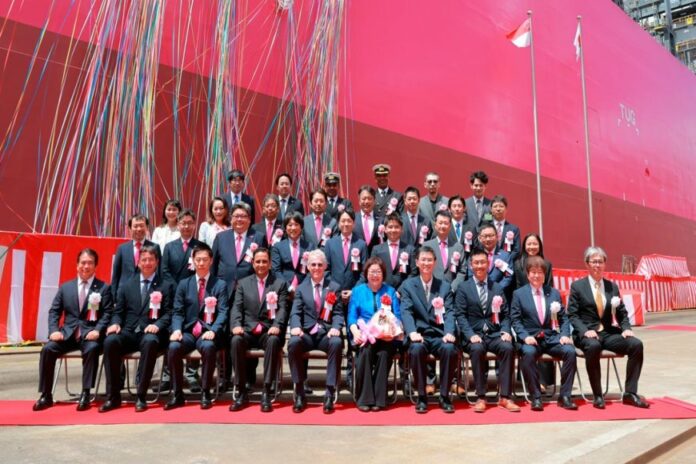
The naming ceremony took place at the Hiroshima Shipyard of Imabari Shipbuilding Co. Ltd. in Japan, marking another milestone in ONE’s fleet expansion program.

The 13,900 TEU vessel, which is methanol and ammonia-ready, is another demonstration of ONE’s commitment to sustainable shipping practices. Following the successful integration of ONE Sparkle – ONE’s first owned newbuilding – and subsequent sister vessels, ONE Singapore will strengthen the company’s service offerings on the trade lanes where she will be deployed.

Says Jeremy Nixon, CEO, “Today’s naming of ONE Singapore signifies further progress in our fleet expansion strategy. This vessel, carrying the name of our global headquarters city, symbolizes our strong connection to Singapore’s vibrant maritime ecosystem. As we deploy this vessel into service, we continue to build upon ONE’s strong commitment to Singapore, in its prime position as the leading global international maritime centre.”

Since establishing its global headquarters in Singapore in 2017, ONE has become an integral part of Singapore’s maritime community. The company’s headquarters serves as the command center for its global network operations.

Appraisal well confirms oil discovery in the Norwegian Sea

0

ConocoPhillips Skandinavia AS, operator of production licence 891, has concluded drilling of the second appraisal well, 6507/5-12 S, on the 6507/5-10 S (Slagugle) oil discovery.

The well was drilled about 22 kilometres northeast of the Heidrun field and about 270 kilometres north of Kristiansund.

This is the third exploration well in production licence 891, which was awarded in the Awards in Predefined Areas (APA) in 2016.

The Slagugle oil discovery was proven in 2020. Preliminary calculations indicate a resource estimate in the range of 4.9 – 9.8 million standard cubic metres (Sm3) of oil equivalent, which corresponds to around 30.8 – 61.6 million barrels of oil equivalent in Triassic reservoir rocks (Middle Grey Beds). 

The licensees will now analyse the collected data and evaluate a possible development.

Geological information

The discovery was proven in 2020 in well 6507/5-10 S (Slagugle) in reservoir rocks in the Lower Jurassic (Åre Formation) and Triassic (Grey Beds). An attempt was also made to delineate the discovery in 2022 with well 6507/5-11, which was dry. 

The objective of well 6507/5-12 S was to delineate the discovery proven in well 6507/5-10 S (Slagugle), and to conduct a formation test to obtain better understanding of reservoir properties and connectivity in the hydrocarbon-bearing layers. 

Well 6507/5-12 S encountered several oil columns in a 188-metre interval in the Åre Formation and Grey Beds, 75 metres of which consist of sandstone with very good reservoir properties.

Extensive data collection and sampling have been carried out and a successful formation test has been completed. The maximum production rate was 650 Sm³ of oil per flow day through a 36/64-inch nozzle opening.

Appraisal well 6507/5-12 S was drilled to a vertical depth of 2169 metres below sea level/2260 metres measured depth, and was terminated in the Triassic (Red Beds). 

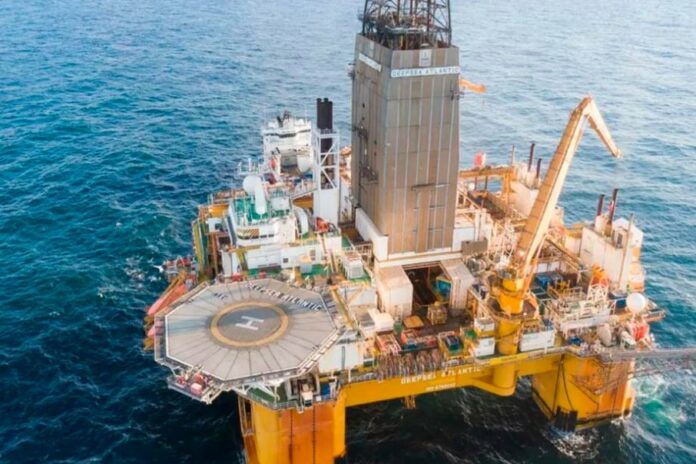
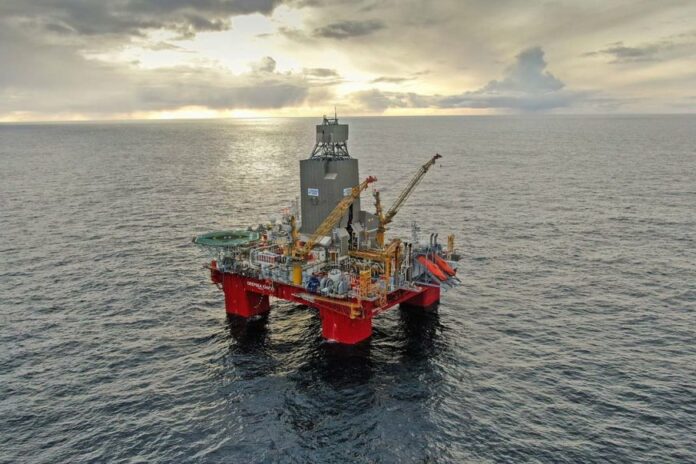
The well, which has been permanently plugged and abandoned, was drilled using the Deepsea Yantai drilling rig. Water depth at the site is 341 metres. 

The next stop for Deepsea Yantai is production licence 586 in the Norwegian Sea, where it will drill well 6406/11-2 S for Vår Energi and its partners.

Woodside and PETRONAS eye long-term LNG supply

0

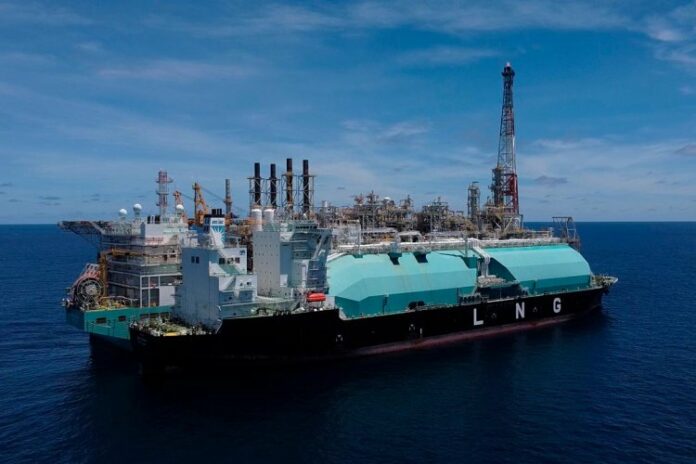
Woodside Energy (Woodside) and PETRONAS, through its subsidiary PETRONAS LNG Ltd (PLL), have signed a non-binding Heads of Agreement (HOA) for the supply of 1 million tonnes per annum of LNG to Malaysia from 2028 for a period of 15 years.

Woodside Executive Vice President & Chief Commercial Officer Mark Abbotsford welcomed the HOA with PETRONAS, recognised globally as one of Asia’s most respected energy companies.

“This agreement marks the beginning of a new era of collaboration between Woodside and PETRONAS and is an important step towards what would be our first long-term LNG sales to Malaysia. It reflects the value global buyers see in Woodside’s Louisiana LNG project and our reputation as a safe and a reliable supplier of energy to Asia.”

The agreement is expected to support PETRONAS’ efforts to ensure secure, flexible LNG supply to meet growing demand in Peninsular Malaysia and the broader Asia-Pacific region.

“We are pleased to launch our new collaboration with Woodside, a leading supplier of LNG to Asia. We hope this will be the start of cooperation between PETRONAS and Woodside on future opportunities to support energy security and sustainability across the region,” said Shamsairi Ibrahim, Vice President of LNG Marketing & Trading, PETRONAS.

The agreement was exchanged at the Energy Asia 2025 conference in Kuala Lumpur in the presence of Woodside CEO Meg O’Neill and PETRONAS Executive Vice President & CEO Gas & Maritime Business Datuk Adif Zulkifli.

The Parties are now working to convert the HOA into a sales and purchase agreement.

Sanctioned Russian Oil Tanker Goes Up in Flames After Gulf Collision

0

According to Bloomberg, the incident occurred at approximately 00:15 local time, around 44 kilometers off the coast of the United Arab Emirates near the port of Khor Fakkan.

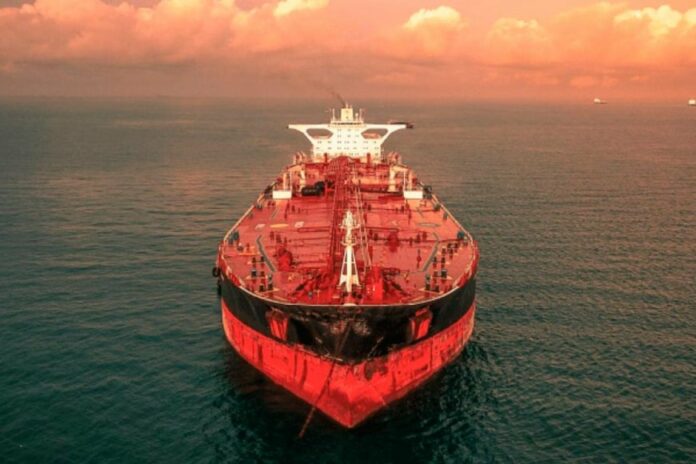
The collision involved the Front Eagle, a 335-meter supertanker operated by Frontline Plc and sailing under the Liberian flag, and the Adalynn, a smaller, 23-year-old tanker flying the flag of Antigua and Barbuda.

The Adalynn has frequently transported oil between Russia’s Ust-Luga port and India’s Vadinar and is widely considered part of the so-called Russian “shadow fleet.”

Frontline stated that the incident was purely navigational and not linked to the current regional tensions following Israeli strikes on Iran. A full investigation into the cause of the crash is underway.

The collision set off fires aboard both vessels. UK-based security company Vanguard Tech said there were no signs of foul play. The UAE National Guard confirmed the rescue of 24 crew members from the Adalynn, while Frontline reported that its crew was safe.

The incident occurred amid heightened alert in the region. The Strait of Hormuz is a key maritime chokepoint through which a significant portion of global oil supply flows. Iran has previously threatened to block the strait during times of conflict, though there has been no indication of direct military involvement in this case.

Bloomberg noted that the Front Eagle may have experienced electronic interference as it passed close to Iran’s Assaluyeh port days prior to the incident. According to ship-tracking data, both vessels were observed sailing near each other in the Gulf of Oman before their paths crossed.

The collision triggered an immediate reaction on the shipping markets. Forward freight agreements, derivatives used to hedge tanker rates, rose from 65–70 Worldscale points to 70–74, reflecting concerns over potential shipping disruptions in the region. The rise follows weeks of volatility in tanker rates, which surged nearly 50% after the start of Israel’s airstrikes on Iran.

The Adalynn is not listed in industry insurance databases and belongs to a group of vessels operating under flags of convenience that have been used to circumvent sanctions on Russian oil. Emails sent to the vessel’s listed operator, Oceanpack Ship Management, went unanswered, Bloomberg said.

Earlier, on January 7, Bloomberg reported that NATO will deploy up to ten ships in the Baltic Sea to protect critical underwater infrastructure, including energy and communication cables. The move follows suspected sabotage involving Russia-linked vessels and aims to deter further incidents through increased surveillance and patrols, particularly near the Gulf of Finland.

Source: Bloomberg, united24media

Eitzen Avanti to build largest electric boxships after additional funding

0

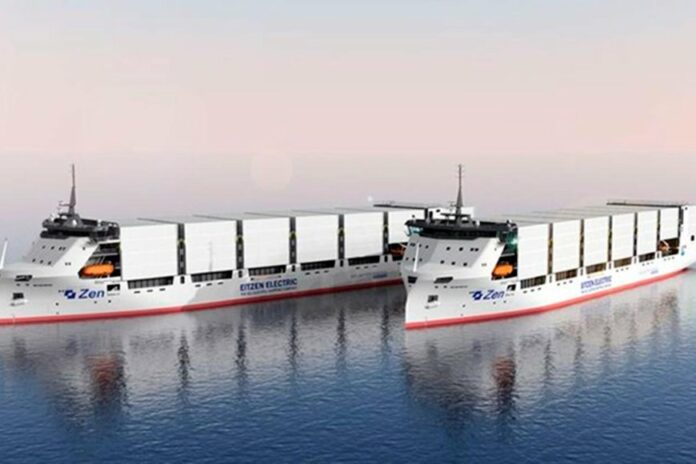
Norway-based Eitzen Avanti will build the world’s largest battery-powered containerships, with help from a green grant from Norwegian government climate fund Enova.

The state-run financer is handing out a total of NOK362m ($36.6m) to several decarbonisation projects in shipping, which it says will save 20,836 tonnes of CO2 equivalent annually.

The two electric containerships will operate across Norway, Sweden and Germany and transport up to 850 containers with zero emissions. Both ships will have battery packs with more than 100 MW hours’ worth of power installed.

Enova senior adviser in maritime transport Andreas Forsnes Jahn said the “projects each show in their own way what is possible with battery electrification in shipping”.

“The technology is now mature and the projects exist. If the electrification of car ferries was the first wave, we hope this will be the start of the second electrification wave in shortsea shipping.”

This latest round of funding will also support the installation of a charging system for the two vessels at the port of Oslo’s container terminal on Sjursøya.

Alongside the two containerships, Enova will support several other Norwegian decarbonisation projects, including an all-electric bulk carrier for Polar Energy Shipco, which will carry minerals along Norway’s coastline. 

Source: lloydslist