-2.2 C
New York
Home Blog Page 565

PAV starts work on the new passenger terminal project in València

0

It will also contemplate the recovery of reusable materials to be sold for an estimated value of more than 400,000 euros.

The new public passenger terminal will be a model infrastructure in terms of the environment, sustainability, accessibility and intelligence, at the service of the city.

According to the  PAV project, which included contributions from the València city council, the passenger station will operate with zero polluting emissions and will be committed to the circular economy.

The new public passenger terminal begins to take its first steps with the start of the awarding procedure for the works for the “refurbishment of the site of the old shipyard of the Port of Valencia” that the Port Authority of Valencia (APV) will publish in the next few days with a tender budget of around 900,000 euros. This project includes the demolition of some of the warehouses and other buildings on the site and the ramp of the north slipway, as well as the dismantling of all the equipment and installations, and the prefabrication installations for the steel blocks. This procedure also includes the disposal of reusable materials, such as tiles or metal parts, for sale with an estimated value of more than 400,000 euros.

The project for the new passenger terminal, which will be located between the Muelle de Poniente and the Muelle Perfecto Palacio in the area previously occupied by the Unión Naval de Valencia shipyard, will occupy an area of approximately 100,000 square metres. The design of this infrastructure will maintain the four elements of the old shipyard catalogued by the Demetrio Ribes Chair of Industrial Archaeology of the University of Valencia as pieces of historical and artistic value. Specifically, these are the water tank, the shipbuilding slipway, two cranes and sub-ship A of building III. It will be a historic and emblematic building of maritime València that will continue to serve the city and the citizens – more than a hundred years after its construction – now with the most modern environmental technologies.

As stated in the refurbishment project, the demolition of building 2 (Tilling workshop) of 6,326 m2, building 4 (Prefabrication workshop) of 2,591 m2, and two smaller buildings for industrial, administrative and sanitary use of 129 m2 and 293 m2, respectively, will be carried out. The procedure also envisages the dismantling of the steel block prefabrication facilities. The project also envisages the disposal of reusable goods from the steel block manufacturing area, metal materials present in the rest of the building and the tiles forming the roof.

The new passenger terminal is intended to serve cruise traffic, regular lines with the Balearic Islands and Algeria, as well as ro-ro traffic (platforms or vehicles that access the ships by their own means). This infrastructure, which has the bid submitted by the shipping company Baleària, guarantees that 100% of the electrical energy necessary for the operation of the terminal will be produced in the facilities themselves, and will be of renewable origin. According to the project presented to the PAV tender, which included the contributions of the València City Council in environmental matters, the passenger station will operate with zero polluting emissions and will be committed to the circular economy. In this sense, all berths will be equipped with an electrical supply network for docked ships, thus making it easier to stop the engines and their emissions when they are visiting València; and all the roofs and ceilings of the existing buildings will be designed for the installation of photovoltaic solar panels.

The terminal will recycle 100% of the waste it generates in a biomethane plant that will be built expressly for this purpose; and it will treat waste from the ships and the building itself to obtain biogas. The interior design of the station will guarantee the independent operation of cruise passengers and passengers on regular lines. Other new features of the project include the planned development of an Innovation and Eco-efficiency Centre and a space for cultural activities. The project presented by the shipping company also contemplates a training centre of the Baleària Business School (EdEB) with an offer in different areas of the maritime sector and especially aimed at the Nazareth neighbourhood, within an action plan to involve the main actors and interest groups.
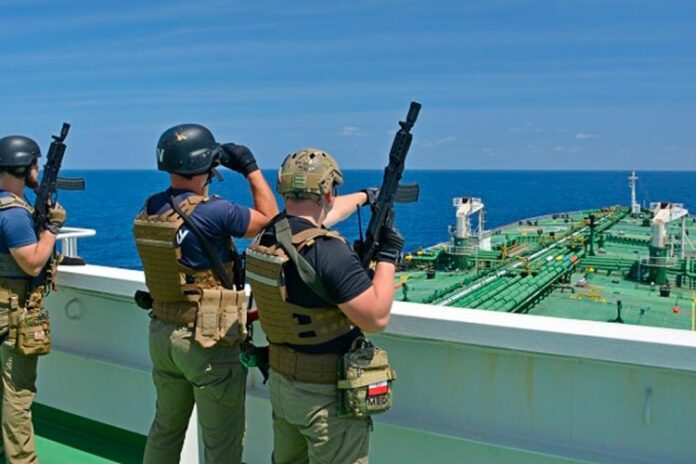
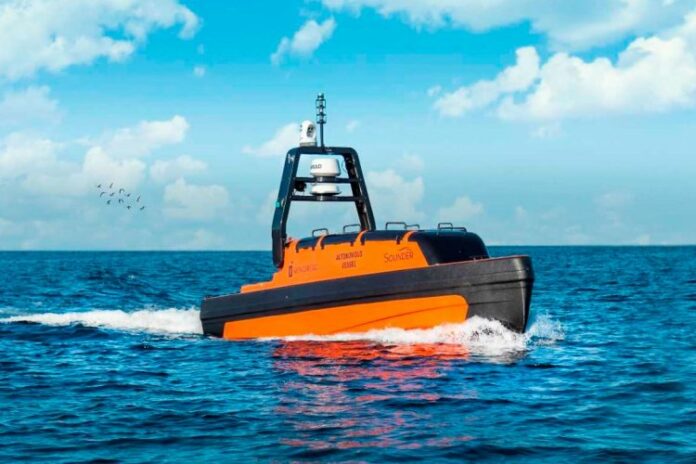
Change in piracy threats in Indian Ocean prompts re-think of High Risk Area

0

In broad terms, the changes agreed by BIMCO, ICS, INTERCARGO, INTERTANKO, and OCIMF, representing the global shipping and oil industries, will reduce the HRA boundaries to the Yemeni and Somali Territorial Seas and Exclusive Economic Zones in its eastern and southern reaches.

The organisations, in consultation with international partners, will also take a comprehensive new approach to assessing international maritime security threats to allow shipowners and operators to fully gauge the risk of voyages worldwide. This second step is expected to be completed by 31 December.

The HRA was created at the height of the Somali piracy threat in 2010 to show shipowners, operators, and seafarers where pirates operated and where extra vigilance was required to avoid attacks.

Subsequent updates to the HRA have reflected the changing nature of threats in the region have emerged as well as the existence of more severe security threats, such as piracy off West Africa, necessitating a change in how industry assesses such dangers to shipping.

Guy Platten, ICS Secretary General, said:

“The security landscape is constantly evolving, and as new security threats have emerged or intensified outside the Indian Ocean it has become clear the HRA is outdated and misleading. At the height of the crisis the HRA was essential in raising awareness of the Somali Pirate threat and the need to apply mitigation measures, but it has essentially served its purpose in protecting crews and vessels in the region. Now our attention must shift to ensure we cover all maritime security threats around the globe so we continue to protect the lives of our seafarers and keep global trade moving.”

David Loosley, BIMCO Secretary General and CEO, said:

“The current form of the HRA is no longer the best way to guide maritime security risk management processes. As demonstrated with the recent security incidents in the waters around the Arabian Peninsula, we need a more granular approach to the concepts of threat and risk. The next logical step is to develop a global, threat-based concept which captures how ships of various type, size, nationality, ownership etc. face different risk levels.”

Katherina Stanzel, INTERTANKO Managing Director, said:

“This new designation is an interim measure to allow for the continued application of BMP 5 whilst the Co-Authors undertake substantive work to address maritime security threats in a global context.”

Robert Drysdale, OCIMF Managing Director, said:

“This adjustment to the HRA better reflects the reality of the piracy threat but given the breadth of maritime security threats faced by seafarers, a more intuitive and dynamic system for highlighting threats will be most welcome.”

Kongsberg Maritime joins global ocean floor mapping initiative

0

The Nippon Foundation-GEBCO Seabed 2030 Project and Kongsberg Maritime have entered a Memorandum of Understanding in support of the global initiative to produce the complete map of the ocean floor. Under the terms of the MOU, the two parties will work together to advance understanding of ocean bathymetry. The effort complements the goals of the United Nations Decade of Ocean Science for Sustainable Development.

Seabed 2030 is a collaborative project between The Nippon Foundation and GEBCO to inspire the complete mapping of the world’s ocean by 2030, and to compile all bathymetric data into the freely available GEBCO Ocean Map. GEBCO is a joint project of the International Hydrographic Organization (IHO) and the Intergovernmental Oceanographic Commission (IOC), and is the only organisation with a mandate to map the entire ocean floor.

Kongsberg Maritime provides solutions for safe, efficient and sustainable maritime operations. The solutions are suitable for offshore energies, seaborne transportation, hydrography, science, navy, coastal marine, aquaculture, training services and more. Kongsberg Maritime is the largest business area within Kongsberg Gruppen ASA. The Group has an integrated portfolio of solutions for businesses, partners and nations operating from the depths of the sea to outer space and to the digital frontier.

Jamie McMichael-Phillips, Director of the Seabed 2030 Project, commented:

“Seabed 2030 greatly welcomes the support of Kongsberg Maritime. KONGSBERG’s prominent capabilities in providing sustainable maritime operations closely align with our ethos and aim here at Seabed 2030.”

Bjørn Jalving, Senior Vice President Technology Kongsberg Maritime said:

“As an organisation committed to offering the best marine technology, we are delighted to support Seabed 2030 in its mission of producing the definitive map of the seafloor.

“We envisage our systems for surveying, positioning and navigation to contribute rewardingly to this imperative global effort. We will specifically develop freely available functions for Kongsberg Maritime multibeam echo sounders, single beam echo sounders and AUVs that ease the process of contributing bathymetric data to the Seabed 2030 data centres. The development will be collaboratively with the University of New Hampshire and Stockholm University.

“A complete map of the seafloor is a critical first step in understanding our planet through ocean exploration. We’re proud to support the Seabed 2030 Project.”

All data collected and shared with the Seabed 2030 Project is included in the GEBCO global grid, which is free and publicly available.

MacGregor to deliver telescopic cranes for Manson Construction’s Frederick Paup

0

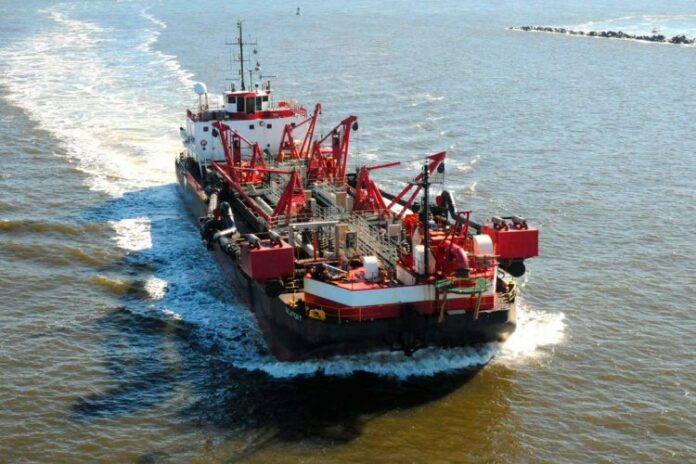
Currently being built for Manson Construction Co., the Frederick Paup will be the largest ever self-propelled trailing suction hopper dredge built in the USA and will operate all over the country.

The order was placed by Keppel AmFELS, Inc. and booked into Cargotec’s 2020 fourth quarter order intake. The cranes are planned to be delivered to the yard by the end of 2021, with commissioning and testing during 2022 prior to delivery of the dredge in spring 2023.

The larger service cranes are double telescopic cranes with a size of 80 ft length when stored and extend out to 120 ft. The Safe Working Load (SWL) for these cranes will be circa 3,900 lbs at 120 ft and 108,000 lbs at minimum reach. The aft stores crane is a single telescopic crane with a size of 32 ft length when stored that extends out to 50 ft. This versatile model has been installed on a diverse range of vessels in recent years, including a number of fishing vessels in the US Pacific Northwest.

MacGregor worked with the vessel owner/operator, Manson Construction Co. of Seattle, WA, and the designer, Hockema Group, Inc. of Seattle, WA, during the earlier design stage of the project to provide crane models that fit their requirements and ensure the highest quality. The cranes will be built at MacGregor’s facility in Seattle, and the vessel will be built at Keppel AmFELS shipyard in Brownsville, Texas, USA.

Jordan Brown, Project Manager, Manson Construction Company, says:

“Since day one, the MacGregor team has provided excellent support and engineering solutions for this project, and the cranes will be a great tool for our daily operations.”

Leif Byström, Head of MacGregor’s Offshore Solutions Division, says:

“The active dialogue at an early stage in the project, together with the operator’s focus on high-quality equipment and reputable in-service support, are the reasons why MacGregor was selected to supply these robust cranes.”

Seafarers COVID Relief Fund hits US$1 million target

0

The Seafarers International Relief Fund (SIRF) has reached its goal of raising US$1 million to provide vital relief for seafarers and their families affected by COVID.

The target was reached thanks to a substantial donation from NYK Line, plus many other personal and corporate donors, including most recently the TK Foundation. The total raised by SIRF currently stands at US$1.17 million. Further donations are very welcome and will enable SIRF to extend its crisis welfare response to the COVID pandemic.

The SIRF appeal was launched in May this year when the catastrophic scale of the latest wave of the pandemic in India became clear. Several leading seafarer welfare charities, including The Seafarers’ Charity, The Mission to Seafarers, ISWAN, Sailors’ Society and Stella Maris, as well as other shipping industry players, came together to explore ways to deliver urgent support to seafarers and their families. Together, they rapidly formed SIRF as an emergency relief initiative to raise funds to deliver rapid assistance, initially in India and with the potential to expand to other countries.

In less than three months, SIRF has raised more than US$1 million, all of which goes towards supporting seafarers and their families from the threat of COVID. The latest SIRF grants include funding for Stella Maris to provide food parcels to more than 1,000 seafaring families in Kochi, Kerala, plus funding for support workers to deliver post-COVID medical care, counselling, and therapy, including specialist care for children.

Speaking on behalf of SIRF, Catherine Spencer, Chief Executive of The Seafarers’ Charity, commented:

“This was an ambitious goal, but one that reflected the catastrophic impact of the pandemic, particularly in India, where many seafaring communities have been badly affected, through lives lost and severe health impacts, as well as the personal costs for the livelihoods of seafarers. To have reached this goal in less than three months is a wonderful testament to shipping’s global community. All our donors, big and small, have mobilised in support of seafarers and every dollar has helped to deliver urgent, life-saving support to those most in need.”

Tomoyuki Koyama, Senior Managing Executive Officer, NYK Line, commented:

“This effort truly exemplifies the solidarity of the industry. Although our activity may have been small considering the impact that the pandemic has had on seafarers, we believe that all stakeholders within the international shipping industry should stand hand in hand with our seafarers, essential workers who are vitally needed to keep the worldwide supply chain in operation.”

Although the COVID situation in India is stabilising, many other parts of the world are suffering from further waves of infection, including other seafaring nations, such as Indonesia, South Africa, and the Philippines. SIRF is looking at how it can extend its support to seafaring communities in other countries and, as Catherine explains, it remains grateful for further donations to fund its vital work:

“The funds raised will continue to support our work in India, where thanks to our delivery partners, we have been able to respond rapidly to the needs of those at risk. This has included funding for oxygenators, COVID care kits, food aid, and post-COVID support, as well as supporting a vaccination drive for seafarers. However, the pandemic is far from over, and the situation remains bleak in many nations. SIRF is looking at what we can do to help support seafarers in other countries, but this relies on your help. The SIRF appeal remains open for donations and we continue to ask you to dig deep in support.”

Neighbouring countries cannot obtain data from Russia on oil spill in Novorossiysk

0

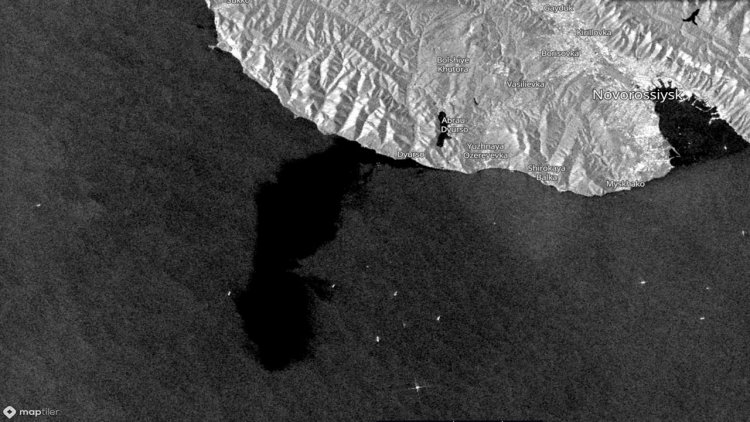
Information about the incident in the Russian port of Novorossiysk appeared on August 7. It became known that the spill occurred at the oil terminal while loading the Minerva Symphony vessel.

According to initial data, the spill area was about 200 sq. m, and the volume of the oil spill is about 12 cubic meters. Later, environmental organizations including WWF Russia and Greenpeace reported that the area of ​​the oil spill is 400 thousand times higher than declared. This was confirmed by the space images.

Russian law enforcement has launched an investigation, but as of August 17, no new information about the environmental disaster has been released. Thus, even 10 days after the incident, environmentalists from neighbouring countries do not have information on the extent and nature of pollution.

Viktor Komorin, Director of the Ukrainian Scientific Center for Ecology of the Sea (UkrSCES), said:

“Unfortunately, we don’t have our own data on this pollution. In turn, the Russian Federation did not provide the necessary information to Ukraine or anyone else. If we focus on information from the media, I can say that this oil spill will not reach the territories of Ukraine.

At the same time, it should be noted that we don’t know anything about which oil products got into the sea. If it is heavy fuel oil, then most of the heavy fractions will hit the bottom and will be a constant threat to the marine environment as secondary pollution. In this case, only a small part of these fractions as an emulsion will be distributed in the water column, be diffused in the sea.

If these are light fractions, then they will be carried by currents and winds on the surface of the water over fairly long distances. Consequently, it will harm not only the coast around Novorossiysk, but also the ecosystem including cetaceans, birds and fish.”

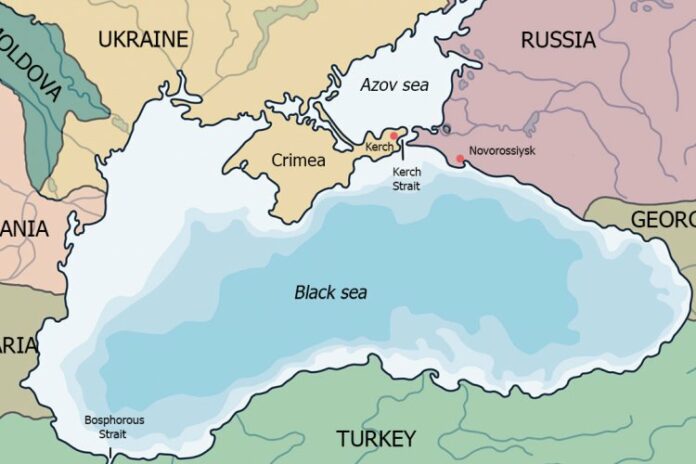
According to Viktor Komorin, it would be possible to control the movement of the spill and analyze the consequences of the leak thanks to the scientific institutions and facilities available in Crimea. Novorossiysk is only 160 km from the Kerch Strait and the Crimean peninsula. Moreover, Ukrainian ecologists already have experience in such critical situations. In 2007, during a very strong storm in the Kerch Strait, the five ships sank, some of them carrying dangerous goods, including oil. Then Ukraine used all its resources in Crimea to study the situation and scientists actively worked together with the Ministry of Emergencies.

Unfortunately, such work is impossible now. After Russia had occupied Crimea in 2014, Ukraine lost all scientific bases located on the peninsula.

Victor Komorin explains:

“In Crimea, we had three large institutions – the Marine Hydrophysical Institute and the Institute of Biology of the Southern Seas in Sevastopol, as well as the Institute of Fisheries in Kerch. After 2014, they were transformed and subordinated to Russia, and we do not know much about what is happening there. Communication with the local scientists has also stopped, the results of their research are not available. Therefore, we are deprived of the opportunity to do our job to the fullest.

In this case, we can only make measurements of seawater and bottom sediments in the Black Sea, which is completely controlled by Ukraine. Based on this, we can conclude whether this oil spill affects our part of the sea.”

by Iryna Umanets

TECO 2030 and Greenstat to cooperate on developing a hydrogen value chain

0

As part of the agreement, the two parties will discover, evaluate and participate in relevant projects. For the projects they decide to cooperate on, Greenstat will provide green hydrogen to be used as fuel for the fuel cells developed by TECO 2030.

Tore Enger, CEO of TECO 2030 ASA, says:

“With the signing of the letter of intent with Greenstat, we have reached a milestone towards building complete infrastructure hydrogen projects.”

“Together with Greenstat, we are working towards our common goal of creating a zero-emission future, and we will aim to promote each other’s services towards the hydrogen community.”

Vegard Frihammer, GEO/CEO of Greenstat ASA, says:

“At Greenstat we are proud to work with an ambitious partner like TECO 2030. We strongly believe in collaboration throughout the value chain to accelerate the introduction of hydrogen as an energy carrier across different sectors.”

Hydrogen fuel cells are the engines of tomorrow and convert hydrogen into electricity while emitting nothing but water vapour and warm air.

Green hydrogen is hydrogen produced with renewable energy such as electricity from wind turbines and solar panels. When ships or other large applications replace their traditional combustion engines running on fossil fuels with fuel cells fuelled by green hydrogen, they can become completely emissions-free.

CSA completes geophysical survey in support of expanding US offshore wind industry

0

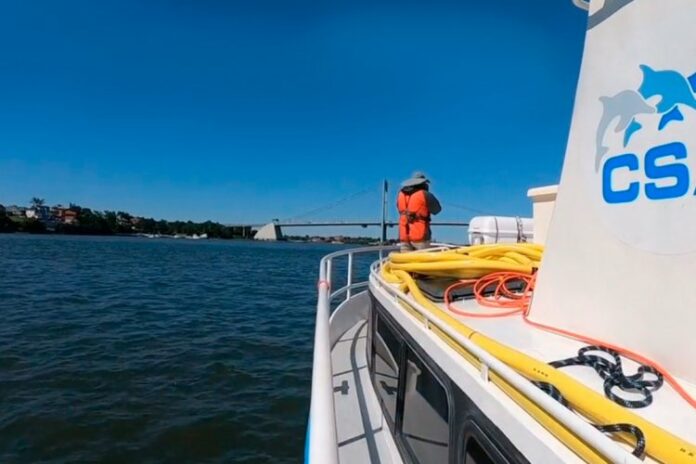
CSA Ocean Sciences Inc. (CSA), a marine environmental consulting and survey company, recently completed a series of geophysical surveys as part of an ongoing campaign of nearshore multidisciplinary marine surveys in support of an offshore wind development project off the Northeastern United States. 

This is the second fieldwork season for the recently outfitted R/V Dolphin, a 15-m turnkey multipurpose vessel ported at CSA’s regional office in East Greenwich, RI. The vessel is powered by twin diesels and a 20-kW generator and features a raised wheelhouse with a 360° view and spacious multi-use salon. To support marine geophysical missions, the R/V Dolphin is equipped with a dual head multibeam echosounder, side-scan sonar, sub-bottom profiler, gradiometer, single-channel seismic, sound velocity profiler, and underwater position systems. More about the vessel’s capabilities, which is HSSE approved by major offshore wind developers, can be found in the video below.

CSA is also conducting benthic surveys in collaboration with MMT US, which includes the collection and scientific analysis of benthic grab samples, the capture of real-time video of the seafloor, and sediment profile imaging. These data will help to characterize the benthic habitats along the export cable route and within the lease area.

Kevin Peterson, CSA’s CEO, said:

“We are hiring additional local subject matter experts and technicians to better serve a diverse range of markets with our cutting-edge ocean technology and innovative survey vessels and, in particular, support the rapidly expanding offshore wind industry.”

In addition to the geophysical and benthic survey campaigns, CSA will support the collection of geotechnical data following the completion of the benthic campaign.

Babcock International secures contract to support the Irish Naval Service

0

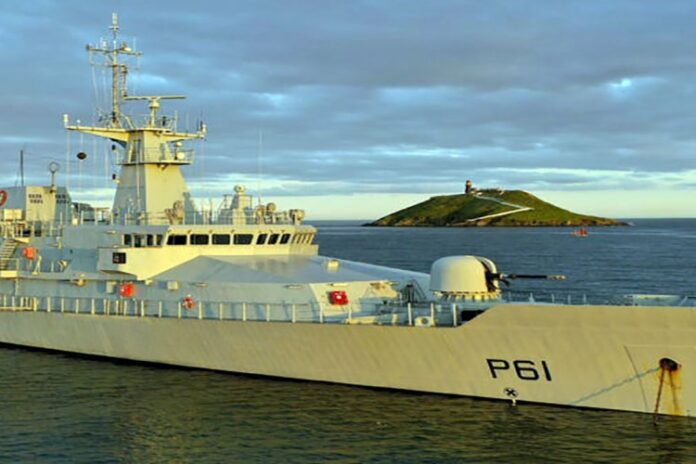
The variable speed drive system was first installed on the central cooling system of the fourth Offshore Patrol Vessel, LÉ George Bernard Shaw (P64), at time of build, enabling the vessel to use a variety of power outputs depending on the conditions and requirements.

The system has proven to be very successful, with the Irish Naval Service requesting it to be installed across the class to save power, fuel and cost, whilst providing a more environmentally friendly running option across the class.

The contract will see Babcock working alongside a range of suppliers to complete the work package for the Irish Naval Service, which will include all aspects of the project from design to engineering assurance.

Gary Simpson, Managing Director, Babcock’s Marine Support business, said:

“We’re pleased to continue our close working relationship with the Irish Naval Service and particularly to support this environmentally efficient system.

“We are immensely proud of the work we carried out to build the P60 Samuel Beckett Class and welcome the opportunity to continue supporting these fantastic Offshore Patrol Vessels and the Irish Naval Service.”

Captain Roberts, Officer Commanding Naval Support Command, said:

“The installation of the variable speed drive upgrades on the P60 Samuel Beckett Class demonstrates our climate change objectives, following the Government’s Climate Action Plan, in action. Babcock International have proven know-how to deliver this project, having already installed the system on LÉ George Bernard Shaw, and we look forward to working alongside them.”

Work will commence later this year in Ireland at Haulbowline, Co. Cork.

Norwegian Cruise Lines succeeded in the US District Court

0

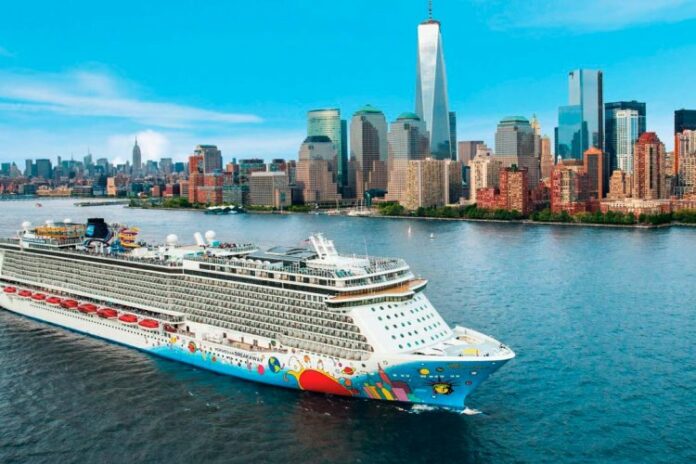
Norwegian Cruise Lines succeeded in the US District Court in enjoining the application of a Florida statute prohibiting Florida businesses from requiring patrons to document  they have been vaccinated as a condition of service.

Planning to resume passenger cruises from Florida on 15 August 2021, Norwegian Cruise Line Holdings Ltd. (NCLH) adopted a policy requiring all passengers on its vessels to be fully vaccinated against COVID-19 and to provide documentation confirming their vaccination status.

NCLH’s policy, however, was at odds with a recently enacted Florida statute, Fla. Stat. § 381.00316 (Statute), prohibiting businesses in the state from requiring patrons or customers to provide any documentation certifying COVID-19 vaccination or post-infection recovery to gain access to, entry upon, or services.

Arguing that the Statute violates the First Amendment of the U.S. Constitution and the Dormant Commerce Clause Doctrine, NCLH asked the U.S. District Court for the Southern District of Florida to issue a preliminary injunction against the enforcement of the Statute.

On 8 August 2021, finding that NCLH was likely to prevail on both constitutional grounds on the merits, that the cruise line would likely be irreparably harmed if required to comply with the Statute, and that the equities and public interest weighed in favor of the injunction, the Court granted NCLH’s request. Norwegian Cruise Lines Holdings v. Rivkees, No. 21-22492, 2021 U.S. Dist. LEXIS 148279 (S.D. Fla. Aug. 8, 2021).

Considering the unique risks of COVID-19 outbreaks on board cruise ships, the U.S. Centers for Disease Control and Prevention (CDC) issued a No Sail Order on 14 March 2020, prohibiting cruise ship operators from continuing operations in U.S. waters. The No Sail Order was extended three times before expiring on 31 October 2020. Thereafter, on 4 November 2020, the CDC issued a Conditional Sail Order (CSO), establishing a four-step framework for a phased resumption of cruise ship passenger operations. The steps include:

  • establishing laboratory testing of crew onboard cruise ships in U.S. waters;
  • performing simulated voyages designed to test a cruise ship operators’ ability to mitigate COVID-19 on cruise ships;
  • completing a certification process; and
  • resuming restricted passenger voyages in a manner that mitigates the spread of COVID-19.   

Following the introduction of COVID-19 vaccines, the CDC modified the CSO through a series of Letter Instructions, including, on 28 April 2021, a letter acknowledging that instead of simulated voyages, cruise lines could satisfy step two of the framework through an alternative method:

  • attesting that 98 per cent of crew members are fully vaccinated [later reduced to 95 per cent]; and
  • submitting to the CDC “a clear and specific vaccination plan and timeline to limit cruise ship sailings to 95 percent of passengers who have been verified by the cruise ship operator as fully vaccinated prior to sailing.”

Although the CSO and its subsequent instructions now appear to be non-binding guidelines because of separate, recent legal challenges, all cruise lines have nevertheless agreed to continue to follow the CDC Order and instructions on a voluntary basis.

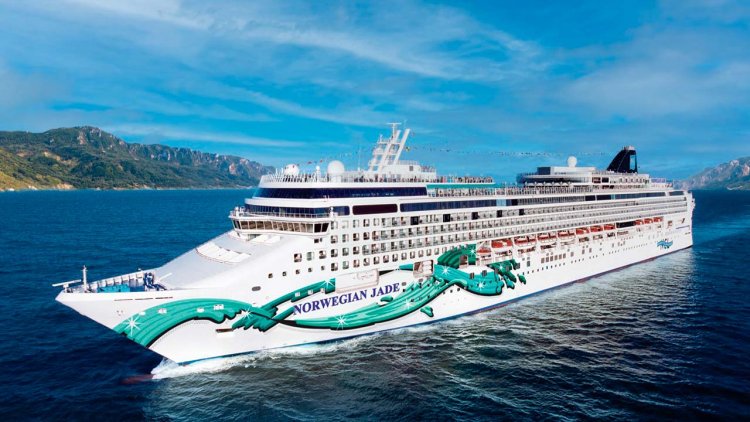
NCLH plans to resume sailing from Florida for the first time since the pandemic aboard the Norwegian Gem.

On 9 July 2021, the CDC approved the Norwegian Gem’s application for a Conditional Sailing Certificate, with the vessel fulfilling the second step of the CSO framework through the attestation method instead of performing simulated voyages.

Starting 15 August 2021, the Norwegian Gem offers several cruises from Florida to the Bahamas, Honduras, Belize, Mexico, the Dominican Republic, the U.S. Virgin Islands, and the British Virgin Islands.

To prevent a COVID-19 outbreak on board, build brand trust and goodwill with customers, and ensure compliance with the attestation it submitted to the CDC, NCLH will require that all crew and passengers be fully vaccinated, and that passengers provide proof of their vaccination status, prior to boarding the ship.