0.4 C
New York
Home Blog Page 564

Allseas awarded SMST new rental contract for their motion compensated gangway

0

Allseas awarded SMST a new rental contract for their motion compensated gangway, including operating crew, to provide safe transfers for their personnel that is working on the platform in UK waters.

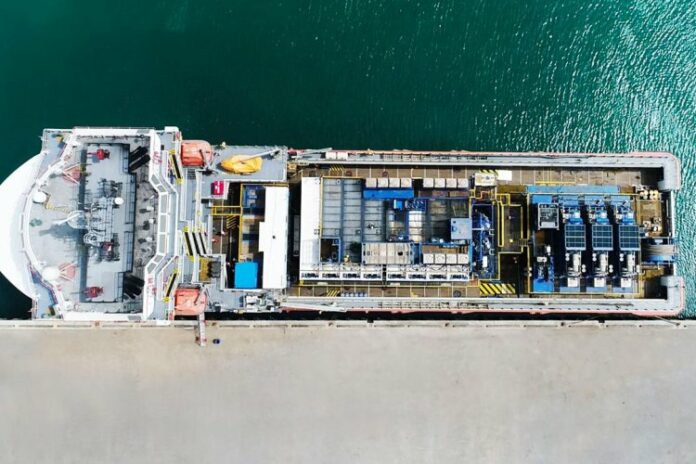
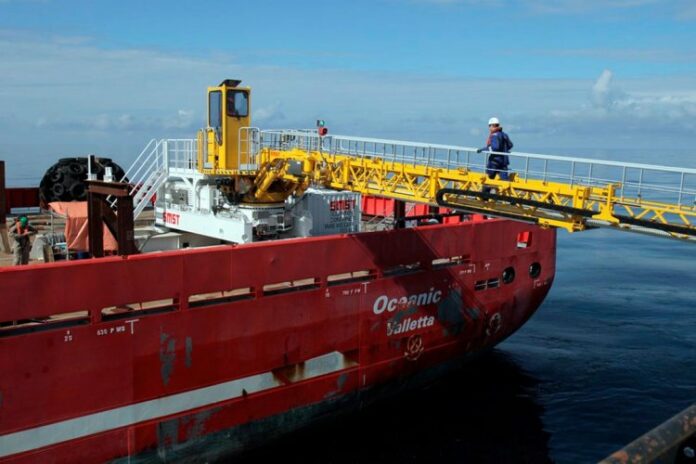
In July, the commissioning team of SMST mobilized the gangway, the Telescopic Access Bridge M-Series (TAB-M), on board of the offshore construction vessel Oceanic. The vessel provides construction support and accommodation for their crew that is preparing the eight-legged steel jacket for removal in this third phase of the project. 

Jeroen van der Sman, Project Manager at Allseas, says:

“After successful operations in the second phase of the decommissioning, we have chosen the reliable gangway system of SMST to assist us once more.”

In addition to the deployment of the motion compensated gangway, Allseas is also using the experienced team of SMST to operate the system during this project. 

The gangway on board Oceanic is installed directly on deck to access the jacket structure, whereas during the previous decom phase the topside was accessed via the gangway on 6 stacking modules. 

Menno de Jong, Sales Manager at SMST, says:

“Also during this project they profit from our modular W2W solution that enables continuous and safe access on various heights.”

Abu Dhabi Ports’ Offshore Arm OFCO purchases seven state-of-the-art vessels

0

Offshore Support and Logistics Services Company (OFCO – Offshore International), the integrated maritime logistics service provider that is jointly owned by Allianz Marine & Logistics Services (AMLS) and SAFEEN, Abu Dhabi Ports’ marine services arm, has announced the acquisition of seven support vessels as part of its offshore marine services fleet.

Comprising of four Anchor Handling Tugs (AHT), a 65-metre landing craft, as well as a supply ship and multipurpose safety standby vessel, the newest additions to OFCO’s fleet will further extend the new company’s capabilities in providing highly efficient and cost-effective onshore and offshore integrated logistics solutions and subsea services.

Combined with a fully operational offshore supply land base and led by a growing team of industry-leading talent, OFCO’s fleet expansion marks Abu Dhabi Ports’ venture into the ever-evolving field of regional and international offshore logistics.

Captain Maktoum Al Houqani, Chief Corporate Authority Officer of Abu Dhabi Ports, Acting Head of Maritime Cluster, and Chairman of OFCO said:

“With the acquisition of diversified and ultra-modern support vessels as part of our ever-expanding offshore marine services fleet, Abu Dhabi Ports is rapidly taking its strategic move into offshore logistics to new heights, while simultaneously cementing its role as the preferred maritime services provider in the Middle East and beyond.

“Possessing a unique proposition that combines industry-leading capabilities, rich talent, and cost-efficient solutions as part of a holistic offering, OFCO will deliver immense value to our customers, particularly for those active within the GCC’s offshore oil and gas market.

“We will continue to explore other potential vessel acquisitions and other related expansion opportunities in an effort to broaden our overall service capabilities, and to ensure we are well-positioned to satisfy the increasingly complex needs of the offshore market for years to come.”

Officially launched in January 2021, OFCO currently serves as one of the largest and competitively priced providers of onshore and offshore integrated logistics solutions, and subsea services in the GCC.

Deploying a winning combination of exceptional fleet assets, logistics solutions and supply-base operations, OFCO is well-placed to deliver a wide range of specialised services geared towards large offshore infrastructure projects, including active operations within the Middle East’s oil and gas sector.

Offering a unique ‘one-stop-shop’ offering, the company’s solution portfolio, which in addition to subsea services include integrated logistics for O&G and EPC organisations, as well as inspection repair and maintenance (IRM), is further supported by Abu Dhabi Ports’ land-based logistical assets.

Ahmed Khalil, General Manager, Allianz Middle East Ship Management, said:

“The expansion of OFCO’s offshore marine service fleet has greatly enhanced the organisation’s capabilities in meeting the ever-evolving demands of the region’s offshore energy market.

“Building on this momentous occasion, we aim to continue developing our unique offering incorporating not only the latest in support vessel design, the highest industry best practices and innovations, but we also strive to embrace new capabilities that will enable us to serve the end-to-end logistical needs of customers in other expanding industries.”

Friedrich Portner, General Manager, OFCO said:

“We are pleased to announce the acquisition of seven ultra-modern support vessels, which will be integrated into OFCO’s offshore marine services fleet. In a short time since the inception of the organisation, we have been able to swiftly expand the size of our standing fleet and placed ourselves in a position where we can serve large-scale and complex offshore operations.

“Extending our capacity to deliver integrated logistical solutions to customers seeking premium offshore services in the GCC, the new additions to our fleet have reinforced our capabilities in supporting vessels carrying specialised cargo for the oil and gas sector.”

Maersk Drilling secures nine-month contract to reactivate Mærsk Innovator

0

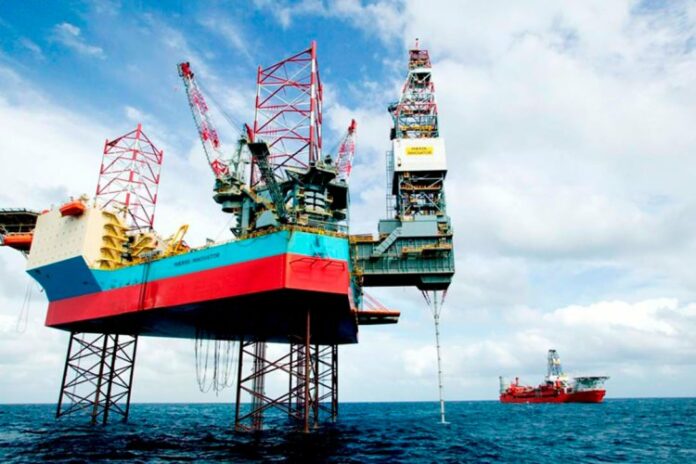
Maersk Drilling has been awarded a contract with Harbour Energy for the jack-up rig Mærsk Innovator to drill three subsea development wells in Block 28/9 on the UK Continental Shelf. 

COO Morten Kelstrup of Maersk Drilling says:

“We’re excited to secure this contract with Harbour Energy which will see Mærsk Innovator go back to work in the UK. We believe the Innovator’s high-specification and technical capabilities are an ideal match for this work scope, including the rig’s large deck area, offline capabilities, and capacity for deploying subsea trees.”

Mærsk Innovator is an ultra-harsh environment CJ70-X150-MD jack-up rig, designed for year-round operations in the North Sea. It was delivered in 2003 and is currently warm-stacked in Grenaa, Denmark after ending its previous contract in the UK in May 2020.

Brazilian terminal orders three new eco-efficient cranes

0

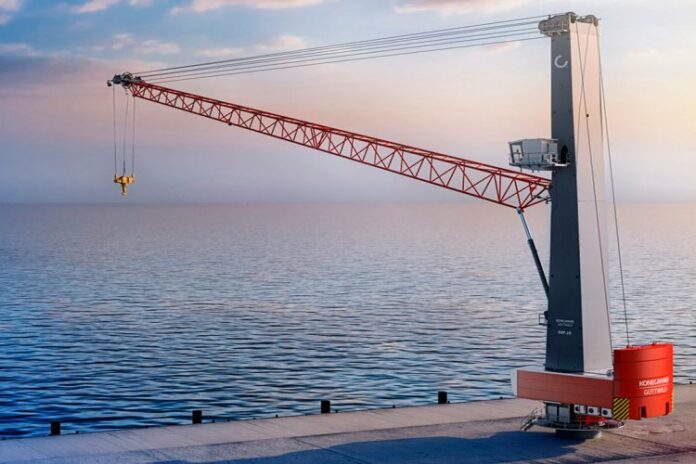
Konecranes has won an order to deliver three of its new eco-efficient Generation 6 Konecranes Gottwald cranes to Super Terminais Comercio e Industria Ltda (Super Terminais) in Brazil. 

The order, booked in June 2021, makes Super Terminais the first customer for the new cranes, and will help it sustainably meet growing demand for containers and general cargo in the Port of Manaus.

Super Terminais, a new customer for Konecranes, needs the extra lifting capacity to handle the megaships in use today at Manaus, an important commercial center and transport hub for the upper Amazon basin. The ESP.10 cranes are the largest models in the new Generation 6 portfolio and will be built on a new floating pier which can accommodate a recent influx of larger vessels coming down the Amazon River.

Marcello Di Gregorio, Managing Director of Super Terminais, says:

“Konecranes has been able to provide us with a specially tailored, holistic solution consisting of reliable, high-performance cranes that fit perfectly onto our unusual quay. This equipment will significantly expand our capacity and give opportunities for future growth and development. The choice of this equipment brought the perfect solution that goes in line with our philosophy of environmental preservation and sustainability, uniting productivity, technology and reliability.”

Andreas Moeller, Senior Sales Manager, Mobile Harbor Cranes, for Konecranes Port Solutions, says:

“We consulted closely with Super Terminais, and our new Generation 6 electric cranes overcame the special challenges that a hot climate and the floating pier presented us. This demonstrates the importance of a solid partnering relationship with customers and the flexibility of our equipment in a range of applications and working environments.”

The cranes will be connected to an external power supply on shore, to increase efficiency and fully comply with regional emission standards. Electric cranes provide comprehensive lifting solutions that support customers in helping them to move closer to their low-carbon targets. Konecranes calls this Ecolifting.

Smarter regulation of global shipping emissions could improve air quality

0

Emissions from shipping activities around the world account for nearly 3 percent of total human-caused greenhouse gas emissions, and could increase by up to 50 percent by 2050, making them an important and often overlooked target for global climate mitigation. At the same time, shipping-related emissions of additional pollutants, particularly nitrogen and sulfur oxides, pose a significant threat to global health, as they degrade air quality enough to cause premature deaths.

The main source of shipping emissions is the combustion of heavy fuel oil in large diesel engines, which disperses pollutants into the air over coastal areas. The nitrogen and sulfur oxides emitted from these engines contribute to the formation of PM2.5, airborne particulates with diameters of up to 2.5 micrometers that are linked to respiratory and cardiovascular diseases. Previous studies have estimated that PM2.5 from shipping emissions contribute to about 60,000 cardiopulmonary and lung cancer deaths each year, and that IMO 2020, an international policy that caps engine fuel sulfur content at 0.5 percent, could reduce PM2.5 concentrations enough to lower annual premature mortality by 34 percent.

Global shipping emissions arise from both domestic (between ports in the same country) and international (between ports of different countries) shipping activities, and are governed by national and international policies, respectively. Consequently, effective mitigation of the air quality and health impacts of global shipping emissions will require that policymakers quantify the relative contributions of domestic and international shipping activities to these adverse impacts in an integrated global analysis.

A new study in the journal Environmental Research Letters provides that kind of analysis for the first time. To that end, the study’s co-authors — researchers from MIT and the Hong Kong University of Science and Technology — implement a three-step process. First, they create global shipping emission inventories for domestic and international vessels based on ship activity records of the year 2015 from the Automatic Identification System (AIS). Second, they apply an atmospheric chemistry and transport model to this data to calculate PM2.5 concentrations generated by that year’s domestic and international shipping activities. Finally, they apply a model that estimates mortalities attributable to these pollutant concentrations.

The researchers find that approximately 94,000 premature deaths were associated with PM2.5 exposure due to maritime shipping in 2015 — 83 percent international and 17 percent domestic. While international shipping accounted for the vast majority of the global health impact, some regions experienced significant health burdens from domestic shipping operations. This is especially true in East Asia: In China, 44 percent of shipping-related premature deaths were attributable to domestic shipping activities.

Yiqi Zhang, a researcher at the Hong Kong University of Science and Technology who led the study as a visiting student supported by the MIT Joint Program on the Science and Policy of Global Change, says:

“By comparing the health impacts from international and domestic shipping at the global level, our study could help inform decision-makers’ efforts to coordinate shipping emissions policies across multiple scales, and thereby reduce the air quality and health impacts of these emissions more effectively.”

In addition to estimating the air-quality and health impacts of domestic and international shipping, the researchers evaluate potential health outcomes under different shipping emissions-control policies that are either currently in effect or likely to be implemented in different regions in the near future.

They estimate about 30,000 avoided deaths per year under a scenario consistent with IMO 2020, an international regulation limiting the sulfur content in shipping fuel oil to 0.5 percent — a finding that tracks with previous studies. Further strengthening regulations on sulfur content would yield only slight improvement; limiting sulfur content to 0.1 percent reduces annual shipping-attributable PM2.5-related premature deaths by an additional 5,000. In contrast, regulating nitrogen oxides instead, involving a Tier III NOx Standard would produce far greater benefits than a 0.1-percent sulfur cap, with 33,000 further avoided deaths.

Noelle Selin, a professor at MIT’s Institute for Data, Systems and Society and Department of Earth, Atmospheric and Planetary Sciences, and a faculty affiliate of the MIT Joint Program, says:

“Areas with high proportions of mortalities contributed by domestic shipping could effectively use domestic regulations to implement controls. For other regions where much damage comes from international vessels, further international cooperation is required to mitigate impacts.”

Port of Baltimore awarded US$1.6 million for cybersecurity enhancement

0

The Maryland Department of Transportation Maryland Port Administration (MDOT MPA) has been awarded $1.6 million in the most recent round of the Federal Emergency Management Agency’s (FEMA) Port Security Grant Program. The funding will go towards solidifying cybersecurity and access control policies and initiatives at the Helen Delich Bentley Port of Baltimore’s state-owned, public marine terminals.

Governor Larry Hogan said:

“As the Port of Baltimore continues to grow and expand, our administration is committed to ensuring it remains one of the most secure ports in the nation. Cybersecurity is a growing concern in our world, and this funding will help the Port of Baltimore protect itself against significant cyber threats.”

In late July, Governor Hogan convened a cybersecurity summit in Annapolis to highlight federal, state, and private sector efforts to protect America’s critical infrastructure from cyberattacks.

Since 2005, the Port of Baltimore’s public terminals have received more than $20 million in the Port Security Grant Program. Over that period, the Port has significantly enhanced its security program by upgrading access control procedures, installing physical security fixtures such as high-mast lighting and fencing, and strengthening closed-circuit television. For 12 consecutive years, the Port’s public marine terminals have received a top rating on an annual security assessment conducted by the U.S. Coast Guard.

MDOT Secretary Greg Slater said:

“Security is critical to the maritime industry, and the Port of Baltimore has the reputation as a safe and secure place for our workers and customers. As the Port continues to lead the way in Maryland’s economic recovery, this grant will help us make security an even stronger focus in our dayto-day operations.”

MDOT MPA Executive Director William P. Doyle said:

“We thank FEMA for this grant and for helping make the Port of Baltimore a stronger and more secure seaport. We will continue to aggressively go after federal port security grants that will protect the thousands of men and women who work at the Port of Baltimore and protect the tens of millions of tons of cargo that we handle annually.”

The Port of Baltimore generates about 15,330 direct jobs, with more than 139,180 jobs overall linked to Port activities. The Port of Baltimore ranks first among the nation’s ports for volume of autos and light trucks, roll on/roll off heavy farm and construction machinery, and imported gypsum. It ranks 11th among major U.S. ports for cargo handled and tenth nationally for total cargo value. 

Delays in cargo shipments loom as China ports reel due to COVID-19

0

The Philippine Ports Authority (PPA) is encouraging the Philippine-based importers and exporters to make the necessary operational adjustments as delays in the delivery of cargo looms due to the partial closure of several ports in China due to COVID-19.

PPA said early preparation is key to reduce the negative impact of the delays in their overall daily operations, thus, allowing them flexibility in the long run.

It may be recalled that in the past two weeks, several transshipment ports under the territories of China have slowed down operations due to COVID-19. On Tuesday, Ningbo Port, the world’s third-largest container port, continues to shut one of its terminals for the 7th straight day due to the virus, particularly the Delta variant.

Other major ports in the region likewise reported congestion owing to the lingering effect of the pandemic.

The majority of Philippine imports and exports, on the other hand, pass through these transshipment ports as the country remains as a feeder economy.

PPA General Manager Jay Daniel R. Santiago said:

“We need to prepare. Eventually, the delays in cargo shipments will catch up with us due to the congestion being experienced in these transshipment ports.”

“We are encouraging all importers and exporters to take the necessary steps to adjust and secure their operations to mitigate the impact of the slowdowns or partial closures of the big ports in their overall operations.”

The Philippine major port gateways, meanwhile, are currently operating under optimum conditions and way below the threshold level of utilization set at 75%.

The Manila ports, composed of the Manila International Container Terminal and the Manila South Harbor are operating under normal conditions. These two ports handle 85% of the country’s foreign trade volume. The two ports have an average utilization rate of 68% and 56%, and berth utilization rate of 59% and 56%, respectively. Both ports have an average per crane productivity rate of 25 moves an hour.

In terms of daily cargoes passing through the ports, an average of 12,000 twenty-foot equivalent units of foreign cargoes are being handled at the ports.

 Santiago explained:

“PPA assures the shippers that Philippine ports, can handle the bulk of the delayed shipments when conditions at the transshipment ports start to normalize.”

UK sea level rising but data quality going down

0

Scientists from the National Oceanography Centre (NOC) have contributed to The Met Office’s annual report ‘The State of UK Climate’, which revealed UK sea level has risen 16.5cm since 1901 (excluding land movement).

The State of the UK Climate Report 2020 published last month shows that UK sea level rose by over 16.5cm or 6½ inches (1.5 ± 0.1 cm/decade) since 1901. However, issues with data quality mean there was not enough data to update the UK sea level index with a value for 2020. NOC scientists are calling for more effectively managed sustained ocean observation systems to provide the research and information needed for a healthier ocean.

The report warns, however, that ‘due to ongoing issues with data quality there was not enough data to update the UK sea level index with a value for 2020’. NOC experts believe this highlights the ever-growing need for sustained observations as a way of providing the essential data required to inform decision-makers of climate and environmental policies about the oceans and how to tackle critical marine issues.

According to the report, the sea level index for 2019 was the highest on record but the data from the 2019 and 2018 values are based on only one of five stations used to calculate the UK sea level index, due to insufficient data from the other four stations. It also states that, ‘given issues with data availability in the network, a review of the method used to calculate the UK index may be required to derive an index based on the complete network of 42 stations maintained for flood warning, rather than restricting this to long‐running stations only’; something scientists at NOC believe needs to be addressed by global investment in ocean observation, monitoring and measurement.

Ed Hill, CEO of the UK’s National Oceanography Centre, who manage the global database of average sea levels from tide gauges all around the world, commented:

“Deterioration of the quality of sea-level data around the British Isles for climate studies has been a matter of growing concern. The present network of 42 sea level monitoring sites is maintained mainly for flood warning but a smaller number are supposed to be operated to higher standards to contribute to the Global Sea Level Observing System and are used to calculate the UK sea level index.

“New technologies are now available that mean accurate sea level measurements can be made at lower costs once installed, and I welcome plans to invest in upgrading the UK’s five sea level index sites as a priority.

“No doubt it will come as a surprise to many that accurate monitoring of climate quality coastal sea level rise is not reliably sustained. However, it’s the tip of an iceberg and continuous sensing of many other, but less obvious, essential ocean variables is also a concern.

“As the Head of the World Health Organisation said about the importance of COVID testing and tracking; ‘You cannot fight a fire blindfolded’. The same is true for understanding and solving the impacts of climate change and loss of biodiversity in the ocean, because you cannot manage what you cannot measure. There needs to be a complete rethink of monitoring of the global ocean, including tracking carbon dioxide absorption, the speed at which ocean waters are warming, becoming more acidic and losing their dissolved oxygen, changes in the global conveyor belt circulation, and the impacts on the health of marine life.

“Ocean sensing networks need to be viewed as a globally shared infrastructure to provide the data needed to tackle the big global challenges of the ocean’s role in regulating climate and to reverse the cycle of decline and restore the health of the ocean. At least UK sea level measurements are maintained continuously for flood warning, but a lot of other essential data is supported only by a succession of short-term research projects and not managed as the critical data infrastructure needed.”

WinGD makes hybrid energy system integration debut with NYK

0

The four pure car and truck carriers (PCTC) will run on LNG, with WinGD’s 7X62DF-2.1 two-stroke engines coupled with shaft generators, DC-links and battery systems.  Based on its in-depth knowledge of the main engine’s performance WinGD has optimized spinning reserves, peak shaving, and energy flow to run the main engine constantly at its sweet spot while avoiding inefficient generator loads.  WinGD will be responsible for the system integration and system-level energy management, through WinGD’s new Hybrid Control System.

Combined with other ship design enhancements, the LNG-battery configuration is expected to cut overall CO2 equivalent emissions by around 40% compared to conventionally powered vessels operating on heavy fuel oil, taking them beyond IMO’s 2030 target for cutting greenhouse gas (GHG) emissions.

Mr.Keita. Fukunaga, Deputy Manager/ Ship Design Team/ Technical Group at NYK LINE, said:

“Battery hybrid technology improves fuel efficiency and emissions by mitigating main engine and electrical generator load fluctuations. This project is an important step in our plan to replace current vessels to newly built LNG-fuelled PCTCs, reducing the fleet’s carbon intensity by 50% by 2050. We are delighted to contract with WinGD to integrate this innovative power and propulsion arrangement.”

WinGD Program Portfolio Manager Digital & Hybrid Stefan Goranov added:

“An appropriately controlled hybrid energy system is emerging as one of the most cost-effective solutions for deep-sea vessels to meet future environmental targets, combining the high efficiency of low-speed two-stroke engines with optimally sized electric drives, machines, and energy storage units. This important landmark showcases WinGD’s core engine development expertise and the extensive investments we have been making to understanding how to optimise the operational characteristics of integrated hybrid systems.”

WinGD believes that the low-speed two-stroke engine must remain at the heart of any hybrid energy configuration for deep-sea merchant vessels. With its step into system integration, the company brings its expertise to the holistic design of power arrangements that can incorporate batteries, shore power interfaces, solar or wind power generation, fuel cells, frequency converters and energy management systems.

Peak shaving is just one example of the operating modes that hybrid power systems can deploy to make deep-sea shipping more efficient. As low-speed engines are inherently more efficient than four-stroke engines, the carefully managed use of the main engine and electrical energy management aided by batteries can optimise the loading of auxiliary engines. Other modes include efficient port maneuvers and bow thruster operation, and the use of batteries rather than auxiliaries to provide spinning reserve in case of the need for emergency power.

This project marks another significant step forward in WinGD’s commitment to the energy transition within shipping. The expertise gained within the well-established X-DF fleet, paired with customers dedicated to improving the sustainability of their assets, is ensuring progress towards this goal.

The vessels will be built by China Merchants JinLing Shipyard (Nanjing) for delivery in 2023. They are expected to be assigned to transport vehicles mainly between Europe and the Middle East.

Study: Measuring the impact of extreme waves on offshore structures

0

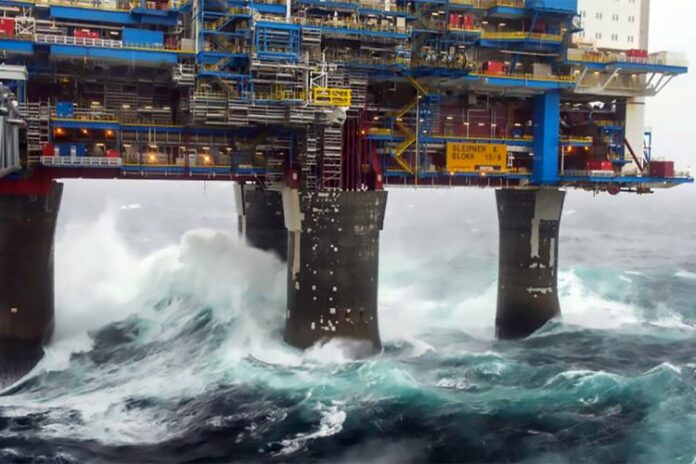
The force of waves slamming into offshore rigs, wind turbine pillars, ships or other offshore structures can do an enormous amount of damage.

One of the fundamental – and unresolved – problems with designing these kinds of large structures is being able to predict exactly how they will react to extreme stresses. What exactly is the load from the force of powerful waves slamming into structures?

Solving these challenges will be a major step towards safer and more cost-effective marine operations.

Rene Kaufmann says:

“It’s crucial to understand the mutual interaction between the impacting wave and the response of the structure.”

Kaufmann is a postdoctoral fellow at the NTNU SIMLab (Structural Impact Laboratory) and one of the researchers in the SLADE KPN project. This is a Knowledge-building Project for Industry (KPN) funded by the Research Council of Norway, in which researchers from SINTEF Ocean and NTNU are collaborating on basic research. The overall goal is to increase the safety at sea.

Photo: Vegard Aune, SIMLab

It’s important to expand what’s known about these challenges, but that will require systematic experimental studies of wave-impact scenarios. The project will do exactly that, which should allow researchers to figure out how a structure’s behaviour interacts with the loads that are applied to it.

The researchers are developing experimental methods to measure this interaction. Better calculation methods can help the industry when new offshore structures are designed.

Kaufmann’s focus is measuring the impact of local surface deformations from massive loads.

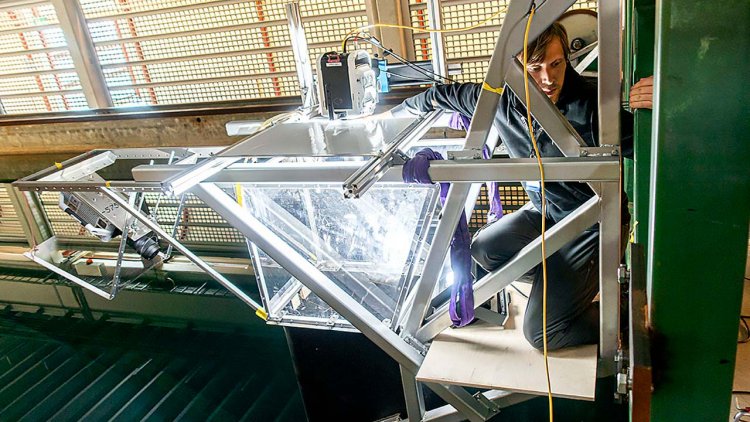
One important aspect of Kaufmann’s research is to make sure the measuring equipment itself doesn’t affect the structure’s properties. Researchers at SIMLab have used their experience with camera-based techniques to measure the structural response to loads from impacts and explosions.

Kaufmann, along with fellow researchers Bjørn Christian Abrahamsen from SINTEF Ocean Transport & Energy and project engineers Trond Auestad (SIMLab) and Jens Åge Havmo (SINTEF Ocean), recently spent several days in the Ocean Basin Laboratory at Tyholt in Trondheim, where they conducted wave slamming tests on small-scale models.

The researchers tested the measurement technique they had worked out, which involves measuring the load as the wave strikes the structure.

Today, this is measured with point meters that rely on wires. The SLADE team has been exploring the use of lasers and camera techniques that not only provide measurements at a given point, but can potentially determine in time and space how the entire incoming wave field evolves as it approaches the structure.

This development is leading to another goal for SLADE, that of bridging the gap between physical tests and reliable computer simulations.

The researchers recreated breaking waves in the basin, causing them to slam into a flat steel plate. The plate was integrated into a steel pillar representing a scaled-down steel structure at sea.

SLADE KPN was launched in 2019, but the partners involved have a long shared history of collaboration.

Source: Norwegianscitechnews.com