-2.4 C
New York
Home Blog Page 513

Belgian ports and Chile join forces to foster hydrogen production

0

On November 4th, Port of Antwerp, Port of Zeebrugge and the Chilean Ministry of Energy signed a Memorandum of Understanding (MoU) in which they commit to working together to make green hydrogen flows between Chile and Western Europe a reality. This cooperation will eliminate the last barriers and gaps in the run-up to the effective start-up of green production, the set-up of the logistics chain between the continents and the logistics in the Belgian seaports and their hinterland.

In the MoU, that was signed on Energy Day during the COP26 in Glasgow, the different parties express their interest in collaborating on the important strategic issue of setting up a corridor between their countries to ship green hydrogen or derivatives, produced in Chile and received at the Belgian Ports, for further distribution to meet expected demand in Europe. The signing of the MoU took place after a debate on hydrogen import between Sébastien Arbola (Executive Vice President, ENGIE), Tom Hautekiet (CEO, Port of Zeebrugge),  Juan Carlos Jobet (Chilean Minister of Energy) and Tine Van der Straeten (Belgian Minister of Energy), and moderated by Noam Boussidan (Lead Energy, World Economic Forum).

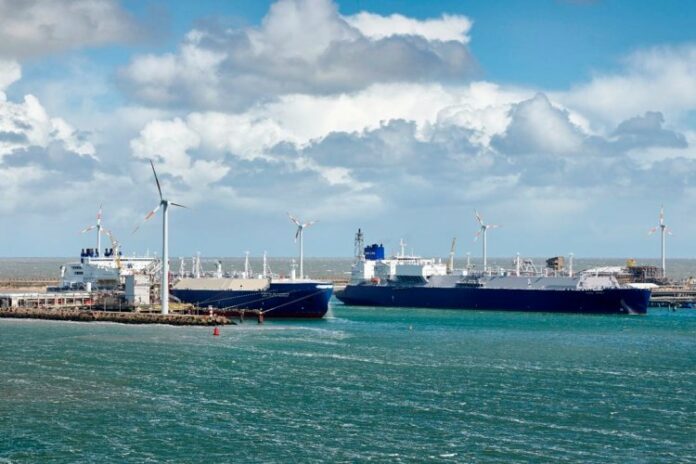
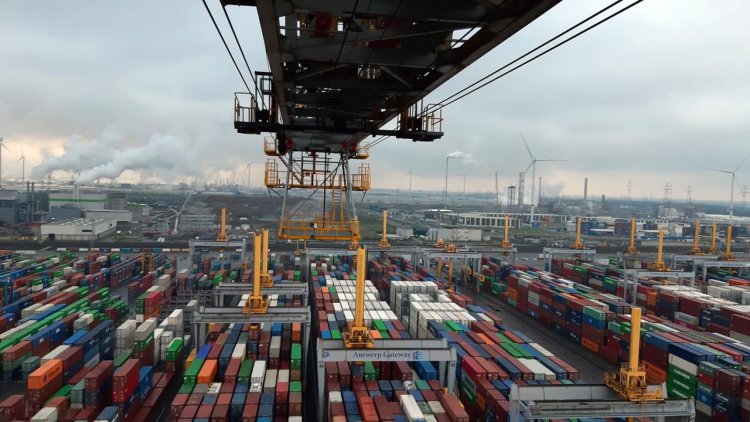
Port of Antwerp, Europe’s largest port in terms of size and integrated chemical cluster activities, and Port of Zeebrugge, Belgium’s most important LNG hub and offshore wind power plant, play an important role as fossil energy hubs for Western Europe. They receive, store and dispatch important volumes of energy to power, heat, chemistry and transportation off-takers. Port of Antwerp and Port of Zeebrugge intend to become part of the Belgian and European climate solution by acting as early mover renewable energy hubs, making use of their infrastructures, know-how and network to import and deploy important volumes of hydrogen to the European hinterland

Both ports are convinced that the future Western European energy system will need to focus on domestic wind and solar energy, as well as imported volumes of renewable hydrogen. They believe that hydrogen carriers will be the adequate form of energy to allow the transition in sectors such as marine shipping, chemistry, fuel and steam production. Hence their role as a key actor in the Hydrogen Import Coalition, whose goal is to combine public and industrial partners to gain all the system insights needed to take the right actions.

Jacques Vandermeiren, CEO Port of Antwerp:

When we look back at the impact of COP26, I sincerely hope we will call it ‘the climate action summit”. The summit where promises were made and kept. That’s the only way how we will be able to tackle this challenge, by saying what we do and doing what we say. At Port of Antwerp, we will continue to push forward our ambitions to make sure our entire fleet, eco-friendly and to further develop as a multi fuel port, offering the alternative fuels that sustainable shipping requires.”

Tom Hautekiet, CEO Port of Zeebrugge, says:

“We are proud to know that Chile, the most significant potential exporter of green molecules, wants to cooperate with the ports of Antwerp and Zeebrugge. This opportunity will allow us to realize our shared ambition of importing hydrogen to Europe together. The fact that they consider Zeebrugge to be a suitable import port confirms our position as an important energy hub. Moreover, our close cooperation will herald a new chapter for the energy transition in and of Europe.”
Chile, through its national Green Hydrogen Strategy, has set very ambitious targets in order to become a carbon-neutral country by 2050 and utilize the high-quality and abundant renewable energy resources available to it. The country aims to be producing the cheapest green hydrogen by 2030 and become one of the top 3 exporters of green hydrogen by 2040. The Chilean Ministry of Energy, which is leading the green hydrogen strategic policy, is required to engage with overseas parties to cooperate on the issue of setting up international supply chains of green hydrogen from Chile. The signing of this MoU is a further step towards fulfilling their sustainability commitments.

Juan Carlos Jobet, Chilean Minister of Energy:

“This is excellent news to continue consolidating Chile’s leadership in the development of this new industry. Our potential in clean energy will allow us to be the cheapest producers of green hydrogen in the world, with which we will be able to satisfy our demand, but also help other countries to advance with their climate goals.”

Port of Antwerp, Port of Zeebrugge and the Ministry of Chile will collaborate on a regular basis in order to exchange knowledge, experiences and other information to further explore the possibilities of the cooperation. This latter is particularly important to eliminate the challenges in the run-up to the effective start-up of green production in Chile, the set-up of the logistics chain between our continents and the logistics in the Flemish seaports and their hinterland.

Annick De Ridder, Alderwoman of Antwerp, responsible for the port:

Together with the industry, ports play an important role in finding solutions for our climate. For this reason the agreement between the ports of Antwerp and Zeebrugge is an important milestone in the fight against climate change, making sustainable energy flows more accessible in Europe. As the port of Antwerp we are delighted with this agreement, which further consolidates our position as a sustainable energy hub in Europe.”

Dirk De Fauw, Mayor of Brugge:

“The signing of the ‘letter of intent’ will certainly open new doors for the ports of Zeebrugge and Antwerp. The green hydrogen produced in Chili in the coming years will primarily be used for domestic consumption, but there are concrete plans to export green hydrogen to other parts of the world as well. Zeebrugge would thereby become the hub for the supply of Green Hydrogen in Western Europe. This element of cooperation was already extensively discussed during the merger negotiations with the port of Antwerp: Port of Antwerp Bruges as a real green energy hub of the future.”

ENGIE, partner of the Hydrogen Import Coalition with an historical presence and long-standing expertise in both Belgium and Chile, key countries for the Group, aims to develop renewables and propose projects to launch the import supply chain of renewable molecules between the two countries.

Catherine MacGregor, ENGIE CEO:

“Convinced that green hydrogen will play a key role in decarbonizing our economies, we are very proud to support the H2 Import Coalition program and to collaborate with Belgium and Chile. With a target to develop globally 4GW of renewable hydrogen capacity by 2030, the Group is perfectly-positioned to support these two countries in developing an ambitious hydrogen industry while reaching their net-zero goals.”  
Unitrove unveils liquid hydrogen bunkering facility for fuelling zero-emission ships

0

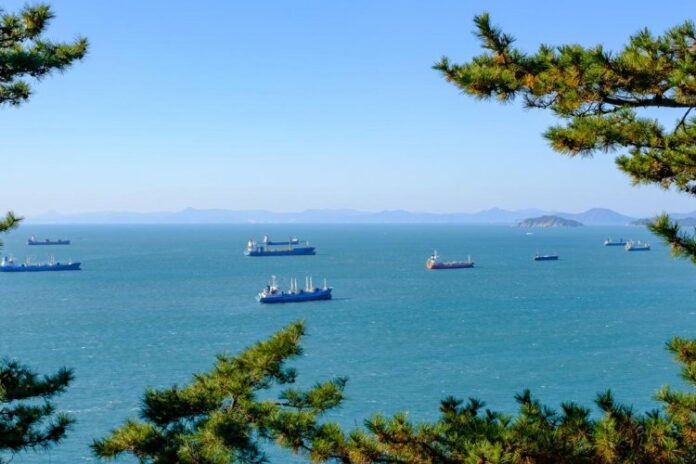
Unitrove says the facility is vital to fuel an international shipping industry that accounts for around one billion tonnes of global carbon dioxide (CO₂) emissions and contributes to around 400,000 premature deaths and 14 million cases of childhood asthma every year due to fine particulate matter (PM2.5), sulphur oxides (SOₓ), and nitrogen oxides (NOₓ) that arise from ship smokestacks.

Having already successfully delivered the UK’s first liquefied natural gas bunkering facility at Teesport in May 2015, Steven Lua, CEO of Leicestershire-based Unitrove, said his ambition was to enable clean, affordable, reliable, and sustainable fuelling options for ships at every port in the world – and he believes liquid hydrogen will play a vital role, especially for larger sea vessels.

In the run-up to COP26, the International Chamber of Shipping (ICS) submitted plans to the industry’s UN regulator, the International Maritime Organization (IMO), calling for urgent measures to help the industry achieve net zero CO2 emissions by 2050.

The ICS, which represents 80% of the global shipping industry, is pushing governments to double the IMO’s current target, which is to reduce emissions from international shipping by 50% by 2050.

Mr Lua said:

“The global maritime sector is one of the most polluting in the world. It’s estimated that just a handful of the worst-polluting mega ships on our oceans today produce more pollution than all the world’s cars put together. That’s a staggering statistic, and one we simply cannot ignore.

“To achieve net zero by 2050 needs the combined will of the industry and governments. As well as building new vessels, we need to ensure the infrastructure is in place. At this moment in time, there’s no clean-fuel bunkering infrastructure – it’s practically non-existent.

“Without zero-emission fuelling infrastructure, the drive for zero-emission ships will falter. In terms of infrastructure, there’s nothing significant in place today, but we are here to change that.

“The average lifespan of a large ship is anywhere between 20 to 40 years, meaning any ship procured today could potentially still be operating well beyond 2050.”

Mr Lua said liquid hydrogen as a commercial fuel was relatively unexplored as an option – but that it had great potential for many uses, including plugging the gap where electric and compressed hydrogen cannot reach:

“Liquid hydrogen has long been used to safely and successfully send rockets into space. The technology is mature, but the markets for its use are not.

“We already see very early signs of light-duty vessels being battery-driven or powered by compressed gaseous hydrogen, but liquid hydrogen will allow us to serve the heavier portion of the shipping fleet where we hope to have a much larger impact.

“We are also exploring options including ammonia, liquid organic hydrogen carriers, and solid hydrogen in the form of sodium borohydride. However, we understand that priority is currently being given to the development of international standards and regulations for pure hydrogen, and this could play a significant factor in the long run.

“We believe that hydrogen will be recognised as a global commodity that will be traded in the same way that natural gas is today. The bunker fuel market is worth an estimated $120bn, so there is a huge opportunity not only in environmental and social terms, but also financially.”

Neptune Energy partners with SOS Dolfijn to support marine conservation

0

Neptune will share its advanced emergency response systems and expertise to help the foundation rapidly mobilise teams of volunteers to provide aid for the sick or injured animals.

Neptune will also provide SOS Dolfijn with acoustic monitoring data and sightings of marine mammals from its offshore platforms in the Dutch North Sea to support the further understanding and knowledge that is essential for the conservation of marine populations in the wild.

The partnership will also see Neptune help fund the charity’s new rehabilitation centre in the Netherlands, which is scheduled to open in January. Neptune employees will have the opportunity to volunteer at the centre which will be open to the public, so they can learn more about marine mammals and the rescue work.

Neptune Energy’s Group Health Safety Environment and Quality (HSEQ) Director, Kick Sterkman, said:

“While the day-to-day work our organisations carry out is different, we both have a strong presence in marine environments and are committed to having a positive impact on biodiversity. This partnership provides a unique opportunity to support the invaluable work that SOS Dolfijn are doing to help conserve these incredible animals.”

The SOS Dolfijn partnership is in line with Neptune’s environment, social and governance (ESG) strategy and its commitment to the UN Sustainable Development Goals, in particular Goal 14: Life Below Water, which supports marine conservation.

Each year SOS Dolfijn responded to around 30 marine mammals stranded on the Dutch coast and surrounding countries. 

SOS Dolfijn Director, Annemarie van den Berg, said:

“Working with the advanced emergency response system will save us a lot of time and the funding for the new centre is helping us to have the rescue centre up and running before the next stranding season.”


NYK receives delivery of new VLCC Tateshina

0

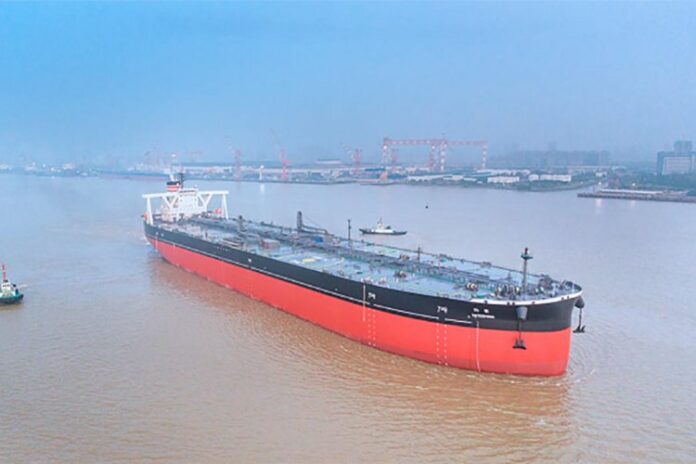
By improving the shape of the ship’s bow, the wave-making resistance caused by the bow wave during navigation has been greatly reduced, and the propulsion performance has been improved. 

This ship is also equipped with energy-saving measures such as low-friction paint applied to the hull, high-efficiency large-diameter propellers, and ladder fins that regulate the water flow at the stern and reduce energy loss. As a result, energy efficiency (carbon dioxide emissions per unit of transportation) is expected to improve by approximately 23% compared to conventional VLCCs, and the IMO’s phase 2 EEDI requirements have been achieved.

In addition, the vessel has been given the Cyber Resilience-Guideline (CybR-G) notation by the Japanese classification society ClassNK. This is the first such grant of a cyber notation for a vessel in accordance with the “Guidelines for Designing Cyber Security Onboard Ships” established by ClassNK. The notation acknowledges that the design is feasible for proper ship operation with cybersecurity taken into consideration.

  • Length overall: 339.5 meters
  • Breadth: 60.00 meters
  • Depth: 28.90 meters
  • Gross tonnage: 162,218 tons
  • Deadweight tonnage: 311,979 tons
  • Shipbuilder: Nantong COSCO KHI Engineering Co., Ltd. (NACKS)
  • Flag: Liberia

Gaslog chooses Wärtsilä’s Optimised Maintenance Agreement for LNG carriers

0

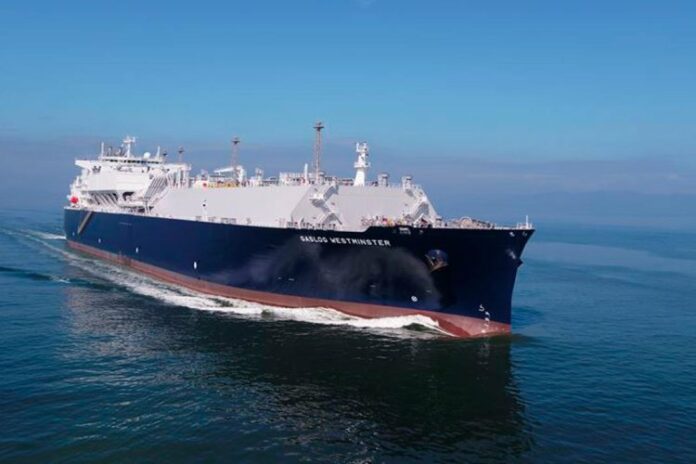
The technology group Wärtsilä’s Optimised Maintenance Agreement has been selected by Greek shipowner and operator Gaslog to cover ten of the company’s very large LNG Carrier vessels. 

The agreement is designed to ensure certainty of operations with budgeted maintenance costs. It was signed in June 2021.

The tailored agreement covers the vessels’ twin two-stroke dual-fuel main engines, enabling them to benefit from the latest condition monitoring and asset diagnostic services. These include Wärtsilä’s unique Expert Insight solution and remote operational support capabilities. The Expert Insight digital predictive maintenance innovation utilises artificial intelligence (AI) and advanced diagnostics to provide accurate and pro-active advice and recommendations. 

Together with Wärtsilä’s vast experience and deep in-house know-how, the system is able to promptly recognise performance deviations, should they occur, thus allowing timely corrective and mitigating actions to be taken, thereby increasing uptime. Furthermore by ensuring efficient operations, emission levels are lowered.

Expert Insight is estimated to reduce unplanned maintenance by as much as 50 percent, and to deliver an up to five percent improvement in fuel efficiency, with a corresponding reduction in emissions. The service is delivered via Wärtsilä’s Expertise Centres strategically located around the world.

Kostas Karathanos, General Manager, Innovation & Technology at Gaslog, says:

“To achieve optimal operational efficiency, we need to take advantage of the latest and most advanced technology. Wärtsilä’s Optimised Maintenance Agreement provides this. We have worked closely with the Wärtsilä team to create a customized agreement that addresses our main concerns and needs while providing an efficient means for us to manage both costs and risks.”

Rajeev Janardhan, Sales Manager, 2-stroke engine Lifecycle solutions, Wärtsilä Marine Power, says:

“This agreement represents the smart way for ensuring the efficient maintenance of complex modern marine engines and related systems. By ensuring optimal engine efficiency, which in turn minimises emissions, it is also a valuable contributor to global efforts to decarbonise shipping.”

The Optimised Maintenance Agreement is an important element within Wärtsilä’s Lifecycle Solutions offering, which is aimed at strengthening the business performance and competitiveness of its customers. The broad range of services that enable reliable and efficient vessel operations include 24/7 remote technical support, contract management, maintenance planning, and annual engine health audits. The planning and supply of spare parts required for engine overhauls is also included. 

Fugro wins two Energinet site investigation contracts for Denmark’s Energy Island

0

A global first, this purpose-built artificial island will be situated 80 km offshore in the North Sea and act as a hub connecting hundreds of surrounding wind turbines. 

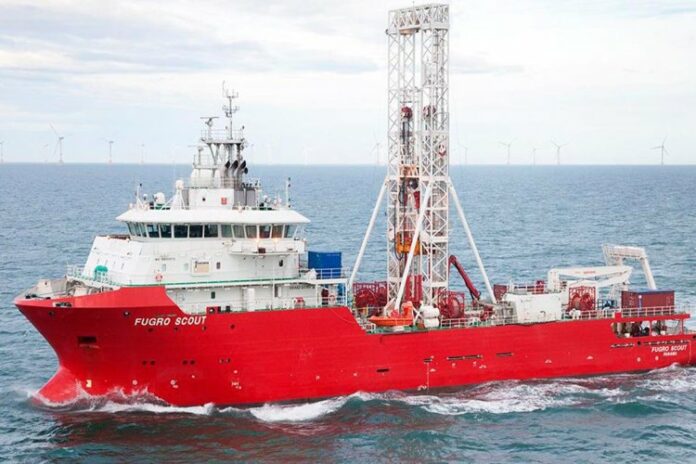
Fugro will perform the preliminary geotechnical site investigation for the Energy Island and the adjacent offshore wind farm zone. The resulting Geo-data will be used to prepare an integrated geological and geotechnical soil model on which wind farm developers will base future tenders.

The fieldwork will run from February to May 2022 and up to four dedicated geotechnical vessels will work on the project. These operations will include the use of Fugro’s SEACALF® Mk V Deepdrive system for seabed cone penetration tests (CPTs), as well as the WISON® Mk V Ecodrive for the downhole testing. Following the fieldwork, an extensive laboratory testing programme will be delivered by various laboratories, including Fugro’s newly certified and accredited laboratory in Belgium.

Commenting on the award Jens Kenneth Larsen, Project Manager for Energinet’s site investigations on the future Energy Islands, said:

“Energinet is pleased to see Fugro among the suppliers for the Energy Island site investigation project. Reliable geotechnical site investigations are very important for future tenders and therefore a very important part of the foundation when realising the Energy Island and surrounding offshore wind farms.”

Sven Plasman, Fugro’s Principal Commercial Manager, said:

“We are proud to be involved in this European offshore wind megaproject. Fugro is uniquely positioned to provide the vessels, equipment, experienced engineers and geoconsultants required for successful geotechnical data acquisition, and our advanced laboratory testing will provide critical high-quality Geo-data that helps derisk the project’s future development phases and support Denmark’s energy transition.”

This Energy Island contract follows on from the geophysical and unexploded ordnance (UXO) magnetometry survey awarded to Fugro earlier this year and the floating wind lidar measurement campaign that started in October.

Partners start development of large-size ammonia carrier

0

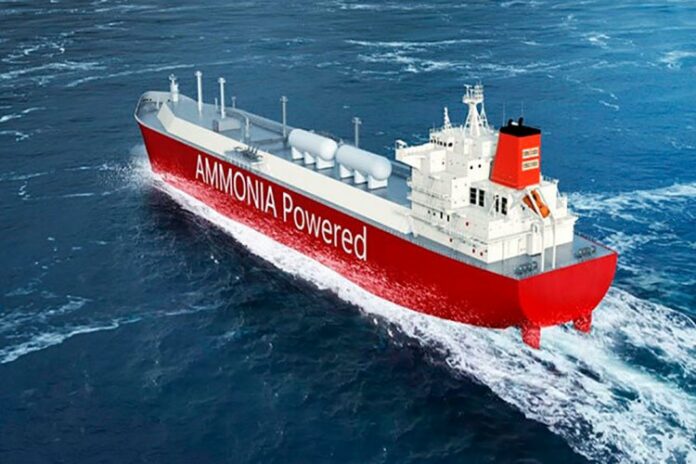
Mitsubishi Shipbuilding Co., Ltd., a part of Mitsubishi Heavy Industries, Ltd. (MHI) Group, has reached an agreement with Mitsui O.S.K. Lines, Ltd. and Namura Shipbuilding Co., Ltd. on joint development of large-size ammonia carrier fueled by ammonia.

Ammonia is mainly used as a raw component of fertilizers, and is expected to be a high-quality, reliable and clean energy. The development aim to increase the volume of marine transportation of ammonia by large-size ammonia carrier which are fueled by ammonia. 

The three companies will jointly proceed with the development of basic design of large-size ammonia carrier where Mitsubishi Shipbuilding will take charge of the optimal design of cargo tank and deck tank used for ammonia fuel, organizing engine and related machinery systems including the fuel supply system, and development and design of cargo handling equipment, special equipment for ammonia transportation and safety equipment onboard.

In the years ahead, ammonia fuel is anticipated to increase in demand in the future as a next-generation clean energy that does not emit CO2 when burned, and as the global value chain of maritime industry shifts to decarbonization, it is highly expected as a long-term solutions for marine logistics. Ammonia is considered to be a promising choice for realizing carbon neutrality in Japan as well, and its demand is expected to increase especially in applications involving replacement of existing fuels in thermal power plants and as a hydrogen carrier.

Shell restores production at Mars and Ursa in the Gulf of Mexico

0

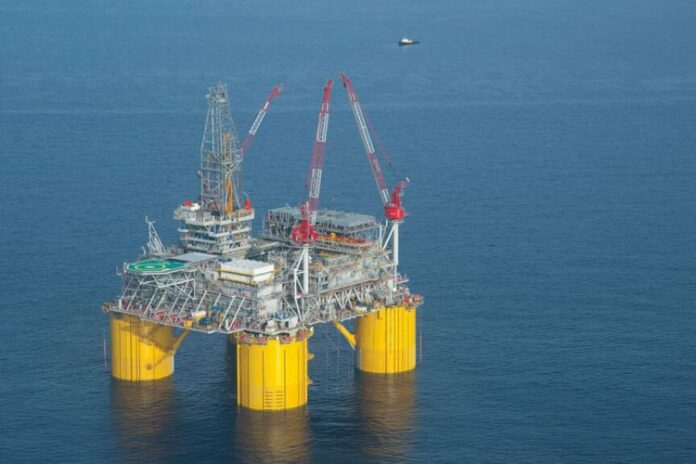
Shell Offshore Inc., a subsidiary of Royal Dutch Shell plc, has safely and successfully re-started production at our Mars and Ursa platforms in the US Gulf of Mexico and began exporting oil and gas through the West Delta-143 (WD-143) “A” facility.

The WD-143 facilities serve as the transfer station for all production from Shell’s assets in the Mars corridor in the Mississippi Canyon area of the Gulf of Mexico to onshore crude terminals. Production from Olympus flows across WD-143 “C” while production from its Mars and Ursa facilities flow across WD-143 “A”.

Zoe Yujnovich, Upstream Director, said:

“Our Hurricane Ida recovery efforts are the latest example of how our people come together with great determination to tackle the biggest challenges of the day. We are proud to have safely restored our full production in the US Gulf of Mexico, where the barrels are among the lowest GHG intensity in the world.”

On October 1, Shell safely and successfully re-started production at its Olympus platform in the Gulf of Mexico and began exporting oil and gas through the West Delta-143 (WD-143) “C” facility. 

The Mars corridor consists of Shell-operated tension leg platforms Mars, Olympus, and Ursa. Mars and Olympus ownership is: Shell Offshore Inc. (71.5%) and BP Exploration & Production Inc. (28.5%), respectively. Ursa ownership is: Shell Offshore Inc. (45.3884%), BP Exploration & Production Inc. (22.6916%), ExxonMobil Corporation (15.9600%), and ConocoPhillips Company (15.9600%).

CMA CGM to acquire one of the largest port terminals in the United States

0

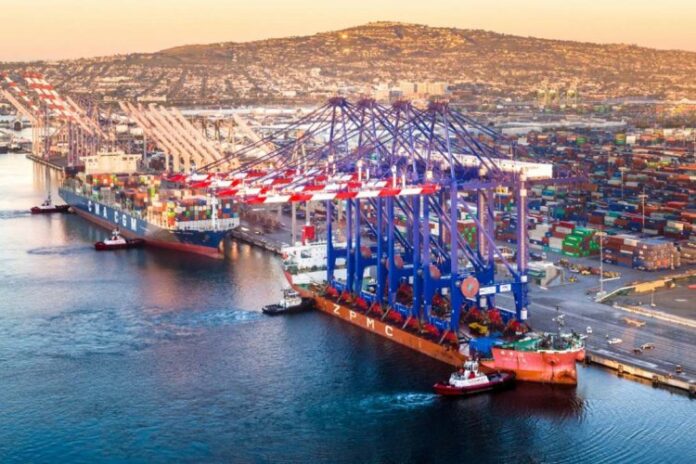
The CMA CGM Group has signed an agreement to acquire 90% stake in the Fenix Marine Services (FMS) terminal in Los Angeles, currently held by EQT Infrastructure III, based on an enterprise value of USD 2.3 billion. 

FMS is the third-largest terminal in the Los Angeles/Long Beach port area in terms of capacity (around 2.5 million TEU) and one of the largest in North America. The terminal also benefits from a long-term concession agreement (through 2043). 

The FMS terminal has a strategic deep-water location and boasts first-class infrastructure: 

  • 4 berths, each more than 1,000 feet long and with a draft of 50 feet, 
  • 16 cranes, 8 of which are capable of serving very large ships, 
  • 8 rail tracks located within the terminal, ensuring first-class rail connectivity, 
    a 292-acre container yard, 
  • more than 700 reefer plugs with 24/7 reefer monitoring. 

After closing, the CMA CGM Group will take over the operations of this strategic industrial facility with a goal of improving its service quality to better deliver upon its customers’ expectations.  

As part of its plan, the Group will accelerate FMS’ development with significant investment in the coming years: 

  • extension of the container yard to increase the terminal’s capacity in a staged approach,  
  • expansion of the terminal’s rail capacity in order to create one of the largest rail infrastructures in the United States,  
  • construction of a new berth, 
  • continuation of the terminal’s digital transformation.

By early 2022, the FMS terminal will welcome the first CMA CGM liquefied natural gas-powered 15,000-TEU ships to be deployed on routes between Asia and the United States. 

The closing of this transaction remains subject to the approval of the competent regulatory authorities.  

HSBC Continental Europe acted as financial adviser and Willkie Farr & Gallagher as legal counsel to CMA CGM Group for this transaction. 

This major investment is consistent with the CMA CGM Group’s strategy of developing its terminal business while supporting the growth and efficiency of its shipping lines, and increasing service quality for its clients, in a context that requires a comprehensive approach to the supply chain. 

With this acquisition, funded from its own resources, CMA CGM is bolstering its position as a global port terminal operator. Currently, the Group has investments in 49 port terminals in 27 countries, through its two subsidiaries CMA Terminals and Terminal Link (joint venture). 

Rodolphe Saadé, Chairman and CEO of the CMA CGM Group, said:

“The swift recovery of the global economy has demonstrated the importance of ports and logistics infrastructure. In order to manage efficiently our port operations on the West Coast of the United States, we have decided to acquire Fenix Marine Services. Fenix Marine Services is one of the largest terminals in this country and one of its most strategic gateways. It is a key industrial facility which will significantly strengthen our position and support our rapid growth in this market.” 

KOTUG and Shift sign MoU to use Shift’s new PwrSwäp clean energy service

0

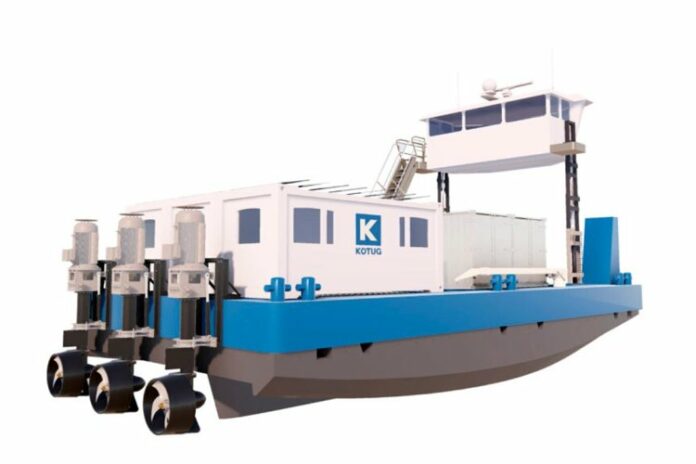
Today KOTUG International B.V. (KOTUG) and Shift Clean Energy (Shift) announced the formation of a partnership to use Shift’s new PwrSwäp clean energy service—which uses swappable batteries on a pay-as-you-go basis—on KOTUG’s E-Pusher™ vessels.

The signing of the MoU coincides with COP26 in Glasgow, where reducing global greenhouse gases (GHGs) is at the top of the agenda. The combined services support the maritime industry in reaching this goal today, without requiring any upfront capital costs and at competitive rates.

Shift’s proven technologies provide a ready to market pay-as-you-go service. PwrSwäp uses swappable batteries to deliver energy when and where you need it, delivering 100% uptime, eliminating carbon and minimizing maintenance.

KOTUG offers a range of modular and scalable electric pusher tugs, the E-Pusher™ Series, powered by swappable energy containers. The innovative design of the E-Pusher™ has a draft that is 30% less than conventional pusher tug designs. Due to the modular design the E-Pusher offers a 50% faster delivery time and allows a range of vessels to suit the needs of any waterway.

For smart operations, KOTUG will use its advanced dispatching, KOTUG OptiPort route and reporting tool. An automated dispatching system based on historical and real-time information will bridge port and terminal information with ship operations.

Brent Perry, Shift CEO, said:

“The message of COP26 is clear; we have to make changes now, with no time to waste. Shipping accounts for significant GHG emissions, contributing to climate change, as well as particulates that are unhealthy for communities living near ports and inland waterways. PwrSwäp and E-Pusher bring zero emissions solutions today.”