-2.4 C
New York
Home Blog Page 514

Innovez One receives ISO certification for data security and management

0

ISO/IEC 27001 is an international standard on the management of information security, with requirements on the security of assets such as financial information, intellectual property, employee details or data entrusted by third parties.

It formally validates that Innovez One follows the best practices in terms of data protection, with robust security policies and procedures in place to protect the data of its employees and customers against the risk of leaks or cyberattacks.

David Yeo, CEO and Founder of Innovez One, said:

“From the very onset, protecting the data that is entrusted to us by our customers has been a priority for our company. Our marineM system is now in use by in major global ports such as Singapore, Tanjung Priok and Portsmouth. We fully understand the importance of protecting the critical data that their businesses rely on. Our entire team is dedicated to following world-leading standards and best practices to ensure that their information and interests are safeguarded, both in the short and in the long term.”

This ISO certification comes as Innovez One grows rapidly, with contracts signed recently to implement its AI-powered solution MarineM in the Indonesian Ports of Balikpapan and Belawan, as well as on the fleet of Singapore-based Cast Marine Services. MarineM has been in use in some of Asia’s busiest ports, such as Singapore and Tanjung Priok, Teluk Bayur, Panjang, Banten in Indonesia, for over a decade in some cases, where it optimises the operations of support fleets to improve efficiency and reduce greenhouse gas emissions.

Velesto Drilling orders first cost-effective Chela Twins cranes

0

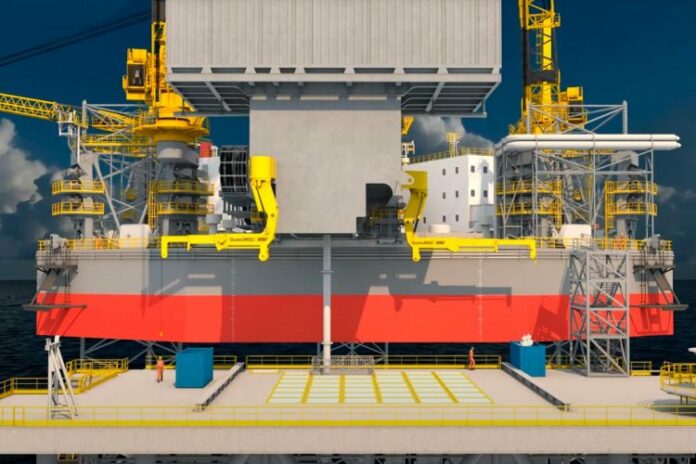
Two cranes are to be installed on NAGA-6, a GustoMSC CJ46 drilling jack-up design and owned by Malaysia’s Velesto Energy. The GustoMSC Chela series is designed to improve safe handling underneath the cantilever and reduce total time spent on wells.

The GustoMSC Chela series of multifunctional arms offers an extra hand in operations. It can reach below the cantilever as well as reach towards the main deck, providing crane access to an area traditionally blocked by the cantilever when drilling. Chela thus provides a huge advantage in development drilling, infill drilling, and plug and abandonment operations. 

As an option wireline operations can take place offline, on any other nearby well, while the derrick is engaged with other well construction operations. The primary field-proven feature of Chela relates to safe and efficient lifting of well related parts and tools prior before and after well construction. With this functionality, a simultaneous operation with the activities performed by the drilling crew at well center is possible. Depending on the well-program, total time saved varies between 5 to 15% of total rig days per well. This proven technology represents a robust opportunity to bring forward ROI for every well drilled. With less rig days per well, it directly reduces the industry’s environmental footprint per well drilled.

In 2019, the first Chela crane was delivered to Maersk Drilling and installed onboard the Maersk Invincible – an ultra-harsh environment GustoMSC CJ70 drilling jack-up design. It has proven its claims since while operating offshore in the Valhall field for AkerBP. The Chela Twins take the key elements of this first Chela towards the South East Asian drilling arena. These Chela Twins cranes work around the well center in pairs. With their telescopic arms, they provide significant coverage below the cantilever and, depending on the cantilever position, can reach main deck and pick up tools or a x-mas trees, for example. The current offering of two telescopic cranes forms a cost-competitive solution that can be applied to the worldwide fleet of standard drilling jack-ups.

Based in Malaysia, Velesto Drilling Sdn Bhd is a wholly-owned subsidiary of Velesto Energy Berhad and is principally involved in the provision of offshore drilling services to the upstream oil and gas sector.

GustoMSC commenced fabrication of the Chela Twins earlier last month. Since the project schedule is part of into a planned rig mobilization in the first half of 2022, the engineering and fabrication process started the day after the contract was signed. 

Delivery of methanol-duel fueled methanol carrier “Capilano Sun”

0

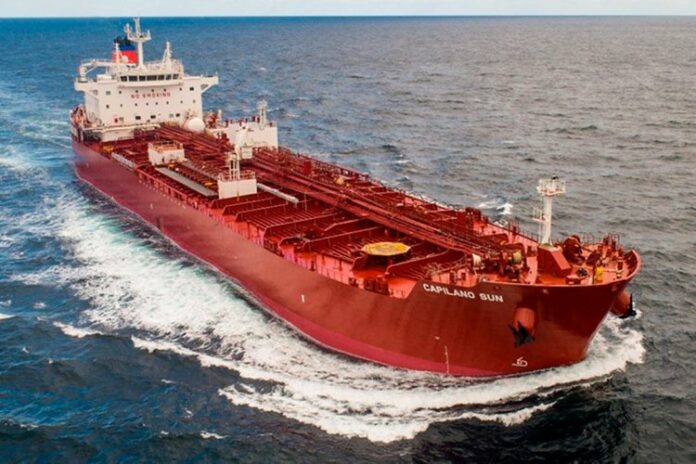
Mitsui O.S.K. Lines, Ltd. (MOL) has announced that on November 4, the methanol carrier “Capilano Sun”, which can run on either heavy oil or low-environmental impact methanol fuel, was delivered at Hyundai Mipo Dockyard.

The vessel will be chartered from Hisafuku Kisen K.K., and Waterfront Shipping Company Limited will charter the vessel from MOL under a long-term contract.

MOL is operating 18 vessels (including “Capilano Sun”), and in 2016, started owning and operating dual-fuel vessels that can run on environment-friendly methanol fuel, continuously expanding the fleet. Currently, MOL operates 4 of the 13 methanol dual-fuel tankers in service around the world.

These methanol dual-fuel vessels can reduce emissions of sulfur oxide (SOx) by up to 99%, particulate matter (PM) by up to 95%, nitrogen oxide (NOx) by up to 80%, and carbon dioxide (CO2) by up to 15%, compared to vessels using conventional fuel oil. The “Capilano Sun” is the most advanced low-emission vessel , which adopts advanced technology that adjusts the combustion temperature by mixing water into methanol fuel and can meet Tier 3 NOx regulations without a scrubber.

In the future, duel fuel methanol carriers can become an Environmental circulation-type business, by synthesizing the carbon dioxide from carbon capture methods, CO2 Carrries, with Hydrgen derived from renewable resource based electricity such as offshore wind power and wave power, which MOL looks into. The Methanol produced from the cycle can be used or provided as fuel, which will reduce the net CO2 emission.

PGNiG and partners launch two wells on the Ærfugl field

0

Thanks to the completion of the investment, the Ærfugl reservoir will contribute approx. 0.57 billion cubic metres of natural gas per year to the Company’s production volume.

Completion of two wells means the successful finalisation of the development plan for the Ærfugl field. The new wells will enable licence partners to extract additional 1.6 billion cubic metres (bcm) of natural gas per year, which means that the total production from the field will reach approx. 4.8 bcm of gas annually.

Paweł Majewski, President of the Management Board of PGNiG SA, the company which is a sole owner of PGNiG Upstream Norway, said:
“This is an important step to achieve goals envisioned in our hydrocarbon production strategy. After the successful launch of two wells production from the Ærfugl field attributable to PGNiG Upstream Norway will increase by 0.22 bcm to approx. 0.57 bcm per year. Combined with remarkable profitability this means that Ærfugl and other reservoirs located in Skarv area are one of the PGNiG Group’s most valuable assets on the Norwegian Continental Shelf. I would like to congratulate our licence partners on the exceptional job we’ve done together to tap into the potential of the Ærfugl field.”

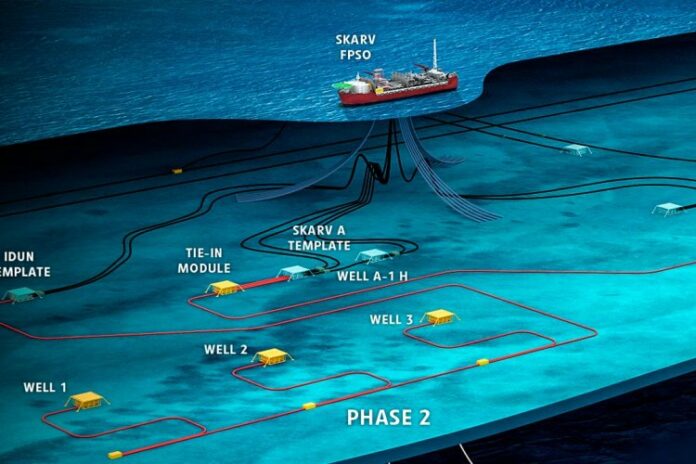
The wells that have just been brought on stream were drilled as part of the II Phase of the field development. Once they are connected, production from Ærfugl is carried out with a total of seven wells: three drilled in Phase I, three in Phase II and the A-1H test producer. The project was completed two months ahead of the schedule.

The Ærfugl‘s wells are connected to the floating production storage and offloading unit (FPSO) “Skarv”, which also serves other fields located in the Skarv production area. The use of the existing infrastructure has made it possible to significantly reduce CAPEX and start-up costs for the Ærfugl field increasing its profitability. It also contributed to the reduction of the carbon footprint associated with the development and operation of the reservoir.

Ærfugl is a gas-condensate field with recoverable reserves estimated at approx. 274.7 million barrels of oil equivalent (boe). There are still ca. 210 million boe to be extracted. PGNiG Upstream Norway holds an 11.9% interest in the Ærfugl licence, and 15% in Ærfugl Nord. The operator is Aker BP (23.8%) and the other partners are Equinor Energy (36.2%) and Wintershall DEA (28.1%).

GEV’s pilot hydrogen vessel features an efficient Wärtsilä propulsion solution

0

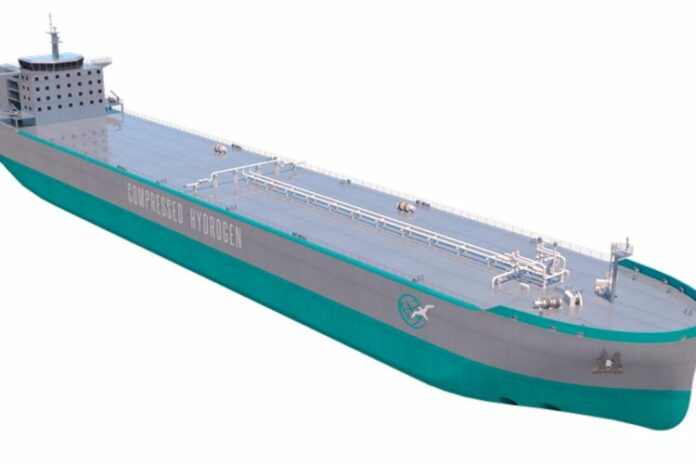
The technology group Wärtsilä’s cooperation with the Australian energy transportation company Global Energy Ventures (GEV) has resulted in GEV successfully obtaining Approval-in-Principle (AiP) for its pilot scale 430 tonne C-H2 Carrier vessel. The AiP was awarded by the American Bureau of Shipping (ABS) in early October 2021.

The pilot compressed hydrogen vessel is a highly functional Handymax sized gas carrier designed to advance the commercialisation of green hydrogen projects. Wärtsilä has worked in close cooperation with GEV’s ship designer to develop the optimal propulsion solution using highly efficient Wärtsilä dual-fuel engines powering two electric drive fixed-pitch propellers. The work was carried out under a Memorandum of Understanding (MoU) signed by the two companies earlier this year.

Martin Carolan, GEV’s Managing Director and CEO, says:

“Marine storage and transport solutions are required for hydrogen to contribute to global decarbonisation ambitions. GEV views the compressed hydrogen ship as a means to provide efficient, safe, and cost competitive regional marine transportation for hydrogen, and we thank Wärtsilä for its valuable support in making this project a success.”

Petteri Saares, Sales Director, Wärtsilä Marine Power, says:

“The AiP represents an important milestone in bringing this concept to realisation. Our involvement allows us to further leverage our technology and experience in the development of future fuels to decarbonise ship operations. This is fully in line with our commitment and strategy to support our customers in achieving a sustainable and carbon-free future.”

Compression delivers a proven, simple, and efficient method for transporting green hydrogen. Both GEV and Wärtsilä believe that the compressed hydrogen vessel project will eliminate technical barriers to marine hydrogen transport, and deliver a solution that is superior to currently available alternatives.

ABS, HHI and KSOE collaborate on green hydrogen

0

Ahead of COP26, ABS, Hyundai Heavy Industries (HHI) and Korea Shipbuilding and Offshore Engineering (KSOE) have announced two landmark joint development projects (JDPs) to develop decarbonization technologies to support global sustainability ambitions.

The JDPs address green hydrogen production and offshore carbon capture and storage (CCS), two technologies that will be critical to achieving net-zero.

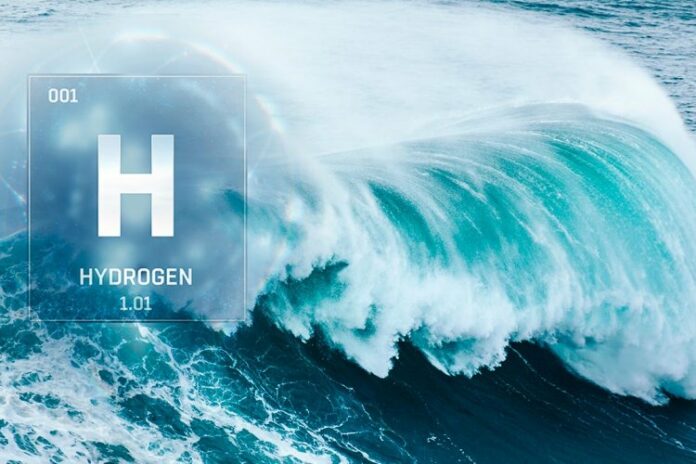
ABS, HHI and KSOE will jointly develop technical guidance for green hydrogen production from offshore platforms as a key first step to the design and construction of a facility by 2025. The guidance will facilitate the development of production facilities providing a vital contribution to the growth of a global green hydrogen economy.

The project will utilize the electrolysis of seawater to generate green hydrogen.  Later stages potentially include ABS Approval in Principle (AIP) and generic design approval, supporting engineering development right through to project construction.

A second offshore carbon capture JDP is focused on securing an AIP for HHI and KSOE’s design for a CO2 injection platform for offshore storage. The platform is designed to be able to store 400,000 tons of captured and liquefied CO2 every year from 2025.

The announcement is timed to coincide with the 2021 United Nations Climate Change Conference, COP26, in Glasgow, where the potential of green hydrogen to support global sustainability ambitions and the capture, utilization and sequestration of carbon will be central to the discussion. Green hydrogen is a fuel created using entirely renewable energy sources. Currently, only one percent of hydrogen fuel is produced this way.

Won Ho JOO, HHI Senior Executive Vice President and Chief Technical Officer, said:

“We are pleased to leverage our expertise in the green hydrogen and CCS platform pathway for decarbonization offshore. These projects are part of our continuous endeavors and commitment to a sustainable future that is aligned with HHI Group’s ESG vision, “Beyond Blue Forward to Green.” We also promise that HHI Group will encourage new value creation to lead the market, satisfying customers’ desire for the achievement of GHG zero emissions.”

Sung Joon KIM, CTO of KSOE, said:

“It is a quite meaningful technological milestone in obtaining the JDPs for these innovative green hydrogen and CCS platforms in offshore. KSOE believes our self-developed model will contribute to the global decarbonization effort. Also, we are preparing the development of the whole value chains of both CO2 and green hydrogen. In the near future, we will show the Perfect Net Zero technology.”

ABS Chairman, President and CEO, Christopher J. Wiernicki, said:

“Securing the required quantities of zero-carbon fuels to power our industry’s transition will require significant scaling up of the global renewable energy sources. Green hydrogen will certainly have a critical role to play but we are starting from a very low base and increasing production is an urgent global priority. Meanwhile, carbon capture is a potential game-changer, and ABS is working to accelerate the development of both the technology and the vessels required to make it viable. We are proud to be able to use our industry-leading offshore and sustainability expertise to support advances in these key areas of technology and the international decarbonization drive.”

Bay Shipbuilding to build another 5,500 cubic meter LNG barge

0

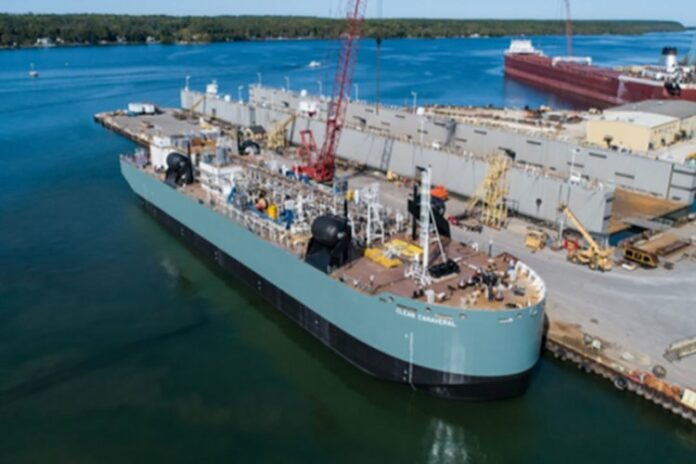
Fincantieri Bay Shipbuilding has agreed to partner with PNE Marine Holdings (“PNE”), an affiliate of Polaris New Energy (“Polaris”) to build a second 5,500 cubic meter (CBM) LNG bunker barge.  

This new barge will be a sister vessel to the LNG bunker barge Clean Canaveral, which will deliver to Polaris in mid-November.

Fincantieri Bay Shipbuilding is the main commercial business unit of Fincantieri Marine Group in the United States. FMG’s president and CEO, Dario Deste, offered the following on the contract announcement:

“Our team at Fincantieri Bay Shipbuilding is once-again showing why they are the U.S. market reference point for LNG bunkering vessels.”

Demand for economical supply of LNG fueling the maritime sector is growing rapidly. Over the next several years 400 new vessels utilizing LNG are expected in service. LNG is the leading solution to fuel the maritime sector as the industry advances its sustainability goals through a transition to lower carbon fuels. The new articulated tug and barge adds to Northstar’s growing fleet delivering LNG to cruise ships, container vessels, bulk carriers, car carriers, and tankers that are in service or on order today.

The 5,500 cubic meter ATB will be fitted with four 1,375 CBM IMO Type C tanks. It will utilize a cargo handling system designed and developed by Wartsila. Upon completion, the vessel will be 340’ overall length, 66’ beam, and 32’-10” deep. The ATB will be an Oceans Classed ABS barge.

Todd Thayse, Fincantieri Bay Shipbuilding’s Vice President and General Manager said:

“Thanks to our continued partnership with Northstar and its affiliate companies, we are amassing our extensive in-house expertise in the design and construction of LNG bunker barge capabilities. As we begin constructing our second LNG bunker barge for Polaris, we are excited to bring the expertise of Fincantieri, our bunker barge design knowledge, and our passion for delivering the highest quality, on-time products to the LNG market. The hard-working, proud women and men of Fincantieri Bay Shipbuilding will once again provide the quality and eventual on-time delivery the maritime industry has come to know and expect from our shipyards.”

Tim Casey, Senior Vice President – LNG for Northstar, said:

“LNG is recognized as a clean, dependable and competitively priced fuel for the shipping industry. The completion of this sister vessel to the Clean Canaveral further distinguishes Northstar’s capabilities to manage the last-mile logistics of LNG safely and effectively across the US coastline. The new capacity will provide unmatched reliability and flexibility in the current market and is the next step in our strategy to create a complete platform of LNG logistical solutions for marine customers.”

Tim Casey continued:

“We’re excited to be moving forward on the second barge with Fincantieri. They proved to be the right partners to build the Clean Canaveral. Despite the global challenges of the last two years, they have performed above expectations and we are confident that they’ll do the same with this second barge as they leverage their unmatched experience gained during construction of the Clean Canaveral.”

PNE and Polaris are subsidiaries of Northstar Terminals, a portfolio company of funds managed by Oaktree Capital Management, L.P. (“Oaktree”).

Proman Stena Bulk: first methanol dual-fuel tanker launched

0

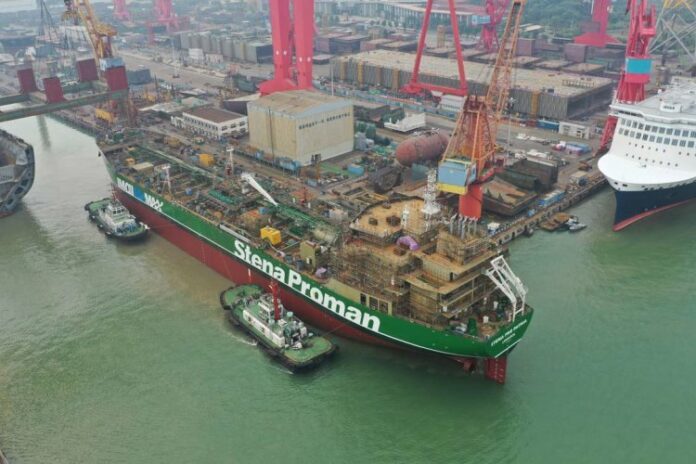
Shipping joint venture Proman Stena Bulk has launched the Stena Pro Patria, the first of three 49,900 dwt methanol dual-fuel MR tankers that Proman and Stena Bulk are building together as part of their joint venture.

The launching is one of the most important milestones of the ship construction process, as the newly constructed vessel is transferred to the water for the first time. Stena Pro Patria’s launching took place at Guangzhou Shipyard International (GSI), which is the first Chinese shipyard to build a Methanol Dual-Fuel vessel.

Construction of the Stena Pro Patria will now continue on the water, ahead of sea trials and final delivery to Proman Stena Bulk in Q1 2022.

Over the next two years, it will be joined by another five methanol-powered newbuilds: Stena Pro Mare and Stena Prosperous, which will be Proman Stena Bulk JV vessels, and Proman-owned Provident, Progressive and Promise. All vessels will be constructed at Guangzhou Shipyard International and delivered by the end of 2023.

All Proman and Proman Stena JV vessels will utilise the same pioneering vessel design and innovative MAN B&W 6G50ME-C9.6 MW Tier III engines. The vessels will also be equipped with the latest energy efficiency technologies, including continually controlled combustion, optimised tuning, redesigned and aerodynamic hull lines, and an energy shaft generator, reducing fuel consumption and helping to meet strict emissions criteria.  

Each vessel will use approximately 12,500 tonnes per annum of methanol as a marine fuel. Using widely available and cost-competitive ‘grey’ methanol produced from natural gas, greenhouse gas (GHG) emissions resulting from the vessels’ normal commercial operations will be significantly reduced compared to conventional marine fuels. This includes the virtual elimination of sulphur dioxide and particulate matter, a 60% reduction in nitrogen oxide and a cut in carbon dioxide, offering immediate improvements to air quality around ports and coastlines.

Rolls-Royce to supply mtu engines for 80-ton bollard pull tugboats in Brazil

0

Rolls-Royce has secured a significant contract to supply eight of its mtu 16V 4000 M65L engines for four 80-ton bollard pull tugboats to be built by Detroit Brasil, Ltda. and operated by Starnav Servicos Maritimos Ltda. 

The new tugs will feature a hybrid propulsion system, combining the mtu engines and mtu Blue Vision New Generation (BVNG) monitoring system with Z-drive thrusters, hybrid components and controls from Schottel, a manufacturer of propulsion and steering systems for ships and offshore applications.

While Rolls-Royce has supplied mtu Series 4000 engines to Detroit Brasil for several vessel projects in the past, this marks the first time Rolls-Royce will be supplying engines for 80-ton- bollard pull tugboats to the company and the first time that the high performance mtu 16V 4000 M65L engines which deliver 2560 kW at 1,800 rpm will be used in Latin America. Once the new tugs are entered into service, Starnav Serviços Marítimos Ltda. will run a total of 96 mtu Series 4000 engines in their fleet of harbor tugs and offshore vessels.

Maxwell Oliveira, General Manager of Detroit Brasil Shipyard, said:

“The hybrid system featured on the new tugs will allow for the ships’ thrusters and one of the two main engines to be connected for all light operation activities when full power is not required, reducing the operating hours for the main engines, leading to lower overall maintenance costs, better fuel consumption and lower emissions compared to a traditional configuration.”

“When full propulsion power is needed, the connection between the two thrusters is disengaged and each engine is engaged to each thruster, reverting to a traditional, direct-drive propulsion system. The performance characteristics of the mtu 16V 4000 M65L and its wide performance map allow for this type of hybrid propulsion concept while keeping a considerable level of available reserve power on demand.”

Christof von Bank, Director Sales, Marine, Americas at Rolls-Royce business unit Power Systems, said:

“This order is an important milestone in the launch of the next generation of mtu 4000 series engines, as the 16V 4000 M65L engine is currently the most powerful version of the new series and is being supplied to Latin America for the first time. Further, this contract will reinforce our 20% share in the Brazilian tug boat market with mtu engines, a position we’ve earned over the past decade since installing our first Series 4000 in a tug in 2010.”

Carlos Eduardo Pereira, CEO of Starnav Serviços Marítimos Ltda, said:

“The mtu 16V 4000 M65L engines offer the best engine performance for the hybrid propulsion concept being utilized in our new tugs. Having accumulated 2.5 million hours of operation with mtu engines in several of our harbor tugs and platform supply vessels operated over the years, mtu engines were a reliable choice for these new ships.”

The mtu engines will be delivered in phases, with two delivered in August, two more in October, and two ship-sets consisting of two engines each for delivery in December.

Port of Antwerp and Port of Montreal pledge to create a green shipping corridor

0

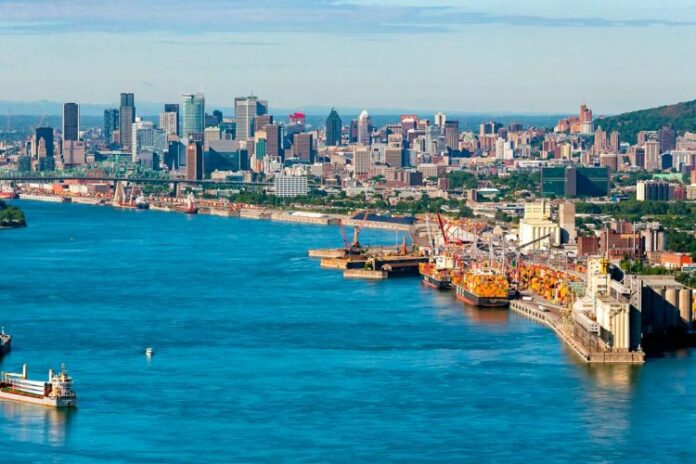
At the 26th Conference of the Parties (COP26) on climate change, the Port of Antwerp and the Port of Montreal have signed a cooperation agreement to support the creation of the first green shipping corridor in the North Atlantic.

Through this agreement, the two pillars of marine transportation between Europe and North America pledge to mobilize their respective public- and private-sector partners alike in the assessment, identification, development and adoption of shared or complementary solutions and infrastructures. 

By pooling their respective expertise and building on a framework partnership in place since 2013, the Port of Antwerp and the Port of Montreal, both signatories of the Call to Action for Shipping Decarbonization, intend to actively contribute to the achievement of international objectives while creating economic opportunities for their respective markets.

Montreal Port Authority President and CEO Martin Imbleau said:

“The St. Lawrence port and marine ecosystem is well positioned to use, distribute and export renewable fuels such as hydrogen and methanol produced using Quebec hydropower. Our green energies can serve vessels and international markets alike. This agreement makes it possible for us to build on our respective strengths to decarbonize not only our industry, but also our respective economies.”

Antwerp Port Authority CEO Jacques Vandermeiren said:

“Along with local and international partners, the Port of Antwerp is leading the transition to a cleaner, more climate-friendly world based on renewable and circular energy. The Port of Antwerp is one of the largest bunkering ports in the world. As such, the Port of Antwerp wants to play a pioneering role in the integration of carbon-neutral fuels in the bunkering market. In this way, together with the Port of Montreal, we are working on the transition to a multi-fuel port, with renewable fuels that are better for the climate and the quality of the air.”