-3.7 C
New York
Home Blog Page 512

Wärtsilä delivers bridge solution for Lindblad Expedition’s vessel

0

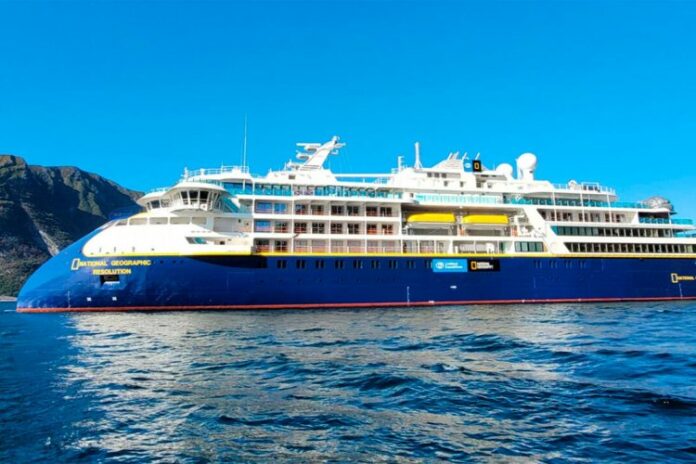
Built at Ulstein Verft shipyard, Lindblad Expeditions Holdings, Inc. took delivery of the ‘National Geographic Resolution’ in September 2021.

Along with its sister ship National Geographic Endurance, this is the second vessel in a series of two explorer vessels to have Ulstein signature X-BOW, the inverted bow concept combined with Wärtsilä’s integrated bridge and navigation system onboard enables optimal fuel-efficiency and safety even in the harshest polar conditions.

The contract was signed in June 2019 and, after successfully completing her sea trials in September 2021, National Geographic Resolution is all set for her inaugural polar voyage exploring Antarctica, South Georgia and the Falklands on 17 November 2021.
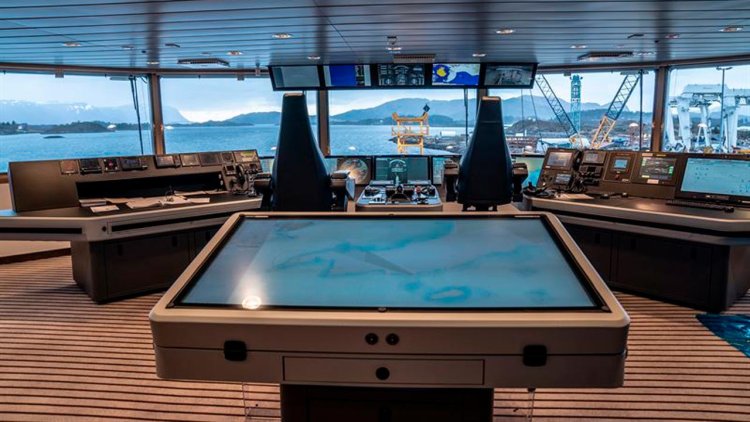
Photo: Wärtsilä 

The Wärtsilä Voyage team worked in close cooperation with the experts at Ulstein Verft shipyard to develop and meet the exact navigational and safety requirements of a polar cruise vessel that is expected to sail long distances in extremely harsh and unpredictable environments carrying around 126 passengers, plus crew, on board. 

The vessel has been fitted with a complete package of Wärtsilä bridge consoles and the Nacos Platinum Integrated Navigation System consisting of ten Multipilot Platinum Navigation workstations, four Datapilot Platinum information display, a 55” Planning station, a dual Trackpilot Platinum integrated track steering system, Dynamic Positioning System, Sound Reception System, uninterruptable power system (UPS), a weather station, Voyage Data Recorder, Bridge Alarm Management and Bridge Navigational Watch Alarm System (BNWAS).

Along with military-grade infrared cameras that allow to easily spot wildlife and ice ahead of the ship, the solution includes one S-band and two X-band radars integrated into the Nacos Platinum system to provide 360° situational awareness capabilities that allow the captain and the crew to concentrate on their primary task – safe navigation. The system also includes an Integrated Ice Radar System making manoeuvring simple and safe even in sub-zero icy waters.

The bespoke radar solution is part of the full Wärtsilä Nacos Platinum Integrated Navigation System, which also incorporates ECDIS, Conning and Trackpilot. Navigation sensors like Gyro, Speed log, sonar, echo sounders, compass systems, positioning sensors and DGPS are connected to the system to provide heading, speed and position, and a high degree of redundancy ensures safe operation.
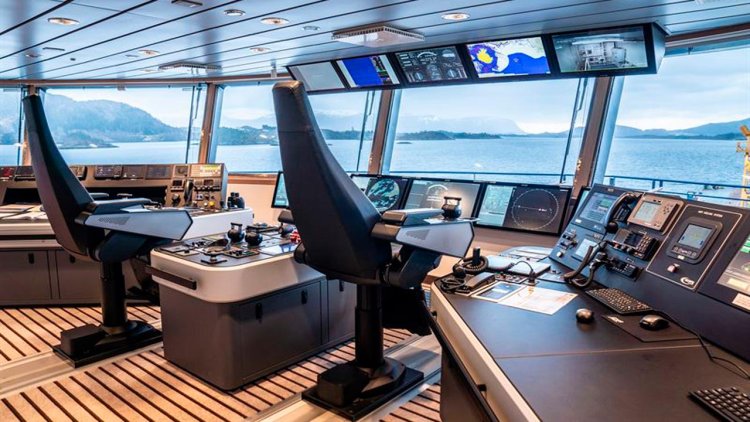
Photo: Wärtsilä 

Wärtsilä has been delivering Nacos Platinum systems to almost all explorer cruise vessels built in Norwegian yards since 2016 and there are currently 14 such ships sailing on some of the world’s most extraordinary cruise expedition routes.

Helge Kvandal, Sales Manager – Scandinavia, Wärtsilä Voyage, says:

“Our reliable and proven portfolio for extreme weather conditions, huge experience and customised solutions have earned us the partner of choice in the explorer ship segment. We will continue to innovate and deliver to match our customer’s high expectations”

Wärtsilä Voyage is a leading technology supplier to the cruise industry. With a network of dedicated experts available worldwide, the company can support its cruise customers wherever they operate. In addition to its portfolio of an efficient and reliable bridge and navigation and solutions, Wärtsilä also offers the latest in ship automation, dynamic positioning, sensor technology, enhanced sustainability performance, and future-proof operations.
MHI and NYK agree to jointly develop large LCO2 carrier

0

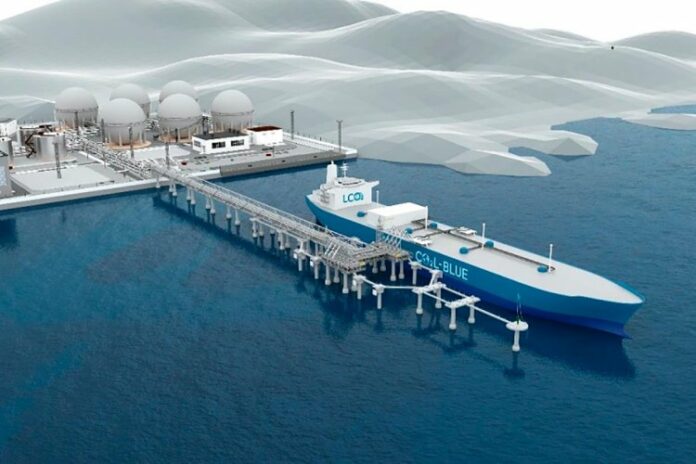
Mitsubishi Shipbuilding, a part of Mitsubishi Heavy Industries (MHI) Group, and Nippon Yusen Kabushiki Kaisha (NYK Line) have agreed to jointly develop a large-scale liquefied CO2 (LCO­2) carrier. 

To facilitate the development of technologies for transporting CO2 using large vessels, this project will combine Mitsubishi Shipbuilding’s advanced gas handling technologies accumulated through the construction of liquified gas carriers (LPG and LNG carriers), with NYK Line’s wealth of knowledge in operations of not only small and medium-sized vessels, but also large vessels that are expected to increase in demand globally. The two companies will participate in the CCUS value chain based on the development of LCO2 carriers.

Carbon dioxide capture, utilization, and storage (CCUS) is attracting attention worldwide as an effective means to achieve a carbon neutral world. LCO2 carriers will play a vital role in that value chain by transporting liquified CO2 to storage sites and facilities for utilization, and demand for these vessels is expected to increase in the future.

Mitsubishi Shipbuilding is actively pursuing commercialization of LCO2 carriers as part of MHI Group’s strategic initiative for the energy transition, bringing together technologies and knowledge gained from construction of liquified gas carriers in an effort, as a marine systems integrator, to support decarbonization at sea. This joint project is expected to make a significant contribution to the establishment of a CO2 ecosystem in the CO2 transport sector, which will be an essential component of the CCUS value chain.

NYK Line expects the establishment of technology to transport CO2 using large-scale LCO2 carriers to make a significant contribution to the realization of a carbon neutral world. Through this joint project with MHI Group, which possesses a wide range of technologies to overcome the high technological hurdles in the CCUS value chain, NYK Line will be integrating its accumulated wealth of knowledge in ship operations to support early realization of not only small and medium sized vessels, but also large-scale LCO2 carriers. Building on this project, NYK Line will participate in the CCUS value chain.

Going forward, Mitsubishi Shipbuilding and NYK Line will continue their efforts through this joint development project to develop the technologies for LCO2 carriers necessary to establish a CCUS value chain, utilizing the complementary strengths and knowledge of the companies to contribute to the realization of a carbon neutral world.

Maersk, Svitzer to develop carbon neutral methanol fuel cell tug

0

Svitzer, A.P. Moller – Maersk’s world leading towage operator, has signed an agreement with Robert Allan Ltd, leading naval architect company, to design the world’s first fuel cell tug for harbour operations, running on green methanol.

The project builds on close cooperation between Svitzer and Maersk with the aim to jointly explore the combination of methanol fuel cells, batteries, storage/handling systems, electric drives and propulsion units as a carbon neutral alternative to the conventional fossil fuelled propulsion train.

Commenting on the agreement, Ingrid Uppelschoten Snelderwaard, Global COO, Svitzer, says:

“Fuel cells will be applicable as main propulsion power for tugs earlier than for larger vessels and further, the time to build a tug is significantly less than for a container vessel. Svitzer will obtain valuable knowledge and operational experience handling fuel cells as an alternative to diesel or pure electric power. We consider this project a significant step in Svitzer’s ambition to lead the decarbonisation of towage and an important contribution to the joint efforts to develop solutions with a positive impact on the environment.”

Svitzer and Maersk are working closely together to determine technologies that support the overall Maersk decarbonisation journey. The objective is to extract and apply knowledge and operational experience of methanol feasibility from the near shore small scale tug onto larger ocean-going container vessels. 

Commenting on the collaboration, Ole Graa Jakobsen, Maersk Head of Fleet Technology, explains:

“Fuel cell technology could be a disruptor in the maritime technology space, promising high efficiencies and eliminating the need for substantial amounts of pilot ignition fuels while removing harmful emissions. Thus, we have been monitoring the technology for the last few years, and with the accelerating developments in the ‘Power-to-X’ arena, it has become evident that we should step up our engagement in fuel cells, especially in combination with Green Methanol.”

The 80 tons bollard pull newbuild tug with escort notation will come with a hybrid electrical propulsion system solution where fuel cells can be dimensioned to deliver a specific amount of sustained bollard pull using fuel cells alone, adding additional power from the batteries during the short but often frequent peaks that characterises towage. The fuel cells can be used to charge the batteries when the tug is mobilising and when the tug is berthed, minimising the need for expensive shore side charging facilities. The combination of fuels cells and batteries will deliver a self-sustained tug with longer endurance and with less operational constraints than a pure battery powered vessel.

Jim Hyslop, Director of Project Development, Robert Allan Ltd, adds:

“Robert Allan Ltd. is very excited to be working with Svitzer on the development of this new tug design.  It is refreshing to work with an operator with such a progressive and forward-thinking attitude and this move towards drastically reducing tug emissions is a bold step. By taking the lead with this technologically advanced project, Svitzer and Maersk are making true and meaningful progress towards a greener future in the tug industry. Robert Allan Ltd. is proud to be a part of this team and we look forward to the challenges and opportunities that this innovative vessel will bring.”

The fuel cell tug will function as a pilot design for future Svitzer newbuilds and is planned to be put into operation within the Svitzer Europe region by Q1 2024.

ExxonMobil and PETRONAS to study carbon capture and storage in Malaysia

0

The companies will assess the viability of carbon capture projects in select locations offshore Peninsular Malaysia and share subsurface technical and infrastructure data for pipelines, facilities and wells as they evaluate potential projects for the storage, transport and reutilization of captured CO2.

The MoU strengthens a decades-long strategic partnership between ExxonMobil and PETRONAS and has the objective of helping Malaysia reduce emissions and achieve its net-zero ambitions.

Joe Blommaert, president of ExxonMobil Low Carbon Solutions, said:

“ExxonMobil continues to explore opportunities in Southeast Asia for large-scale carbon capture and storage projects that have the potential to make the greatest impact in the highest-emitting sectors. With joint collaboration and well-designed policies, we can use our capabilities to develop projects that progress reliable, safe and ready-to-deploy technologies at scale that could significantly reduce emissions throughout Malaysia.”

Adif Zulkifi, PETRONAS executive vice president and chief executive officer of Upstream, said:

“This collaboration is an important step to unlock the opportunities and potential of CCS in Malaysia through applied technologies and innovation, potentially helping us reach our net zero carbon emissions aspirations amidst an evolving energy landscape. PETRONAS and ExxonMobil share a long-standing relationship that has seen multiple successful collaborations and business ventures between the two parties in Malaysia and abroad. We are proud of our collaboration with ExxonMobil and look forward to achieving a shared ambition of delivering energy security and clean energy solutions.”

The MoU with PETRONAS is the ninth carbon capture and storage opportunity that ExxonMobil has announced since establishing its Low Carbon Solutions business in March 2021 to commercialize low-emission technologies. The others are in Houston, Texas; LaBarge, Wyoming; Edmonton, Canada; St Fergus, UK; Fife, UK; Normandy, France; Indonesia; and Russia. These are in addition to previously announced projects in Qatar; Antwerp, Belgium; Rotterdam, Netherlands; and Australia.

Low Carbon Solutions is initially focusing its carbon capture and storage efforts on capturing CO2 from industrial activity that would otherwise be released into the atmosphere, and injecting it into deep underground geologic formations for safe, secure and permanent storage. It is also pursuing strategic investments in biofuels and hydrogen to bring those lower-emissions energy technologies to scale for hard-to-decarbonize sectors of the economy.

The company has an equity share in approximately one-fifth of global CO2 capture capacity and has captured approximately 40 percent of all the captured anthropogenic CO2 in the world.

The International Energy Agency projects that carbon capture and storage could mitigate up to 15% of global emissions by 2040, and the U.N. Intergovernmental Panel on Climate Change estimates global decarbonization efforts could be twice as costly without its wide-scale deployment.

New electric cranes ordered for ABP Port of Ipswich

0

A new supply contract with Cooper Specialised Handling has been agreed which will deliver some of the first fully mains electric powered hydraulic cranes in the UK to the port. 

This £4 million investment is another step in ABP’s companywide policy to reduce CO2 emissions and energy consumption. The company expects all cargo handling operations at the Port of Ipswich to be fully electrified within the next five years.

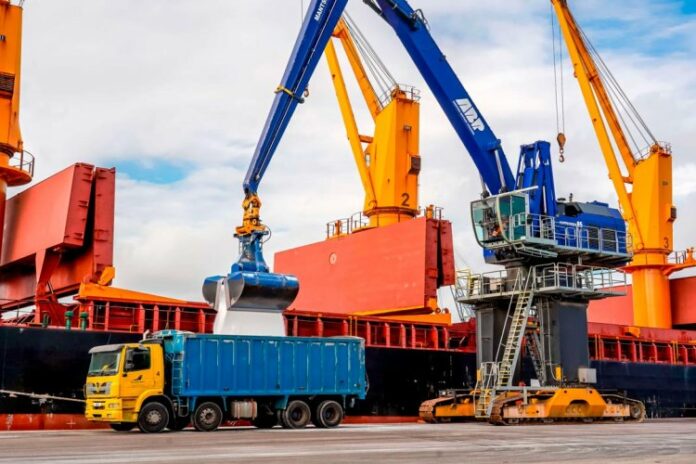
The Mantsinen model 95ER is destined for use at the Port of Ipswich. It has been configured around the specific workings of the port operation. To enhance efficiencies, each machine will be ready supplied with innovative insight reporting systems that can further reduce energy. This model will replace the diesel-powered version and will improve ABP’s cargo handling service to its customers.

The Port already has some 4,000 solar panels installed onsite which could power the two new cranes. ABP have also invested in an electricity sub-station infrastructure that is future-proofed to accommodate up to four electric powered cranes working concurrently on the same quay.

Commenting on behalf of ABP Paul Ager Divisional Port Manager East Coast said:

“This investment shows that going green does not cost the earth. In addition to reducing our CO2 footprint, we estimate that these electric cranes will save in excess of 40% in energy costs. The electrification of our cranes will also significantly reduce noise emissions.

“At ABP, we have firm plans to decarbonise our ports. We know greener operations is important to our customers too and we are listening.”

Speaking on behalf of Cooper Specialised Handling, Executive Director, David Cooper commented:

“This is truly a landmark supply and hope this is the first of many. We congratulate ABP on their foresight and vision in opting for electric power. We have noticed a significant increase in interest in both direct electric power and Mantsinen’s dual power (electric and diesel in one machine) however, infrastructure costs become a barrier that often thwarts further investment. ABP have tackled this head-on and will yield the cost and environmental benefits in the years ahead.”

The new units are expected to enter service in Spring 2022.

VPS partners with BunkerTrace to bring new bunker services to market

0

VPS and BunkerTrace have announced a new strategic partnership. This partnership will see VPS bring to market BunkerTrace’s ground-breaking, innovative forensic technology – starting with the launch of its Sample Assurance product. 

The agreement represents a significant step for the improvement in traceability and transparency across the global marine fuel sector. As such, VPS will now provide a variety of new services to its customers – powered by BunkerTrace’s ground-breaking blockchain and synthetic DNA technology.

As these new services are rolled out, they will allow for greater efficiency across the bunkering supply chain, peace of mind in ensuring customer compliance, drastically reduce the risk of delays and disputes, support ESG objectives, and protect customers’ reputation.

BunkerTrace’s Sample Assurance product is a tamper-proof embedded seal which is added to the sample cubitainer during a VPS Bunker Quantity Survey. Using the BunkerTrace mobile app, VPS surveyors digitally record the event to prove sample provenance and integrity. In the event of a dispute, the seals carry a unique code, only detectable with a BunkerTrace detection unit in a VPS lab where the sample will be checked for integrity. 

Physically tagging and digitally tracing the collected samples prevents contamination and tampering, assuring the quality of the samples as evidence. This enables a clear chain of custody and conclusive evidence to authenticate representative fuel samples. 

Steve Bee, Group Commercial & Business Development Director VPS, commented:

“The shipping industry, like every other sector, is in the midst of a digital transformation. On top of that, there are also increasing demands for improved governance and greater transparency. In partnering with BunkerTrace, VPS is able to meet both those demands head on; leading the transition on the global marine fuel market into an age of more assurance, trust and transparency.”

Deanna MacDonald, Co-founder & CEO of BunkerTrace, commented:

“BunkerTrace’s technology is genuinely ground-breaking in terms of its ability to physically tag and digitally trace marine fuel samples – underpinned by innovative blockchain and synthetic DNA technologies. What we needed was a partner that understands the growing need and demand for digital tracing and tracking services, but also has global reach, and shared ideals. In VPS we have found that, and we’re excited to see where we can take this partnership.”

Consortium awarded three 880 MW offshore substations for the US

0

The contract comprises three 880 MW offshore substations, which will be established in 2021-2025 and commissioned in 2026. The three substations will constitute the backbone of the electrical infrastructure for the 2.6 GW Coastal Virginia Offshore Wind project.

The contract is Bladt Industries’ and Semco Maritime’s third offshore substation project in the U.S. and the two strategic partners’ 21st project together since their first cooperation in 2003.

The scope of work on the Coastal Virginia Offshore Wind project includes design, engineering, procurement, manufacturing and installation. Bladt Industries is responsible for design, procurement and manufacturing of steel structures and jacket foundations, while design, procurement and installation of electrical equipment, emergency systems and inter-array cables will be managed by Semco Maritime.

Anders Søe-Jensen, CEO, Bladt Industries, says:

“We are proud that Dominion Energy has selected Bladt and Semco for the world’s largest assignment so far within the offshore substation area where we have established solid experience and unique competencies together. We are pleased with this opportunity to leverage our experience and contribute to shaping the U.S. offshore wind industry. We look forward to cooperating closely with Dominion Energy, securing green US jobs in connection with the construction and operation phases to provide green energy for thousands of US households and reduce CO2 emissions.”

Steen Brødbæk, CEO, Semco Maritime, says:

“Dominion Energy has created a visionary project in Coastal Virginia Offshore Wind, and we look forward to contributing to the green transition in Virginia. We are proud of the contract for three 880 MW substations, which we consider a vote of confidence in Semco’s and Bladt’s tried and tested partnership and our strong track record of delivering competitive projects within electrical infrastructure for offshore wind through two decades.”

The Coastal Virginia Offshore Wind project will be established 40 kilometers off Virginia Beach and with a 2.6 GW capacity, supplying up to 660,000 households in Virginia and eliminating up to 5 million tons of CO2 emissions per year. The project is furthermore expected to generate up to 900 jobs in the local area during the construction phase and up to 1,100 jobs when the wind park is commissioned in 2026.

Joshua Bennett, Dominion Energy vice president of offshore wind, said:

“Bladt Industries and Semco Maritime are experienced global leaders in the development and engineering of offshore substations, which are critical to delivering the clean, renewable energy to shore and ultimately to our customers. Just as important, it means jobs for our operations team to provide important service and maintenance for the substations.”

AIDA Cruises expands use of shore power in German ports in 2021

0

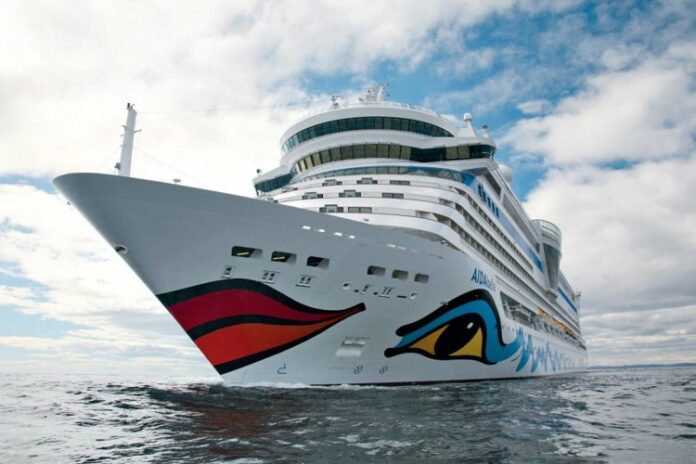
The Rostock-based cruise company has already been using Europe’s first shore power system in regular operation in Hamburg-Altona since 2017.

On May 10, 2021, one of Europe’s largest shore power facilities was opened in Rostock-Warnemünde with AIDAsol as part of the 12th German National Maritime Conference. Only a few weeks later, on June 16, 2021, a cruise ship (AIDAsol) could be supplied with green electricity for the first time in Kiel.

At the end of the season in Kiel and Rostock, the company takes a first positive stock. With both AIDAsol in Kiel and Rostock-Warnemünde and AIDAprima in Kiel, despite the technical challenges involved in commissioning this complex infrastructure on both the shore and ship sides, the ships were able to be stably supplied with green shore power during most calls.

The opening of the facilities in Kiel and Rostock-Warnemünde is the result of two partnership agreements for environmentally friendly cruise tourism that AIDA Cruises had initiated together with the state governments of Schleswig-Holstein and Mecklenburg-Vorpommern and the ports of Kiel and Rostock.

The company is also promoting the use of this environmentally friendly technology in other destinations. Following the restart of the Norway season at the end of August 2021, AIDA Cruises has been able to complete initial shores-based and ship-based tests with AIDAmar in Bergen together with the operators of the new facility.

AIDA Cruises’ goal is to use green shore-side electricity in port with all ships in its fleet in the future and therefore welcomes the plans of many other countries to develop a corresponding infrastructure.

As early as 2004, with the commissioning of AIDAdiva and during the construction of all subsequent ships, the use of shore power was considered as an option for environmentally friendly ship operation.

For many years now, AIDA Cruises has been investing in a future-proof and sustainable cruise market as part of its Green Cruising strategy. Further steps on the way to the first zero emission ship, which AIDA Cruises plans to put into service in 2030, are in preparation:

In just a few months, AIDAcosma will be the second LNG cruise ship to set sail. In 2022, the first fuel cell will be used on board AIDAnova, and the largest battery storage system currently in use in the cruise industry, with a capacity of 10 megawatt hours, will be commissioned on an AIDA ship.

The long-term goal of AIDA Cruises is the emission-neutral operation of its entire fleet in 2040, which is why the company is already looking into issues such as the future use of renewable fuels, wind energy, photovoltaics and the use of waste as a valuable material for energy generation, e.g. to generate biogas on board from food waste, or the pyrolysis of paper, plastic and other materials.

Port of Felixstowe makes major decarbonisation investment

0

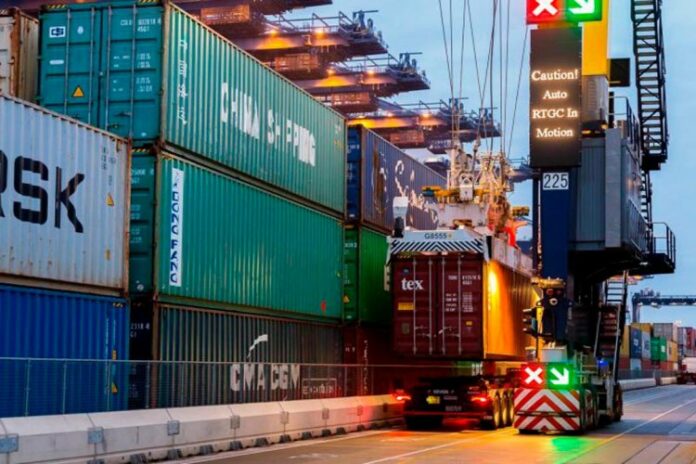
The UK’s largest container port has placed orders for 48 battery-powered terminal tractors and 17 zero-emission Remote controlled Electric Rubber-Tyred Gantry cranes (ReARTGs).

The new two-wheel drive tractor units, to be supplied by Shanghai Zhenhua Heavy Industries Co Ltd (ZPMC), will be the first electric tractors at the UK’s largest container port. ZPMC are working with their partner Shacman to develop the battery-powered tractor units.

The ReARTGs, which will be fitted with the latest semi-automation technology, will be supplied by Konecranes Finland. Commenting on the investment, Chris Lewis, Chief Executive Officer at the Port of Felixstowe, said:

“This order represents the latest part of our plan to reduce the environmental impact of our operations. In total, replacing 48 diesel-powered tractor units and 17 conventional RTGs with new electrical equipment will save 6,662 tonnes of CO2 and 59.38 tonnes of NOx emissions every year.

“We have reduced our carbon footprint by 30% since 2015. That has been achieved through a range of measures including the first phase of our programme to phase out diesel-powered yard cranes. These latest acquisitions will help drive further substantial reductions in the future and help us to reach our target of a further 20% reduction over the next 5 years.”

Clemence Cheng, Managing Director Hutchison Ports Europe and joint chair of Hutchison Ports Group Sustainability Committee, commented:

“Climate change is one of the greatest challenges of our time and Hutchison Ports is committed to playing its part by minimising the impact of port operations on the environment. Promoting a culture of technological innovation and adoption of alternative fuels is a key strand of our strategy. This investment takes us another step nearer to our goal.”

To support use of the new equipment the port will be upgrading its High Voltage (HV) electrical power distribution network and installing new electrical infrastructure to support the ReARTGs and ten charging stations for the battery-powered terminal tractors.

The port is examining ways to build on the steps it has already taken to eventually reach net-zero. It is working with partners, including Ryse Hydrogen, to explore the use of hydrogen powered port equipment and with Cranfield University, Sizewell C and EDF, the Port of Felixstowe is involved in one of the projects selected to receive support from the Clean Maritime Demonstration Competition. The project involves a feasibility study into the potential for Freeport East, which includes the ports of Felixstowe and Harwich International, to become a net-zero port and a net-zero energy hub for third parties and the adjacent region.

New study pinpoints likely path of COVID-related plastic waste in the ocean

0

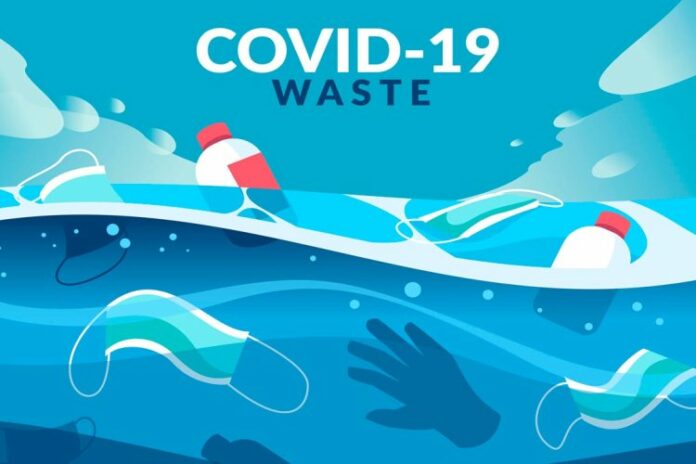
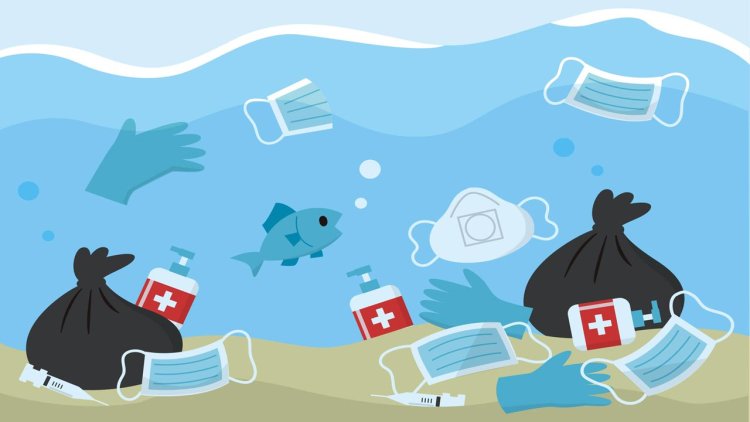
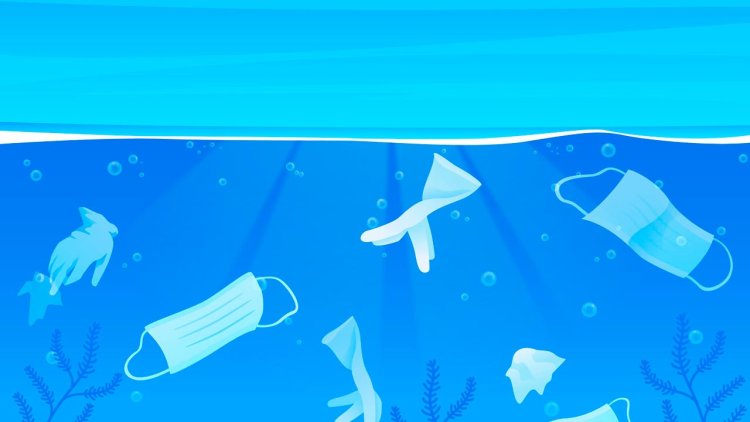
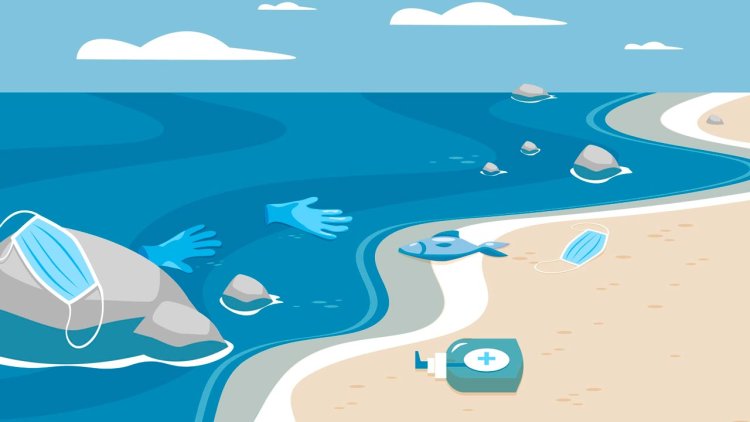
Around the world, the COVID-19 pandemic has led to an increased demand for single-use plastics such as face masks, gloves, and face shields. The resulting waste, some of which ends up in rivers and oceans, is intensifying pressure on an already out-of-control global plastic problem. 

Led by a team of researchers at Nanjing University’s School of Atmospheric Sciences and UC San Diego’s Scripps Institution of Oceanography, the study uses a newly developed ocean plastic numerical model to quantify the impact of the pandemic on plastic discharge from land sources. Graduate students Yiming Peng and Peipei Wu of Nanjing University led the research, which was published Nov. 8 in the journal Proceedings of the National Academy of Sciences.

Using the model, the researchers found that more than eight million tons of pandemic-associated plastic waste have been generated globally, with more than 25,000 tons entering the global ocean. Within three to four years, a significant portion of this ocean plastic debris is expected to make its way onto either beaches or the seabed. A smaller portion will go into the open ocean, eventually to be trapped in the centers of ocean basins or subtropical gyres, which can become garbage patches, and a circumpolar plastic accumulation zone in the Arctic Ocean.

The researchers incorporated data from the start of the pandemic in 2020 through August 2021, finding that most of the global plastic waste entering the ocean is coming from Asia, with hospital waste representing the bulk of the land discharge. The study reveals the need for better management of medical waste in developing countries.

Amina Schartup, an assistant professor at Scripps Oceanography, said:

“When we started doing the math, we were surprised to find that the amount of medical waste was substantially larger than the amount of waste from individuals, and a lot of it was coming from Asian countries, even though that’s not where most of the COVID-19 cases were. The biggest sources of excess waste were hospitals in areas already struggling with waste management before the pandemic; they just weren’t set up to handle a situation where you have more waste.”

Devised by the research team, the Nanjing University MITgcm-plastic model (NJU-MP) used in this study works like “a virtual reality,” explained Yanxu Zhang, the corresponding author and a professor at the School of Atmospheric Sciences at Nanjing University. He said the model was built based on Newton’s laws of motion and the law of conservation of mass.

Zhang said:

“The model simulates how the seawater moves driven by wind and how the plastics float on the surface ocean, degraded by sunlight, fouled by plankton, landed on beaches, and sunk to the deep. It can be used to answer ‘what if’ questions, for example, what will happen if we add a certain amount of plastics to the ocean?”

The study highlights the hotspot rivers and watersheds that require special attention in plastic waste management. The researchers found that most of the global plastic waste from the pandemic is entering the ocean from rivers. Asian rivers account for 73 percent of the total discharge of plastics, with the top three contributors being the Shatt al-Arab, Indus, and Yangtze rivers, which discharge into the Persian Gulf, Arabian Sea, and East China Sea. European rivers account for 11 percent of the discharge, with minor contributions from other continents.

While most of the pandemic-associated plastics are expected to settle on beaches and the seafloor, a smaller amount will likely end up circulating or settling in the Arctic Ocean, which study authors say appears to be a “dead-end” for plastic debris transported into it due to ocean circulation patterns.

Schartup, whose research normally focuses on understanding mercury in the oceans, said:

“There is a pretty consistent circulation pattern in the ocean, and that’s why we can build models that replicate how the ocean moves—it’s just physical oceanography at this point. We know that if waste is released from Asian rivers into the North Pacific Ocean, some of that debris will likely end up in the Arctic Ocean—a kind of a circular ocean which can be a bit like an estuary, accumulating all kinds of things that get released from the continents.”

The model shows that about 80 percent of the plastic debris that transits into the Arctic Ocean will sink quickly, and a circumpolar plastic accumulation zone is modeled to form by 2025.

The Arctic ecosystem is already considered to be particularly vulnerable due to the harsh environment and high sensitivity to climate change. The potential ecological impacts of exposure to accumulated Arctic plastics adds another layer of concern, said the researchers.

To combat the influx of plastic waste into the oceans, the authors urge for better management of medical waste in epicenters, especially in developing countries. They also called for global public awareness of the environmental impact of personal protection equipment (PPE) and other plastic products, and the development of innovative technologies for better plastic waste collection, classification, treatment, and recycling, and development of more environmentally friendly materials.

Zhang said:

“Indeed, the COVID-related plastic is only a portion of a bigger problem we face in the 21st century: plastic waste. To solve it requires a lot of technical renovation, transition of economy, and change of lifestyle.”