4.4 C
New York
Home Blog Page 494

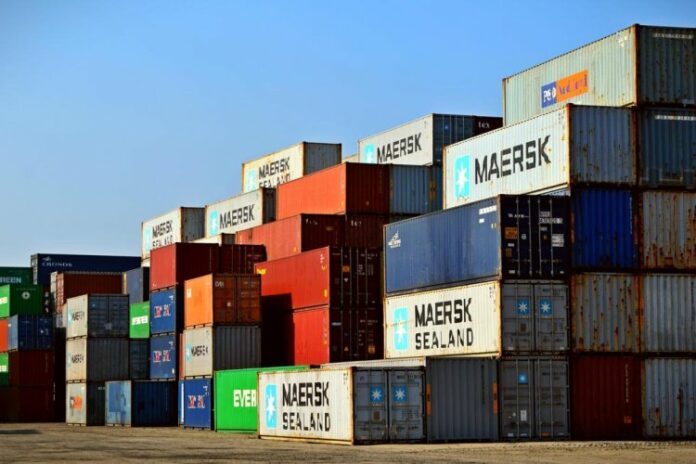
Maersk partners with UNAHCO on dedicated logistics facility

0

A. P. Moller-Maersk announced recently, to provide end-to-end logistics solutions with a dedicated warehouse and bagging facility in the Philippines for UNAHCO Inc. (Univet Nutrition and Animal Healthcare Co.), the leading manufacturer and distributor of the country’s most popular and fast-selling animal nutrition and healthcare products.

This is Maersk’s first investment in the storage and bagging field in the Philippines, to meet the growing demand in the agricultural grain supply chain.

Erry Hardianto, Managing Director of Maersk Indonesia and the Philippines, said:

“We are very delighted to work with UNAHCO to improve the efficiency and competitiveness of its supply chain. This new facility will enable UNAHCO to reduce storage and trucking costs, optimize operations, improve goods flow, as well as provide flexible and faster delivery to mills. Building the partnership both in ocean and logistics services, it will enhance the resilience and agility of our customer’s supply chain. We also hope to better leverage our expertise and tap into immense potential for future cooperation.”

This new facility is around 4,000 square meters, which will be strategically located in Angat, Bulacan, UNAHCO’s central distribution hub. It will be accessible to most of UNAHCO’s existing mills and customers, satisfying receiving and delivery needs.

Ricardo Alba, UNAHCO’s President and Chief Operating Officer, said:

“I am confident that with this partnership, we can make our ocean shipment more economical and scalable, at the same time, build greater flexibility in our supply chain. This new tailor-made facility perfectly highlights the benefits we can get from Maersk’s integrated solutions. We look forward to the facility opening in the coming year.”

Project Greensand backed by €26m award for carbon capture

0

The Danish Energy Agency has announced that it will award 197 million DKK (€26 million) to the INEOS led consortium backing Project Greensand for CCS (carbon capture storage). The carbon storage project will support Denmark’s ambitions to reach a 70% CO2 reduction by 2030.

A pilot phase targets first injection from late 2022. Subject to progress, the consortium aims for full-scale CO2 storage from 2025 onwards. The project could ultimately have total storage potential of up to eight million tonnes of CO2 per year. This means that the project could potentially deliver all the CO2 storage envisaged in the Danish Climate Programme.

David Bucknall, CEO INEOS Energy, said:

“We are very pleased and thankful for the trust that has been shown to the entire consortium behind Project Greensand. Carbon capture storage is one of the steps needed to reach the ambitious climate goals in Denmark, and we as a consortium are very proud to be allowed to contribute to that through this project.”

The award is based on a political decision by The Danish Government and a broad majority of political parties in December 2020 to allocate a total of DKK 197 million earmarked for the development and demonstration of CO2 storage in the North Sea.

Mads Gade, Head of INEOS Energy, Denmark, said:

“The entire consortium has been waiting in the starting block and we are ready to start working on the project so we can help reach the ambitious climate ambitions as soon as possible.”

David Bucknall, CEO of INEOS Energy, said:

“This is a huge achievement and a big step towards the net zero ambition for INEOS.”

Wintershall Dea’s Chief Technology Officer, Hugo Dijkgraaf, said:

“We warmly welcome the trust and  funding support from the Danish Government, which recognises that CCS is essential for delivering climate goals in Denmark and Europe. With CCS we can safely store unavoidable industrial emissions, enabling a clean and successful future for European industry. Wintershall Dea is proud to be driving this promising project forward.” 

Klaus Langemann, Senior Vice President for Carbon Management and Hydrogen, Wintershall Dea, says:

“In CCS we see an opportunity to take Wintershall Dea’s expertise – in the subsurface, for drilling and operating offshore – and apply it to the task of reducing industrial emissions. We look forward to working with our consortium partners to deliver Project Greensand.”

The Storage potential in Project Greensand is ½-1 million ton of CO2 per year from 2025, increasing to 4-8 million tons of CO2 per year by 2030. The Greensand Area could account for all of the CO2 storage proposed in the Danish Climate Program.

Fugro awarded R&D grant to develop methanol as a low carbon shipping fuel

0

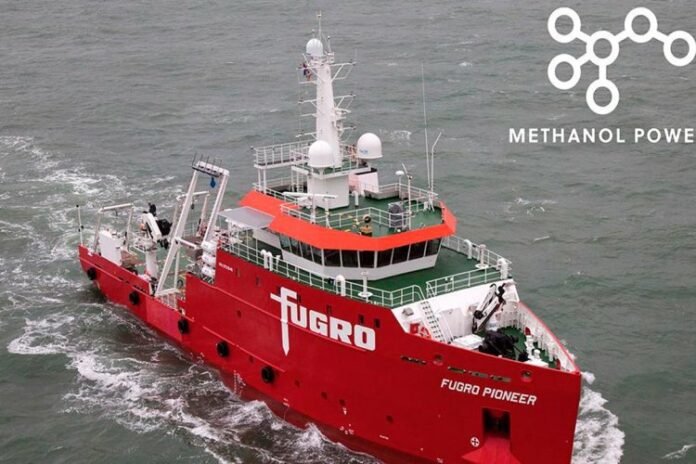
The Fugro-led consortium MENENS (Methanol as Energy Step Towards Emission-free Dutch Shipping) has been awarded a grant from Dutch Government’s Rijksdienst voor Ondernemend Nederland (Netherlands Enterprise Agency) for the development of methanol as a low-carbon shipping fuel.

The 22 partners in the consortium represent the complete Dutch maritime sector, from equipment suppliers, designers, shipbuilders and ship owners to Geo-data and survey specialist Fugro.

Fugro’s leading role in the consortium is to safely convert the engine of the Fugro Pioneer survey vessel to run emission-free on methanol by the beginning of 2023. Fugro will also contribute to the wider development of the engine technology and energy management, ship design, safety procedures and technology validation of this emission-free fuel.

Achieving emission-free shipping is not a straight-forward matter as most vessels still run on fossil fuels. Although there are several routes to achieve CO2 emission reductions in the maritime sector, there are only a few possible alternatives to marine diesel that can be deployed in the short to medium term. For large-scale introduction the most viable option is methanol.

Mark Heine, Fugro CEO:

“This is a major and tangible achievement on Fugro’s step towards Net Zero emissions by 2035. A specific thank you for the people at the RVO and the Ministry of Economic Affairs and Climate for making this very specific grant possible for the Dutch transport sector.”

Russia blocks almost 70% of the Sea of ​​Azov and hinders free navigation 

0

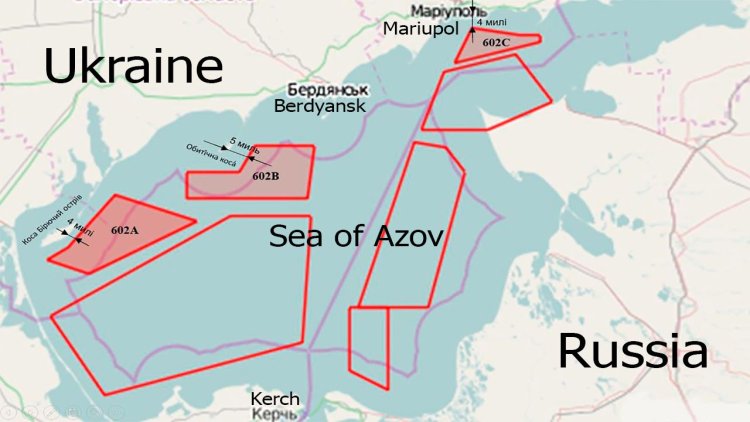
The Russian Federation has issued navigational warnings about restrictions on navigation in the Sea of ​​Azov, in areas near the Ukrainian cities of Mariupol, Berdyansk and Genichesk. As of December 10, Russia has blocked almost 70% of the Sea of ​​Azov.

This was reported by the public relations service of the Command of the Naval Forces of the Armed Forces of Ukraine (AFU). The statement notes:

“Russia continues to take provocative actions against Ukraine. As of December 10, the Russian Federation has blocked about 70% of the Sea of ​​Azov.
Such overlaps occur systematically and impede free navigation in the Sea of ​​Azov. The announcement by the Russian Federation of navigational warnings in the Sea of ​​Azov near the bases of the Ukrainian Navy and civilian ports is an open provocation. Such actions of the aggressor once again demonstrate Russia’s attempts to turn the Sea of ​​Azov into its internal “lake”.

Russia explains its actions by the fact that it allegedly conducts artillery fire. Given the large-scale accumulation of Russian troops on the border with Ukraine, these actions look very threatening.

Recall that in early December, The Washington Post published an unclassified U.S. intelligence document on the Russian military movement. The authors of the publication said:

“U.S. intelligence has found the Kremlin is planning a multi-frontal offensive as soon as early next year involving up to 175,000 troops, according to U.S. officials and an intelligence document obtained by The Washington Post.

The Kremlin has been moving troops toward the border with Ukraine while demanding Washington guarantee that Ukraine will not join NATO and that the alliance will refrain from certain military activities in and around Ukrainian territory. The crisis has provoked fears of a renewed war on European soil.”

(Obtained by The Washington Post)

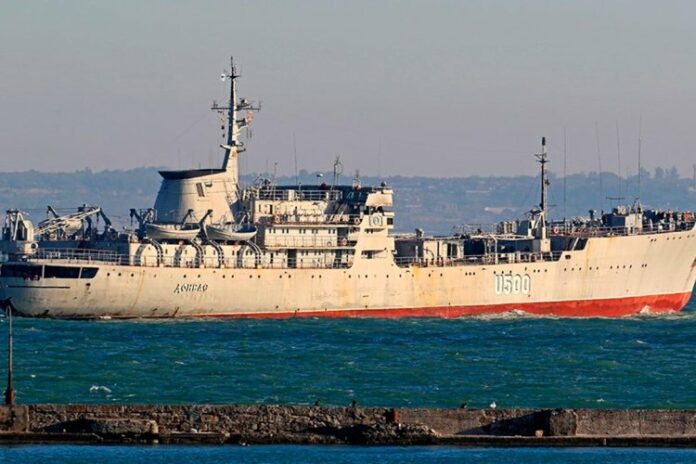
On December 9, the FSB of the Russian Federation made another provocative statement and accused the ship of the Ukrainian Navy “Donbas” of creating a threat in the Kerch Strait.

According to the FSB, on Thursday morning, the ship “Donbas” of the Ukrainian Navy withdrew from the raid on the port of Mariupol and went in the direction of the Kerch Strait.

The FSB said:

“Applications by the Mandatory Resolutions in the Seaport of Kerch, approved by the order of the Ministry of Transport of the Russian Federation dated October 21, 2015, № 313, for the passage of the Kerch-Enikal Canal by the Ukrainian side, was not submitted.”

Ukraine denies such allegations, as the Sea of ​​Azov is a watershed between Ukraine and Russia. Ukrainian ships have the right to stay there legally.

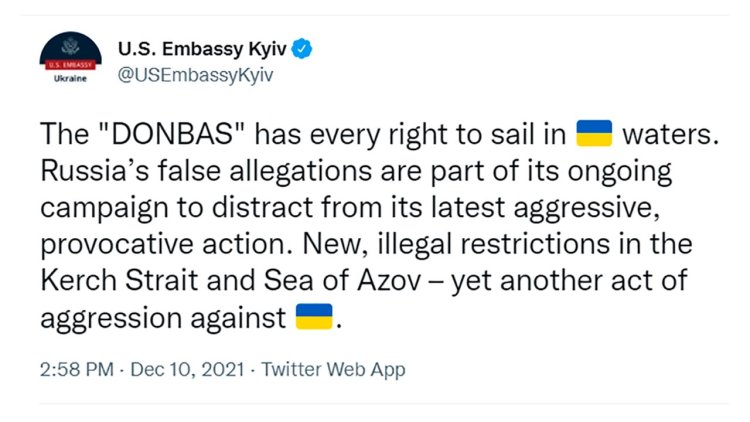
U.S. Embassy in Ukraine commented on the situation on Twitter as follows:

“The “Donbas” has every right to sail in Ukrainian waters. False allegations are part of its ongoing campaign to distract from its latest aggressive, provocative action. New, illegal restrictions in the Kerch Strait and the Sea of ​​Azov – yet another act of aggression against Ukraine. “

He Dreiht offshore wind farm to power Frankfurt Airport

0

Fraport AG, the publicly listed operator of Frankfurt Airport, and EnBW, the energy provider headquartered in Karlsruhe, have concluded a corporate power purchase agreement (CPPA) for the supply of electricity generated by offshore wind turbines. 

The long-term contract guarantees Fraport 85 megawatts (MW) from the 900 MW EnBW He Dreiht wind farm in the North Sea off the coast of Germany. The CPPA comes into force in the second half of 2026, and has a term of 15 years.

With the expiry of the previous subsidies under the German Renewable Energy Sources Act (EEG), PPAs are becoming a key element of the energy transition: They provide developers of renewable energy projects with a reliable source of funding while helping purchasers to quickly achieve ambitious climate targets. 

EnBW CEO Frank Mastiaux explained:

“Long-term power purchase agreements are a market response to advancing the energy transition even without government support. PPAs equally benefit purchasers, project developers and the climate. For us, they are the key between renewables-generated power and our major customers.”

The CPPA becomes operational in the summer of 2026. It will enable Fraport to transition a substantial portion of electricity consumption at its Frankfurt Airport home base to green energy. 

Fraport CEO Dr. Stefan Schulte said:

“Renewables such as wind and solar are the focus of our climate strategy. They provide the firm foundations for a comprehensive package of measures to systematically reduce our CO2 emissions. Our clearly defined goal is to make Frankfurt Airport carbon-free by 2045. The power sourced from this new offshore wind park will play a central role. As an airport operator, we are especially reliant on a dependable, stable source of power that can be scaled up to meet our growing needs. In EnBW, we have found a strong partner. Compared with the conventional energy sources on which we have previously depended, the new CPPA unlocks potential savings of up to 80,000 tonnes of carbon dioxide per year.”

EnBW initiated a new trend in the offshore market with the He Dreiht project in 2017. For the first time in an auction in Germany, the company secured the rights to build the 900 MW wind farm by bidding a subsidy amount of zero cents per kWh. Located about 90 kilometres northwest of the island of Borkum and about 110 kilometres west of Heligoland, He Dreiht is scheduled to go into operation in 2025. The investment decision is planned for 2023. The wind farm with around 60 turbines is currently one of the largest energy transition projects in Europe. It will also be the first to use turbines with a capacity of 15 megawatts each. By way of comparison, Germany’s first offshore wind farm, EnBW Baltic 1 built in 2011, has a capacity of 2.3 megawatts per turbine.

The signing of the CPPA with Fraport also marks the commencement of marketing for further quantities of electricity from He Dreiht. EnBW plans to step up these activities in 2022, enabling further companies to achieve their climate targets using PPAs. The company also plans to use long-term power purchase agreements for the marketing of electricity from two large-scale photovoltaic projects currently under construction, Gottesgabe and Alttrebbin, each of which will generate 150 megawatts. Detailed talks are already underway for Weesow-Willmersdorf, the largest solar farm in Germany.

The green electricity supplied from 2026 under the PPA with EnBW to Germany’s largest airport will be harnessed to operate three terminals and many other buildings. The wind-generated power will also be used to illuminate the Frankfurt Airport’s apron and four runways, and to charge the growing fleet of more than 500 electric vehicles (EVs) on the airfield, which is some 25 square kilometers in size.

Attollo unveils $100 m next generation zero emission hydrogen vessel

0

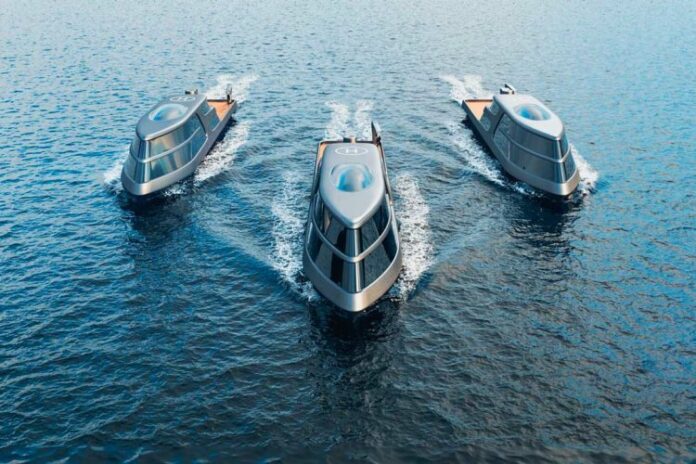
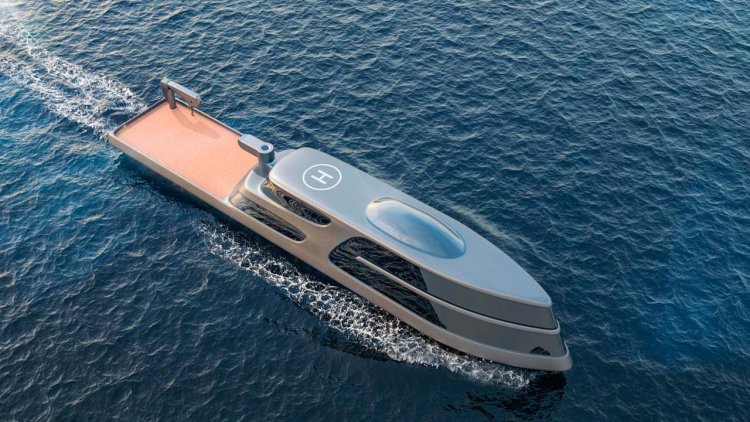
The futuristic concepts are part of a multi-generational Research & Development mission known as ‘Project Zero’ – with the vessels named after the three pillars of the project: Hope, Destiny and Progress.

Dedicated to deploying future technology to support the next generation of offshore marine projects, Project Zero’s autonomous ships utilise zero emission hydrogen fuel cells, benefitting from onboard renewable power generation (solar and wind power) and built-in state-of-the-art technology from computer vision to AI.

All three vessels – United Hope, United Destiny and United Progress – are designed for optimum working conditions, ensuring staff remain healthy, happy, and productive whilst on board.  
Smart, ergonomic environments minimise noise and vibrations, with personalised cabin settings allowing crew to tweak light, sound and temperature to get a good night’s sleep, reduce fatigue and enhance performance while offshore.  

Staff can also take advantage of incredible facilities including a high-tech gym with virtual classes, yoga studios and saunas, a cinema, a games room and an atrium for socialising and optimising natural light.

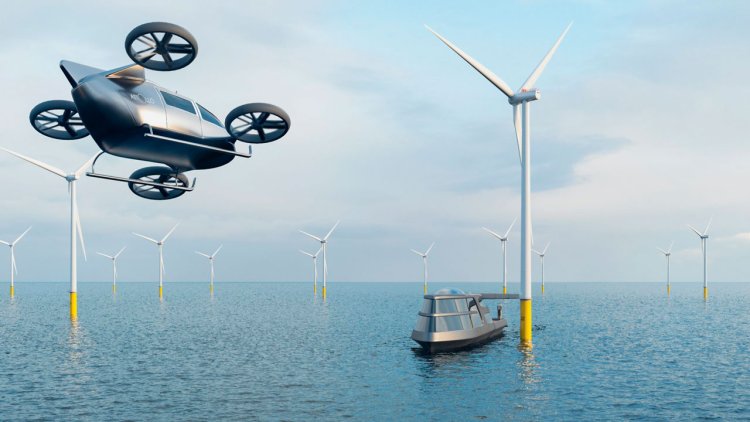
Additional features include advanced sensors, 3D printing capability and hydroponics to increase the vessels ability to operate independently – with drones replacing helicopters to ensure safe transit between assets.  

Vessels are set to hit waters by 2030.  
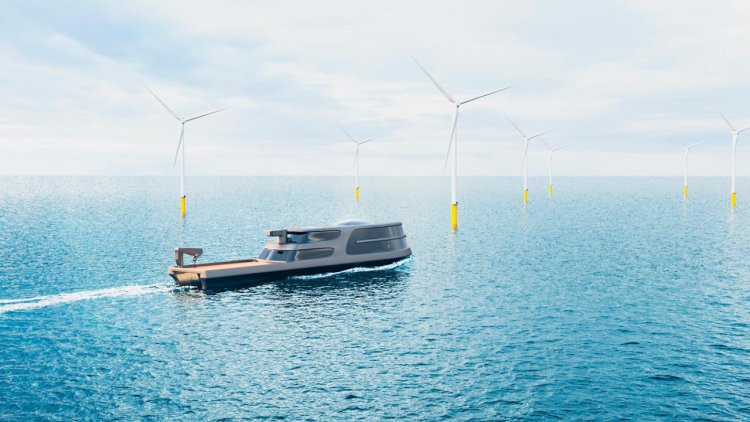
Attollo’s pioneering design reflects the brand’s modern, holistic and structured approach to the future of zero emission marine operations, as well as a commitment to complete solutions.  

The vessels are being unveiled after global leaders gathered for COP26 – the 2021 United Nations Climate Change Conference took place in Glasgow and achieved pleages to keep alive hopes of limiting human caused global warming to 1.5 degrees Celsius.

Under current legislation, the Climate Change Act commits the UK government to reducing greenhouse gas emissions by at least 100% of 1990 levels (net zero) by 2050. This includes reducing emissions from the devolved administrations (Scotland, Wales and Northern Ireland), which currently account for about 20% of the UK’s emissions.  

Attollo’s vessel design has been funded with help of government support and assistance from  V&A Dundee ‘Design Accelerator’ for low carbon technologies. CENEX transport consultancy conducted vital research into the zero-emissions propulsion technologies.  
Jen Ballie, Design for Business Research Manager at V&A Dundee, said:

“Attollo’s Project Zero is one of the most exciting ideas we’ve worked on in our Design for Business programme, and these plans for zero emissions vessels could be a game-changing development in sustainable offshore travel. V&A Dundee works with organisations of all sectors and sizes to support their innovation, putting design thinking tools to use and solving complex social and technical problems. Attolo’s design combines sustainability and technology innovation in a remarkable way and we’re very proud to have supported this project.”

Fergus Worthy, General Manager at CENEX said:

“Attollo want to use zero emission at point of use propulsion technology for its next generation vessels. We undertook an evaluation into the technologies available for marine applications to enable short-, medium-, and long-term strategies for a transition to zero emission operations in line with Attollo’s goals. Zero emission marine propulsion technology is in its infancy, but Attollo want to demonstrate early leadership and adoption for large scale commercial maritime applications.“

Attollo has also signed up to the Science Based Targets initiative (SBTi) – a net-zero standard which gives companies science-based certification of their sustainability targets. Project Zero represents part of that commitment.  

Attollo Chief Executive Ben Moore said:

“All our future plans are now carried out with our net zero commitments in mind. Designing a carbon neutral vessel to ensure that all parts of our operations are as sustainable as possible is a natural next step for us. Project Zero is our ambitious programme to create the tomorrow we want to see. One with zero emissions energy propelling our vessels and cutting-edge technology taking the offshore marine industry into the future. Without big ideas and significant investment in the future, our industry faces becoming obsolete as we move into a decarbonised world. Project Zero provides vision and structure to our R&D plans.” 

Planned new green hydrogen project at Port Pirie

0

Trafigura Group Pte. Ltd. (“Trafigura”), Nyrstar, and the State Government of South Australia have announced a joint investment to progress plans to construct a commercial scale green hydrogen manufacturing facility in Port Pirie, a regional city north of Adelaide.

The AU$5 million Front End Engineering Design study for the Port Pirie Green Hydrogen Project, jointly funded by Trafigura and the South Australian State Government, will commence immediately, with a final investment decision to be made by the end of 2022.  If approved, construction will commence in 2023. 

At an estimated design and construction cost of AU$750 million, if approved, the Project is to be developed in a phased manner, initially producing 20 tonnes per day (tpd) of green hydrogen for export in the form of green ammonia.  The full-scale plant will produce 100tpd of green hydrogen at full capacity from a 440MW electrolyser, enabling it to meet both export and domestic supply needs. The oxygen created in the production of hydrogen will be utilised by the Nyrstar Port Pirie smelter.

The project is planned to be integrated into Nyrstar Australia’s metals recovery smelter at Port Pirie, using existing infrastructure to accelerate production of green hydrogen compared to developing a project on a new greenfield site.  The Project will form the cornerstone of a new green hydrogen precinct in Port Pirie that will benefit local businesses and support the decarbonisation of transport and industry.

Trafigura will source 100 percent renewable energy to provide the electricity needed to run the Project’s electrolyser, which will also contribute to decarbonising the existing smelter’s power supply.

Trafigura General Manager – Australia, Tim Rogers said that the company was increasing its global presence in the fast-evolving renewable energy sector, and that the Project created a unique opportunity for the Spencer Gulf to participate in the growth of a new energy industry, creating the next generation of jobs for local communities. He said:

“We are encouraged by governments’ support of the hydrogen industry. With both State and Federal Government support, the Port Pirie Green Hydrogen Project has the potential to be a catalyst for new jobs and economic growth in the region, creating opportunities for existing local businesses to become part of the supply chain, attracting new talent, and encouraging new companies and industries to establish a local presence.”

“We are expecting significant early interest in becoming a part of the green hydrogen precinct with early potential for the region’s heavy vehicle transport industry to investigate hydrogen refuelling options.  In time, it is also expected that Trafigura will be working with mining and other energy-intensive industries across the State to explore the opportunities the precinct creates for them to decarbonise through the use of green hydrogen.”

Nyrstar’s Vice-President Australian Operations, Dale Webb, said that the Port Pirie Green Hydrogen Project would enable its business to take a significant step in improving its competitiveness in the international market for zinc, lead and other metals that it produces from its interconnected Port Pirie and Hobart smelters.

“As a leading multi-metals manufacturer, producing and recycling vital metals required for the energy transition, Nyrstar Australia needs to remain competitive on the global stage, on cost and in terms of carbon intensity.  The Port Pirie Green Hydrogen Project will meet this challenge head on by delivering renewable energy and oxygen to prove that we can decarbonise a heavy industrial facility and at the same time ensure more efficient and cost-effective production of low carbon metals for the world. This will create a positive differentiator for our products with international customers, and help underpin a stronger, more secure, more sustainable future for Nyrstar Australia.”

South Australian Premier Steven Marshall said:

“The Port Pirie Green Hydrogen Project will be integral to South Australia’s transformation into a leading global producer of green hydrogen.

“My Government is pleased to contribute to the Front End Engineering Design and support Trafigura and Nyrstar’s plans to create a new green hydrogen precinct that delivers jobs and business growth in the Spencer Gulf.”

Woodside and Viva Energy progress LNG regasification agreement

0

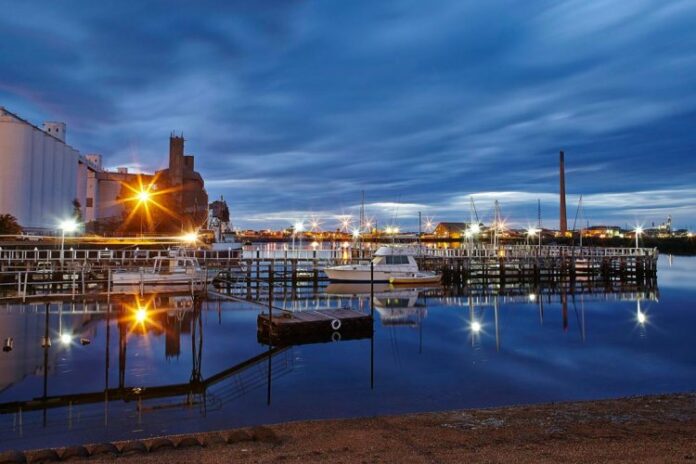
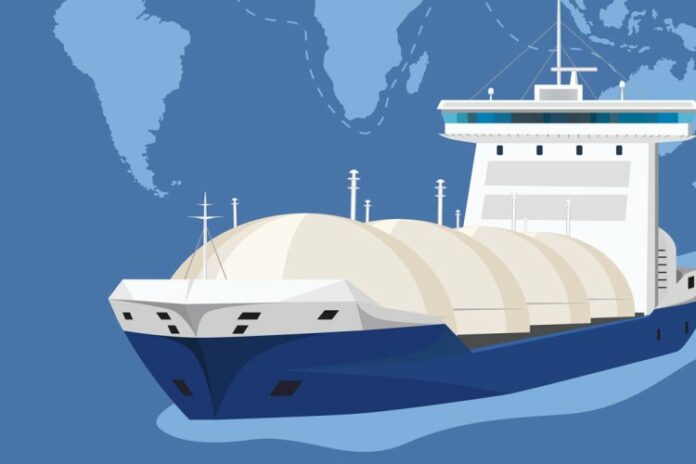
Woodside and Viva Energy have entered into a memorandum of understanding (MoU) to progress discussions on capacity rights at Viva Energy’s proposed LNG regasification terminal (the Gas Terminal Project) in Geelong, Victoria, which could enable Woodside to supply LNG to the east coast Australian market.

Under the terms of the MoU, Woodside will discuss with Viva Energy the opportunity to acquire regasification capacity usage rights at the terminal to regasify LNG. This could help underpin the Gas Terminal Project as a key infrastructure solution to address the expected gas supply shortfall in the east coast Australian market from the mid-2020s, and support the National Electricity Market’s transition to lower-carbon energy.

The MOU provides a framework and timeline to negotiate binding regasification capacity commitments, to be finalised in definitive agreements executed following Woodside and Viva Energy approvals prior to a final investment decision targeted for the third quarter of 2022.

Woodside CEO Meg O’Neill welcomed the collaboration with Viva Energy on potential LNG supply from Woodside’s portfolio to the east coast market, which would be a milestone for the Australian gas industry. She said:

“Our MoU with Viva Energy presents an opportunity for Woodside to supply reliable, cost-competitive LNG from our Western Australian projects and global portfolio into the east coast gas market, which is predicted to face a shortfall in coming years.

“Working to secure regasification capacity at Viva Energy’s proposed import terminal aligns with Woodside’s future production profile and the ongoing needs of east coast Australian customers for reliable, lower-carbon energy sources.”

Viva Energy CEO Scott Wyatt said he was very pleased to be progressing this opportunity with Woodside. He said:

“Woodside’s experience and capability in LNG supply, shipping, terminals and international gas markets will assist us in progressing the Gas Terminal Project to a final investment decision.

“Woodside’s potential participation in the Gas Terminal Project highlights the value of LNG terminals as ‘virtual pipelines’ to deliver LNG from Australia and other sources into the east coast domestic gas market. This can be achieved more efficiently and with lower environmental impact than building new pipelines to transport gas from other domestic gas sources to the south east Australian gas market.”

I-Tech mitigates barnacle fouling on high-risk idling vessel Global Mercy

0

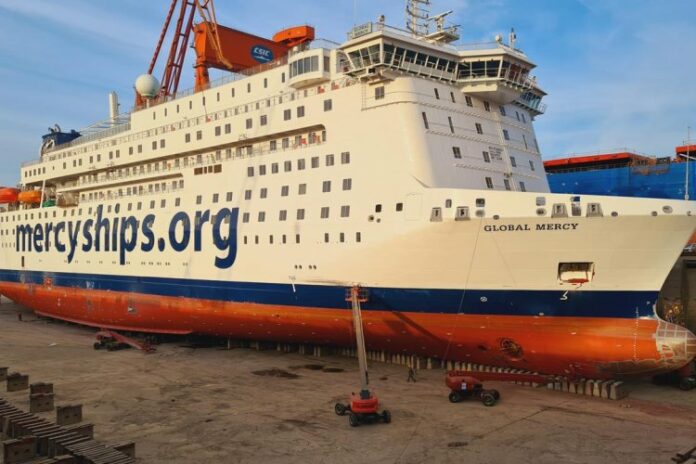
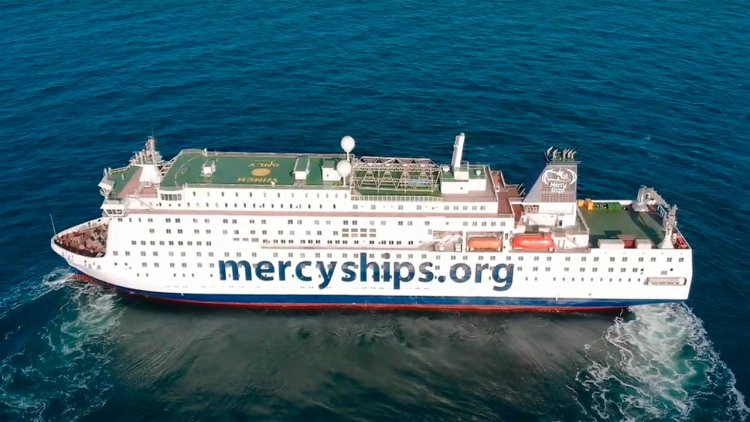
Biotech antifouling specialists, I-Tech AB, has announced the performance of its barnacle-repelling active ingredient, Selektope® after an eight-month period in outfitting of the world’s largest civilian hospital ship, Global Mercy™

In May 2021, Global Mercy completed its sea trial with good results. After extended static period during outfitting, exposed to high risk of fouling, I-Tech found that the vessel showed some signs of fouling on the propellers, however the vessel’s hull was completely free from barnacle growth.

Built by Xingang shipyard in Tianjin, China, with Stena RoRo appointed by Mercy Ships as the project manager, Global Mercy’s hull was coated with two layers of Jotun’s SEAQUANTUM PRO ACE containing Selektope® – an organic, non-lethal, metal-free active agent that is added to marine antifouling paints to prevent barnacles from settling on coated surfaces by temporarily activating the swimming behaviour of barnacle larvae. The bio-repellent effect makes Selektope® the only type of technology of its kind available to marine paint manufacturers today.

During construction, I-Tech worked with leading innovators of the roll on/roll off cargo and passenger concepts, Stena RoRo, to identify Selektope® as the most suitable, innovative technology to ensure that the hull of the new hospital ship would not suffer from the negative effects of barnacle fouling – even during long periods of idling in high-risk areas. 

Excess amounts of marine fouling can lead to increased drag, resulting in reduced overall engine efficiency affecting speed, power, performance, and fuel consumption, in addition to costs associated with drydocking the ship to mechanically remove hard fouling, if required.

Embarking on its first mission in early 2022 to the west coast of Africa, the nature of the voluntary aid Global Mercy will provide means that the hospital ship is expected to be stationary in warm water ports for long periods of time, up to as long as 10 months. These extended periods at anchor can put vessels at a heightened risk of barnacle colonisation, according to I-Tech’s recent idling study released earlier this year, which found that ships located in medium or warm waters were at a higher exposure to marine growth.

Commenting on the result after vessel delivery, Philip Chaabane, CEO at I-Tech, said:

“The mission of Mercy Ships is vitally important for people in need of medical attention in some of the world’s poorest countries. I-Tech, grateful of the important work performed by Mercy ships, have decided to donate the Selektope® required in the hull coating. Our fast-growing technology, with its heritage in the scientific research domain, is a perfect fit for this ship and its operating pattern. We are proud partners to the Mercy Ships organization and grateful for the work they do to help humanity.”

“Barnacle fouling can be detrimental to the efficiency and maintenance of vessels, increasing costs and emissions in a market which cannot afford either. Therefore, it is important for vessel owners and operators to ensure that vessels are in some way protected, especially when idle for long periods of time.”

Stefan Soneson, National Director, Mercy Ships Sweden, added:

“Mercy Ships is known for its extensive sustainability profile, and I-Tech’s donation in support of our assignment further contributes to being able to carry out our work in a more sustainable way. The use of the latest technological innovations to protect Global Mercy against fouling during static conditions is of great importance to us.”

KOTUG CANADA awarded a longterm agreement with Trans Mountain

0

KOTUG Canada Inc., a partnership between KOTUG International B.V. and Canada’s Horizon Maritime Inc., has been awarded a long-term agreement with Trans Mountain, operator of Canada’s only oil pipeline servicing the West Coast of Canada providing tidewater access to foreign markets for Canada’s petroleum resources. 

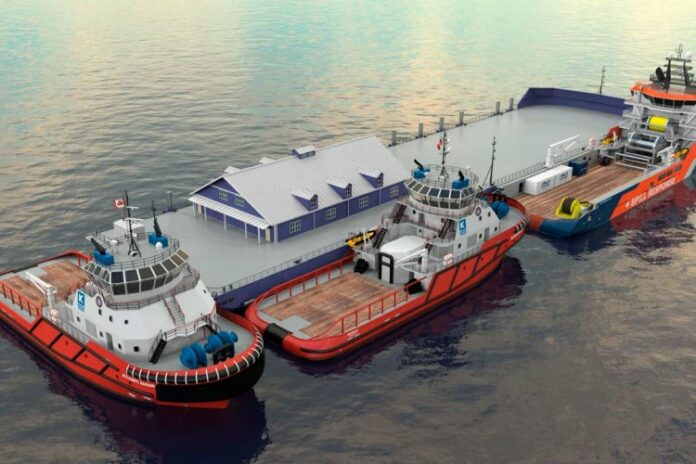
KOTUG Canada will provide escort towage to tankers loaded at Westridge Marine Terminal. KOTUG Canada was selected for this purpose by shippers on the Trans Mountain Pipeline after a rigorous and competitive process facilitated by Trans Mountain. Besides the strong technical specifications of these modern vessels, decisive factors for the award included KOTUG Canada’s commitment to a strong and innovative approach to Indigenous involvement and the partnership’s strong foundation in operational excellence in Canada and around the world. 

This agreement has been established in partnership with the Sc’ianew First Nation, located in Beecher Bay, on Vancouver Island. This strategic location along the Trans Mountain escort route will provide KOTUG Canada with a safe home for a dedicated berthing facility as well as supporting the commercial activities of the Sc’ianew First Nation in Beecher Bay. The escort tug names will commemorate two important people from the Sc’ianew community.

The agreement provides the Expansion Project, and all other marine movements, with necessary resources in support of Trans Mountain’s stringent commitment to marine safety and will further enhance the overall safety of vessel transits along the commercial shipping route between Westridge Marine Terminal in Burrard Inlet and the open ocean.

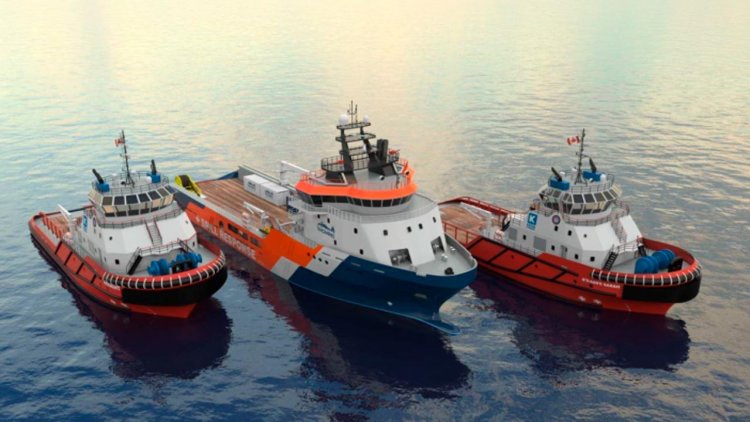
KOTUG Canada will provide and operate the two dedicated escort tugs, each approximately 50 metres long, with minimum bollard pull capacity of 110 T BP, which will be flagged in Canada and operated by highly skilled and capable Canadian mariners.

Provision of new technologies will assist to reduce underwater radiated noise and greenhouse gases. This includes the application of a revolutionary vessel hull coating developed in Canada by Graphite Innovation & Technologies. The vessels’ propulsion systems will use the latest engine drive technology.

KOTUG Canada will operate in close coordination with the Sc’ianew First Nation. The agreement also includes related training and development of community members of Indigenous communities to maintain the necessary experience and knowledge in the field of advanced safe tug operations and marine response. Importantly, the partnership between KOTUG Canada and the Sc’ianew First Nation provides vessel crews opportunities to learn from traditional knowledge and operate with respect and appreciation of the unique natural habitat of British Columbia’s coastal environment.  

Also, under a separate transaction, KOTUG Canada has an agreement with Western Canada Marine Response Corporation (WCMRC) for the provision of one dedicated offshore supply vessel (OSV) to support the protection of the Salish Sea/Haro Strait and Juan de Fuca Strait. KOTUG Canada has an agreement with WCMRC to supply and operate a dedicated OSV, suitably equipped for 24/7 oil spill response services. This highly capable vessel also possesses significant bollard pull capacity of 207 T BP and is also capable of vessel towing, if required to do so.

Together, these three KOTUG Canada-operated vessels, based out of Beecher Bay, will help to further improve the safety of the marine network in the region.