4.4 C
New York
Home Blog Page 493

Port of Salalah invests in 16 eco-efficient RTG cranes

0

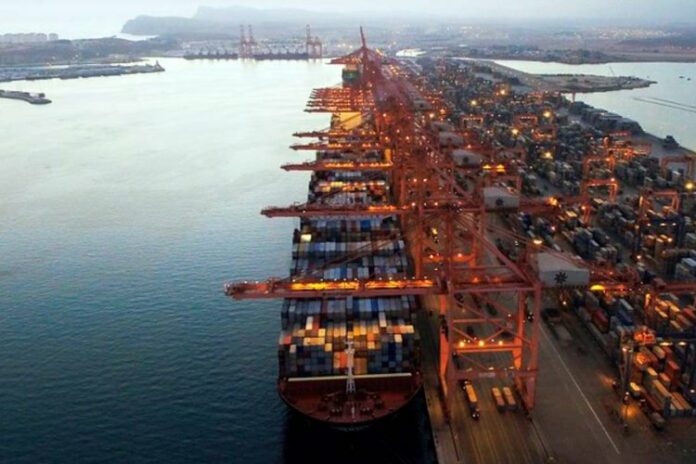
Port of Salalah have taken delivery of 12 out of the 16 new eco-efficient rubber-tired gantry (RTG) cranes from ZPMC to expand operations and enhance cargo movement within the terminal.

The new equipment actively reduces the terminal’s environmental impact as well as significantly improves the container handling capabilities. This in addition to investing in state-of-the-art equipment with three new mobile harbor cranes from Liebherr , expected to arrive Q1 of 2022, which will vastly improve general cargo handling capabilities.

Port of Salalah is a multi-service port and the largest in Oman, handling over 4.3 million TEU last year and 15.7 million tons of general cargo. The Port, instrumental in facilitating strong trade links to the Indian Subcontinent, East Africa, Red Sea/Levant, and the Arabian Gulf and access to key regional markets including Asia and Europe, attracts over 2000 vessel calls, sailing to over 52 port destinations around the world. The contract with ZPMC and Liebherr, market leaders in port equipment, is a part of Port of Salalah’s future capacity expansion investments to ensure the terminal is equipped with the latest technologies and equipment to support local and international business customers. The agreement also aligns with Oman’s 2040 Vision, elevating infrastructure as a key economic instrument to further grow the transportation and logistics sector.

Mark Hardiman, CEO, Port of Salalah, said:

“Innovation and improvement are at the heart of our Port-centric solutions. Our investment in the latest RTG and mobile harbor cranes demonstrates our long-term commitment to optimize operational efficiencies and cargo handling services while accommodating existing and new trade. We’re excited to have the 12 new RTGs already in the commissioning-progress phase to be delivered, with the remaining four expected to arrive later this year. Once completed, it will enable us to expand our capabilities, capacity, and efficiencies, and support increased demandю” 

The new RTG cranes are an important step in the terminal’s long-term plan to have zero-carbon emissions-reducing fuel burn by 20%. They are fitted with the latest Siemens technology Simotion D with S & 1500 PLC, and can lift 41 tons, and have six wide stacking plus truck lanes. They can be fully monitored remotely and integrated with the asset digitization system currently being installed in the terminal to monitor production and efficiency. In addition to laser anti-collision systems to provide protection to machinery and pedestrians. The 16 RTG cranes will be operational by January 2022. Two of the mobile harbor cranes will arrive in February 2022 while third will be received in April 2022.
OneOcean’s Regs4ships ensures regulatory compliance for Uni-Tankers

0

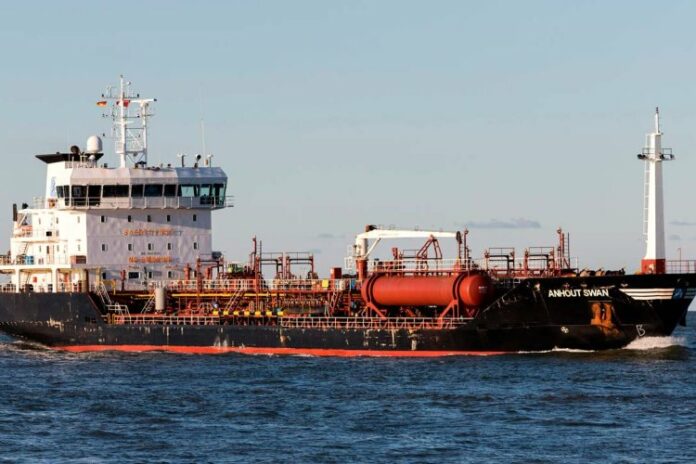
Denmark-based Uni-Tankers has selected OneOcean’s Regs4ships regulatory database as the most effective means for ensuring continuous, fleet-wide compliance.

The solution allows ship and shoreside teams to stay abreast of, and to comply with, regulatory requirements around the world. This is particularly valuable for tanker fleet owners and operators because of the hazardous nature of their cargo, and the potential environmental impact should an accident occur.

In selecting OneOcean’s Regs4ships, Uni-Tankers can access all regulations for the management of the fleet and for specific sailing routes. This eliminates the need for the company to manually source and verify the needed information, a process that typically takes hours. Fleet managers also gain a high level of regulatory oversight over regulations in force for all vessels they manage.

As Lars Sandsdalen, a senior member of Uni-Tankers’ HSEQ team, explains:

“Navigating the complexity of rules and regulations that our fleet has to comply with has, in the past, been difficult and time consuming. By contrast, Regs4ships gives us a complete picture in no time at all, including an overview of upcoming amendments. I have not seen any other platform that compares with the OneOcean solution.”

The advanced functionality of Regs4ships provides the ability to see how regulations have evolved over time, and when they and later amendments come into effect. Easy tracking of the rules applying to vessels of different ages and types is a value-adding benefit, as is the single-source reference for information. This reduces confusion and mitigates the risk of missing important regulatory changes.

OneOcean Group CEO Martin Taylor, says:

“The maritime industry is increasingly acknowledging the need for a single source of accurate and reliable information, which enables the right decisions to be made quickly and confidently. This promotes safe and compliant shipping operations, and we are pleased to support Uni-Tankers in keeping fully up-to-date with all the regulations, regardless of where their ships are operating.”

Regs4ships will be used aboard 17 Uni-Tanker vessels.

Ashtead Technology bolsters rental fleet with investment in iXblue technologies

0

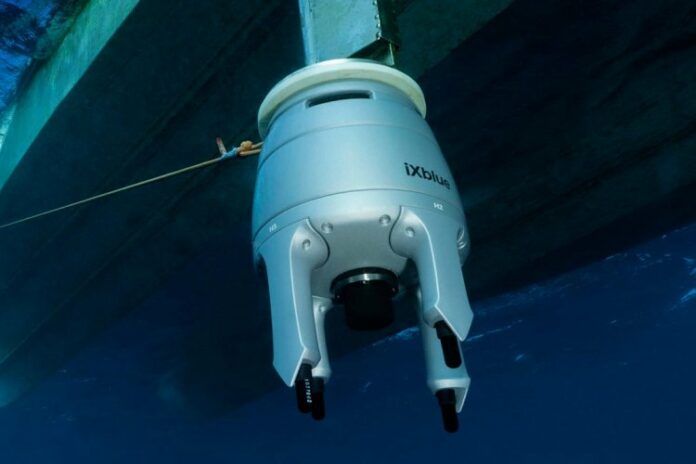
The investment includes the addition of further Rovins and Rovins Nano inertial navigation systems as well as Octans attitude and heading reference systems which are now available to rent throughout the company’s nine international technology and service hubs.

Based on fibre-optic gyroscope technology, iXblue navigation solutions have become a standard in the offshore industry. Equipping over 80% of the subsea vehicles used in the energy and geoscience industries, iXblue inertial navigation systems and attitude and heading reference systems are accurate and maintenance-free, offering unrivalled performance and power, with robust navigation for remotely operated vehicles and autonomous underwater vehicles.

Ross MacLeod, Ashtead Technology’s Technical Director, said:

“For 36 years, we have built a strong track record as a market leader in the provision of subsea equipment rental and solutions across the offshore energy sector. This latest investment of iXblue equipment is a direct result of listening to our customers’ requirements and ensuring we have the broadest and most technologically advanced subsea equipment from leading manufacturers to support our customers’ projects worldwide.”

Maverick Piccininni, iXblue’s, Regional Sales Manager, said:

“It is great to see the ongoing support and investment from Ashtead Technology which is testimony to our long-term partnership. It also demonstrates Ashtead Technology’s commitment to leading edge technology and innovative solutions that brings robust performance, safety, reliability and differentiation to their customers”.

Two cargo ships collide in Baltic fog, rescue underway

0

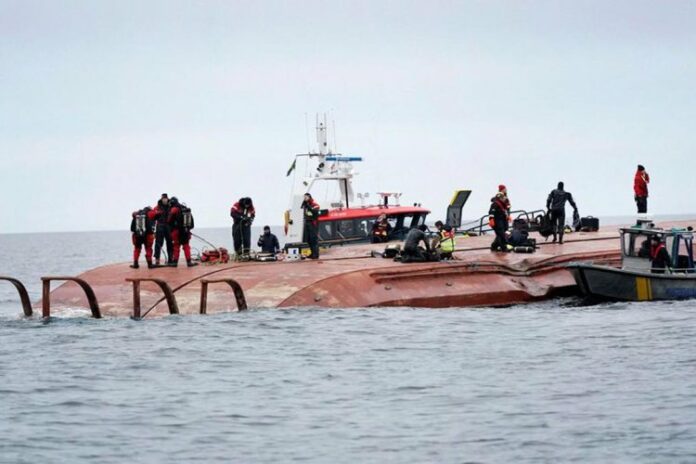
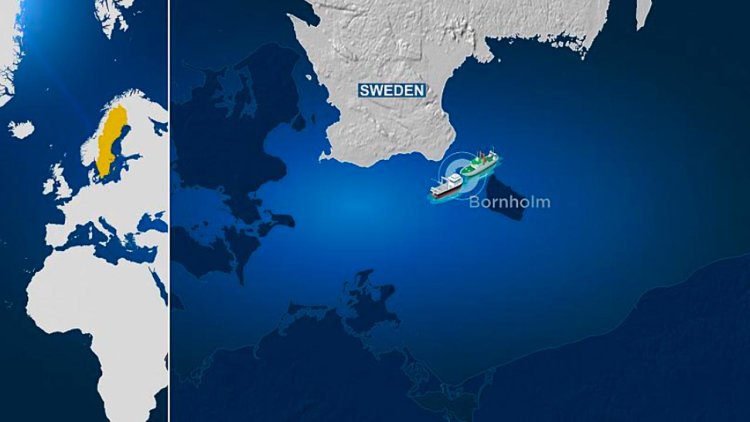
Two cargo ships collided on Monday during foggy conditions in the Baltic Sea between the Danish island of Bornholm and the southern Swedish city of Ystad and a rescue operation was launched for two missing people, authorities said.

The 55-metre Karin Hoej, registered in Denmark, had capsized and was upside down, the Swedish Maritime Administration (SMA) said. It had two people on board and they were missing, the Danish Defence’s Joint Operations Centre (JOC) said.

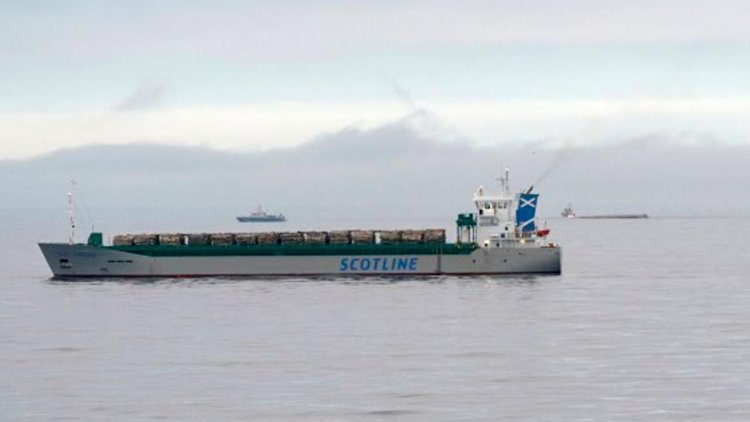
The other ship, the 90-metre, British-registered Scot Carrier, was functional and its crew were safe.

Photo: euronews

The rescue operation near the site, which was riddled with wreckage, was ongoing more than five hours after the incident. Swedish divers were standing by on land to investigate the hull, the SMA said.

Water temperature is around 4-6 Celsius (39-43F) in the area, according to the Danish Meteorological Institute.

The U.K. vessel MV Scot Carrier was sailing from Hargshamn north of Stockholm to Montrose on Scotland’s east coast, according to Refinitiv Eikon data. 

A spokesperson for the Danish Meteorological Institute said there was fog in the area at the time of the accident, around 3.30 a.m. local time (9:30 p.m. ET Sunday.)

Photo: Johan Nilsson / AP

Denmark was helping Swedish authorities with the rescue, in which a total of nine vessels and a Danish helicopter were participating. Civilian vessels in the vicinity were also helping.

The accident happened in Swedish territorial waters and the two ships were sailing in the same direction when they came into contact.

Denmark’s JOC was not immediately able to say whether the ships carried any hazardous cargo.

The SMA said the Danish vessel was empty of cargo and it was unclear what if any the British ship was carrying.

Sources: NBC, Reuters. Video: Reuters

Kale Logistics chosen by MSC to provide e-Delivery Solution

0

Kale Logistics Solutions (Kale) has collaborated with TIFFA EDI Services to provide the CODEX Electronic Delivery Order (e-DO) service to the Mediterranean Shipping Company (Thailand) to digitally enable all stakeholders.

Developed in partnership with TIFFA, the CODEX e-DO services enable freight forwarders, shipping lines, custom brokers, importers, and terminal operators to exchange and receive delivery order documents digitally instead of in paper form.

The CODEX e-DO platform allows multiple stakeholders to perform their business activities via a digital interface, enabling stakeholders to place an e-DO request to the shipping line.

All the details of the e-DO are retrieved from the manifest file, which is provided in EDI format by the shipping line in advance to minimise data entry, with most steps automated, from request to issue of the delivery order.

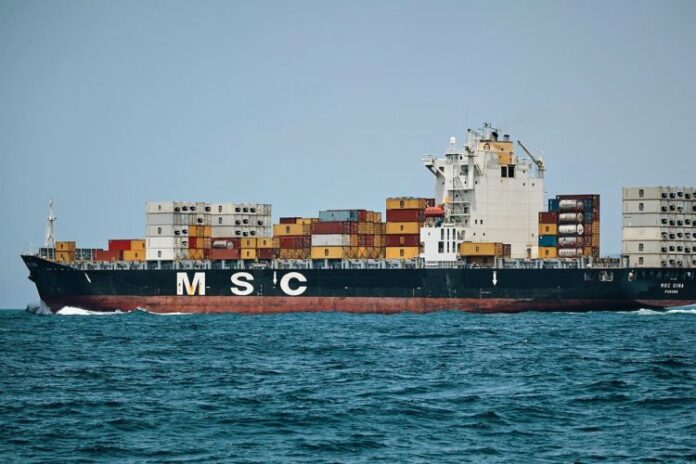
The new contract with TIFFA and MSC (Thailand), the world’s second largest container shipping line, was signed on 15th November and will serve to strengthen Kale’s foothold in Thailand.

Vineet Malhotra, Director of Kale Logistics Solutions, said:

“Kale has a long lasting relationship with Thailand and the stakeholders here. We have a major role to play in the digitisation drive in air cargo, as well as the maritime sector. Our domain expertise and experience of working in 27 countries and executing global IT projects in the maritime and air cargo space will add value to our CODEX Port Community System (PCS) platform in Thailand.”

The CODEX e-DO will digitalise and streamline all business processes in goods exchange for MSC (Thailand), increasing the efficiency of document management and enabling work from anywhere, thanks to the cloud-based technology and a mobile version of the application.

When the terminal releases the cargo in their application, the e-DO automatically updates through Web API, with electronic goods release certificates and status updates available 24 hours a day.

As well as offering increased security, by facilitating paperless operations the e-DO also minimises the risk of viral transmission and the spread of Covid by reducing physical contact between personnel and manual handling of documents.

Malhotra said:

“With our CODEX e-DO utilised by MSC (Thailand), Kale’s focus on playing a key role in improving Thailand’s Logistics Performance Index (LPI) ranking with World Bank and Trade Facilitation Agreement initiatives with the World Trade Organization (WTO) continues to grow.”

Suwit Ratanachinda, Chairman of TIFFA EDI Services, said: “We are offering this solution to ease the challenging situation of risk posed by COVID-19 for all stakeholders. The old-style Delivery Orders (DO) process, which takes time and paper-intensive operations, is prone to errors and increased the spread of the virus through document exchange.

“The initiative of the e-DO service is to facilitate ease of doing business for freight forwarders, shipping lines, transporters, terminal operators and port authorities.”

During the ceremony, Managing Director of Mediterranean Shipping (Thailand) Co. Ltd, Peter Blohm, said:

“MSC (Thailand) has been delivering superior customer service to the maritime industry over a period of 20 years.

“By collaborating with TIFFA EDI who are partners to Kale to provide this new service, we are committed to making a significant contribution to superior economic growth for all Thai entrepreneurs and the logistics trade community.

“We foresee the benefits of the CODEX e-DO system in providing services to MSC’s customers.”


Titan, Attero, and Nordsol awarded €4.3M in funding for a bio-LNG production plant

0

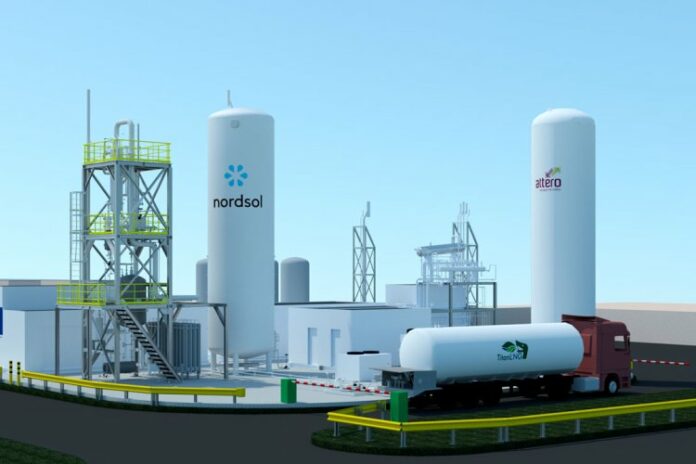
The FirstBio2Shipping project, set to be completed in 2023, will achieve a decentralized production of bio-LNG designated for use in the maritime industry. The plant, located at the Attero facility in Wilp, the Netherlands, will produce around 2,400 ton/year of bio-LNG (or liquefied biomethane).

This substantial funding is a clear recognition by the EU of the vital role that bio-LNG will play in decarbonizing the maritime industry and expediting the energy transition. The collaboration of these front-runners in sustainable fuels shows their commitment to, and belief in, the strong pathway to maritime decarbonization through bio-LNG. As one of the first projects to receive funding from the Fit for 55 package, the FirstBio2Shipping project has also been recognised as practical, because it will supply existing LNG fuelling infrastructure.

Bio-LNG originates from organic waste flows, particularly domestic and agricultural waste that is available in abundance. Attero will produce 6 million Nm3 of biogas per year from domestic biowaste for the FirstBio2Shipping project. The biogas is upgraded and liquefied into bio-LNG by Nordsol’s innovative iLNG technology. This technology resolves various challenges in the production of small-scale LNG, including: producing high-quality bio-LNG (not containing contaminants); zero methane ‘slip’ (not releasing unburned methane); and no high temperature demands in gas treatment technologies, resulting in a lower total cost of ownership.

In partnership, Attero and Nordsol will produce 2,400 tons/year high-purity bio-LNG and 5,000 tons/year liquid bio- CO2. Titan, the exclusive long-term off-taker, will supply the bio-LNG to the maritime industry where it will cost-effectively substitute fossil fuels. The produced bio-LNG will reduce GHG emissions by 92% compared to a conventional maritime fuel, representing more than 87500 tCO2e net absolute emissions avoided during the first ten years of operation.

Producing biogas by digestion of waste streams and converting it into bio-LNG also fits into the sustainable circular model resulting in a fuel that is not just potentially net-zero in GHG emissions, but also has the potential to be net-negative in emissions by replacing the use of fossil CO2 with liquefied bio-CO2.

Ronald van Selm, CTO, Titan said:

“This project is paramount in implementing our strategy of reaching carbon zero within the coming two decades. Furthermore, it builds upon Titan’s previous successful funding application called ‘Bio2Bunker’ that realizes three additional bio-LNG bunker barges. Mature transport, storage, and bunkering infrastructure are not the only benefits of bio-LNG, it is also increasingly recognised as a sustainable option that can be ‘dropped in’ and blended with LNG at any ratio, with no changes required onboard the vessels.”

Jan-Willem Steyvers, business developer, Attero:

“Producing bio-LNG out of biogas is a next step in biowaste digestion, leading to higher end products. Bio-LNG from biowaste supports the circular economy and helps in dealing with yet another global concern: replacing Heavy fuel oil applications. By producing bio-LNG locally, traceability and transparency are ensured. Our bio-LNG will meet ISCC certification criteria. The Firstbio2shipping project will create more opportunities for local biogas upgrading plants, produce high-quality, sustainably sourced bio-LNG, and help decarbonize the maritime industry. It’s a no brainer.”

Léon van Bossum, commercial director, Nordsol added:

“Reducing GHG emissions in maritime transport is of critical importance, and with bio-LNG we can start today. With the firstbio2shipping project, we take a first step in decarbonizing the shipping sector with our highly scalable decentralized bio-LNG plants. We look forward to realizing this milestone project with our partners Titan and Attero.”

With the introduction of this first bio-LNG plant for shipping, LNG-fuelled vessels can take a significant step towards achieving decarbonization goals and meeting European Union and International Maritime Organisation regulations. Shipping’s pathway to decarbonization via LNG, bio-LNG, and in the longer-term green hydrogen-derived E-LNG is well underway and emissions will only reduce more as Titan, Attero and Nordsol scale up bio-LNG production further.

Damen’s ASD 2312 Tug is now available at simulator centres globally

0

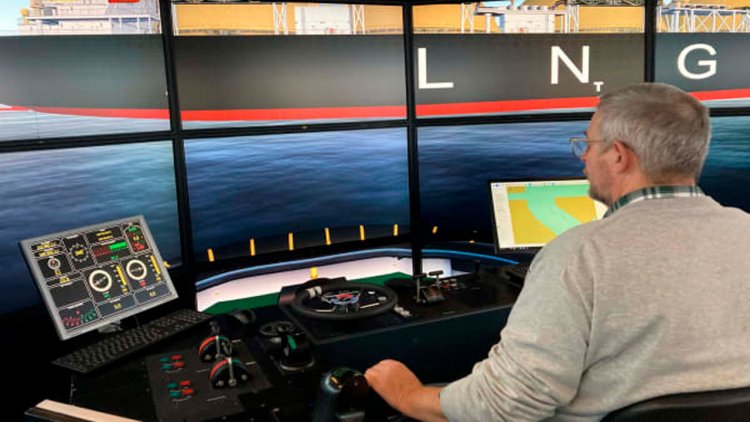
Damen’s ASD 2312 Tug is now available at simulator centres globally, as well as in the SimFlex Cloud, following an agreement with FORCE Technology, a leading maritime research and development company and frontrunner in developing simulators for the maritime industry.

FORCE Technology’s SimFlex simulator model of the ASD 2312 Tug provides an accurate and completely realistic experience that corresponds to the actual vessel. 

Bastin Kubbe, Damen Regional Service Manager Asia Pacific, comments:

“We decided to team up with FORCE Technology because of their global coverage and highly respected reputation in the maritime industry. Originally, we came up with the idea to design a simulator model for the ASD 2312 because of the various Covid lockdowns and travel restrictions in countries such as Australia and New Zealand.

“We want to enable our customers to thoroughly test our vessels in an accessible manner prior- or during the acquisition process. Simulations can assist customers when deciding on the tug type they require, but they are equally important after an acquisition, when the simulator can be used for training purposes for existing and new customers. The SimFlex simulator is a super realistic, immersive experience. Operators can really see how the Damen ASD 2312 Tug manoeuvres in real life.”

This investment in simulator technology also fits in with Damen’s policy of being the most sustainable shipbuilder in the world, he stresses:

“Previously, customers would have to fly to one of our yards which can be difficult currently, given the various lockdowns and travel restrictions. By collaborating with FORCE Technology and creating access to this new Damen design, every port in the world can now simulate operations with the Damen ASD 2312.”

FORCE Technology already has several renowned Damen vessels in its simulator portfolio.

Jan Michelsen, Head of Department, Simulation, Ports & Training at FORCE Technology, comments:

“We use advanced modelling techniques to ensure a realistic environment in our own and client simulator training facilities. This is achieved by using mathematical ship models that respond exactly like the actual vessels. Our models are based on an eclectic approach where sea trials as well as data from physical model tests derived from our towing tank, wind tunnel test facilities and from numerical calculations (CFD) is applied to ensure that the reactions of the simulated vessel replicate reality.

“Damen is world renowned for their innovative ships with an enhanced focus on sustainability, safety, reliability and efficiency – values that are also core to FORCE Technology, hence this strategic partnership makes good sense. We have decided to make the ASD 2312 Tug model available in simulator centres globally, as well as in our brand new SimFlex Cloud SaaS solution that is available anywhere and at any time.”

The Damen ASD 2312 Tug is one of the company’s most well-known vessel types. This compact, multipurpose ASD Tug delivers a powerful 70 tonnes of bollard pull, while the patented Twin Fin skeg plus twin Azimuth thrusters ensure excellent manoeuvrability. An obstacle-free working deck provides a safe working environment for the six crew members, as does the integrated winch which handles both forward and aft operations. The central positioning of the winch means the vessel can tow both fore and aft.

Stena Bulk and OCGI partner on carbon capture and storage feasibility study

0

Stena Bulk has today announced the results of a recent partnership with the Oil and Gas Climate Initiative (OGCI) to study and explore the potential of capturing carbon at the point of exhaust from large commercial vessels.

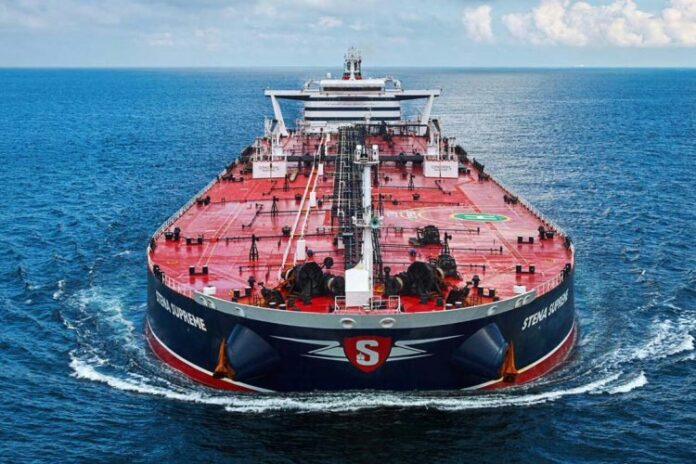
Stationary carbon capture & storage (CCS) technologies onboard ships could be an important solution in the maritime sector’s race to decarbonise. To support the feasibility study into their use, Stena Bulk initially provided data from three vessels in its fleet; a medium range (MR) oil/chemical tanker and a Suezmax crude oil tanker that are currently running on heavy fuel oil (HFO), and an LNG carrier fuelled by LNG.

The information that Stena Bulk provided to support the study included key vessel technical information such as deck space, fuel use, the availability of heat and energy in the exhaust stream, as well as wider considerations such as if the vessels were technically representative of the wider global fleet.

The findings of the study showed that the LNG carrier offered the most straightforward path to implementing viable CCS because it had the right mix of onboard infrastructure. The Suezmax and MR tankers presented more technical challenges to implement a CCS system.

Ultimately, the full feasibility study was conducted based on the Suezmax tanker’s technical specifications because of the positive impact that a potential carbon capture and storage system would have, and to test feasibility on a ship that was representative of the global fleet.  

The results of the study show that carbon capture and storage is technically feasible on a large tanker. The biggest challenge, the study found – although by no means an unsurmountable one – was likely to be cost of installation and operation, with storage tanks, compressors, and other equipment generating a large upfront CapEx barrier. Operating expenses would also increase, the study found, because of the energy required to use the CCS system effectively. However, the study found that these costs could be substantially reduced if the engine was adapted for compatibility with carbon capture and storage.

The study concluded these costs were likely to be a hurdle to deployment of CCS in the near and medium term, but that as the technology improves and becomes cheaper to operate, it could be a persuasive option for the industry’s decarbonisation trajectory. Wider context could influence this as well, the study pointed out, with commodity prices for captured carbon dioxide potentially offsetting some of the costs for owners and operators.

Erik Hånell, President and CEO of Stena Bulk, said:

“It is fantastic to be able to share the results of the study we recently conducted with OGCI into the feasibility of carbon capture and storage for the global fleet. Completing this study fully aligns with Stena Bulk’s vision to advance decarbonisation because it is the commercially sensible thing to do. These results show promise, but also make clear that there are commercial and technical challenges that our sector must overcome if we are to use CCS as a decarbonisation solution.

“We think that it’s right that the industry is honest about the challenges it faces from a technical and commercial perspective on the pathway to decarbonisation. This study proves once again that there is no silver bullet solution to meet the IMO’s climate targets, and that we must promote and adopt a wide variety of proven and commercially sensible solutions if we are to successfully decarbonise.”

Dr. Michael Traver, Transport Workstream Chair for the Oil and Gas Climate Initiative, said:

“Carbon capture and storage is expected to play a key role in meeting the ambitions of the Paris Agreement and is a familiar process for many of the member companies of OGCI.  Extending and adapting the technology to marine vessels poses unique challenges, but also represents a great opportunity to reduce emissions from a difficult to abate sector within transportation.  Our partnership with Stena Bulk has been a great example of the type of cross-industry collaboration that will be necessary to meet the challenges we face.”

ABS granted AIP to Bassoe Technology for T-Floater design

0

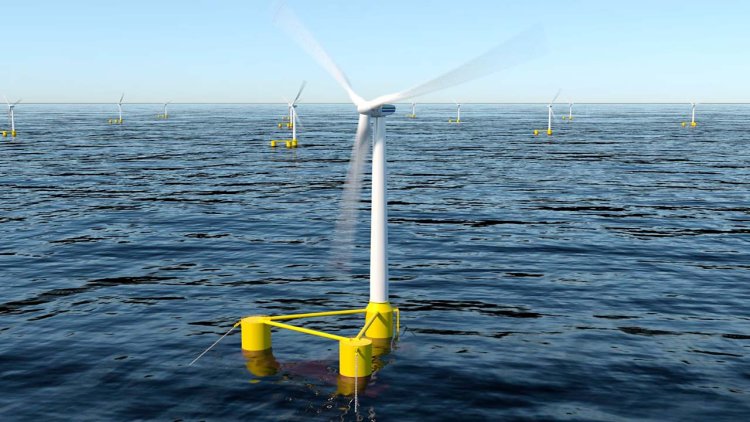
The foundation is designed to carry a 10 MW turbine in the harsh conditions of the North Sea.

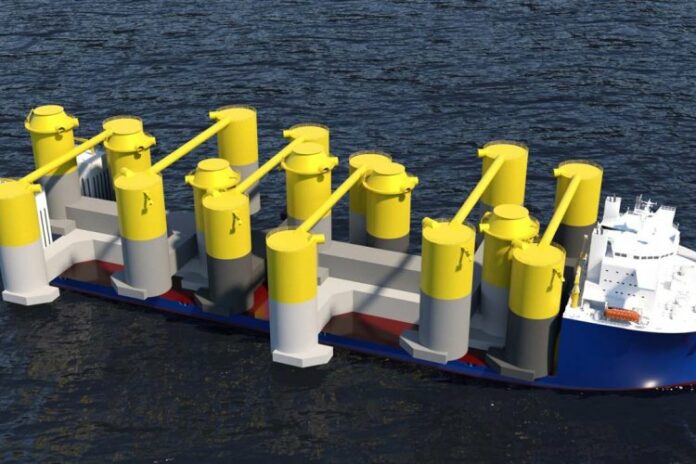
With three columns and T-shaped pontoons to allow transport of multiple T-Floater hulls on a dry tow vessel or alternatively in modules for in-water assembly, the design is intended to operate with a tow-out draft of only eight meters with the turbine installed. This facilitates flexibility in assembly port selection allowing quayside installation of the tower and turbine close to the wind farm.

Greg Lennon, ABS Vice President, Global Offshore Wind, said:

“ABS has supported on delivering more than 80MW of pioneering floating wind turbine projects to the market. It is great to be able to use this experience to support new innovation in the market, such as this novel design from Bassoe Technology. We are committed to supporting the offshore wind supply chain through project designs that support new approaches to improving deployment processes and managing risks such as the T-Floater. From design to construction to operations, our international team strength adds value to projects.”

Joakim Nilsson, Managing Director, Bassoe Technology, said:

“The T-Floater has been designed to meet the demand for industrialization and effective logistic solutions for floating wind. The ability to transport up to six completed 15 MW T-Floaters on a single dry tow vessel will allow for cost-efficient construction and transportation. Together with our parent company, CIMC Raffles, we will have the ability to deliver more than 50 T-Floaters per year but we will also, due to the in-water assembly possibility, be able to work together with local shipyards with limited width of dry-docks/slip-ways to meet local content requirements. Having experience designing oil & gas semi-submersibles to ABS approval, we appreciated the opportunity to expand our cooperation with ABS into floating wind.”

The AIP verifies that the design is feasible for the intended application and, in principle, complies with the applicable requirements of the ABS Guide for Building and Classing Floating Offshore Wind Turbine Installations. When constructed, the units will qualify for the ABS Class notations ✠A1, Offshore Wind Turbine (Floating), (S), Central North Sea, and FL(25). 

Clariant developing next-gen ammonia cracking catalysts

0

Clariant Catalysts is now participating in Germany’s prestigious TransHyDE project AmmoRef, which is tasked to develop process technologies and catalysts for ammonia cracking to facilitate future hydrogen transport, also for large distances. 

With €14 million in funding from the German Federal Ministry of Education and Research (BMBF), AmmoRef is part of the overarching 135-million-euro TransHyDE project, which aims to revolutionize the nation’s hydrogen transport infrastructure in preparation for a sweeping energy transition. TransHyDE is one of three hydrogen flagship projects aiming to prepare Germany’s entry into a hydrogen economy.

Marvin Estenfelder, Head of R&D at Clariant Catalysts, commented:

“We are honored to have joined forces with some of the world’s most talented scientists in supporting Germany’s and the global transformation into a clean hydrogen economy. Clariant has been involved in R&D and cross-industry collaborations in this field for many years, and we have already developed numerous catalysts for use in innovative hydrogen applications. We are confident that together we will make it possible to recover pure hydrogen from ammonia in the scales required for efficient and safe mass transportation of hydrogen.”

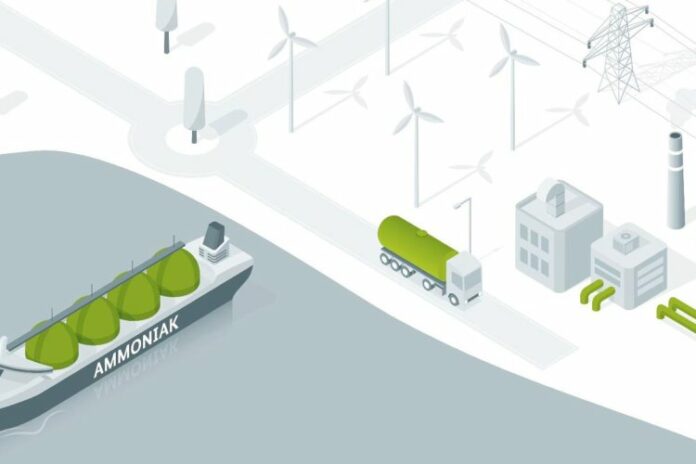
Although green hydrogen is an abundant, versatile, and clean energy source, its high volatility and very low density make it difficult and expensive to transport. An economically viable method is to convert hydrogen to ammonia (NH3) for transportation and then release it at the point of use. The release is achieved by cracking (dissociation) of ammonia into hydrogen. Currently, there are commercial processes and catalysts available, but at relatively high energy costs. AmmoRef aims to develop new catalysts and technologies for ammonia dissociation at lower energy costs and improved efficiency.

Clariant will be collaborating non-exclusively with other prominent partners in academia and industry, amongst others are Prof. Schlögl (Max Planck Institute, Berlin and Mühlheim), Prof. Muhler (Ruhr-University Bochum), Prof. Behrens (University of Kiel), Prof. Lerch (Technical University of Berlin), as well as ThyssenKrupp, and BASF.