3 C
New York
Home Blog Page 27

NYK and Stolt Tankers to build two additional chemical tankers

0

NYK Stolt Tankers, S.A., a joint venture between NYK and Stolt Tankers Limited (“Stolt Tankers”), has signed a contract with Nantong Xiangyu Shipyard in China to build two parcel chemical tankers.

Scheduled for delivery in 2028 and 2029, these vessels will join the chemical tanker pool operated by Stolt Tankers B.V. This order brings the total number of chemical tankers under construction to eight, including the six vessels ordered from the same shipyard in 2024.

The two newly ordered vessels are large chemical tankers with a cargo capacity of 38,000 tons. They will feature stainless steel cargo holds capable of transporting various chemical products and will incorporate energy-saving technologies, such as being equipped to receive shore-side electricity supply during port stays, as part of their commitment to environmental sustainability.

Amid rising demand for renewable energy to achieve a decarbonized society, chemical tankers capable of transporting sustainable aviation fuel (SAF), other renewable fuels, and feedstocks are expected to see steady demand growth. In response, the NYK Group and Stolt Tankers are advancing the renewal and expansion of our chemical tanker fleet. 

PowerCell secures contract to equip world’s first hydrogen-powered bulk carriers

0

PowerCell has secured a contract worth just over SEK 40 million to supply the fuel cell systems for two hydrogen-powered bulk carriers. 

The order includes 14 of PowerCell’s Marine System 225 units, providing over 3 MW of power, with the deliveries scheduled for 2026 – 2027, to be built by GMI Rederi.

Each of the two bulk carrier vessels will be fitted with seven Marine System 225 units, enabling them to operate entirely without emissions by replacing fossil fuels with renewable hydrogen. When launched in 2027, the vessels will be the world’s first hydrogen-powered bulk carriers. Each Marine System 225 unit provides efficient, vibration-free power, enabling operators to adopt hydrogen-electric technology with confidence. Additionally, the unit system has also received Type Approval from Lloyd’s Register.

GMI Rederi is developing the vessels, while the engineering, integration and certification process for the hydrogen system will be handled by eCap Marine, a German ship integrator specialising in green propulsion solutions. PowerCell will also provide engineering support.

Stig Kallestad, Marine Director at PowerCell Group, said: “This project shows just how far the Marine System 225 has come in proving itself as a reliable and competitive solution across shipping segments. Bulk carriers are demanding applications, and the fact that our technology is chosen here demonstrates that hydrogen fuel cells are no longer just pilots, they are real solutions for real operations.”

Torstein Holsvik, CEO at GMI Rederi, commented: “Existing bulk carriers are outdated, and we needed to think completely anew. After careful evaluation of technology maturity, fuel availability, and cost-effectiveness, we chose compressed hydrogen with fuel cells as the most future-ready solution.”

Richard Berkling, CEO of PowerCell Group, added: “We continue to expand the use of our Marine System 225, and with GMI Rederi we are now moving into bulk carriers, a new and important segment in shipping. Regulatory frameworks such as the EU ETS and IMO requirements are pushing the break-even point in favour of hydrogen fuel cells, making them a competitive and future-ready choice for operators. This is not only about two ships; it is about setting a new standard for zero-emission maritime transport.”

PowerCell’s Marine System 225 is a compact fuel cell system delivering 225 kW of clean electric power with zero emissions. Designed for marine environments, it combines high efficiency, low noise, and easy installation while maintaining a small footprint. Scalable to megawatt outputs, the system supports the electrification of various marine applications and is fuel-flexible, capable of operating on reformed renewable fuels for sustainable maritime operations.

With this order, PowerCell further reinforces its position as a leading supplier of fuel cell solutions for hard-to-abate sectors such as marine, aviation, and power generation, delivering tangible projects that accelerate the transition to sustainable energy.

Wärtsilä Lifecycle Agreement will provide support to 14 LNG carriers

0

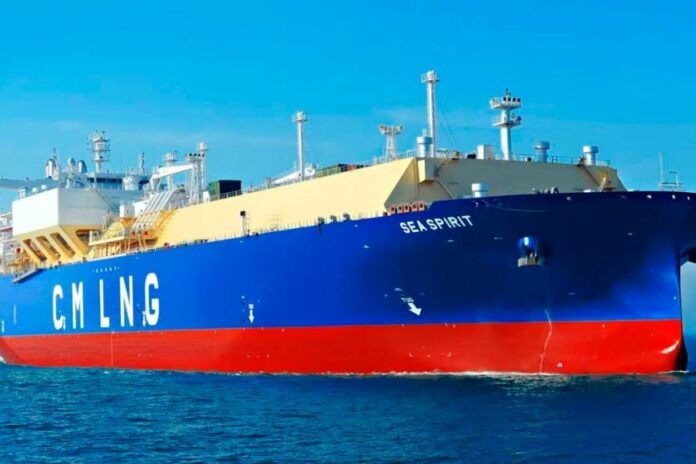
Technology group Wärtsilä has signed a ten-year Lifecycle Agreement with Hong Kong based OPearl LNG Ship Management covering a total of 14 LNG Carrier vessels. The agreement is designed to ensure the vessels’ maximum operational reliability by enabling flexible maintenance scheduling and optimising time between overhauls (TBO). The agreement was booked by Wärtsilä in Q3 2025.   

Global LNG demand is rising, making prompt deliveries essential. Wärtsilä’s support agreement will help OPearl’s LNG Carrier vessels maintain strong operational reliability.

“We currently manage tight delivery schedules and require operations with minimal downtime and reduced maintenance interruptions. This long-term agreement with Wärtsilä is intended to support these operational requirements and assist us in reliably meeting our delivery commitments to our customers,” says General Manager, Captain. Nomura – OPearl LNG Ship Management. “We greatly value Wärtsilä’s commitment to innovation and their forward-thinking approach to maritime solutions, which plays a crucial role in enhancing both efficiency and sustainability across our fleet. Their cutting-edge technologies and expertise are instrumental in helping us navigate the evolving demands of our customers.”

The scope of the agreement includes Wärtsilä’s Dynamic Maintenance Planning solution, which will provide flexible maintenance scheduling and extended maintenance intervals, 24/7 remote operational support, as well as contract management. It also includes Expert Insight, Wärtsilä’s unique predictive maintenance solution that uses real-time vessel data to detect potential issues and assist in optimising operation and maintenance. By leveraging advanced AI capabilities, Expert Insight will enable OPearl LNG Ship Management to identify anomalies early and address emerging issues proactively, thereby reducing the risk of unexpected downtime and ensuring smoother, more reliable journeys. This AI implementation highlights and matches the “Creativity” part of OPearl LNG Ship Management’s 4C policy.

“The maritime industry has grown increasingly complex, requiring advanced technology, real-time data, and analytics to ensure efficient and competitive operations while also staying in line with decarbonisation objectives. Our Lifecycle Agreements are designed with all of these factors in mind and are invaluable to our clients’ operations,” comments Andrea Morgante, Vice President of Performance Services – Wärtsilä Marine.

The 14 vessels covered by this agreement will be delivered between Q3 2025 and Q2 2027. Each ship will operate with two 6-cylinder and two 8-cylinder Wärtsilä 34DF dual-fuel engines. They will also each feature four Wärtsilä Gas Valve Units (GVU). OPearl LNG Ship Management was established in December 2023 as a joint venture by China Merchant LNG, CNOOC and NYK to serve as the ship management arm for all three shareholders.

NYK completes low-carbon methanol bunkering of methanol-fueled bulk carrier

0

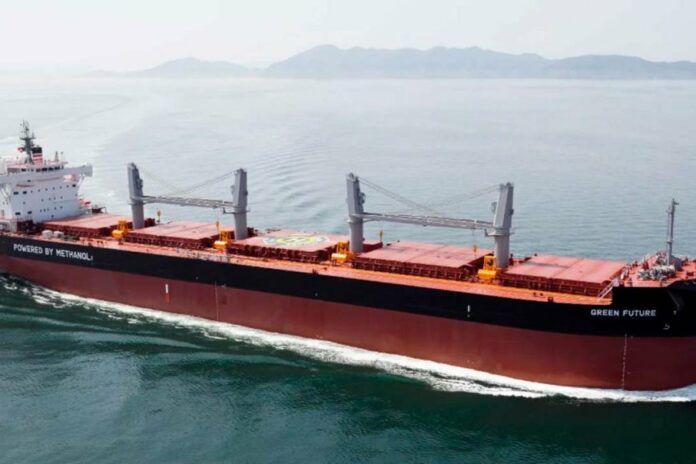
On September 28, Green Future, a methanol dual-fuel bulk carrier chartered from Kambara Kisen Co., Ltd. by NYK Bulk & Projects Carriers Ltd., an NYK Group company, received methanol bunker via ship-to-ship transfer using a bunkering ship to supply the low-carbon methanol fuel at Ulsan Port in South Korea.

The low-carbon methanol supplied this time was produced using a mass balance method, which attributes environmental value to the manufacturing process by utilizing renewable raw materials such as renewable natural gas and green hydrogen. This method significantly contributes to the reduction of greenhouse gas (GHG) emissions. 

Moreover, it has obtained ISCC EU certification, an international standard for sustainability and traceability of biomass and biofuels. This certification guarantees reduced environmental impact and transparency in the supply chain.

MODEC awarded full EPCI scope for Hammerhead FPSO project

0

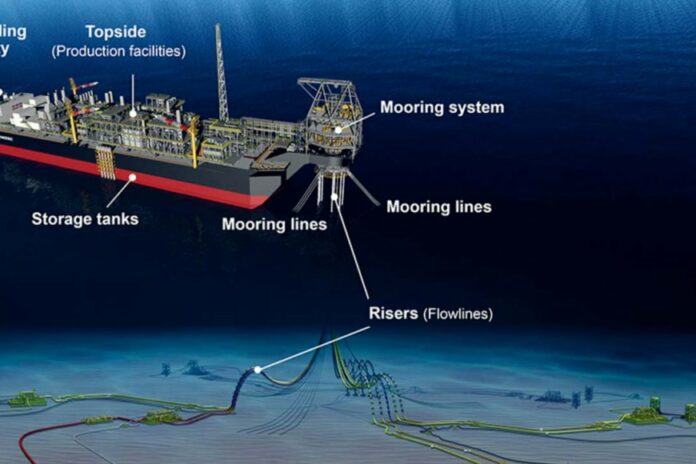
MODEC has been awarded the full Engineering, Procurement, Construction, and Installation (EPCI) scope to develop a Floating Production Storage and Offloading (FPSO) vessel for the Hammerhead Project following a Final Investment Decision (FID) by ExxonMobil Guyana.

In April 2025, MODEC received a Limited Notice to Proceed (LNTP) enabling it to commence FPSO design activities to support the earliest possible startup in 2029, subject to required government approvals. Phase One of the contract, covering Front-End Engineering and Design (FEED), has since been completed and MODEC is advancing Phase Two, EPCI, execution readiness in line with project governance.

“We are honored to be entrusted with the full EPCI scope for Hammerhead. This award reflects MODEC’s integrated capabilities to design, build and operate—from concept and FEED through to safe execution and timely delivery of the project,” said Soichi Ide, Head of Floating Production Solutions Business Unit of MODEC. “Building on the strong progress we’ve made on the Uaru Project, this milestone further underscores the momentum of our collaboration. MODEC’s strategic relationship with ExxonMobil Guyana positions us to work with them and our stakeholders to create lasting value throughout the project lifecycle.”

The Hammerhead FPSO will have the initial annual average production of 150,000 barrels of oil per day (BOPD), along with associated gas and water. It will be moored at a water depth of approximately 1,025 meters using SOFEC’s Spread Mooring System.

The Hammerhead FPSO will be MODEC’s second for use in Guyana, following the Errea Wittu, which is currently being built for ExxonMobil Guyana’s Uaru project. As with the Uaru Project, MODEC will provide ExxonMobil with operations and maintenance services for the FPSO for 10 years from first oil.

DMC contracted to deliver equipment packages for 14 vessels under construction at Indian shipyards

0

Damen Marine Components (DMC) has been contracted to supply rudders, steering gear and nozzles to two major newbuilding projects in India. 

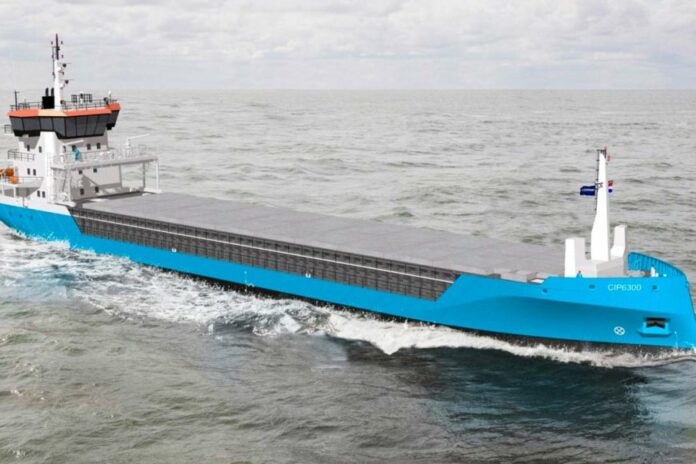
The contracts cover a total of 14 multi-purpose vessels (MPVs), and are constructed at two shipyards: Udupi Cochin Shipyard and Mazagon Dock Shipbuilders. Both end-clients chose for DMC equipment. 

The first project involves eight 6,300 DWT MPVs being built by Udupi Cochin Shipyard (UCSL) for a Scandinavian customer. These vessels mark the very first order placed at DMC by this yard, which is part of Cochin Shipyard Ltd.

The Dutch company will deliver its Piston-type steering gear and Atlantic-type rudders for these ships. The rudders will be tailored to this specific vessel design. All equipment will be built at, and delivered from, DMC’s own factory in China: DMC Jiangyin.

DMC Sales Manager Bogdan Mocanu says:

“We have been active in India for 20 years and growing our footprint with this project for Udupi Cochin Shipyard makes us very proud. It shows our capability to work worldwide, tailoring our in-house designed equipment to the client’s wishes. It’s nice to see that our mutual relationship with Udupi is smooth; there’s good communication and collaboration across the board.” The second project consists of six vessels for Danish shipowner Navi Merchants, built at Mazagon Dock Shipbuilders Ltd. in Mumbai. Again, this project marks a first-time collaboration. The DMC scope includes:

•    Rudder systems (Atlantic-type) and hydraulic steering gear (Piston-type)
•    Propeller nozzles for propulsion efficiency

While the steering gear will come directly from DMC’s head office and production location in the Netherlands, the rudders and nozzles are manufactured at DMC Gdansk in Poland.

DMC Sales Manager Bogdan Mocanu says:

“We’re proud to be part of these newbuilds and grateful for the trust that Navi Merchants has given us. The same goes for our first-time client Mazagon Dock Shipbuilders. This high-tech shipyard is well-known for its naval vessels – destroyers, frigates, submarines. Hence, when building commercial vessels, you know one thing for sure: this will be a demanding project to the highest standards. Personally I see this contract as a milestone for DMC in the Indian maritime market.”

All components will be manufactured to meet the latest class standards and are scheduled for phased delivery starting later this year.

BV supports COSCO CHI (Shanghai) in China’s first ship-to-ship methanol bunkering

0

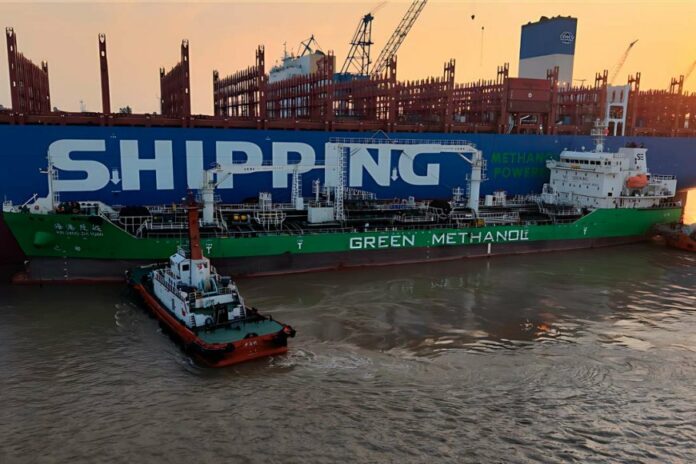
COSCO Shipping Heavy Industry (Shanghai) (CHI Shanghai) has successfully completed China’s first ship-to-ship methanol bunkering operation by a shipbuilding and repair enterprise at a shipyard’s berth, marking a major milestone in the nation’s adoption of alternative marine fuels.

The operation took place at CHI Shanghai’s shipyard terminal, where the COSCO Shipping Libra safely bunkered 2,100 tons of methanol fuel within 10 hours. Bureau Veritas Solutions Marine & Offshore (BVS), a technical advisory arm of Bureau Veritas Marine & Offshore (BV), provided expert risk assessment and technical support, ensuring the safe and efficient execution of the project.

The successful bunkering provides a replicable model for future methanol dual-fuel conversions and supply projects while showcasing CHI Shanghai’s ability to deliver end-to-end solutions across repair, conversion, and bunkering. This capability further accelerates the shift from conventional fuels to greener alternatives.

In preparation for the operation, CHI Shanghai worked closely with multiple stakeholders. Technical reviews were held to verify the feasibility, safety, and compliance for bunkering 20,000 TEU dual-fuel container ships. The shipyard also organized methanol-specific training programs, tabletop emergency exercises, and safety management initiatives to ensure robust risk controls were applied across the process and surrounding environment.

Throughout the project, BVS provided support by conducting comprehensive HAZID (Hazard Identification) and HAZOP (Hazard and Operability Study) risk assessments across five key stages: truck-to-ship inerting, bunkering vessel berthing, ship-to-ship transfer, post-bunkering purging, and vessel departure. These measures established a strong and reliable safety framework for the operation.

Matthieu de Tugny, Executive Vice President, Industrials and Commodities at Bureau Veritas, said, “By working closely with COSCO Shipping Heavy Industry (Shanghai), we have shown how collaboration, preparation, and rigorous risk management can make methanol bunkering both safe and practical. This operation sets a new benchmark for China’s alternative fuel adoption, and Bureau Veritas is committed to supporting the industry as it accelerates its transition to cleaner energy.”

Japan offshore wind players want inclusion in government’s fixed-revenue scheme

0

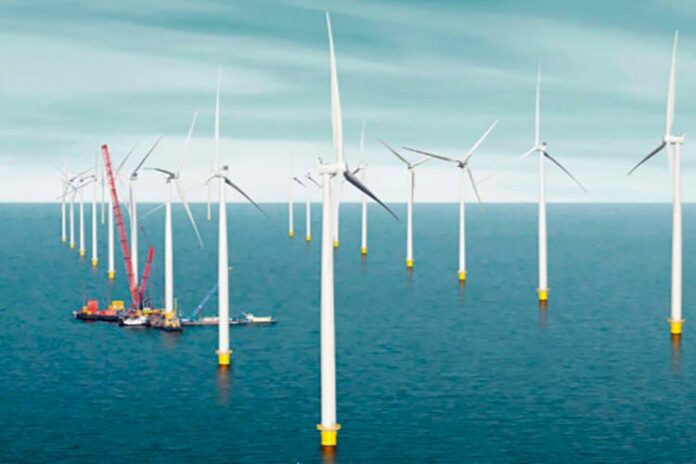
Developers of offshore wind projects in Japan are seeking to be included in a scheme that could guarantee fixed revenue for up to 20 years – a move that comes after Mitsubishi-led groups walked away from three projects due to soaring costs.

Japan’s long-term decarbonised capacity auction (LTDA) scheme currently allows bidding by operators of nuclear and gas power plants, hydropower and battery storage projects, as well as solar and onshore wind projects, but not offshore wind projects.

Yuichi Furukawa, wind energy policy director at Japan’s industry ministry, said offshore wind farm operators have made such requests but added that it could not say whether those requests will be taken into consideration.

Participation in LTDA “would be a life vest for the industry,” said an industry source involved in offshore wind policy discussions who declined to be identified.

Since the Mitsubishi-led (8058.T), opens new tab consortia in August dropped out from projects won in the country’s first large-scale state auctions in 2021, there has been much consternation about the fate of other projects in the works.

Other groups have won two subsequent auction rounds and those projects are slated to be launched between 2028 and 2030 with a combined capacity of nearly 3 gigawatts. The groups include Japanese companies JERA and Mitsui, as well as foreign firms such as Germany’s RWE, Spain’s Iberdrola, and BP.

The four groups that won the second round of state auctions for offshore wind projects are due to pay a final bond to the government, confirming they are proceeding with the development, in the next few months.

The government has promised to analyse the factors behind Mitsubishi’s decision and adjust regulations to ensure the sector’s development.

Even before Mitsubishi walked away, the government had sought to ease rules for the industry. Those changes include allowing changes in suppliers, including for turbines, and allowing offshore wind farms to operate beyond an original timeframe of 30 years.

Furukawa said the industry ministry aims to establish a framework by the end of this year to help companies make future operational decisions.

The government aims to have 45 GW of offshore wind capacity by 2040, which is seen as essential to cutting the country’s dependence on imported coal and gas for power generation, reducing its carbon emissions and bolstering national security.

“If the government takes the opportunity to reassess what went wrong, looking to and learning from other countries… the long-term (project) pipeline can remain robust,” said Hui Min Foong, a senior analyst at Westwood Global Energy Group.

“This is especially true looking further ahead 10 to 15 years from now, where Japan is well positioned to leverage its vast floating wind potential, reinforced by recent policy momentum.”

Source: Reuters

Stena Line signs landmark 50-year agreement with the Municipality of Frederikshavn

0

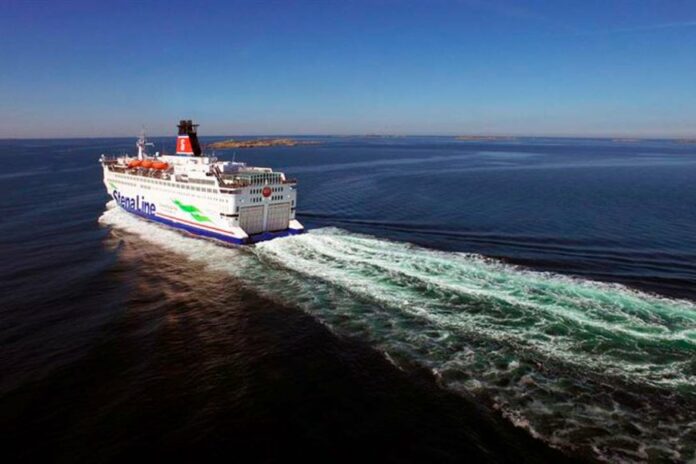
Stena Line has entered into a 50-year agreement with the Municipality of Frederikshavn to operate the ferry port in Frederikshavn Harbor. The partnership between Stena Line and Frederikshavn dates back to the early 1960s. 

“Through an excellent dialogue with the Municipality and Port of Frederikshavn, we are continuing to build on our historically strong relationship to create a stable and prosperous future together. This long-term commitment enables us to establish infrastructure that supports sustainable trade, growth and resilience,” says Carl-Johan Hellner, COO Ports & Terminals and Head of Group Strategy at Stena Line.

Mayor Karsten Thomsen of Frederikshavn adds:

“I am delighted that we have reached a 50-year agreement with Stena Line. This creates security and long-term opportunities not only for the port, but for the entire city of Frederikshavn. It sends a strong signal of trust and shared ambitions.”

The new agreement expands Stena Line’s operating rights within the ferry port and establishes the company as the negotiating partner for other external customers requiring port services.

This development aligns with Stena Line’s broader strategic investments. In the coming years, the company’s terminals for routes to Denmark and Germany will be relocated from central Gothenburg to the Arendal Port. The 50-year commitment in Frederikshavn mirrors this forward-looking investment.

“Our relocation to Arendal is a major step towards the future of passenger travel and freight operations. A long-term agreement in Frederikshavn is an equally important cornerstone for that journey. I am very pleased that the Municipality of Frederikshavn shares our long-term vision and that together we are creating the conditions for continued trade, tourism, and resilience,” says Niclas Mårtensson, CEO of Stena Line.

Stena Line currently operates the Gothenburg–Frederikshavn route with two vessels, Stena Danica and Stena Jutlandica, offering three to four daily departures in each direction.

Alabama Port Authority selects Konecranes RTGs to establish efficiency at new terminal

0

The order was booked in Q3 2025 and delivery is scheduled for Q4 2026.

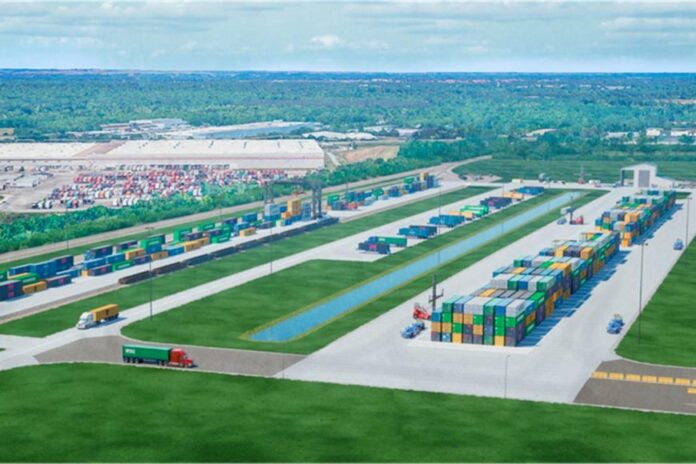
Container volumes at Alabama’s Port of Mobile grew from approximately 502,000 TEUs in 2021 to more than 563,000 TEUs in 2023. With more growth expected, the Alabama Port Authority is now developing the Montgomery Intermodal Container Transfer Facility (ICTF). The two new Konecranes RTGs will provide the backbone for container handling at the ICTF, supporting efficient transfers to rail and truck transportation.

In addition to Active Load Control, which prevents container sway, the RTGs will have a range of Konecranes Smart Features that make operations safer, faster and automation ready. Auto-steering, Auto-positioning and Auto-TOS Reporting work together to ensure efficient operation and accurate container placement, seamlessly integrated with the terminal operating system (TOS). Stack Collision Prevention and Auto Path Optimizing enhance safety and yard efficiency, while Auto-Truck Guiding directs road trucks accurately for container pick-up and drop-off.

This is the Alabama Port Authority’s first investment in Konecranes RTGs, extending a relationship that began in 2001 with the delivery of a Konecranes Gottwald Mobile Harbor Crane. That crane is still in operation, handling containers and breakbulk cargo.

“We’ve seen how durable and dependable Konecranes technology is in our daily operations. This track record gave us the confidence to expand the relationship with these RTGs. The new cranes will set the standard for efficiency and handling capacity as we launch the intermodal terminal and scale up operations,” says Doug Otto, Interim Director and CEO of the Alabama Port Authority.

“The agreement shows that when performance and reliability are critical – customers turn to Konecranes. We’re proud to support the Alabama Port Authority in this ambitious greenfield project,” says Alan Garcia, Director Regional Sales Americas, Konecranes, Port Solutions.