3 C
New York
Home Blog Page 28

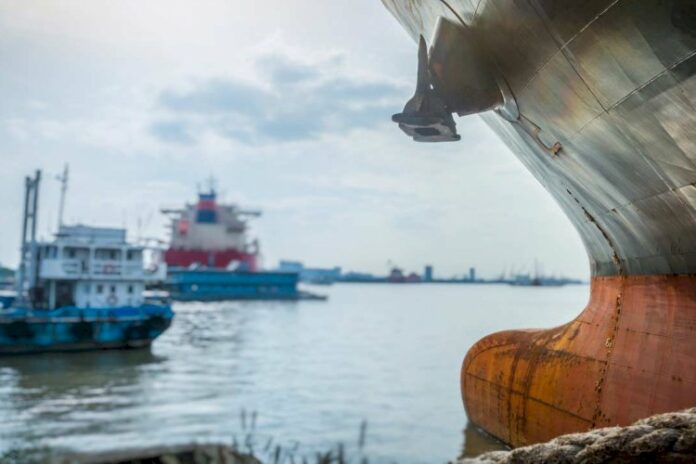
NYK and Neptune sign MoU to drive decarbonisation in the maritime industry through hull cleaning

0

NYK has worked with Neptune since 2022, making it one of the earliest adopters of Neptune’s robotic hull cleaning. From earlier deployments, Neptune’s robots delivered up to 10x fuel savings compared to cleaning costs, with significant reductions in fuel use and emissions.

The expanded partnership will now scale robotic cleaning across NYK’s global fleet, expected to generate even greater fuel savings and carbon reductions each year in the second deployment phase. As part of this push, NYK also joined Neptune’s US$52 million Series B funding round led by Granite Asia, aligning incentives to scale deployment globally.

This collaboration also supports Neptune’s further expansion into global markets, opening access to a wider customer base and port ecosystem including Japan.

“We are impressed by Neptune Robotics’ highly efficient hull cleaning technology which maximizes protection to hull coatings and contributes to fuel savings and GHG emissions reduction, as well as compliance with environmental regulation Through this partnership, we aim to create future business opportunities by combining our strengths. We hope to contribute to decarbonization not only across our fleet but also within the broader shipping sector,” said Hidehiko Sato, General Manager of Ship Business Group, NYK.

“NYK has been one of the earliest and most forward-looking adopters of robotic hull cleaning,” said Elizabeth Chan, CEO of Neptune Robotics. “Their leadership has allowed us to demonstrate how automation can deliver real ROI and emissions reductions at scale. Together, we are proving robotics is a practical, scalable pathway to decarbonisation.”

Unlike diver-based or conventional ROV methods, Neptune’s AI-powered robots clean a full draft Capesize vessel 3-5 times faster, automatically, safely, above and below water, and even in currents up to 4 knots, triple the counter-current capability of human divers. Their robots operate day and night in clear and murky waters, while protecting hull coatings — a process endorsed by leading global paint manufacturers.
New technology increases gas recovery on Åsgard

0

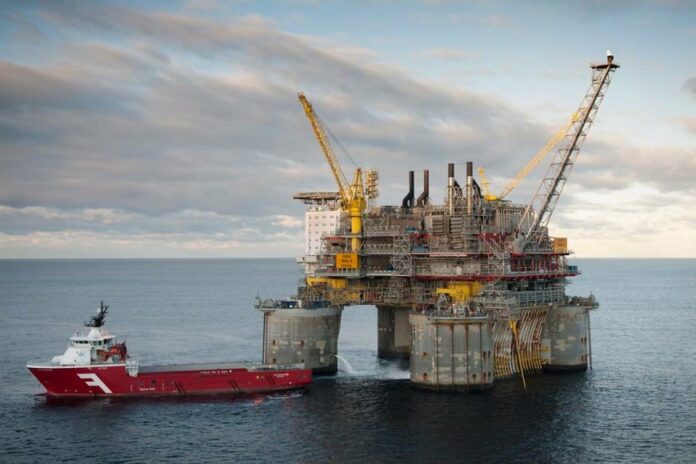
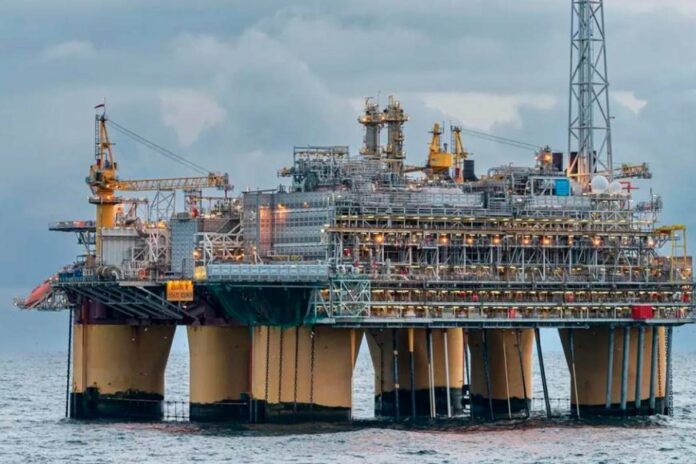
The project will help maintain production from the field by increasing the pressure in the pipelines between the wells and the Åsgard B platform.

“In this project, Equinor, together with partners and suppliers, has further developed and qualified the next generation of compressor modules. The technology allows us to recover more gas from producing fields. Good resource utilisation is important to maintain high and stable production from the Norwegian continental shelf,” says Trond Bokn, Equinor’s senior vice president for project development.

The first plan for development and operation (PDO) of Åsgard was approved in 1996. The field came on stream with Åsgard A in 1999 and Åsgard B in 2000. In 2012, the PDO for Åsgard subsea compression was approved by the authorities, and the first phase of Åsgard subsea compression came on stream in 2015.

This was the world’s first facility for gas compression on the seabed and the result of extensive technological development.

The plans described that there would be a need for increased pressure in the long term to compensate for the pressure drop in the reservoirs. The first compressor module in phase two was replaced in 2023, now the second and final module has been installed, at a depth of 270 meters.

“The compressor system has produced stably for ten years with almost 100% uptime. The system has so far contributed to increased value creation from the field of about NOK 175 billion,” says Randi Hugdahl, vice president for Exploration and Production for Åsgard and Kristin.

Combined for both phases, the recovery rate from the Mikkel and Midgard fields will increase to 90% due to the compressor plant.This amounts to an additional 306 million barrels of oil equivalent from the fields.

Licensees Åsgard: Equinor Energy AS (operatør) 35,01%, Petoro AS 34,53%, Vår Energi ASA 22,65% og TotalEnergies EP Norge AS 7,81%.

Licensees Mikkel: Equinor Energy AS (operatør) 43,97%, Vår Energi ASA 48,38% og Repsol Norge AS 7,65%.

Saipem receives authorization to proceed with the execution of Hammerhead offshore project

0

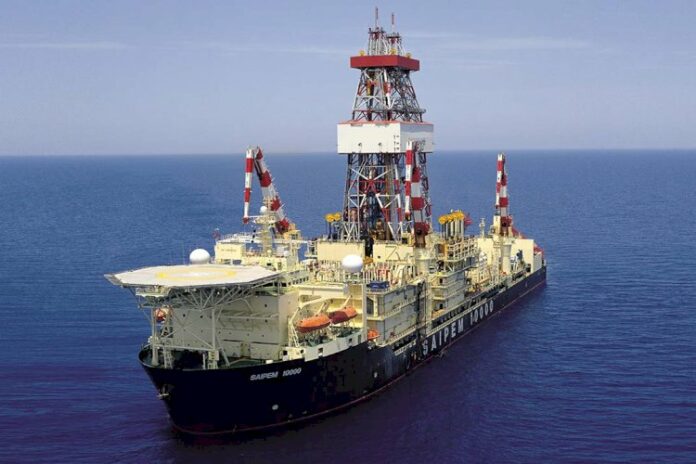
Saipem has received by ExxonMobil Guyana Limited the authorization to proceed with the execution of the activities provided for the engineering, procurement, construction and installation (EPCI) offshore contract for the development project of the Hammerhead oil field, located in the Stabroek block off Guyana at a depth of approximately 1,000 meters. The contract value is approximately 500 million USD.

On April 2, 2025, Saipem had already announced the receipt of the Limited Notice To Proceed (LNTP), by virtue of which Saipem had started some initial activities, namely detailed engineering and the procurement of long-lead equipment. Following the receipt of the necessary government and regulatory approvals, as well as of the final investment decision by the client and its co-venturers of the Stabroek block, Saipem has received authorization to continue the execution of the contractual activities with the offshore campaign currently planned to begin during 2028.

Saipem’s scope of work includes the engineering, procurement, construction and installation of subsea, umbilical, riser and flowline (SURF) structures for the production facility and the gas export system related to the Hammerhead oilfield development project located about 200 km from the Guyanese shore.

Saipem will carry out the operations using a variety of construction and support equipment, including the Saipem FDS2 and the Shen Da, which is part of the Saipem fleet as a chartered vessel. The logistics will be entirely executed and managed in Guyana through the Vreed-en-Hoop Shorebase Inc. (VEHSI) yard, generating employment and opportunities for the Guyanese people.

With the Hammerhead project, Saipem confirms its commitment to Guyana, strengthening its presence and relationship with a strategic client. Previously, the Company was awarded by ExxonMobil Guyana 6 additional contracts for projects in the same region: Liza Phase 1 and Phase 2, Payara, Yellowtail, UARU and Whiptail.

Fincantieri delivers Star Princess in Monfalcone

0

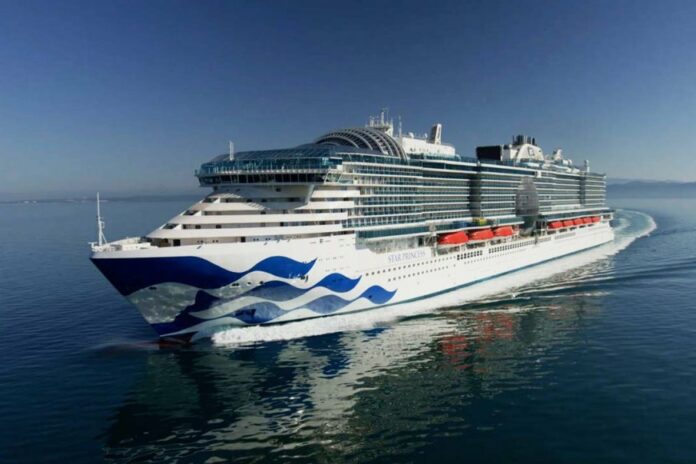
The ceremony was attended by Gus Antorcha, President of Princess Cruises, Mauro Bordin, President of the Regional Council of Friuli Venezia Giulia, Ester Fedullo, Prefect of the Province of Gorizia, Luca Fasan, Mayor of the Municipality of Monfalcone, Pierroberto Folgiero, CEO of Fincantieri, Biagio Mazzotta, President of Fincantieri, Luigi Matarazzo, General Manager of the Fincantieri Merchant Ships Division, Cristiano Bazzara, Director of the Fincantieri shipyard in Monfalcone.

With a gross tonnage of approximately 178,000, Star Princess – sister ship to Sun Princess, delivered in 2024 by the Monfalcone yard – is the second largest vessel ever constructed in Italy and the second LNG-powered cruise ship that Fincantieri has built for this shipowner. It is also the second dual-fuel vessel, primarily powered by liquefied natural gas, to officially join the Princess fleet. LNG is the best readily available, proven and commercially scalable fuel for the maritime industry today that significantly reduces direct greenhouse gases and other atmospheric emissions and particulate matter.

The new vessel will accommodate approximately 4,300 people and is based on a next-generation platform which features several new systems designed to enhance the energy efficiency of the ship.

Pierroberto Folgiero, Chief Executive Officer and General Manager of Fincantieri, stated:
“Star Princess is a symbol of our ability to shape the future of the cruise industry, combining tradition and innovation. With this vessel we confirm Fincantieri’s leadership in building a new generation of sustainable and highly technological ships, strengthening the competitiveness of the Italian industry worldwide. The Monfalcone shipyard, a true global benchmark, represents the highest expression of our expertise and craftsmanship: here we build ships that carry Italy’s name across the world and consolidate our Country’s role as a global leader in shipbuilding.”

The Monfalcone shipyard is Fincantieri’s largest production site dedicated to the construction of cruise ships. Since 1990, it has delivered more than 40 vessels, and in the coming years it will play a leading role in new record deliveries. With the contribution of thousands of workers and a supply chain that generates more than 23,000 jobs across the Region, the shipyard confirms itself as a strategic asset for industrial development, combining manufacturing tradition, technological innovation, and continuous collaboration with universities and research centers.

Green light for export via gas pipeline from Troll B

0

A new gas export solution will facilitate increased gas export from Troll B, as gas injection is no longer needed here. It also provides additional flexibility as the gas can be exported via both the Troll A and Kvitebjørn gas pipelines.

The consent applies to start-up of gas export from the Troll B platform to the Kvitebjørn gas line to Kollsnes. The expected start date is in the fourth quarter of 2025.

«The new gas export solution with tie-in to the Kvitebjørn gas pipeline will contribute to reducing the decline in gas production in the coming years,» says Niels Erik Hald, assistant director Offshore South  in the Norwegian Offshore Directorate.  

«The Norwegian Offshore Directorate is very pleased that the previous gas injection solution for improved oil recovery will be re-used. The fact that it’s being converted into a gas export solution will contribute to further value creation,» he adds.

The Troll field is located at a water depth of 300-330 metres, 60 kilometres southwest of Sognefjorden in the North Sea. The field has two primary structures: Troll East and Troll West. The gas from Troll B (Troll East) was previously exported via the Troll A facility to Kollsnes, and some of the gas was injected.

The gas injection solution has now been converted into an export solution and tied into the Kvitebjørn gas pipeline located about 2.45 kilometres away. This entails that Troll B will have the flexibility going forward to export via both the Troll A and Kvitebjørn gas pipelines.

Investments to establish the new gas export solution total around NOK 1.16 billion.

Prysmian secures €460m contract for Italy–Tunisia subsea power link

0

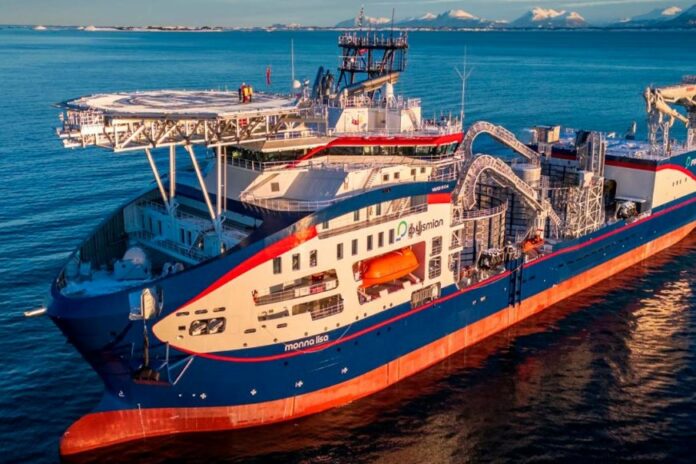
Prysmian has been awarded the tender launched by Terna S.p.A., the Italian transmission system operator, and STEG, the Tunisian electricity grid operator, for the construction of the submarine power interconnection between Italy and Tunisia under the Elmed Project. 

The contract, which initially provides for a preliminary activation phase, is subject to certain conditions. Once these are met, the contract could reach a value of around €460 million.

The power line will run between the Partanna electrical substation in Sicily and the Mlaabi substation on the Tunisian Cap Bon peninsula, reaching a maximum water depth of around 800 meters along the Strait of Sicily. 

Raul Gil, EVP Transmission BU, Prysmian, said:

“This is a major project for Italy, Tunisia, Europe and Africa, and being chosen is testament to our experience in handling big challenges and finding smart solutions. The interconnector will benefit both countries and support the global shift toward cleaner energy.” 

Prysmian has already secured several submarine connection projects with Terna, such as the Tyrrhenian Link – which set the world record by installing a High Voltage Direct Current (HVDC) subsea cable at an unprecedented depth of 2,150 meters during sea trails, the deepest ever for a power cable, as well as the Adriatic Link, the submarine cable connection between Marche and Abruzzo, and the SA.CO.I.3 HVDC project that will connect Sardinia, Corsica, and Italy.

Unified command completes salvage operations for Pier G container incident

0

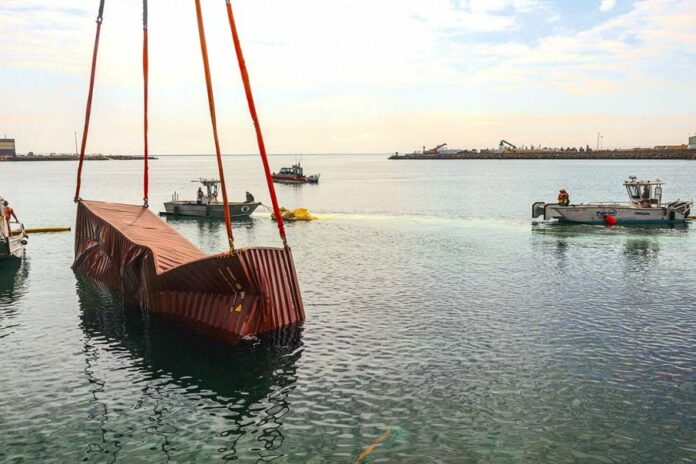
Early counts for the number of containers overboard increased from the original estimate as some units were crushed, submerged, or hidden from view in the nearby boat basin.

At approximately 3:28 p.m., the final container was lifted from the water, marking the end of salvage operations for the incident.

“Every decision during the Pier G Container Incident was centered on safety — whether it was divers working to recover containers in the basin or around the hull, evaluating vessel transits through the safety zone, or crews conducting container operations day and night,” said Coast Guard Capt. Stacey Crecy, Coast Guard incident commander. “By bringing in experts from across the country and working closely with the Port of Long Beach and our partners, we completed a complex salvage operation and restored safe operations within a few weeks.”

Recent response actions include:

  • Deploying side-scan sonar and remotely operated vehicles to locate submerged containers.
  • Using dive teams to inspect the bottom of the cargo vessel Mississippi and assist in recovering containers around the vessel.
  • Repositioning the vessel was a tug, pilot vessels and line handlers to access containers trapped beneath the bottom of the vessel.
  • Reducing a 500-yard safety zone to a 100-yard safety zone as operations moved forward, and maintaining hourly Safety Marine Information Broadcasts to keep mariners informed.

All vessel traffic restrictions were lifted following the completion of the dive operations on Sept. 26, 2025, and vessel transits near Pier G no longer require Captain of the Port approval. A total of 142 vessel transits were authorized during the salvage operations phase of the response, ensuring continued operations in the busy Port complex.

The Pollution Response, Salvage, and Marine Transportation System Recovery groups have since been demobilized. Pier G terminal operations have been fully restored, and port traffic is now continuing without restrictions.

“This was an extremely rare event that required a complex and unique salvage operation,” said Michael Goldschmidt, Port of Long Beach incident commander for the Pier G Container Incident response. “We are grateful to the Coast Guard, vessel managers, salvage teams and the highly skilled ILWU workers for expediting a safe and speedy return to normal operations.”

The U.S. Coast Guard and National Transportation Safety Board continue to lead the investigation into the cause of the incident.

Exail achieves world first with 1,100-nautical-mile autonomous USV transit across Gibraltar Strait

0

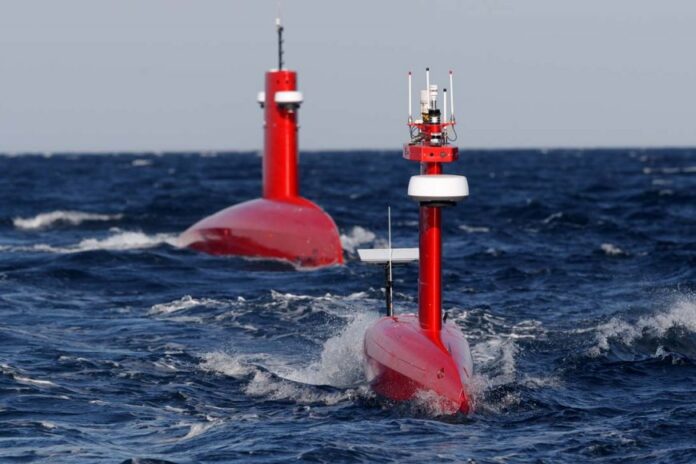
Exail has achieved a major milestone in maritime autonomy with its DriX O-16 transoceanic uncrewed surface vehicle (USV). 

The 16-meter platform has just completed an unprecedented 1,100-nautical-mile (2,000 km) transit from La Ciotat – France, to Troia – Portugal, to join NATO’s REPMUS 2025 exercise.

Sailing past the Balearic Islands and through the Strait of Gibraltar, one of the world’s busiest maritime passages, the DriX O-16 completed the voyage in six days without port calls. Operated in supervised autonomy from Exail’s Remote Operation Center (ROC) in La Ciotat, the mission demonstrated endurance, situational awareness, and reliable decision-making in dense traffic.

This long-range deployment confirms the robustness, safety, and operational readiness of Exail’s surface drone technology. More than a symbolic crossing, it provides concrete proof that large USVs can be remotely supervised across open waters and constrained sea lanes, arriving fully mission-capable in theater without heavy logistical support. During the transit, the DriX O-16 also conducted seabed mapping operations with a Kongsberg EM304 multibeam echosounder, further demonstrating its capacity to deliver valuable data while underway.

“With this unprecedented long-range transit, Exail’s DriX O-16 shows that large USVs are now an operational reality,” said Sébastien Grall, Head of Maritime Autonomy Solutions at Exail. “As the first uncrewed platform to successfully execute such a mission, it sets a new benchmark in surface autonomy—safe, reliable, and mission-ready.”

BOTAŞ and Woodside sign landmark long-term LNG HOA

0

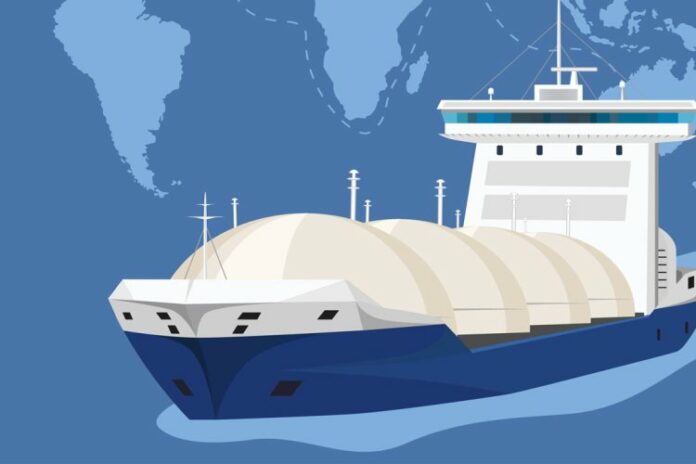
Türkiye’s Boru Hatları ile Petrol Taşıma A.Ş. (BOTAŞ) and Woodside have signed an LNG Heads of Agreement under which Woodside will supply BOTAŞ a total of approximately 5.8 billion cubic meters natural gas equivalent of LNG for up to nine years starting from 2030, primarily from the Louisiana LNG project.

The agreement was exchanged between Abdulvahit Fidan, BOTAŞ Chairman and General Manager, and Daniel Kalms, Woodside’s Chief Operating Officer International, in a ceremony witnessed by Alparslan Bayraktar, the Republic of Türkiye’s Minister of Energy and Natural Resources, during his visit to the US for the 80th Session of United Nations General Assembly.

Speaking in the ceremony, Minister Bayraktar stated: “We are observing the signing of an agreement between a Turkish company and Woodside for the supply of LNG, primarily from Louisiana LNG in the United States, which establishes a connection across continents. We believe this will be the beginning of a successful relationship between BOTAŞ and Woodside. The companies have already expressed their intention to expand the relationship beyond a proposed LNG sales agreement and build a strategic cooperation in the wider region, and we fully support this vision.”

Daniel Kalms welcomed the HOA. 

“This is a landmark Heads of Agreement between Woodside and BOTAS as it is the inaugural long-term LNG supply arrangement between our companies. More importantly, it stands as a testament to BOTAS’s confidence in the Louisiana LNG project, the US LNG sector and Woodside’s reputation for reliability and operational excellence. This agreement also strengthens the Turkish-US relationship and paves the way for building a larger strategic relationship with BOTAS that supports energy security and economic growth for Türkiye and the United States. Woodside appreciates the strong support from the Turkish and United States governments to help advance this agreement,” he said.

The supply arrangement is subject to the parties entering a binding sales and purchase agreement. 

Van Oord, FRDP to dredge Fraser River navigation channel

0

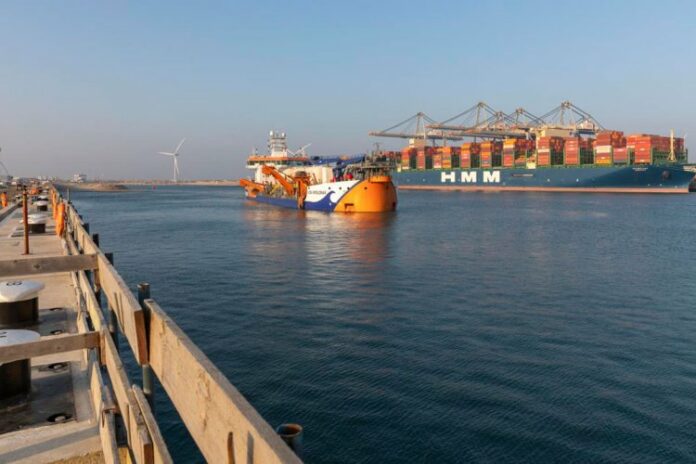
Van Oord and Fraser River Pile and Dredge (FRPD) announce that their newly formed partnership, RiverFlow Dredging (RiverFlow), has entered into a long-term agreement with the Vancouver Fraser Port Authority to provide maintenance dredging services for the Fraser River navigation channel. 

The Fraser River is a critical transport artery for local and national supply chains in Canada. RiverFlow’s scope of work encompasses annual maintenance dredging of the Fraser River South Arm deep-sea channel, including the berths and approaches to the DP World Fraser Surrey marine terminal. Approximately 3.0 to 4.5 million cubic metres of sediment will be dredged annually to keep the river navigable for deep-sea vessels.

August Runge, Director Dredging & Infra, Van Oord, said: 

‘This partnership marks a significant step in strengthening Van Oord’s presence in Canada. Together with FRPD, we are combining over a century of dredging expertise to ensure safe and efficient access to one of Canada’s most vital waterways.’

RiverFlow is committed to an inclusive and environmentally responsible dredging programme that respects and considers all of the communities that depend on the health of the Fraser River and its surroundings, including indigenous groups, recreational users, and residents. The works will also be carried out in an environmentally conscious manner, incorporating best management practices for dredging operations. For example, the equipment used for dredging will be powered by biofuels to help reduce carbon emission intensity, and dredging activities will adhere strictly to marine mammal protection zones and non-dredging windows to safeguard the environment. 

Sean Baxter, Director, Marine Operations and Harbour Master, Vancouver Fraser Port Authority: 

‘Ensuring cargo moves safely and efficiently to and from Port of Vancouver terminals is essential for Canadian goods and commodities to reach international markets, and for Canada to access critical imports. With over $100 billion worth of international trade flowing through the Fraser River annually, maintenance dredging is integral to safe marine operations along this vital trade corridor for the port, British Columbia, and Canada. The port authority is pleased to partner with RiverFlow for the delivery of annual maintenance dredging activities on the Fraser River, beginning in 2026. Our long-standing relationship with FRPD – now forming the joint venture RiverFlow – will ensure this work continues to be carried out safely, efficiently, and with respect for the environment, and local First Nations and communities, over the coming years.’  

Sarah Clark, President and Chief Executive Officer, FRPD: 

‘Working in partnership with the Vancouver Fraser Port Authority and with Van Oord through RiverFlow, FRPD is thrilled to continue its role in ensuring the Fraser River is well-maintained to enable our supply chain and in support of all river users. Combining our local knowledge and dredging expertise with Van Oord’s international dredging expertise will ensure that the river is maintained to the high standard required for the efficient flow of cargo.’