3 C
New York
Home Blog Page 26

Petrobras begins contracting for the construction of FPSO Búzios 12

0

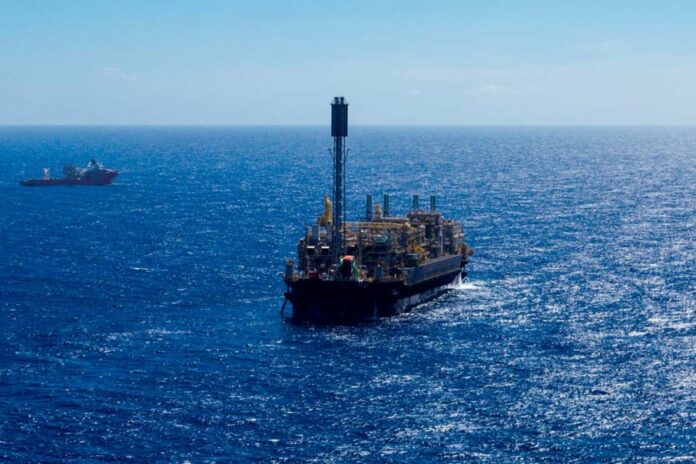
Petrobras has begun the contracting process for the construction of FPSO Búzios 12, which will be installed in the Santos Basin, in the state of Rio de Janeiro. 

The new unit, P-91, will be the 12th platform assigned to the Búzios field, consolidating it as the company’s largest producing field and increasing its importance in supplying natural gas in the country.

Búzios 12 will operate as a hub for exporting gas produced in Búzios. In addition to having systems to process and separate its own production, the unit will also be able to export gas produced in other platforms in the field that were not originally designed for gas export.

With this solution, Petrobras ensures the utilization of Búzios gas and the expansion of natural gas supply to the Brazilian market. The transported gas will be directed to the Boaventura Energy Complex, in Itaboraí (RJ), through the Rota 3 pipeline until it reaches the coast.

The P-91 will be interconnected to 16 wells, consisting of 8 producers and 8 alternating water and gas injectors, with a capacity to produce 180,000 barrels of oil per day and 12 million m³/day of natural gas. The development of Búzios 12 aims to expand the reservoir’s production, adding economic value to the field, in partnership with CNPC (China National Petroleum Corporation, 3.67%) and CNOOC (China National Offshore Oil Corp, 7.34%), with Petrobras as the operator (88.99%).

Búzios is already on track to surpass Tupi as the company’s largest producing field, and the new unit reinforces this growth trajectory.

“Starting the contracting process for Búzios 12 on Petrobras’ anniversary is symbolic: it demonstrates the strength of our capacity for innovation and the work of generations of professionals committed to the country. This new unit expands the supply of natural gas to the Brazilian market, ensuring safe, competitive energy that is indispensable for a just energy transition. The P-91 is already being designed with solutions to increase gas supply to the market, reduce emissions, and improve energy efficiency, reflecting Petrobras’ mission: to generate wealth for Brazilian society with responsibility and sustainability,” said the company’s president, Magda Chambriard.

For this contracting process, Petrobras is adopting the BOT (Build-Operate-Transfer) model, in which the contracted company is responsible for the design, construction, assembly, and operation of the asset for an initial period defined in the contract. Later, the operation will be transferred to Petrobras.

Companies interested in participating in the Búzios 12 contracting process will have 180 days, starting from the publication of the Request for Proposal (RFP), to submit their proposals. The RFP establishes a minimum local content requirement of 25%.
DOF Group wins over $60m in new contracts in North America

0

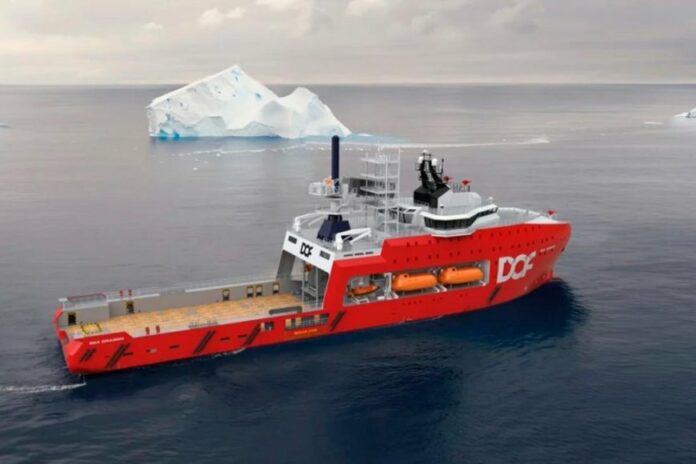
The awards will utilise vessels already in the region, securing more than 300 days of firm vessel utilisation for a combined contract value of more than USD 60 million, with further options available.

Skandi Skansen will be utilised for a mooring project in Guyana with expected commencement in October 2025 and an expected duration of approximately six weeks with further options.

Skandi Implementer has secured two jobs in Mexico with international oil companies for subsea cable repair and subsea installation services with execution during Q4 2025 and expected combined duration of more than two months.

Furthermore, the third-party vessel Cade Candies will be used to provide Walk to Work services off the East Coast of the USA with expected commencement in Q2 2026 and duration of approximately eight months with further options.

Mons Aase, DOF Group ASA CEO, said: “I am very happy to seethe strong momentum in the North America region continue with these project awards, securing utilisation for project vessels in the region. I am especially pleased that Skandi Implementer has been working non-stop in the region after we terminated her original long-term contract in Mexico in early 2025.”

DEME secures sizable contract for Nordseecluster B wind farm in Germany

0

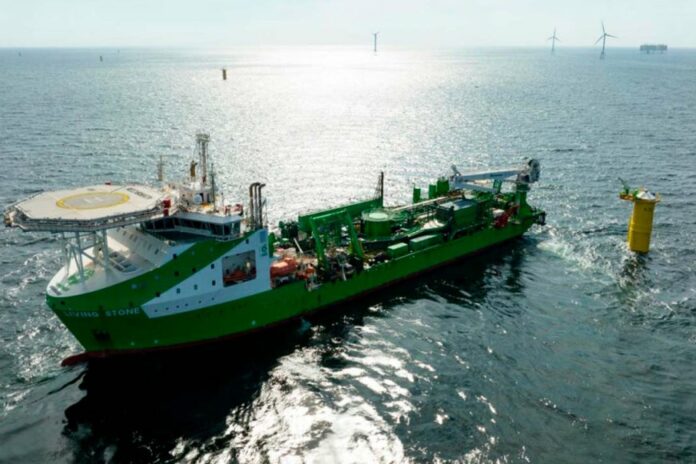
DEME has secured a sizable contract to carry out the transport and installation works for the inter-array cables for the Nordseecluster B offshore wind farm in Germany. 

The Nordseecluster is a joint offshore wind project of RWE (51%) and Norges Bank Investment Management (49%).

The Nordseecluster, located approximately 50 km north of the island of Juist (Germany), combines wind farm sites in the eastern part of the German North Sea. With a total capacity of up to 1.6 GW, the Nordseecluster will generate enough green electricity to supply the equivalent of 1,600,000 homes. RWE is in charge of construction and operations throughout the lifecycle of the Nordseecluster offshore wind farms.

DEME will transport and install a total of 124 km of inter-array cables for the second project stage – Nordseecluster B – connecting all 60 foundations for the wind turbines to the offshore substation in the German North Sea. The extensive scope includes all the engineering, preparation and supporting activities, ensuring that DEME will deliver a complete solution.

Scottish Government brings Clyde and Hebrides ferries under full public control

0

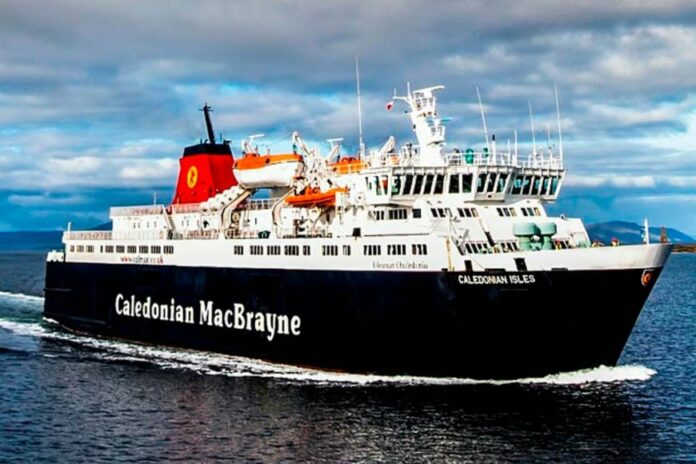
The new arrangements, which commence on October 1, 2025, will see almost £4 billion ($5.1 billion) of public funding invested in the service over a ten-year period.

Cabinet Secretary for Transport Fiona Hyslop stated that the new arrangements fundamentally change the ethos of the services from a commercial arrangement to a model fully focused on delivering a public service for Scotland’s island and rural communities.

Island communities have long called for better resilience and reliability of the ferry services. The new contract is intended to deliver those improvements, with significant investment in new vessels, increased services on the Sound of Barra and secondary Arran routes this winter, and the recruitment of additional CalMac crew.

Transport Scotland said the new model also embeds the requirement for continued engagement with the ferries community board to ensure community views are heard.

Duncan Mackison, CEO at CalMac, said the new contract creates a framework to operate ferry services which are, “safe, reliable, and better integrated with other transport providers.”

“We acknowledge that there have been challenges in recent years but we’re fully invested in continuing to drive up standards and delivering for the communities we serve,” he said, noting that a dozen new vessels are on the way.

Source: Bairdmaritime

Ukrainian Special Forces strike Russian missile ship in Karelia’s internal waters

0

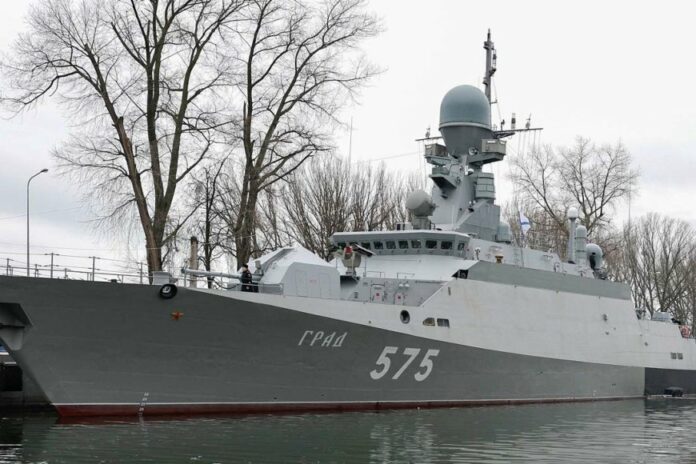
On the night of October 4, 2025, the Ukrainian Special Operations Forces targeted the Russian Project 21631 Buyan-M Grad small missile ship (hull number 575).

Preliminary reports indicate that the strike hit the right side of the ship’s power plant compartment.

As a result of the attack, the vessel sustained critical damage, significantly limiting its maneuverability and combat effectiveness.

The ship was en route from the Baltic Sea to the Caspian Sea, likely to reinforce the Russian fleet’s grouping in the southern region. Its route passed through Russia’s internal waters.

Grad is among the newest ships of the Buyan-M class, having been commissioned into the Russian Baltic Fleet on December 29, 2022.

Source: Militarnyi

Falling ocean shipping rates put carrier profits at risk, analysts say

0

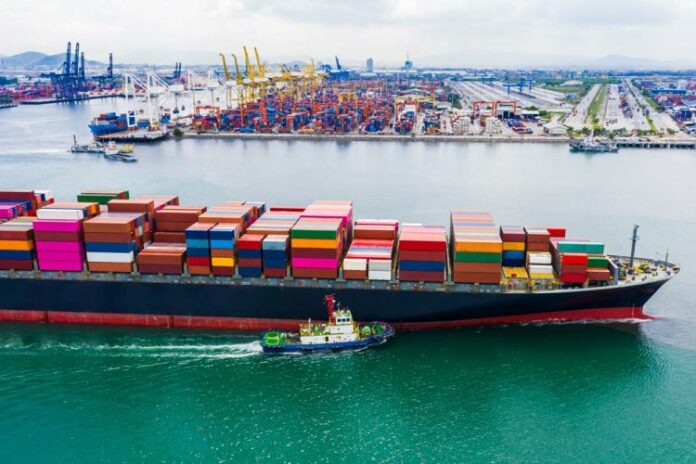
The Drewry World Container Index (WCI), which tracks the off-contract “spot” rate to transport a 40-foot cargo container on major shipping lanes, dropped to roughly 20-month low of $1,669 per 40-foot container as of Thursday.

The rate for Shanghai to Los Angeles, the busiest container trade route, was down 58% from a year ago to $2,196, Drewry said.

Both of those rates are below the $2,200 overall rate major ship owners like Maersk and Hapag-Lloyd need to turn a profit, according to Jefferies ocean shipping analyst Omar Nokta.

“Rates have fallen below leading-cost operators’ break-even for the first time since late 2023,” Nokta said.

Maersk declined to comment on break-even rates. Hapag-Lloyd did not immediately respond.

Roughly 50% of container cargo moves on the spot market. That percentage can climb when spot rates fall far below a customer’s negotiated contract rate.

“Currently with the drop in the spot rates, the gap is getting smaller when it comes to the major East-West routes,” said Hind Chitty, senior manager, Drewry Supply Chain Advisors.

The spot rate for Shanghai to New York, meanwhile, is off 46% to $3,200, according to Drewry data.

Ocean shipping is a closely watched economic barometer since some 80% of trade moves on the water.

The United States is the biggest importer of containerized goods. Top shippers like Walmart, Target and Home Depot brought forward imports of holiday goods to avoid Trump’s tariffs, ushering in an early “peak season” and dimming prospects for the remainder of the year.

Some industry experts worry that retailers, which account for about half of all container shipping volume, will pull back on future shipments as tariff-fueled inflation squeezes U.S. consumers – putting more downward pressure on rates.

Compounding the risk, major container carriers like MSC, Maersk, Hapag-Lloyd and Cosco are taking delivery of new container ships, adding capacity to an already oversupplied market.

Supply chain adviser Sea-Intelligence said the industry is approaching cyclical overcapacity that is projected to peak in 2027 at a level comparable to 2016, when the carriers were cutting prices to win customers.

“A weakened U.S. economy plus a supply glut at sea? That’s a recipe for brutal rate wars, idle tonnage, and carriers scrambling to plug financial holes,” industry executive turned consultant Jon Monroe said. “The question isn’t if the storm hits, it’s how hard.”

Container carriers were booking losses in the third and fourth quarters of 2023, before a spate of attacks by Yemen’s Houthis on ships in the Red Sea forced significant vessel rerouting that sucked up capacity and pushed rates into profit-making territory, said Peter Sand, chief analyst at pricing platform Xeneta.

Now, rates from the Far East to U.S. East Coast and U.S. West Coast are approaching pre-Red Sea crisis levels, Sand said.

Carriers are trying to manage capacity and shelter profits by skipping port calls, slowing down or idling ships, canceling sailings and scrapping older ships, experts said.

Still, Jefferies analyst Nokta expects the fourth quarter of this year to be the weakest since 2023.

“The tables are now turning in the favor of shippers when they enter negotiations for the next ocean container freight contract,” Sand said.

Source: Reuters

ClassNK issues AiP for the methanol fuel tank design concept developed by SRC Group

0

With the growing adoption of alternative fuels such as methanol in the maritime industry, the development of safe and efficient fuel storage solutions has become increasingly important.

The design concept enables efficient utilization of fuel tank capacity while meeting safety requirements by eliminating the need for additional structural space for a cofferdam.

ClassNK carried out a design review of the design concept based on ‘Part A Guidelines for Ships Using Methyl/Ethyl Alcohol as Fuels (Edition 3.0.0)’ of the ‘Guidelines for Ships Using Alternative Fuels’. ClassNK issued AiP upon confirming the feasibility of key design, including the arrangement of methanol fuel tanks and fuel supply systems, in terms of regulatory compliance.

Furthermore, in anticipation of future application to actual vessels and to facilitate the final approval process, ClassNK presented the concept overview and key technical considerations to the Panama Maritime Authority prior to the issuance of the AiP and received its acknowledgment.
 

Fincantieri partners with aeronautical service in using composite materials

0

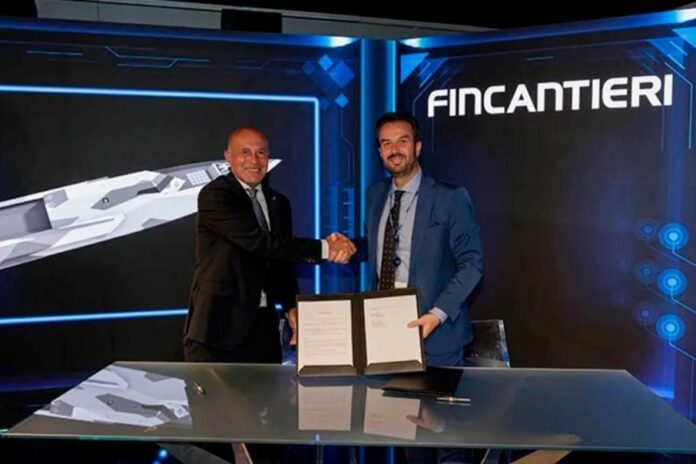
Fincantieri has signed a Memorandum of Understanding (MoU) with Aeronautical Service, a SME-companyspecialized in the development of advanced aerospace solutions, to launch a strategic collaboration focused on the large-scale adoption of carbon-based composite materials and innovative technologies in both civil and military naval applications.

The agreement was signed in La Spezia during Seafuture 2025 by Mauro Manzini, Vice President Sales of the Fincantieri Naval Vessels Division, and Kris Bordignon, CEO of Aeronautical Service.

Carbon composite materials, enhanced with nanotechnologies and proprietary engineering solutions, provide a set of key benefits: structural lightness, reduction of radar, infrared and magnetic signatures, high mechanical strength, ballistic protection, fire resistance, and modularity. These features make them strategic both for the evolution of military platforms and for civil applications in sectors where performance and safety are essential.

In particular, the cooperation will focus on the development of a new Fast Patrol Boat (FPB), built in carbon-fiber composites enhanced by nanotechnology. The unit will also feature state-of-the-art stealth performance through reduced radar (RCS), infrared, and magnetic signatures, while ensuring safety and resilience thanks to multifunctional composite materials with fire-retardant and ballistic protection properties. The unit will also be equipped with integrated self-defense systems and will support operations with drones, loitering munitions, and advanced surveillance and communication technologies. Payloads will be fully reconfigurable to adapt to different mission profiles.

The agreement further confirms Fincantieri’s ability to collaborate effectively with the SME ecosystem, leveraging specialized expertise and promoting innovation through open and synergic industrial models.

Pierroberto Folgiero, CEO and Managing Director of Fincantieri, stated: “With this agreement we clearly affirm our pioneering role in introducing composite materials at sea. It represents a technological paradigm shift that aims to combine innovation, safety and sustainability across all strategic civil and military applications. We are pleased to collaborate with Aeronautical Service, a technologically advanced SME, to jointly design the next generation of shipbuilding.”

“For Aeronautical Service, it is a great honor to collaborate with a group of excellence such as Fincantieri,” said Kris Bordignon, CEO of Aeronautical Service. “This fully Italian agreement strengthens our mission to transfer innovation to leading industrial partners, enhancing our expertise in advanced materials and next-generation platforms.” 

World’s first nuclear-powered LNG carrier design wins landmark approval

0

The certification, jointly granted by the American Bureau of Shipping (ABS) and the Liberian flag state, marks an important step towards making nuclear-powered commercial vessels a reality. 

Dr Jin-Young Cho, Director of the Advanced Reactor Research Institute, highlighted the significance of this achievement, stating that the project will continue to drive progress towards carbon neutrality in global shipping.

Molten salt reactor technology uses liquid nuclear fuel that combines fuel and coolant in one medium. This innovation provides strong safety margins and exceptional energy efficiency, making it particularly well suited for maritime applications.

One of the most remarkable aspects of this reactor design is its longevity. Operating at 100 MWth capacity, a single MSR unit can power an LNG carrier for its entire lifetime without the need for refuelling, delivering both operational efficiency and reduced environmental impact.

The project, which began in 2023, is supported by South Korea’s Ministry of Science and ICT and the Ministry of Oceans and Fisheries. The consortium aims to complete the conceptual design of a marine MSR by 2026, paving the way for deployment in the next generation of sustainable shipping.

Successful installation of Anemoi Rotor Sails on U-Ming’s Grand Pioneer VLOC

0

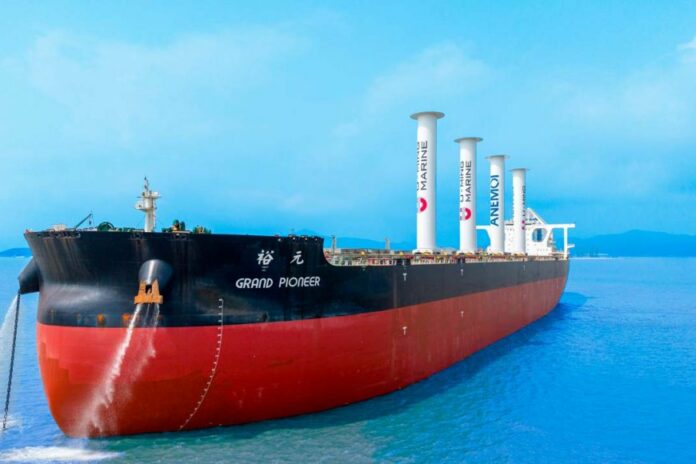
U-Ming Marine Transport Corporation (U-Ming) and leading wind propulsion technology provider Anemoi Marine Technologies Ltd. (Anemoi) announce the successful completion of the Rotor Sail installation on U-Ming’s Grand Pioneer, a 325,000 DWT Very Large Ore Carrier (VLOC).

The four 35m tall, 5m diameter folding (tilting) Rotor Sails were delivered fully assembled and dynamically balanced from Anemoi’s production base on the Yangtze River and transported by barge to COSCO Zhoushan shipyard. In a streamlined plug-and-play process unique to Anemoi, the sails were lifted directly onto the deck and secured in place. This method significantly reduces the shipyard’s scope of work and keeps installation time short. For this installation, it took only 1.5 days to lift and fix the Rotor Sails in position onboard, with a further 5 days for commissioning and testing all four Rotor Sails and folding systems once the shipyard had completed their works during the vessel’s scheduled dry-dock in September 2025.

Anemoi’s specialist team were present throughout the process overseeing the installation and will sail on the vessel’s maiden voyage from Zhoushan to Singapore, with the Rotor Sails deployed and operational. This is to ensure crew training and operational handover will be completed smoothly, equipping U-Ming’s seafarers with the skills and confidence to operate the technology from day one.

Mr Jeff Hsu, Vice Chairman of U-Ming added, “The installation of Rotor Sails on Grand Pioneer marks an important step in U-Ming’s decarbonisation journey and reflects our belief that the future of global shipping must be both sustainable and competitive. Through the collaboration with our forward-thinking partner Anemoi, we are turning strategy into action by reducing emissions, enhancing efficiency, and delivering long-term value. This initiative also demonstrates our commitment to innovation and our contribution to the industry’s shared ambition of achieving net zero by 2050.”

Clare Urmston, CEO of Anemoi, commented “We are proud to have delivered another successful Rotor Sail installation, providing fully assembled technology that minimises time in the yard and maximises value for our customers. U-Ming’s decision to adopt Rotor Sails, particularly as the first in the Taiwanese market to do so, demonstrates their strength, ambition and clear focus on decarbonisation. Our collaboration reflects the growing momentum behind wind propulsion as a critical pathway to lower emission shipping, and we look forward to analysing the performance data from upcoming voyages.”

Following completion of the installation, Grand Pioneer will resume deep-sea service between Brazil and China under a long-term charter with Brazilian mining company Vale. The vessel is projected to achieve annual fuel and emissions reductions of approximately 10–12% on average.