2.8 C
New York
Home Blog Page 1241

Port of Marseille considers ways to reduce its emissions

0

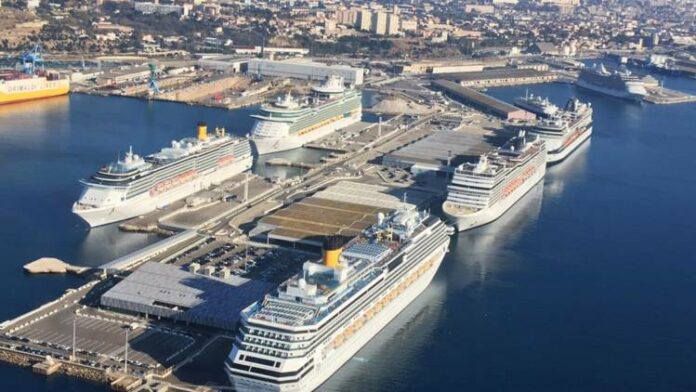
At the end of 2017, the Port of Marseille Fos established a working group, gathering players from the LNG sector to find ways to develop LNG as a marine fuel. The working group will also attempt to reduce the impact of ships in the Port. Specifically, the working group will study the relevance of the logistics options for LNG bunkering in the Port of Marseille Fos.

Before this decision, during May, the Costa Group and the Marseille Fos Port Authority announced a collaboration between the two, to make Marseille a port technology hub. The agreement includes a joint commitment to protect the environment, create a dedicated warehouse and a training project for naval officers and engineers in Marseille.

The agreement aims to improve control of exhaust emissions through concerted action, mainly in terms of deploying advanced exhaust gas cleaning systems (EGCS) and LNG propulsion in which the Costa Group is investing heavily.

Now, between March and July 2018, an LNG working group set out a plan detailing the schedule for the investment that would be needed, in order for the port to reduce its emissions.

It also brought together ship-owners that had expressed an interest in LNG from Marseille / Fos, the managers of the two LNG terminals based in Fos (Elengy and Fosmax LNG), an LNG supplier (Total Marine Fuels Global Solutions) and the LNG marine and fluvial platform.

The working group reaffirmed that an operational LNG bunkering solution in both Marseille and Fos would be viable, within a limited timeframe. This solution consists of:

  • The rapid development of truck refuelling logistics that would initially to serve ferries and continue to be an option should refuelling vessels be unavailable;
  • Putting one or more refuelling vessel(s) in place that would be suitable for cruise ships and ferries as well as container ships.

Currently, the players are preparing, with Fosmax LNG investing in the Fos Cavaou terminal, so as to receive small LNG carriers. This service will launch in the summer of 2019, including 50 annual slots.

In addition, Elengy is examining the extension of the Fos Tonkin Terminal, in order to incorporate the loading of small LNG carriers, providing 100 annual slots from 2021.

"The work will result in the establishment of a complete and sustainable economic sector leading to concrete measures to reduce the emissions of all traffic"..The Port believes.

Source:safety4sea
 

Agreement reached to increase minimum wage for seafarers

0

The International Transport Workers Federation (ITF) and the International Chamber of Shipping (ICS), convened in Geneva at the Joint Maritime Commission Subcommittee on Seafarers Wages. The two organizations decided to update the minimum wage for an able seafarer by 27 USD over the next 3 years.

ITF and ICS convened at the Joint Maritime Commission Subcommittee on Seafarers Wages, to review the ILO Minimum Wage for an Able Seafarer (AB) provided for in Code B of the Maritime Labour Convention, 2006 (as amended).

They decided to update the minimum wage for an able seafarer by 27 USD over the next 3 years. The wages include an increase of 4.5% on the current rate of 614 USD, with an increase of 4 USD as of 1 July 2019. There will also be an increase of 7 USD as of 1 January 2020 and a final increase of 16 USD as of 1 January 2021.

The social partners, with the support of the ILO Office, were presented with the current consumer prices changes indices, along with the impact of fluctuation of the USD in the countries that represent the basis for a formula for the calculation of the recommended minimum wage for an AB.

It was decided that during the period considered, the 614 USD, which is the current ILO minimum wage rate for an able seafarer, was below the purchasing power stated in the ILO report prepared for consideration at the meeting.

The social partners tried to support their respective positions, by providing  arguments and economic forecasts. These included the volatility of the shipping industry, the need to recognize the seafarers’ commitment and the need to agree fair and sustainable conditions.

Commenting on the occasion, Mark Dickinson, the Seafarers’ Group spokesperson, informed that there was strong opposition from the shipowners side for a significant increase.

"However, I am pleased that at the end pragmatism and common sense prevailed and the social partners worked their way forward to recognise the fundamental role seafarers play within the industry" Mr. Dickinson also added that now the partners will continue the cooperation to make sure that the ILO formula used as the basis for these negotiations is fair and reflects the reality for seafarers.

Source:safety4sea

Rail project at Port of Long Beach wins $14 mln grant

0

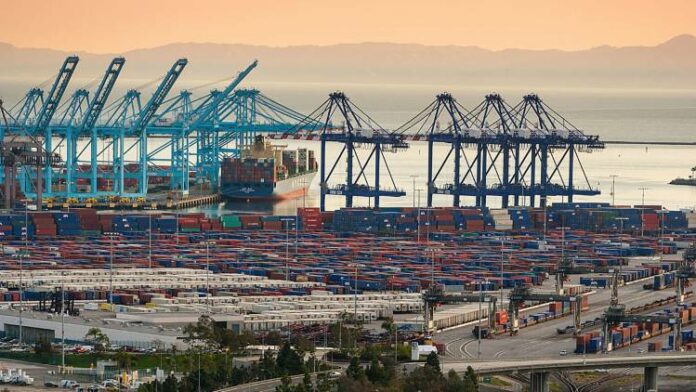
The Port of Long Beach has been awarded a $14 million grant to help pay for construction of a planned rail project that will increase efficiency while also reducing traffic congestion on local streets and freeways, the company said in a press release.
 
The grant is from the Trade Corridor Enhancement Program, which helps pay for improvements to freight corridors across California using designated transportation funds from Senate Bill 1 and the National Highway Freight Program. The Port will contribute the remaining $11 million for the $25 million project, which aims to increase operational efficiency, reduce delays by providing greater reliability for on-dock rail and decrease roadway congestion by shifting more containers to rail.
 
Moving goods by rail is four times more efficient than by truck, so this project would enhance our operational excellence and environmental sustainability,” said Mario Cordero, Executive Director of the Port of Long Beach.
 
The planned “Pier G and J Double Track Access Project” will add a new 9,000-foot departure track for trains serving four of Long Beach’s six container terminals. The project will allow for better utilization of the on-dock rail yards at Piers G and J by enabling them to simultaneously handle arriving and departing trains. The project will also minimize conflict with neighboring terminals’ on-dock rail operations and improve overall safety in the vicinity.
 
When completed, the project will expand on-dock rail usage by approximately 157,000 twenty-foot equivalent units (TEUs) of container cargo annually, while reducing the need for 615 daily truck trips.
 
The Harbor Commission welcomes the grant, which helps to modernize the Port and strengthen its ability to contribute to the regional and state economy,” said Tracy Egoscue, President of the Long Beach Board of Harbor Commissioners.
 
As a vital piece of the Port’s $1 billion rail infrastructure capital improvement program, the project will eliminate an existing bottleneck.
 
The project is scheduled to start construction by the end of 2019 and be completed by mid-2021.

Source:portnews

Blockchain Tokens Introduced for Oil and Gas Investment

0

Blockchain technology is being introduced to oil and gas investments by Canada-based PermianChain Technologies. The company is introducing the Permian Token (XPR), a crypto asset-class that will underpin holding rights to the value of potential but undeveloped oil and gas reserves.

Trading oil and gas is currently complex, slow and fundamentally inefficient, says Permian. Agreements are cumbersome and difficult to transfer without adding costs, and there are so many different steps involved in the process of getting oil and gas from upstream through mid-stream to downstream, that the knock-on effect of delays at any point can be significant and costly.

The levels of complexity and inefficiency mean that many potential investors are reluctant to involve themselves in the market, reducing the sector’s potential liquidity and value. 

The Permian Token’s system of smart contracts is intended to replace these complex agreements using the PermianChain. XPR is expected to reduce investors’ liquidity issues by creating a tradable crypto-asset on a permissioned-access trust-protocol. The smart contracts will also remove a large proportion of the administrative and brokerage burden from oil and gas suppliers, which could turn marginal fields into profitable ones, says the company.

Many private oil and gas opportunities are structured with an upfront fee due to their exclusivity and inaccessibility,” says Mohamed El-Masri, Co-Founder of PermianChain Technologies. Advisers and brokers take a proportion of the profit simply for placing investors’ money in the deal, which means charging higher investment costs to cover administrative and brokerage tasks, rather than helping the project itself. 

It also means that the offering company’s incentive is often to fill the deal quickly to protect their balance sheets in the short-term. There are currently over 1.6 trillion barrels of potential oil reserves globally. The Permian Token helps public organizations and private sector oil companies use them more efficiently.

There are already approximately 250 million barrels of potential oil and gas reserves planned to be listed on the PermianChain network, says Permian, and the company has formed partnerships with a number of organizations including the Gulf Energy Corporation, Battiest Energy and KaspianInnovations. More than 30,000,000 XPR tokens have been pre-booked so far. 

The firm is working with King & Spalding, a global legal specialist, to have XPR issued as a regulated crypto-asset.

Source:maritime-executive

GAO: Sub Maintenance Delays Cost Navy $1.5B Over 10 Years

0

In a new report, the Government Accountability Office (GAO) calculates that the U.S. Navy has spent $1.5 billion over the past decade supporting submarines that it could not deploy. 

A well-publicized maintenance backlog has cut into the availability of the Navy's attack subs, which are much in demand by combatant commanders. The problem is also costing the Navy a considerable amount of funding: At an average annualized cost of $150 million, idled or delayed units have taken up about 1.5 percent of the Navy's $9 billion attack submarine budget. 

According to GAO, the Navy has been unable to begin or complete the vast majority of its attack submarine maintenance periods on time. GAO's analysis of Navy maintenance data shows that between fiscal year 2008 and 2018, attack submarines have incurred 10,000 days of idle time and maintenance delays as a result of delays in getting into and out of the shipyards. 

As an example of the problem, GAO noted the long idle period for the USS Boise, which was due to enter shipyard for a maintenance availability in 2013. Due to the heavy workload at the Navy's yards, a slot was not immediately available, and Boise kept running for three additional years. In 2016, she was idled because she could no longer carry out her normal operations. She has been docked ever since while awaiting a shipyard slot. The same issue has affected over one dozen other subs that  could not be serviced before the expiry date for their materiel certification.  

GAO asserts that if the Navy allocated more maintenance work to private shipyards, it might be able to alleviate the problem. The public shipyards have been operating above their capacity for some time, and Huntington Ingalls and General Dynamics Electric Boat told GAO that they have space availabe. However, GAO says, the Navy has not carried out an analysis to determine how best to allocate its maintenance needs between private and public yards.

The issue is not expected to go away of its own accord. The Navy predicts that it will miss 50 planned sub maintenance periods over the next 23 years unless it expandes its shipyard capabilities. The service estimates that it needs an investment of $21 billion in its public yards over the next two decades in order to meet its needs. 

"Without addressing this challenge, the Navy risks continued expenditure of operating and support funding to crew, maintain, and support attack submarines that provide no operational capability because they are delayed in getting into and out of maintenance," GAO warned.  

Source:maritime-executive

Shipping Magnate Orders World’s Largest Research Vessel

0

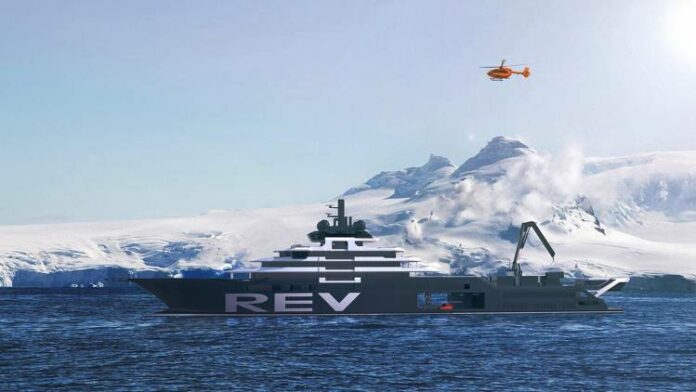
Norwegian shipping magnate Kjell Inge Røkke is underwriting the construction of a new 600-foot research vessel, and she will easily be the largest ship of her type when delivered.

The luxurious $350 million vessel will be operated by a Røkke-owned research enterprise, REV Ocean. The design features extensive laboratory space, a moonpool and an enclosed launching bay on the port side. According to REV Ocean, the vessel will be able to accommodate 90 scientists and crew in its "research" mode.

Monaco-based megayacht architect Espen Øino provided the yacht-like design, and Vard will build her hull at its yard in Romania, with final outfitting in Norway. Delivery is scheduled for 2021. 

In addition to the funds for the vessel's construction, Røkke has committed $150 million for the first three years of operation in order to provide the vessel's use free of charge for qualified research projects. In particular, Røkke has an interest in climate science, fisheries management, ocean acidification and marine pollution, but REV Ocean CEO Nina Jensen says that he intends to take a hands-off approach to the vessel's scientific agenda. An independent assessment body will solicit and evaluate proposals for research.

"[Røkke] has made much of his fortune from the ocean and it was only natural for him to choose improving ocean health as his philanthropic goal. REV Ocean is lucky to have such a devoted owner," said Jensen in announcing the pledge. 

REV Ocean also wants to create a giant ocean technology hub outside of Oslo, a project it dubs the "World Ocean Headquarters." It would be built and owned by Røkke's commercial enterprise, Aker. 

Source:maritime-executive

Major Corporations Want Renewable Energy Made Easier in Europe

0

Almost 100 organizations signaled their willingness to do more on climate action and called on European governments to make it easier to source renewable energy, during an event in Amsterdam this week. 

The companies signed a declaration at The RE-Source 2018 event taking place from November 20-21. The RE-Source Platform is a European alliance of stakeholders representing clean energy buyers and suppliers. It is coordinated by SolarPower Europe, WindEurope, The Climate Group and CDP (RE100) and WBCSD. 

To unlock the full potential for investing directly in onsite and offsite renewable energy through power purchase agreements, the declaration calls on policymakers to remove all regulatory and administrative barriers to corporate sourcing of renewable energy, as required by the recently enacted Renewable Energy Directive, so the early success – mainly concentrated to date in the Nordics, the Netherlands and the U.K. – can be replicated more broadly.

Corporate renewable power purchase agreements worth 6GW have already been signed in Europe, representing billions of Euros of investment and thousands of jobs. Nearly 2GW of this has been contracted in 2018 alone. Commercial and industrial on-site corporate sourcing accounted for 1.7GW in 2017, and this is expected to grow considerably in the next five years.

The signatory companies, including Google, Amazon, Ikea, Iberdrola, Microsoft, Engie, E.ON, Innogy, Ørsted, Shell, Siemens Gamesa, Vattenfall and Vestas, also ask for greater certainty on the long-term ownership of Guarantees of Origin, which are needed for companies to know they are buying renewable electricity. They also called for the facilitation of a wide variety of procurement models and market products, from on and offsite solutions to multi-corporate renewable power purchase agreements and the ability to sign cross-border renewable energy transactions.

Industrial and commercial consumers account for around half of Europe’s energy consumption. A survey of 1,200 corporations carried out by BayWa showed that 80 percent believe that using renewable energy gives them a competitive advantage. 

Wind energy is set to overtake coal, nuclear and gas to become the E.U.’s largest power source by 2027, according to the International Energy Agency’s (IEA) 2018 World Energy Outlook.
Europe leads the world in offshore wind projects with a record 3.1GW of net additional capacity installed capacity in 2017. The Global Wind Energy Council anticipates that 2019 will be another record year with the U.K. connecting 3.3 GW of new grid-connected capacity between 2018 and 2020, followed by Germany with 2.3 GW, Belgium with 1.3 GW, the Netherlands with 1.3 GW and Denmark with 1.0 GW.
Source:maritime-executive

Busan Port Authority signs Letter of Intent for the Maasvlakte Distribution Park West

0

The Busan Port Authority and the Port of Rotterdam Authority signed a Letter of Intent for the allocation of a 5 to 10 hectare site on the Maasvlakte Distribution Park West. It is the second LOI signed in a short time for this distribution site.

The Busan Port Authority wants to develop a sustainable warehouse on the Maasvlakte Distribution Park West, to be used by multiple, mainly Korean, service providers. Combined with the previous agreement, this means that 15 to 20 hectares of the total available 100 hectares have already been reserved.

Accessible
Maarten de Wijs, Business Manager Distribution and Warehousing of the Port of Rotterdam Authority, explains the great interest in the only available ‘greenfield’ location in the Port of Rotterdam due to the favourable location of the site. “The site has multimodal links by road, rail and water and is located just a stone’s throw from high-frequency deep-sea and short-sea connections. The Distribution Park is also located conveniently for the A15, the Maasvlakte Plaza Truck parking area, the existing Maasvlakte Distribution Park and the freight rail links between Maasvlakte and the European hinterland.

Construction height
The part of the Maasvlakte Distribution Park West that is still available will be allocated in plots of various sizes. Coupled with the fact that there are no construction height restrictions, this makes Maasvlakte Distribution Park West extremely suitable for the development of large-scale distribution, says De Wijs. “I see particularly good opportunities for the chemical industry, cold storage and the distribution of high-quality freight.”

Source:hellenicshippingnews

Ports and maritime systems to get smart: official

0

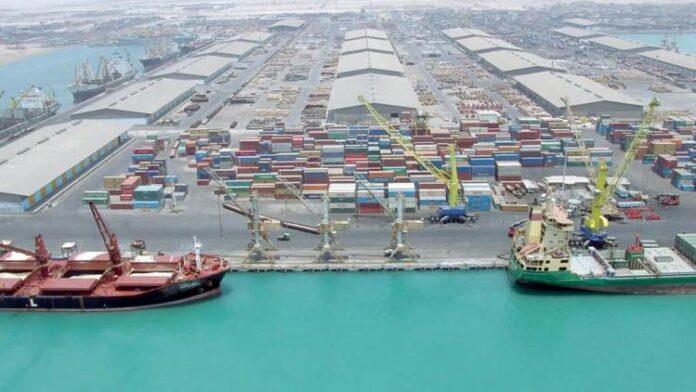
The Ports and Maritime Organization of Iran will establish a center for making smart its systems until the yearend (March 20, 2019), the head of the organization’s information and communication technology office told IRNA.

Mohammad Tajgardoun said that the development of smart system for the organization has several dimensions and cooperation between different organizations.

The smart system aims to improve cross-border trade and the knowledge-based companies would greatly help pave this way, he said.

He named the logistics and multimodal transport as important factors for promoting maritime economy.

The Customs Administration, the Road Maintenance & Transportation Organization and the Railways Company have a crucial role in expansion of multimodal transport systems as well, he said.

Source:hellenicshippingnews

SBS plots Indonesia tidal course

0

UK tidal developer SBS has filed a grid expansion feasibility study to Indonesian state power utility PT Perusahaan Listrik Negara (PLN) as part of its up 150MW Nautilus project.

The preliminary study, which explores the options to expand the grid on Lombok island to accommodate the Nautilus array output, is being internally reviewed by PLN.

SBS has exclusive site-development rights with PLN for the project, which features the installation of an eight-turbine, 12MW first phase on behalf of independent power producer SBS Energi Kelautan.

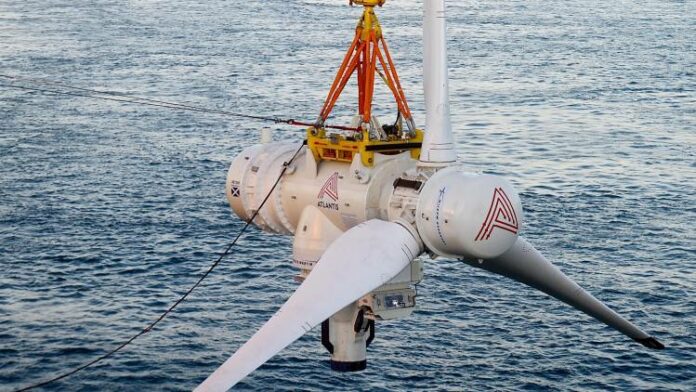
The turbines for the first phase, expected to be completed in 30 months, will be supplied by Simec Atlantis Energy.

The 12MW phase will be followed by expansions to 70MW in the second phase and 150MW in the third and final phase.

Following successful lobbying for tidal to be included in the Indonesian government’s list of approved renewable energy technologies, the Nautilus project has achieved significant progress toward inclusion in PLN’s 10-year business plan,” said SBS chief executive Michael Spencer.

We are very pleased to submit this preliminary grid extension feasibility study report requested by PLN and honoured to assist its planning for this significant marine energy power generation project,” he added.

SBS Energi Kelautan reached a final investment decision for the first phase in October 2017. The output will be sold to PLN under a 30-year power purchase agreement.

Source:renews