2.8 C
New York
Home Blog Page 1242

Catapult, GE aim to ‘stay ashore’

0

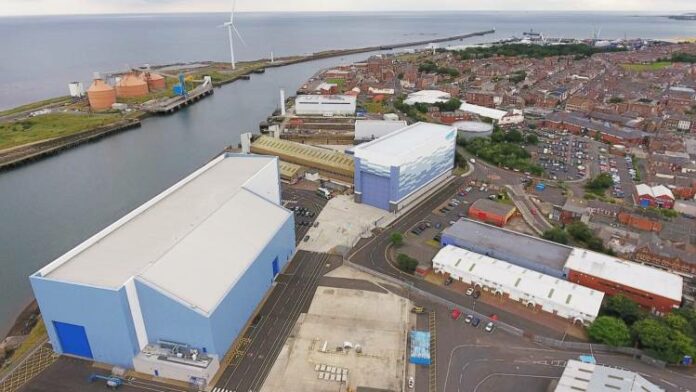
GE Renewable Energy and the Offshore Renewable Energy Catapult are partnering on a £9m research project that aims to reduce the time workers need to spend at offshore.

The four-year 'Stay Ashore!' programme will focus on on three pillars. One, reliability by design, which will primarily cover validation of key wind turbine components.

Two, enabling full remote operability and troubleshooting of the turbines through advanced digital functionality to reduce the need to go offshore for unplanned events.

Three, the use of robotics for planned maintenance events, in particular repetitive tasks and inspections, as well as activities in areas that are difficult to access.

The partnership aims to further reduce operating costs of offshore wind and is part of GE’s broader offshore wind strategy for the UK to collaborate with local partners to drive down the cost of electricity and improve reliability of projects.

It also plans to launch technology innovation challenges to UK small to medium-sized enterprises and the academic community, including robotics, blade and tower inspections and repair processes.

UK Minister for Energy and Clean Growth Claire Perry said: “We are a nation of innovators and this latest £9m research partnership between GE Renewable Energy and the government’s ORE Catapult is a fine example of how we’re working with industry to embrace cutting-edge technology to ensure the UK offshore sector stays ahead of the pack.”

As part of our modern Industrial Strategy we’re putting the finishing touches to our Offshore Wind Sector Deal to create the right business conditions to export this type of expertise around the world to ensure this sector goes from strength to strength.

GE offshore wind business president chief executive said: “By eliminating unplanned offshore human intervention through increasing productivity with digital and robotic tools, in addition to our Haliade-X12 MW performance and design features, we will contribute significantly to reducing the cost of offshore wind energy.”

ORE Catapult chief executive Andrew Jamieson said: “This further strengthening of ORE Catapult’s partnership with GE Renewable Energy will see significant investment in nationally important R&D, growing not only our expertise but providing opportunities for the UK supply chain to capture domestic and international market share in an offshore wind market expected to be worth £30bn per year by 2030.”

Source:renews
Moray East mirth for Cromarty Firth

0

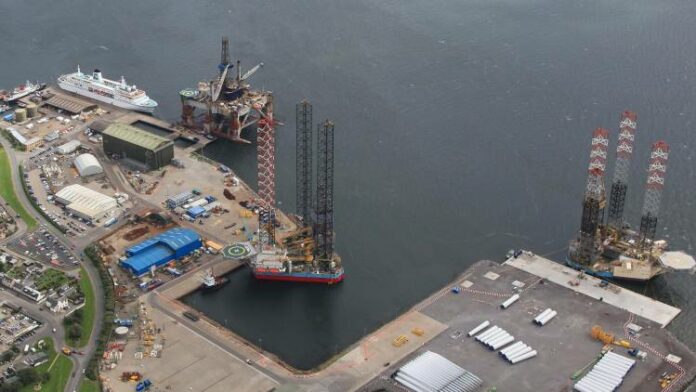
EDPR has signed a contract with the Port of Cromarty Firth to use the Scottish facility as a pre-assembly base during construction of the 950MW Moray East offshore wind farm.

The port will provide storage for MHI Vestas 9.5MW components and site offices as part of an 18-month stint during construction.

Moray East Project director Oscar Diaz said the deal is a major delivery milestone.

This will be hub of the project during construction,” he said.

As a Trust Port, the Port of Cromarty Firth have been able to deliver much more than competitive prices, they are well established with strong local relationships.

We look forward to working together to provide an excellent opportunity for the local economy to take advantage of the markets created by the project.

Port chief executive Bob Buskie added the deal is a major success for the Highlands and Scotland.

“We have demonstrated once again that we can successfully compete with international competition and attract these major infrastructure projects to our area,” he said.

The port’s team worked for over two years to secure this contract for the benefit of the local area. It will attract jobs and investment for the coming years, offering countless opportunities to local people and businesses.”

Moray East is being developed by EDPR, Engie and Diamond Generating Europe and will be located 22km from Caithness. The project is due online in 2021.

Source:renews

Enpro Subsea, Kosmos Energy to Deploy FAM Technology in Gulf of Mexico

0

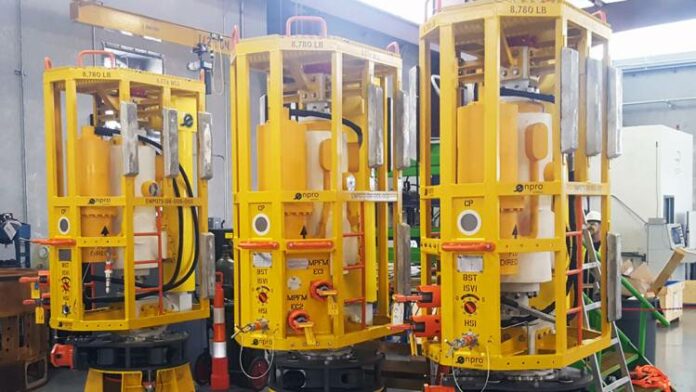
Enpro Subsea announced that it has reached a Master Services Agreement (MSA) with Kosmos Energy (formerly Deep Gulf Energy) aimed at providing enhanced subsea architecture and smart standardization via Enpro's patented Flow Access Module (FAM) technology.

FAM essentially creates an enhanced production 'USB port' within the jumper envelope. This enables the operator to use standard subsea Xmas Trees and Manifolds, with FAM providing life of field flexibility within the system design, delivering 'Smart Standardization' and the capability to maximize the ultimate recovery from their subsea wells.

The Kosmos Flow Access Modules are primarily being used to enable retrievable multiphase metering within the jumper envelope between the XT and the manifold. The FAM technology simplifies their standard well jumper, enabling longer spans and reducing fatigue while enabling project specific technologies (MPFM) retrievable independently of the jumper.

Additionally, FAM enables a range of enhanced production options including water cut metering, flow assurance, hydraulic intervention and fluid sampling, allowing the Operator to adapt the technology within the FAM to suit the needs of the reservoir.

The initial award under this MSA is for 4x FAM systems, which will be installed on South Santa Cruz, Odd Job, Double Team and Kodiak fields. This brings the total number of adopted FAM systems adopted globally to over 50, since the product was first launched in 2015.

Ian Donald, Enpro CEO said: "This is significant achievement for Enpro Subsea, we appreciate the opportunity to work with the Kosmos team to help deliver innovative, cost effective projects in record time. The adoption of FAM to provide first oil faster and to maximize the potential ultimate recovery is wholly aligned with that philosophy."

Baleària starts the refurbishment of Naples

0

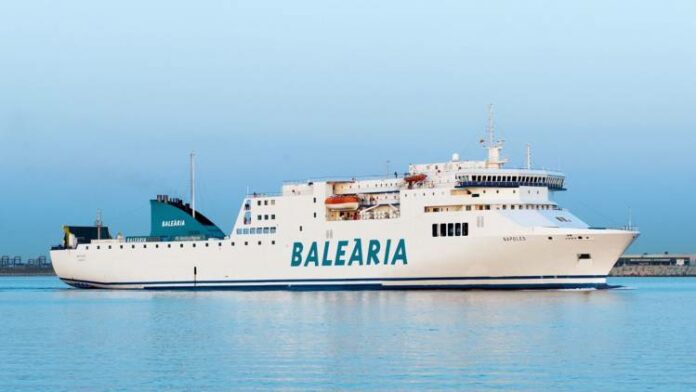
Spanish ferry operator Baleària announced it has started LNG retrofitting work for its ferry 'Napoles', the first of the company's six vessels to be converted to run on LNG. The ship arrived Sunday at Gibdock shipyards in Gibraltar, where the modification of the engines and the installation of the LNG tank will be carried out. The works completion is scheduled on 15 February 2019.

As such, the two current engines of the ship (MAN9L48 / 60) will be upgraded to the version 9L51 / 60DF, dual motors to LNG from MAN Energy Solutions. With this change in fuel, the Naples ferry is expected to save 9,113.45 tons of CO2 and 871.37 NOx each year, and completely eliminate sulfur and particulate emissions (75.95 tons of SOx). The annual CO2 savings would be equivalent to the emissions of 6,000 cars.

The total investment for the LNG retrofitting amounts to 12 million euros, 20% of which will be paid through the CEF (Connecting Europe Facility) funds of the EU. The European Commission granted to the Baleària € 11,797,424 for the retrofit of five ships, highlighting that the project addresses 'the objectives of Regulation 1315/2013 regarding efficiency, sustainability and cohesion, and contributes to the decarbonization of maritime transport'.

In addition to Napoles, Baleària plans to change the engines of ferries Abel Matutes, Sicily, Bahama Mama and Martin i Soler, by the end of 2021, plus one more apart from the EU fund.

In line with its strategic commitment to LNG, the shipping company is also finalizing the construction of the first two smart ships with LNG engines that will sail in the Mediterranean (the Hypatia de Alejandría will start operating at the beginning of 2019 and the Marie Curie a few months later).

Top 5 Deficiencies on board Gas Carriers

0

Dallas Smith, Detachment Chief of the USCG's Liquefied Gas Carrier National Center of Expertise, addresses the top five deficiencies that could occur on board on gas carriers.

As noted, there aren't many issues found on gas carriers. However, the top five deficiencies are related to:

  • Gas detection;
  • Emergency shut downs;
  • Maximum Allowable relief valve settings;
  • Deck water spray;
  • Electrical issues.

First of all, gas carriers need gas detection. It's required to sample many locations around the vessel. The interval period should not to exceed the 30 minutes. The gas detection is required to alarm at 30% LEL. It's tested and calibrated with span gas. It's expected to alarm on the bridge and where cargo's controlled. The coastal security will test the system along with a crewmember who will be in charge of gas detection. Also, the CS will have the crew member calibrate the system and ensure that it alarms at 30% LEL. Often, the USCG finds problem concerning the calibration and this test.

Moreover, gas ships are in need of emergency shut downs. They need to be activated from two remote locations. They have fusible elements that are installed over the tank domes and loading stations. Once emergency shut down is activated it’s expected to turn off within 30 seconds. Most of the times, marine inspectors find that the valve does not close within the 30 seconds requirement.

MARVS or maximum allowable relief valve settings are needed to be set in accordance to IGC code and 46 CFR 154. When MARVS are installed, they should be installed under the supervision of the captain and must be inured in the vessel's log. After they’re installed, they have tamper seals that are in place and must remain intact. Many times, marine inspectors find that these tamper seals or settings are incorrect.

Also, gas carriers need a deck water spray system that covers the cargo deck, tank domes, manifolds, and superstructure. Often marine inspectors find that these nozzles on the water spray are clogged.

Finally, the lighting fixtures on a gas ship should definitely be flameproof or pressurized in the gas dangerous zone. The wiring has to be in good condition. However, sometimes marine inspectors find problems with the wiring and the cable glands in electoral installations.

Source:safety4sea

Attempts in Gulf of Guinea to improve maritime security

0

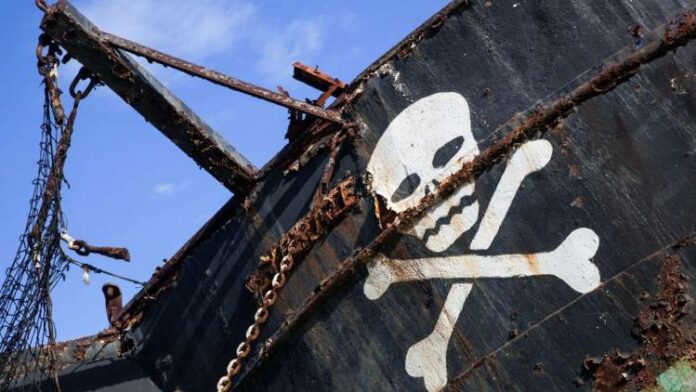
The Gulf of Guinea is one of the regions that has the most issues with piracy. In order to address these problems, a workshop for participants from the Gulf of Guinea, was held in Ghana, from 13 to 16 November. The workshop aims to improve national capacity to advance port security.

Maritime security needs the capacity of national authorities to develop security plans and procedures, as well as the ability to self-audit.

The training focused on how to create multi-agency port and port facility security and facilitation committees with specific terms of reference. It also gave emphasis on drafting port facility security assessments and plans.

Moreover, a key area included technical expertise on ships and port facilities security, maritime situational awareness, the conduct of harmonized maritime security control and compliance, information sharing, mutual support, contingency planning, joint operations and response based on existing infrastructure.

In addition, lectures addressed piracy, armed robbery and other illicit maritime activities. Key instruments covered included the following:

  • IMO maritime security measures in SOLAS Chapter XI-2;
  • ISPS Code;
  • ILO/IMO Code of practice on security in ports.

Participants also visited the port of Tema, to see how such measures can be implemented.

Source:safety4sea

IMO Sec-Gen supports STM Validation Project

0

During the STM Validation Project Final Conference at the IMO, in London, the IMO Secretary General Kitack Lim supported the STM. Specifically, Mr. Lim stated that STM goes hand in hand with IMO goals.

Kitack Lim expressed his full support for STM, encouraging the project to submit its results to IMO at the next possible committee meeting.

In addition, EU officials also stated that STM is very important for the EU strategy and that the 20 million euro invested in the project is a good investment.

Moreover, industry representatives actors expressed their intention to take responsibility for the technical governance of the digital Maritime Service Infrastructure, developed within STM. What is more, BIMCO’s Documentary Committee adopted a specific STM clause, which aims to enable just-in-time port calls in commercial contracts.

Continuing,Professor Kurt Bodewig, the EU coordinator for the Motorways of the Seas, the maritime dimension the EU transport corridors welcomed the project as well. He said that:"Sea Traffic Management is a pillar in the European maritime strategy"

Finally, during the conference, the STM results showed high saving potential for all ships based on operational efficiencies. This is because of better information sharing between ships and ports. This could contribute greatly to achieving the IMO goal of reducing CO2 with 50% by 2050.

Recently, Tallinn became the latest shore centre for STM Validation Project. Namely, Tallin VTS joined the STM, which aims to improve traffic safety and provide vessel traffic services to know vessels’ intentions and sailing plans.

Sea Traffic Management connects and updates the maritime world in real time, with efficient information exchange.Through data exchange among selected parties such as ships, service providers and shipping companies, STM is creating a new paradigm for maritime information sharing offering tomorrow´s digital infrastructure for shipping.

STM-services allow personel on-board and on shore to make decisions based on real-time information. These services enable more just-in-time arrivals, right steaming, reduced administrative burden and decreased risk related to human factors. Example of services are

  • Route optimisation services;
  • Ship to ship route exchange;
  • Enhanced Monitoring;
  • Port Call Synchronisation;
  • Winter Navigation.

STM´s aim is to create a safer, more efficient and environmentally friendly maritime sector. The goals for full deployment of STM by year 2030 in relation to year 2015 are the following.

  • Safety: 50% reduction of accidents;
  • Efficiency: 10% reduction in voyage costs and 30% reduction in waiting time for berthing;
  • Environment: 7% lower fuel consumption and 7% lower green house gas emissions.

Source:safety4sea

Allseas Completes TurkStream’s Pipeline Sections

0

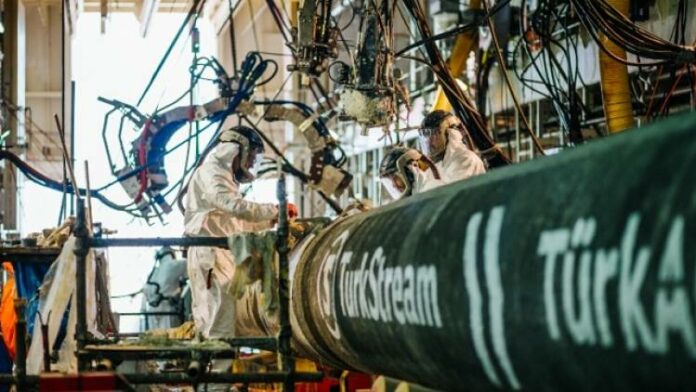
On Monday, Turkish President Recep Tayyip Erdogan and Russian President Vladimir Putin met in Istanbul to give the order for the final joint of the TurkStream pipeline to be welded into place. The pipelaying / decommissioning vessel Pioneering Spirit has now finished the subsea portions of the twin pipeline, one month ahead of schedule. 

According to GazProm, the pipeline's shoreside infrastructure will be completed and the line will enter into operation by the end of next year. It will have enough capacity to carry 31.5 billion cubic meters of gas from Russia to Turkey and southeastern Europe every year. 

Turkey's demand for natural gas is soaring, and the pipeline will help it to supply its domestic needs. Currently, Russian gas is delivered to Turkey via the Blue Stream gas pipeline and the Transbalkan Corridor. In 2017, Gazprom supplied the record 29 billion cubic meters of gas to the Turkish market. 

As a new hub for regional distribution, Turkey will earn new revenues for transporting Russian gas overland to the European market – though potentially at the expense of Ukraine's revenues for performing the same task. 

"The projects of this kind, and this project, in particular, are not directed against anyone's interests. The projects of this kind have a purely constructive character. They are aiming to develop the relationship between the states, create sustainable conditions for economy development, for the growth of our countries' citizens' well-being," Putin said.

Allseas' Pioneering Spirit – the world's heaviest-capacity pipelay vessel – completed work on the first string of the TurkStream pipeline in late April. She then transited the Bosporus and sailed to the North Sea in order to fulfill a contract for her other role – she is the only vessel capable of lifting large offshore platforms intact – and then returned to the Black Sea in June to lay the second string. During the first string, she averaged nearly three miles of pipelay per day, and she set a maximum speed of 3.5 miles in a day during February. 

Source:maritime-executive

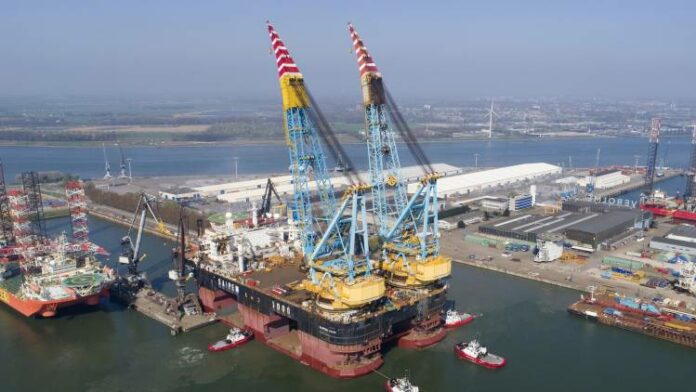
Saipem 7000 sails into Damen Verolme Rotterdam for upgrade

0

Saipem has contracted Damen Verolme Rotterdam (DVR) to upgrade the Saipem 7000’s DP-3 system.

The upgrade is to meet the new closed ring DP-3 configuration and ABS EHS-P notation. Under DP3 EHS-P notation, the vessel is said to achieve an exceptional level of redundancy with four independent redundancy groups systems.

The project will include the upgrade and modification of the semisubmersible crane and pipelay vessel’s power system for load sharing, the installation of MV, LV and control cables, renewal of the MV and LV switchboards and the motor control centers, the installation of uninterrupted power supplies (UPS) and the creation of an A60 compartment.

Detailed engineering is being executed by Damen Verolme Rotterdam in close cooperation with Saipem.

When completed, the vessel’s DP-3 system with its 12 thrusters will ensure that the vessel can maintain its position in even the most adverse weather conditions. In addition, because the Saipem 7000 can accommodate up to 725 people, the vessel will be able to assist hook-up and commissioning activities as well as initial platform life support.

The works are expected to take about six months, with completion due in 1Q 2019. This represents a tight schedule, Damen said, mainly due to the delivery and installation for the cables, the switchboards and the extensive structural modifications.

The vessel’s most recent visit to DVR was in April 2018 when she spent nine days undergoing mobilization activities.

Source:offshore-mag

Navy nanosatellite launch delayed for further inspection

0

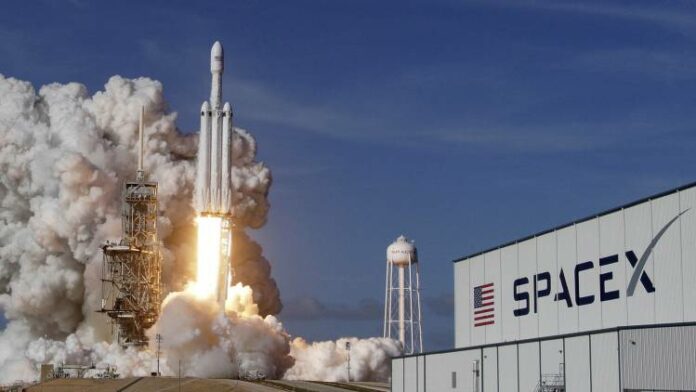
A U.S. Navy ultra-high frequency nanosatellite designed for polar communications scheduled for launch from Vandenberg Air Force Base was delayed Monday for further inspection, SpaceX said.

The delayed launch is part of the Integrated Communications Extension Capability program under the Navy’s Program Executive Office Space Systems and the Space and Naval Warfare Command Systems Center Pacific. Further details on the delay have not been released.

ICE-Cap is meant demonstrate low-Earth orbit satellites ability to extend the coverage of the Mobile User Objective System and old UHF Follow-On satellites to the polar regions.

MUOS gives mobile units cell-phone-like access to the Wideband Code Division Multiple Access, waveform while keeping its ability to access legacy UHF. The four MUOS satellites with one spare already in orbit provide a constellation UHF coverage between 65 degrees north and 65 degrees south latitude.

This is a force multiplier,” program manager, Navy Communications Satellite Program Office Capt. Chris DeSena said in a release.

The Arctic portion of maritime domain is becoming more active and important, and MUOS and ICE-Cap help ensure we have advantages in any challenges we might face there,” DeSenba said.

The small nanosatellites are designed to be affordable and flexible then larger satellites, enabling them to be deployed in large numbers.

The ICE-Cap payload is a 3U nanosatellite roughly the size of a loaf of bread, while planned 1U nano satellites will be only 10cm to a side. More than 70 are planned to be commercially launched by SpaceX.

The satellites will serve as calibration targets and technology demonstrators for tracking small objects
in space. They will host combinations of radar and optical reflectors for radar signature and laser altitude tracking.

The development and launch of these four nanosatellites demonstrates the Navy’s interest in leveraging the significant growth and private-sector investment in disruptive, new-space technologies aimed at driving down the costs of developing, building, launching and operating constellations of small satellites, increasing access to space,” assistant program manager for science and technology at PEO Space Systems Lt. Cmdr. Shawn Kocis said in a release.

Tradition large satellite often are typically expected to remain on orbit for 15 to 20 years. Nanosatellites are designed to last around three years but with a much faster development cycle between constellations.