2.8 C
New York
Home Blog Page 1240

U.S. Army Corps of Engineers Releases 2019 Work Plan

0

The U.S. Army Corps of Engineers has delivered its Fiscal Year 2019 Work Plan for the Army Civil Works program to Congress.

On September 21, 2018, President Donald Trump signed into law the Consolidated Appropriations Act, 2019, which provides $6.999 billion in FY 2019 appropriations for the program. The work plan funds to completion 15 feasibility studies and one Limited Reevaluation Report, five projects in the Pre-construction Engineering and Design phase and 21 construction projects or elements of projects.

Studies Funded for Completion in FY 2019:

Alaska Regional Ports (Port of Nome Modification), AK
Lower Santa Cruz River, AZ
East San Pedro Bay Ecosystem Restoration, CA
Port of Long Beach Navigation Improvement, CA
Fairfield and New Haven Counties (Flooding), CT
Central Everglades Planning Project PPA South (South Florida Ecosystem Restoration), FL
Western Everglades Restoration Project (South Florida Ecosystem Restoration), FL
Grand River Basin, IA & MO
Chesapeake Bay Comprehensive Plan, MD, PA & VA
Rio Grande, Sandia Pueblo to Isleta Pueblo, NM
Hudson River Habitat Restoration, NY
Coastal Texas Protection and Restoration Study, TX (in conjunction with funds provided in the Bipartisan Budget Control Act of 2018)
GIWW – Brazos River Floodgates & Colorado River Lock, TX
Houston Ship Channel, TX
Matagorda Ship Channel, TX
Atlantic Intracoastal Waterway Bridge Replacement at North Landing, VA

Preconstruction Engineering and Design Funded for Completion in FY 2019:

Mobile Harbor, AL
Dry Creek (Warm Springs) Restoration, CA
San Joaquin River Basin, Lower San Joaquin, CA
San Juan Harbor Improvement Study, PR
Galveston Harbor Channel Extension, Houston – Galveston Navigation Channels, TX

Construction Projects Funded for Completion in FY 2019:

Tucson Drainage Area, AZ
Hamilton City, CA
Isabella Lake, CA (Dam Safety)
Sacramento River Bank Protection Project, CA
Santa Ana River Mainstem, CA 
Yuba River Basin, CA 
Herbert Hoover Dike, FL (Seepage Control) 
Panama City Harbor, FL
C-111 South Dade (South Florida Ecosystem Restoration), FL
Indian River Lagoon South C-44 Reservoir and Storm Treatment Area Bank Stabilization (South Florida Ecosystem Restoration), FL
East St. Louis (Deficiency Correction), IL
Illinois Waterway, LaGrange Lock & Dam (Major Rehabilitation), IL
Olmsted Locks and Dam, Ohio River, IL & KY
Manhattan, KS
Delaware River Main Channel, NJ, PA & DE
East Branch Clarion River Lake, PA (Dam Safety)
Buffalo Bayou and Tributaries, TX (Dam Safety) 
Lewisville Dam, TX (Dam Safety) 
Lynnhaven River Basin, VA
Skokomish River, WA
Bluestone Lake, WV (Dam Safety)

Public Law 115-244 requires the Corps to fund six new studies and five new projects.

The six selected studies are:

Brunswick Harbor, GA (Navigation)
Kansas River Reservoirs Flood and Sediment Study, KS, CO & NE (Flood Risk Management)
Three Forks Beargrass Creek, KY (Aquatic Ecosystem Restoration)
Mississippi River Ship Channel, Port of New Orleans, LA (Navigation)
New York and New Jersey Harbor Deepening Channel Improvements, NY & NJ (Navigation)
FE Walter Dam Reevaluation Study, PA (Flood Risk Management)

The five selected projects are:

Manhattan, KS (Flood Risk Management)
Sault Ste. Marie (Replacement Lock), MI (Navigation)
Cedar Bayou, TX (Navigation)
Sabine-Neches Waterway, TX (Navigation)
Skokomish River, WA (Aquatic Ecosystem Restoration)

Source:maritime-executive

Two New Berths Planned for COSCO-PSA Terminal, Singapore

0

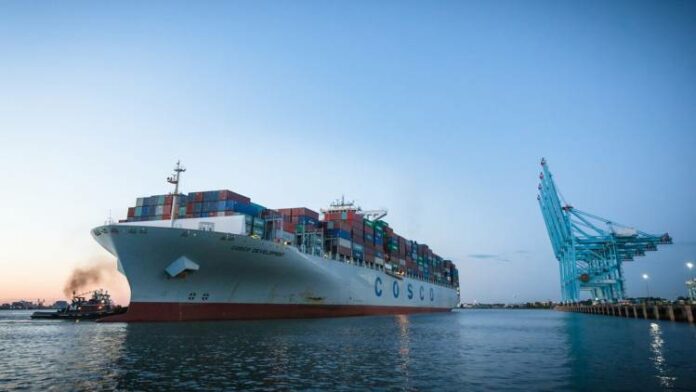
COSCO Shipping Ports and PSA Corporation Limited have signed a memorandum of understanding for the addition of two new berths at the COSCO-PSA Terminal in Singapore.

With the launch of the two new berths, the terminal will have five mega-vessel berths, increasing its annual handling capacity from three million TEUs to about five million TEUs. The new berths are designed to strengthen COSCO's position in Singapore and support mega-vessels and mega-alliances.

The new berths, like the current berths, will be supported by automated yard technology.

PSA Singapore currently operates 67 berths at its container terminals in Tanjong Pagar, Keppel, Brani and Pasir Panjang. They operate as one seamless and integrated facility, with the terminals at Pasir Panjang the most advanced. The berths are equipped with quay cranes able to reach across 24 rows, and the terminal is being used to trial a zero-emission, fully-automated electric quay crane system and 30 automated guided vehicles on trial, eight hybrid and 22 fully battery operated. 

The system is expected to be used at Singapore's Tuas mega port which is currently under construction. Singapore's existing port facilities will be migrated to Tuas which, when complete in 2040, will have a capacity of 65 million TEUs. It is being designed to accommodate 24,000 TEU container ships.

Source:maritime-executive

Koreans tap Danish offshore nous

0

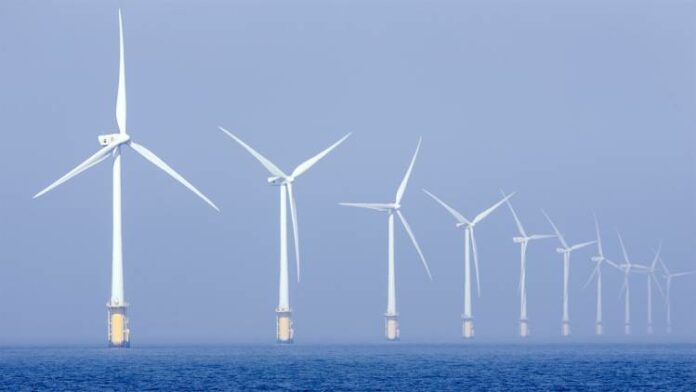
A delegation of Korean parliamentarians and representatives from government agencies have visited Denmark to learn about the European country's experiences in offshore wind development.

The visit to the Danish Energy Agency on 19 November was part of a cooperation agreement between the two countries on renewable energy launched at the start of the month.

The Korean delegation was keen to learn about the regulatory framework, including offshore wind auctions, that Denmark has established to support wind power development, while at the same time promoting its public acceptance.

South Korea plans to expand renewable energy capacity to at least 20% by 2030 from about 7% in 2016. This will require 48.7GW of new clean power capacity to be built, DEA said.

DEA added that Danish technology could likely be used to help mature the Korean wind sector.

Source:renews

Simec Atlantis builds Normandy beachhead

0

UK tidal player Simec Atlantis Energy and the French regional government of Normandy have formally established their Normandie Hydrolienne joint venture at a ceremony in London.

The documents were signed by Atlantis chief executive Tim Cornelius and President of the Normandy region Hervé Morin at the French Embassy.

The venture majority-owned by Atlantis has agreed terms to define its collaboration with development agency AD Normandie Developpement and regional investment fund Normandie Participations for a phased, large-scale tidal project in the Raz Blanchard.

The new company is expected to commence recruitment immediately in Normandy with a view to energising its first tidal array in 2021 before rolling out larger projects from 2022.

The venture will establish turbine manufacturing facilities in either Cherbourg or Le Havre.

Normandy has all of the attributes required to deliver large scale tidal power projects – excellent natural resource in close proximity to load, available grid capacity, a feed-in-tariff, an established offshore energy supply chain and port facilities in Cherbourg and Le Havre and access to EU funding,” said Cornelius.

Source:renews

South Korea Dominates LNG Shipbuilding

0

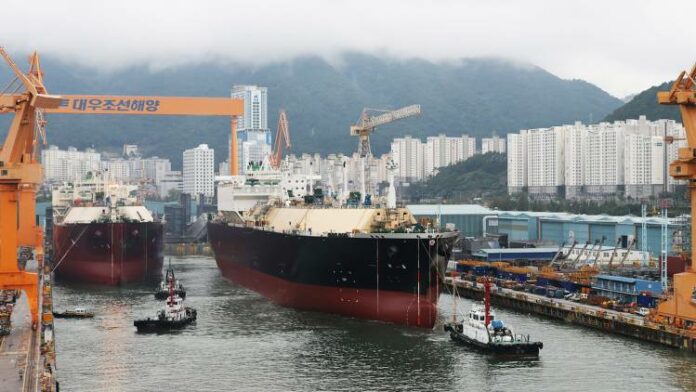
The liquefied natural gas (LNG) carrier orders received by South Korean shipbuilders have more than tripled from last year.

According to Reuters, the three South Korean yards – Daewoo Shipbuilding & Marine Engineering (DSME), Hyundai Heavy Industries and Samsung Heavy Industries – have won the more than 50 orders for ships carrying LNG, with a total value of $9 billion.

According to Clarkson, a shipbuilding research company in the U.K. on Nov. 20, LNG carrier orders from January to October this year totaled 43 units or 6.8 million cubic meters, a three-fold increase from a year earlier.

Greek shipping companies triggered the sudden spike in orders, said Business Korea. They ordered 22 ships or a total of 3.8 million cubic meters, accounting for 56% of the new orders placed this year.

Clarkson analyzed that maritime LNG transport volume will grow more than 10 percent this year compared to last year. This positive outlook on the shipping industry has been prompting Greek shipping companies to place orders for LNG carriers.

South Korean yards are responsible for 78% of all LNG-related orders in the last year, including floating LNG storage and support vessels. Japan hold just 14% of the marketplace and China 8%.

Source:marinelink

Johan Castberg Topside Construction Begins

0

Norwegian minister of petroleum and energy Kjell-Børge Freiberg cut the first sheet for the topside of the Johan Castberg floating production, storage and offloading unit (FPSO) at Kværner's yard at Stord on Wednesday as part of a large scale  project triggering ripple effects throughout Norway.

The topside will be installed on the 200-meter long FPSO vessel that will be producing on the Johan-Castberg field for 30 years from the planned production start in 2022.

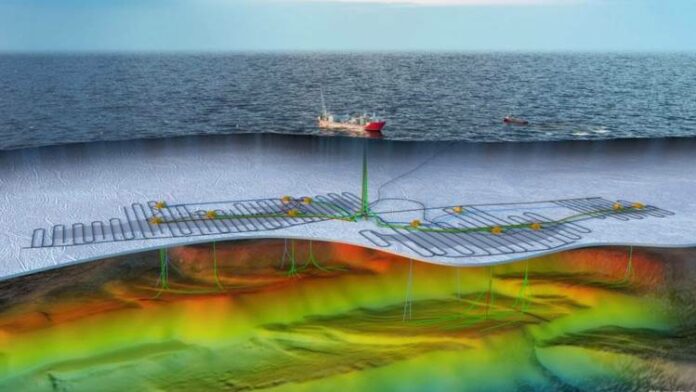
The field development concept includes a FPSO vessel and extensive subsea development, with a total of 30 wells, 10 subsea templates and two satellite structures.

Construction of the other two major components of the FPSO is well under way. The hull is under construction in Singapore, and the turret is being built in Dubai. These will eventually arrive at Stord in 2020 for assembly and completion before the vessel is moved to its location in the Barents Sea.

"Johan Castberg is the next major development on the Norwegian continental shelf and will open a new area in the Barents Sea for Equinor," said Anders Opedal, Equinor’s executive vice president for Technology, Projects and Drilling."Johan Castberg's development will have ripple effects equivalent to 47,000 man-years in Norway during the development phase. The value of Norwegian goods and services will amount to around NOK 25 billion."

The Johan Castberg development costs are estimated at around NOK 49 billion, and jobs generated nationwide during the development are estimated at slightly less than 47,000 man-years, some 1,800 of which will be located in Northern Norway. More than 2 million working hours will be included in the construction of the topside, and it is expected to generate jobs for 4,800 people.

There will be extensive activity at the yards in Verdal, Egersund and Sandnessjøen in addition to Stord over the next few years constructing the many parts that will form the complex topside.

"Already, many small and large Norwegian suppliers are in the process of delivering to Johan Castberg. This shows the competitiveness and competencies of the Norwegian supplier industry in hard global competition," said project director for Johan Castberg, Knut Gjertsen.

The Johan Castberg partnership includes Equinor (50 percent), Eni (30 percent) and Petoro (20 percent).

Source:marinelink

Solar EOR Gains Steam In Oil Patch

0

Some oil and gas companies are turning to renewables, particularly solar, to boost oil production from fields as they work to reduce carbon footprints while meeting today’s global energy needs.

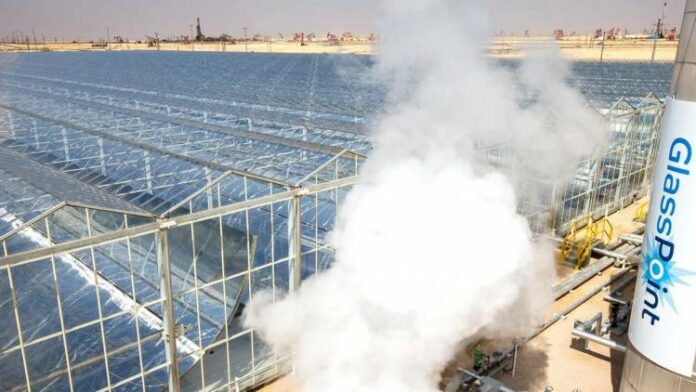
Occidental of Oman, a subsidiary of Houston-based Occidental Petroleum Corp., is among the latest companies to take the step. The company signed an agreement this week with GlassPoint Solar that could lead to a more than 2-gigawatt solar thermal energy plant at the Mukhaizna oil field in Oman.

This is a strategic opportunity for us to tap into solar as a sustainable source of energy in order to minimize the carbon footprint of our operations,” Steve Kelly, president and general manager of Occidental of Oman, said in a statement about the agreement.

GlassPoint, the technology company behind solar EOR projects for Petroleum Development Oman (PDO) and California’s Berry Petroleum Corp. , would use its solar technology to produce steam that would, in turn, be purchased by Occidental and used to produce heavy oil. By eliminating the use of natural gas in the EOR process, the proposed project could cut CO2 emissions by more than 800,000 tons annually, according to GlassPoint.

The agreement comes as the energy industry incorporates more renewables into the mix and the world turns to cleaner forms of energy like natural gas. Some companies have plunged into renewable forms of energy by stepping up investments in wind and solar as well as carbon capture, utilization and storage. Others have added renewables to assist in producing more oil, considering current and future oil demand remains.

Source:epmag

SHI Receives AiP From LR For INTELLIMAN Smart Ship Solution

0

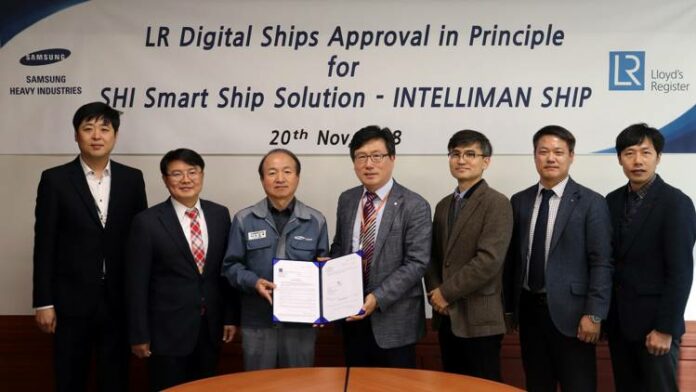
LR has presented Samsung Heavy Industries Co., Ltd. (SHI) with approval in principle (AiP) for its smart ship solution: INTELLIMAN SHIP. The solution is the first to receive LR’s ‘Digital AL2 SAFE PERFORM SECURE’ notation, confirming compliance with LR’s new Digital Ships requirements.

The marine industry is beginning to realise the benefits of operating and optimising ships that have remote access to onboard operational data for the purposes of monitoring, analysis, decision-making and control – once they have been assessed to minimise incidents of cyber-attack and security breach. This new level of connectedness presents the industry with both opportunities for improving operation, optimisation and safety.

The hardware and software that control processes, systems and equipment can be vulnerable to attack and affect safe/effective operation, therefore numerous risks for safe operation and security need to be identified, understood and mitigated to make sure that smart ship technologies are safely integrated into ship design.

SHI has been focusing its efforts on developing a smart ship solution to promote safe operation and optimisation with a cyber security governance system to mitigate the risk of introducing vulnerabilities to cyber-attack, or other unauthorised access, as part of its plans to meet the market’s needs for cyber security in shipping.

SHI Director of Ship and Offshore Research Institute, Vice President, Dr. Yong-Lae Shim, commented: “We expect to see a number of assets in the marine and offshore industry using our INTELLIMAN smart ship solution in the near future. The system has consolidated functionality, integrated safety and cybersecurity capabilities which enable ship owners/operators to improve their operational efficiency. We are delighted to receive this AiP from LR – a leader in the marine and offshore digital transformation. In connection with this initiative, we will continue to develop the next generation of smart ship solutions together with our other offerings: BIG, S.VESSEL and S.FLEET, for our clients to see real commercial benefit. These systems will provide integrated management of all asset-related data between onboard and onshore safely and seamlessly.

LR’s North Asia Technical Support Offices Manager, Mr. Young-Doo Kim, said: “We are pleased to present this AiP to SHI, confirming that their advanced smart ship solution is in compliance with our Digital Ships requirements. As more and more ships become digitally-enabled in order to enhance operational performance, we are glad to be working with SHI to drive innovation in this area to ensure that digital ship systems are well designed, safely integrated and have cyber resilience capabilities.

Source:marineinsigh

Cosco, Navis launch digital Center of Excellence

0

Navis collaborated with Cosco Shipping Ports Limited (CSP) to create a joint Center of Excellence (CoE). The two companies launched the centre in September 2018, to provide resources for N4 implementation projects across Cosco Shipping Ports’ operation.

The Center of Excellence aims at enabling CSP to implement the projects themselves, reducing the time to deliver services. The CoE will also be able to transfer tasks that are currently executed onsite in projects, to be performed remotely.

Key areas of the CoE include:

  • Content Governance – define and use of a CSP standard delivery methodology and tools. This will be based on Navis’ methodology and adapted to support CSP strategy;
  • Platform Management – deploy N4 as the sole standard TOS across the CSP portfolio and fully automate business process testing of software releases against CSP requirements;
  • IT Landscape – define the CSP IT landscape and explore the use of multi facility setup for small terminals without on-premise hardware
    Knowledge and Skills Management – training based on Navis STACK Academy with CSP curriculum and certification to build up a team of N4 experts within CSP;
  • Change Management – support CSP in the change to Navis as the singular TOS solution. Support will also oversee organizational and operational change management;

Earlier this year, CSP entered into an agreement with Navis to use N4 across its network of berths and ports. The CoE aims to deliver a number of projects, regardless of terminal type.

Source:csp

USCG: the 5 most common deficiencies found on gas carriers

0

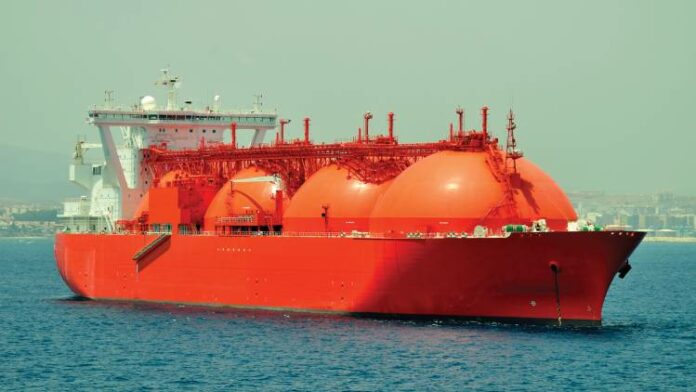
Dallas Smith, Detachment Chief of the USCG's Liquefied Gas Carrier National Center of Expertise, addresses the top five deficiencies that have taken place on board  gas carriers.

Although there aren't many issues found on gas carriers, the top five deficiencies are:

#1 Gas detection

Gas carriers are required gas detection. It's required to sample many locations around the vessel. The interval period should not to exceed the 30 minutes. It is required to alarm at 30% LEL. It's tested and calibrated with span gas. It's expected to alarm on the bridge and where cargo's controlled. The coastal security will test the system along with a crewmember that is in charge of gas detection. Also, the CS will have the crew member calibrate the system and ensure that it alarms at 30% LEL. Often, the USCG finds problem concerning the calibration and this test.

#2 Emergency shut downs

Gas ships are in need of emergency shut downs that need to be activated from two remote locations. They have fusible elements that are installed over the tank domes and loading stations. Once emergency shut down is activated it’s expected to turn off within 30 seconds. Most of the times, marine inspectors find that the valve does not close within the 30 second requirement.

#3 Maximum Allowable relief valve settings

MARVS or maximum allowable relief valve settings are required to be set in accordance to IGC code and 46 CFR 154. When MARVS are installed, they should be installed under the supervision of the captain and must be inured in the vessel's log. After they’re installed, they have tamper seals that are in place and must remain intact. Many times, marine inspectors find that these tamper seals or settings are incorrect.

#4Deck water spray

Gas carriers need a deck water spray system that covers the cargo deck, tank domes, manifolds, and superstructure. Often marine inspectors find that these nozzles on the water spray are clogged.

#5Electrical issues

The lighting fixtures on a gas ship should definitely be flameproof or pressurized in the gas dangerous zone. All wiring should be in good condition. However, sometimes marine inspectors find problems with the wiring and the cable glands in electoral installations.

Source:safety4sea