5.1 C
New York
Home Blog Page 1237

Royal Navy Reveals Name of New Submarine Hunters

0

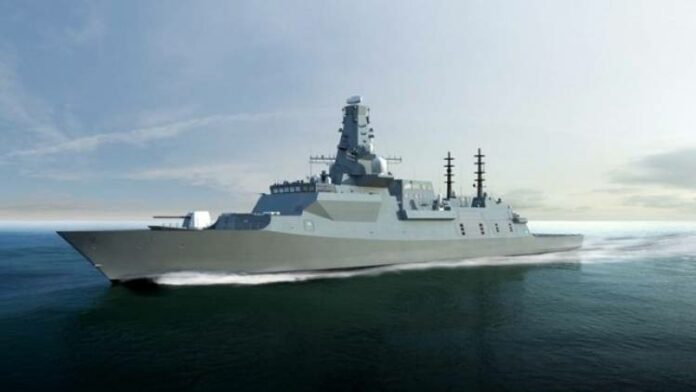
U.K. Defence Minister Stuart Andrew has announced that the Royal Navy's new submarine hunter will be named HMS Sheffield. The ship will be the fourth ship to carry the name and will be Britain’s fifth Type 26 frigate. 

The naming of HMS Sheffield came as Defence Secretary Gavin Williamson also announced the sixth ship would be called HMS Newcastle.

The two ships will join HMS Glasgow, HMS Belfast, HMS Cardiff, HMS Birmingham and HMS London. The final name has yet to be announced.

All of the Type 26 frigates will be built on the Clyde, supported by suppliers across the country and securing decades of work for more than 4,000 people. The first three ships have already been ordered for £3.7 billion ($4.7 billion).

The news also came as the Defence Secretary announced he will retain three of the Royal Navy’s patrol ships to bolster Britain’s fishery protection capability. The Royal Navy currently provide around 200 days of fishery protection a year. The Defence Secretary’s announcement means that the Royal Navy will now have the capacity to deliver up to 600 days of fishery protection a year if needed.

The ships are also vital to the Royal Navy’s anti-smuggling and counter-terrorism work, and frequently escort foreign vessels, including those from Russia, through the English Channel. Just last month, HMS Tyne monitored a Russian frigate as it passed through the English Channel, while last year, HMS Merseyreturned from a 48,000-mile deployment where she played a key part in a £12 million drugs bust off the coast of Nicaragua and helped combat the migrant crisis in the Mediterranean.

The ships also deter illegal pollution activity and provide emergency firefighting capabilities for ships in distress.

The Royal Navy expects to have five its new-generation Batch 2 Offshore Patrol Vessels, HMS Forth, HMS Medway, HMS Trent, HMS Tamar and HMS Spey, operational by the end of 2020. 

Source:maritime-executive
CMA CGM Sees Volumes and Revenue Rise

0

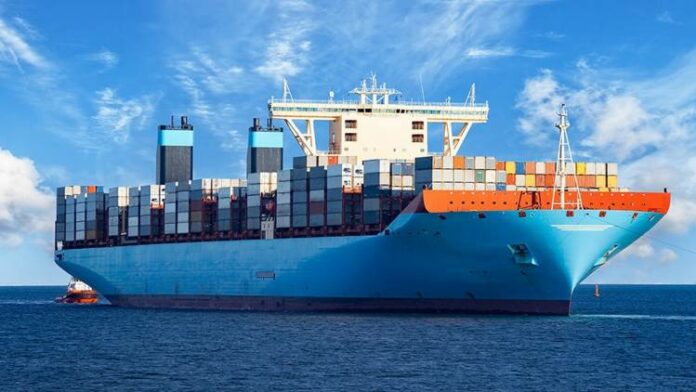
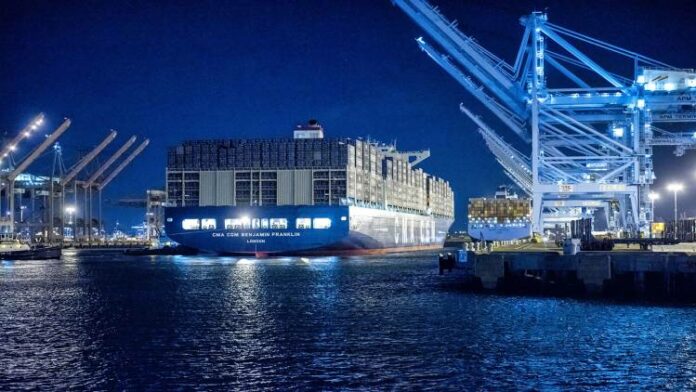
CMA CGM has released its third quarter results saying that volumes have risen 5.5 percent and revenue is up 6.3 percent compared to the third quarter in 2017. The group's net income was $103.1 million.

Over the period, CMA CGM exceeded five million containers shipped. This increase is attributable to the strength of most of the trades, particularly the Transpacific, India/Oceania and Africa lines. 

Revenue per container in the third quarter of 2018 increased slightly compared to the third quarter of 2017 (0.8 percent), as well as compared to the second quarter of 2018 (4.9 percent). Consequently, revenue in the third quarter of 2018 rose by 6.3 percent to $6.06 billion.

Unit costs rose by 7.7 percent ($77 per TEU), mainly due to the market price of fuel, resulting in an increase of $55 per TEU compared to the third quarter of 2017. This was only partially offset by the introduction of an Emergency Bunker Surcharge.

Rodolphe Saadé, Chairman and Chief Executive Officer of the CMA CGM Group, said: "In a context of sharply rising fuel prices, CMA CGM core EBIT margin recorded a significant increase compared to the second quarter of 2018, at 4.0 percent. In a market growing by 2.5 to three percent, the increase in volumes shipped by CMA CGM demonstrates our commercial drive and the quality of service offered to our customers.”

As CEVA's major shareholder since the company's IPO in May 2018, CMA CGM signed a new cooperation agreement with CEVA on October 24 to strengthen their development project. The agreement provides for the lifting of the tag-along obligation and the launching of a takeover bid by CMA CGM, which is expected to be announced by November 30.

Speaking on CEVA, Saadé said: “By strengthening the partnership with CEVA, CMA CGM is actively engaging its logistics strategy. Our ambitious development project for CEVA was approved by its Board of Directors. Subject to approval from the regulatory authorities, this project will accelerate CEVA’s transformation, making it a more efficient logistics leader, to the benefit of its customers, employees and shareholders. Via a takeover bid, we hope to obtain the majority of CEVA's share capital and unleash its full potential.”

During the quarter, the CMA CGM Group signed an agreement with SHONE. This U.S. based start-up is working on embedding artificial intelligence on board ships. CMA CGM also rolled out its offer of connected containers using Traxens technology. This technology allows real-time monitoring of the container's position, the intensity of impacts sustained, changes in temperature and humidity and the detection of doors being opened.

CMA CGM and its subsidiaries have signed a number of agreements to develop Blockchain technology in the shipping industry. More particularly, CMA CGM is developing a project for blockchain-secured electronic “bill of lading” with the start-up BuyCo, in which the Group has recently invested.  

Source:maritime-executive

West Africa to Promote Electronic Data Exchange for Vessels

0

Ships and ports will need to be able to exchange arrival and departure data electronically from April 2019, under International Maritime Organization (IMO)'s Facilitation Convention said a press note.

There requirements also encourage the use of a single window in which all the many agencies and authorities involved exchange data via a single point of contact. Training in the treaty requirements took place during national seminars in Malabo, Equatorial Guinea (13-15 November) and in Nouakchott, Mauritania (20-22 November).  

The seminars highlighted the objectives of the Facilitation of International Maritime Traffic (FAL) Convention: to promote public authorities to process their clearance procedures effectively and efficiently, to make the clearance of ships, their cargoes, passengers and crews in ports less cumbersome and more expedient.

Forty-six participants attended the Malabo seminar, organized by IMO and the Ministry of Transport, Post and Telecommunications of the Republic of Equatorial Guinea.

Twenty-one participants from public authorities and private sectors attended the seminar in Nouakchott, organized by IMO and the Ministry of Fisheries and Maritime Economy of Mauritania.

Source:marinelink

Offshore wind buoys Fisher revenues

0

UK marine services provider James Fisher and Sons has recorded a 14% revenue increase thanks to growing demand for its offshore wind services.

The results are published in the company’s trading update for the ten month period ending 31 October 2018.

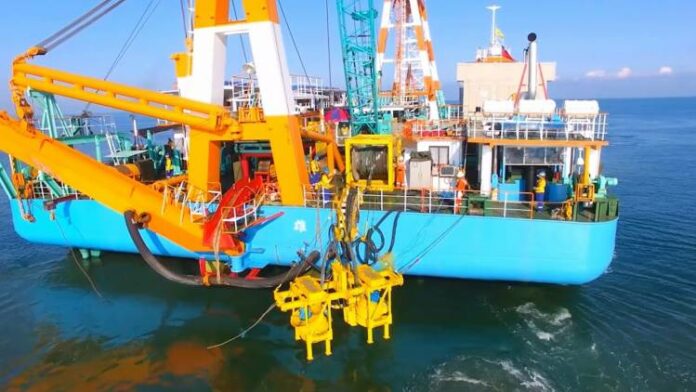
The company said it has secured all three five-year maintenance contracts covering topside, subsea and high voltage services for the 630MW, 175-turbine, London Array offshore wind farm.

"Overall James Fisher continues to make good progress and the outlook for the year remains unchanged," said the company.

Source:renews

GE renewables boss calls for storage revolution

0

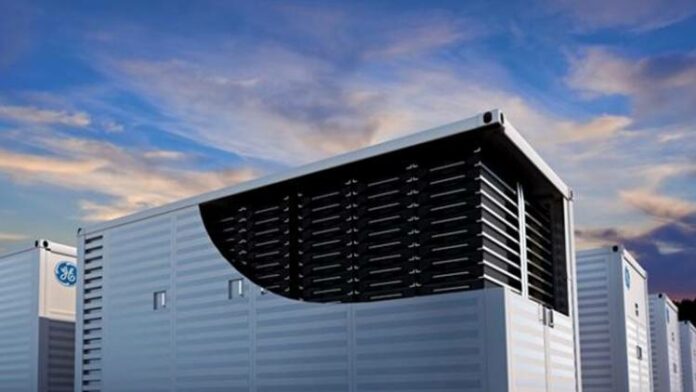
GE renewable energy chief executive Jerome Pecresse has said systems combining intermittent clean energy generation with storage are critical to future renewables growth.

According to Pecresse, in a piece published on LinkedIn Pulse, renewable energy is a smart, profitable, long-term investment, driving down the levelised cost of energy (LCoE), whilst scaling green power in preparation for a subsidy-free future.

The next step for the industry is to move towards making clean energy dispatchable and guaranteeing supply based on wind and solar. This what customers want, he said.

However, systems for creating and storing renewable power when it is not immediately needed, need more focus and effort.

Energy storage allows wind and solar plants to immediately respond to changes in load, enhancing wind and solar farm flexibility, reduce the impact and uncertainty of weather-related forecasts on power generation, and make up the difference when unexpected shortfalls of wind and solar generation output occur.

By combining energy storage with multiple sources of energy generation – whether hydropower, wind and solar – and uniting those with control systems, it is possible to create hybrid systems that will allow the industry to unlock significant untapped value.

According to Pecresse there is growing interest in developing hybrid renewable energy solutions, to find the balance within energy supply and grid stability, with initial projects and pilots underway.

In Gaildorf, Germany, GE has built 15MW of wind turbines alongside an integrated water tank to combine wind power and pumped-hydro storage. At India’s Kadapa Hybrid Park, the company is developing its first big project to integrate wind, solar and battery energy storage, to enhance grid stability and optimise the output of these resources.

Pecresse said: “We must continue pushing the boundaries of what’s currently possible, investing in new technologies, building new financing models, and unlocking the potential of countries globally."

"We must advocate for regulatory measures that place a proper value on storage to ensure that the most efficient renewable solutions are being developed in the first place."

According to financial analysts, by 2020, renewables will have become the cheapest form of power generation.

For renewable energy to be the world’s primary power source, we have to change our mindset from simply LCoE to generating reliable, dispatchable green electrons. I believe we are uniquely positioned to deliver on that promise for our customers and the planet,” added Pecresse.

Source:renews

Equinor Energy Strikes Gas in Barents Sea

0

Norwegian multinational energy company Equinor Energy has made discovery containing up to 24billion cubic feet of gas in the Barents Sea. Two exploration targets were found, with the first containing between 10 and 20billion cubic feet, the other between one and four billion.

The discovery’s profitability is currently unclear, said a statement from the Norwegian Petroleum Directorate (NPD).

"Equinor Energy AS has completed the drilling of wildcat well  about 15 kilometres northwest of discovery well (Atlantis) and 370 kilometres north of Hammerfest. The well's primary exploration target was to prove oil in reservoir rocks from the Late Triassic Age (upper part of the Snadd formation)," said the statement.

The secondary exploration target was to prove petroleum in reservoir rocks from the Middle Jurassic Age (Stø formation) and in a deeper exploration target from the Middle Triassic Age (lower part of the Snadd formation).

In the primary exploration target, a total gas column of about 30 metres was encountered in the upper part of the Snadd formation, of which 20 metres was in an effective reservoir of primarily moderate to poor reservoir quality. The gas/water contact was encountered 1492 metres below the sea surface.

In the secondary exploration target in the lower part of the Snadd formation, gas was also encountered in sandstone of poor to moderate reservoir quality. The gas column has not been clarified, as efforts to define a gas gradient were unsuccessful due to the tight formation.

In the other secondary exploration target, 15 metres of aquiferous reservoir sandstone was encountered in the Stø formation, with moderate to good reservoir quality.

Preliminary calculations of the size of the discovery in the upper part of the Snadd formation are between 10 and 20 billion standard cubic metres (Sm3) of recoverable gas. In the lower part of the Snadd formation, the gas volume is estimated at between 1 and 4 billion standard cubic metres (Sm3) of recoverable gas. The discovery's profitability is currently unclear.

The well was not formation-tested, but extensive data acquisition and sampling were carried out.

The well was drilled to a vertical depth of 1678 metres below the sea surface and was terminated in the Snadd formation from the Late Triassic Age. Water depth at the site is 452 metres. The well will now be permanently plugged and abandoned.

Well 7324/3-1 was drilled by the West Hercules drilling facility, which will now drill appraisal well 7122/7-7 S on the Goliat field in the Barents Sea in production licence 229, where Eni Norge AS is the operator.

Source:marinelink

Watch: First oil production from Clair Ridge off UK

0

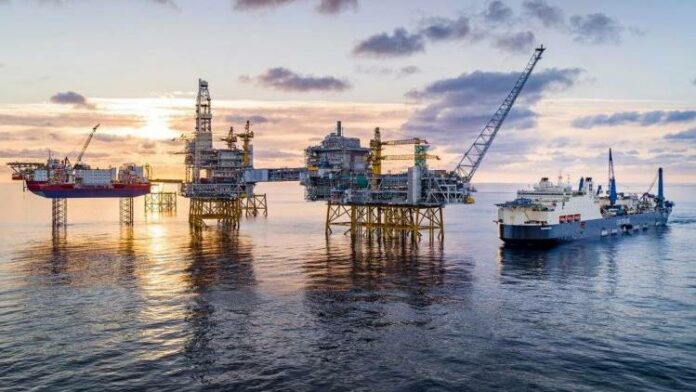
British oil major BP, on behalf of co-venturers Shell, Chevron and ConocoPhillips, announced first oil production from the giant Clair Ridge project in the West of Shetland region off UK. Clair Ridge is the second phase of development of the Clair field, 75 kilometres west of Shetland. The field, which was discovered in 1977, has an estimated seven billion barrels of hydrocarbons.

This line of developments will follow from 2017’s seven major project completions and is set to deliver the 900,000 barrels of oil equivalent new production that BP expects from new upstream major projects by 2021.

The Claire Ridge, project includes:

  • A 5.5 km, 22-inch oil export pipeline that is tied to the Claire Phase 1 export pipeline, exporting to the Sullom Voe Terminal on Shetland;
  • 14.6 km, 6-inch gas export pipeline tied to the West of Shetland Pipeline Systems;
  • An advanced drill rig which is set to deliver a drilling programme for many years to come;
  • 36 well slots. 2 out of 36 are used for the tieback of pre-drilled wells.

The new facilities are set to produce for 40 years, and required an investment of $4.5 billion.

The beginning of this production follows other 5 major projects that started earlier in 2018, which are Atoll Phase One, offshore Egypt, Shah Deniz 2 gas development in Azerbaijan, TAAS expansion project in Russia, Western Flank B offshore Western Australia and Thunderhorse Northwest Expansion in the Gulf of Mexico.

Source:safety4sea

BIMCO to launch cyber security clause in spring 2019

0

BIMCO announced it is developing a clause dealing with cyber security risks and incidents that might affect the ability of one of the parties to perform their contractual obligations. The clause is being drafted by a small team led by Inga Froysa of Klaveness, in Oslo, while other partners involved include Navig8, the UK P&I Club and HFW. The project is due for completion in May 2019.

BIMCO has previously conducted a survey , in cooperation with Fairplay and ABS Advanced Solutions, based on cyber security incidents which indicated the need of improving cyber awareness and training. Although cyber security can be managed; still poses great risks to the maritime industry.

BIMCO cyber security clause demands the parties elaborating to have plans and procedures present in order to protect its computer systems and data. Also, it requires the partners to respond directly and efficiently to cyber attacks, Mads Wacher Kjaergaard from BIMCO in Copenhagen informed.

Moreover, when a party is a victim of a cyber attack, it is obliged to notify the rest of the partners as quickly as possible, in order to receive the measures needed, since eliminating the effects of cyber security is the most important aim.

The clause is also made for use in a broad range of contracts. To this result, the clause can cover arrangements with third-party service providers, such as brokers and agents.

The trustworthiness of the parties to each other for claims is limited to an amount that was agreed during negotiations. A sum of USD 100,000 will apply if no other amount is inserted.

In particular, the clause is aspired to maintain two major functions:

  • Raising awareness of cyber risks among owners, charterers and brokers,
  • Providing a mechanism for making sure that the parties to the contract have plans in place, in order to help eliminate the risk of an incident occurring in the first place and, if it does occur, to mitigate the effects of such an incident.

It was also under discussion the idea of address payment fraud. As a result, it was decided that any company should tighten up its internal payment and verify any changes concerning payment details.

Source:safety4sea

NYK to pay its crewmembers in digital currency

0

Japan's largest shipping line by sales, Nippon Yusen K.K., is moving towards building an innovative system by launching its own digital currency for seafarers.

Namely, Nippon Yusen K.K. amongst other technology innovations, is aiming to make seafarers' life easier and efficient by digitalizing their currency. In other words, according to Bloomberg, the company aims to convert the money to local currencies, that is why the company is developing digital cash. It should be noted that the digital money will be close to the US dollar, concerning the exchange rate, in order to avoid extreme variations.

However, it is not clear yet if the company will use blockchain or some sort of cryptocurrency. The company will also is collaborate with banks and software developers to make sure that its digital currency will be able to be converted into local currencies. For this reason, the company has carried out a number of tests on shipboard telecommunications, as satellites, that have been successful.

Moreover, the shipper is looking for a patent to support its tech-innovation. Also, Nippon Yusen K.K. aspires to turn its digital currency to a service that could be used by other shippers too.

The majority of seafarers are paid in cash or have their wage transferred into their bank account. Since the seafarers come from various bakcrounds, many times they have to transfer their money from one country to another. On the contrary, digital cash gives them the opportunity to track and spend their salary.

The company's idea is based on the initiative of using smartphones. The idea is set to launch on the first half of 2019.

Source:safety4sea


European Parliament votes to increase transport budget by €7bn

0

The European Parliament's Committee on Transport and Tourism and the Industry Committee voted to raise the general envelope of the Connecting Europe Facility (CEF) transport budget by €7bn to €33.51bn.

After the European Parliament adopted the EU’s long-term budget (Multiannual Financial Framework – MFF 2021-2027), the Industry, Research and Energy (ITRE) Committee and the Transport and Tourism (TRAN) Committee established their priorities for funding of transport, energy and telecommunication projects.

The two Committees agreed to increase the budget by almost €6bn compared to the Commission’s proposal. The new CEF transport funds will go towards the completion of the TEN-T corridor, to improve connectivity and accessibility across Europe.

Rapporteur Henna Virkkunen (EPP, FI) stated:"In the new CEF 2.0 we are looking for more synergies between the transport, energy and digital sectors. Taking into account the new climate targets, 60% of CEF funding should invest in projects contributing to climate actions" 


An important new element in CEF 2.0 is the introduction of cross-border renewable projects. Namely, actions to improve access to very high-capacity networks will be crucial, providing gigabit connectivity, including 5G.

The European Commission has also proposed to include an envelope for military mobility in the transport budget. This aims to strengthen cyber security resilience and civil protection.

ESPO appreciated the recognition of the cross-border importance of port projects. These projects can have a significant cross-border impact, as they improve connectivity on the sea side, or in the hinterland.

However, ESPO is still worried over the priorities listed in the Annex. Specifically, both Motorways of the Sea (MoS), as well as all maritime and port projects, have been exxluded from the listed priorities.

ESPO Secretary-General Isabelle Ryckbost, noted on this aspect:"We hope a solution can be found with the Council, which gives the necessary importance to Motorways of the Sea. In the last 3 years only 4 % of the budget was spent on port projects, whereas 95% of world trade goes over sea and 70% of rail freight is coming from the ports"

In addition, ESPO believes that the TEN-T network, along with the ports and land-based transport, are 'fundamentally important for the connectivity within Europe and with third countries.' For this reason, it called that their importance should be better reflected by the Connecting Europe Facility 2021-2027.

The European Parliament will now vote on December, while the negotiations between Council and Parliament are expected to start in the beginning of 2019.

Source:safety4sea