5.1 C
New York
Home Blog Page 1238

IMO supports a training course to empower port women

0

More women are joining the maritime ranks in many aspect of the industry. To encourage this trend, IMO is supporting a training course aimed at female officials from maritime and port authorities entitled.

Twenty-seven women from 18 developing countries (Antigua & Barbuda, Bangladesh, Belize, Brazil, Cambodia, Dominica, Guyana, Jamaica, Kenya, Mauritius, Mongolia, Pakistan, Philippines, Saint Lucia, Seychelles, the Sudan, Uganda and Viet Nam) took part in the two-week "Women in Port Management" course, hosted in Le Havre, France (12 – 23 November). It includes lectures on subjects such as port management, port security, marine environment, facilitation of maritime traffic, marketing, port logistics and other topics. The course provides participants with the necessary skills to improve the management and operational efficiency of their ports.

Visits to the Port of Le Havre and the Port of Rouen are also taking place, enabling the participants to experience for themselves the day-to-day operations of a port, with a view to applying this knowledge back in their respective countries.

The event is delivered through IMO's Women in Maritime Gender Programme, in partnership with the Port Institute for Education and Research (IPER) and the Le Havre Port Authority. It comes as part of IMO's ongoing and increasing efforts to support the UN Sustainable Development Goal number five: achieve gender equality and empower all women and girls.

This is the 14th training event of its kind. Demand for the course has continued to grow substantially over the past years.

Source:portnews

Hanjin Shipyard delivers 2 units of 114K crude oil tanker

0

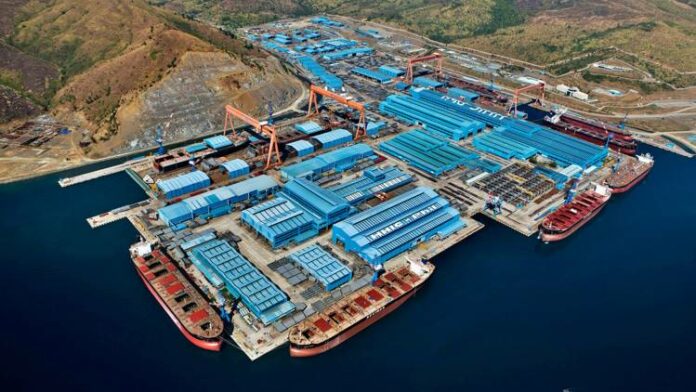
Subic-based Korean shipbuilder Hanjin Heavy Industries & Construction – Philippines (HHIC-Phil Inc.) has once again successfully delivered 2 units of 114K Tanker to its proud owner last November 13, 2018 and November 17, 2018.

Named M/V “IBERIAN SEA” and M/V “LEVANTINE SEA”, these colossal vessels were ordered by Singapore-based Eastern Pacific Shipping (EPS) from HHIC-Phil Inc. The construction was successfully carried out under the technical supervision of classification society American Bureau Shipping (ABS) together with the high quality craftsmanship of Filipino workforce.

Its ship owners are also expecting two more tankers of the same kind to be delivered on the 1st quarter of 2019. And with the positive business momentum of HHIC Phil and Eastern Pacific shipping, the latter have ordered two more tanker vessels that is set to start its construction on the 2nd quarter of 2019.

Each of the tankers measures 240 meters in length, 44 meters in width and 21.35 meters in depth. Subic shipyard skilled workforce compliments the highest standard of expertise this type of sophisticated merchant ship requires in terms of pipefitting and painting works.

These two vessels are equipped with the cutting-edge SOX scrubber system to significantly reduce sulfur emission and a fixed ballast water treatment system(BWTS) has been installed in each vessel, in strict compliance with global environment protection standards prescribed by the International Maritime Organization (IMO).

Source:portnews

eConowind Solution Readies for Sea Trials

0

The Dutch engineering firm eConowind BV has finished land-testing its foldable, autonomous wind system and is readying it for sea trials. 

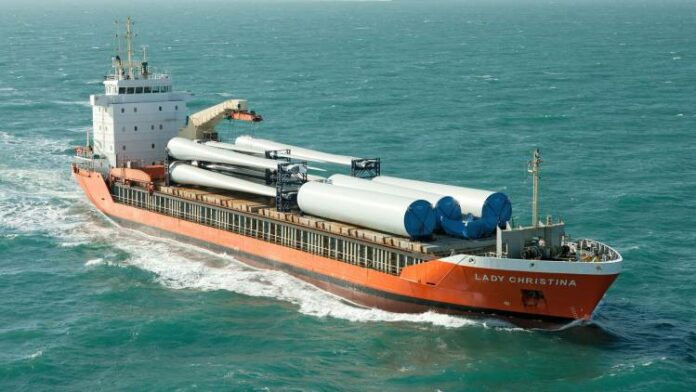
A full-size eConowind system will be tested in the North Sea and Baltic on MV Lady Christina operated by WijnneBarends Delfzijl. Two units will be installed in a 40-foot container mounted on the hatchcovers. From there, with a button push in the bridge, the VentiFoils can be folded out to act like sails. They will automatically adjust to the direction of the wind to generate maximum thrust. 

eConowind expects to start commercial production and delivery of the system in the second quarter of 2019.

eConowind is a member of the International Windship Association (IWSA) which has been holding a series of events in Northern Germany to help galvanize the development of a regional wind propulsion hub, IWSA Europe North Sea & Baltic. The hub will be formed in the coming months around a core of wind propulsion projects from the Netherlands, Germany and Scandinavia with the aim of sharing best practice and working together to further help develop, promote and ultimately build wind assist and primary wind vessels.

Th group held meetings at Hochschule Emden Leer and the Hamburg School of Business Administration to help plot the course. In attendance were eConowind (NL), Norsepower (FIN), Blue Technology (DK), Ecoflettner (DE), to R&D, Designers & Naval Architects including: MARIN (NL), MARIKO & MariGreen project (DE), Utopia Navalis (DE), Dykstra NA (NL) and IDMM (NL). 

Earlier this month, Norsepower announced that it has concluded its equity financing round, raising €3.6million ($4.1 million) in funding to drive the company’s expansion and growth plans. With the funds raised, Norsepower, whose customer’s include Maersk Tankers, Viking, Line and Bore, will be able to expand production of its Rotor Sails in Asia, as well as ramp-up its search for potential supplier partners within the region. 

The Norsepower Rotor Sail Solution is a modernized version of the Flettner rotor, a spinning cylinder that uses the Magnus effect to harness wind energy and propel ships. The solution, which is suitable for both newbuilds and retrofitting, has the ability to deliver fuel and emissions savings of up to 20 percent when wind conditions are favorable.

Over the last year, Norsepower has celebrated a number of successes, including the installation of its Rotor Sail technology onboard Viking Line’s M/S Viking Grace in April 2018, making her the first passenger ship in the world using auxiliary wind propulsion. Separately, in partnership with Maersk, Shell, and the U.K.’s Energy Technologies Institute, a Maersk P-class 109,647dwt oil product tanker was retrofitted with two 30-meter tall by five-meter diameter Norsepower Rotor Sails at the end of August 2018.

The way forward is full of exciting opportunities,” said Gavin Allwright, IWSA Secretary General. “These activities follow some of the recommendations made in the E.U. report on wind propulsion market development, which forecast up to 10,700 wind propulsion installations on bulkers and tankers by 2030 if the facilitation framework is in place. The development of this North Sea and Baltic Hub is one step in the right direction.” 

Wind Propulsion Technologies break down into seven main categories, with all technologies being fully automated in operation for ease of use, safety and efficiency:

• Soft Sail – both traditional sail and new designs of dynarig etc.
• Hard Sail – wingsails, foils etc. Some rigs have solar panels for added ancillary power generation.
• Flettner Rotor (Rotor Sail) – rotating cylinders operated by low power motors using the Magnus effect (difference in air pressure on different sides of a spinning object) to generate thrust
• Suction Wings (Ventifoil, Turbosail) – non-rotating wing with vents and internal fan (or other device) that use boundary layer suction for maximum effect.
• Kites – dynamic or passive kites off the bow of the vessel to assist propulsion or to generate a mixture of thrust and electrical energy.
• Turbines – using marine adapted wind turbines to either generate electrical energy or a combination of electrical energy and thrust.
• Hull Form – the redesign of ship’s hulls to capture the power of the wind to generate thrust.

Source:maritime-executive

Failed Canadian Warship Bidder Takes Legal Action

0

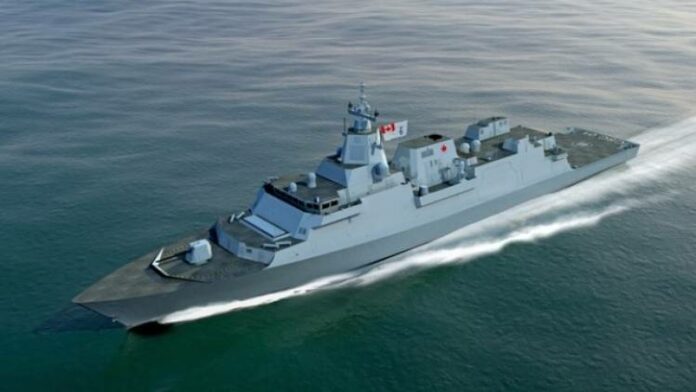
Alion Science and Technology has launched a Federal Court appeal in an attempt to overturn the Canadian Government's decision to select Lockheed Martin as the preferred bidder for the nation's new fleet of warships.

Alion Canada, a subsidiary of U.S.-based Alion Science and Technology, filed an application on Friday aimed at preventing Irving Shipbuilding from entering into a contract with Lockheed Martin for the $60-billion dollar project on the grounds that Lockheed Martin’s bid was non-compliant. Alion says the BAE Systems Type 26 combat ship proposed by Lockheed Martin does not meet the mandatory requirements set by the government' request for proposal (RFP) regarding vessel speed and the number of crew berths.

The RFP was released to 12 companies that had been pre-qualified to participate in the procurement by Irving Shipbuilding in October 2016. Irving is the prime contractor for the construction of the 15 warships at its Halifax shipyard. 

Alion states that its proposed design, based on a Dutch frigate, met all of the RFP’s requirements. A bid was also received from Navantia/Saab/CEA Technologies with their proposal was based on the Spanish Navy F-105 frigate.

The new warships will replace Canada’s 12 aging Halifax-class frigates and already-retired Iroquois-class destroyers. The choice of preferred bidder was announced in October this year, and construction of the 150-meter (492-foot) vessels is expected to start in the early 2020s.

The procurement has been the subject of bid-rigging allegations including that a number of amendments were made to the RFP to suit Lockheed Martin's bid. The company's proposed design, whilst under construction for the Royal Navy and selected for the Royal Australia Navy, is seen to be inconsistent with Canada's National Shipbuilding Strategy that calls for a proven, off-the-shelf design to cut costs and mitigate risks.

The Canadian Surface Combatant project is the largest, most complex procurement ever undertaken by the Government of Canada. 

Source:maritime-executive

Hapag-Lloyd to Retrofit Scrubbers on Ten Vessels

0

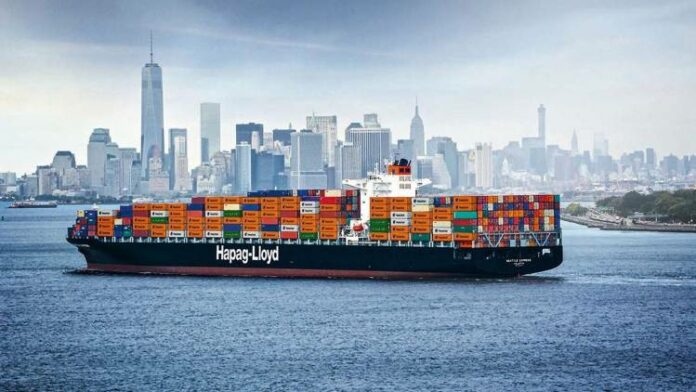
Hapag-Lloyd has ordered 10 hybrid-ready scrubbers to be installed on 10 of its Hamburg class, 13,000 TEU vessels during 2019 and 2020. 

The retrofits will start in March 2019 with the first installed on the Hamburg Express at Qingdao Beihai shipyard in China. Hapag-Lloyd is estimating all of the installations to be finished before the end of 2020. 

The decision was made as a part of Hapag-Lloyd’s response to the IMO's upcoming low sulfur regulation taking effect on January 1, 2020.

“Using compliant low sulfur fuels is the key solution for Hapag-Lloyd. However, we want to make sure we test and make use of all relevant solutions,” said Anthony Firmin, COO of Hapag-Lloyd.

Hapag-Lloyd also has 17 new vessels in its fleet, which can be converted to use LNG. The company will retrofit one vessel of 15,000 TEU during 2019 – and will then test whether LNG is a suitable alternative to low sulfur fuel.

In October, Hapag-Lloyd joined a number of other leading container shipping companies by announcing how it will recover the costs of low sulfur fuel once the IMO regulations enter into force in 2020. The company said that the use of low-sulfur fuel is the most environmentally friendly solution in the short term. However, the move to low sulfur fuel is expected to cost the shipping industry up to $60 billion, and the company says: On the assumption that the spread between high-sulfur fuel oil and low-sulfur fuel oil will be $250 per ton by 2020, Hapag-Lloyd estimates its additional costs will be around $1 billion in the first years. It has therefore developed a Marine Fuel Recovery (MFR) mechanism which will be gradually implemented from January 1, 2019 and replace all existing fuel-related charges.

Source:maritime-executive

CSIRO and Fortescue Metals Partner on Australian Hydrogen

0

CSIRO, Australia’s national science agency, and Fortescue Metals Group have announced a partnership to develop hydrogen technologies in Australia.

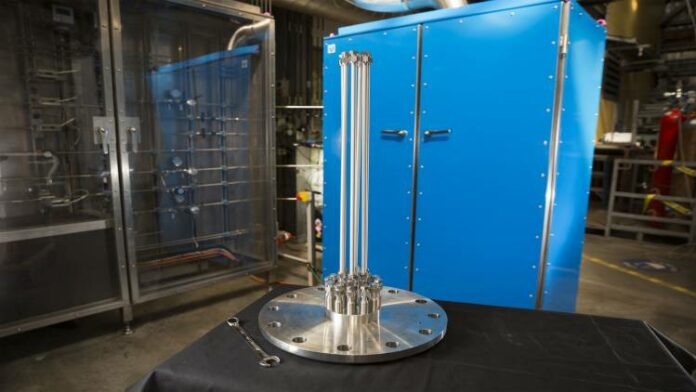
CSIRO will work with Fortescue to identify, develop and commercialize technologies to support the creation of an Australian hydrogen industry and future global uptake. The centerpiece of the A$20 million partnership is an investment in CSIRO’s metal membrane technology which enables ammonia to be used as a carrier material for hydrogen storage and transport. The agreement includes commercialization arrangements for the membrane technology, with a subsequent five-year investment in hydrogen R&D.

CSIRO’s National Hydrogen Roadmap, released earlier this year, found that an economically-sustainable hydrogen industry could soon be a reality. Hydrogen is a clean-burning fuel with a range of uses from powering vehicles to storing energy, and if produced using low-emissions energy sources, it could facilitate decarbonization across the energy and industrial sectors.

The Roadmap indicates that hydrogen technologies are reaching maturity, with the narrative now shifting from R&D to market activation. By around 2025, clean hydrogen could be cost-competitive with existing industrial feedstocks such as natural gas and energy carriers such as batteries in many applications. The Roadmap states that an appropriate policy framework could create market pull for hydrogen, with investment in infrastructure then likely to follow. 

Australia has long been dependent on imported liquid fuels and is currently not meeting domestic fuel reserve targets. Hydrogen could play a key role in protecting Australia from supply shocks by localizing liquid fuel supplies (e.g. by producing synthetic fuels) or by displacing their use in both stationary and transport applications. Hydrogen could also help manage the transition to a higher proportion of variable renewable electricity in the electricity network by overcoming challenges associated with energy intermittency. 

Australia has a history of exporting its natural resources. However, some of these markets, for example uranium, have suffered downturns as a consequence of a changing energy mix abroad. Others such as thermal coal, could be at risk in the future if global trends continue to lead towards a low carbon economy.

In contrast, the global market for hydrogen is expected to reach $155 billion by 2022, with a number of Australia’s existing trading partners, such as Japan, who are comparatively resource constrained, currently implementing policy commitments for hydrogen imports and use. The Australian Renewable Energy Agency (ARENA) has already funding for Australia’s first green hydrogen innovation hub at Jandakot in Western Australia with an eye for the Japanese market.

The hub will trial the production, storage and use of renewable hydrogen to energize a commercial-scale microgrid. Green hydrogen will be produced from on-site solar using electrolysis, fueling a range of gas appliances and blending hydrogen into the natural gas pipeline. The development project will also evaluate the potential for renewable hydrogen to be exported at a larger scale.

Potential demand for imported hydrogen in China, Japan, South Korea and Singapore could reach in the order of 3.8 million tons in 2030. Commercial scale production of hydrogen from brown coal in Victoria is likely to be available after 2030, so the majority of prior demand is expected to be met by electrolysis coupled with dedicated renewables or grid connected electricity. 

Source:maritime-executive

UNCTAD Examines Fifty Years of Shipping

0

The major events that have marked the past of maritime transport – and issues that are likely to forge its future – are examined in a special publication released on Friday, marking 50 years since UNCTAD first published its longest standing annual report, the Review of Maritime Transport.

The new commemorative publication offers a forward-looking assessment of issues likely to shape shipping in the future and explores fresh directions in research and analysis, as well as examining the history of the Review of Maritime Transport over the past 50 years. It comprises reflections by seven eminent guest essayists, chosen for their expertise and roles in the maritime transport industry:

• Kitack Lim, Secretary-General of the International Maritime Organization

• Cleopatra Doumbia-Henry, President of the World Maritime University

• Serigne Thiam Diop, former Secretary General of the Union of African Shippers Councils

• Peter Hinchliffe, former Secretary General of the International Chamber of Shipping

• Martin Stopford, President of Clarkson Research Services Limited

• Patrick Verhoeven, Managing Director of the International Association of Ports and Harbors

• Chris Welsh, former Secretary-General of the Global Shippers’ Forum

In addition to core issues covered by the Review of Maritime Transport since 1968, including demand and supply, ports and freight markets, and legal and regulatory developments affecting transport and trade, the commemorative report considers several emerging themes. These include consolidation in liner shipping, alliance formation, maritime transport costs, connectivity, green shipping, ports and environmental sustainability, digital innovations, climate change mitigation and resilience.

Source:maritime-executive

Orsted shields Race Bank substation

0

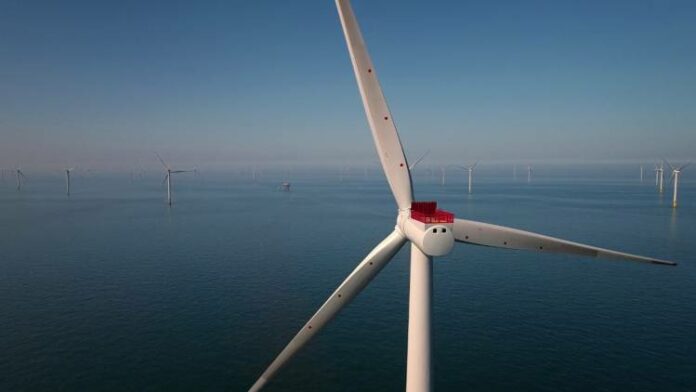
Orsted is in the final stages of commissioning a flood defence mechanism at the onshore substation for its 573MW Race Bank wind farm off east England.

Onshore works contractor J Murphy & Sons has added two 250,000-litre cylindrical plastic tanks to the substation near Wisbech, in Cambridgeshire.

The four-metre wide and five-metre deep cylindrical units are built in plastic and were recently cleaned out by drainage engineers from Lanes Group plc ahead of commissioning.

Lanes Site Supervisor Aaron Dunkley said: "The tanks are of a significant size to give appropriate flood protection for a strategically-important energy generation facility and allow regulated discharge of the water into local water courses."

Orsted fully commissioned Race Bank earlier this year and the project features 91 Siemens Gamesa 6.3MW turbines.

Source:renews

Dutch jack-up outfit completes DolWin3 duties

0

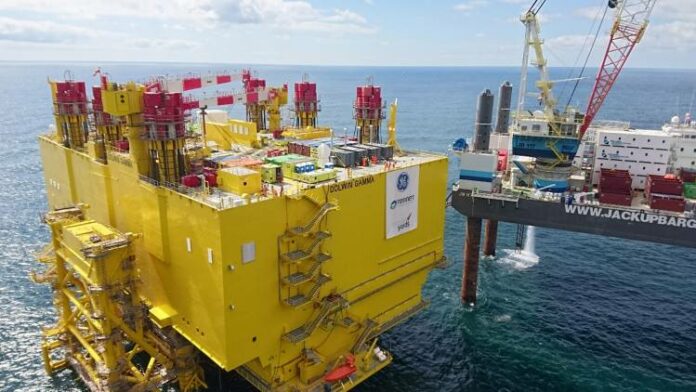
Vessel operator Jack Up Barge has completed crane and accommodation support for GE at German grid operator TenneT’s DolWin3 grid hub in the German North Sea.

The Dutch company deployed its JB-117 vessel on the job, which included support, maintenance and accommodation of crew and stores.

The jack-up has now deployed to BorWin3, this time for Petrofac, where it is performing similar duties, the company said.

For BorWin3, this will be our first time working with Petrofac – something that we are very much looking forward to,” said Jack Up Barge commercial director Jurgen de Prez.

And for DolWin3, we are pleased with the cooperation with GE, a strategic partner of ours with this contract as well as future projects they are tendering on.”

Source:renews

Heerema Fabrication Group Sells UK and Netherlands Yards

0

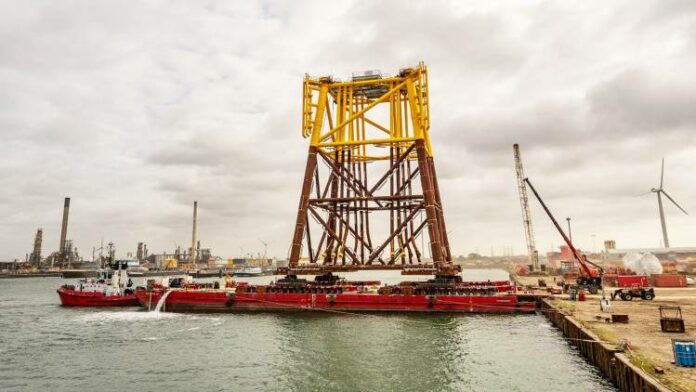
Dutch offshore construction and engineering company Heerema Fabrication Group (HFG) intends to divest a significant part of its activities in the field of design and fabrication of complex steel constructions for the offshore market.

HFG has been struggling for some time with insufficient project volume and marginal profitability. In addition, the risks associated with building topsides are high and clients are not prepared to pay for this risk.

As a result of the divestment HFG intends to dispose of its activities at the locations in Zwijndrecht (The Netherlands) and Hartlepool (United Kingdom). The intended restructuring will see the closure of HFG’s head office in The Netherlands. It is anticipated that 60 jobs at the company’s headquarters will be phased out.

HFG has signed a letter of intent aiming to sell its activities at the yard in Zwijndrecht with the Italian engineering and construction company Rosetti Marino S.p.A.. It is expected that the transfer of activities will not affect the workforce at the Zwijndrecht yard. In the coming period HFG also intends to seek a buyer for its activities at the yard in Hartlepool. The activities at the HFG yard in Vlissingen (The Netherlands) and Opole (Poland) will continue as they are.

The management of HFG meanwhile has informed staff at all locations about the intended plans and has requested advice from the works council of HFG Netherlands. HFG is committed to support staff who are being made redundant as a result of the divestment. “We are very much aware that the intended plans will have a deep impact on our staff at the head office in Zwijndrecht”, says HFG’s CEO Koos-Jan van Brouwershaven. “We will be providing every support we can offer in this very difficult period.”

The current intended divestment follows a restructuring of HFG in November 2016 that took place against the background of the decreased oil price, the consequent lack of investment in the oil and gas industry and unfavourable contractual conditions in the wind energy market. The restructuring was based on the expectation that the market would improve from 2019 onwards. Van Brouwershaven is disappointed that the reorganization did not bring HFG the results it needed. “With the ongoing difficult market conditions there is not enough perspective for HFG to continue its activities with the current structure and head office organization.”

The HFG yard in Vlissingen, supported by the yard in Poland, will remain focused on the construction of jackets for the offshore industry and at the same time will continue to act as shore base for its sister company HMC.

Source:marinelink