5.1 C
New York
Home Blog Page 1236

Damen announces new service accommodation and transfer vessel

0

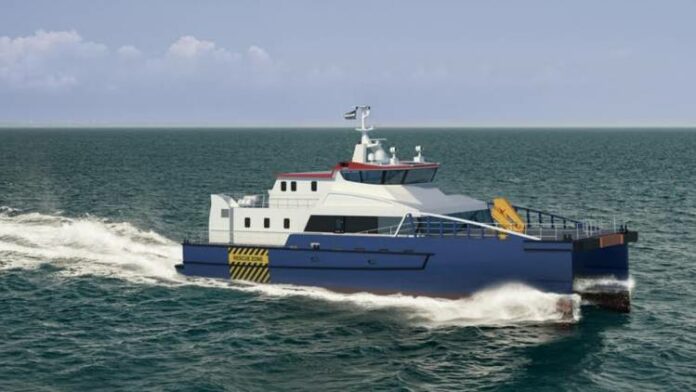
Damen Shipyards Group has recently announced a new design. The Fast Crew Supplier (FCS) 3410 service accommodation and transfer vessel (SATV) contains numerous design features that ensure its suitability for operations in the developing offshore wind market in North America. 

The design of the new vessel builds on the success of proven DAMEN designs that have earned themselves an outstanding reputation in the European renewables market. 

The premise of the design is the DAMEN Twin Axe bow design. The Axe Bow, a patented design that allows the vessel to cut through waves instead of slamming, significantly improves seakeeping and onboard comfort. Damen’s FCS 2610 optimised this seakeeping behaviour by combining the Axe Bow with a catamaran hull form.

The FCS 2610 was heralded as a game changer in the offshore renewables industry in Europe and went on to sell over 45 vessels. DAMEN has recently developed this theme further with the FCS 2710 – a new FCS vessel one metre longer than its predecessor and, significantly, with an additional metre in water clearance, enabling the vessel safely extended operational windows. 

The FCS 3410 further develops this evolutionary theme, tailoring the concept to meet the requirements of the emerging US offshore renewables market, as Daan Dijxhoorn, DAMEN sales manager US explains. “This vessel is well suited to numerous markets, however, we have given it long endurance capability so that it can remain at sea for up to five days at a time – a requirement typically seen in US operations. To facilitate this we have designed a vessel 6 metres longer than previous FCS types, able to host more on board personnel and accommodation.”

The FCS 3410 also draws on the successful DAMEN Accommodation Support Vessel 9020, a walk-to-work vessel designed for transporting and providing accommodation for offshore personnel for up to a month. 

Daan continues: There’s a real sense that offshore wind is building momentum. The Black Island Wind Farm off Rhode Island is still the only wind farm in operation off the coast of the USA nearly two years after it opened, but a number of states are pushing ahead with their own plans for offshore renewable energy development.

Massachusetts currently leads the way in these developments with a target of 1,600 MW generated by wind energy by 2027 and having an 800 MW project planned to begin next year. New York, New Jersey and Maryland also have plans in the pipeline. 

The FCS 3410 would be built on location in the United States. For many years, US partner yards have built DAMEN designs at domestic locations, providing American ship owners with access to Damen’s designs while complying with the requirements of the Jones Act. This process, the DAMEN Technical Cooperation, ranges from simple licensing up to the delivery of full materials package, including technical support. 

Source:portnews
Kyiv Says Russia Attacked Ukrainian Navy Ships, Seized Three In Black Sea

0

The Ukrainian Navy announced the incident on a day of heightened tension after Russia reportedly blocked the three Ukrainian Navy ships from passing from the Black Sea into the Sea of Azov via the Kerch Strait.

Russian Foreign Ministry spokeswoman Maria Zakharova late on November 25 accused Ukrainian authorities of using “gangster tactics” in the Kerch Strait — first a provocation, then pressure, and finally accusations of aggression.

Russia’s Federal Security Service (FSB), which oversees the country’s border guard service, said its forces fired weapons at the Ukrainian Navy ships to get them to stop after they had illegally entered Russia’s territorial waters.

But the Ukrainian Navy says its vessels — including two small-sized artillery boats — were attacked by Russian coastguard ships as they were leaving the 12-mile zone of the Kerch Strait and moving back into the Black Sea.

Ukrainian President Petro Poroshenko said late on November 25 that “Russian special forces have taken over some ships.”

Poroshenko called a meeting of his military cabinet to evaluate and determine Ukraine’s next steps.

The Ukrainian Foreign Ministry said it considered Russia’s “aggressive actions” to be a violation of international law that would be met with “an international and diplomatic legal response.”

Meanwhile, angry demonstrators were gathering in front of Russia’s embassy in Kyiv late on November 25 after authorities announced the attack against the Ukrainian Navy ships.

Earlier the same day, Kyiv said a Russian coast guard vessel rammed the Ukrainian Navy tugboat in the same area as three Ukrainian ships approached the Kerch Strait in an attempt to reach the Ukrainian port city of Mariupol on the Sea of Azov.

Mariupol is the closest Ukrainian government-controlled city to Donetsk and Luhansk, the breakaway regions of eastern Ukraine controlled by Russia-backed separatists.

The Ukrainian Navy said the collision happened because “the invaders’ dispatcher service refuses to ensure the right to freedom of navigation, guaranteed by international agreements.”

It also accused Russia of demonstrating an “aggressive nature and complete disregard for the norms of international law.”

The Ukrainian Navy said in a statement:

“The ships of the Ukrainian Navy continue to perform tasks in compliance with all norms of international law. All illegal actions are recorded by the crews of the ships and the command of Ukraine’s Navy and will be handed over to the respective international bodies.”

After that incident, Russian authorities closed passage by civilian ships through the Kerch Strait.

Deep Sea Mining Zone Hosts CO2-Consuming Bacteria

0

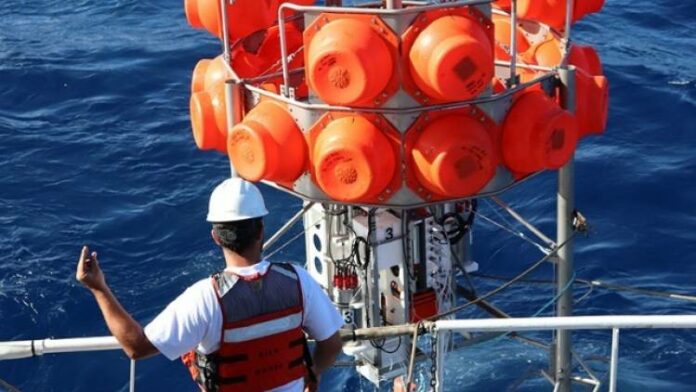
Scientists have discovered that bacteria in the deepest parts of the seafloor are absorbing carbon dioxide and could be an additional food source for other deep-sea life.

Prof. Andrew K. Sweetman from Heriot-Watt University in the U.K. studied bacteria living 4,000 meters below the ocean surface in the Clarion-Clipperton Fracture Zone.

Until now, scientists believed the main source of biomass on the seafloor was the organic matter that floated down towards the depths: dead fish, plankton and other detritus. However, Sweetman made two  major findings: “In contrast to similar studies in the north Atlantic Ocean, we found that bacteria and not seafloor animals were the most important organisms consuming organic detritus that floats down towards the ocean floor. “

We also discovered that benthic bacteria are taking up large amounts of carbon dioxide and assimilating it into their biomass through an unknown process. This was completely unexpected.

Their biomass then potentially becomes a food source for other animals in the deep sea, so actually what we’ve discovered is a potential alternative food source in the deepest parts of the ocean, where we thought there was none.  

“If we upscale our results to the global ocean, our findings reveal that 200 million tons of CO2  could be fixed into biomass each year by this process. This equates to approximately 10 percent of the CO2 that the oceans remove each year, so it’s possibly an important part of the deep-sea carbon cycle.”

Sweetman's team found the same activity at multiple study sites separated by hundreds of kilometers.

The Clarion-Clipperton Fracture Zone is a prime area of interest for future seabed (polymetallic nodule) mining. 16 contractors from countries including the U.K., Germany, France and Korea have claimed exploration rights in the region and have begun conducting surveys to gather baseline data on biodiversity and genetic connectivity across their claim areas.

Sweetman is calling for the International Seabed Authority to ensure contractors in this area will implement carbon cycling monitoring as well as biodiversity and genetic studies. “If mining proceeds in the Clarion-Clipperton Fracture Zone, it will significantly disturb the seafloor environment.“

The full-scale mining proposed in the Clarion-Clipperton Fracture Zone could significantly impact benthic ecosystems for decades, perhaps even longer.

“Now that we have shown that novel carbon cycling processes are happening on the seafloor in this region, which may be very significant in terms of the carbon cycle, authorities should insist that hopeful mining contractors study these  processes in baseline surveys, impact assessments and monitoring, so that mining-related changes in this important ecosystem process can be identified and tracked.”

Source:maritime-executive

E.U. Commission Finds No Aid Given to Antwerp Terminal Operators

0

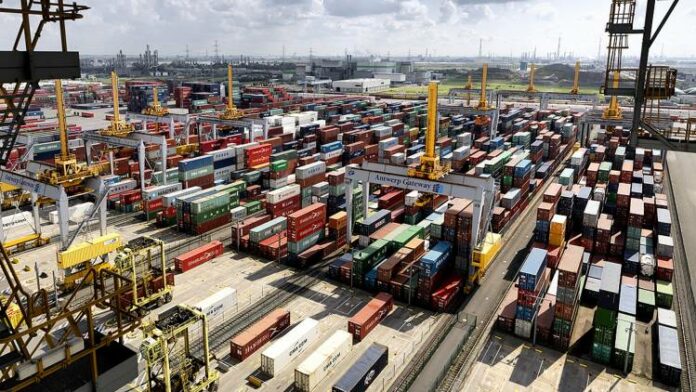
The European Commission has concluded that reductions in compensation payments granted by the state-owned Port of Antwerp to two container terminal operators were granted on market terms and hence do not involve state aid within the meaning of E.U. rules.

The Port of Antwerp is managed by the Antwerp Port Authority, a public authority, which is fully-owned by the city of Antwerp. The Authority makes land available to companies to operate in the port area on the basis of concession agreements.

In 2004, the Authority concluded concession agreements with two container terminal operators, PSA Antwerp NV and Antwerp Gateway NV, for 42 years. The agreements are similar to the concession contracts awarded by the Authority to other container terminal operators and include a requirement that a minimum quantity of containers is handled in each terminal every year.

Between 2009 and 2012, PSA Antwerp NV and Antwerp Gateway NV did not to reach their yearly minimum tonnage requirements. As a result, under the concession agreements, they would have been expected to pay compensation to the Antwerp Port Authority. However, instead of collecting the compensation due from the two companies, in March 2013, the Authority retroactively revised downwards the minimum tonnage requirements for the two companies. This reduced by around 80 percent the amount of compensation due by each of the two operators.

Following a complaint from a competitor, in January 2016, the Commission opened an investigation to examine whether the compensation reductions were in line with E.U. State aid rules and whether a private operator would have accepted a similar reduction (the market economy operator principle).

The Commission investigation found that in the context of the economic crisis a certain adjustment of the minimum tonnage requirements was justifiable, as container volumes and traffic decreased in all major ports in Europe, including in the Port of Antwerp. For the same reason, the Authority also adjusted the minimum tonnage requirements of other terminal operators.

PSA Antwerp NV and Antwerp Gateway NV were in a very specific situation compared to other operators active in the Port. As the concessionaires of a new area of the port (Deurganckdok), they were still in a start-up phase when the economic crisis started. This put the two companies in an even more challenging situation in the context of the economic crisis and further justified the adjustment to their minimum tonnage requirements, the investigation found.
  
The Port Authority was concerned that forcing the two concessionaires to pay the full amount of compensation could have had such a negative effect that it would put their relationship with the port at risk.

The investigation concluded that the size of the reduction of the minimum tonnage requirements and the methodology applied by the Antwerp Port Authority to determine these adjustments for the two concessionaires were in line with what a private market operator would have used and applied.

Therefore, the Commission found that the Antwerp Port Authority acted in the same way as a private market operator an that it did not constitute State aid.

Earlier this month, DP World Antwerp, operator of the Antwerp Gateway, announced that it would invest 197 million euros ($223 million) in the further expansion of the capacity of its terminal. The existing container terminal needs to expand by more than a third in order to meet the expected growth prognoses. DP World Antwerp wants to evolve from the current 2.5 million containers to 3.4 million units by 2023.

Source:maritime-executive

China Harbhour Engineering wins deal to expand Sri Lanka port anchorage

0

China Harbhour Engineering Company has been selected to expand the deep water anchorage capacity at a container terminal in Sri Lanka’s Colombo Port, a legislator said.

The expansion of the anchorage will allow two ships to be accommodated at the the Jaye container terminal owned by state-run Sri Lanka Ports Authority, Mahinda Samarasinghe who was appointed Ports Minister in Sri Lanka’s disputed cabinet said.

The deal was approved by the cabinet, he said.

Sri Lanka’s is in the midst of a political crisis after President Maithripala Sirisena appointed Mahinda Rajapaksa as Prime Minister, who has been defeated twice in no confidence motions in parliament.

Sri Lanka’s ports has been one of the fastest growing in the world with transshipment traffic on the rise.

Source:hellenicshippingnews

ABB extends its service network in Zhoushan, China

0

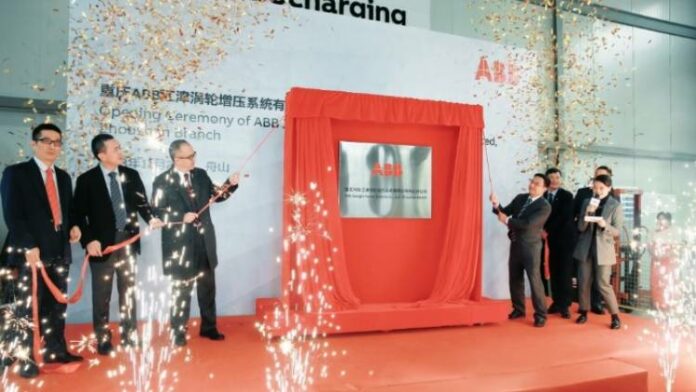
To continue to provide customers across the globe with greater access to ABB’s high-quality service and parts, ABB Turbocharging has announced the establishment of a branch office of ABB Jiangjin Turbo Systems Co., Ltd. in Zhoushan.

Zhoushan, thanks to its superior geographical position and the booming development of China’s marine industry and economy, is now taking over 35 percent of the total working load of ship repair for the country, making it the premier ship repair center in China. With the rapid growth in the demand for efficient and convenient services from customers, ABB foresaw the opportunity at this prime location and reached a strategic cooperation with Zhoushan Xinya Shipyard Co., Ltd., an important hub for ABB.

This branch will offer customers the benefit of ABB’s original spare parts and services, and more convenient access to maintenance and repair for all ABB turbochargers, regardless of the model types and use. With the new location, the time previously required for repairs and maintenance will now be significantly reduced.

"ABB Jiangjin Turbocharging System Co., Ltd. Zhoushan Branch is the first legal entity established by ABB in Zhoushan,” said Mr. Jiang Haibo, Head of Industrial Automation Division, ABB China. “It will be a valuable addition to our sales and service network in Zhoushan and the entire south-eastern coastal Yangtze River Delta region. It will help ABB remain closer to the needs of the market and serve our customers faster and better, as well as in the delivery of ABB’s mission ‘In China, for China, and for the world’.

The cooperation with local partners will encourage and grow innovation to meet the needs of both present and future customers, further contributing to the regional industrial transformation and upgrading. It will also create positive influences and enhance the economic development of Zhoushan and Zhejiang province.

We are very optimistic about the future of Zhoushan. By leveraging ABB’s technical advantages in Internet of Things and digitalization, through active participation in the construction of key projects and the economic development of Zhoushan, we are confident to achieve a ‘win-win’ collaboration,” added Haibo.

As well as offering geographical benefits to customers, the branch will also provide greater access to customers to fully utilize ABB’s digital offerings through its support network.

ABB Turbocharging is committed to providing customers with high quality and accessible services and products, which encompasses the delivery of innovative and digital solutions. These solutions, be it products or services, enhance the equipment performance, increase operational flexibility, and reduce operating costs (OPEX),” said Allan-QingZhou Wang, Head of ABB Jiangjin Turbo Systems Co., Ltd.

ABB Jiangjin Turbo Systems Co., Ltd. sales and service network will serve both domestic and international customers. These include branches/subsidiaries in major coastal cities such as Hong Kong, Guangzhou, Shanghai, Tianjin, Dalian, Qingdao, Zhoushan, as well as service points in Shekou and Fuzhou in cooperation with local shipyards, in a bid to optimize utilization of resources and service footprint, expand network coverage and improve service responsiveness.

Source:hellenicshippingnews

DEME Launches Orion

0

Belgian offshore vessel owner DEME has launched its next generation, giant new offshore installation vessel ‘Orion’ in a ceremony at the COSCO Qidong shipyard in China.

 ‘Orion’ will feature an unrivalled combination of exceptionally high transport and load capacity, impressive lifting heights and green technology.

The launching marks a major milestone in the construction of this next generation vessel, which is progressing at the COSCO shipyard according to schedule. ‘Orion’ will be deployed for the construction of the largest offshore wind farms, to service the oil and gas industry and for the decommissioning of offshore installations.

With a total installed capacity of 44,180 kW, ‘Orion’ will be equipped with a high-tech Liebherr crane with a lifting capacity of 5,000 tonnes and can hoist heavy loads at an exceptional radius. The loads can be lifted to an unrivalled height of more than 170 m.

The deck space and deadweight has been maximised to provide an exceptionally high transport and load capacity. ‘Orion’ can take the heaviest monopiles, jackets, wind turbine components and structures in a single shipment, and can transport and install the next generation of multi-megawatt wind turbines.

Environmental considerations are also an important element of the vessel design. ‘Orion’ has dual fuel engines and can run on liquefied natural gas (LNG). It will have a Green Passport and Clean Design notation. This unique vessel will also have other environmental innovations on board, such as a waste heat recovery system that converts heat from the exhaust gases and cooling water to electrical energy. The evaporation of LNG will cool the accommodation with a cold recovery system.

At 216.5 metres long, ‘Orion’ features DP3 capability. She is expected to join the fleet at the end of 2019.

A number of pioneering vessels recently entered the DEME fleet, including the dual fuel dredgers ‘Minerva’ and ‘Scheldt River’ in 2017, the cable installation vessel ‘Living Stone’ and DP2 jack-up platform ‘Apollo’ in 2018.

Other innovative vessels under construction include the 15,000 m³ trailing suction hopper dredger ‘Bonny River’ and the powerful cutter suction dredger ‘Spartacus’. Additionally, DEME recently ordered two new trailing suction hopper dredgers and two split barges, which will join the fleet in 2020.

The Belgian dredging, environmental and marine engineering group DEME is an international market leader for complex marine engineering works.

Source:marinelink

Sapura Energy Wins Contracts in Mexico, Malaysia

0

Malaysia-based integrated oil and gas services Sapura Energy Berhad has strengthened its presence in Mexico and Malaysia with new contract wins valued at approximately RM1.75 billion (USD 410 mln).

The new contracts have lifted the company’s orderbook to RM18 billion and total contract wins to-date for this financial year to RM7 billion (USD 1.68 bln).

Sapura Energy has built capabilities and expertise that are critical to support its clients in their quest to meet global energy demand and as a result, has a strong track record that has opened up greater prospects in the opportunity funnel for the company worldwide.

In line with the company’s pursuit for growth and strategy to capitalise on the industry upturn, the new contract wins reflect Sapura Energy’s continued successes in deepening its penetration into existing core markets and expanding into new markets. The company has established a global infrastructure that would enable it to manage and execute work around the world.

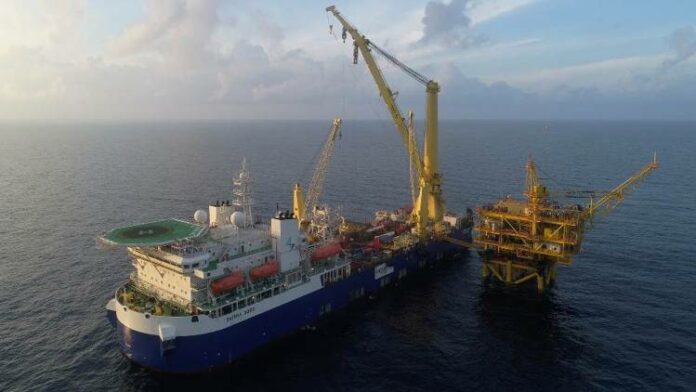
Among the latest wins is a contract from Hokchi Energy S.A. de C.V. for Sapura Energy’s wholly-owned subsidiary in Mexico to undertake offshore engineering, procurement, transportation, installation and pre-commissioning and commissioning (EPCIC) works in the Hokchi Field Development in the Gulf of Mexico. The scope will include fabrication and installation of a central wellhead platform and a satellite platform that will be connected to Hokchi Paraiso, an onshore processing facility.

Sapura Energy has also been awarded a contract from ENI Mexico S. de. R.L de. C.V to undertake engineering, transport, construction, installation and pre-commissioning of sealine and onshore pipeline for the Offshore Block Area 1 in the Gulf of Mexico. Additionally, the scope will involve fibre optic cabling, and transportation and installation of the Mizton wellhead platform at water depths of approximately 40 meters.

Another significant win is a five-year contract for the provision of Pan Malaysia Underwater Services awarded under the Petroleum Arrangement Contractors (PAC). The contract will be undertaken by Sapura Energy’s wholly-owned subsidiary, Sapura Subsea Services Sdn. Bhd. (Sapura Subsea). The PAC consists of Sarawak Shell Bhd and Sabah Shell Petroleum Company Limited; Murphy Sarawak Oil Co., Ltd. and Murphy Sabah Oil Co., Ltd.; Repsol Oil & Gas Malaysia Limited; and Kebabangan Petroleum Operating Company Sdn Bhd.

Sapura Subsea will undertake underwater services which includes the utilisation of its vessels, air and saturation diving, and remotely operated vehicles. The scope will also cover inspection, maintenance and repair works to support the PACs’ underwater facilities located offshore in East Coast Malaysia.

Source:marinelink

Novatek Kicks-off Yamal LNG’s Train 3

0

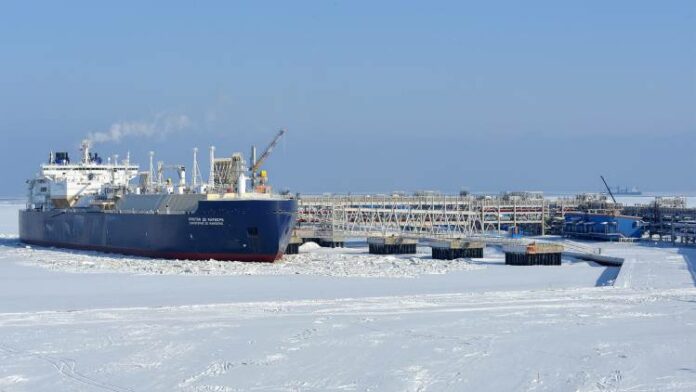
Russia's Novatek has begun production of the commissioning LNG from its third 5.5 million mt/year train at the Yamal LNG project, bringing the plant's total capacity to 16.5 mln tonnes of LNG per year.

“We have successfully launched all three LNG trains at our flagship Yamal LNG project according to our revised early launch schedule,” Novatek’s head Leonid Mikhelson said.

Russia’s largest independent natural gas producer said in a press release that the third LNG train was launched more than one year ahead of the planned original schedule. All three technological trains have been launched on budget, it said.

This fact is unprecedented for the industry plagued by massive cost overruns and project delays, Mikhelson claimed.

"We have transformed NOVATEK into a global gas player and obtained the unique experience of design and construction of Arctic LNG projects. We will use this experience implementing our future LNG projects in this prolific hydrocarbon resource basin. The innovative fourth LNG train at Yamal LNG will be based on NOVATEK's proprietary liquefaction technology called “Arctic Cascade” and will utilize Russian-manufactured equipment,” he added.

Yamal LNG project (50.1% owned by Novatek, 20% – France’s Total, 20% – China’s CNPC, 9.9% – Silk Road Fund) is being implemented on the resource base of the Yuzhno-Tambeyskoye field in Russia’s Arctic region.

Production at the first LNG train was commenced on December 5, 2017. 7. On August 2018, Yamal LNG shipped the first batch of LNG after the launch of the second train of the plant.

Meanwhile, a report in Reuter's said that a LNG tanker is transferring a cargo of Russia’s Yamal LNG to another vessel off the tip of northern Norway on Thursday, the first such operation that will help the facility raise production.

The Vladimir Rusanov, an Arc7 ice-breaking LNG tanker, and the lower Arctic-classed Pskov LNG tanker are both anchored off Honningsvag, Norway, according to Refinitiv Eikon data.

Source:marinelink

Authorities of Busan and Rotterdam ports ink LoI for the Maasvlakte Distribution Park West

0

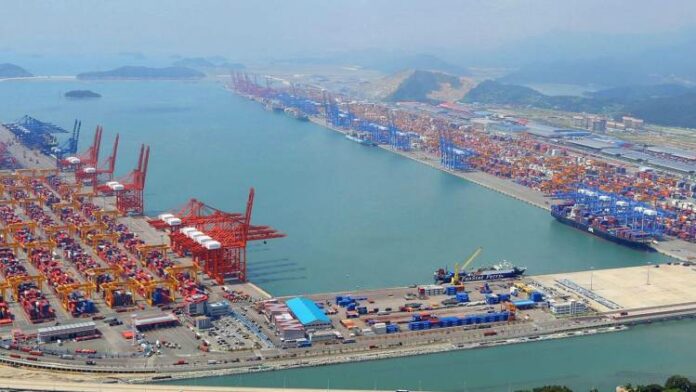
The Busan Port Authority and the Port of Rotterdam Authority signed a Letter of Intent for the allocation of a 5 to 10 hectare site on the Maasvlakte Distribution Park West. It is the second LOI signed in a short time for this distribution site, the Authority of Port of Rotterdam said in its press-release.

The Busan Port Authority wants to develop a sustainable warehouse on the Maasvlakte Distribution Park West, to be used by multiple, mainly Korean, service providers. Combined with the previous agreement, this means that 15 to 20 hectares of the total available 100 hectares have already been reserved.

Accessible
Maarten de Wijs, Business Manager Distribution and Warehousing of the Port of Rotterdam Authority, explains the great interest in the only available 'greenfield' location in the Port of Rotterdam due to the favourable location of the site. “The site has multimodal links by road, rail and water and is located just a stone’s throw from high-frequency deep-sea and short-sea connections. The Distribution Park is also located conveniently for the A15, the Maasvlakte Plaza Truck parking area, the existing Maasvlakte Distribution Park and the freight rail links between Maasvlakte and the European hinterland.”

Construction height
The part of the Maasvlakte Distribution Park West that is still available will be allocated in plots of various sizes. Coupled with the fact that there are no construction height restrictions, this makes Maasvlakte Distribution Park West extremely suitable for the development of large-scale distribution, says De Wijs. “I see particularly good opportunities for the chemical industry, cold storage and the distribution of high-quality freight.”

Source:portnews