3.1 C
New York
Home Blog Page 1191

14 Migrants Caught Attempting to Cross Channel on Stolen Trawler

0

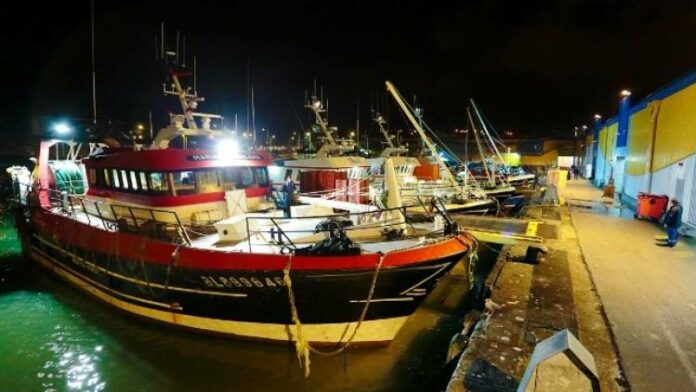
French police have intercepted 14 migrants at Boulogne who were allegedly intending to cross the English Channel on a stolen fishing trawler. The interdiction occurred in port after suspects were spotted in the act of breaking into the vessel. 

The migrants detained are all Iraqi nationals, and include one mother and one child. An additional two individuals are sought on suspicion of human smuggling, according to AFP.

This latest incident follows days after the UK government reported a spike in the number of people caught while trying to cross the Channel and enter Britain using small boats. About 230 migrants were discovered while attempting to make the crossing last month, including more than 100 who were intercepted by French police before their departure. The others were detected at sea or on arrival near Dover. 

In response to the rising number of crossings, the UK is recalling two patrol vessels from a migrant rescue mission in the Mediterranean to join the sole ship that is currently conducting maritime security operations in the Channel. 

Members of the opposition have described the announcement and the response plan as a political ploy to drum up support for Prime Minister Theresa May's controversial Brexit plan. The agreement – the product of months of negotiations with Brussels – comes up for a decisive up-or-down vote in Parliament in mid-January. If it is not approved, Britain will leave the EU without a transition plan or a trade agreement at the end of March. 

“There’s no question that with Brexit, and also with the approach of the meaningful vote in January, people are being whipped up about migration issues, because the government thinks this is the best way of frightening people to vote for their deal," alleged shadow home secretary Diane Abbott, speaking to The Guardian. “It’s the [Nigel] Farage technique: ‘hordes’ of people trying to enter the country. You frighten people about that.”

Source:maritime-executive

Challenge Peak Ships 1st Plant Condensate from Ichthys LNG Project

0

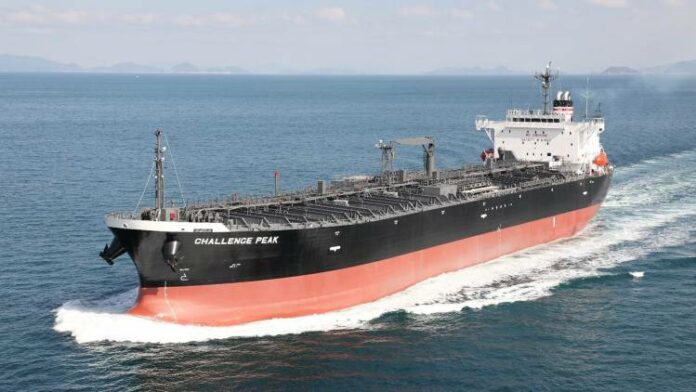
The oil products tanker operated by Singapore-based NYK Bulkship (Asia) Challenge Peak  has shipped the first batch of plant condensate produced at the onshore gas liquefaction plant of the INPEX-operated Ichthys LNG Project.

According to a press release from the Japanese shipping and logistics company NYK (Nippon Yusen Kabushiki Kaisha), the condensate was loaded from the gas liquefaction plant in Darwin in the Northern Territory of Australia, and the vessel departed for an Asian country on December 26.

A joint venture among INPEX (the operator), oil major Total, and others, the Ichthys LNG Project is one of the largest LNG projects in the world, it said.

At its peak, the project is expected to produce approximately 8.9 million tons of LNG and approximately 1.65 million tons of LPG per annum, along with approximately 100,000 barrels of condensate per day.

In accordance with its medium-term management plan “Staying Ahead 2022 with Digitalization and Green,” the NYK Group seeks to secure stable freight rates and provide flexible and optimal transport options that meet customers’ diversifying needs and contribute to stable energy supply.

Source:marinelink

Ørsted Selected for Connecticut Offshore Wind Farm

0

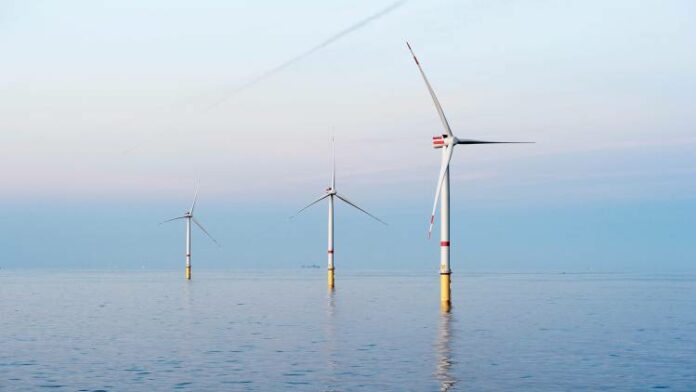
Connecticut’s Department of Energy and Environmental Protection has selected Ørsted’s Revolution Wind project to move forward to negotiate a fixed-price power purchase agreement for 0.42TWh (terawatt hours) per year – equivalent to 100MW offshore wind capacity.  

Subject to contract signing and Ørsted’s final investment decision, construction is expected to start in 2022, and the wind farm is expected to be commissioned in 2023.

With the 100MW added capacity, Revolution Wind has now secured a total of 700MW offshore wind capacity, including previously awarded projects in Rhode Island and Connecticut, which Ørsted will build as one joint project. In addition, Ørsted will build the adjacent 130MW South Fork project at the same time as Revolution Wind.

Revolution Wind is part of the Deepwater Wind portfolio which Ørsted acquired in October 2018. Deepwater Wind proposed the 100MW Revolution Wind project prior to the company’s acquisition.

In the U.S., Ørsted has projects underway in seven states on the U.S. East Coast which are expected to provide over 10GW of offshore wind capacity by 2030.

Ørsted’s US offshore wind farms in operation (30MW in total):

•  Block Island, America’s first offshore wind farm, comprises five General Electric 6MW turbines with a total capacity of 30MW. The Block Island wind farm, located three miles from Block Island, Rhode Island, came into operation in December 2016.

Ørsted’s U.S. offshore wind development projects with revenue contracts awarded or under negotiation (950MW in total):

•  Revolution Wind (700MW): Located within Deepwater Wind’s northern Massachusetts-Rhode Island BOEM lease area, Revolution Wind will interconnect into southern New England where it will deliver power to Rhode Island (400MW) and Connecticut (300MW). Subject to permitting, securing power purchase agreements and final investment decision, Revolution Wind is expected to be commissioned in 2023. The Revolution Wind lease area is located more than 15 miles south of the Rhode Island coast.
     
•  Skipjack (120MW): Located more than 19 miles from Ocean City, Maryland, Skipjack will interconnect into the Delmarva peninsula where it will deliver power to the residents of Maryland under the 20-year OREC order which was issued by the Maryland Public Service Commission in 2017. Subject to permitting, further development, and final investment decision, Skipjack is expected to be commissioned by the end of 2022.
     
•  South Fork (130MW): Located 35 miles east of Long Island, South Fork will interconnect into eastern Long Island where it will deliver power to households under a long-term power purchase agreement with the Long Island Power Authority. Subject to permitting, further development, and final investment decision, South Fork is expected to be commissioned by the end of 2022.

Ørsted’s future offshore wind development projects in the U.S. (can potentially be developed into a total capacity of approx. 8GW):

•  Constitution Wind/ Bay State Wind: A 50-50 joint venture between Ørsted and Eversource which can be developed into an up to 2GW offshore wind site. Bay State Wind/Constitution Wind is located 25 miles off the Massachusetts South Coast, and 15 miles off the coast of Martha’s Vineyard.
     
•  Ocean Wind: An up to 3.5GW offshore wind site off the coast of New Jersey. Ocean Wind is in the early stages of development and will be located approximately 10 miles off the coast of Atlantic City.
     
•  Garden State Offshore Energy: A 50-50 joint venture with PSEG, a leading New Jersey utility and power generation company, holds the rights to a BOEM lease off the coast of Delaware and New Jersey with the potential for approx. 1.2GW of offshore wind.
     
•  New England lease areas: Ørsted holds the rights to two BOEM lease areas off the coast of New England which contain the potential for a further 1.3GW with close proximity to the growth markets in the North East.
     
•  In Virginia, Ørsted will be constructing two 6MW wind turbine positions for phase one of Dominion Energy’s Coastal Virginia Offshore Wind Project. The two companies have signed a memorandum of understanding giving Ørsted exclusive rights to discuss the potential development of up to 2GW of offshore wind capacity.

Ørsted recently acquired Lincoln Clean Energy, a leading U.S. developer of onshore wind farms. In addition, Ørsted is active in battery storage and solar development and last year established an office in Austin, Texas, to lead those efforts.

Globally, Ørsted operates more than 1,100 offshore wind turbines. Ørsted has installed approximately 5.6GW offshore wind capacity and has a further 3.4GW under construction. In addition, Ørsted has secured the rights to build approximately 0.9GW offshore wind in the U.S. by 2023, approx. 1.1GW in Germany by 2025, and approximately 1.8GW in Taiwan on two projects to be built in 2021 and 2025. It is Ørsted’s ambition to have installed a total of 15GW offshore wind capacity world-wide by 2025.

Source:maritime-executive

London backs rise of the renewables robots

0

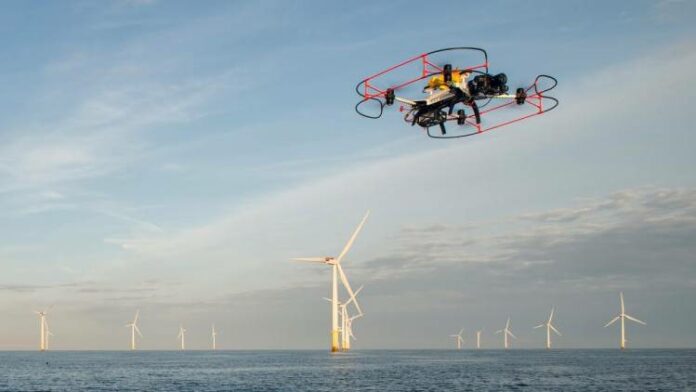
The UK Government is investing a shave over £26m to support the creation of robots for a range of industrial uses, including at offshore wind farms.

Researchers will test new technologies, such as the use of artificial intelligence software on satellites in orbit to detect when repairs are needed, London said.

Among the companies to secure support is Bladebug, which will be backed to develop a demonstrator for robotic inspection and maintenance of offshore wind turbine blades.

Innvotek will also be supported on its in-service X-ray radiography of offshore wind blades.

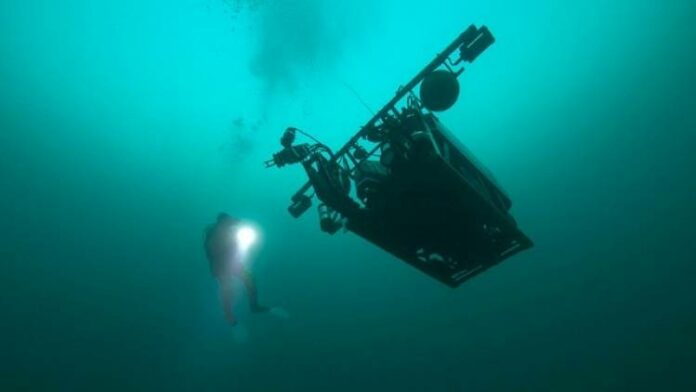
A third company called Innovative Technology and Science is developing autonomous, robotic and AI enabled bio-fouling monitoring, cleaning and management system for offshore wind turbine monopile foundations and will also get funding.

Other companies to win backing include Rocvo for its autonomous aquatic inspection and intervention operations.

The government funding is part of the country’s modern industrial strategy, which invests in the technologies of tomorrow to help support the creation of high skilled jobs across the country, according to London.

UK Research and Innovation chief executive Mark Walport said: “The projects announced today demonstrate how robots and artificial intelligence will revolutionise the way we carry out complex and dangerous tasks, from maintaining offshore wind farms to decommissioning nuclear power facilities."

They also illustrate the leading role that the UK’s innovators are playing in developing these new technologies which will improve safety and boost productivity and efficiency.

Source:renews

LNG marine fuel gets a push in the United States

0

In November last year, energy supermajor Shell Global, Q-LNG, VT Halter Marine and Wärtsilä began work on an articulated tug barge (ATB). This, one commitment, managed two feats. One, Shell will soon be able to supply LNG fuel to cruise ships along the entire eastern coast of the US. More importantly, it has reaffirmed that LNG is quickly gaining a foothold as the future choice of fuel for the US marine industry.

“LNG has been developing in the Far East and Europe for some time. The development in the US has been lagging, the main reason being the lack of a reliable transportation link. The big question has always been – how am I going to get this fuel? The Q-LNG ATB is the missing link in the chain,” says Bill Amundsen, Sales Manager for Marine Solutions at Wärtsilä.

“It answers the question of where ship owners / operators are going to get the fuel. It provides a transport link from the liquefaction plant to the ship receiving the LNG, and therefore increases the viability of LNG as a fuel source,” he explains.

Shell will be taking the 4000 cubic metre ATB on long-term charter from Q-LNG. The LNG bunker barge fitted with LNG products and solutions from Wärtsilä is one in a host of recent initiatives seeking to solve the logistics and infrastructure challenges that have hindered the adoption of LNG as a marine fuel in the country.

In fact, commitments to using LNG as a marine fuel have increased in the United States in the past few years. In 2016, for example, Harvey Gulf International Marine, inaugurated its first LNG fuelling terminal in Port Fourchon, Louisiana that will service the Gulf of Mexico region. In another case, Eagle LNG, a bulk LNG provider, seeks to construct an LNG liquefaction facility in Jacksonville, Florida, from where ExxonMobil intends to supply fuel to vessels.

I believe there is enough movement in the global market and in the use of LNG as a marine fuel today to propel people into making commitments more regularly. They’re now willing to make a capital investment because the market seems to be moving in that direction,” says Chad Verret, President of Q-LNG, and Chairman of the Board for industry body, SGMF.

So, what exactly is moving the market in this direction?

Factoring in regulations and cost benefits
A key aspect is the looming International Maritime Organization (IMO) emission deadline in 2020. The IMO has set a stringent 0.5% sulphur cap on emissions from marine fuel as compared to the current 3.5%. While vessels can continue running on traditional fuel oils by employing scrubbers or exhaust gas cleaning systems, ship owners are switching to LNG instead.

“Ultra-low sulphur diesel (ULSD) is going to be very expensive because starting in 2020, the demand will increase, but the supply will be restricted as there are only so many refineries in the world that can produce it. While the price of ULSD is going to go up, at the same time, natural gas in North America is going to remain relatively flat since we have this huge amount of supply already. So we’re going to see diverging curves between the price of LNG and ULSD,” says Amundsen.

This could play out in LNG’s favour.

“The favourable cost differential plus the superior environmental factors will lead to increased demand for LNG in the North American market space. It’s a practically sulphur-free, clean, well-proven technology, easy to burn, and can lower engine maintenance costs. All of these factors make LNG much more viable as a marine fuel,” Amundsen adds.

In addition, with the help of right technology, LNG emits about 90% fewer nitrogen oxide emissions than conventional HFOs, according to industry coalition SEA/LNG. Its sulphur oxide and particulate matter emissions are next to zero, further making its case.

Reduced tolerance towards pollutants
In the United States, particularly, there has also been movement on ground for the use of LNG.

In California (considered to have the worst air quality in the nation), the California Air Resources Board (CARB) has imposed a 0.1% sulphur cap on vessels operating within 24 nautical miles of its coast. In another instance, two of the busiest ports in the country, Long Beach and Los Angeles announced a USD 14 billion anti-smog plan primarily aimed at cutting greenhouse gas emissions by 80% by 2050.

There is definitely a growing demand for LNG-powered vessels in the country. If you look at Hawaii, Pasha will be adding an LNG-powered container ship to its fleet. So yes, I believe that once there is a better understanding of the demand load in the West Coast (California especially), companies will start to put that infrastructure in place,” says Verret.

The US energy department predicts that LNG production in the country will quadruple by 2019, making it the third largest supplier of LNG in the world.

The current demand for LNG in the US stems from offshore supply vessels, container ships and passenger cruise vessels. Currently, there 13 vessels operating in the US run on LNG, with 15 more in the pipeline. Looks like there is no stopping the LNG wave.

Source:Wärtsilä

Norway’s Government Invests $700 Million in Ocean Research Labs

0

Long before oil was found in the North Sea in 1969, Norway has lived off the ocean and its resources. Now, the Norwegian government has said it is willing to allocate up to NOK 6 billion for the construction of new ocean research laboratories in Trondheim, Ålesund and on Hitra/Frøya. Torbjørn Røe Isaksen, the Norwegian Minister of Trade and Industry, came to Trondheim on 7 December to announce the decision.

“The maritime industry is responsible for more than 200 000 jobs across the country and these jobs are an important aspect of ensuring that we have a sustainable society in the future,” Isaksen said in a press release. “If Norway is going to continue to be a world leader in the maritime sector, it’s important that we have laboratories that ensure that we can continue to expand and develop our expertise.”

New indoor tanks and outdoor laboratories

The plan goes by the name Ocean Space Laboratories and includes adding two new test basins at the Tyholt Marine Technology Centre, along with three fjord laboratories: one in the fjord just outside Trondheim city center, one in the Hitra/Frøya and one in Ålesund.

The fjord laboratory in Trondheim will be used for testing autonomous vessels and underwater robots. The laboratory in Hitra/Frøya will focus on food, fish farming, aquaculture and the environment. Finally, the laboratory in Ålesund will take advantage of the proximity to the shipping industry to test maritime vessels and transport at sea.

NTNU will use the different laboratories for educating students as well as for research, while SINTEF will conduct research in the labs. The laboratories will also be accessible to Norwegian universities and research communities, as well as companies that need to test products or equipment.

We will create a national infrastructure for marine research,” Olav Bolland, Dean of NTNU’s Faculty of Engineering told Adressavisen, the regional newspaper.

The decision by the government means that the project now enters the “OFP” phase, during which preliminary work to determine the details of the project will be undertaken. If all goes according to plan, the earliest the laboratories will be completed is in 2025.

Source:maritime-executive

Royal Austalian Navy Seizes Illegal Drug Shipments

0

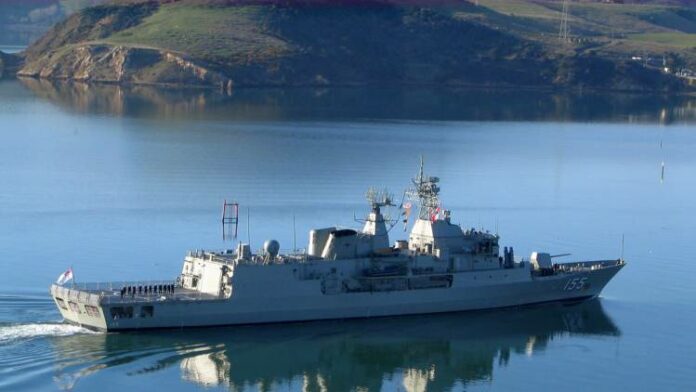
Royal Australian Navy frigate HMAS Ballarat has seized more than 900 kilos of heroin worth approximately $279 million* during two boarding operations that took place 21–23 Dec 18 as part of Operation MANITOU.

Ballarat conducted flag verification checks by boarding vessels of interest, under the direction of the Combined Maritime Forces’ (CMF) Combined Task Force (CTF) 150 in international waters in the Arabian Sea. The fishing vessels, known as dhows, were believed to be engaging in illegal activity.

The boarding team discovered and seized illegal narcotics on both dhows. 165 kilos of heroin was found on the first dhow, and 766 kg on a second. The drugs were transferred to Ballarat for disposal.

Commanding Officer of HMAS Ballarat, Commander Paul Johnson, said “A thorough search by the boarding parties uncovered a large quantity of heroin intended for distribution around the world. By keeping these illegal narcotics out of the hands of those that exploit others, we improve the lives of those in the region.” CMDR Johnson said.

“The crew is well prepared for these activities and I am glad that they have been able to showcase their professionalism in supporting security in this complex maritime environment”.

Commander of Australian Forces in the Middle East, Rear Admiral Jaimie Hatcher, AM, RAN said  “These drug seizures support Australia's long-term mission to ensure maritime security, stability and prosperity in the region,” Rear Admiral Hatcher said.

“This operation will impact on the flow of narcotics around the world and the use of drug money to fund extremist organisations. This is a promising start to Ballarat’s work here and the crew should be very pleased with this excellent result,” he said.

These are the first seizures Ballarat has made since starting operations in the Middle East Region during November 2018 in support of Operation MANITOU.

*Note: This calculation is a based on the Australian Criminal Intelligence Commission Illicit Drug Data Report 2015–16 figures for Cannabis Resin (Hashish) @ AUD$50,000 per kilo  p215) and Heroin @ AUD$300,000 per kilo (p216).

Source:marinelink

Explosion, fire on tanker off Cyprus, 2 injured

0

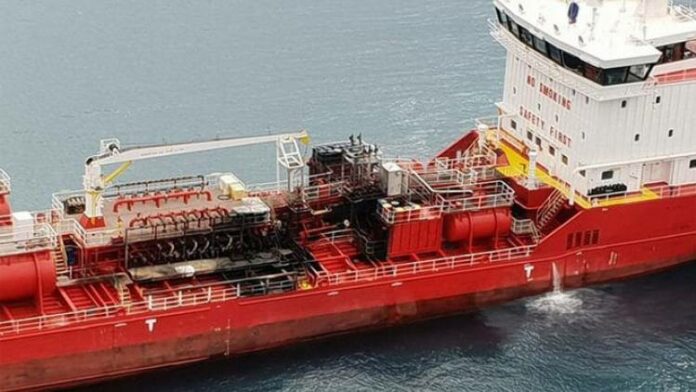
Product tanker ATHLOS suffered explosion, followed by fire, in the morning Dec 29 off southern coast of Cyprus, shortly after leaving Larnaca. 5 crew understood to be thrown overboard, all 5 rescued, 2 of them suffering extensive burns. All 5 were taken to hospital. Fire reportedly was extinguished or taken under control, tanker turned to coast and ran aground off Zygi village, southern Cyprus. 

1600 UTC: Tug VTS KERYNEIA (IMO 9631010) near tanker, tanker’s status unknown, probably she isn’t aground, AIS is on. Explosion occurred in or near cargo tank, while tanker was in ballast. It means, that most probably, 5 crew thrown overboard by explosion were on cargo deck, maybe there were some wielding or fire works. 
 

Source:fleetmon

Japanese cruise ship holed in collision in Apra Harbor, Guam

0

Japanese cruise ship holed in collision in Apra Harbor, Guam

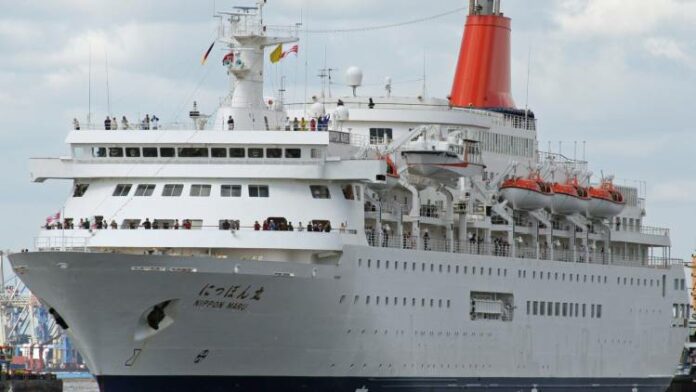
Cruise ship NIPPON MARU with 524 passengers on board collided with Delta Pier in inner Apra Harbor, Guam, at night Dec 30, on arrival from Japan, inflicting damages both on the ship and the pier.

Pier is fitted with fuel pipe line, it wasn’t said if pipe was damaged or not. NIPPON MARU starboard hull sustained a hole 1.5×2.1 meters, understood above waterline. 

About Nippon Maru measures 97 metres (318 ft) long, with a beam of 12.95 metres (42.5 ft) and a draft of 6.90 metres (22.6 ft).Her gross tonnage is 2,286.She is rigged as a four-masted barque, with 32 sails covering 2,397 square metres (25,800 sq ft), and two 600-horsepower diesel engines for auxiliary functions. During her career as a training ship, she was manned by a crew of 27 officers, 48 seamen, and 120 trainees.

EXMAR’s Tango FLNG sets sail to Argentina

0

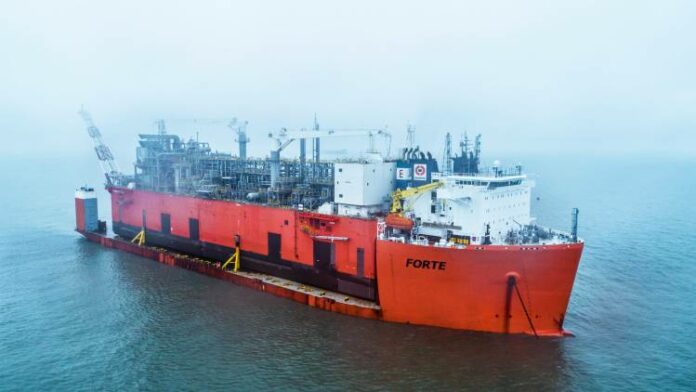
EXMAR announced on Thursday (Dec27) that its Floating LNG Liquefaction Unit (FLNG), to be renamed Tango FLNG, has left China to the destination of its liquefaction operations: Bahia Blanca, Argentina.

Tango FLNG is now on the move, just one month after contract signing, and the voyage to Argentina is expected to take approximately 45 days. Upon its arrival, Tango FLNG will be put in operation for EXMAR’s customer YPF S.A. and is expected to start up LNG production in the second quarter of 2019.

Tango FLNG is designed for a liquefaction capacity of about 0.5 million tons of LNG per year and is to play a central role in YPF’s efforts to export the Vaca Muerta gas reserves to the international markets.