4.2 C
New York
Home Blog Page 1192

Innovative ideas see Senvion secure Nordsee Ost servicing

0

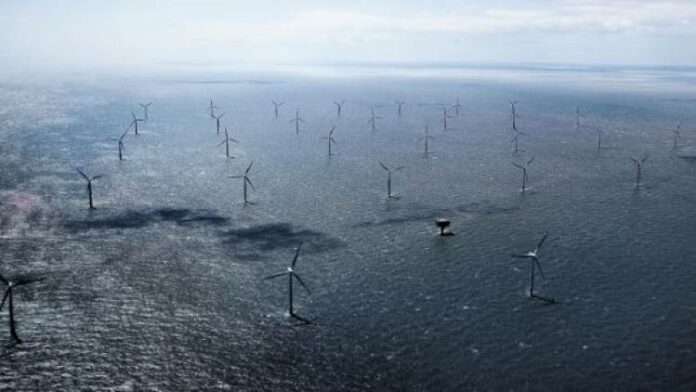
Senvion has been awarded a four-year service contract by innogy for the Nordsee Ost offshore windfarm following a competitive tender process.

Senvion has serviced the 48 wind turbines since their installation in 2014. The existing contract has been replaced ahead of schedule by a new service agreement which includes new service concepts such as joint service teams and sea-based services.

Nordsee Ost consists of 48 Senvion 6.2M126 turbines and is 100% owned by innogy. Each turbine has a capacity of 6.15 MW. The windfarm is located 30 km north of Heligoland.

Senvion executive director and chief sales officer David Hardy said, “Nordsee Ost is a challenging offshore project in which Senvion developed many innovative service solutions during its first years of operation.”

innogy SE general manager for Nordsee Ost Karina Würtz said, “A proactive and forward-looking maintenance approach is a key requirement for ensuring cost-effective operations throughout the entire lifecycle of Nordsee Ost."

The new service contract gives both parties planning security. Implementation of new service concepts will ensure a high level of turbine operational reliability and availability.

Source:owjonline

Another Japanese company invests in offshore wind projects

0

Japanese company JERA, a joint venture between TEPCO and Chubu Electric Power Company, has acquired stakes in offshore windfarms in Taiwan and the UK, and plans to establish bases in both countries.

The deals are the first forays into the offshore wind energy sector by a company that said it wants to move further into renewable energy.

Offshore wind is a mature industry in Europe. However, JERA recognizes that this business is still at an early stage in Asia, including Japan, having much room to develop. JERA also believes that it is able to capitalize on its strengths considering its business scale and expertise in conventional power project development,” the company said.

The Taiwanese deal saw JERA enter into an agreement with Macquarie Capital and Swancor to acquire a 32.5% equity interest in the Formosa 1 offshore windfarm off the northwestern coast of Taiwan. The transaction remains subject to regulatory approvals.

The 128 MW Formosa 1 project is Taiwan’s first utility-scale offshore windfarm. The first phase of 8 MW has been operational for 18 months, with an additional 120 MW under construction and expected to enter into operation in late 2019. The project has secured the support of Taiwan Power Company under a 20-year power purchase agreement based on a feed in tariff.

The Japanese company has also acquired 24.95% equity interest in Gunfleet Sands in the UK from Marubeni Corporation. The windfarm has a capacity of 172.8 MW and entered into operation in 2010.

Source:owjonline

Optimarin ballast system chosen by Royal Caribbean for trio of ships

0

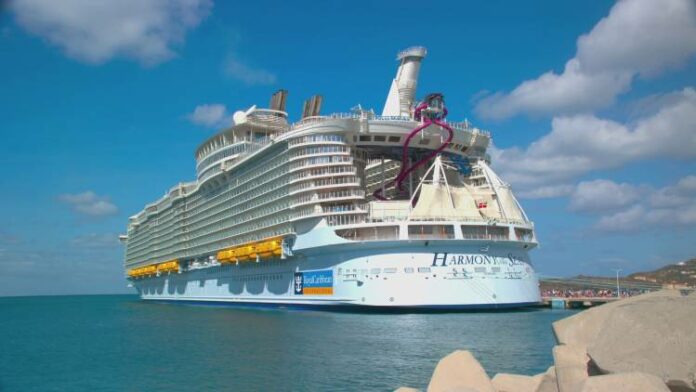
Royal Caribbean International has chosen Optimarin to provide its USCG-compliant Optimarin Ballast System (OBS) for three flagship vessels.

The Norwegian-based ballast water treatment (BWT) specialist has now retrofitted its technology on Independence of the Seas and Mariner of the Seas, with installation on Grandeur of the Seas set for Q1 2019. 

An agreement of this nature with a world-renowned operator is very special,” commented Optimarin chief executive Tore Andersen.

The fact Optimarin has been selected provides not only an endorsement of our simple, reliable and market proven UV-based technology, but also demonstrates that world leaders turn to us when it comes to ensuring total global compliance. We have always been a regulatory frontrunner, since our very foundation in 1994, and were the first manufacturer to achieve full USCG approval in December 2016.

That means we don’t simply provide systems, we provide peace of mind. For a ‘heavyweight’ cruise champion like Royal Caribbean that is priceless – allowing optimal fleet flexibility, no matter where their business takes them.”

Optimarin’s systems are modular in construction, allowing them to be retrofitted in almost any vessel, regardless of space restrictions – a crucial factor for these feature packed ships.

“We focus on exceeding expectations and optimising performance, that applies as much for industry and regulatory standards as it does for passenger experience,” commented Royal Caribbean superintendent, technical systems, global marine operations Jorge E Coronado. “With a fleet that sails throughout the world – from the Caribbean to Alaska, South America to Australia – it is imperative that we have the best systems to ensure complete compliance. Optimarin delivers this, allowing us to focus on delivering holidays of a lifetime.

Optimarin installed the world’s first commercial treatment on board Regal Princess in 2000. Since then it has gone on to win contracts from customers such as Hapag Lloyd.

Optimarin has now sold approximately 700 OBS units, with more than 500 installed and operational, of which approximately 250 are retrofits.

Source:norwegiansj

Lessons to learn for ports after drone impact on UK airport

0

Ports and airports received a wake-up call on the disruptive impact of drones last week as a UK airport was closed for more than a day by unmanned aerial vehicles.

More than 750 flights and 125,000 passengers were affected when London Gatwick was closed by drones for 1.5 days. Authorities cancelled all flights to and from Gatwick airport on Wednesday night and Thursday (20 December), with flights finally recommencing on 21 December.

Although unmanned aerial vehicles (UAVs) are less dangerous to shipping than aircraft, they can still disrupt maritime operations. For example, as a disruptor to crane operations in a port or as a tool for signal jamming, conversation intercepting or system hacking.

Martek Marine Systems is providing its marine anti-drone system for this detection project. It will allow the port operator to understand current and future drone use and identify threats to port infrastructure, shipping and harbour operations from UAVs.

There are lessons to be learnt from this week’s Gatwick airport closure as authorities were still searching for the UAVs and the pilots that successfully closed the runway for around 36 hours.

UK transport secretary Chris Grayling said drone activity around Gatwick was unprecedented and that these levels of disruption have not been encountered before. He then explained that mitigating processes were in place and measures were enacted to prevent this from happening again. Police were given authority to shoot down any drones that they considered would cause disruption to airline operations.

However, a UAV pilot/s have demonstrated how drones can cause disruption. Ports, whether they are air or sea ports, need to use this as a wake-up call and take the example of the Port of Amsterdam and begin reviewing methods to detect, manage and prevent drones from affecting port operations.

Source:marinemec

Orders for floating LNG vessels hot up

0

The oil and gas industry has recognised the importance of nimble floating LNG vessels such as Hilli Episeyo in delivering gas in remote areas, triggering a spate of orders for Mark II versions.

The most recent order, announced on 17 December, is the go-ahead from BP for Golar LNG’s new FLNG to support the first phase development of the Greater Tortue/Ahmeyim field off Mauritania and Senegal.

And there may be more orders in the offing. As Golar pointed out, “[Hilli Episeyo’s] proof of concept continues to add momentum to both existing and new opportunities under discussion.”

The vessel, a next-generation design, will be built by the Keppel Shipyard that created Hilli Episeyo. The new FLNG will use Black and Veatch’s Prico gas-processing technology. Design work for the vessel, which will have a capacity of 3M tonnes per annum is in its final stages. According to Golar, “indications are that [the design] will be cost-competitive with Hilli Episeyo’s design.”

The success of Hilli Episeyo, which has already exported its 10th LNG cargo, underlined the potential revealed by Petronas’ FLNG, PFLNG Satu, first deployed off Malaysia in 2017. The obvious merits of PFLNG Satu sparked the industry into action almost overnight.

“Research and development moves rapidly in the oil and gas industry,” noted Alistair Black and Charles Wood from law firm Dentons in a recent paper entitled The development and financing of future FLNG projects. “However, few could have foreseen the pace at which floating LNG vessels are now becoming commoditised.”

The breakthrough followed the development of much more compact liquefaction systems. Vessel operators realised that existing LNG carriers could be retrofitted with topsides based on established – but shrunken – liquefaction processes, typically from manufacturers Air Products and Black and Veatch. “[They] are significantly cheaper and quicker to deploy than the highly bespoke – and expensive – vessels developed to date by a number of the majors,” Dentons pointed out.

In the space of little more than two years since the launch of Petronas’ PFLNG Satu, another generation of FLNGs is coming over the horizon. There are several new projects in the pipeline – and financiers are queuing up to support them. “Now that the first of these vessels has been successfully financed and deployed, we have seen significant client interest,” reported Dentons.

Much of the action is in central Asia and Africa, relatively new supply regions. An FLNG is being developed for the Coral South LNG project, for instance, that is estimated to hold over 450Bn m3 of gas. It will be Africa’s first FLNG.

The penny is dropping rapidly about the versatility of FLNGs. “The speed and efficiency of supply is increasing due to the development of new technologies such as small-scale LNG and FLNG,” explained Kogas research and development institute’s senior research engineer Kidong Kim, citing their suitability for previously unviable “small pools” and “stranded fields” that are often located in remote locations.

Another strong argument for FLNGs is speed of construction. According to a survey by classification society DNV GL, 61% of respondents said their company would support investments in projects that could be put into operation in shorter timeframes than fixed platforms or giant floating storage and regasification units.

Meanwhile, manufacturers of liquefaction equipment are scrambling to meet the demand. In October, America’s Air Products opened an equipment testing facility at its plant at Port Manatee in Florida and expanded manufacturing capacity there by 50%. On the back of booming demand, Air Products posted revenues of US$8.2Bn in the 2017 financial year, in large part because of the rush of orders for FLNGs.

Source:lngworldshipping

cIntercepts Five Tons of Hashish in Gulf of Aden

0

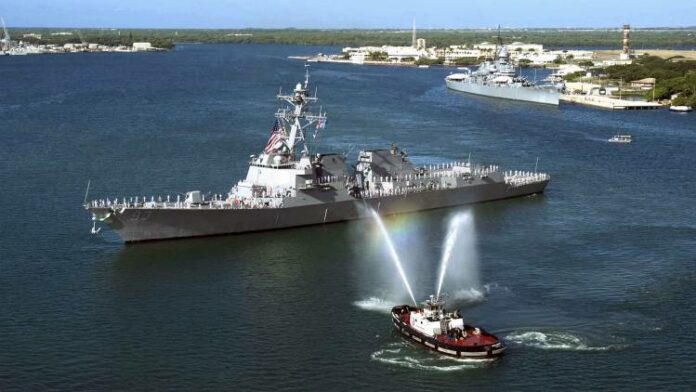
On Thursday, the Arleigh Burke-class destroyer USS Chung-Hoon seized more than five tons of hashish from a stateless vessel in the international waters of the Gulf of Aden.

If a vessel is believed to be stateless, a flag verification boarding is generally allowed under international law. Chung-Hoon’s visit, board, search and seizure team boarded the vessel and discovered over 11,000 pounds of hashish aboard. The vessel and its crew were allowed to depart once the narcotics were seized.

“We have been conducting maritime security operations along suspected maritime smuggling routes in order to interdict illicit shipments into Yemen and Somalia,” said U.S. Navy Cmdr. Brent Jackson, commanding officer of the Chung-Hoon. “It's critical in an effort to curb the ongoing shipments of illicit weapons and narcotics. I am grateful that Chung-Hoon was able to play a small part in an ongoing effort to deter and limit these illicit shipments of contraband."

USS Chung-Hoon is one of the many ships conducting maritime security operations in the U.S. 5th Fleet area of operations. These maritime security patrols help the service to detect smuggling and to foster improved mariner-to-mariner relations. These relationships help the Navy to disrupt the transport of illicit cargoes, which often fund terrorism and other illegal activities.

Sailors on the Chung-Hoon recently completed maritime security training with instructors from the U.S. Coast Guard and the U.S. Army, just in time for their latest boarding operation. “Training’s going excellent,” said U.S. Coast Guard Maritime Enforcement Specialist 1st Class Michael Walden, after a round of drills in mid-December. “They’re very willing to learn. They’re actually grasping a lot.”

The USS Chung-Hoon is named for Rear Adm. Chung-Hoon, a decorated commander in WWII and the Korean War. He was also the first admiral of Chinese-Hawaiian ancestry in the U.S. Navy. 

Source:maritime-executive

Season’s First Icebreaker Deployed in Finland

0

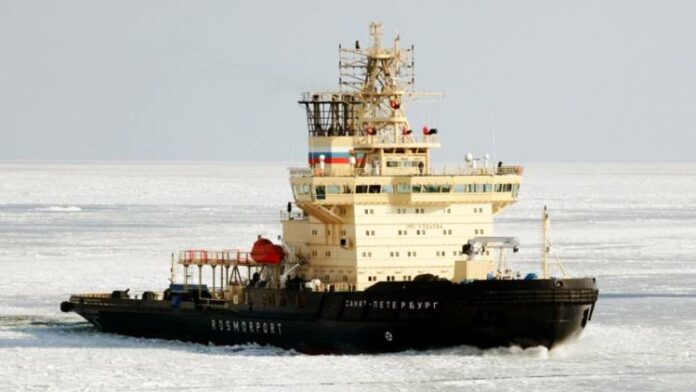
The Finnish icebreaking season officially kicked off on Tuesday evening with the first icebreaker deployment.

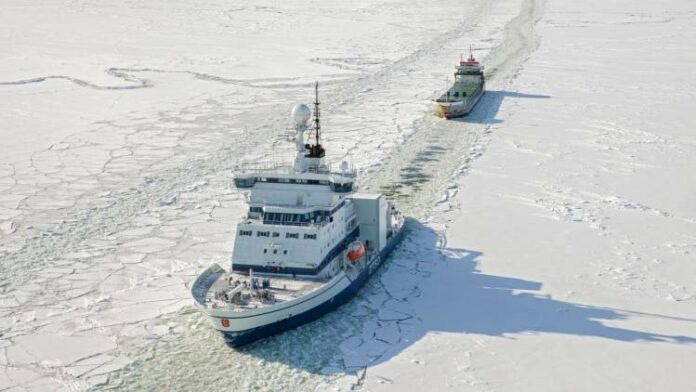
Arctia’s converted polar icebreaker Otso departed the icebreaker base in Helsinki at 6 p.m. local time toward its initial operation area to keep open the fairways to Tornio, Kemi and Oulu. The vessel is expected to reach the area before noon on Thursday.

According to the latest ice report by the Finnish Meteorological Institute, ice in the Bay of Bothnia is drifting toward northeast. In the northern Bay of Bothnia's inner archipelago there is 10-20 cm thick fast ice. Farther out there is 5-15 cm thick very close ice, level ice and new ice to Kemi 2, Oulu 1 and Raahe lighthouse.

Icebreaker Otso along with its crew is eager to begin the new season, said Otso's master Seppo Eva, right before heading to sea. "As we have learned, years are not alike, and ice conditions in the Bothnian Bay vary a lot. According to predictions, last season was supposed to be fairly mild, but it turned out to be far from it: on the last day of February all eight Arctia icebreakers were at sea assisting merchant vessels. Let's see, what the coming season will bring."

Arctia is the state-owned company responsible for operating the Finnish icebreaker fleet. The company currently operates a fleet of nine vessels, including the world's first icereaker powered by liquefied natural gas (LNG), Polaris.

In 2017 the Finnish icebreaking season's first icebreaker departed the icebreaker base in Helsinki on December 18, Arctia said. In 2016 the first icebreaker deployed on December 8, and in 2015 on December 29.

Source:marinelink

13 icebreaker escort operations performed in eastern part of Gulf of Finland during 24 hours on December 27-28

0

13 vessels were escorted by icebreakers in the eastern part of the Gulf of Finland during 24 hours on December 27-28, says Ice Operations Headquarters of the Baltic Sea Ports Administration.

From the beginning of winter navigation season, icebreakers escorted 126 vessels including 91 vessels in Big Port St. Petersburg and 35 vessels in Vyborg and Vysotsk.

According to Ice Operations Headquarters, 2 icebreakers are in operation with four more ships in reserve. Technical availability of 7 icebreakers is being recovered. 

Floating ice with concentration of 9-10/10th is observed in the Neva Bay, between the 16th anchorage and the Golden Gate (10-15 cm thick). The canal is free. Between the 16th anchorage and Dock-Gate Building C-1: 10-cm thick ice with concentration of 6-8/10th. Floating ice with concentration of 7-9/10th is observed in the port basins (up to 10 thick). Floating ice with concentration of 3-5/10th is observed between С-1 and the entrance buoy.

Between the port of Vyborg and the turning buoy of Vysotsk port: fast ice of 10-15 cm thick. The canal is free. Between the turning buoy of Vysotsk port and Vysotsk Gate (including water area of Vysotsk port) – new ice with ice free water from the entrance buoy.

Source:portnews

SOCAR built and installed new offshore platform at Bulla-deniz field

0

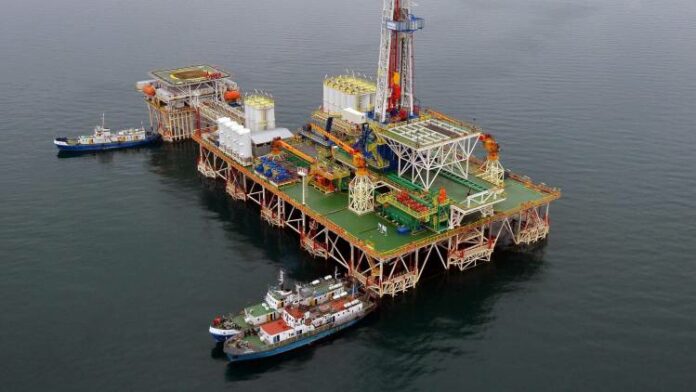
On December 24 a new stationary drilling platform built by SOCAR Oil and Gas Construction Trust at the Bulla-Deniz field was commissioned in a ceremony attended by Rovnag Abdullayev, President of SOCAR and other senior officials. 

The platform was projected by the in-house Oil & Gas Research and Design Institute and the construction started in 2017. It was designed for drilling of one exploratory and four production wells. The platform was constructed in 30-meter sea depth and its deck is 12 meters above the sea. 

The average depth of wells will be 6300 meters. After commissioning of the wells the platform is expected to produce 2.5 million cubic meters of natural gas and 500 tons of condensate per day. The drilling will be carried out by ZJ-70DBS drilling rig. The rig has 46,6 meter high tower, which will enable to drill down to 7000-meter depth from the rotor’s level. Drilling and exploitation works are scheduled to be carried out simultaneously. The wells will be operated by N.Narimanov Oil and Gas Extraction Department of SOCAR’s production unit Azneft. 

SOCAR President Rovnag Abdullayev said: ''Guided by the instructions of President Ilham Aliyev, SOCAR has become a big international group of companies over the past 15 years. Today it represents Azerbaijan as its global brand and it creates value and income for the country. We are investing on time also in our traditional fields of activity, such as exploration and production, to ensure the continuous supply of the new industrial facilities in Azerbaijan and abroad with crude materials, and most importantly, to meet the needs of the Azerbaijani people in fuel and petrochemical products. Thanks to the determination and hard work of Azerbaijani oil workers, SOCAR has achieved significant growth in production during last 11 months. The new platforms based on modern technologies like Bulla-Deniz-12 will ensure the sustainability of our successes. We are proud of being able to build and install such complicated platforms that meet high engineering and technological requirements completely single-handedly. Among other things it demonstrates that SOCAR has emerged as a modern global company in all fields of our business.'' 

Khoshbakht Yusifzadeh, First Vice President of SOCAR said: ''We have gathered here on a very remarkable day for Azerbaijani oilmen. Today is the birthday of President Ilham Aliyev, a friend of oil workers, who was working together with us for a long time. On this day, the State Oil Company has launched a new, high-tech drilling platform at the Bulla-Deniz offshore field. The construction and installation of such a challenging offshore platform by Azerbaijani oilmen single-handedly seemed impossible in the past, but today we witness it as reality. This is one of the most important projects that were realized with the guidance and support of Mr. President, so the oil workers presented it as a gift to him and Azerbaijani people on his birthday.'' 

The platform was built to the highest environmental, safety and fire prevention standards and requirements. It has four blocks in the platform’s production area and one in its residential area, a helideck, four jetties and four boarding and landing areas, as well as a comfortable and safe residential building to accommodate 36 people. 

Bulla-Deniz field is located in the northern part of the Baku archipelago, 10 km south-east from the Sangachal-Duvanny-Khara Zira island field. The structure was discovered in 1957 by seismic exploration, deep exploration drilling started in 1965. However, initially the drilling of the first 17 wells was not completed due to complicated geological conditions. The oil and gas potential of the field was confirmed after the drilling of 18th well in 1973.

Siurce:portnews

Shell Completes New Zealand Exit With $578 Million Sale To OMV

0

Royal Dutch Shell Plc completed the sale of its remaining upstream assets in New Zealand to Austria's OMV AG for $578 million, the companies said Dec. 28.

The sale, which is part of Shell’s three-year program to dispose of $30 billion by the end of 2018, included the company’s Māui, Pohokura and Tank Farm assets in New Zealand. Additionally, OMV acquired Shell’s interest in and operatorship of the Great South Basin venture, which was subject to a separate agreement. Shell Taranaki and Shell New Zealand employees have now also become a part of OMV New Zealand.

“We are proud of having worked in New Zealand for more than 100 years and completion of the sale to OMV marks an important milestone in the company’s history,” said Zoe Yujnovich executive vice president of Shell Australia and New Zealand.

Pohokura, which OMV had already been a partner in as well as Māui, is the largest gas producing field in New Zealand. OMV will now assume operatorship of both Pohokura and Māui joint ventures.

“This acquisition is an important step to develop Australasia into a core region in line with our new strategy,” OMV CEO Rainer Seele said in a statement following the announcement of the acquisition in March 2018.